Choose the lawn before you choose the robot mower.
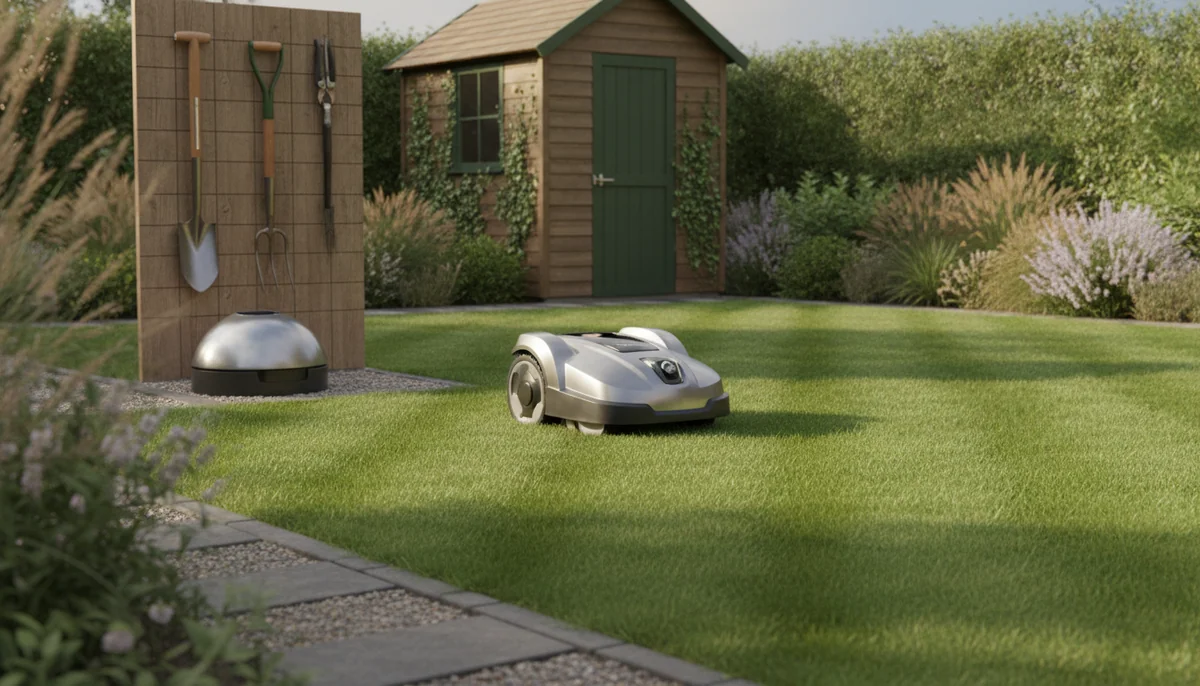
A flat quarter-acre under open sky is an easy assignment. Add a narrow side passage, a maple canopy, a raised border, and one wet incline behind the shed, and the same purchase becomes a navigation problem with grass attached. The mower that looks strongest on a specification sheet can be the one that spends its afternoons losing position, missing a separate patch, or leaving a green fringe along every wall. Smart Lawn Bots organizes the subject around those points of failure. Begin with the lawn, learn enough about the technology to reject the wrong type, and only then open the reviews and model comparisons. That order is less exciting than choosing the machine with the biggest acreage number. It is also much more likely to produce a lawn that stays cut without becoming a second job. Put the awkward parts of the lawn first Measure the grass rather than the property boundary, then walk the route a mower would need to travel. Look up as well as down. Buildings and dense tree cover matter to satellite-guided machines; abrupt drops, loose banks, exposed roots, tight gates, and border construction matter to every machine. Your first route through the library What the lawn is telling you Why it changes the purchase Start here The garden is small, open, and mostly level. Compact coverage and dependable boundaries matter more than heavy traction or a huge battery. See the small-lawn shortlist The mowable area is large or split into several substantial sections. Headline acreage can conceal charging time, transfer routes, and the work required to keep every zone on schedule. Compare mowers for large yards One bank is steeper, rougher, or wetter than the rest. The most difficult slope sets the traction requirement, not the average gradient across the property. Find machines suited to steep ground Trees, walls, or buildings block a wide view of the sky. Satellite positioning may be least dependable in exactly the places where the boundary needs to be most certain. Choose for obstructed yards Long walls, raised beds, or crisp hard edges surround the grass. A mower can keep the center immaculate while still leaving regular work for a string trimmer. Prioritize edge cutting The lawn exists in disconnected islands. Multi-zone software does not create a safe physical route between areas that the mower cannot cross. Plan for multiple and disconnected zones Do not size the mower to the estate acreage printed on a listing or deed. The useful figure is the grass it must maintain, adjusted for slopes, obstacles, narrow passages, charging, and the number of separate zones; our guide to robotic mower acreage ratings explains why the advertised ceiling is a poor target. Navigation is the purchase hiding inside the purchase Wire-free does not describe one technology. It describes the absence of a buried perimeter cable. The mower still needs a way to locate itself, understand the boundary, recognize obstacles, and return to its charger. RTK satellite positioning, LiDAR, and camera vision solve those jobs differently, so the best choice depends on what surrounds the grass. The navigation trade-offs in plain language System Where it makes sense The drawback to confront RTK satellite positioning Open lawns that suit precise virtual boundaries and orderly mapped zones. Trees, rooflines, walls, and poor antenna placement can weaken the positioning conditions it depends on. LiDAR Yards where local mapping is more useful than relying on a clear satellite view. The mower still needs a legible physical environment, enough passage width, and sensible boundaries around hazards. Camera vision Clearly defined lawns where simple setup and visual obstacle recognition carry more weight than survey-grade positioning. Faint edges, difficult lighting, leaves, and grass that blends into adjoining ground make the scene harder to interpret. Perimeter wire Stable lawns where a physical boundary is acceptable and satellite reception is awkward. Installation takes work, layout changes take more work, and a damaged cable can stop the system until the break is found. Read the full RTK, LiDAR, and vision comparison before treating any navigation label as a mark of superiority. If the main attraction is avoiding cable installation, the wire-free mower guide shows what replaces the wire and what setup still remains. Choose the right shortlist, not the longest one A general ranking is useful when the lawn has no defining complication. The best robotic lawn mowers guide is the broad starting point, while the wire-free shortlist removes models that need a conventional boundary cable. When local sensing matters most Start with the LiDAR mower guide when tree cover or buildings make an antenna-led installation unattractive. Then compare specific approaches rather than assuming every laser-guided mower handles edges, obstacles, and narrow routes in the same way. When the budget has a hard ceiling The budget mower shortlist focuses the choice, but the cheaper machine is not cheaper if its navigation cannot read the lawn or if its capacity forces an exhausting schedule. Include boundary materials, accessories, blades, connectivity, and repairs when judging the commitment. When the property is genuinely demanding Large grounds and sustained workloads belong in the commercial mower guide . If the ground is too steep, rough, or hazardous for unattended cutting, stop shopping for autonomy and read the remote-control mower shortlist instead. When one brand already fits the brief Buyers considering an all-wheel-drive Mammotion platform can narrow the family through the Mammotion mower guide . Brand familiarity should be the last filter, however, not the fact that decides whether the navigation system belongs in the yard. The ownership questions matter before checkout A robot mower does not perform a weekly rescue cut. It maintains grass through frequent, light passes and leaves fine clippings behind. That routine is why the lawn can look continuously tidy, but it also explains why an overgrown, cluttered, or waterlogged yard remains a bad assignment. The machine is maintenance automation, not a tiny brush mower. See how mapping, mowing, docking, and charging fit together for a complete view of the operating cycle. Understand what happens to the clippings before expecting a collection bag or a freshly striped weekly cut. Check the limits around rain, wet grass, tall growth, and night mowing before building a schedule around difficult conditions. Work through children, pets, toys, and wildlife because obstacle avoidance does not remove the need for sensible operating rules. Read what tracking and anti-theft features can and cannot do if the charging area or front lawn is exposed. Separate Wi-Fi, GPS, antennas, mobile data, and subscriptions so a vague promise of connectivity does not become a surprise after installation. Decide whether a mower garage is useful before adding a shelter that complicates docking or signal reception. Account for the cost beyond the mower itself including installation items, consumables, optional services, and repair exposure. The bluntest preparation is also the most useful: read the common robot mower problems and disadvantages while there is still time to walk away. If the likely failure mode is visible before purchase, optimism is not a solution. Use head-to-head pages after the shortlist is down to two Roundups answer which machines deserve attention. Comparisons answer the harder question of what one candidate gives up to beat another. They are most useful when both machines already fit the lawn and the decision has narrowed to a particular trade-off. Compact and mid-size lawns Segway Navimow i110N versus i105N Segway Navimow i110N versus i206 AWD eufy E15 versus E18 ANTHBOT M5 versus M9 YARDCARE V100 versus M800Plus LiDAR and mixed navigation Sunseeker S4 versus Navimow i215 LiDAR Sunseeker S4 versus ECOVACS GOAT O1000 LiDAR PRO MOVA LiDAX Ultra 1000 versus RoboUP Raccoon 2 SE WORX WR320 versus ECOVACS GOAT O1000 LiDAR PRO Large lawns and difficult ground Mammotion LUBA 3 AWD 3000H versus 5000H Mammotion LUBA 3 AWD 3000H versus Navimow X430 DREAME A3 AWD Pro 3500 versus Navimow X430 DREAME A3 AWD Pro 3500 versus Mammotion LUBA 3 AWD 5000H Mowrator S1 4WD versus AIWEIYA AWY-550 Read the individual review last A review becomes useful once the yard has already rejected the wrong machines. At that point, the important details are no longer generic claims about automation. They are the model’s boundary method, the conditions its navigation expects, the terrain it can physically cross, the trimming it leaves behind, and the compromises attached to its strongest feature. For smaller wire-free candidates, continue to the Navimow i110N review , eufy E15 review , eufy E18 review , or Mammotion LUBA Mini 2 1500H review . For LiDAR-led shortlists, use the reviews of the MOVA LiDAX Ultra 1000 , Sunseeker S4 , Navimow i215 LiDAR , and ECOVACS GOAT O1000 LiDAR PRO . The larger and more difficult end of the market deserves the same discipline. Read the Navimow X430 review , Mammotion LUBA 3 AWD 5000H review , DREAME A3 AWD Pro 3500 review , or Yarbo Lawn Mower review only after confirming that its scale, navigation, and terrain assumptions match the property. If an operator will remain at the controls, the robotic versus remote-control mower guide explains why that is a different category rather than a tougher version of the same machine. The sensible order is brutally simple Map the grass, slopes, obstacles, edges, passages, and disconnected zones. Choose the navigation system that can read those conditions. Use the relevant shortlist to remove machines built for a different lawn. Read the comparison and full review before making the final decision. Robot mowers do work, but not by overpowering a bad match. They work when a suitable machine receives a lawn it can understand and a routine it can maintain; the guide to whether robotic mowing is worth it is the place to make that final yes-or-no call.
Ranked Shortlists
Six focused shortlists narrow the field by navigation system, lawn difficulty, budget and professional use.
Best robotic lawn mowers
Its wide deck, tall cutting range, four-wheel traction and turf-friendlier steering make it the best all-rounder here, while LiDAR specialists remain better under severe cover.
See the picks →Best wire-free robotic lawn mowers
The Segway Navimow X430 is the best all-round buy for a demanding large lawn, while smaller, shaded, softer, or simpler yards need a different kind of machine.
See the picks →Best LiDAR robotic lawn mowers
DREAME’s A3 AWD Pro 3500 combines antenna-free navigation, serious traction and a wide deck better than anything here, but soft turf gives it somewhere painful to fail.
See the picks →Best budget robotic lawn mowers
It wins by combining wire-free setup, automatic charging and credible cutting performance, but its camera cannot turn an open property line into a dependable boundary.
See the picks →Best commercial robotic lawn mowers
It wins on warranty, support and mower-first design, but crews that cannot tolerate downtime still need a conventional machine behind it.
See the picks →Best Mammotion robotic lawn mowers
The 3000H combines serious hill traction, high-cut flexibility and navigation beneath trees, while every Mammotion here asks its owner to tolerate rougher software and support than the hardware deserves.
See the picks →Robot Mower Reviews
Get the full case for and against each mower, from mapping and traction to edge cutting, obstacles and app control.
AIWEIYA AWY-550
Read the review →ANTHBOT M5
Read the review →Dreame A3 AWD Pro 3500
Read the review →ECOVACS goat A2000 LiDAR Pro
Edge cutting
Read the review →ECOVACS goat O1000 LiDAR Pro
Read the review →ECOVACS goat O1000 RTK Care
Read the review →Eufy E15 robot lawn mower
Read the review →Eufy E18 robot lawn mower
Read the review →HOOKII Neomow X2 SE
Read the review →LawnMaster OcuMow 200 series
Read the review →Mammotion LUBA 3 AWD 3000H
Read the review →Mammotion LUBA 3 AWD 5000
Read the review →Mammotion LUBA Mini 2 1500H
Yards with trees
Read the review →Mammotion YUKA Mini 600H
Read the review →MOVA LiDAX Ultra 1000
Read the review →Mowrator S1 4wd
Remote control for steep hills
Read the review →Navimow Garage S
Read the review →Navimow Garage X
Read the review →Navimow i215 LiDAR
Read the review →Navimow X430
Large yards
Read the review →RoboUP Raccoon 2 SE
Read the review →Segway Navimow i110N
Small lawns
Read the review →Sunseeker S4
Read the review →WORX WR320
Read the review →WORX WR344
Read the review →Yarbo lawn mower Pro module
Read the review →Yarbo lawn mower
Read the review →YARDCARE V100
Read the review →Head-to-Head Comparisons
Put 35 close rivals side by side on yard fit, navigation, cutting, setup and ownership tradeoffs.
navimow i110n vs i105n
Compare →navimow i110n vs i206 awd
Compare →eufy e15 vs e18
Compare →mowrator s1 vs aiweiya awy 550
Compare →yarbo lawn mower vs pro
Compare →mova lidax ultra 1000 vs 2000
Compare →mova lidax ultra 1000 vs roboup raccoon 2 se
Compare →sunseeker s4 vs navimow i215
Compare →sunseeker s4 vs ecovacs goat o1000 lidar pro
Compare →sunseeker s4 vs sunseeker x5
Compare →sunseeker s4 vs sunseeker x7
Compare →sunseeker s4 vs terramow v1000
Compare →navimow i215 vs i210 awd
Compare →navimow i215 vs x430
Compare →ecovacs goat o1000 vs a2000
Compare →ecovacs goat o1000 lidar vs rtk
Compare →ecovacs goat o1000 rtk vs a2000 lidar pro
Compare →anthbot m5 vs m9
Compare →mammotion luba 3 3000h vs 5000h
Compare →mammotion luba 3 vs worx landroid vision cloud 4wd
Compare →worx wr320 vs wr344
Compare →worx wr344 vs navimow x430
Compare →mammotion luba 3 vs navimow x430
Compare →mammotion luba 3 awd 5000 vs segway navimow x430
Compare →worx wr320 vs ecovacs goat o1000 lidar pro
Compare →dreame a3 awd pro 3500 vs mammotion luba 3 awd 5000
Compare →dreame a3 awd pro 3500 vs segway navimow x430
Compare →dreame a3 awd pro 3500 vs mova lidax ultra 1000
Compare →dreame a3 awd pro 3500 vs 5000
Compare →dreame a3 awd vs a3 awd pro
Compare →mammotion yuka mini 600h vs luba mini awd 800h
Compare →mammotion yuka mini vs worx landroid vision cloud
Compare →worx wr310 vs wr320
Compare →yardcare v100 vs e400
Compare →yardcare v100 vs m800plus
Compare →Buyer Guides
Use six buyer-specific guides to match acreage, terrain, tree cover and boundary needs to the right kind of mower.
The Mowrator S1 is the remote mower to trust when the hill stops being ordinary
Its four-wheel drive, full-size blade and battery power make it the strongest all-round choice here, while tracked alternatives demand more compromise or much more faith.
Read the guide →The GOAT A2000 comes closest to ending the edging chore.
Its side-mounted string trimmer reaches grass that ordinary robot-mower discs cannot, although difficult maps can erase the convenience it creates.
Read the guide →The Navimow X430 is the large-yard robot mower to beat.
It combines the deck width, tall cut and turf-friendly steering an acre actually needs, while Mammotion and Dreame remain better answers for the hardest satellite-starved ground.
Read the guide →The Segway Navimow i110N is the small-lawn robot mower to beat.
It offers the best balance of orderly coverage, mature controls and ownership evidence, provided the lawn is smooth and the sky above it is reasonably open.
Read the guide →The Navimow X430 wins on steep lawns because it can turn without fighting the turf.
Four driven wheels are only the beginning; steering, suspension, navigation and a safe downhill margin decide whether a robot maintains the hill or becomes part of it.
Read the guide →Trees defeat satellite mowers, but they do not defeat the right robot.
The Mammotion LUBA Mini 2 1500H is the best overall choice because LiDAR solves the blocked-sky problem while AWD keeps roots, dips and slopes from becoming the next one.
Read the guide →Learn Robot Mowers
Understand mapping systems, slope limits, boundary choices and upkeep through 19 plain-language explainers.
A robot mower is safe only on a lawn nobody is using
Obstacle detection can reduce collisions, but it does not make spinning blades compatible with children, animals, toys, or nighttime wildlife.
Read →Robot mowers work, but the lawn has to meet them halfway.
The right machine can remove most routine mowing, while the wrong one merely replaces pushing with troubleshooting.
Read →A robot mower can be stolen; GPS only helps after it has gone
Tracking is worth having, but locks, activation controls, account security, and a credible response plan matter more than a reassuring dot on a map.
Read →Robot lawn mowers leave the clippings behind, and that is usually the point
They keep grass tidy by shaving off tiny tips several times a week, not by filling a catcher.
Read →A robot mower does not need a garage, but its parking place might
A good shelter reduces direct sun and rain at the dock, while a bad one traps heat, blocks navigation or gets in the mower’s way.
Read →A robot mower can climb the hill, but the turn decides whether it belongs there
Smooth slopes suit many robots, while rough, wet, or consequential ground calls for AWD, generous safety margins, and less faith in the number on the box.
Read →The mower is only the first bill in robot lawn care
Captured listing records stretched from a basic manually charged mower to a tracked multi-acre platform, and the honest budget also includes setup, blades, connectivity, trimming, and a repair plan.
Read →Boundary wire is bought by the route, not the acre
Measure the outer edge, every exclusion island, and each guide route before choosing a reel.
Read →A robot lawn mower keeps grass short by working often, not by cutting hard.
It contains or maps the lawn, follows planned or repeated routes, drops tiny clippings, then docks, charges, and resumes before growth gets ahead of it.
Read →Robot lawn mowers trade one weekly chore for six smaller ones
They can keep the right lawn beautifully short, but they do not remove setup, trimming, debris clearing, rescues, software dependence or the need for a backup plan.
Read →One robot mower can handle several lawn zones, but a map cannot open a gate
Multi-zone software works when every patch of grass has a safe route to the dock, while truly disconnected lawns still require carrying, another charging station, or another mower.
Read →Robot mowers are fair-weather maintenance machines, whatever the waterproofing says.
They can survive rain better than they can cut wet or overgrown grass, and darkness introduces risks that quiet motors do not solve.
Read →The acreage badge on a robot mower is a ceiling, not a lawn size.
Measure the grass, allow for everything that slows the machine down, and buy enough spare capacity that one wet week does not break the schedule.
Read →Robot mowers cut the lawn, but the last strip is still yours.
Flush paving can leave almost nothing behind, while walls, fences, curbs, beds, trees and drop-offs commonly leave two to six inches for a string trimmer.
Read →Wire-free robot mowers cut the boundary cable, not every connection.
LiDAR can remove GPS and an antenna from the mowing job, while Wi-Fi and subscriptions usually serve the app, remote access, or theft tracking rather than the blades.
Read →Trees do not stop a robot mower, but the wrong navigation system will.
Onboard LiDAR is the safest choice under dense canopy and beside walls, while RTK belongs only where the antenna and mower can still see enough sky.
Read →A robot mower saves time; a remote mower saves you from the hill.
For ordinary turf, autonomy wins, while severe banks and rough growth are the narrow exceptions where continuous remote control earns its burden.
Read →RTK wins in open sky, LiDAR wins under trees, and cameras win only on tidy lawns
Choose the navigation system that survives the hardest part of your yard, then check whether the wheels, deck, and map software can finish what the sensors start.
Read →A wire-free robot mower is only as good as the system that replaces its cable.
The best models trade a powered perimeter loop for a dependable map, while the worst merely hope that grass looks different from everything beside it.
Read →