The GOAT A2000 makes the O1000 RTK Care feel unfinished.
Buy the GOAT A2000 LiDAR PRO unless your lawn is small, open to the sky and simple enough for the O1000 RTK Care’s external antenna and weaker mapping arrangement.

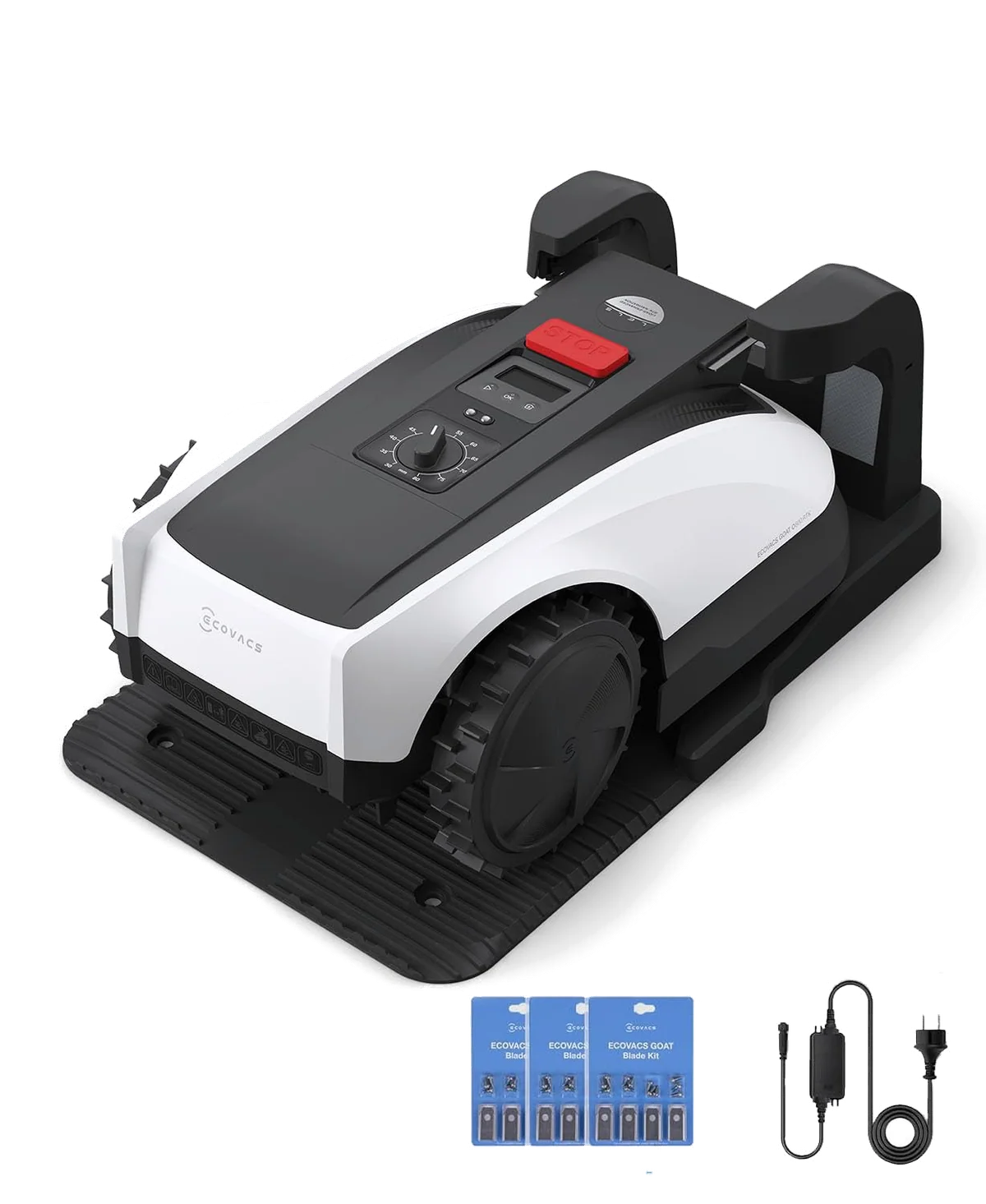
ECOVACS goat O1000 RTK Care
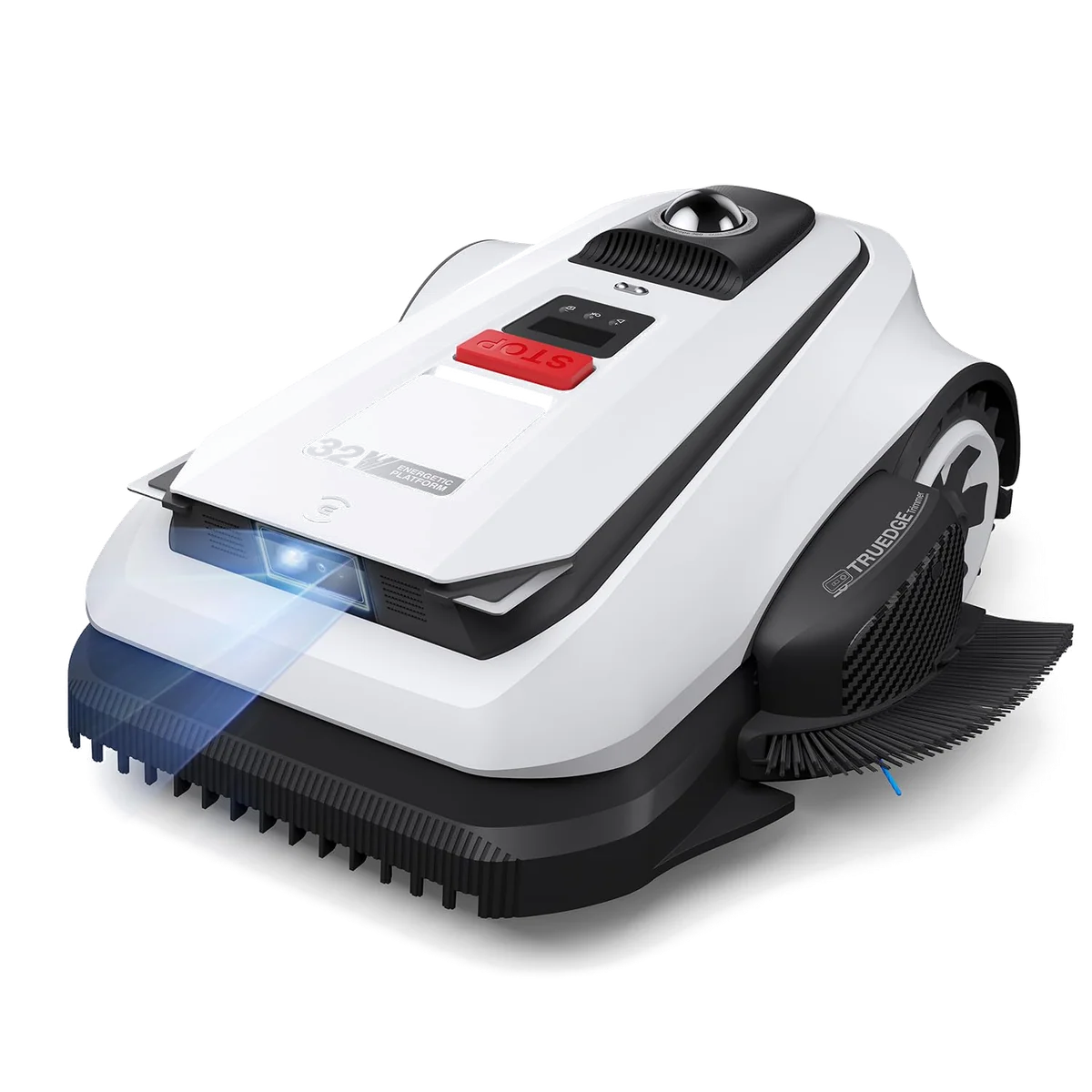
ECOVACS goat A2000 LiDAR Pro
These two white ECOVACS mowers promise the same pleasant Saturday: systematic stripes appear while the push mower stays in the shed. Both can map without a buried perimeter wire, mow in orderly lanes, return to a dock and resume unfinished work. Both also demand frequently maintained grass rather than an overgrown rescue job.
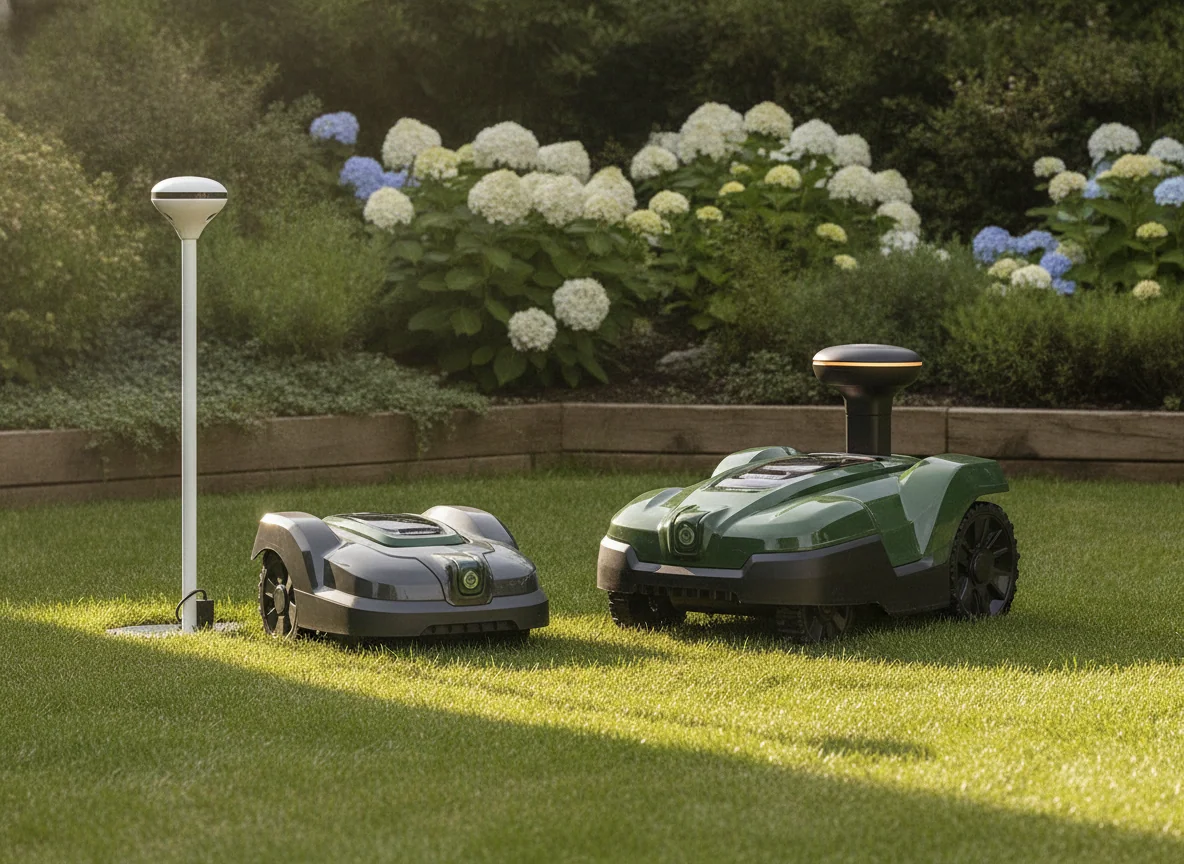
The resemblance ends underneath. The O1000 RTK Care is a compact single-disc mower that depends on a powered satellite reference station. The A2000 replaces that station with dual LiDAR, nearly doubles the rated lawn area, widens the cut by more than four inches and adds a powered string trimmer. It is not merely the larger choice. It removes two of the O1000’s most consequential compromises.
That does not make the A2000 invulnerable. Its front casters and rear-wheel-drive layout are still unhappy on loose slopes, holes and exposed drops, while the ECOVACS app can turn a mistaken boundary into an argument the mower refuses to lose. A fence separating two closely adjacent lawn areas can confuse either machine. LiDAR solves the satellite problem, not every software problem.
| Decision point | GOAT A2000 LiDAR PRO | GOAT O1000 RTK Care |
|---|---|---|
| Best lawn size | Up to ½ acre over repeated mow-and-charge cycles | Up to ¼ acre over repeated mow-and-charge cycles |
| Navigation | 360° rotating LiDAR, forward 3D ToF LiDAR and camera | RTK positioning, external reference station and camera-assisted sensing |
| Cutting system | Two overlapping discs across 12.96 inches | One centered disc across 8.66 inches |
| Height control | 1.18 to 3.54 inches, adjusted in the app | 1.2 to 3.2 inches, adjusted manually |
| Edge treatment | Separate powered string trimmer | Blade-based edge pass with no string trimmer |
| Mow and charge cycle | About 50 minutes mowing and 50 minutes charging | About 65 minutes mowing and 100 minutes charging |
| Weight | About 39 pounds | 24.25 pounds |
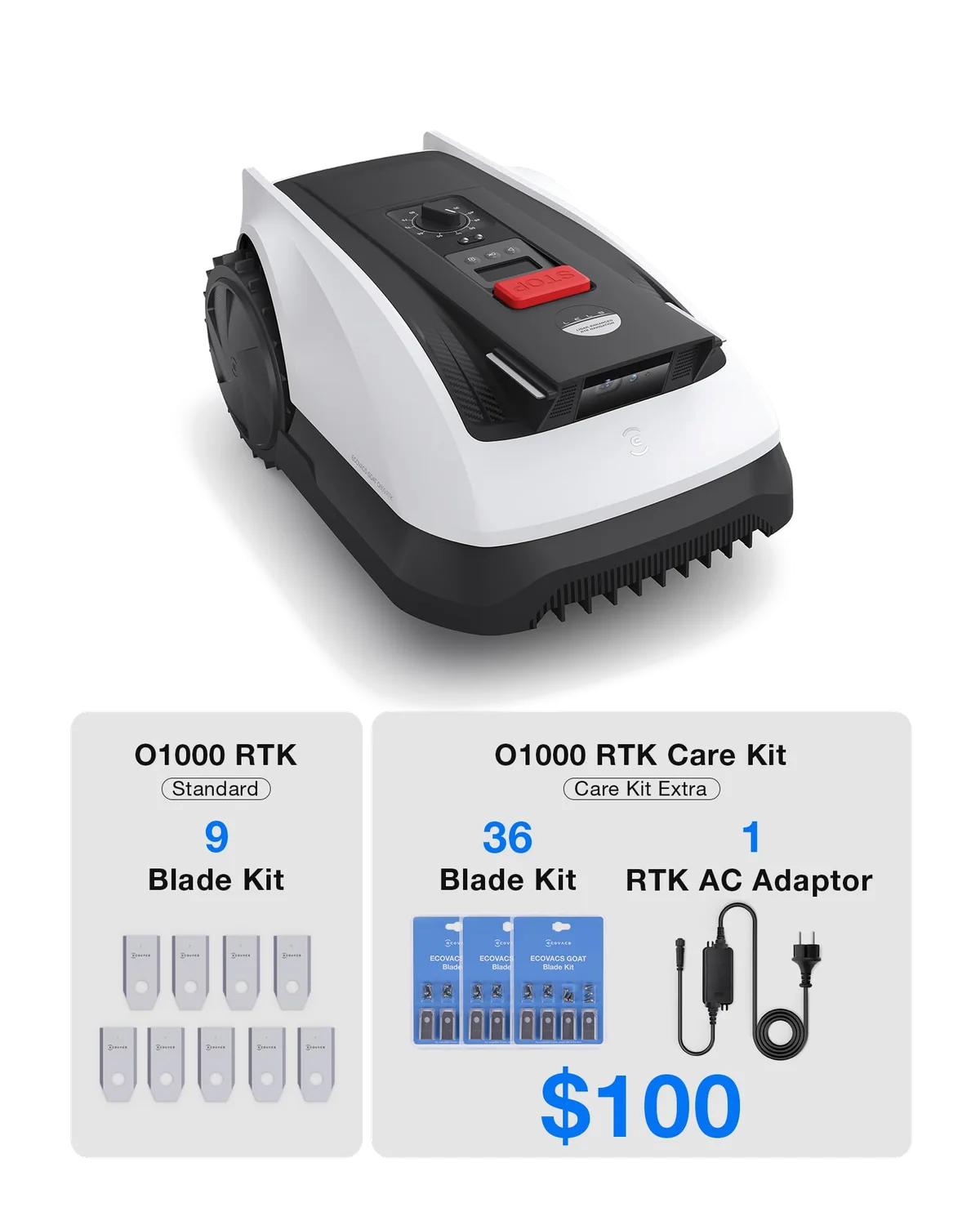
ECOVACS goat O1000 RTK Care
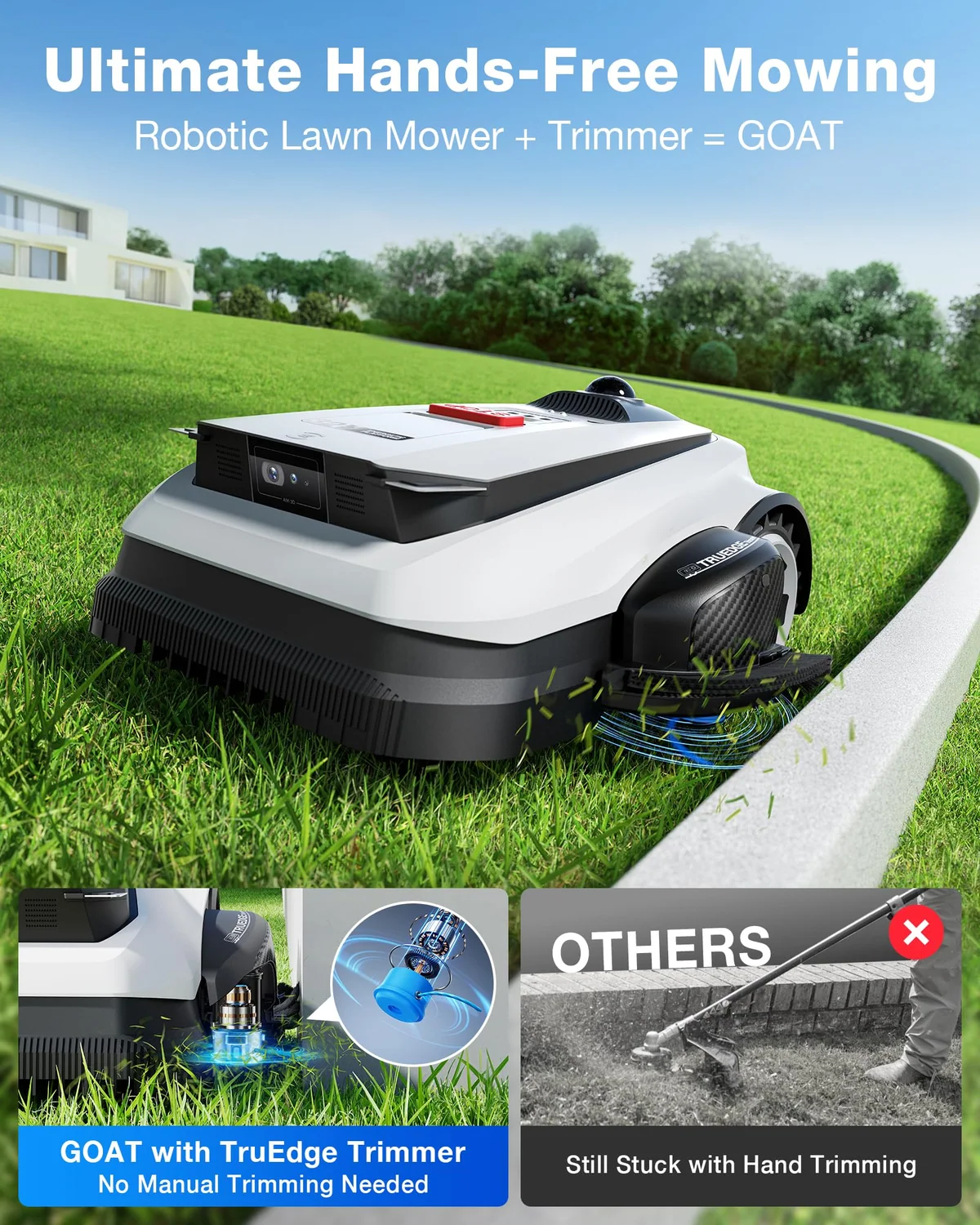
ECOVACS goat A2000 LiDAR Pro
At a Glance
| Feature | ECOVACS goat O1000 RTK Care | Editor's Pick ECOVACS goat A2000 LiDAR Pro |
|---|---|---|
| Price Range | $500–$1,000 | Under $200 |
| Cutting height | 1.2 to 3.2 inches, manually adjusted | 1.18–3.54 inches, adjusted in the app |
| Recommended lawn size | Up to 1/4 acre | Up to ½ acre over repeated mow-and-charge cycles |
| Cutting width | 8.66 inches | 12.96 inches |
| Check Price on Amazon | Check Price on Amazon |
The A2000 wins where ownership becomes inconvenient
LiDAR removes a piece of yard infrastructure
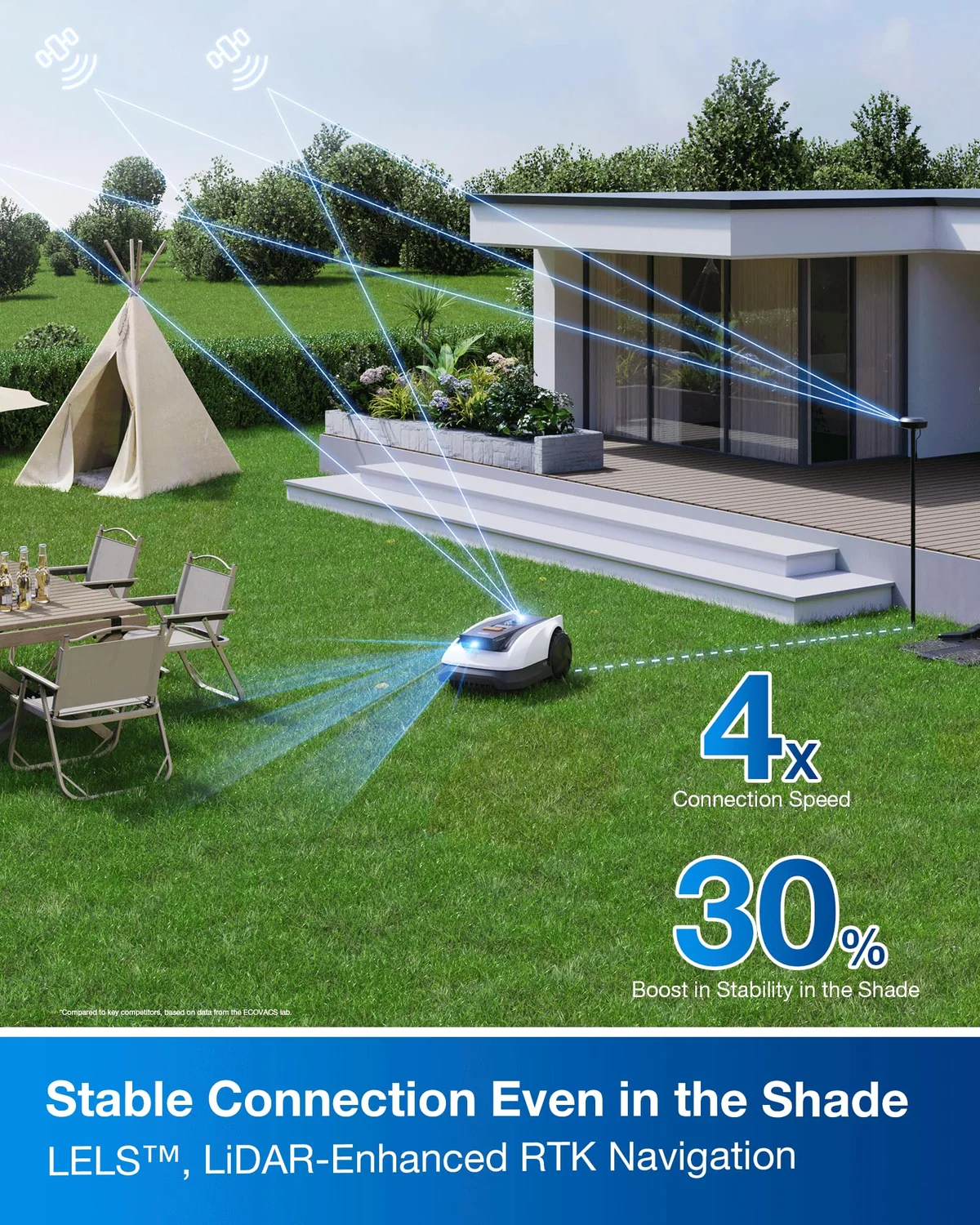
Wire-free is not the same as hardware-free on the O1000 RTK Care. Its reference station needs power, mounting hardware, a cable and a clear view of the sky. The included extension cable helps find a better antenna position, but it cannot create open sky beside a wall, beneath a tree canopy or behind a metal shelter.
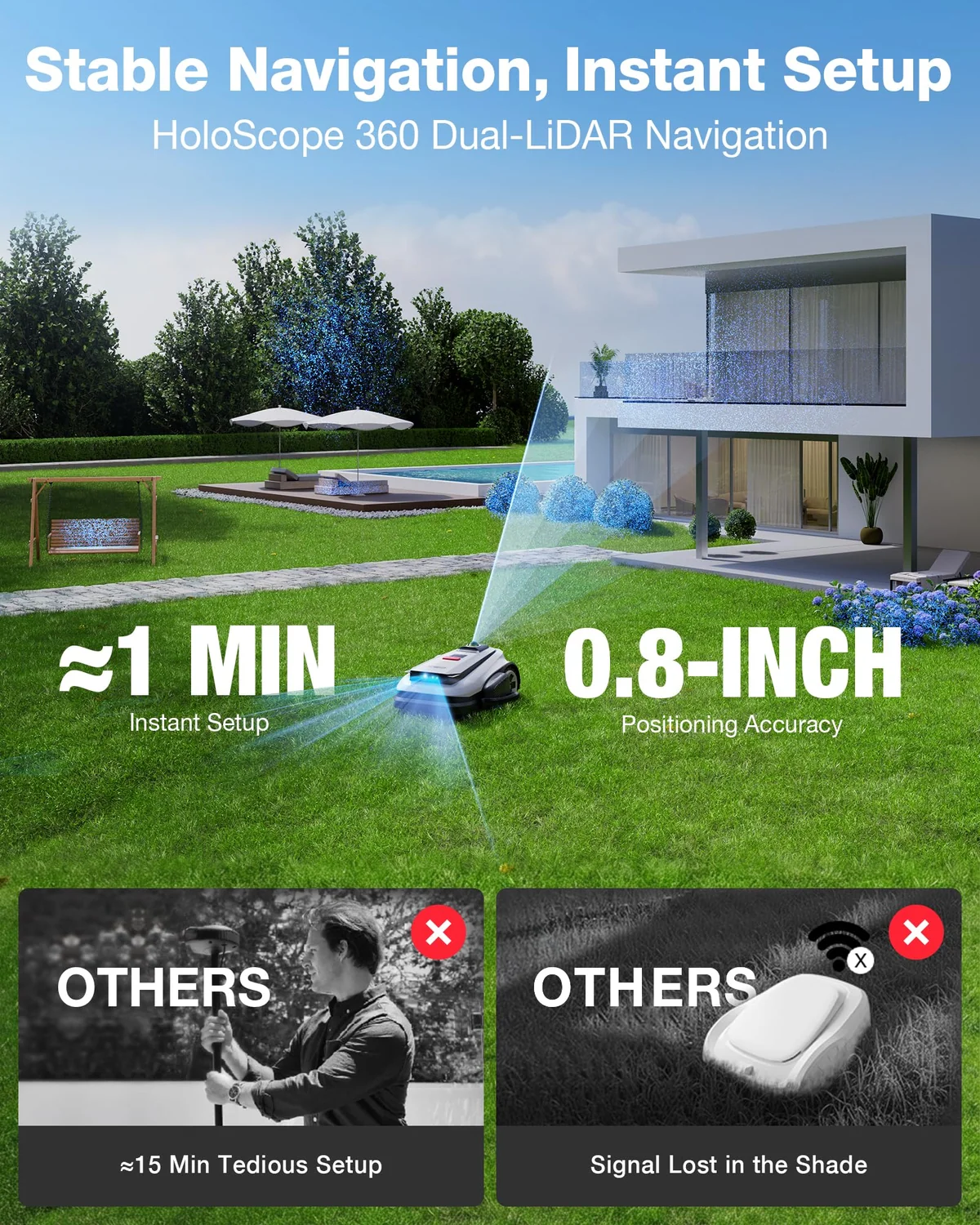
The A2000 builds its position from the yard around it instead. Trees, buildings, shade and cloudy weather do not create the same satellite-placement puzzle, and there is no RTK pole to install. A clearly bounded lawn can therefore move from dock assembly to mapping quickly, although the dock still needs level ground, power, a clean approach and useful outdoor connectivity.
This is the decisive difference for a shaded suburban yard. The O1000 can report precise satellite positioning and still struggle to reach a front zone through a narrow side passage. The A2000 is the more credible starting point where a house, fence and mature trees dominate the view overhead. Buyers choosing specifically for poor satellite reception should also see the broader guide to robot mowers for yards with trees and buildings.
The wider deck matters less than the trimmer, until the lawn gets large
Across open grass, both machines can leave neat parallel lanes. The O1000’s 8.66-inch single-disc cut is entirely sensible on a modest lawn, and its 24.25-pound body is much easier to carry when cleaning or recovering it. The A2000’s two staggered discs cover 12.96 inches without leaving a center strip, so it completes more useful cutting on every pass and is better matched to a half-acre workload.
The bigger everyday improvement sits off to one side. The A2000’s separate string head can trim beside accessible driveways, paths, square beds and straight fences. The O1000’s TruEdge language describes positioning its recessed blade disc near a passable border; it does not describe the powered trimmer fitted to the LiDAR Pro mower. Against a wall, post or raised curb, the smaller machine still leaves a visible strip for a second tool.
The A2000 does not produce a perfect outline. Its trimming run is a separate task, and inside corners, downspouts, irregular stones, conservative virtual boundaries and awkward slopes still leave touch-up work. The advantage is reduction, not elimination: regular edging can become occasional correction instead of an automatic second lap with a string trimmer.
Neither specification sheet describes rough ground honestly enough
The A2000 carries the higher work-area rating at 50% grade, compared with 45% for the O1000, but neither is an all-terrain machine. Both ratings describe slopes within a mapped work area rather than permission to place a virtual boundary beside a steep curb, pool or retaining drop. Boundary-slope limits are lower, and surface conditions can defeat the headline number long before the motor runs out of force.
Wet grass, loose soil, divots and rock-lined turns expose the A2000’s small front casters. The lighter O1000 can slide on an incline and cross an unsafe boundary during mapping. A five-inch curb is a fall risk for either one, not an edge that automatic mapping should be allowed to discover. Severe slopes and rough terrain call for the four-wheel-drive machine covered in the Mammotion LUBA 3 AWD 5000H review, not optimistic interpretation of an ECOVACS percentage.
The shared weakness lives on the phone
A simple lawn can make either mower look impressively autonomous. A complicated property exposes restrictive map correction, stale status information, start-command failures and boundaries that become difficult to override. The most damaging case is a front and rear lawn divided by a fence but positioned close together on the digital map. ECOVACS software can merge them, decide that a route exists through the fence and refuse the real path because it believes one is already present.
The A2000 remains the winner because LiDAR removes a major source of positioning uncertainty, but it retains the same need for supervision during the first boundary trace, first complete mow, first journey between zones and first return to the dock. Firmware changes also deserve a supervised run. Anyone expecting an appliance that vanishes into the background should treat map behavior as a purchase condition, not a setup footnote.
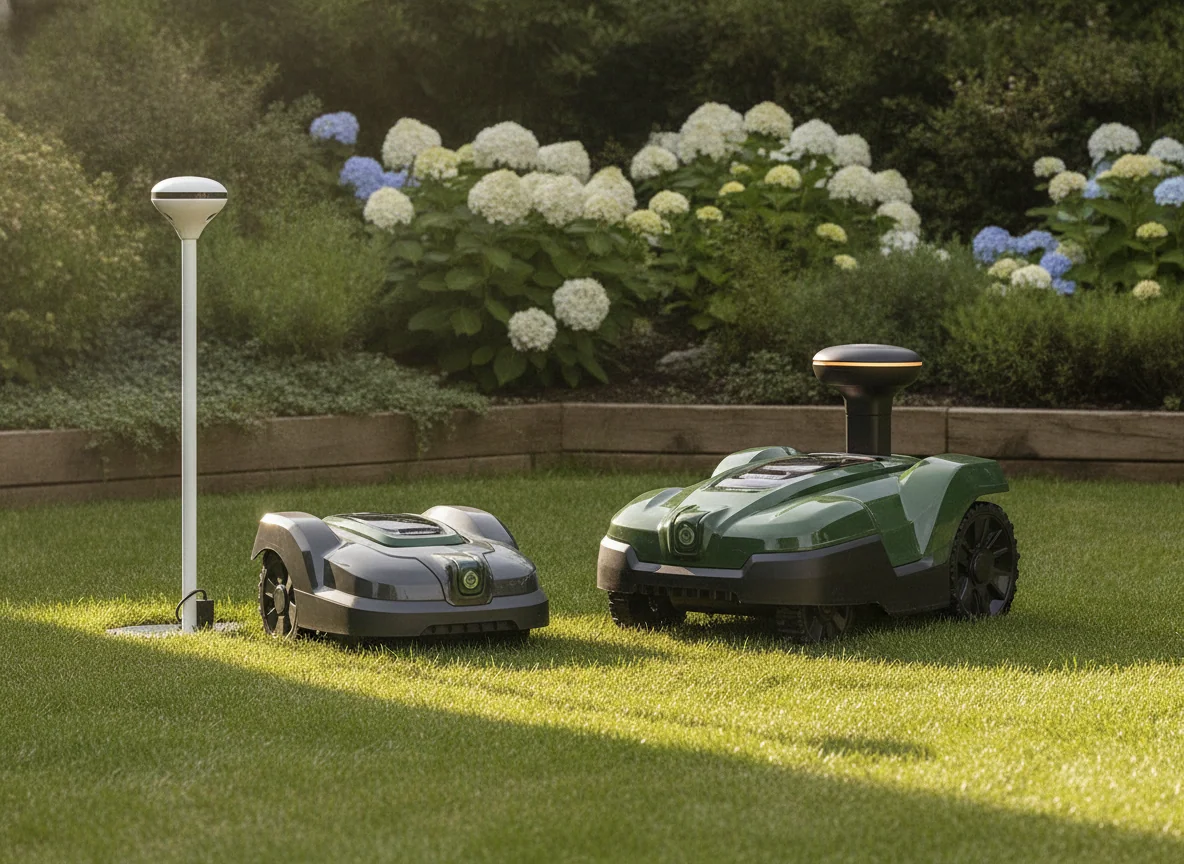
Choose the GOAT A2000 LiDAR PRO for a medium-sized lawn with trees, buildings or borders worth trimming.
Its antenna-free navigation, 12.96-inch dual-disc deck and powered edge trimmer solve more real lawn chores than the smaller GOAT.
The 50-minute battery, restrictive map correction and vulnerable front casters make complex boundaries and rough slopes its honest limits.
Choose the GOAT O1000 RTK Care only for a compact, open lawn with an easy antenna position.
Its quiet systematic cut, low mowing height, lighter body and included supply of replacement blades make sense when one uncomplicated quarter acre is the whole assignment.
The external RTK station, unreliable narrow-zone routing and lack of a powered edge trimmer leave more installation risk and more manual finishing.
ECOVACS goat O1000 RTK Care
ECOVACS goat A2000 LiDAR Pro
Draw the yard before choosing the mower
Buy the A2000 when the lawn is larger than a small urban patch, the sky is obstructed, or straight accessible borders account for much of the trimming. Its faster recharge offsets its shorter mowing shift, and automatic resume makes the repeated dock visits mostly irrelevant when the route is dependable. It is also the better choice for owners who want cutting height controlled in the app rather than at the machine.
Buy the O1000 RTK Care when the property offers one main lawn, firm ground, broad transitions and an obvious antenna location with clear sky. Its narrower deck is not a problem on a genuinely small area, while the lower weight becomes valuable every time grass is cleared from the underside or the mower must be lifted. The Care package’s 36 extra blades are useful consumables, but they do not upgrade the navigation or turn TruEdge into a string trimmer.
Walk away from both when the yard has severe grades, loose shoulders, unfenced water, exposed street curbs or two closely adjoining zones separated by an impassable fence. Also walk away if the grass is usually allowed to grow tall between cuts. These machines maintain upright turf by shaving it frequently and leaving fine clippings behind; they do not bag grass, lift flattened blades or digest a layer of fallen leaves.
A small lawn with poor satellite exposure presents a third answer: compare the RTK Care with the GOAT O1000 LiDAR PRO, which keeps the compact quarter-acre brief while removing the external antenna. For this contest, though, the conclusion is firm. The O1000 wins on portability and simplicity of scale, while the A2000 wins the mowing job that most buyers actually want finished.
Frequently Asked Questions
Does either ECOVACS mower need a perimeter wire?
No, but the O1000 RTK Care requires a powered external RTK reference station while the A2000 navigates without an antenna.
Will the GOAT A2000 mow half an acre on one battery charge?
No, its half-acre rating depends on repeated mowing, docking, charging and automatic resumption rather than one uninterrupted run.
Does the O1000 RTK Care have the A2000’s built-in string trimmer?
No, the O1000 moves its blade-based cut closer to suitable edges but lacks the A2000’s separate powered trimming head.
Do these robot mowers collect grass clippings?
No, both leave small cuttings in the turf and therefore need a frequent schedule that prevents visible clumps from accumulating.
Does either mower require a garage?
No, although any shelter must preserve a clean docking approach and should not interfere with the O1000’s satellite arrangement.
Ready to Choose?
Sources (18)
- Amazon listings and customer reviews — Ecovacs Goat O1000 Rtk and Ecovacs Goat A2000 Lidar
- Owner and reviewer video, 20 channels
- Cnet — Article — www.cnet.com
- Robomowlab — Article — robomowlab.com
- Facebook — Article — www.facebook.com
- Bobvila — Article — www.bobvila.com
- ECOVACS — Article — www.ecovacs.com
- Eftm — Article — eftm.com
- Au — Article — www.harveynorman.com.au
- Consumerreports — Article — www.consumerreports.org
- Pcmag — Article — www.pcmag.com
- Bestbuy — Article — www.bestbuy.com
- Thespruce — Article — www.thespruce.com
- Pcmag — Article — uk.pcmag.com
- Mensjournal — Article — www.mensjournal.com
- Tomsguide — Article — www.tomsguide.com
- Pcworld — Article — www.pcworld.com
- 9to5google — Article — 9to5google.com