Trees defeat satellite mowers, but they do not defeat the right robot.
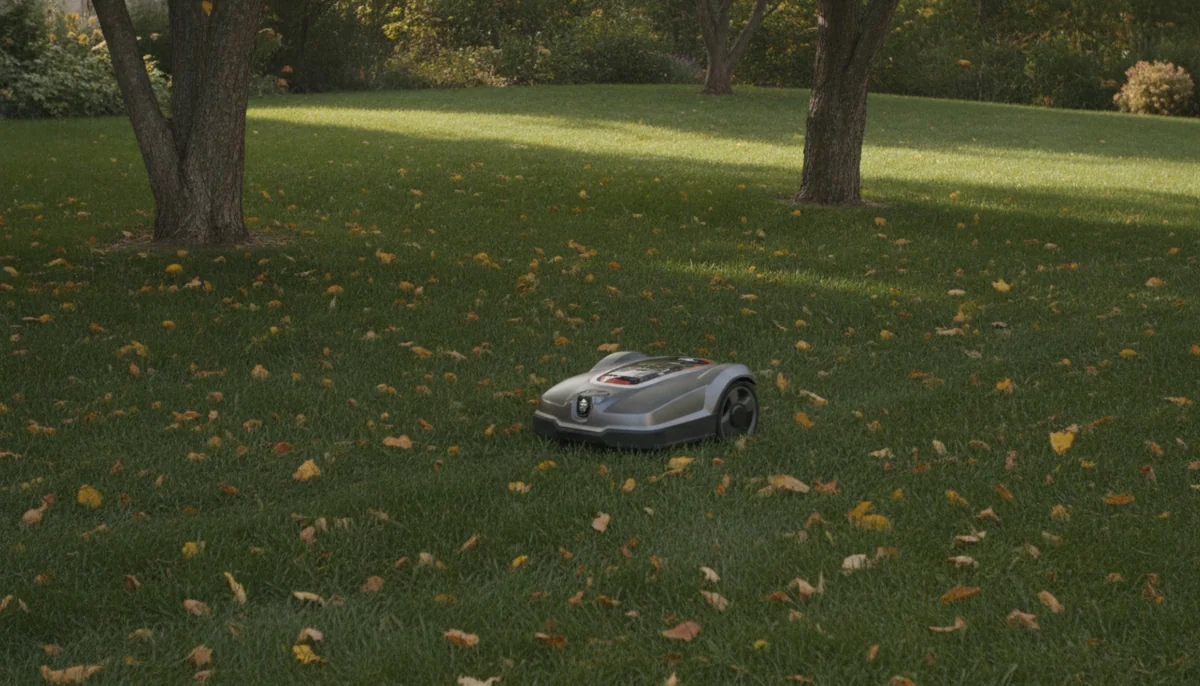
A robot mower beneath trees has two separate jobs. It must know where it is when branches, walls and roofs obstruct the sky, then it must keep moving when roots, shade-softened soil and uneven transitions appear beneath its wheels. Solving only the first problem produces a beautifully mapped robot waiting for somebody to rescue it.
That is why the LUBA Mini 2 1500H wins. Its onboard LiDAR and cameras do not require an RTK reference antenna, while four driven wheels give it more authority over banks, roots and hollows than the rear-drive LiDAR machines below it. It is not the easiest mower here to own. The app and firmware still feel younger than the chassis, raised edges remain string-trimmer territory, and its slow pace near the area ceiling asks for several charging cycles.
The best alternative depends on what the winner is solving unnecessarily. The Sunseeker S4 is the cleaner value proposition for a structured, mostly smooth quarter acre beneath trees. The Navimow i215 expands that antenna-free idea to 0.37 acre with better mapping controls, although its rear-drive chassis still dislikes soft ruts and lateral slopes. Large, genuinely difficult ground points toward the DREAME A3 AWD Pro 3500, whose wide deck and four-wheel drive justify the extra machine in a way a flat suburban lawn never could.
Camera-only mowers deserve a narrower recommendation. The eufy E15 and E18 are unusually easy to install because neither needs a wire, antenna or guided perimeter lap, and their object recognition is excellent. They suit smooth, connected grass with legible borders. Tree shade may not trouble their positioning, but darkness, damp turf, holes, roots and ambiguous grass edges can.
Choose the navigation problem before choosing the mower
RTK positioning can be excellent in an open yard, but the reference station and mower both need a dependable satellite solution. Dense canopy, a narrow passage between buildings, a dock beneath an eave or reflective walls can make that solution intermittent. A larger antenna mast may improve reception without changing the fact that the property is asking the wrong sensor to do the job.
LiDAR reads the physical surroundings instead. Trunks, fences, sheds and walls become landmarks rather than obstructions, which is why the strongest choices on this page use onboard LiDAR. A broad, featureless field can reverse that advantage because a local scanner has less stable geometry to recognize. Readers deciding between these systems should start with the site’s comparison of RTK, LiDAR and camera navigation.
Vision-only navigation occupies the middle ground. It needs no satellite reference, and a clear boundary between short grass and paving can be wonderfully easy to map. Its weakness is interpretation. Fallen leaves, bare soil, flowers, identical grass across a property line and low light can change what the camera believes belongs to the lawn.
| System | Best setting | Failure to plan around |
|---|---|---|
| LiDAR with AWD | Tree cover, buildings, roots, slopes and uneven transitions | Extra weight, turf scrub, higher cost and more complex software |
| LiDAR with rear drive | Firm, structured lawns where blocked sky is the main problem | Casters, ruts, soft soil and sideways travel on slopes |
| Camera vision | Smooth connected grass with obvious visual borders | Leaves, sparse turf, darkness and visually ambiguous edges |
| RTK with cameras | Open lawns with a stable antenna location | Canopy, walls and reflective or obstructed satellite conditions |
Blocked sky and difficult ground are different problems.
A shaded rectangle with firm soil does not need four-wheel drive merely because it has trees. The Sunseeker S4, ECOVACS GOAT O1000 LiDAR PRO and MOVA LiDAX Ultra 1000 can solve the positioning problem without making the chassis larger and heavier. The trade is less reserve when a front caster drops into a rut or the mower must turn on a damp bank.
Roots, exposed transitions and slopes change the recommendation. The LUBA Mini 2 1500H is the balanced choice for a modest property, while the DREAME A3 AWD Pro 3500 is built for much more grass and uses a 15.8-inch dual-disc deck to cover it credibly. The Navimow X430 has formidable 4WD hardware too, but its Network RTK positioning means it is not the first answer to genuinely poor satellite reception.
The route to the dock matters as much as the grass.
Every autonomous zone needs a driveable connection to power. Steps, closed gates and loose rock beds are not solved by an app drawing a corridor through them. Narrow passages also need clearance for the mower’s body, not merely the cutting disc. Trace the complete route from dock to every zone before treating a multi-zone claim as useful; the guide to multiple and disconnected lawn areas covers the layouts that still need carrying, another base or another mower.
Dock placement deserves the same inspection. The station needs firm, level ground and a clean approach, and repeated turns can wear shaded turf into a bare patch. A mower garage may reduce sun and debris, but it cannot repair a sloped charging pad or help a robot climb a threshold it cannot clear.
The best mowers for lawns that lose the sky
Choose the LUBA Mini 2 1500H when trees and difficult ground are part of the same problem.
LiDAR, dual cameras and genuine AWD make it the most complete choice for a sloped, rooty or uneven lawn up to 0.37 acre without an RTK antenna.
Its app and firmware remain less settled than its excellent chassis, while raised edges, slow full-area coverage and tight AWD turns still demand patience.
Choose the eufy E15 for the small lawn that is shaded but otherwise exceptionally polite.
Camera-only automatic mapping removes both wire installation and antenna placement, then produces orderly cuts on dry, smooth and clearly bounded grass below 0.2 acre.
Damp turf, small depressions, rough transitions, unclear borders and unsupported St. Augustine or dense Zoysia expose its light 2WD chassis quickly.
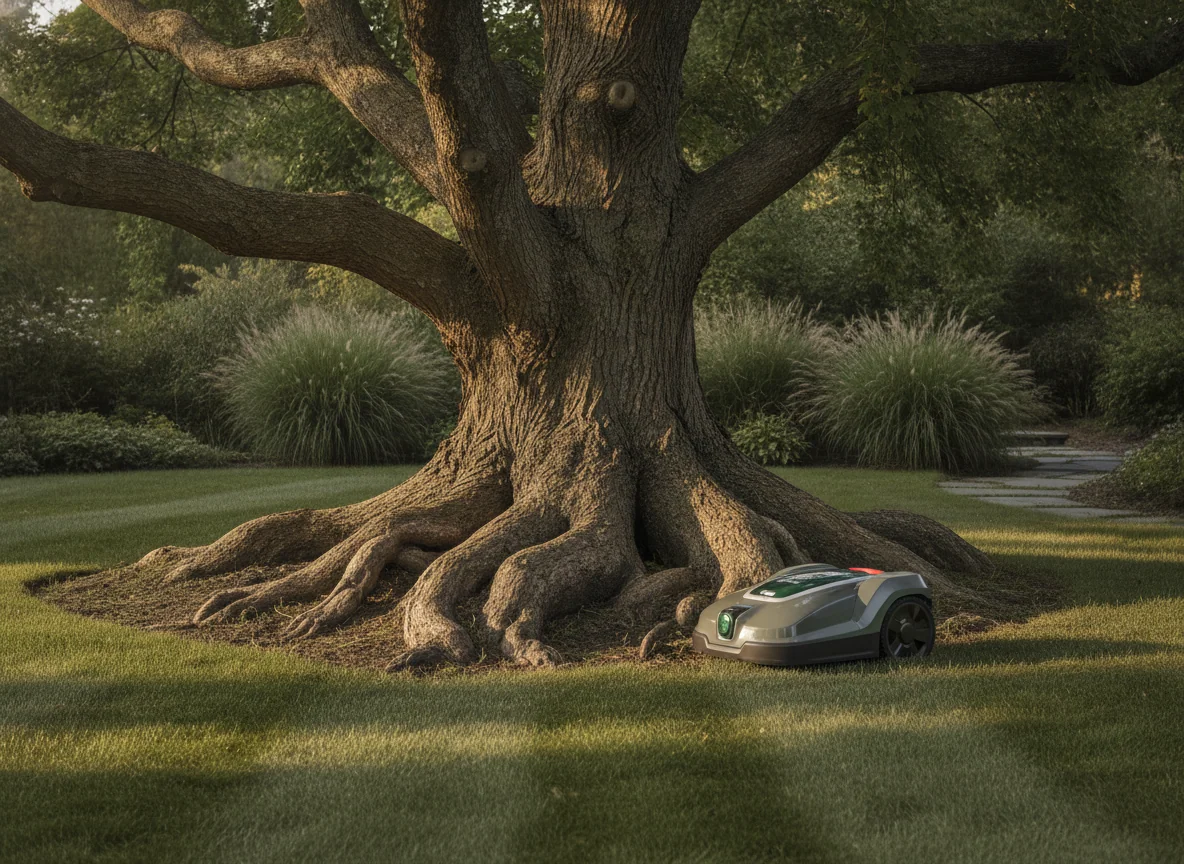
Choose the eufy E18 when the E15’s simple-lawn formula needs room to reach 0.3 acre.
Its cameras map without RTK and recognize ordinary family-yard obstacles unusually well, making it persuasive beside buildings and beneath trees on smooth connected turf.
The larger area allowance brings no wider deck, tougher drive system or longer battery life, so coverage is slow and holes, gates and darkness remain hard limits.
Choose the Neomow X2 SE only when three-quarter-acre LiDAR capacity matters more than settled autonomy.
Its 360-degree LiDAR and large battery create a credible antenna-free route across a maintained lawn beneath trees or beside substantial buildings.
Software, docking, recovery and traction failures are too inconsistent for a remote property, and automatic mapping may require a separate vision upgrade.
Choose the MOVA LiDAX Ultra 1000 for firm quarter-acre turf and a patient schedule.
It combines antenna-free LiDAR, a broad 1.2-to-3.9-inch height range and deep zone controls with a clean, notably quiet systematic cut.
Passive front casters can strand it on sand, soft soil, runners and abrupt seams, while the fixed low UltraTrim pass can scalp taller grass.
Choose the RoboUP Raccoon 2 SE only for one small lawn that already has visible walls around it.
It avoids wire and RTK hardware, offers unusually approachable onboard controls and quietly maintains grass inside a compact, physically enclosed garden.
Random coverage is slow, open grass boundaries are unreliable and small toys or hoses can reach the blades, so simplicity comes with supervision.
Choose the Sunseeker S4 for the best balance on a structured, mostly smooth quarter acre beneath trees.
Its onboard LiDAR holds position in shade, maps several zones and lays down convincing parallel lines without wire or an external antenna.
The seven-inch deck works slowly, vertical borders leave a substantial trim strip and abrupt humps can stop the rear-drive chassis.
Choose the Navimow i215 when a complicated 0.37-acre lawn needs mature mapping controls more than AWD.
Solid-state LiDAR and vision turn trees, fences and buildings into useful landmarks while supporting editable zones, schedules and systematic quiet mowing.
Docking and connector routes need proving, rear drive dislikes soft ruts and lateral slopes, and hazardous drops require conservative boundaries because there is no dedicated cliff sensor.
Choose the ECOVACS GOAT A2000 LiDAR PRO when half-acre throughput and reduced edging matter on a simple lawn.
Dual LiDAR, a wide overlapping deck and a real side-mounted trimmer make it a productive antenna-free mower on firm grass with clear boundaries.
Its short mowing shifts and stubborn map correction become frustrating around fences, narrow passages, closely separated zones and rough slopes.
Choose the ECOVACS GOAT O1000 LiDAR PRO for tight shaded spaces where its larger sibling is unnecessary.
The compact body, onboard dual LiDAR and dedicated edge trimmer form a strong package for a firm connected lawn comfortably below a quarter acre.
Manual mapping is fussy, rear-wheel traction is modest and TruEdge still leaves work beside fences, raised borders and tight corners.
Choose the Navimow X430 for hard acreage only after proving that positioning works on the property.
Its 17-inch dual-disc deck, four-wheel drive, suspension and four-inch maximum cut make it the strongest large-lawn chassis in this ranking.
Network RTK and dock placement can still struggle around obstructed sites, while its size, setup demands and reported height-control failure make it a poor blocked-sky default.
Choose the ANTHBOT M9 only if experimenting with an ambitious quarter-acre platform sounds acceptable.
Dual vision, RTK, NRTK, automatic mapping and extensive zone controls describe an appealing wire-free mower for a simple lawn.
A weak satisfaction record and unanswered questions about navigation fallback, weather protection, parts, warranty and NRTK terms make dependable ownership unproven.
Choose the ANTHBOT M5 for a small open lawn, not for a yard that loses the sky.
It offers systematic cutting, useful app controls and automatic charging at a sensible scale for roughly one-eighth acre with a good antenna position.
The standard M5 depends on RTK reception, leaves a fringe beside vertical edges and has less convincing hill performance than its specification implies.
Choose the DREAME A3 AWD Pro 3500 when a large wooded lawn is also steep, rough and firmly rooted.
Onboard LiDAR, four driven wheels and a 15.8-inch dual-disc deck solve blocked sky, difficult terrain and meaningful acreage in one formidable machine.
Its weight can rut wet or sandy ground, EdgeMaster cuts at a fixed low height and mapping software remains less mature than the hardware.
Choose the DREAME A3 AWD 1000 when a difficult quarter acre needs the Pro’s traction but not its bulk.
LiDAR, dual cameras and AWD make this compact model unusually credible beneath trees, beside walls and across steep or uneven connected zones.
The narrow single-disc deck is slow, visually ambiguous boundaries can require hours of mapping and meaningful saved-map edits may mean starting over.
The shortlist after the sensor argument is settled
For most difficult residential lawns below 0.37 acre, buy the LUBA Mini 2 1500H and accept that the software may occasionally remind you that this is still robotics rather than a mature garden appliance. For flatter ground below a quarter acre, the Sunseeker S4 avoids paying for traction hardware the lawn does not need. Choose the Navimow i215 when greater capacity and more detailed zone control outweigh the rear-drive limitation.
The DREAME A3 AWD Pro 3500 is the serious upgrade for a large lawn where trees and terrain eliminate simpler machines. Its nearest rival here, the Navimow X430, has the more polished large-yard proposition when satellite positioning is dependable, but the Dreame is the more direct answer when poor sky view is the reason this page exists. Readers comparing acreage rather than canopy should use the separate guide to robot mowers for large yards.
Walk away from every mower on this page if the lawn has an exposed pool edge, retaining-wall drop or roadside boundary that software alone would need to protect. Walk away too if disconnected zones require carrying a 50-pound mower every few days, or if nobody can rescue a stranded machine at a remote property. A robotic mower removes repetitive cutting; it does not repeal gates, gravity or soil.
Frequently Asked Questions
Do robot lawn mowers work under trees and beside buildings?
Yes, LiDAR and well-designed camera systems can navigate without dependable satellite reception, although roots, leaves, sparse grass and soft shaded soil may still defeat the chassis or boundary detection.
Is LiDAR always better than RTK for a wooded yard?
LiDAR is usually the safer choice under dense canopy or beside tall structures, while RTK can remain excellent where both mower and reference system retain a stable satellite solution.
Does a LiDAR mower need Wi-Fi across the entire lawn?
No for basic onboard positioning, but setup, remote monitoring, map changes, alerts and firmware updates may still depend on Bluetooth, Wi-Fi or optional cellular service.
Will obstacle avoidance protect exposed tree roots?
No, a mower may cross, strike or high-center on low roots that do not look like obstacles, so troublesome roots need a no-go zone, a smoother transition or an AWD chassis with adequate clearance.
Can one mower handle shaded front and back lawns?
Yes when both areas are mapped and connected by a safe driveable route to the dock, but closed gates, steps and disconnected patches still require physical access or another charging arrangement.
Which mower should I buy for trees and steep slopes together?
The Mammotion LUBA Mini 2 1500H is the best balanced choice below 0.37 acre, while the DREAME A3 AWD Pro 3500 is the stronger large-lawn option when firm ground justifies its weight and width.
Our Top Recommendation
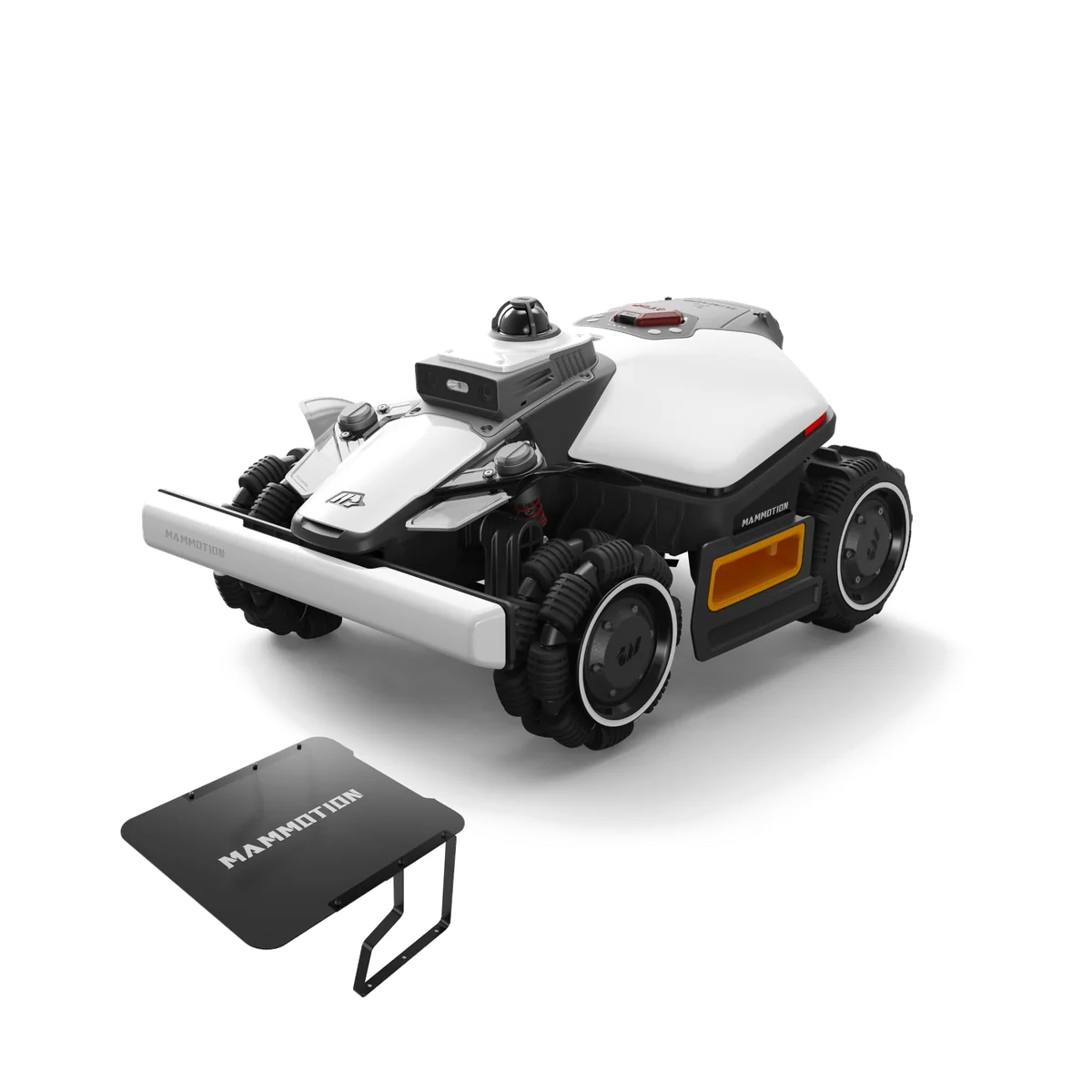
Based on our research, the Mammotion LUBA Mini 2 1500H is our top pick — yards with trees.
Sources (130)
- Amazon listings and customer reviews
- Owner reports across r/RobotVacuums, r/eufyS1Pro, r/eufy and 26 more threads
- Owner and reviewer video, 261 channels
- Walmart listing
- Costco listing
- Facebook — Article — www.facebook.com
- Hedgecombers — Article — hedgecombers.com
- Bestrobovacuums — Article — www.bestrobovacuums.com
- Chewy — Article — www.chewy.com
- eufy — Article — www.eufy.com
- Substack — Article — robovacinsights.substack.com
- eufy — Article — service.eufy.com
- Countryliving — Article — www.countryliving.com
- Rtings — Article — www.rtings.com
- Vacuumwars — Article — vacuumwars.com
- Younghouselove — Article — www.younghouselove.com
- Womanandhome — Article — www.womanandhome.com
- Interlightus — Article — www.interlightus.com
- Coredy — Article — www.coredy.com
- Moderncastle — Article — moderncastle.com
- Thecarpentersdaughter — Article — thecarpentersdaughter.co.uk
- Techradar — Article — www.techradar.com
- Trustedreviews — Article — www.trustedreviews.com
- Lbtechreviews — Article — www.lbtechreviews.com
- Tomsguide — Article — www.tomsguide.com
- Pcmag — Article — www.pcmag.com
- Zdnet — Article — www.zdnet.com
- Trustpilot — Article — uk.trustpilot.com
- Amgardaseeblick — Article — amgardaseeblick.com
- Pistonheads — Article — www.pistonheads.com
- Bestbuy — Article — www.bestbuy.com
- Ycombinator — Article — news.ycombinator.com
- Mammotion — Article — us.mammotion.com
- Trustpilot — Article — www.trustpilot.com
- Pcworld — Article — www.pcworld.com
- Toptenreviews — Article — www.toptenreviews.com
- Trustpilot — Article — au.trustpilot.com
- Mammotion — Article — eu.mammotion.com
- Mammotion — Article — uk.mammotion.com
- Easylawnmowing — Article — www.easylawnmowing.com
- Easylawnmowing — Article — easylawnmowing.co.uk
- Therobotmower — Article — therobotmower.co.uk
- Androidauthority — Article — www.androidauthority.com
- Freshlycharged — Article — freshlycharged.com
- Au — Article — robotlawnmowers.com.au
- Nytimes — Article — www.nytimes.com
- Cnet — Article — www.cnet.com
- Consumerreports — Article — www.consumerreports.org
- Expertreviews — Article — www.expertreviews.co.uk
- Gardenersworld — Article — www.gardenersworld.com
- Smarthomescene — Article — smarthomescene.com
- HOOKII — Article — hookii.com
- Mammotion — Article — ca.mammotion.com
- Tractorsupply — Article — www.tractorsupply.com
- Substack — Article — jjtechish.substack.com
- Basic Tutorials — Article — basic-tutorials.com
- Smarthomeassistent — Article — www.smarthomeassistent.de
- Mein Gartenexperte — Article — www.mein-gartenexperte.de
- Techreviewer — Article — www.techreviewer.de
- Mowingmagic — Article — mowingmagic.com
- Fr — Article — maniaques.fr
- Basic Tutorials — Article — basic-tutorials.de
- Frandroid — Article — www.frandroid.com
- Appgefahren — Article — www.appgefahren.de
- Tech — Article — us.mova.tech
- Slashgear — Article — www.slashgear.com
- Newatlas — Article — newatlas.com
- Tech — Article — au.mova.tech
- at — Article — www.galaxus.at
- Appleinsider — Article — appleinsider.com
- Notebookcheck — Article — www.notebookcheck.net
- Maison Et Domotique — Article — www.maison-et-domotique.com
- Au — Article — www.gadgetguy.com.au
- MOVA Tech — Article — us.forum.mova-tech.com
- Au — Article — www.techguide.com.au
- Wellbots — Article — www.wellbots.com
- Novabot — Article — novabot.com
- Techiwant — Article — techiwant.com
- Samsclub — Article — www.samsclub.com
- Heyupnow — Article — community.heyupnow.com
- T3 — Article — www.t3.com
- Tech — Article — uk.mova.tech
- Robocleaners — Article — www.robocleaners.com
- Mowscout — Article — mowscout.com
- Yarbo — Article — www.yarbo.com
- Wired — Article — www.wired.com
- Shopsunseekertech — Article — shopsunseekertech.com
- Warehouserunner — Article — app.warehouserunner.com
- Electricrevolutionreviews — Article — electricrevolutionreviews.com
- Sunseekertech — Article — sunseekertech.com
- Sunseekerelite — Article — sunseekerelite.com
- Bobvila — Article — www.bobvila.com
- Segway — Article — navimow.segway.com
- Navimow — Article — navimow.com
- Au — Article — segway.com.au
- Lifehacker — Article — lifehacker.com
- Theverge — Article — www.theverge.com
- Au — Article — roboticmower.com.au
- Lowes — Article — www.lowes.com
- Techadvisor — Article — www.techadvisor.com
- Homedepot — Article — www.homedepot.com
- Tv — Article — www.stuff.tv
- Cnygreenteam — Article — cnygreenteam.com
- Outdoor Usa — Article — outdoor-usa.com
- Protoolreviews — Article — www.protoolreviews.com
- Homebuilding — Article — www.homebuilding.co.uk
- Gizmodo — Article — gizmodo.com
- Suncolawns — Article — shop.suncolawns.com
- Smartyardnw — Article — smartyardnw.com
- the Ambient — Article — www.the-ambient.com
- Outdoorica — Article — outdoorica.com
- Robomowlab — Article — robomowlab.com
- Eftm — Article — eftm.com
- ECOVACS — Article — www.ecovacs.com
- Au — Article — www.harveynorman.com.au
- Thespruce — Article — www.thespruce.com
- Pcmag — Article — uk.pcmag.com
- 9to5google — Article — 9to5google.com
- Mensjournal — Article — www.mensjournal.com
- Lawncraftsupply — Article — lawncraftsupply.com
- Smarthomecompared — Article — smarthomecompared.com
- Smarthomeexplorer — Article — www.smarthomeexplorer.com
- Hunker — Article — www.hunker.com
- Smart Dots — Article — www.smart-dots.com
- Trustpilot — Article — ie.trustpilot.com
- Homeandgardenselect — Article — homeandgardenselect.com
- Eu — Article — www.letemsvetemapplem.eu
- Dreametech — Article — yardcare.dreametech.com
- Ign — Article — www.ign.com
- Glroboticsusa — Article — www.glroboticsusa.com