The MOVA LiDAX Ultra 1000 wins this comparison because a map is more useful than a guess.
Buy the MOVA LiDAX Ultra 1000 for a firm, forgiving lawn, while the RoboUP Raccoon 2 SE makes sense only when a smaller lawn is already enclosed by unmistakable physical edges.
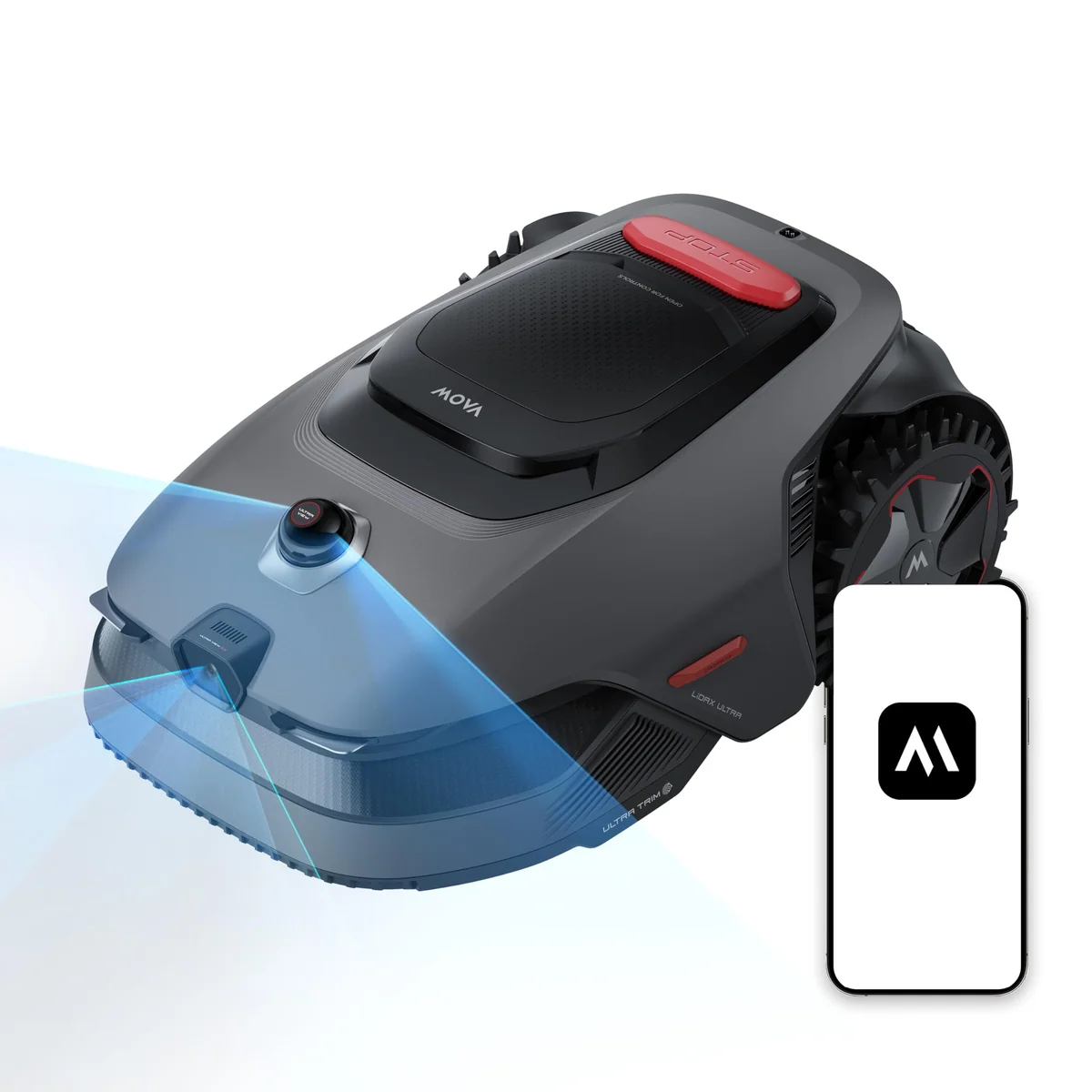
MOVA LiDAX Ultra 1000
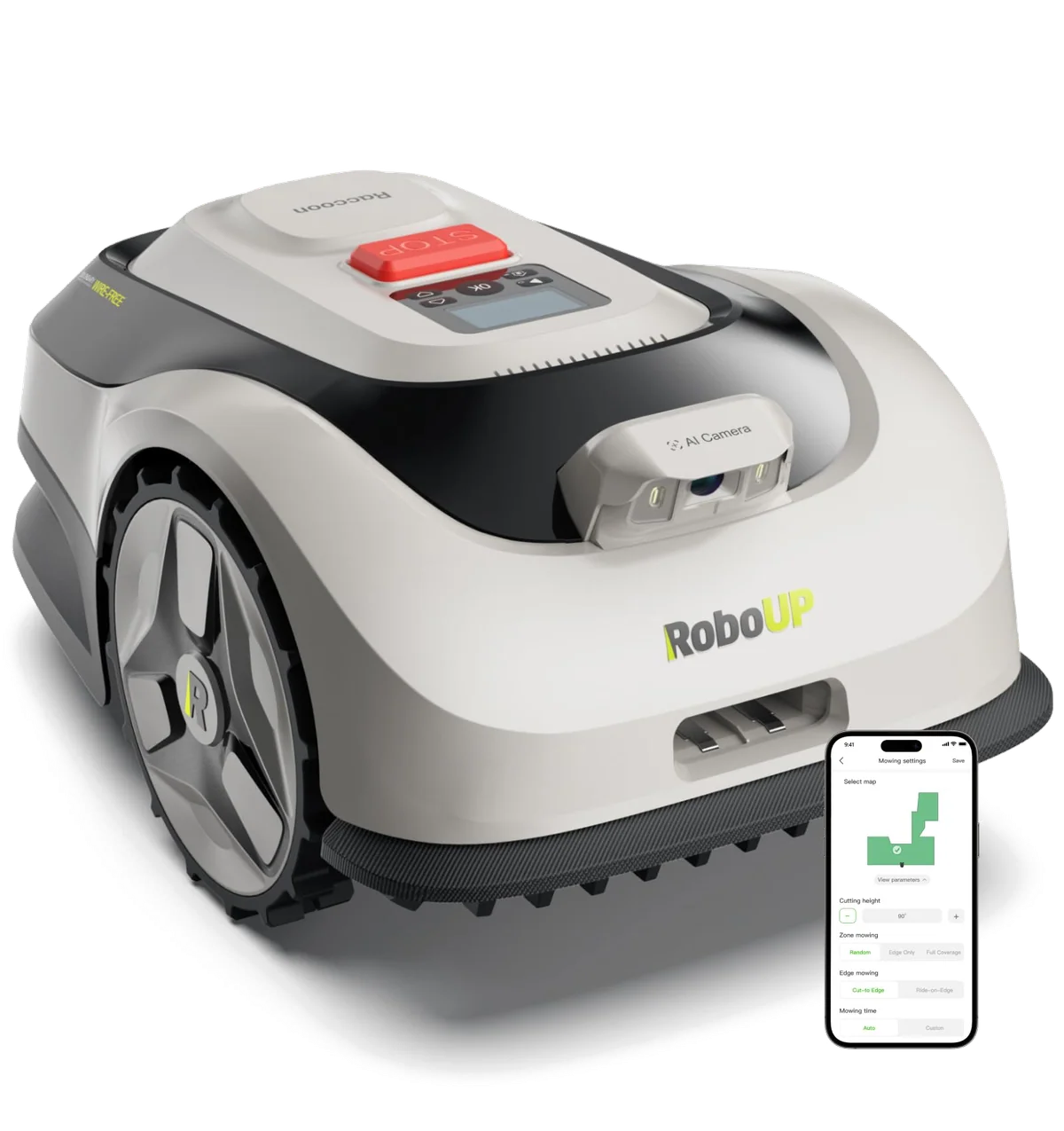
RoboUP Raccoon 2 SE
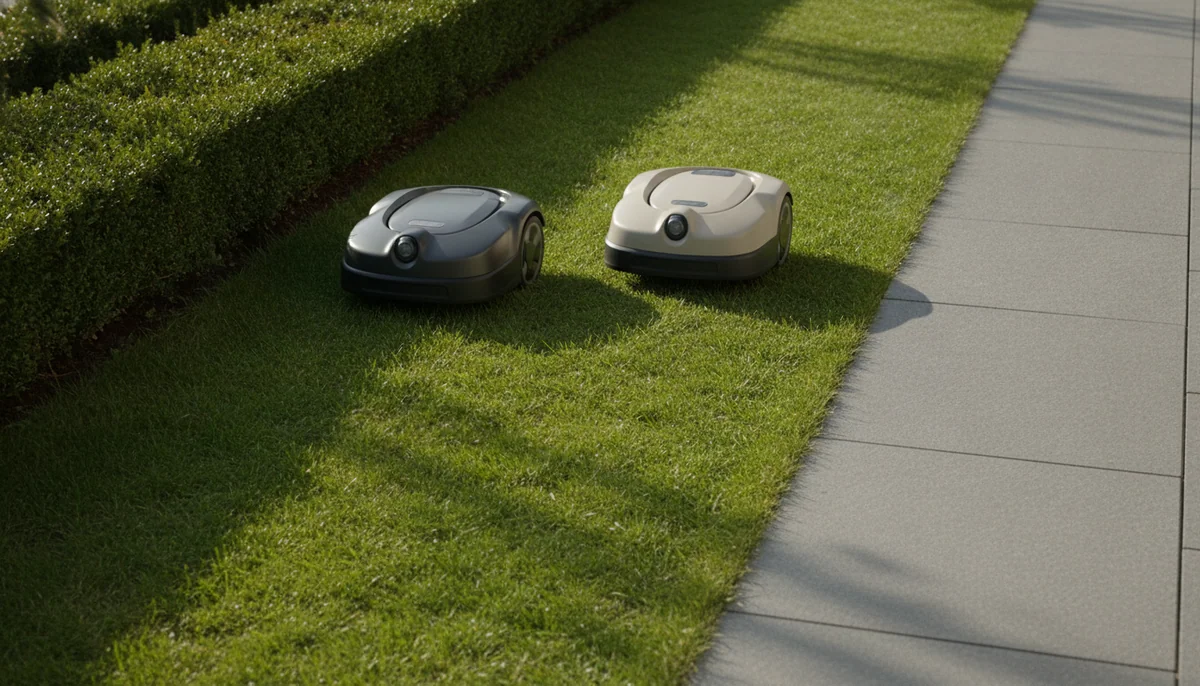
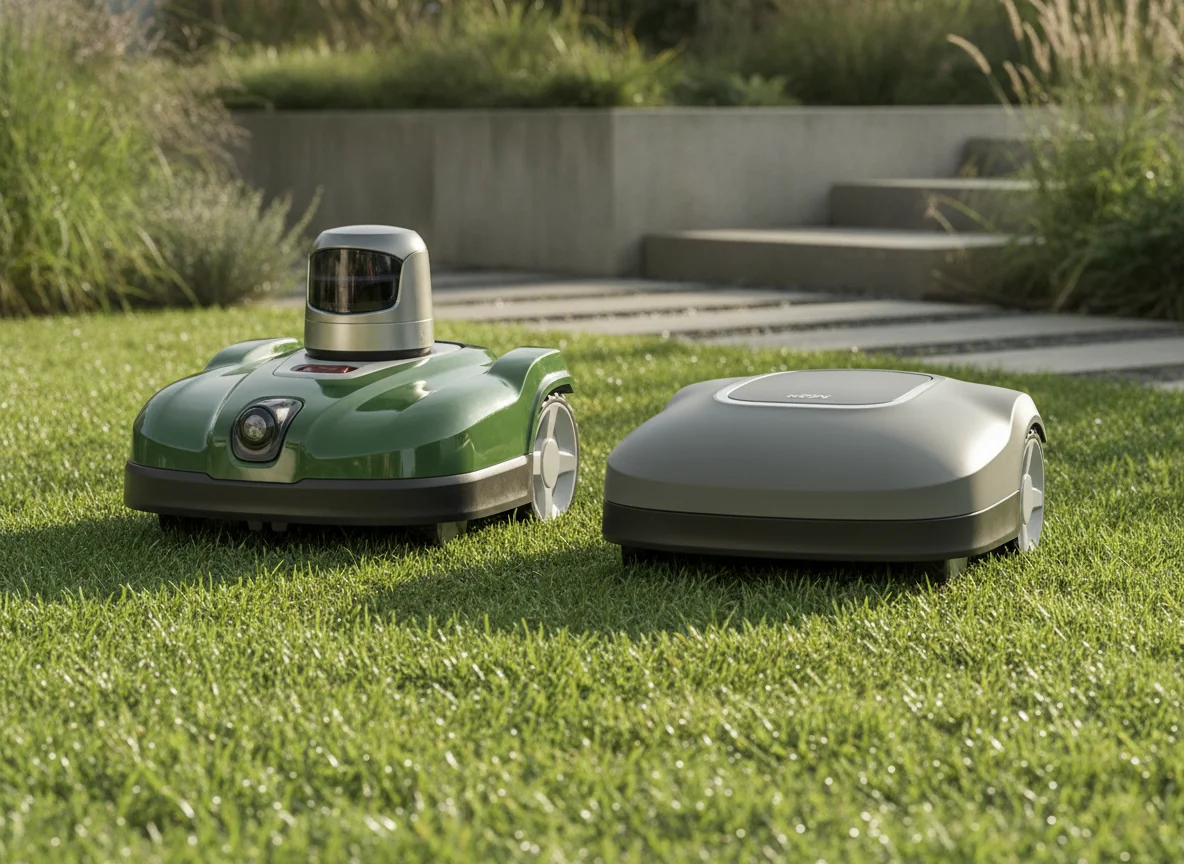
The difference appears at the edge of the lawn. The MOVA reaches a virtual boundary because LiDAR, vision and its saved map tell it where to stop. The Raccoon looks at the ground and decides whether the grass appears to continue. Beside a wall or strip of paving, that can be enough. Beside a neighbor’s lawn, it is not.
That makes the MOVA the clear winner for most buyers choosing between these two wire-free mowers. It cuts in orderly lanes, supports detailed zones and no-go areas, works beneath trees without an RTK antenna and maintains grass across a taller 1.2–3.9-inch range. The Raccoon’s easier controls and nearly three-hour light-load endurance cannot rescue random navigation from its basic inefficiency.
The MOVA is not the safe answer for every yard. Its passive front casters can catch on runners, sand, soft soil, ledges and abrupt transitions, leaving the rear wheels to dig while the mower waits for help. Mapping a difficult lawn can consume hours, and its narrow deck may need several mowing and charging cycles to finish a large or complicated job. If the ground itself is hostile, neither mower deserves the assignment.
| Decision point | MOVA LiDAX Ultra 1000 | RoboUP Raccoon 2 SE |
|---|---|---|
| Navigation | LiDAR, AI vision and a saved virtual map | Camera vision, vSLAM and visible lawn edges |
| Normal cutting route | Systematic U-shaped lanes | Random crossings and repeated ground |
| Marketed lawn size | Up to 0.25 acre | Up to 0.15 acre |
| Cutting height | 1.2–3.9 inches | 1.18–3.15 inches |
| Best boundary | A carefully mapped edge with safe setbacks | A fence, wall, raised border or clear paving |
| Worst habit | Becoming stranded on troublesome ground | Wandering beyond ambiguous grass boundaries |
| Trimming left behind | Usually one or two inches beside walls, with more at risky edges | About four inches beside raised obstacles |
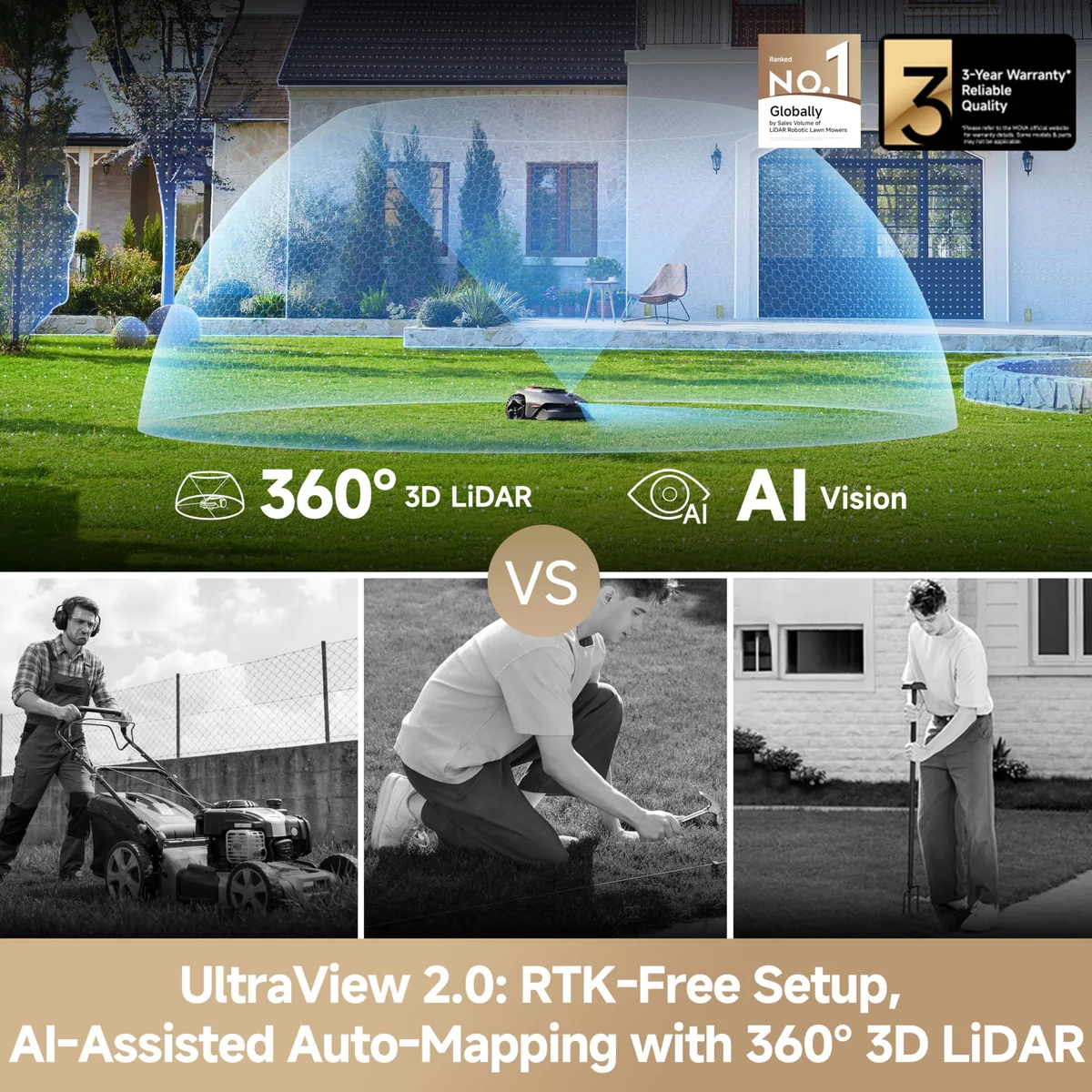
MOVA LiDAX Ultra 1000
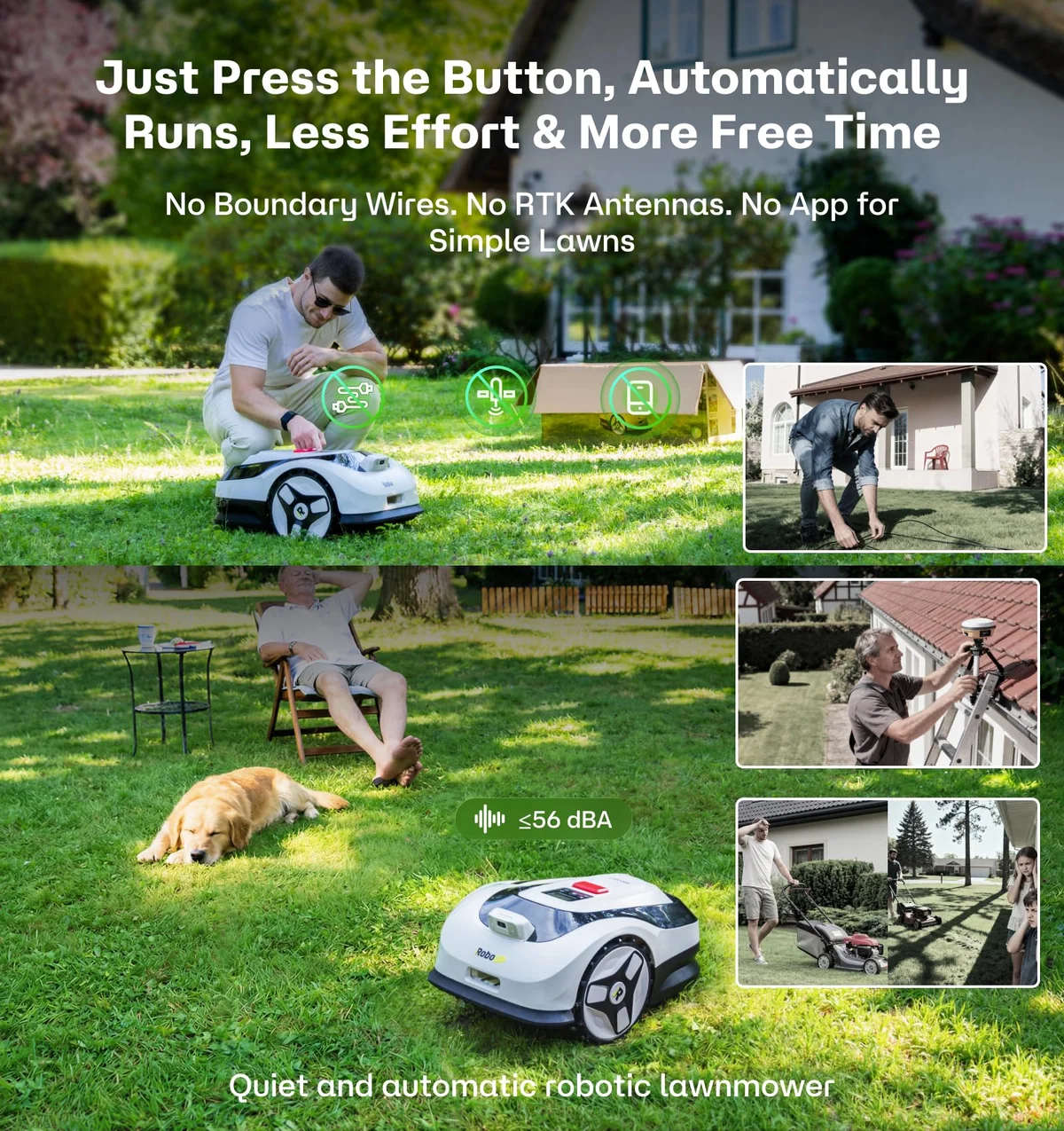
RoboUP Raccoon 2 SE
At a Glance
| Feature | Editor's Pick MOVA LiDAX Ultra 1000 | RoboUP Raccoon 2 SE |
|---|---|---|
| Price Range | $500–$1,000 | Under $200 |
| Cutting height | 1.2–3.9 inches | 1.18–3.15 inches |
| Recommended lawn size | 0.25 acre | — |
| Cutting width | 7.9 inches | 7.9 inches |
| Check Price on Amazon | Check Price on Amazon |
One mower understands a plan; the other understands a lawn-shaped room
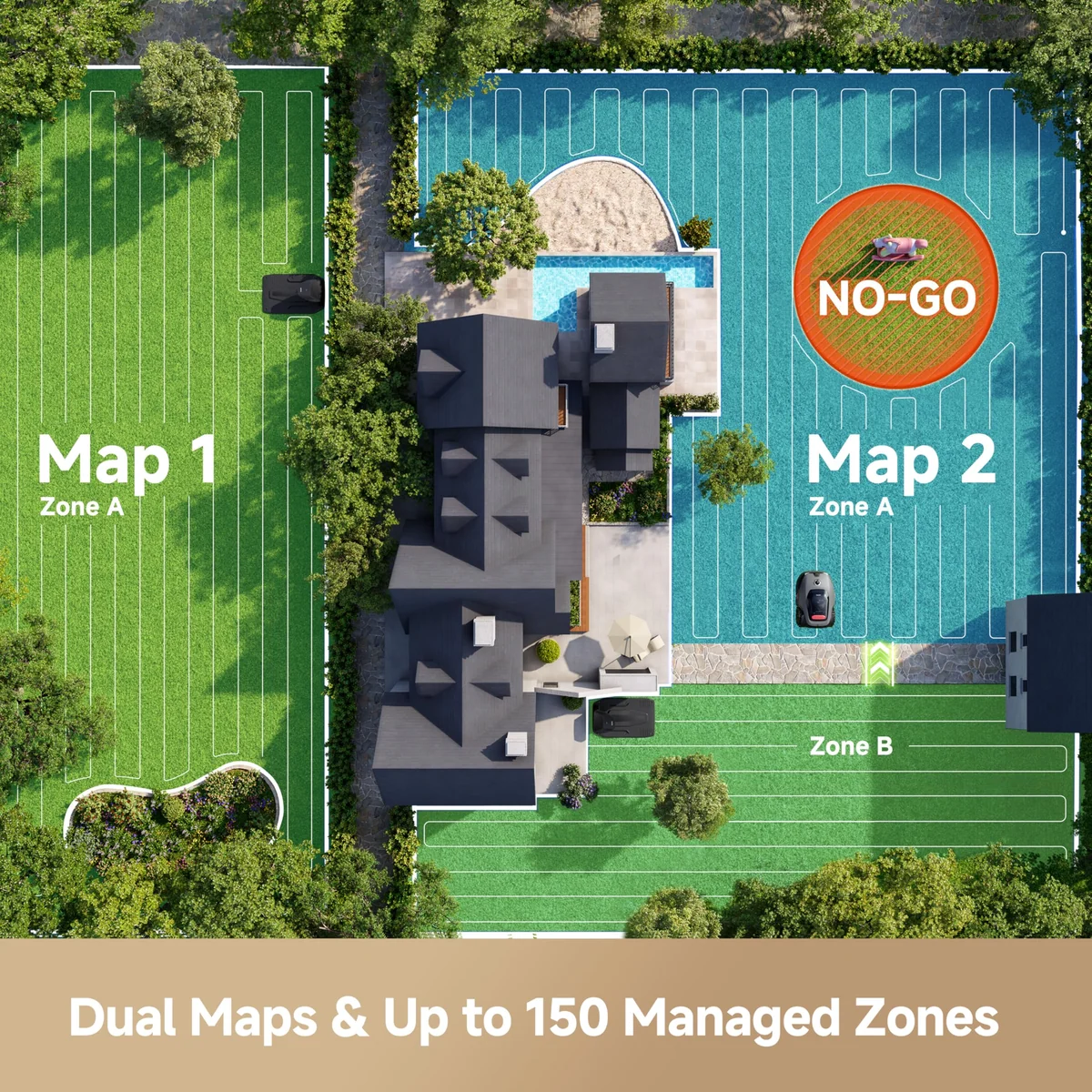
The MOVA’s LiDAR is the reason to tolerate its slower pace and demanding first map. Trees, buildings and covered areas can make satellite-based positioning awkward, but physical surroundings remain visible to the sensor. Once conservative boundaries and no-go zones are in place, the mower follows structured lanes instead of waiting for repeated random passes to produce eventual coverage. The result is more predictable, even if finishing near the quarter-acre mapping limit can occupy much of a day.
The Raccoon removes more setup friction. Its onboard display and five buttons can handle basic work without a phone, and an enclosed rectangle can be mapped with little ceremony. That simplicity is genuine, but the garden must supply the missing infrastructure. Fences, walls and obvious non-grass margins are effectively its boundary system. A saved outline does not become an invisible barrier when grass continues across an open property line.
Route efficiency widens the gap. The Raccoon needed about 8.5 hours of actual mowing to cover a 250-square-meter area reasonably comprehensively because it revisited cut grass while untouched patches waited. The MOVA also takes its time, particularly after charging stops, but its parallel passes make progress legible. Looking through the kitchen window, one appears to be executing a job while the other appears to be hoping probability finishes it.
The MOVA cuts closer, but its clever edge disc can be too clever
Both machines use narrow 7.9-inch floating discs with three swinging blades, so neither is meant to reclaim an overgrown lawn. They work best when frequent light cuts prevent long clippings from accumulating. The MOVA’s broader height range gives it the advantage on taller-maintained grass, while the Raccoon tops out at 3.15 inches.
UltraTrim moves the MOVA’s cutting disc outward and can reduce the remaining strip beside flush paving or a reachable edge. It does not eliminate trimming beside walls, corners or drop-offs, and its fixed low pass of about 1.2 inches can scalp a lawn maintained much taller. Turning UltraTrim off is better than keeping a pale perimeter merely because the feature has an impressive name.
The Raccoon leaves a more substantial strip, roughly four inches where its body cannot cross a raised boundary. Edge mode adds a perimeter pass but cannot relocate the centrally mounted disc. Anyone expecting either robot to retire the string trimmer should first read how robot mower edge cutting works in real yards.
Neither camera excuses an uncleared lawn
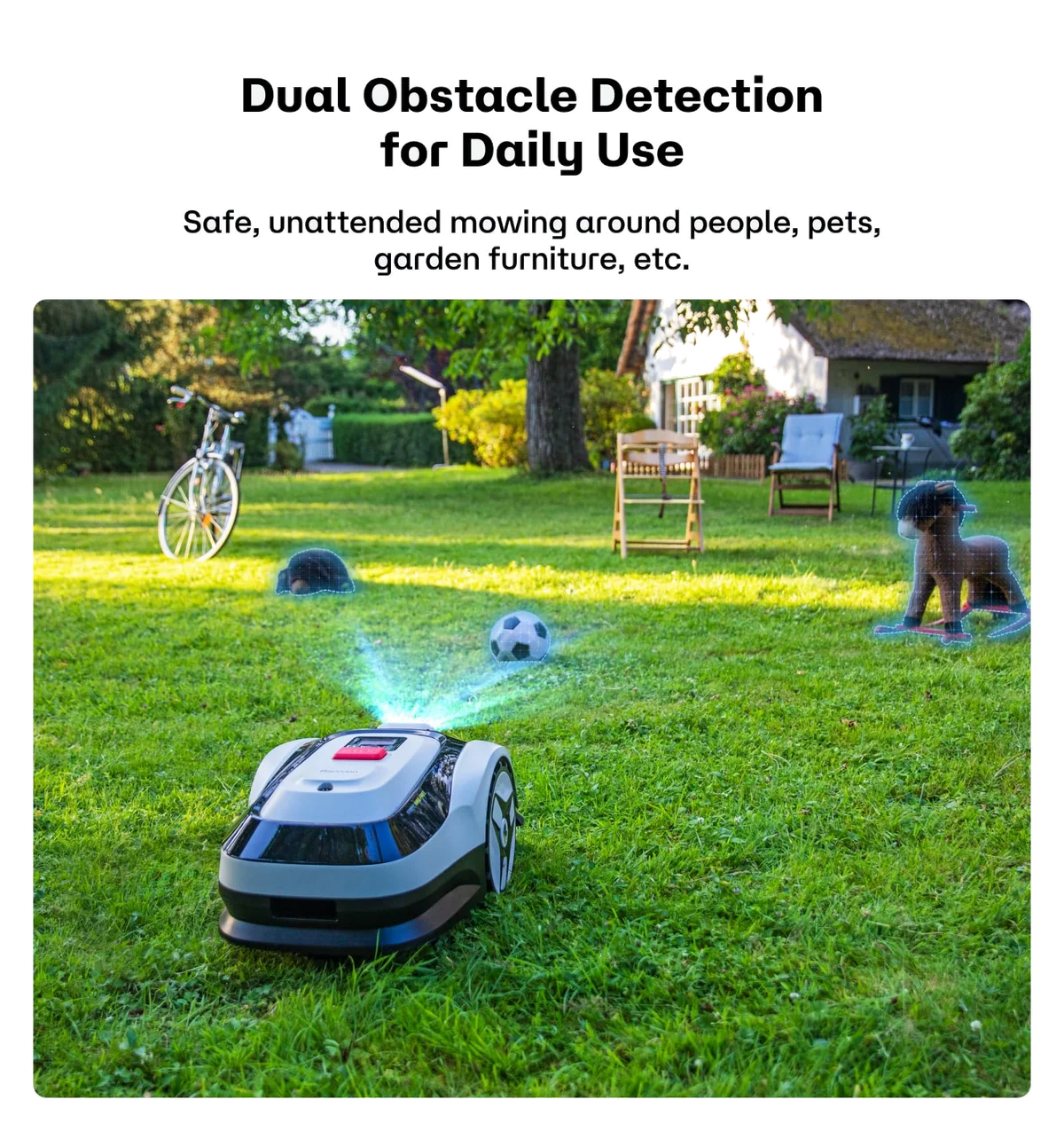
The MOVA usually recognizes people, furniture and larger objects, yet hoses, sticks, tennis balls, small toys and pet waste remain poor candidates for an unattended encounter. The Raccoon reliably avoided trees, swing frames and a handball-sized ball, but it ran over a tennis ball and treated a hose inconsistently. Its camera also reached a wildlife-sized dummy too late on some approaches, with the bumper making contact before avoidance began.
Daylight scheduling and a quick sweep of the grass remain part of ownership. “AI obstacle avoidance” is a backup, not permission to leave toys scattered or send either machine through a lawn occupied by children and animals. The broader robot mower safety guide explains the limits that product-page obstacle counts tend to hide.
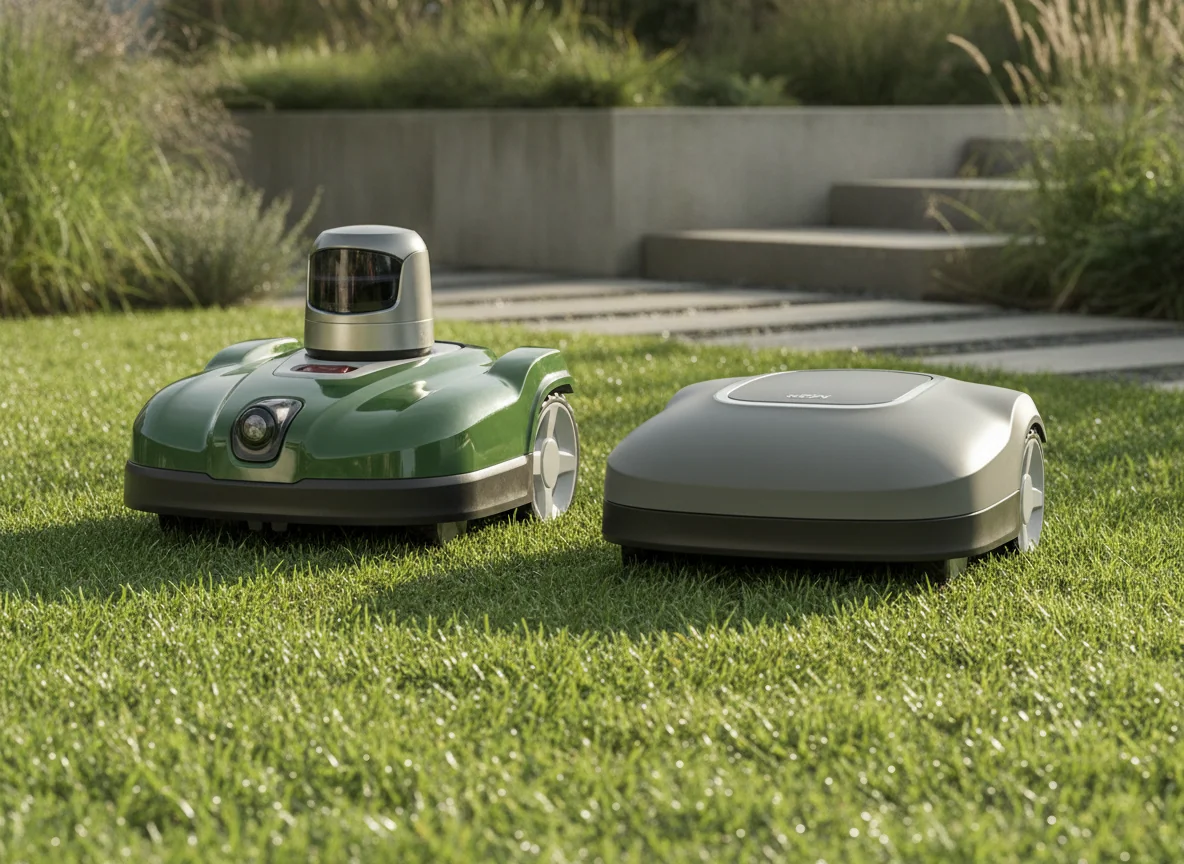
The MOVA LiDAX Ultra 1000 is the better mower for a lawn that can support its chassis.
Its LiDAR mapping, systematic lanes, dependable virtual boundaries and taller maximum cut make it the decisive winner on firm turf beneath trees or beside buildings.
Soft ground, grass runners, ledges and awkward transitions can strand its front casters, while a complex map near 0.25 acre may require several charges and hours of supervision.
The RoboUP Raccoon 2 SE belongs on one small lawn that already has visible walls.
Its quiet operation, useful onboard controls and wire-free setup offer an approachable way to maintain a compact rectangle enclosed by fences, paving or raised borders.
Random coverage wastes hours, open grass boundaries are unreliable, small obstacles remain vulnerable and raised edges can leave roughly four inches for manual trimming.
MOVA LiDAX Ultra 1000
RoboUP Raccoon 2 SE
Choose by the failure your yard will expose
Choose the MOVA when the sky is difficult but the ground is kind
A shaded quarter-acre garden with firm established turf is the LiDAX Ultra 1000’s strongest case. It does not need clear satellite reception, it can divide a complicated layout into zones, and it can store two maps. Leave capacity margin rather than treating 0.25 acre as a promise of one quick cycle, and expect to steer the first perimeter carefully.
Choose the Raccoon only when containment is already visible
A fenced city garden with a simple shape can turn the Raccoon’s limitations into minor inconveniences. Its random route matters less when the area is genuinely small, and its physical controls suit someone who dislikes managing every appliance through a phone. Open sides, disconnected lawns, bare margins and leaf-covered edges remove the very cues it needs.
Walk away from both when rescue access is uncertain
A remote property is a poor home for either mower. The MOVA may stop with a caster trapped in soft ground, while the Raccoon may leave its mapped area or become confused in a narrow dead end. Quiet operation only makes an unattended failure quieter. Our guide to mowers for steep and uneven ground is a better starting point for roots, ruts, loose slopes and abrupt elevation changes.
Move up when the lawn should adapt less than the machine
The Segway Navimow i215 LiDAR is the stronger alternative when automatic mapping, faster systematic coverage and tolerance of rooty ground matter more than a tall maximum cut or especially close edge work. It still leaves more trimming beside raised boundaries, but it asks less landscaping to make autonomy believable.
The MOVA wins because its weaknesses are about terrain and patience, both of which can be judged before purchase; the Raccoon asks the buyer to trust visual containment and random coverage, which are precisely the parts a wire-free mower should solve.
Frequently Asked Questions
Which mower is better beneath trees or beside buildings?
The MOVA is better because LiDAR maps physical surroundings without requiring an RTK antenna, although branches, debris and difficult ground can still cause trouble.
Will either mower stay inside an open lawn without a perimeter wire?
The MOVA can follow mapped virtual boundaries with suitable safety setbacks, while the Raccoon should not be trusted where reachable grass continues beyond the intended area.
Which mower finishes a lawn more predictably?
The MOVA’s systematic U-shaped lanes provide more predictable coverage than the Raccoon’s random whole-lawn route.
Which mower is easier without a smartphone?
The Raccoon is easier for basic app-free operation because its onboard display and controls can map and mow a simple enclosed lawn.
Can either mower replace edging and string trimming?
No, the MOVA still leaves grass beside walls and risky boundaries, while the Raccoon can leave roughly four inches beside raised edges.
Which mower is better for slopes and rough terrain?
Neither is a convincing rough-terrain choice because the MOVA’s front casters can strand it on soft or abrupt transitions and the Raccoon’s navigation depends on clear visual boundaries.
Ready to Choose?
Sources (35)
- Amazon listings and customer reviews — Mova Lidax Ultra 1000 and Roboup Raccoon 2 Se
- Owner reports across r/homeautomation threads
- Owner and reviewer video, 46 channels
- Walmart listing
- Tech — Article — us.mova.tech
- Freshlycharged — Article — freshlycharged.com
- Facebook — Article — www.facebook.com
- Slashgear — Article — www.slashgear.com
- Newatlas — Article — newatlas.com
- Tech — Article — au.mova.tech
- at — Article — www.galaxus.at
- Basic Tutorials — Article — basic-tutorials.com
- Appleinsider — Article — appleinsider.com
- Notebookcheck — Article — www.notebookcheck.net
- Maison Et Domotique — Article — www.maison-et-domotique.com
- Au — Article — www.gadgetguy.com.au
- MOVA Tech — Article — us.forum.mova-tech.com
- Au — Article — www.techguide.com.au
- Wellbots — Article — www.wellbots.com
- Nytimes — Article — www.nytimes.com
- Novabot — Article — novabot.com
- Techiwant — Article — techiwant.com
- Samsclub — Article — www.samsclub.com
- Heyupnow — Article — community.heyupnow.com
- T3 — Article — www.t3.com
- Tech — Article — uk.mova.tech
- Robocleaners — Article — www.robocleaners.com
- Mowscout — Article — mowscout.com
- Cnet — Article — www.cnet.com
- Yarbo — Article — www.yarbo.com
- Consumerreports — Article — www.consumerreports.org
- Easylawnmowing — Article — easylawnmowing.co.uk
- Pcmag — Article — www.pcmag.com
- Wired — Article — www.wired.com
- Gardenersworld — Article — www.gardenersworld.com