The Husqvarna 440 iQ is the only commercial robot mower here worth betting a lawn on.
The word “commercial” is doing work these machines have not yet earned. The four products here promise anything from 1.5 to 6.2 acres, yet acreage alone says almost nothing about whether a mower belongs in a landscaping business. Commercial equipment earns its keep through uptime, recoverable failures, available parts and a service route that does not leave grass growing while an app ticket waits for an answer.
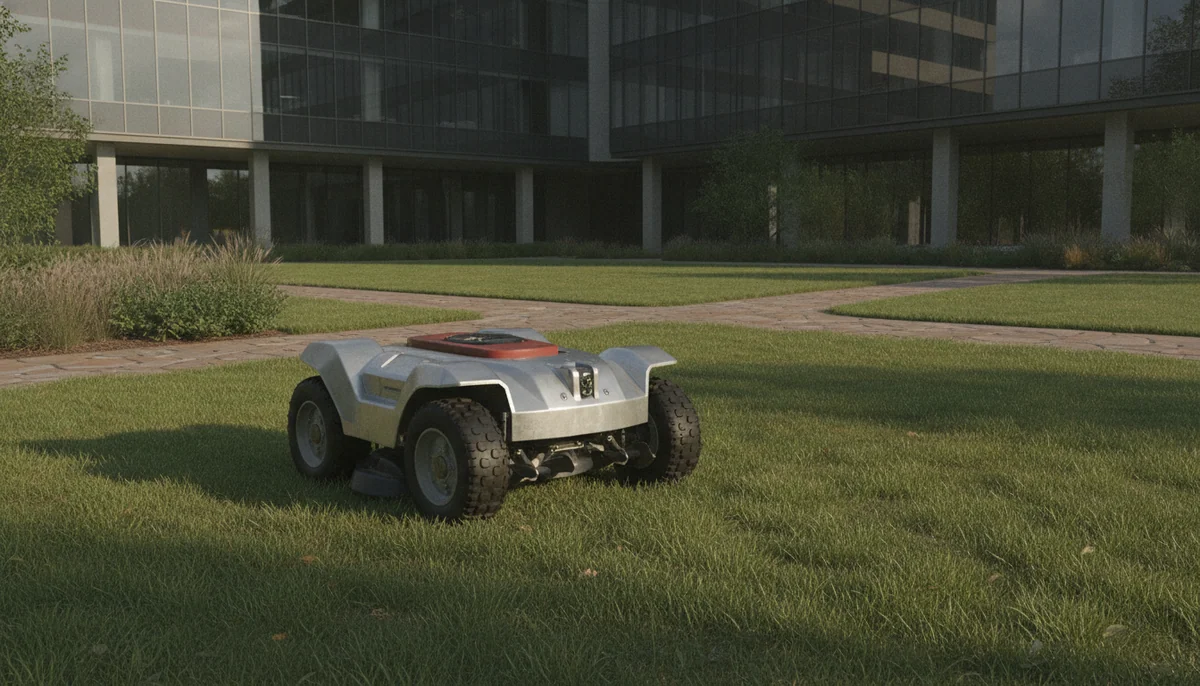
The Husqvarna 440 iQ comes closest. Its two-acre capacity is smaller than Yarbo’s headline figure, but the buying proposition is much more complete: a four-year mower warranty, separate three-year battery coverage, a US support hotline, supplied replacement blades, GPS tracking and a mower-first chassis rather than a modular yard robot. That does not make it immune to satellite shadows, mapping frustration or docking errors. It does make the risks easier to identify before the machine reaches the lawn.
This ranking is therefore for an estate, campus, rental property or single commercial site where autonomous mowing can remove routine seat time. It is not an endorsement of sending one robot between customer addresses or retiring the zero-turn. If missing a week would become an operational crisis, keep the conventional mower.
At a Glance: All commercial robotic lawn mowers Compared
| Feature | Editor's Pick Husqvarna Automower 440iQ Robotic Mower | BESTMOW Robot Lawn Mower — | Yarbo lawn mower | Yarbo lawn mower Pro module |
|---|---|---|---|---|
| Price Range | $3,000+ | Under $200 | $3,000+ | $1,500–$3,000 |
| Cutting height | — | — | 1.2 to 4 inches | 0.8–4.0 inches |
| Check Price on Amazon | Check Price on Amazon | Check Price on Amazon | Check Price on Amazon |
Four machines, only one reasonable default
1. Husqvarna Automower 440iQ Robotic Mower — The Husqvarna 440 iQ is the least risky route to two autonomous acres.
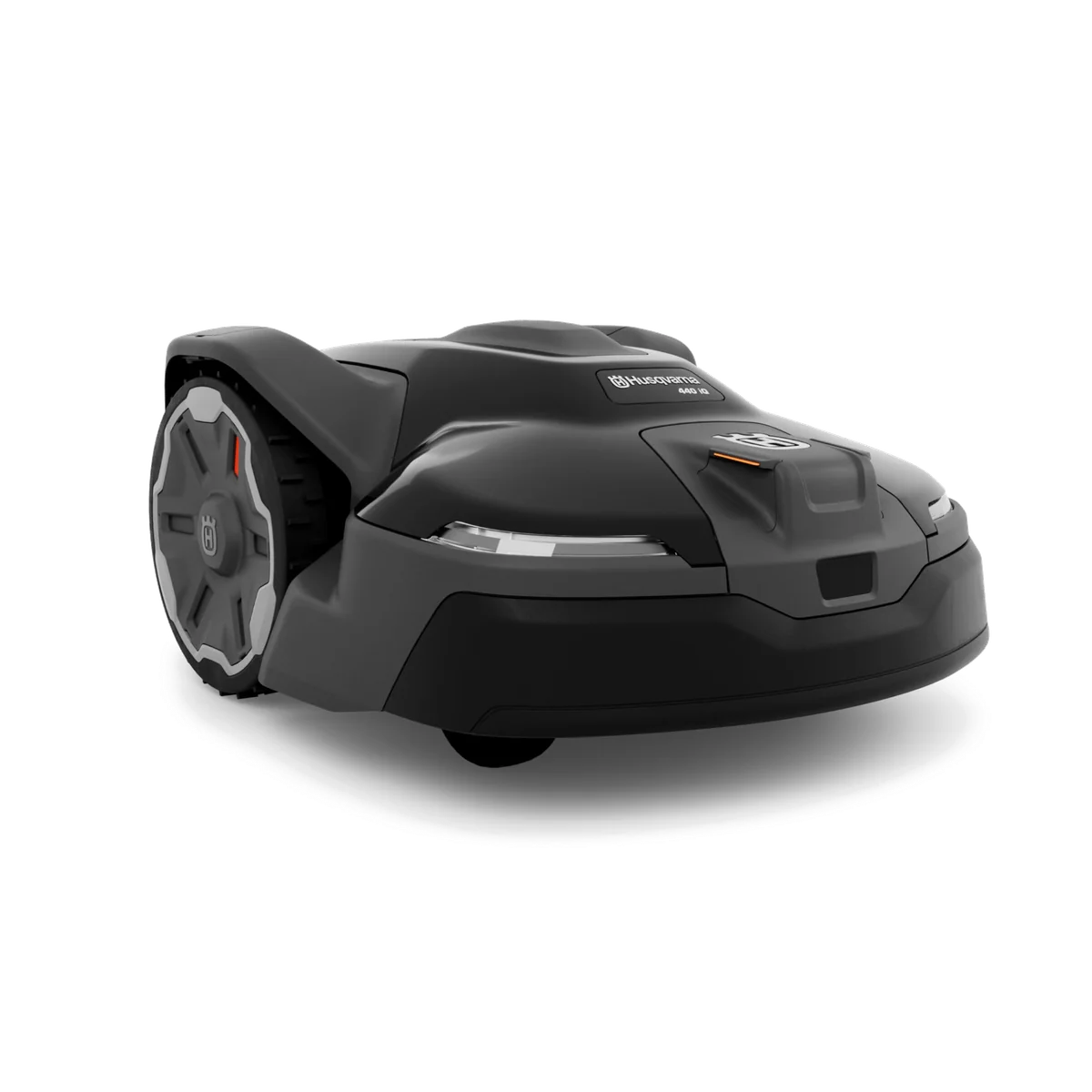
Its documented warranty, support line, wide cutting-height range and established mower-first design make it the strongest overall choice for a large open property.
Satellite dead zones, exacting transport-path setup and weak failure notifications can turn an awkward site into an expensive supervision job.
The 440 iQ is rated for up to two acres, a 45% grade and a 1–4-inch cutting-height range. Husqvarna’s EPOS positioning removes the perimeter wire, onboard radar handles obstacle detection, and the app supports virtual work areas, stay-out zones and systematic or random patterns. Larger wheels and a durable bumper also give it a more credible path across driveways and surface transitions than a delicate garden robot.
The ownership package matters more than one extra acre on a specification sheet. Husqvarna states a four-year warranty for the mower in the United States and Canada, three years for the battery, a dedicated US support number and a year’s supply of blades. An anti-theft alarm and app-based GPS location tracking are also defined features rather than vague “anti-theft technology.” None guarantees quick repair, but each closes a question that the BESTMOW record leaves open.
The warning is geographical. EPOS still needs a usable satellite environment, and the iQ-family ownership record runs from easy four-zone mapping and clean daily patterns to shifting map points, signal loss beside houses, repeated docking failures and schedules that stop without a useful notification. A broad lawn can suit it beautifully while two narrow side passages make the same purchase indefensible. Map the dock, every transport corridor and every satellite-shadowed edge before treating two acres as usable capacity.
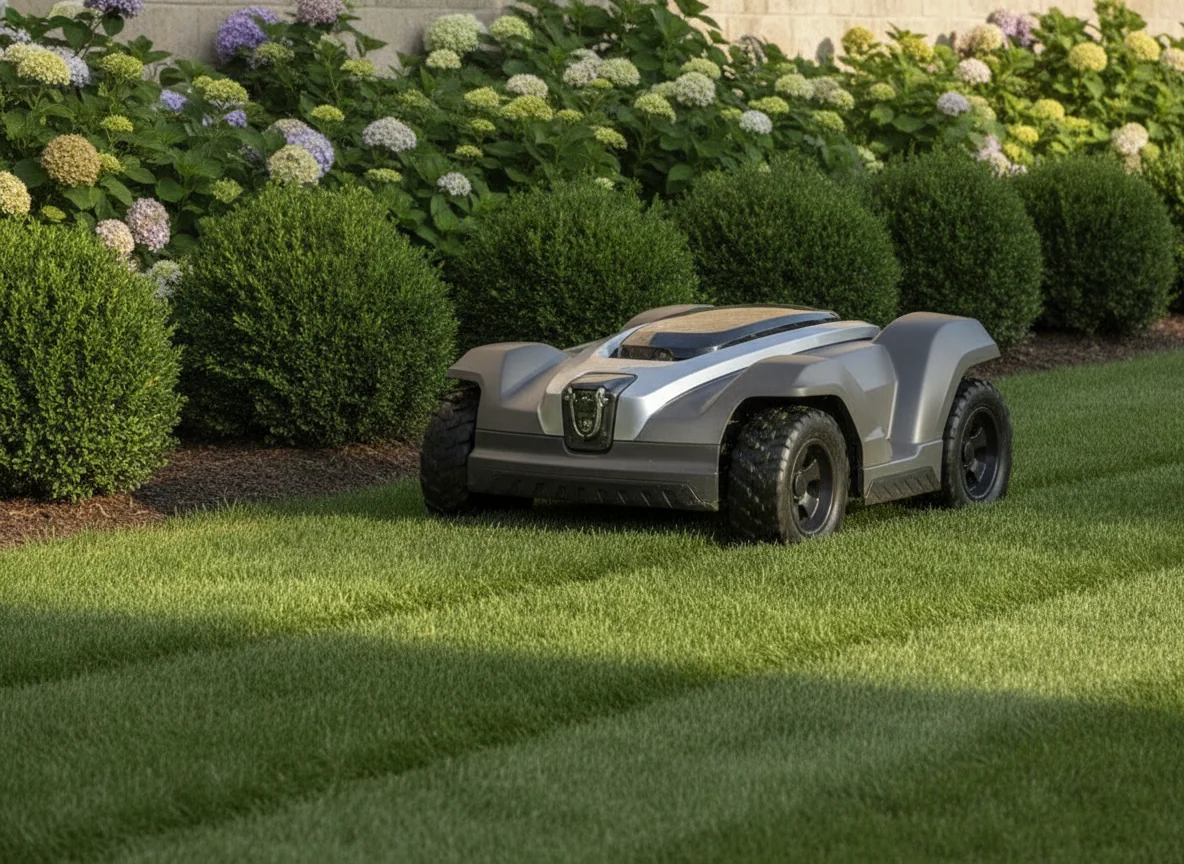
2. BESTMOW Robot Lawn Mower — — The BESTMOW T100 is a specification sheet waiting for an ownership record.
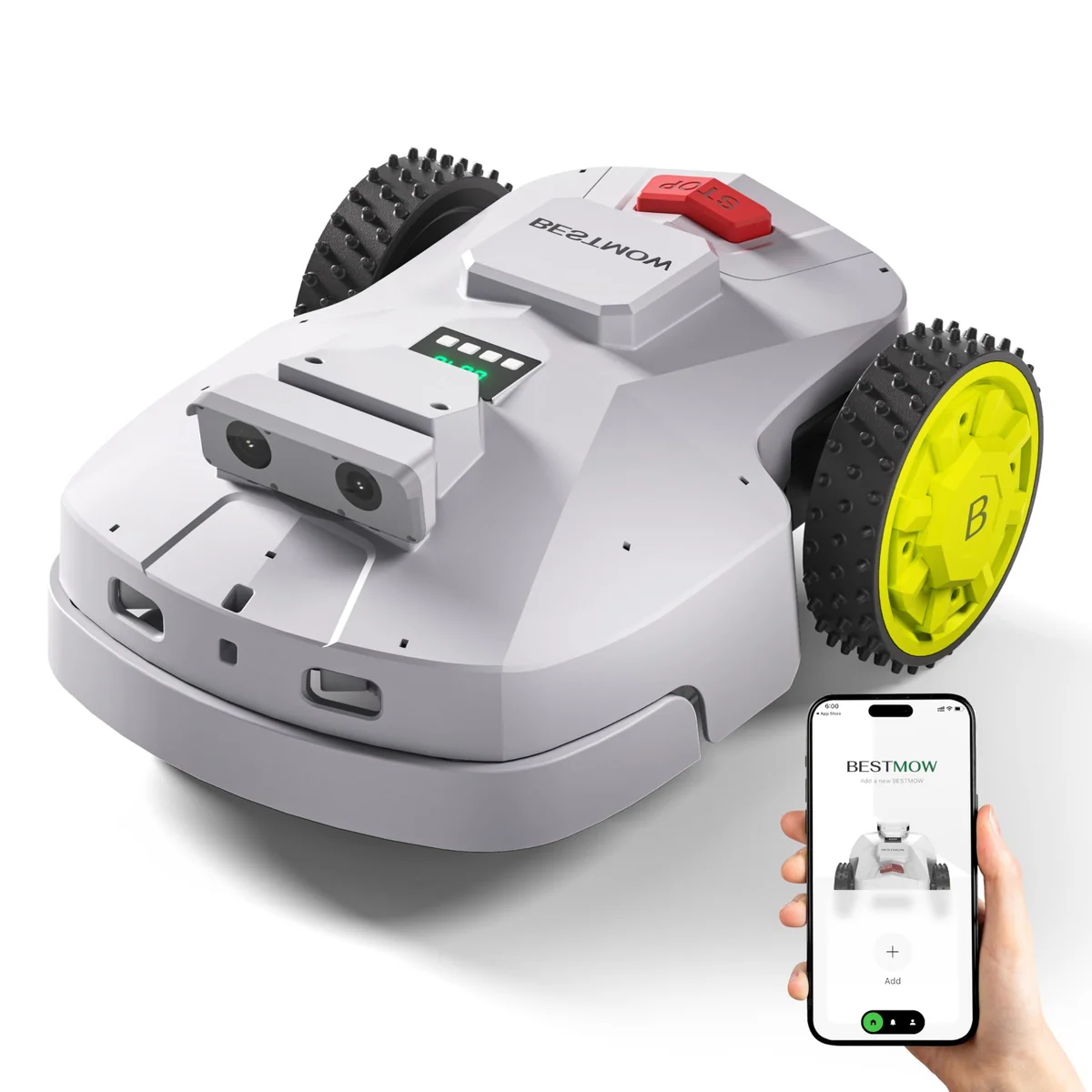
Its 1.5-acre capacity, included RTK station, virtual boundaries and four-camera navigation make sense only for a simple open property after compatibility and support are confirmed in writing.
Conflicting slope claims, strict network requirements and missing warranty, battery, blade and service details ask the buyer to absorb too much uncertainty.
The T100 describes an appealing large-lawn routine. It can maintain up to 1.5 acres through repeated sessions, cover more than 4,000 square feet on a charge, return to its station and resume, and store as many as ten zones or maps. Its listed 4-inch maximum cut is also useful where ornamental-lawn heights are too short. None of that means it can reclaim an overgrown acre or service ten disconnected areas without human help.
The property has to cooperate. BESTMOW says at least half of the mowing area should be open and unobstructed by trees or buildings, while the physical RTK station and charging station each need power within their roughly 33-foot cables. The app requires a 2.4 GHz network, the router must support repeater functionality, and a guest network may block the charging station’s connection. PointOne Virtual RTK is only a possible alternative in supported areas, with no settled terms in the supplied record.
More troublingly, Amazon’s listing gives both a 25–30% slope range and a separate 45% claim. Use the lower figure. Cutting width, drive design, battery capacity, charging time, minimum cutting height, weather rating and measured noise are not disclosed. The captured 3.4-star rating does not reveal which component is responsible, but it certainly does not fill those blanks. A commercial buyer should not become the warranty department for an unproven mower.
3. Yarbo lawn mower — The standard Yarbo is an acreage machine that cannot be trusted as the only mower.
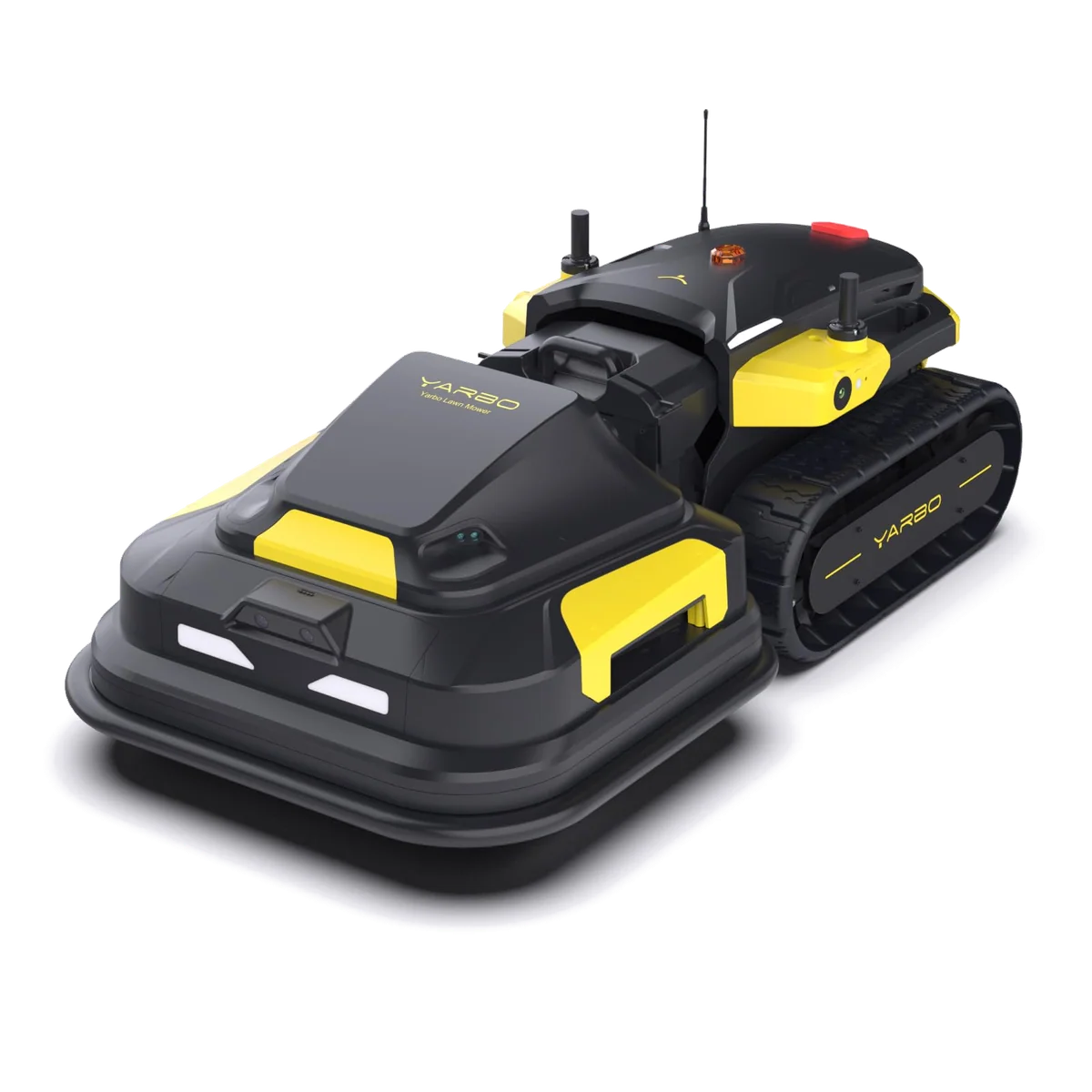
Its 20-inch deck, tracked traction and 6.2-acre maintenance ceiling suit a technically confident owner who can exploit the snow and leaf modules as well as the mower.
Hardware failures, setup burden, standard-deck clogging and unresolved remote-access weaknesses make backup equipment mandatory.
Yarbo is the only complete machine here built around a genuinely different scale. The approximately 200-pound tracked Core pulls a 20-inch standard mowing deck, claims slopes up to a 70% grade and can keep working across repeated 120-minute runs and charging cycles. On open grass, it can lay long parallel stripes and remove hours of ride-on time. Sand, shallow mud, root bumps and uneven ground are precisely where its tracks justify their weight.
That weight also marks turns, wears repeated routes and makes recovery a serious job. The standard M1 deck uses razor discs that suit frequent cuts in short, dry grass; missed schedules, wet growth, sticks and pinecones expose its limits quickly. A 6.2-acre ceiling leaves little recovery margin when rain or a jam takes the mower out of circulation, so the capacity claim hides a calendar as much as it describes a property.
The ownership record is the disqualifier. Core, battery, track, charging, mower-module and Data Center failures have all interrupted mowing, while diagnosis and freight can stretch beyond the lawn’s tolerance. A controlled security investigation also documented remote driving and camera access, exposed location and credential data, and commands capable of reversing a stopped state. The supplied evidence does not establish complete, version-specific remediation. Until Yarbo does, a large connected cutting machine should not patrol an unsupervised property simply because the schedule permits it.
Strengths
- The 20-inch deck and automatic charge-and-resume cycle can maintain substantially more open grass than ordinary residential robot mowers.
- The tracked chassis has genuine advantages on sand, mud, slopes and uneven multi-acre properties.
- Frequent dry mowing can produce a consistently short lawn with crisp directional patterns.
- Interchangeable snow and leaf modules give the Core a credible year-round purpose for the right property.
Limitations
- Repeated Core, charging, battery, track, mower-module and Data Center failures make it unsafe to rely on as the only mower.
- The standard razor-disc deck clogs and falls behind when grass is wet, tall, coarse or littered with debris.
- RTK installation, wired networking, manual mapping and route tuning make the wire-free label sound easier than the setup is.
- The heavy tracks can wear turning points and travel routes while broad avoidance margins leave substantial trimming.
- Documented remote-access and stop-control failures require clear, version-specific proof of remediation.
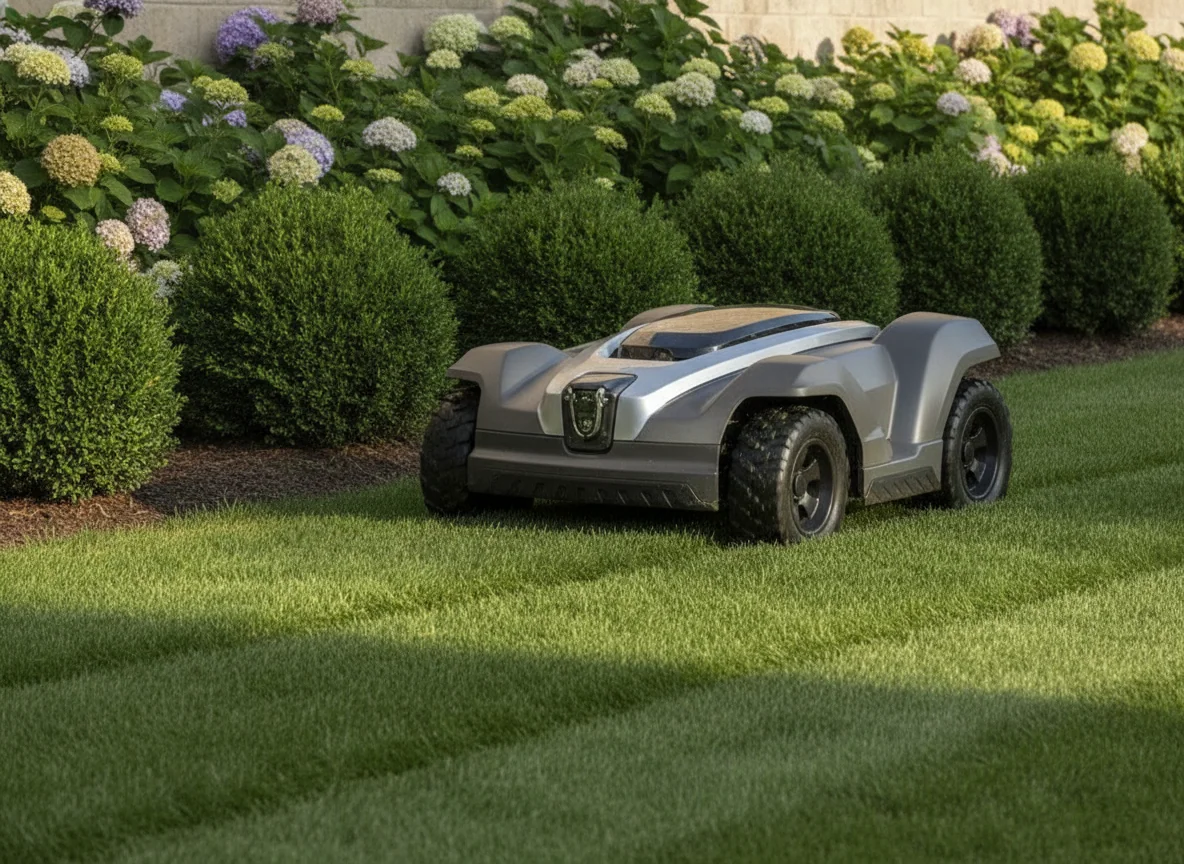
4. Yarbo lawn mower Pro module — The Yarbo Pro is the right cutting deck for someone who already owns the wrong-sized commitment.
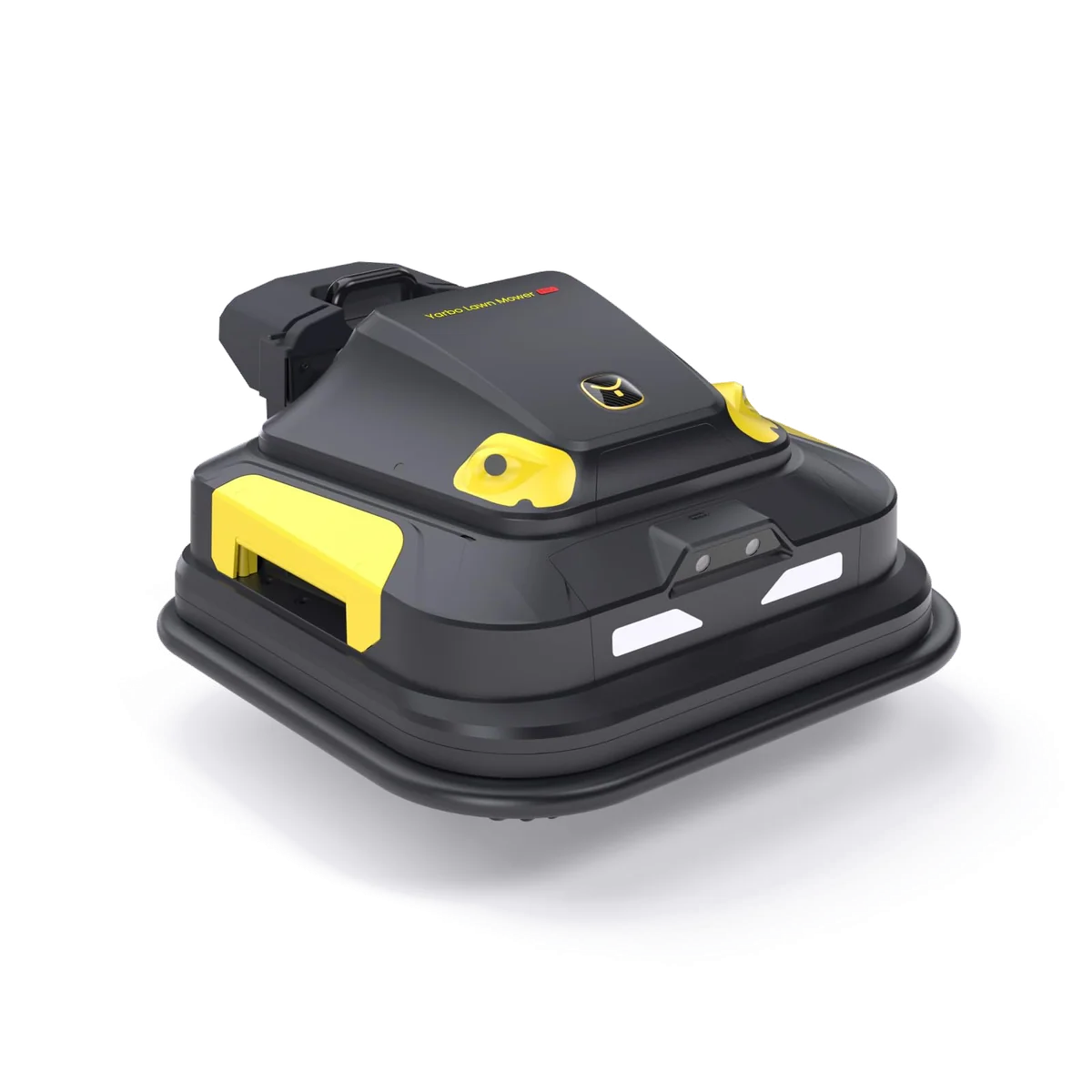
Existing Yarbo Core owners facing tall, wet or dense growth should choose this stronger module over the standard razor-disc deck.
This listing is not a complete mower, and attaching it to a Core also attaches every navigation, reliability and boundary risk of the wider Yarbo system.
The missing Core is the first fact to settle. This box contains the Lawn Mower Pro Module, not the tracked power unit, positioning system or charging platform required to move it. A first-time shopper can receive a substantial piece of mowing hardware that cannot cross one blade of grass. The complete system commitment belongs in the decision even when the listing shows only the attachment.
As an upgrade, the Pro has a clear job. Dual 300W motors replace the standard module’s 150W units, the height range expands to 0.8–4 inches, and the deck can use either five-razor discs or straight high-carbon-steel blades. Those straight blades add lift and a more aggressive chop when rapid growth, rain or a missed cycle leaves the standard head struggling. Slower travel and a second pass can turn a ragged first result into a proper maintenance cut.
The extra power does not turn Yarbo into a brush cutter. Saturated clippings can cake under the deck, debris can jam it, and repeated tracked turns can damage soft turf. More seriously, the complete machine has crossed virtual boundaries and made inconsistent obstacle decisions. Ponds, roads, terraces and drops need physical protection and generous setbacks, not faith in a line drawn on a phone. This is a useful head for a patient Yarbo owner, not an independent fourth mower.
Strengths
- Dual 300W motors and straight blades cut and mulch difficult growth more effectively than the standard Yarbo module.
- The broad dual deck produces crisp stripes and covers open acreage efficiently over autonomous charge cycles.
- Tracked traction, two blade systems, and a 0.8–4.0-inch height range give the Pro an unusually wide working envelope.
Limitations
- The listing is only a mower module, so it cannot function without a separately purchased Yarbo Core and supporting system.
- Boundary excursions and inconsistent obstacle avoidance make virtual maps inadequate as sole protection near water or drops.
- Firmware faults, signal trouble, jams, turf wear, and uncertain parts turnaround can erase the time saved by autonomous cutting.
Our #1 Pick: Husqvarna Automower 440iQ Robotic Mower
Check Price on Amazon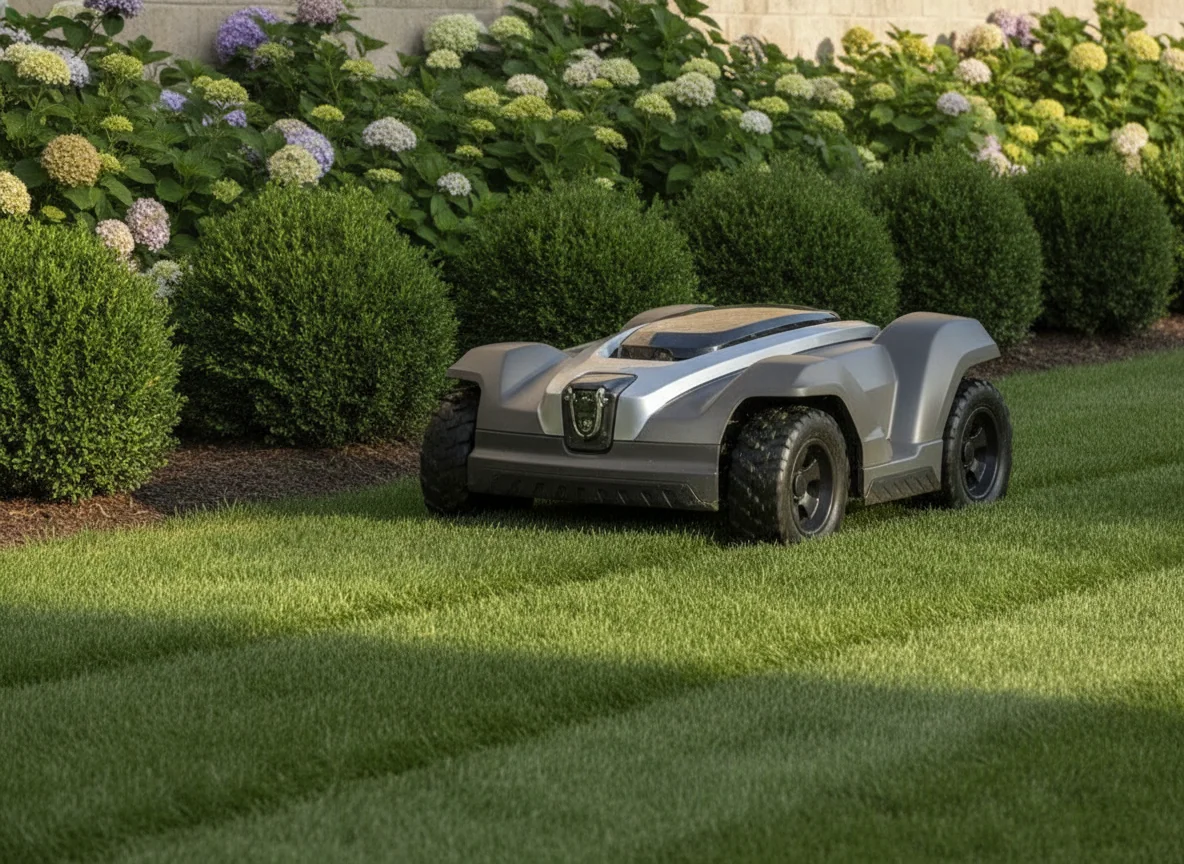
Commercial means uptime, not acreage
Robot-mower acreage is a maintenance envelope. The machine trims a little grass, docks, charges and goes out again, often for days at a time. A larger advertised number does not mean faster recovery after rain, a breakdown or a week of neglected growth. Our guide to what robot-mower acreage ratings really mean explains why a sensible buyer leaves capacity in reserve instead of matching a mower’s ceiling to the last square foot.
We ranked these products by the failure that would matter on Monday morning. Positioning quality came first because a mower that loses itself between two work areas has no useful acreage. Cutting hardware came next, followed by docking, repair coverage, parts clarity and the amount of supervision needed to preserve a schedule. Modular cleverness counted only when it reduced total property work rather than adding another shared point of failure.
| Buying claim | What a working property needs to know | Failure that matters |
|---|---|---|
| Maximum acreage | Whether routine work leaves spare hours for charging, weather and repeat passes. | The lawn reaches recovery height before the normal plan catches up. |
| Wire-free mapping | Whether the dock, transport paths and enclosed edges keep a reliable position. | The mower stops in a satellite shadow or crosses a consequential boundary. |
| Slope rating | Whether the mower can turn, brake and preserve turf on the property’s real surface. | A flattering maximum grade hides poor control on wet grass or near a drop. |
| Automatic resumption | Whether errors trigger a useful alert and the mower actually leaves the dock again. | A silent fault cancels several scheduled cuts before anyone notices. |
| Warranty and support | Who diagnoses the fault, supplies the part and restores the machine to work. | A valid claim still leaves the only mower idle during peak growth. |
That standard favors the Husqvarna even though Yarbo claims far more grass. The 440 iQ presents the most coherent mower purchase, while the other three require either unanswered faith, a backup fleet or hardware the buyer may not already own.
Audit the property before buying the robot
Walk the route where positioning will fail.
Do not begin with the broad center of the lawn. Stand beside the house, under the tree canopy, at the narrow gate and on the return route to the dock. Those are the places where RTK and satellite-dependent navigation have to remain useful. If the property is hemmed in by buildings or mature trees, compare RTK, LiDAR and camera navigation before buying a machine whose best specification assumes open sky.
Size for the bad week rather than the perfect week.
A robot mower maintains controlled grass by taking frequent small cuts and leaving the clippings in the turf. It does not bag a spring flush or erase a rain delay in one decisive afternoon. Leave enough unused capacity for charging, repeat passes and interruptions, then retain a ride-on, push mower or service arrangement for recovery. The practical limits around rain and tall growth are covered in the guide to wet, overgrown and after-dark mowing.
Treat virtual boundaries as instructions, not barriers.
A mapped exclusion zone cannot physically stop a mower whose position drifts or whose software makes the wrong decision. Roads, ponds, pools, retaining edges and public paths deserve a generous setback or a real barrier. Children, pets, vehicles and loose yard objects should remain out of the working area even when the product advertises obstacle avoidance.
Buy the repair path with the mower.
Before checkout, identify who handles diagnosis, which components can be replaced locally, how batteries and blades are obtained, whether maps survive hardware replacement and what happens when cloud connectivity disappears. A warranty limits financial exposure; it does not cut the grass while a part is in transit. This is why the Husqvarna 440 iQ wins: its documented ownership package makes fewer promises than Yarbo’s acreage spectacle, but it leaves fewer operational questions unanswered.
Frequently Asked Questions
Are any of these true commercial fleet mowers?
No, the supplied records establish large-property mowing but not fleet dispatch, service-level repair commitments or dependable operation across several customer sites.
Can the Husqvarna 440 iQ mow two acres in one run?
No, the two-acre figure describes maintained area across scheduled cutting and charging cycles rather than one uninterrupted pass.
Can Yarbo replace a zero-turn on six acres?
Not safely as the only mower, because its maintenance schedule, standard-deck limits and documented downtime leave too little protection against rapid growth.
Is the Yarbo Lawn Mower Pro listing a complete robot mower?
No, it is a mowing module that requires a compatible Yarbo Core and the rest of the Yarbo charging and positioning system.
Will these robot mowers collect grass clippings?
No, they are maintenance mowers that leave frequent fine cuttings in the lawn, as explained in the guide to robot-mower mulching and grass collection .
Do wire-free robot mowers work around buildings and mature trees?
Sometimes, but satellite-dependent models can lose positioning in those spaces, so a heavily obstructed property should start with the site’s mowers for trees, buildings and poor satellite reception .
Our Top Pick
The Husqvarna Automower 440iQ Robotic Mower earns the top spot. The Husqvarna 440 iQ is the least risky route to two autonomous acres.
Compare Top Picks
Sources (25)
- Amazon listings and customer reviews
- Owner reports across r/roboticLawnmowers, r/RobotMowerTalk, r/brisbane and 12 more threads
- Owner and reviewer video, 33 channels
- Nytimes — Article — www.nytimes.com
- Cnet — Article — www.cnet.com
- Yarbo — Article — www.yarbo.com
- Facebook — Article — www.facebook.com
- Mammotion — Article — us.mammotion.com
- Consumerreports — Article — www.consumerreports.org
- Expertreviews — Article — www.expertreviews.co.uk
- Easylawnmowing — Article — easylawnmowing.co.uk
- Pcmag — Article — www.pcmag.com
- Gardenersworld — Article — www.gardenersworld.com
- Trustpilot — Article — www.trustpilot.com
- Freshlycharged — Article — freshlycharged.com
- Pcworld — Article — www.pcworld.com
- Lowes — Article — www.lowes.com
- Mammotion — Article — ca.mammotion.com
- Zdnet — Article — www.zdnet.com
- Easylawnmowing — Article — www.easylawnmowing.com
- Fredshed — Article — www.fredshed.co.uk
- Tv — Article — www.stuff.tv
- Yarbo — Article — forum.yarbo.com
- Yarboreview — Article — yarboreview.com
- Renovationrated — Article — renovationrated.com