Robot mowers are fair-weather maintenance machines, whatever the waterproofing says.
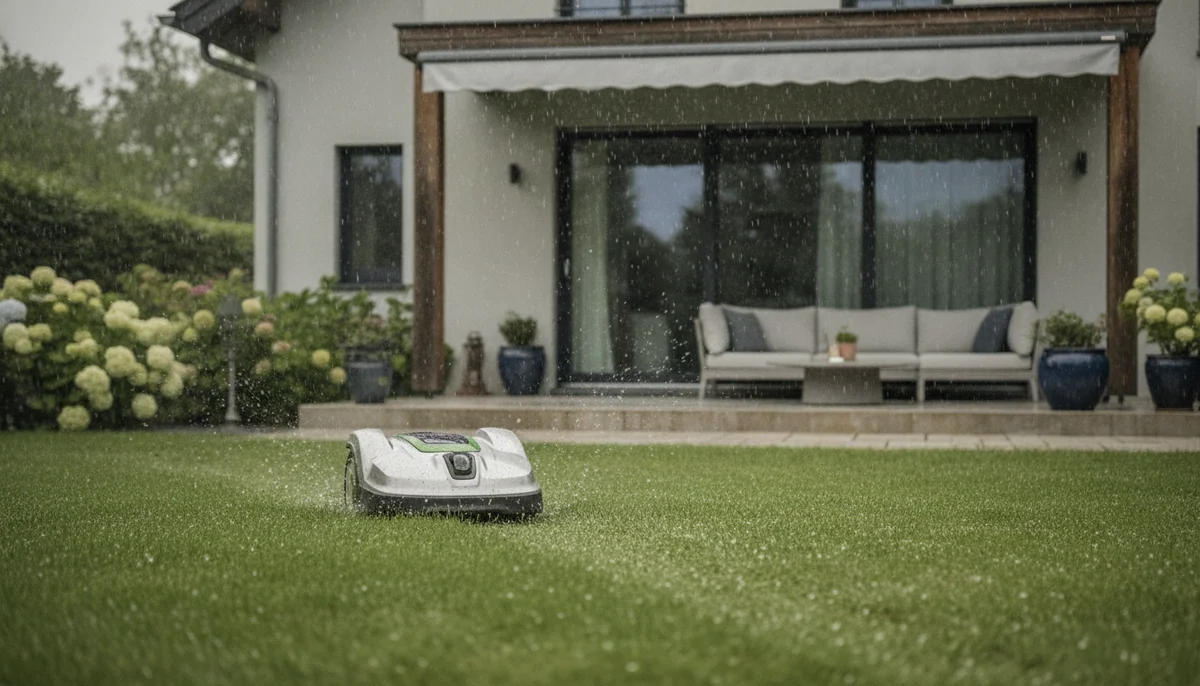
A robot mower is not a small push mower with nobody holding the handle. Its light chassis, narrow cutting disc and pivoting razor blades are designed to remove a little growth every day or two. That distinction explains nearly every disappointing encounter with tall grass, rain and morning dew.
Short, dry grass offers little resistance, releases fine clippings and gives the drive wheels firm ground. Long grass bends beneath the mower, wet clippings pack around the disc, and damp slopes turn modest traction problems into repeated rescue alerts. The mower may be weather-resistant throughout, yet still produce a worse cut while doing more harm to the turf.
Night mowing is another case where capability and judgment part company. Some robots can navigate without daylight and most are quiet enough to run after bedtime, but cameras see less, small wildlife is active and a stopped machine is harder to notice. Smart Lawn Bots recommends daytime schedules even when the app happily offers midnight.
Four lawn conditions, four different answers
“Can it mow?” is too blunt a question. A mower can remain powered in rain, move through wet grass and leave visibly shorter turf while still doing a poor job. The useful test is whether it can finish without clogging, slipping, compacting clippings, tearing the lawn or requiring more intervention than waiting for better conditions would have required.
| Condition | Likely behavior | Best decision |
|---|---|---|
| Tall or overgrown grass | Stalks bend beneath the body, tiny blades miss upright growth, and long clippings remain visible. | Make a conventional recovery cut, then begin frequent robot maintenance. |
| Wet grass or heavy dew | Wheels lose grip, clippings adhere underneath, turns damage soft turf and the finish becomes uneven. | Wait until the surface and lower leaves have dried. |
| Active rain | A weather-resistant mower may keep working, retreat to its dock or rely on an imperfect forecast or sensor. | Pause mowing rather than treating water resistance as a rain recommendation. |
| Darkness | LiDAR or satellite positioning may continue, while camera recognition and visibility around the machine deteriorate. | Use a daylight window for obstacle awareness and wildlife protection. |
Tall grass defeats the maintenance model
Robot mowers succeed through frequency rather than force. Once the lawn is at the intended height, each pass removes only the newest tips. Those tiny clippings drop between the standing blades and decompose instead of forming rows that need collecting. Our guide to robot mower mulching and grass clippings explains why this works without a bag.
Leave that same lawn untouched through a wet growing week and the job changes. Tall stems fold under the bumper and chassis before the cutting disc reaches them. Small blades create little suction, so flattened weeds and coarse grass may spring upright after the mower passes. Camera-guided models can make matters worse by interpreting long or yellow growth as an obstacle and steering around the very patch that needs cutting.
Do not attempt to solve serious overgrowth by lowering the cutting height and sending the robot out repeatedly. That loads the cutting system, creates heavy clippings and risks removing too much of the grass blade at once. Cut the lawn conventionally to a suitable height, remove any windrows or dense debris, then begin with a high robot setting and reduce it gradually if needed.
The BESTMOW T100, HOOKII Neomow X2 SE and standard Yarbo Lawn Mower all illustrate why a large acreage rating does not change this principle. Each is intended to maintain substantial ground through repeated mowing and charging, not reclaim neglected acreage. The standard Yarbo’s razor-disc deck is particularly vulnerable when wet or coarse grass wraps around its cutting hardware, while the T100 leaves too many reliability and support questions unanswered to trust with a lawn that has no backup mower.
Waterproof does not mean wet grass is good mowing
An IP rating concerns the enclosure’s resistance to water under specified conditions. It says nothing about available wheel grip, clipping flow, cut quality or the strength of the turf beneath a turning wheel. A dry electronics compartment does not prevent a two-wheel-drive mower from polishing a damp slope until it can no longer climb.
Wet clippings adhere to the deck and prevent pivoting blades from swinging freely. They accumulate around wheels, increase drag and can be deposited as dark clumps rather than fine mulch. On soft ground, repeated turns may tear grass or form ruts. The effect is most obvious beside the dock and along boundaries, where the machine performs similar maneuvers on every run.
Morning dew deserves the same respect as rain. A schedule may begin under a clear sky while the lower grass remains slick, particularly in shade. Move the start later rather than assuming the absence of falling water means the lawn is ready. On a slope, walk the grass first; if shoes pick up moisture or slide, a lightweight robot has even less margin.
Rain detection is not consistent across mowers
The eufy E15 and E18 have rain sensors and can return to their charging stations, but damp grass has still exposed their rear-wheel-drive traction and packed their cutting areas. Their cameras also require useful daylight, so a rainy afternoon can consume a large part of the available working window. The E15 and E18 comparison helps choose the correct area capacity, but neither model is the answer to a persistently wet lawn.
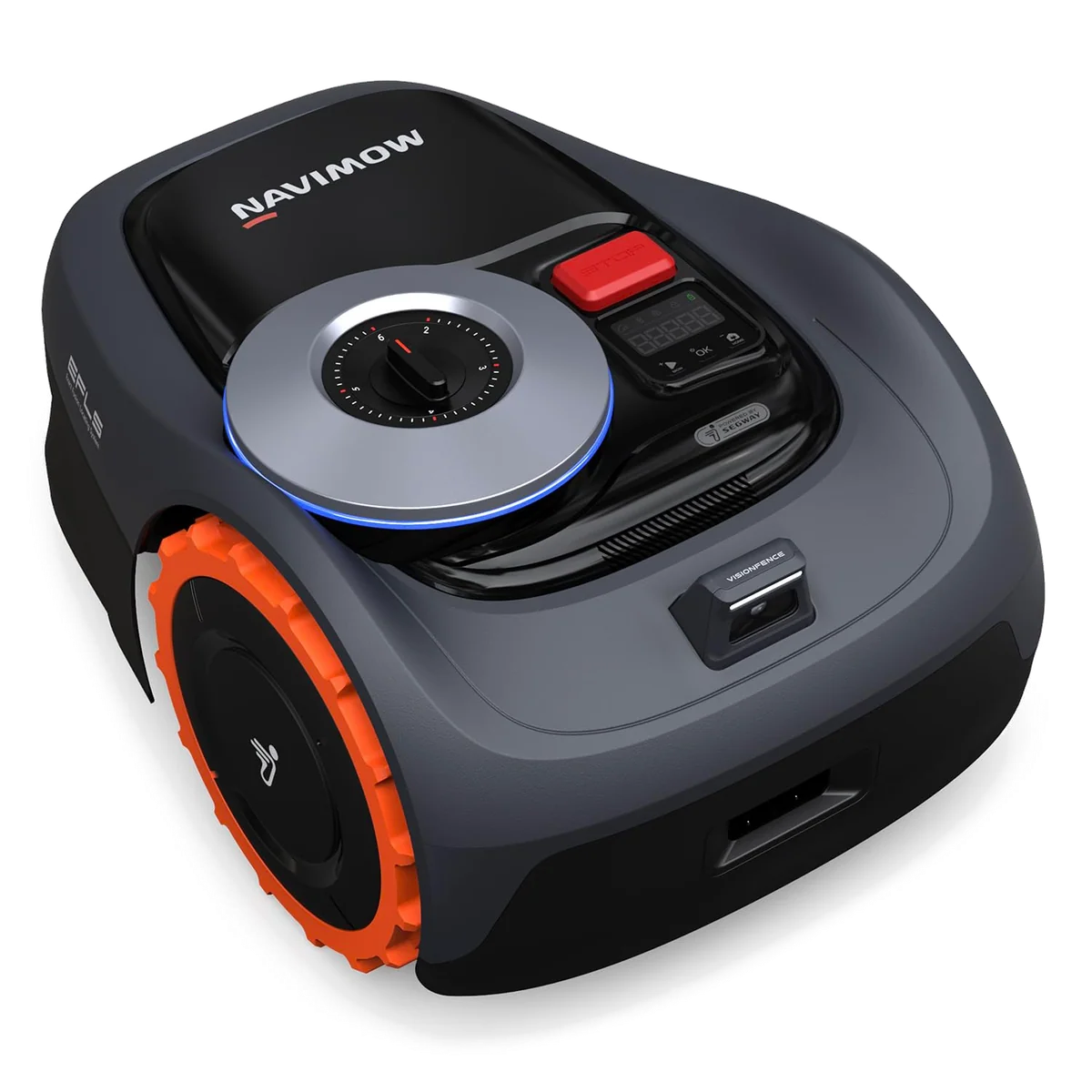
The Segway Navimow i110N is weather-resistant, yet it relies on forecast-based adaptation rather than a dependable physical rain detector. An unexpected shower or manually started job can therefore put it onto wet turf. It is an excellent maintenance mower on a smooth, open and mostly level quarter acre, but its low body and small wheels make ruts, thick grass and wet inclines decisive drawbacks; the complete Navimow i110N review is worth reading only after accepting that yard requirement.
The LawnMaster OcuMow 200 and YARDCARE V100 make the decision simpler because both are manual-deployment vision mowers intended for dry daytime work. Neither docks itself, neither offers reliable night operation, and both leave substantial edge trimming. The OcuMow is the stronger of the two for a tiny, enclosed lawn when its longer runtime matters, but random coverage and optical containment mean it should never be trusted beside a road, pond or open neighboring lawn; the OcuMow 200 review sets out that narrow use case.
Better traction widens the weather window, not the weather
All-wheel drive changes how readily a mower crosses roots, dips and dry slopes. It does not make wet mowing desirable. The advantage is reserve: when ordinary ground is slightly uneven or a bank demands more grip, four driven wheels are less likely to convert every imperfection into an alert.
The DREAME A3 AWD 1000 is the strongest fit among these machines for a wooded, uneven quarter acre. LiDAR avoids dependence on an RTK antenna, and AWD gives the chassis credible authority on difficult dry ground. Its drawback is throughput: the single narrow cutting disc is slow, automatic mapping can misread untidy boundaries, and correcting a saved perimeter may require more remapping than expected. It is a hard-yard specialist, not permission to schedule mowing through rain.
The Mammotion LUBA Mini 2 1500H is the more capable choice for a larger sloped or bumpy lawn because it combines LiDAR, dual cameras and all-wheel drive without a separate RTK antenna. Tight turns can scrub weak or wet turf, its edge disc still leaves grass beside raised borders, and software or support can be less settled than the hardware; the LUBA Mini 2 1500H review makes the full case after those limitations are clear.
Neither machine should be bought merely because the present mower becomes stuck in mud. Drainage, holes, compacted routes and soft dock approaches are lawn problems first. A more expensive chassis may travel farther into bad conditions before it stops, but it cannot make saturated soil suitable for repeated autonomous traffic. Buyers facing roots, banks and rough transitions in dry weather should compare the broader selection of robot mowers for steep and uneven ground.
Quiet enough for night is not safe enough for night
Some satellite and LiDAR mowers can maintain their position after sunset, and noise figures around the high 50-decibel range make them far less intrusive than combustion equipment. That explains why manufacturers promote overnight schedules. It does not settle whether the mower can recognize every low object or animal in darkness.
Pure-vision machines provide the clearest answer. The eufy E15 and E18 return when light becomes insufficient. LawnMaster OcuMow and YARDCARE V100 require good daylight. A headlight may extend what a camera can see, but it does not reproduce daylight across the full field of view or make small hazards easier for a person indoors to notice.
LiDAR can localize in darkness, but localization is only the ability to know where the mower is. Visual obstacle classification may still weaken, and nocturnal animals occupy the grass when people are least likely to intervene. The safer schedule begins after dew has dried and ends before dusk. More detailed precautions around pets, children and wildlife belong in the site’s guide to robot mower safety.
The schedule that actually works
- Bring tall grass down conventionally before mapping or beginning an automatic schedule.
- Start at the upper end of the mower’s suitable height range and remove only light growth.
- Schedule frequent passes late enough for dew to dry and early enough to finish in useful daylight.
- Use rain delays conservatively, even when the enclosure and charging station are weather-resistant.
- Clear branches, toys, hoses, stones and pet waste before every run.
- Inspect the underside after an unexpectedly wet session and remove compacted grass before it dries solid.
This routine is less dramatic than sending a robot into a storm at midnight, but it is how the technology earns its keep. A well-matched mower turns recurring lawn care into light supervision, edge trimming and maintenance. Ask it to be a brush cutter, rain mower and nocturnal wildlife spotter as well, and the robot becomes the chore.
Frequently Asked Questions
Can a robot mower cut grass that has grown tall?
It can reduce modest extra growth over repeated passes, but genuinely tall or overgrown grass should receive a conventional first cut.
Will rain damage a robotic lawn mower?
A suitable weather-resistance rating protects many mowers from ordinary exposure, but the exact manual still governs storms, standing water, cleaning and storage.
Can a robot mower cut wet grass?
It may physically cut wet grass, but reduced traction, clogged clippings, uneven results and turf damage make waiting for dry conditions the better choice.
Should a robot mower run at night?
No, daylight provides better camera performance, easier supervision and less risk to nocturnal wildlife.
Can all-wheel drive make wet mowing safe?
No, AWD improves traction on difficult ground but cannot prevent wet clippings, soft-soil damage or every slide on a damp slope.
What happens if rain interrupts the mowing schedule for several days?
Wait for the lawn to dry, make a conventional recovery cut if growth has exceeded the robot’s maintenance range, and then resume frequent light passes.
Is morning dew enough reason to delay mowing?
Yes, heavy dew can reduce grip and pack the cutting deck much like light rain even when the forecast is clear.
Sources (100)
- Amazon listings and customer reviews
- Owner reports across r/RobotVacuums, r/eufyS1Pro, r/eufy and 29 more threads
- Owner and reviewer video, 168 channels
- Walmart listing
- Target listing
- Toptenreviews — Article — www.toptenreviews.com
- Pcworld — Article — www.pcworld.com
- Homedepot — Article — www.homedepot.com
- Lowes — Article — www.lowes.com
- Robotmowerlab — Article — robotmowerlab.com
- Forbes — Article — www.forbes.com
- Lifehacker — Article — lifehacker.com
- Makeuseof — Article — www.makeuseof.com
- Navimow — Article — navimow.com
- Segway — Article — navimow.segway.com
- Tomsguide — Article — www.tomsguide.com
- Site — Article — segway-navimow.my.site.com
- Consumerreports — Article — www.consumerreports.org
- Propartsdirect — Article — www.propartsdirect.net
- Facebook — Article — www.facebook.com
- Easylawnmowing — Article — easylawnmowing.co.uk
- Trustedreviews — Article — www.trustedreviews.com
- Cleva — Article — us.cleva.com
- Bestutahrealestate — Article — bestutahrealestate.com
- Cleva Uk — Article — www.cleva-uk.com
- Expertreviews — Article — www.expertreviews.co.uk
- Cleva — Article — eu.cleva.com
- Currys — Article — www.currys.co.uk
- Mowerbotlab — Article — mowerbotlab.com
- Gardentool360 — Article — gardentool360.co.uk
- Ukgardenreviews — Article — ukgardenreviews.com
- Gardenersworld — Article — tollbit.gardenersworld.com
- Hedgecombers — Article — hedgecombers.com
- Bestrobovacuums — Article — www.bestrobovacuums.com
- Chewy — Article — www.chewy.com
- eufy — Article — www.eufy.com
- Substack — Article — robovacinsights.substack.com
- eufy — Article — service.eufy.com
- Countryliving — Article — www.countryliving.com
- Rtings — Article — www.rtings.com
- Vacuumwars — Article — vacuumwars.com
- Younghouselove — Article — www.younghouselove.com
- Womanandhome — Article — www.womanandhome.com
- Interlightus — Article — www.interlightus.com
- Coredy — Article — www.coredy.com
- Moderncastle — Article — moderncastle.com
- Thecarpentersdaughter — Article — thecarpentersdaughter.co.uk
- Techradar — Article — www.techradar.com
- Lbtechreviews — Article — www.lbtechreviews.com
- Pcmag — Article — www.pcmag.com
- Zdnet — Article — www.zdnet.com
- Trustpilot — Article — uk.trustpilot.com
- Amgardaseeblick — Article — amgardaseeblick.com
- Pistonheads — Article — www.pistonheads.com
- Bestbuy — Article — www.bestbuy.com
- Ycombinator — Article — news.ycombinator.com
- Mammotion — Article — us.mammotion.com
- Trustpilot — Article — www.trustpilot.com
- Trustpilot — Article — au.trustpilot.com
- Mammotion — Article — eu.mammotion.com
- Mammotion — Article — uk.mammotion.com
- Easylawnmowing — Article — www.easylawnmowing.com
- Therobotmower — Article — therobotmower.co.uk
- Androidauthority — Article — www.androidauthority.com
- Freshlycharged — Article — freshlycharged.com
- Au — Article — robotlawnmowers.com.au
- Nytimes — Article — www.nytimes.com
- Cnet — Article — www.cnet.com
- Gardenersworld — Article — www.gardenersworld.com
- Smarthomescene — Article — smarthomescene.com
- HOOKII — Article — hookii.com
- Mammotion — Article — ca.mammotion.com
- Tractorsupply — Article — www.tractorsupply.com
- Substack — Article — jjtechish.substack.com
- Basic Tutorials — Article — basic-tutorials.com
- Smarthomeassistent — Article — www.smarthomeassistent.de
- Mein Gartenexperte — Article — www.mein-gartenexperte.de
- Techreviewer — Article — www.techreviewer.de
- Mowingmagic — Article — mowingmagic.com
- Fr — Article — maniaques.fr
- Basic Tutorials — Article — basic-tutorials.de
- Frandroid — Article — www.frandroid.com
- Appgefahren — Article — www.appgefahren.de
- Yarbo — Article — www.yarbo.com
- Fredshed — Article — www.fredshed.co.uk
- Tv — Article — www.stuff.tv
- Yarbo — Article — forum.yarbo.com
- Yarboreview — Article — yarboreview.com
- Theverge — Article — www.theverge.com
- Notebookcheck — Article — www.notebookcheck.net
- Lawncraftsupply — Article — lawncraftsupply.com
- WORX — Article — www.worx.com
- Upzy — Article — www.upzy.com
- Newatlas — Article — newatlas.com
- Reviewed — Article — www.reviewed.com
- Protoolreviews — Article — www.protoolreviews.com
- Pwcparts — Article — pwcparts.com
- Familyhandyman — Article — www.familyhandyman.com
- Sitejabber — Article — www.sitejabber.com
- Yardcareinc — Article — yardcareinc.com