The i206 AWD fixes the i110N’s worst fault, then cuts its lawn allowance.
Buy the Navimow i206 AWD for a compact lawn that slips, slopes, or fights back, but choose the i110N when the ground is already smooth and the maintained area exceeds 0.15 acre.
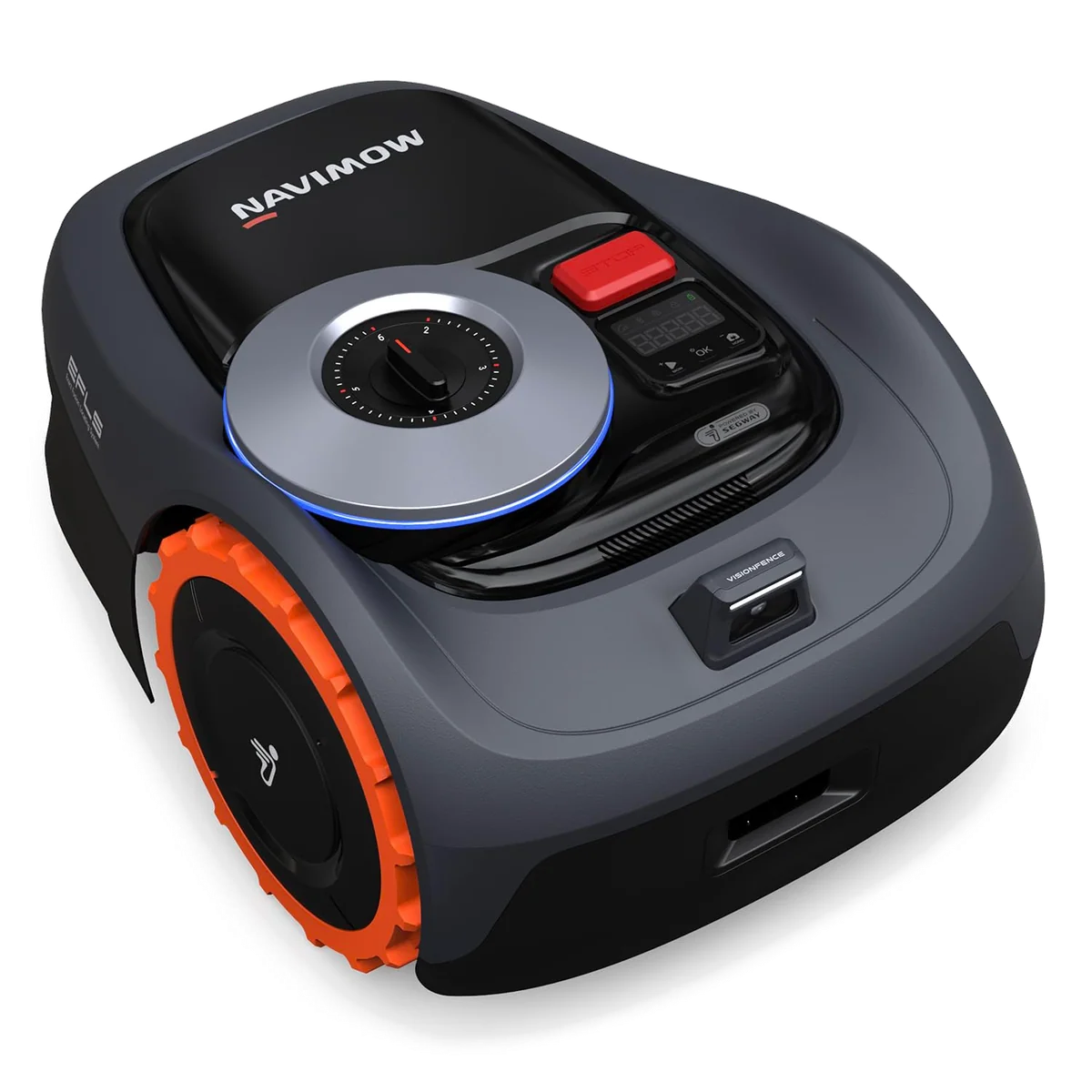
Segway Navimow i110N
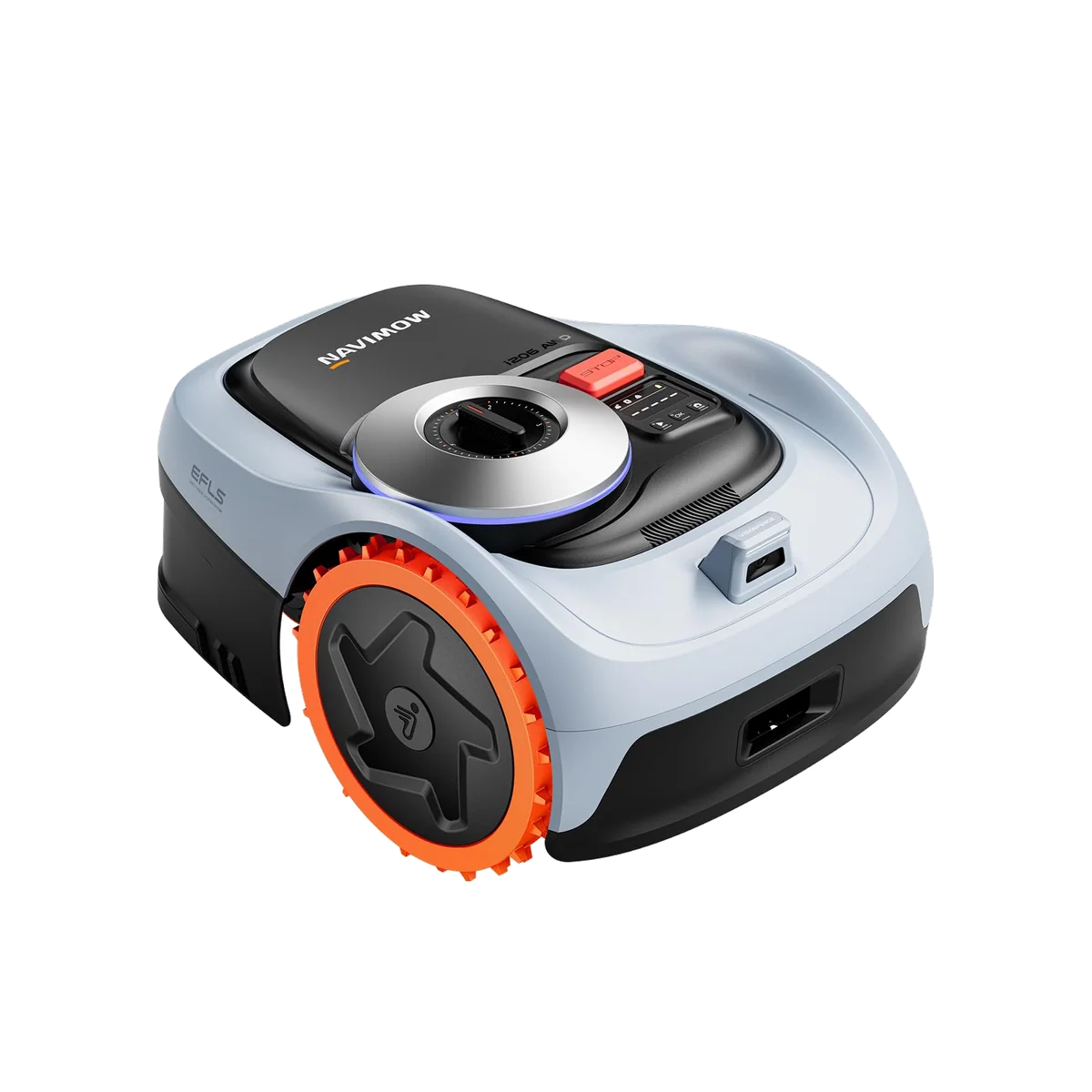
Segway Navimow i206 AWD Robot
The i206 AWD wins this comparison, but it is not a universal successor to the i110N. Segway traded battery capacity and maximum managed area for all-wheel drive, stronger climbing, all-terrain tires, built-in 4G, a five-blade cutting disc, and a setup that does not require a separate antenna in the yard. That is a good exchange on the sort of lawn that repeatedly strands a light two-wheel-drive mower. It is a bad exchange if the grass is flat, open, and spread across most of a quarter acre.
The distinction is more important than the newer badge. A robot mower that can theoretically maintain more grass is no bargain when a caster drops into the same rut every Tuesday. Conversely, extra traction does not compensate for buying too little capacity. The right choice begins with the ground, then the size of the maintained lawn, and only then the feature list.
| Difference | Navimow i206 AWD | Navimow i110N |
|---|---|---|
| Best fit | Small, uneven, sloped lawns | Larger, smooth, open lawns |
| Rated maintained area | 0.15 acre | 0.25 acre |
| Drive system | All-wheel drive | Two-wheel drive |
| Maximum stated slope | 45% | 30%, with 10% at a boundary |
| Nominal runtime | About 60 minutes | About 120 minutes |
| Battery capacity | 2.55 Ah | 5.1 Ah |
| Positioning hardware | Network RTK and vision, with no separate antenna required | RTK and vision, with a separate cabled GNSS antenna |
| Cutting system | 7.1-inch deck with five blades | 7.1-inch deck with three blades |
Both are wire-free maintenance mowers rather than tiny substitutes for every job a conventional mower performs. They work best after the lawn has already been brought under control, then keep it tidy through frequent, systematic cuts. Neither eliminates trimming beside walls and raised borders, and neither turns neglected, wet, overgrown grass into a finished lawn in one heroic pass.
Segway Navimow i110N
Segway Navimow i206 AWD Robot
At a Glance
| Feature | Segway Navimow i110N | Segway Navimow i206 AWD Robot |
|---|---|---|
| Price Range | $500–$1,000 | $500–$1,000 |
| Cutting height | 2–3.6 inches, manual adjustment | — |
| Recommended lawn size | Up to 0.25 acre | — |
| Cutting width | 7.1 inches | — |
| Check Price on Amazon | Check Price on Amazon |
AWD is the upgrade; acreage is the downgrade
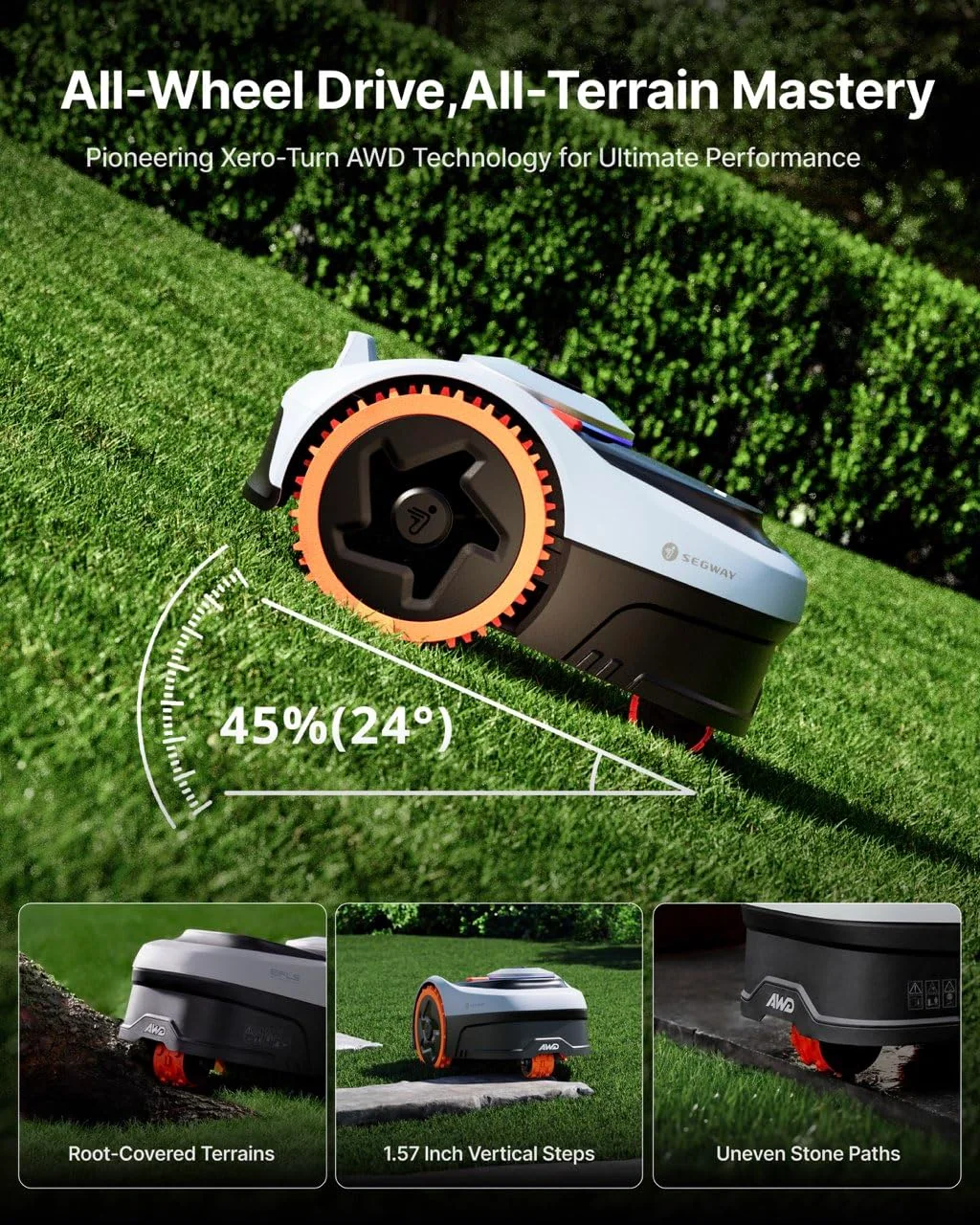
The i206 AWD addresses the most consequential complaint in the i110N ownership record: too many otherwise ordinary lawns contain shallow dips, soft patches, thick turf, exposed roots, or damp inclines that defeat its low body and small front casters. The newer mower brings the hardware needed to keep moving, but its smaller battery and lower area rating make the nameplate progression misleading.
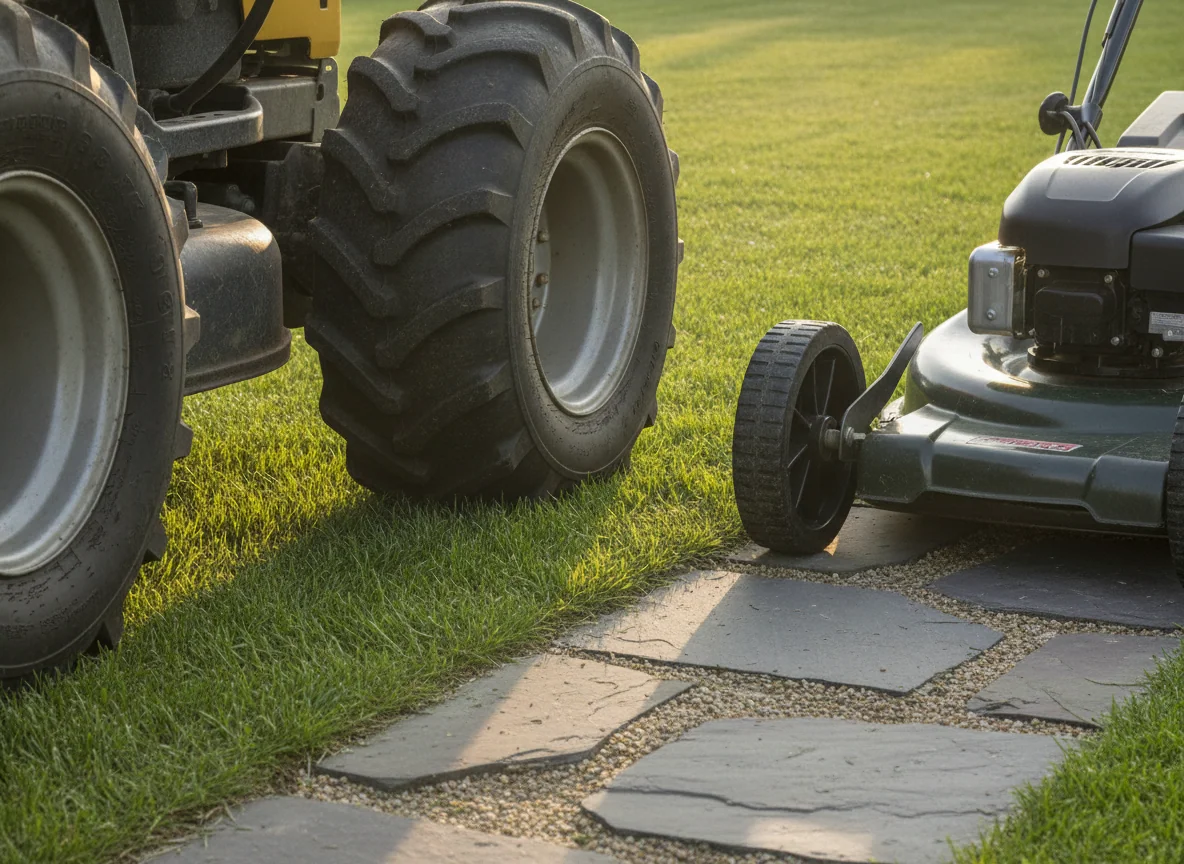
The i206 AWD is the better mower for a small lawn that fights back.
Its all-wheel drive, 45% slope rating, all-terrain tires, zero-turn steering, and antenna-free Network RTK setup solve more practical problems than the i110N’s extra runtime on compact properties.
The 0.15-acre rating and roughly 60-minute runtime make it the wrong shortcut to AWD for a lawn approaching one-quarter acre.
The difference appears at the awkward transition between lawn and life: the worn route beside a gate, a shallow depression left by a removed tree, or a slope that stays damp after the rest of the yard dries. The i110N can sometimes cross those places after its mowing direction is changed, its map is trimmed, or its tires are upgraded. The i206 AWD begins with four driven wheels and stability control, so traction is part of the machine rather than a workaround the owner has to discover.
Its five-blade disc also gives the small deck more cutting opportunities per rotation than the i110N’s three-blade arrangement. That does not make it a brush mower. One tall stalk can still be interpreted as an obstacle, and frequent mowing remains the operating model. The advantage is a more capable maintenance platform, not permission to leave the grass for two weeks and expect a clean recovery pass.
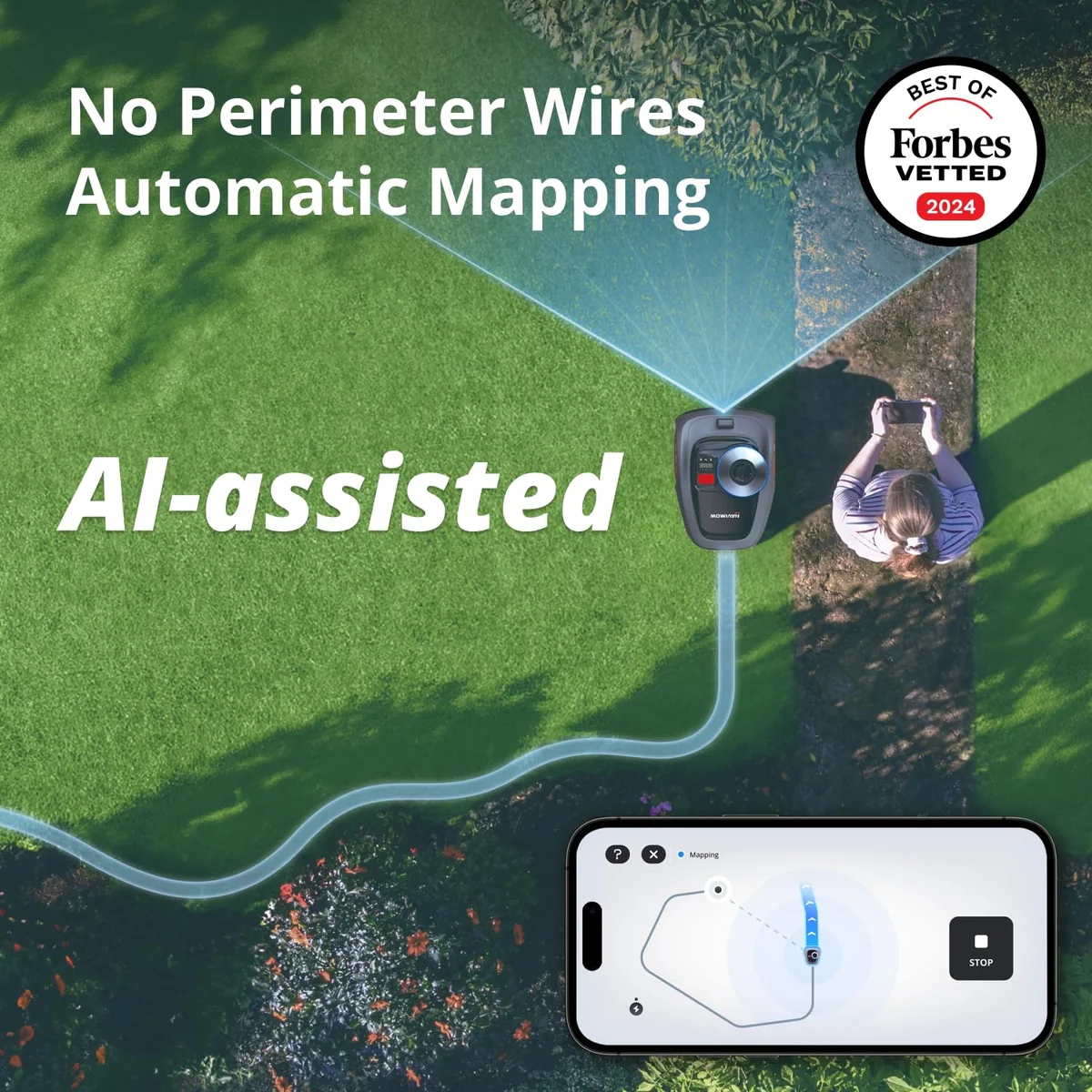
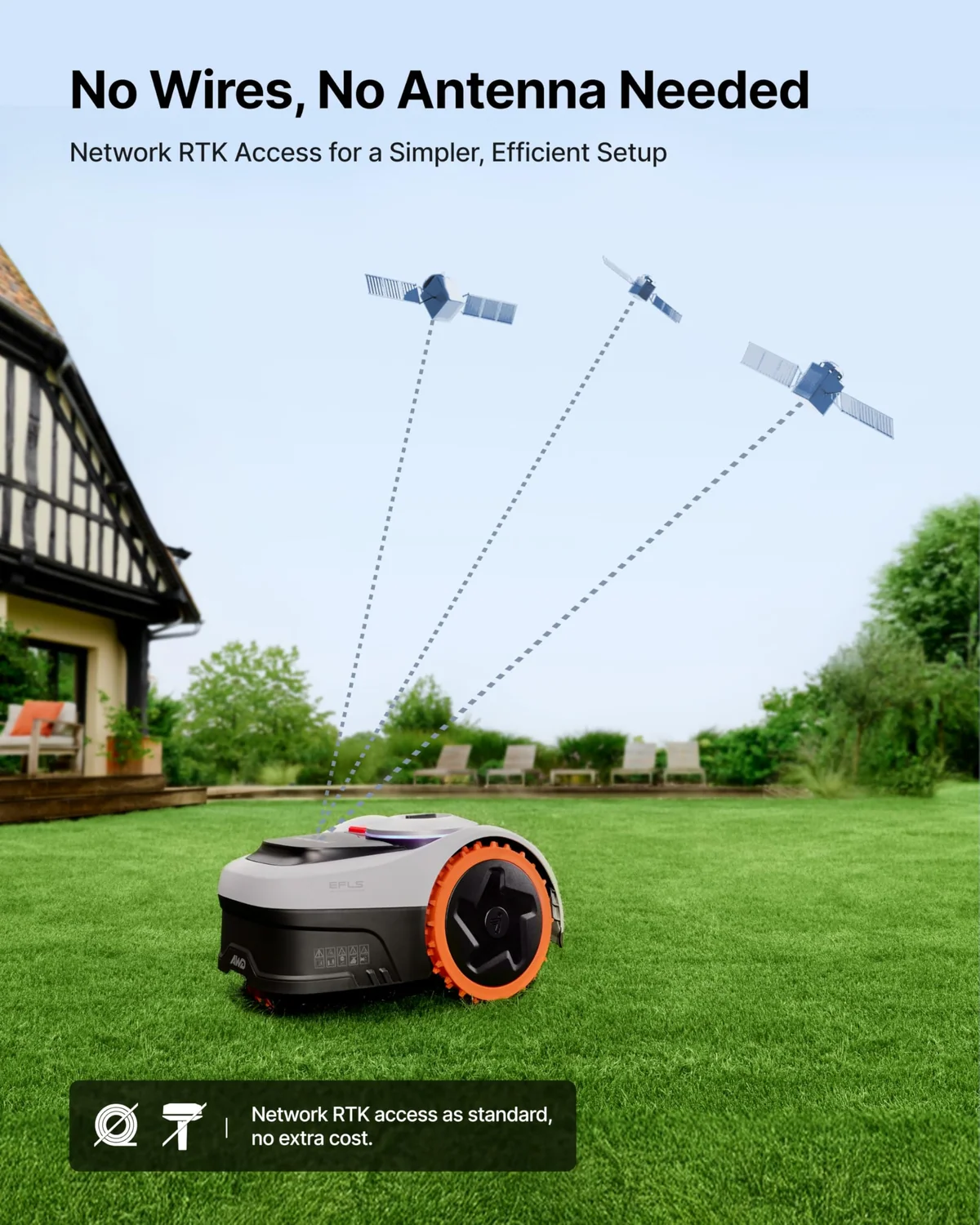
Setup is physically cleaner because there is no separate GNSS antenna to plant, mount, and cable back toward the dock. Built-in 4G and support for as many as 20 zones further reduce the accessory problem around the older mower. Network RTK still does not make mapping infallible, however. Failed automatic mapping, lost manual zones, disconnections, and maps that had to be rebuilt are real parts of the i206 record. Walk every boundary carefully, save work when the app allows it, and supervise the first complete cycles before trusting an exposed edge.
The smaller 2.55 Ah battery covers a stated maximum of about 0.03 acre per charge before the mower must return and resume. That is acceptable when the total lawn is comfortably below its limit because the machine, not the owner, spends the extra time. Near 0.15 acre, weather delays and fast growth leave less scheduling margin. Above it, the i206 is simply undersized no matter how well it climbs.
The i110N is the capacity choice for a lawn that already behaves.
Its 5.1 Ah battery, roughly 120-minute runtime, and quarter-acre rating make it the stronger fit for broad, firm turf with open sky.
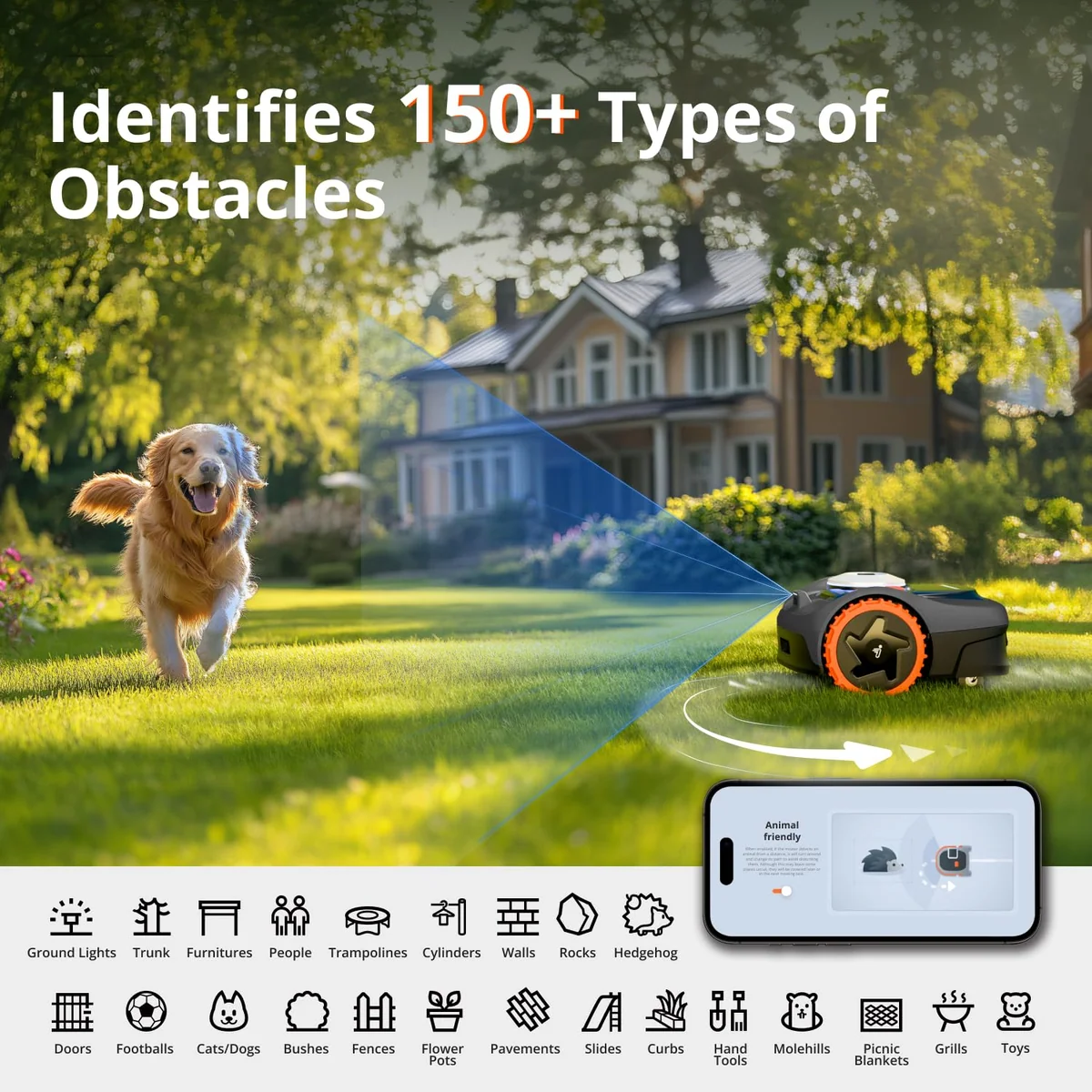
Ruts, thick grass, wet inclines, abrupt transitions, weak satellite reception, and curb drops can turn its promised autonomy into repeated rescues.
The i110N makes sense when traction is not the problem. On a mostly level lawn, its organized rows and alternating mowing directions gradually catch the upright blades missed on an earlier pass. Tiny clippings vanish into the turf, the mower returns to charge when necessary, and the lawn holds a consistently maintained height without combustion noise or a weekly push-mowing appointment.
Its larger battery is not merely a nicer specification. Runtime becomes scheduling headroom when several zones, obstacles, turns, and charging sessions separate the dock from a finished map. A lawn near one-quarter acre will still take multiple sessions, but the i110N has twice the nominal runtime of the i206 AWD. For a property between 0.15 and 0.25 acre, that capacity difference decides the comparison before traction is considered.
The cost is a fussier installation and a narrower terrain envelope. The powered dock needs level ground, while the separate antenna needs a useful view of the sky and a cable route that does not invite a string trimmer. The first convenient location beside the house may not be the location that produces stable positioning. Test both pieces before fixing them permanently, then watch the mower approach curbs, beds, fences, and narrow channels from every direction it may use.
Mapping is powerful once its terminology becomes familiar. Standard boundaries keep the chassis inside the line, ride-on boundaries let it straddle flush paving, no-go areas exclude hazards, and zone-specific mowing directions can stop a wheel from following a rut lengthwise. That flexibility rescues some difficult spots, but software cannot create ground clearance or driven front wheels. If the preparation starts to include filling several depressions, adding traction tires, and excluding half a slope, the i206 AWD was the mower the yard wanted.
The i110N also remains the better member of the older i1 family near its capacity ceiling; for much smaller lawns, the i110N and i105N comparison explains why the larger battery is the principal distinction rather than a completely different cutting system.
Segway Navimow i110N
Segway Navimow i206 AWD Robot
Choose the yard, not the newer badge
Choose the i206 AWD when interruptions are the real enemy
A maintained area below 0.15 acre, a usable power location, and recurring traction trouble form the clearest case for the winner. Slopes, uneven turf, thick grass, and minor surface changes matter more here than the longer runtime printed beside the i110N. The antenna-free installation is an additional reason when there is nowhere sensible to place a pole or wall mount.
Choose the i110N when distance is harder than terrain
A smooth lawn between 0.15 and 0.25 acre reverses the result. The i110N has the capacity to spend longer away from the dock and manage the larger map, while AWD would contribute little on firm, level ground. Make sure the antenna and mower can maintain useful satellite reception before treating that capacity as usable.
Walk away from both when the compromise lands in the middle
A full quarter acre that also needs meaningful traction exposes the gap between these models. The i110N has enough nominal area but the wrong drivetrain, while the i206 AWD has the drivetrain but not the area allowance. The Navimow i210 AWD comparison covers the closer quarter-acre AWD option.
Dense canopy and tall buildings create a different problem because more driven wheels do not repair poor positioning. In that setting, the Navimow i215 LiDAR deserves attention before another attempt to find a perfect RTK location. The broader navigation-system guide explains why the best drivetrain and the best localization method are separate decisions.
For the lawn each machine is rated to handle, the i206 AWD is the more complete robot and the one Smart Lawn Bots would choose; the i110N wins only when its extra tenth of an acre is genuinely needed and the ground is kind enough to let it use that advantage.
Frequently Asked Questions
Can one Garage S cover either mower?
Yes, Segway lists the Navimow Garage S as compatible with both the i206 AWD and the i110N.
How wide must a passage be for the i206 AWD?
Segway specifies a minimum passage width of 27.6 inches for the i206 AWD.
Do these mowers collect their grass clippings?
No, both leave finely cut clippings in the turf, which is why frequent maintenance cuts matter more than occasional long sessions.
Ready to Choose?
Sources (18)
- Amazon listings and customer reviews — Segway Navimow I110n and Segway Navimow I206 Awd
- Owner and reviewer video, 21 channels
- Walmart listing
- Toptenreviews — Article — www.toptenreviews.com
- Pcworld — Article — www.pcworld.com
- Homedepot — Article — www.homedepot.com
- Lowes — Article — www.lowes.com
- Robotmowerlab — Article — robotmowerlab.com
- Forbes — Article — www.forbes.com
- Lifehacker — Article — lifehacker.com
- Makeuseof — Article — www.makeuseof.com
- Navimow — Article — navimow.com
- Segway — Article — navimow.segway.com
- Tomsguide — Article — www.tomsguide.com
- Site — Article — segway-navimow.my.site.com
- Consumerreports — Article — www.consumerreports.org
- Propartsdirect — Article — www.propartsdirect.net
- Facebook — Article — www.facebook.com