The Navimow i110N buys back your Saturday, but only if your lawn behaves.
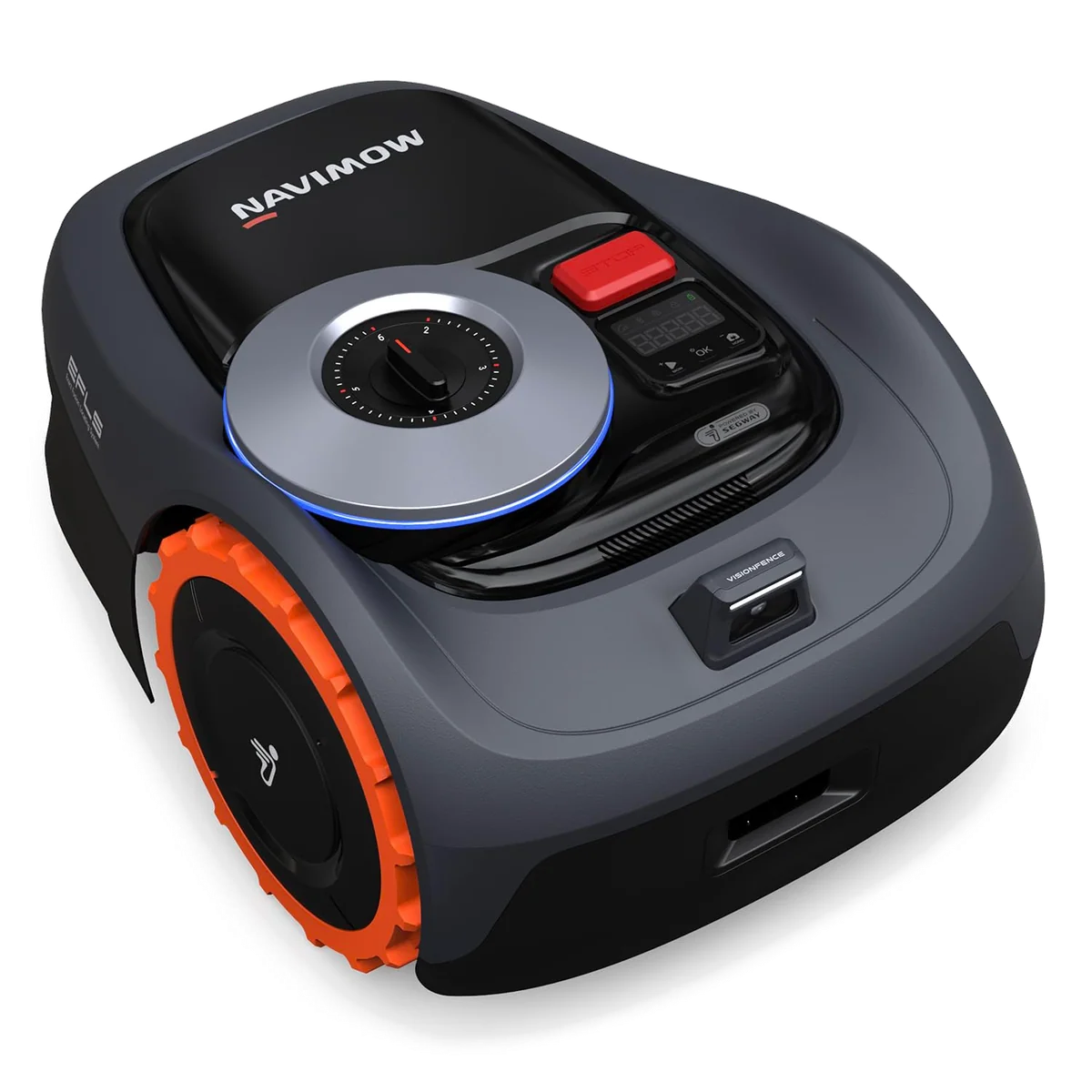
Buy the Navimow i110N for a mostly level lawn with open sky and a willingness to refine the map; skip it for ruts, wet slopes, curb drops, dense canopy, or grass that is regularly allowed to grow long.
It is a brilliant mower for a lawn that meets it halfway
The Navimow i110N is easy to recommend when the lawn is already maintained, the ground is substantially smooth, the antenna can see enough sky, and the owner accepts a patient first week. In that setting, it turns hours of recurring mowing into minutes of edging and occasional maintenance. Put the same machine into thick fescue over ruts, beside an exposed curb, or between two tall buildings, and its headline features become a troubleshooting list.
Best for: Small lawns
The Segway Navimow i110N is not a tiny autonomous replacement for everything a 21-inch push mower can do. It is a maintenance machine. Cut the lawn conventionally to the height you want, send the Navimow out every day or two, and its three small blades shave off amounts too slight to leave visible clippings. Ask it to recover thick, tall, wet grass in one pass and the illusion falls apart.
With that expectation set, the appeal is substantial. The mower follows organized rows, changes direction between cycles, returns to charge, and resumes without turning lawn care into a spectator sport. It may spend most of a day completing a large map, but the point is that it does not take most of your day. What remains is usually edging, clearing debris, and occasionally rescuing it from a patch the map or yard should have excluded.
Its best work appears after several frequent cycles rather than at the end of a heroic first pass. Missed upright blades are caught from another direction, tiny clippings disappear into the turf, and the lawn settles into a consistently maintained height. The finish is orderly and tidy, though its light body and narrow deck do not produce the broad stripes or suction-assisted one-pass uniformity of a conventional mower.
Key Specifications
Wire-free is not work-free
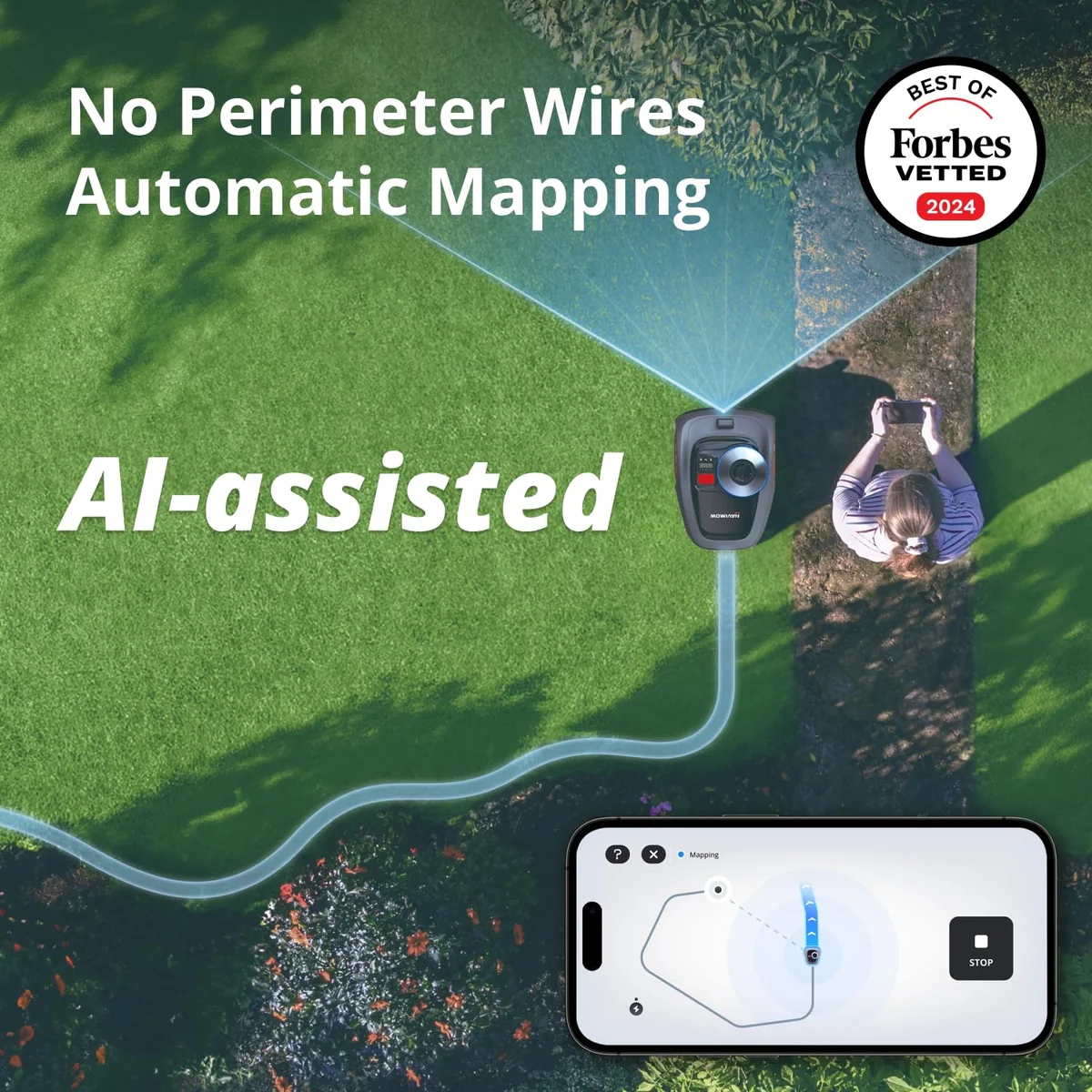
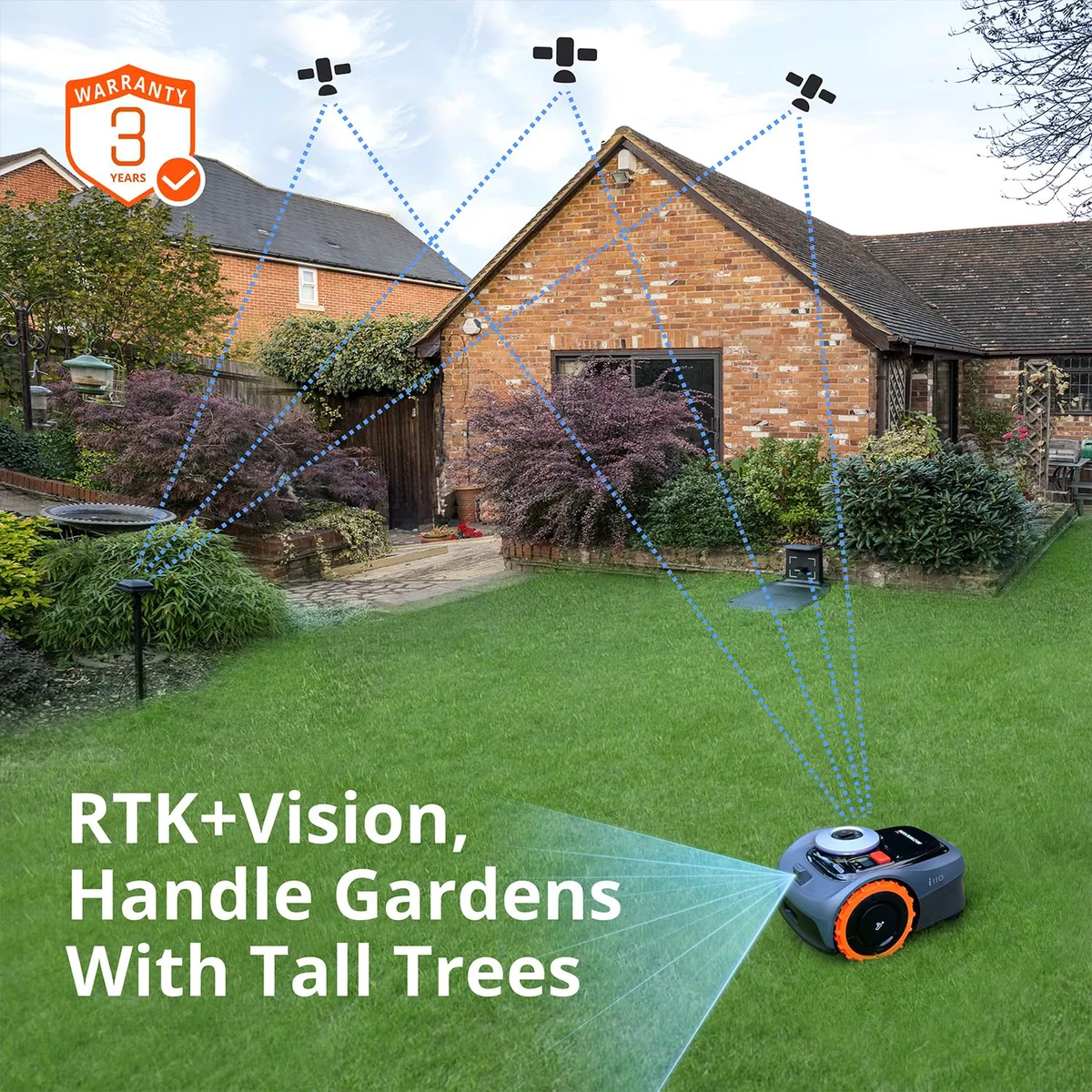
The i110N eliminates the perimeter loop that older robot mowers require owners to trench around the lawn. That is a genuine advantage, especially when a bed moves or a boundary needs correcting. It does not eliminate installation. The charging dock needs level ground and power, while the separate GNSS antenna needs a useful view of the sky and its own cable routed back to the system.
Do not permanently secure either piece as soon as it leaves the box. Let the app approve the locations, build a test map, and watch several complete runs first. A site that looks tidy beside the house may provide poor satellite reception; an exposed antenna position may work electrically while looking absurd in the middle of a small yard. A wall or roof mount can solve that problem, but it is another accessory and another installation job.
The map is where autonomy is earned
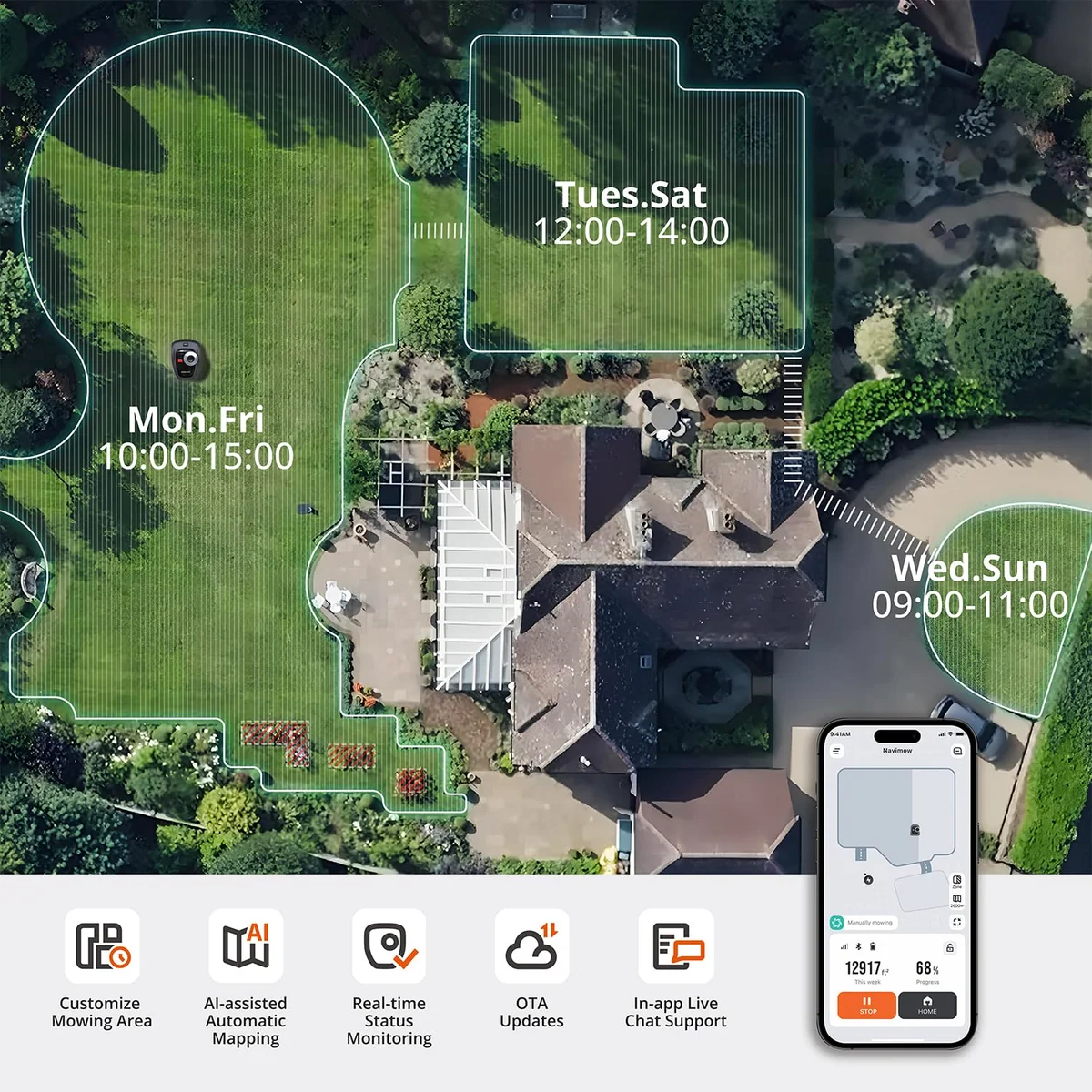
Clear grass-to-driveway and grass-to-mulch transitions give the assisted mapping system its easiest assignment. Ambiguous edges, fences, curbs, ponds, roots, and narrow passages deserve manual mapping with the phone’s Bluetooth controller. Standard boundaries keep the whole mower inside the line, while ride-on boundaries let it straddle a flush sidewalk or driveway for a closer cut. No-go areas protect beds and hazards, channels connect separate zones, and vision-off areas tell the camera not to panic over harmless bare dirt or paving.
This flexibility is excellent once its vocabulary makes sense, but the app can make a simple idea feel obscure. Adding another mowing area may involve creating a “boundary” that later becomes a numbered zone, and a small correction can be more tedious than remapping. Set-and-forget begins after set, watch, adjust, and occasionally alter the yard.
Vision helps, but it is not permission to leave the yard cluttered
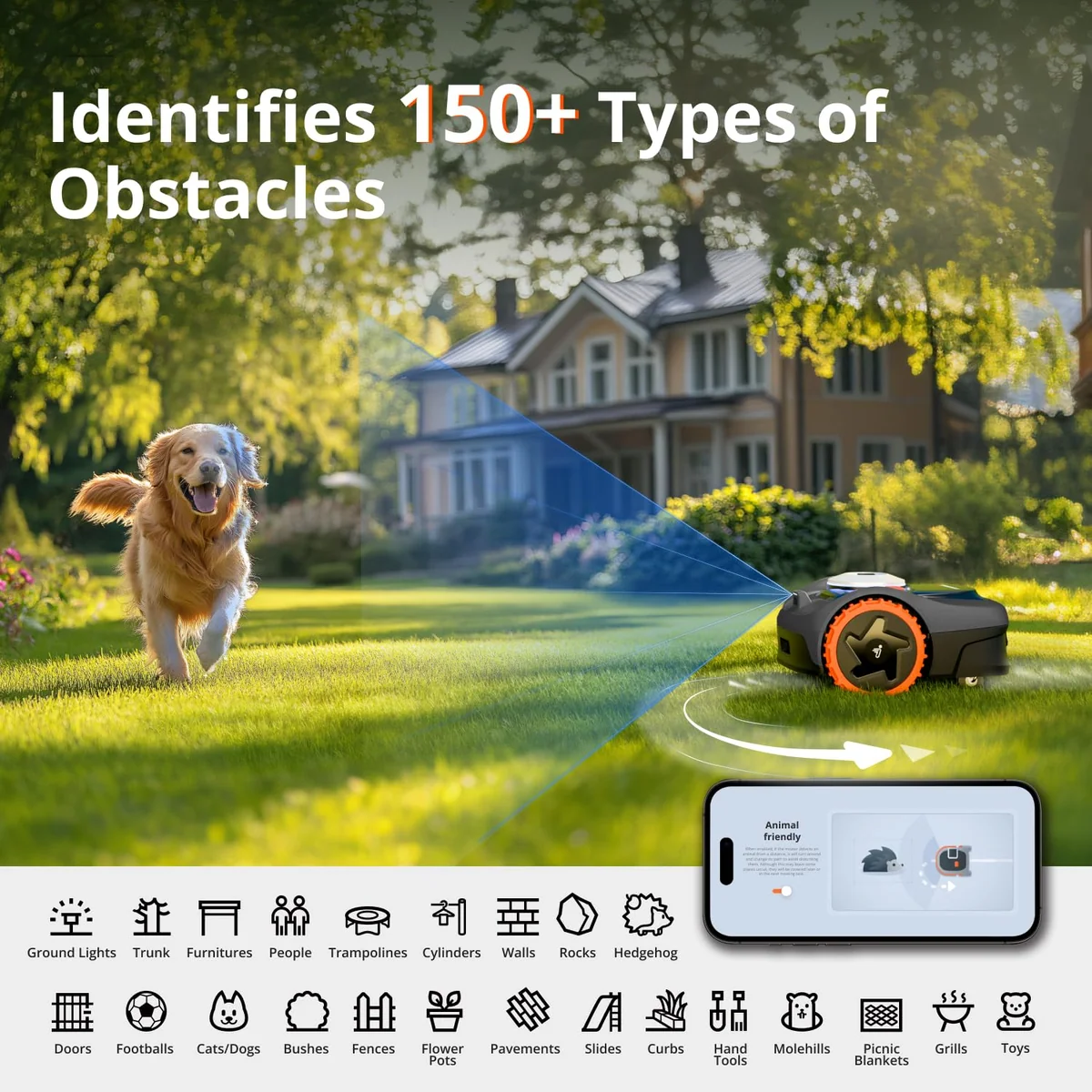
The camera steers around people, trees, pots, furniture, and many ordinary toys. It can also mistake bare patches, moss, stones, or clumps of grass for obstacles, leaving generous islands of uncut turf. Small branches, rocks, pinecones, cables, and pet waste should still be removed. Object recognition is a useful second line of defense, not a guarantee that every low or visually confusing hazard will be spared.
Strengths & Limitations
Strengths
- Virtual boundaries remove the cost and inconvenience of burying a perimeter wire.
- Systematic, frequent cutting keeps compatible lawns at a consistently tidy height.
- The larger i1 battery makes sense for lawns approaching one-quarter acre.
- Quiet operation allows regular maintenance without combustion-mower noise.
- Flexible zones, channels, no-go areas, and boundary modes reward careful setup.
Limitations
- Small dips, ruts, roots, thick turf, and wet slopes can cause repeated rescues.
- The antenna, powered dock, mapping walk, and boundary refinement make installation more involved than the wire-free label suggests.
- A quarter-acre cycle normally requires multiple work and charging sessions.
- Walls, fences, raised beds, and unsafe edges still require trimming.
- Navigation quality remains exposed to satellite conditions and firmware changes.

The mower can take a day without taking your day
The quarter-acre label is a mapping and maintenance capacity, not a promise of one-charge coverage. The 5.1 Ah battery is rated for about 120 minutes of mowing, and the published productivity rate is only 0.02–0.03 acre per hour. A full-size map therefore requires several mowing and charging sessions even before turns, obstacles, slopes, thick grass, and travel between zones slow the job further.
That sounds dreadful beside a push mower that can finish the same ground in an hour, but elapsed time is the wrong comparison. The Navimow works while dinner is cooking, emails are being answered, or nobody is paying attention at all. Frequent scheduling also matters more than speed because each session removes so little growth. Near its capacity ceiling, it needs enough open days in the schedule to keep up.
Uneven ground is the decisive drawback
The i110N is a non-AWD mower with low bodywork and small caster wheels. Shallow dips, exposed roots, ruts, soft soil, thick turf, wet inclines, and abrupt transitions can strand it even when the headline slope number suggests the lawn should be manageable. Off-road wheels and traction-control software help, but they do not turn this chassis into an all-terrain machine.
Mowing direction can make the difference between repeated alerts and an uninterrupted cycle. A wheel that drops into a groove while travelling along it may cross the same groove cleanly from another angle, so the app allows troublesome directions to be excluded by zone. Filling depressions, smoothing bumps, and drawing conservative exclusions often solve more than another round of settings.
Curbs and other drops require particular caution. The rear of the mower swings during a turn, and obstacle vision is not dependable cliff protection. Draw the boundary several inches back, supervise the first runs from every allowed direction, and repeat that supervision after a map or firmware change. A mower that navigated a parking strip correctly last week should not be trusted beside traffic merely because the app says the map is unchanged.
Edges still belong to the owner
Ride-on boundaries can leave a close finish where turf meets level paving, but walls, fences, raised borders, trees, and unsafe drops create a strip the cutting disc cannot reach. A string trimmer remains part of the arrangement. The i110N can remove most mowing labor on a compatible property; it does not remove every blade of manual work.
Noise is the uncomplicated success. At a stated 58 dB(A), the mower is easy to lose beneath ordinary outdoor sound, and the cutting blades are often more audible than the drive motors. Quiet operation makes frequent schedules practical, although darkness reduces the reassurance supplied by its camera and raises the risk to nocturnal wildlife.
Buy for the yard you have, not the acreage on the box
The i110N earns its place by combining accurate virtual boundaries, systematic mowing, a useful app, and a larger battery without moving into a heavy AWD machine. On firm, open, uncomplicated turf, paying for more traction or LiDAR may add little to the result. On the wrong property, money saved on the mower can quickly reappear as antenna mounts, off-road wheels, a cellular module, a garage, and hours spent correcting trouble spots.
For a lawn well below one-eighth acre, the choice between the i110N and i105N is mostly a question of capacity: they share the same basic navigation and cutting hardware, while the i110N doubles the battery capacity and nominal runtime. Near a quarter acre, that larger pack makes the i110N the sensible member of the older i1 family.
If traction is the objection, the newer AWD line is the better answer. The i206 AWD comparison explains the trade, though its 0.15-acre rating makes the i210 AWD the closer capacity match for a full quarter acre. If the yard is a satellite canyon beneath large trees or between tall buildings, the Navimow i215 LiDAR addresses that localization problem more directly than another attempt to reposition the i110N antenna.
The hardware is simple; the autonomy is not
Routine care is undramatic. Inspect the three pivoting blades, remove compacted grass that prevents them from swinging freely, wipe the camera, clean the charging contacts, and clear debris from the caster area. Blade wear depends on grass and debris rather than the calendar, although the app’s maintenance interval provides a useful prompt. Gentle hose cleaning suits the IP66 enclosure better than aggressive pressure washing.
The Navimow Garage S is optional rather than essential to mowing. It adds shade, makes the dock less conspicuous, and reduces direct weather exposure, but it should be judged as a separate accessory rather than a missing piece required for the mower to function.
An OEM 5.1 Ah replacement battery exists, but the evidence does not establish a straightforward owner-service procedure. That matters because the pack is not a slide-out tool battery. Buyers planning for several seasons should assume eventual battery service is an ownership cost without assuming the swap will be a quick do-it-yourself job.
Software is the less predictable part of the ownership story. Updates have added useful functions such as traction control and blade-on manual driving, yet detailed owner reports also document map drift and new positioning errors after major firmware changes. The mechanical mower can remain sound while an update changes how confidently it behaves, so supervise the first cycle after any substantial software or mapping revision.
Support experiences are similarly mixed. Straightforward replacements and operating advice can be handled well, while complex antenna and map failures have produced repetitive, technically shallow answers. That uncertainty is another reason to reject a marginal installation before the return window closes rather than hoping support will make an unsuitable yard compatible.
Frequently Asked Questions
Will the i110N finish a quarter acre on one battery charge?
No, the quarter-acre figure is its rated maintained area, and a lawn near that limit should be expected to require several mowing and charging sessions.
What equipment and connections does the initial setup require?
Setup requires a powered level dock, a cabled GNSS antenna with useful sky exposure, the phone app, Bluetooth for close mapping control, and Wi-Fi for commissioning, updates, and remote functions.
Can its battery be replaced when it eventually wears out?
An OEM 5.1 Ah replacement pack exists, but the available evidence does not establish a simple owner-service process.
Does the mower need its optional garage?
No, the IP66 mower can operate without one, though a garage adds shade, concealment, and protection from direct exposure.
Will it maintain grass beneath mature trees?
It can work through partial or intermittent obstruction when antenna reception is good, but dense canopy and narrow building corridors remain substantial RTK risks.
Can it be left to detect rain by itself?
The mower is weather-resistant but relies on forecast-based adaptation rather than a dependable physical rain detector, so an unexpected shower or manual start can still send it onto wet grass.
Sources (18)
- Amazon listings and customer reviews — Segway Navimow I110n
- Owner and reviewer video, 21 channels
- Walmart listing
- Toptenreviews — Article — www.toptenreviews.com
- Pcworld — Article — www.pcworld.com
- Homedepot — Article — www.homedepot.com
- Lowes — Article — www.lowes.com
- Robotmowerlab — Article — robotmowerlab.com
- Forbes — Article — www.forbes.com
- Lifehacker — Article — lifehacker.com
- Makeuseof — Article — www.makeuseof.com
- Navimow — Article — navimow.com
- Segway — Article — navimow.segway.com
- Tomsguide — Article — www.tomsguide.com
- Site — Article — segway-navimow.my.site.com
- Consumerreports — Article — www.consumerreports.org
- Propartsdirect — Article — www.propartsdirect.net
- Facebook — Article — www.facebook.com