The Mowrator S1 gets you off the hill, but it never gives you your Saturday back
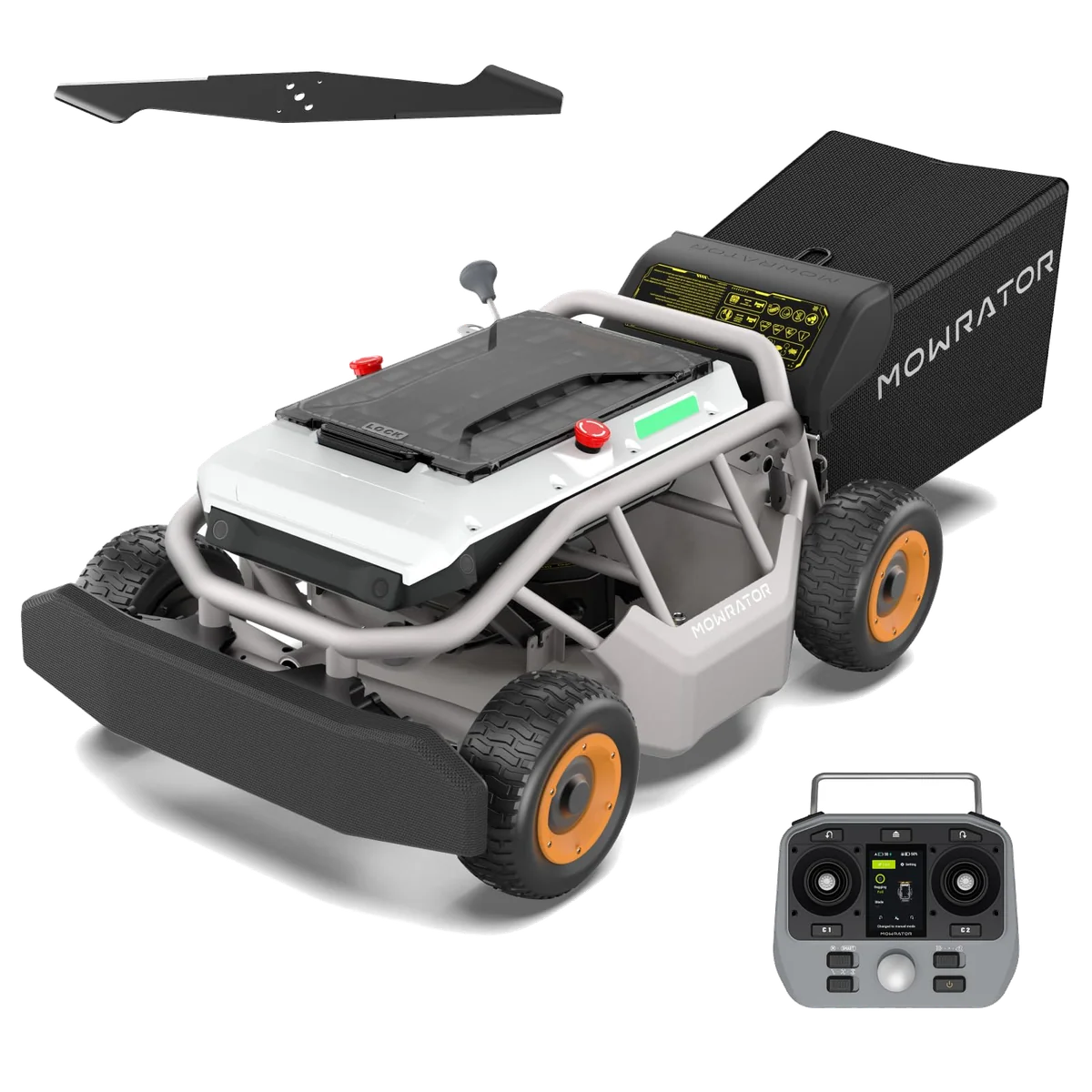
Buy the Mowrator S1 4WD 12Ah if a bank is too risky to walk or ride, but skip it if the goal is unattended mowing.
Buy it for the ground that keeps you awake
The Mowrator S1 4WD 12Ah earns its place where a rider feels reckless and a push mower puts the operator in danger. It is especially persuasive for someone with limited walking strength who still wants direct control, provided the property has clear sightlines, a drivable route between sections, and sheltered storage.
Everyone else should walk away. If the lawn is flat, the turf is precious, or the dream is to schedule a cut and leave, the S1’s weight, skid marks, sensor compromises, and continuous steering are needless burdens. For genuinely difficult land, it is one of the more coherent choices in our guide to remote mowers for steep hills and rough ground.
Strengths
Weaknesses
Best for: Remote control for steep hills
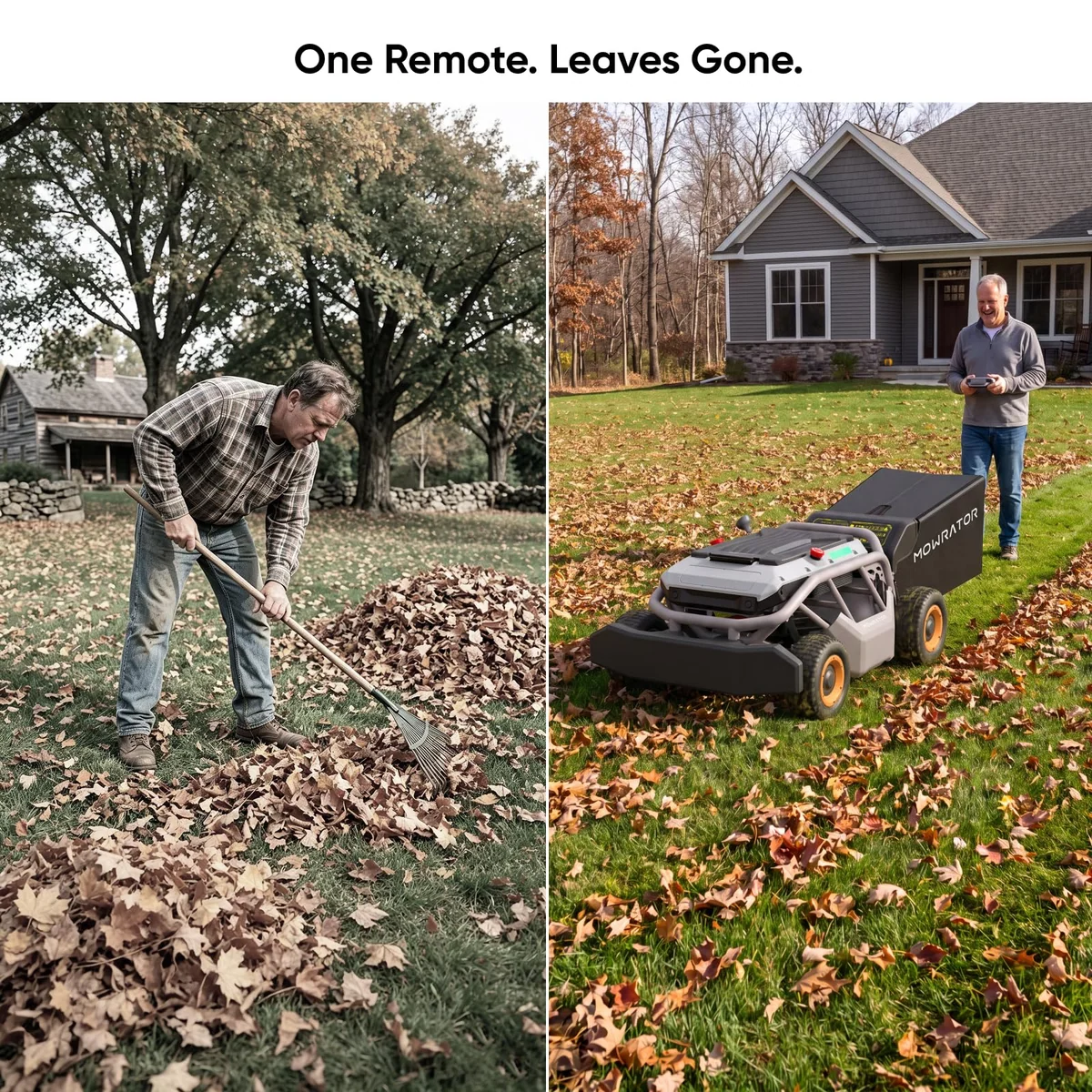
The most important control never leaves your hands. The S1 is a heavy electric mower on a four-motor skid-steer chassis, and every turn across the lawn comes from its handheld controller. It does not map the property, follow a schedule, find a charging station, or finish the job while nobody is watching.
That makes it a poor robot mower and a compelling small slope mower. A full-width metal blade tackles the sort of tall, coarse growth that can overwhelm maintenance robots, while remote control keeps the operator off a bank, away from poison ivy, and clear of insects or dust. The distinction between robotic and remote-control mowing is the whole buying decision here.
The S1 removes pushing, pulling, vibration, and the need to balance behind a deck on hostile ground. It does not remove supervision, steering, cleanup, charging, or the walk required to maintain a clear view. This is effort-saving machinery, not time-saving automation.
Key Specifications
It mows like a mower, not a lawn-maintenance bot
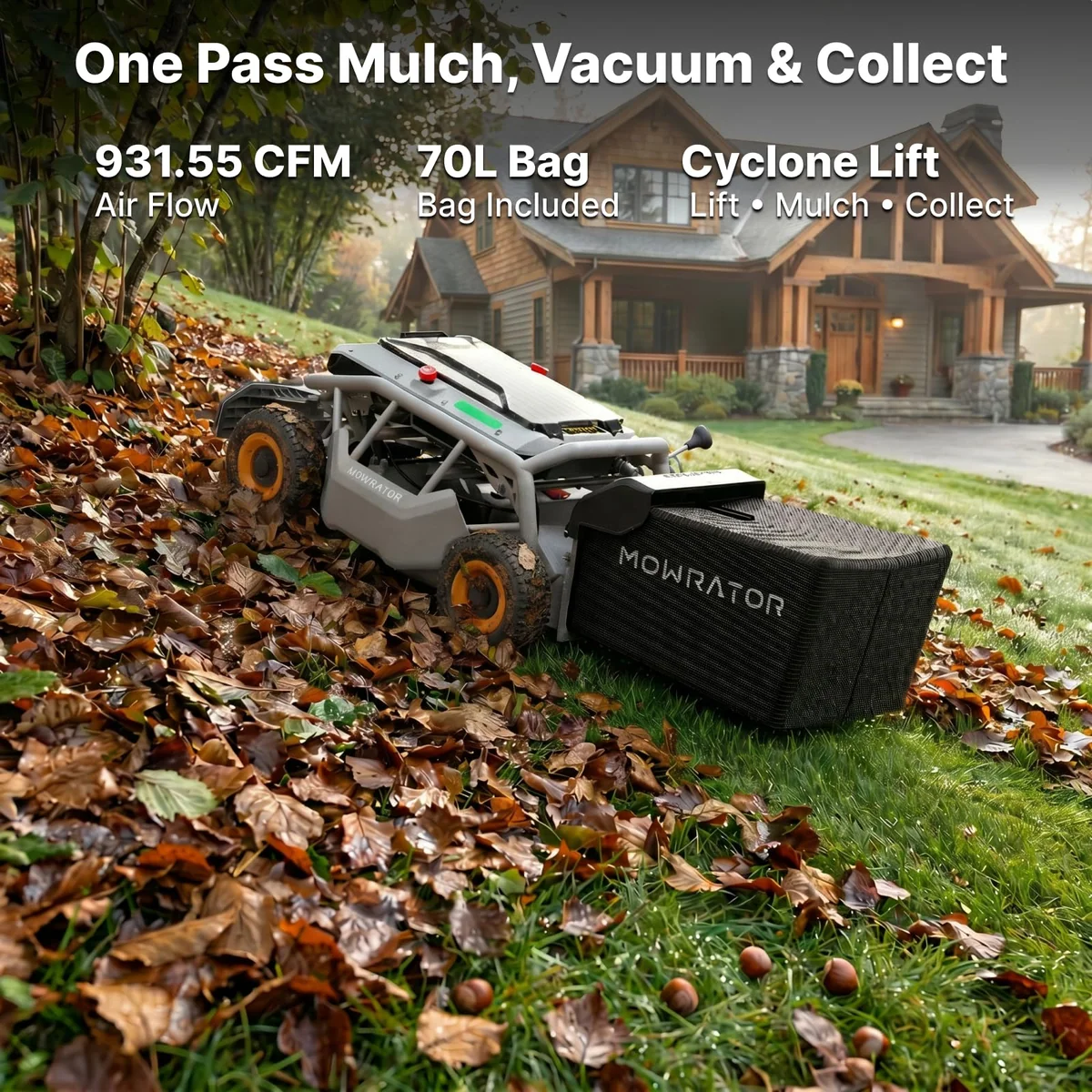
Send it into knee-high weeds and the appeal becomes obvious. The 21-inch deck uses one conventional metal blade instead of the small pivoting cutters common beneath autonomous machines. It can mulch, bag, or throw clippings from the rear, and its five-position height adjustment reaches from roughly 1.5 inches to a little over 4 inches on the exact listing.
The result is much closer to a familiar push-mower finish than a robot’s frequent light trim. Dense areas may need a second forward-and-reverse pass, and woody stems or hidden rocks remain blade-damaging hazards. “Small brush hog” captures the attitude, not the warranty; this is still a lawn mower.
Remote perspective is the unexpected limit. From the porch, sunlight and distance make the previous wheel track harder to judge, so thin missed strips and wandering rows can appear even when the deck itself is cutting cleanly. Cruise control and automatic U-turns help with long passes, but they do not plan lanes or correct poor overlap.
The zero turn is both trick and trap
Skid steering lets the S1 rotate in its own footprint, which looks brilliant around a tree and can be brutal on the grass beneath it. Tight pivots can scrub bare patches into damp, weak, or carefully finished turf. Rolling turns are the better habit, especially on a slope where counter-rotation can also surrender traction.
There is a credible exact-model report of turn input behaving as fully on or off regardless of joystick pressure, with the wheels spinning faster than expected. Other operators have achieved fine rotational control, which points to firmware, setup, or production differences rather than a universal behavior. Either way, precious lawn is the wrong place to discover which version of the experience arrives.
Strengths & Limitations
Strengths
- It cuts with a full-size 21-inch blade and can mulch, bag, or rear-discharge.
- Four driven wheels give it uncommon control on steep, broken ground.
- Remote operation keeps the user away from slope exposure, insects, dust, and deck vibration.
Limitations
- It requires continuous steering and never docks or charges itself.
- Skid steering can tear damp or weak turf during tight turns.
- Its roughly 115-to-135-pound mass can make recovery and transport a two-person job.
- Remote, firmware, sensor, and support complaints make ownership risk more than theoretical.

The hill number is credible until the ground gets slippery
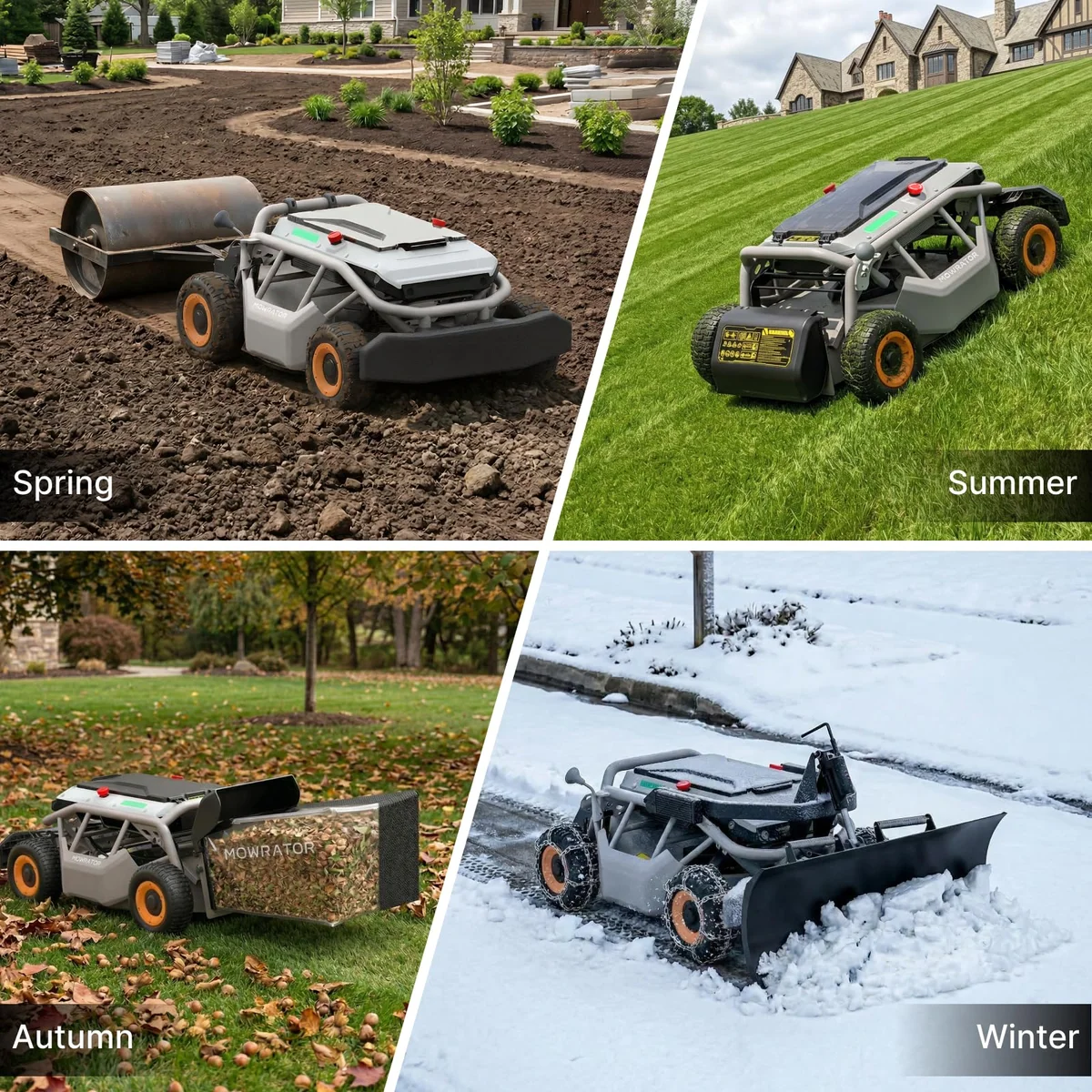
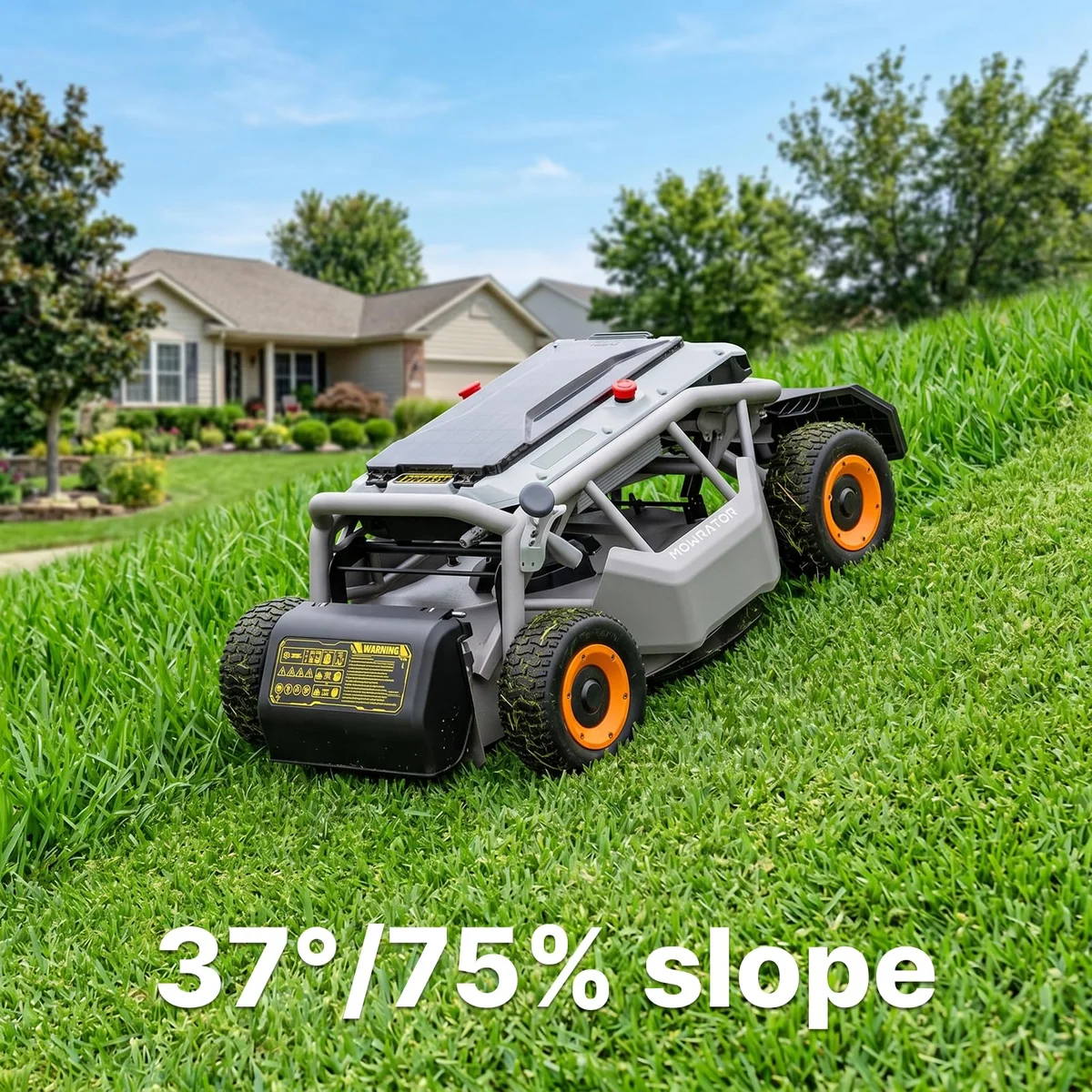
The standard-tire 4WD model is rated for a 75% grade, which is about 37 degrees rather than 75 degrees. That claim has unusually strong support in practical use: the mower climbs banks that trouble riding mowers, crosses rough transitions that stop smaller robots, and keeps working on uneven ground where following a push mower would be miserable.
The number is a limit under favorable conditions, not permission to ignore the surface. Dew, wet grass, loose soil, sand, roots, holes, and thick vegetation all consume traction. Straight ascent and descent are its strongest lines; turning across a steep face is where the wheels begin to slide or tear turf. A route it cannot climb can sometimes be cut downhill, but that demands a safe recovery path at the bottom.
Higher 40- and 50-degree claims belong to different tire packages and configurations, not this standard 12Ah listing. Buyers facing more severe ground should start with the property, not the brochure: measure the actual grade, inspect the runout, and decide how a powerless 100-plus-pound machine would come home.
The sensors help until the grass becomes the obstacle
Four ultrasonic sensors, a contact bumper, tilt protection, mower-mounted stops, a remote emergency stop, and deliberate blade engagement provide meaningful layers of control. The bumper and sensors can stop the machine around rocks, ornaments, people, and animals, but tall weeds, leaf piles, retaining walls, and even the slope itself can trigger nuisance stops.
Sensor sensitivity can be reduced or disabled, which may be necessary to cut close to an edge or enter overgrowth. That convenience transfers the collision risk straight back to the operator. Once protection is bypassed, the S1 is a remotely driven 21-inch blade with enough traction to climb a fence, not a toy that has become temporarily less cautious.
The 12Ah battery deserves conservative planning
The exact configuration is advertised for as much as 1.5 hours or 0.75 acre per charge, yet one exact-listing owner reported about an hour even when the grass was not thick. Slopes, overlap, repeated passes, turns, sensor interruptions, and bag emptying all pull real coverage below the clean mathematical maximum. Treat 0.75 acre as ideal-condition capacity, not a promise.
The current exact listing specifies a 600W charger and a 70-minute recharge, while dealer material also mentions a 300W charger and a 90-minute charge. Confirm the charger supplied with the unit rather than building a mowing plan around inconsistent bundle copy.
A terrible robot can still be the right slope mower
On a flat, accessible lawn, the economics collapse. A conventional self-propelled mower is simpler, lighter, and vastly easier to recover, while an autonomous model returns the time that the Mowrator still consumes. Paying a premium to hold a controller for the whole job makes little sense when neither terrain nor physical strain demands it.
On a dangerous bank, the comparison changes. The S1 is no longer competing with a basic push mower; it is competing with rollover risk, exhausting side-hill walking, specialty slope equipment, or recurring lawn-service bills. One owner’s steep two-acre job fell from six hours of push mowing to four hours by remote, which is a modest time gain and a major reduction in bodily punishment.
| Primary job | Better choice | Reason |
|---|---|---|
| Dangerous bank, ditch, or rough verge | Mowrator S1 4WD | Direct routing keeps the operator off the ground while the full blade handles substantial growth. |
| Routine weekly mowing on a navigable lawn | Mammotion LUBA 3 AWD 5000 | Autonomous operation gives the owner’s time back instead of replacing pushing with steering. |
| Flat, uncomplicated suburban grass | Self-propelled mower | Less weight, less complexity, and no remote or firmware system to maintain. |
The Mowrator beats an autonomous machine when one ugly area needs judgment, repeated passes, and a route chosen in real time. The Mammotion LUBA 3 AWD 5000 beats the Mowrator when the lawn permits routine autonomous work and the point of buying a robot is to stop mowing. Choose the job, then choose the machine.
Ownership starts with the recovery plan
Published operating weights vary with battery and configuration, but roughly 115 to 135 pounds is the honest range to plan around. The removable 12Ah battery accounts for 16 pounds, yet taking it out does not make the mower pleasant to lift. Steps between lawn levels, a narrow shed door, a ditch with no drivable exit, or transport in a vehicle can turn limited-mobility relief into a two-person handling problem.
It also needs dry, ground-level storage. IP54 splash resistance is not permission to pressure-wash the body or leave it in prolonged rain. Grass packed beneath the deck should be cleared, and the underside should be dried after cleaning because corrosion and blade-motor overheating have both appeared in ownership reports.
Firmware is another unpolished edge: the available update process requires Android, even though a phone cannot replace the controller. Support reports are sharply divided. Owners have received firmware fixes, motors, blades, knobs, and other repair parts, sometimes with useful installation instructions; others describe unanswered calls and emails after dead-on-arrival or remote-range problems. A two-year warranty helps only when a case reaches someone.
The retained exact-product reviews are too few to turn either the praise or the failures into a dependable rate. What they establish is narrower and more useful: cutting and hill performance are convincing, while remote electronics, software, service response, and parts access remain purchase-level risks.
Frequently Asked Questions
Is the Mowrator S1 autonomous?
No, the operator must steer it throughout the entire cut because it does not map, schedule, dock, or recharge itself.
Can the standard 4WD model really mow a 37-degree slope?
It is rated for a 75% grade (37°) and has strong real-world hill performance, but wet turf, loose ground, thick growth, and turns can defeat that rating.
How long does the 12Ah battery last?
The listing claims up to 1.5 hours and 0.75 acre, while an exact-model owner reported about one hour in grass that was not thick.
Will it damage a finished lawn?
It can scuff or tear turf during tight skid turns, especially when the ground is damp or the grass is weak.
Can an iPhone update its firmware?
No, the documented firmware process requires access to an Android device even though mowing itself uses the dedicated controller.
Sources (14)
- Amazon listings and customer reviews — Mowrator S1 4wd
- Owner reports across r/MowratorOfficial, r/automower, r/rctoys and 4 more threads
- Owner and reviewer video, 10 channels
- Freshlycharged — Article — freshlycharged.com
- Mowrator — Article — mowrator.com
- Trustpilot — Article — www.trustpilot.com
- Pcmag — Article — www.pcmag.com
- Pcworld — Article — www.pcworld.com
- Reviews — Article — www.reviews.org
- Wellbots — Article — www.wellbots.com
- Facebook — Article — www.facebook.com
- Myprosandcons — Article — mowrator.myprosandcons.com
- Tomsguide — Article — www.tomsguide.com
- Mowingmagic — Article — mowingmagic.com