The Mammotion LUBA 3 AWD 5000 is a brilliant hill mower with a soft-turf problem
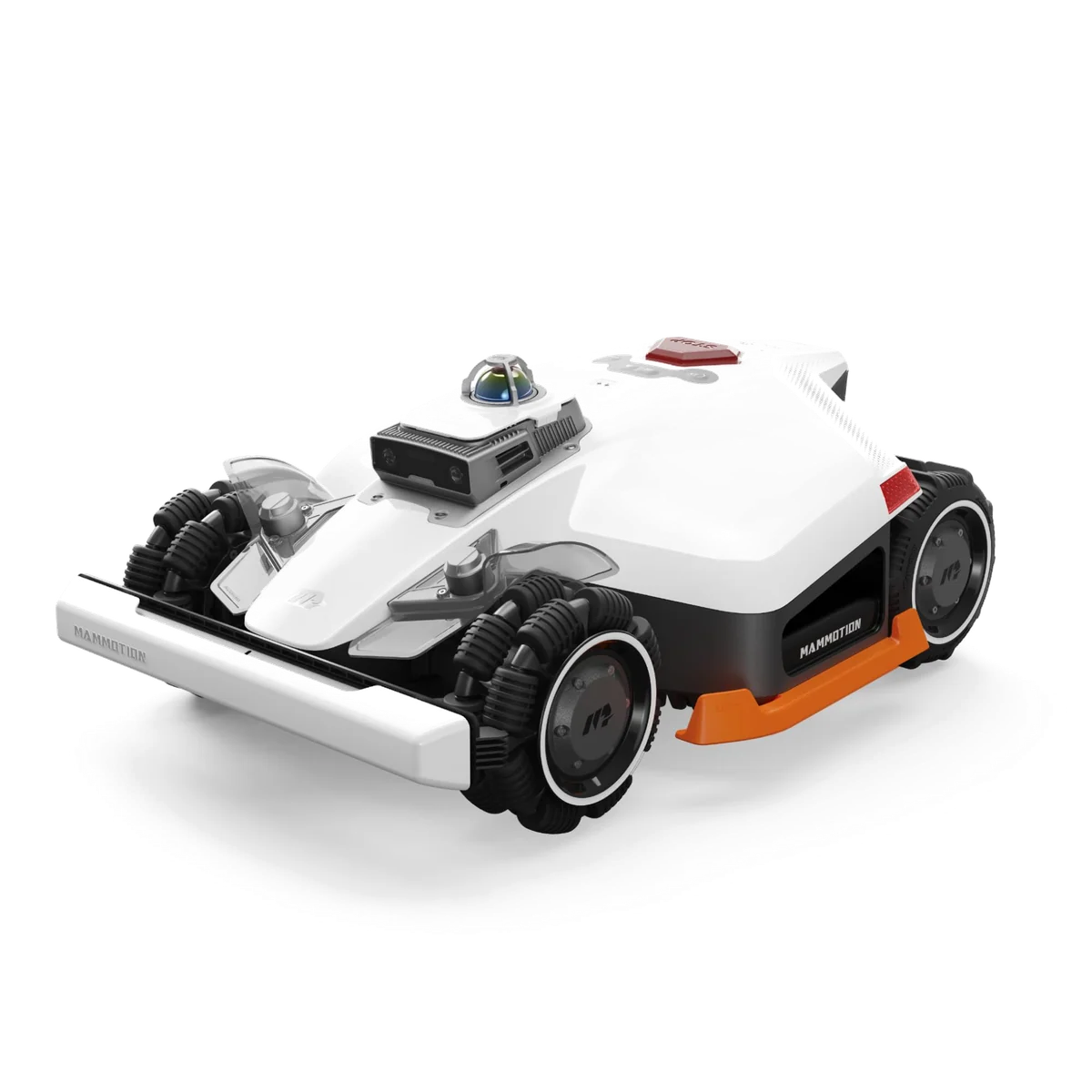
Buy the LUBA 3 AWD 5000 for a large, genuinely steep lawn with firm ground, but choose the Navimow X430 instead if fragile or sandy turf matters more than LiDAR-led navigation.
Buy it for the yard you actually have
The LUBA 3 AWD 5000 is not the effortless answer to every large lawn. It is the unusually capable answer to a specific one: firm ground, real slopes, awkward satellite conditions and an owner willing to spend an afternoon building a careful map. There it can return hours every week and make dangerous banks look routine.
Soft soil changes the recommendation. So does a small rectangle, a demand for immaculate edges or no tolerance for software troubleshooting. Smart Lawn Bots would take the LUBA’s navigation for the hardest properties, but the Navimow X430 is the more forgiving purchase for a broadly conventional large yard.
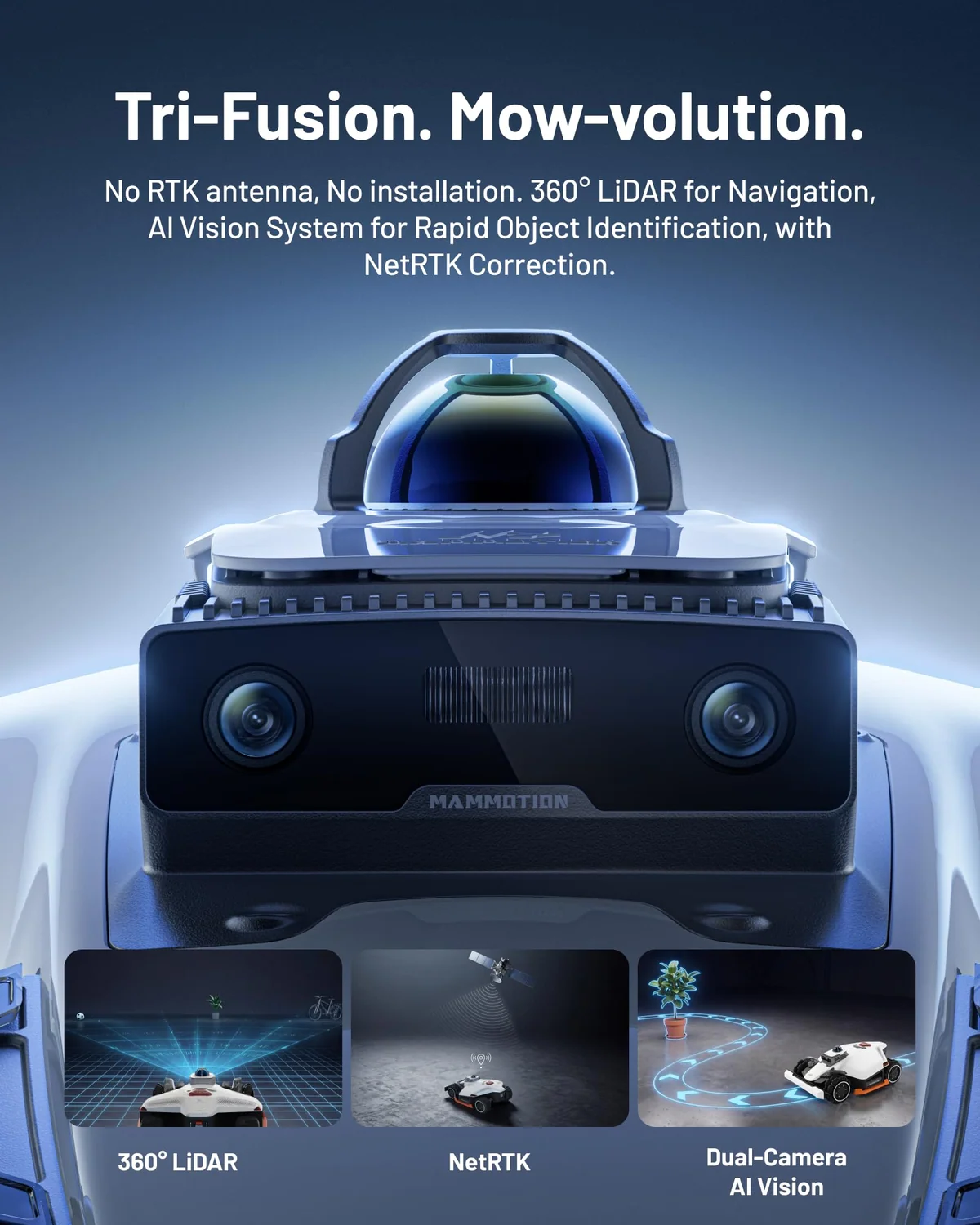
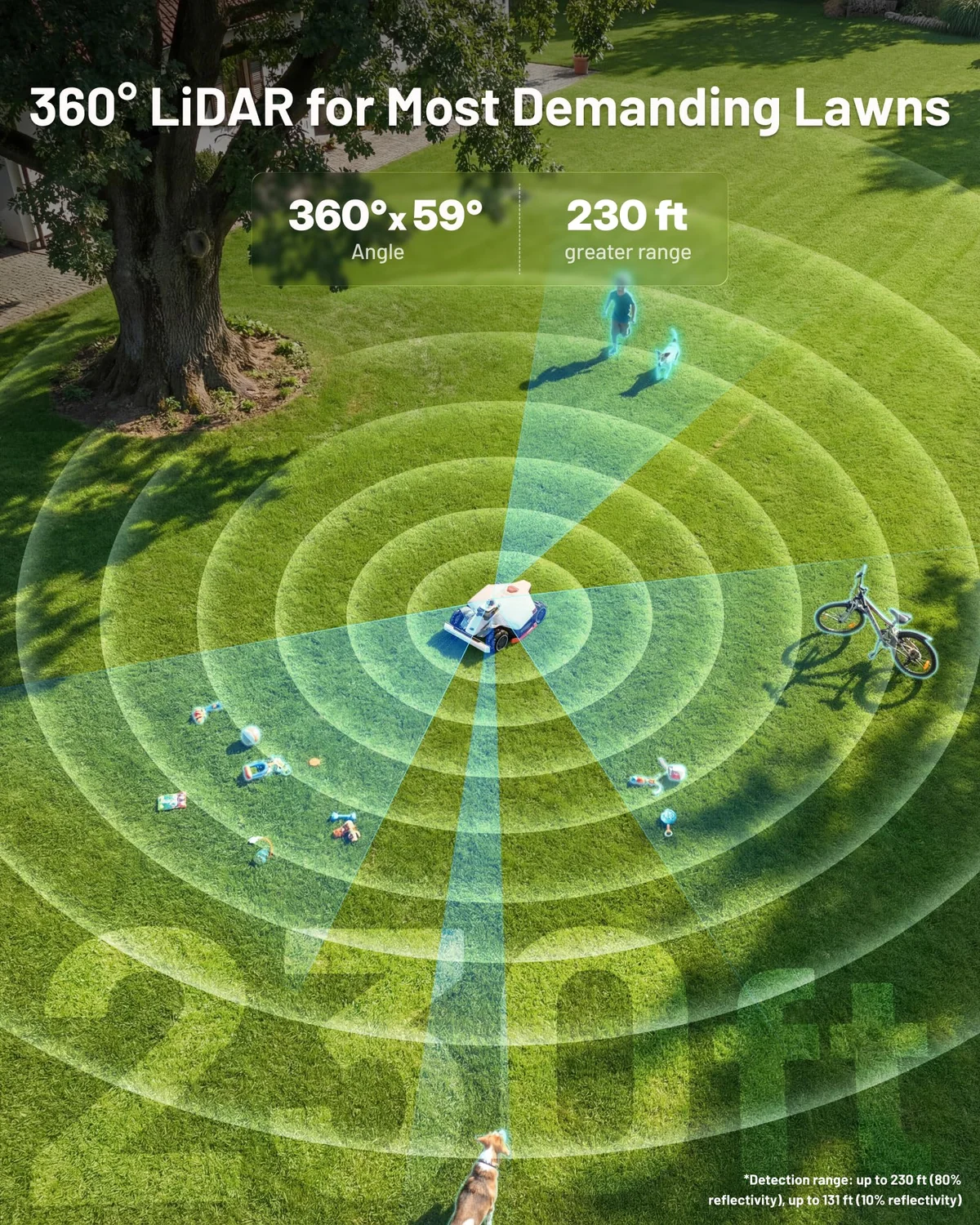
The LUBA 3 is built for the yard that makes an ordinary robot look lost: a bank behind the house, mature trees interrupting the sky, gravel between sections and enough grass that rescuing a stranded mower would become its own weekly chore. Four independently driven wheels keep the machine moving through ruts and across severe grades, while LiDAR, network RTK corrections and two cameras share the navigation work.
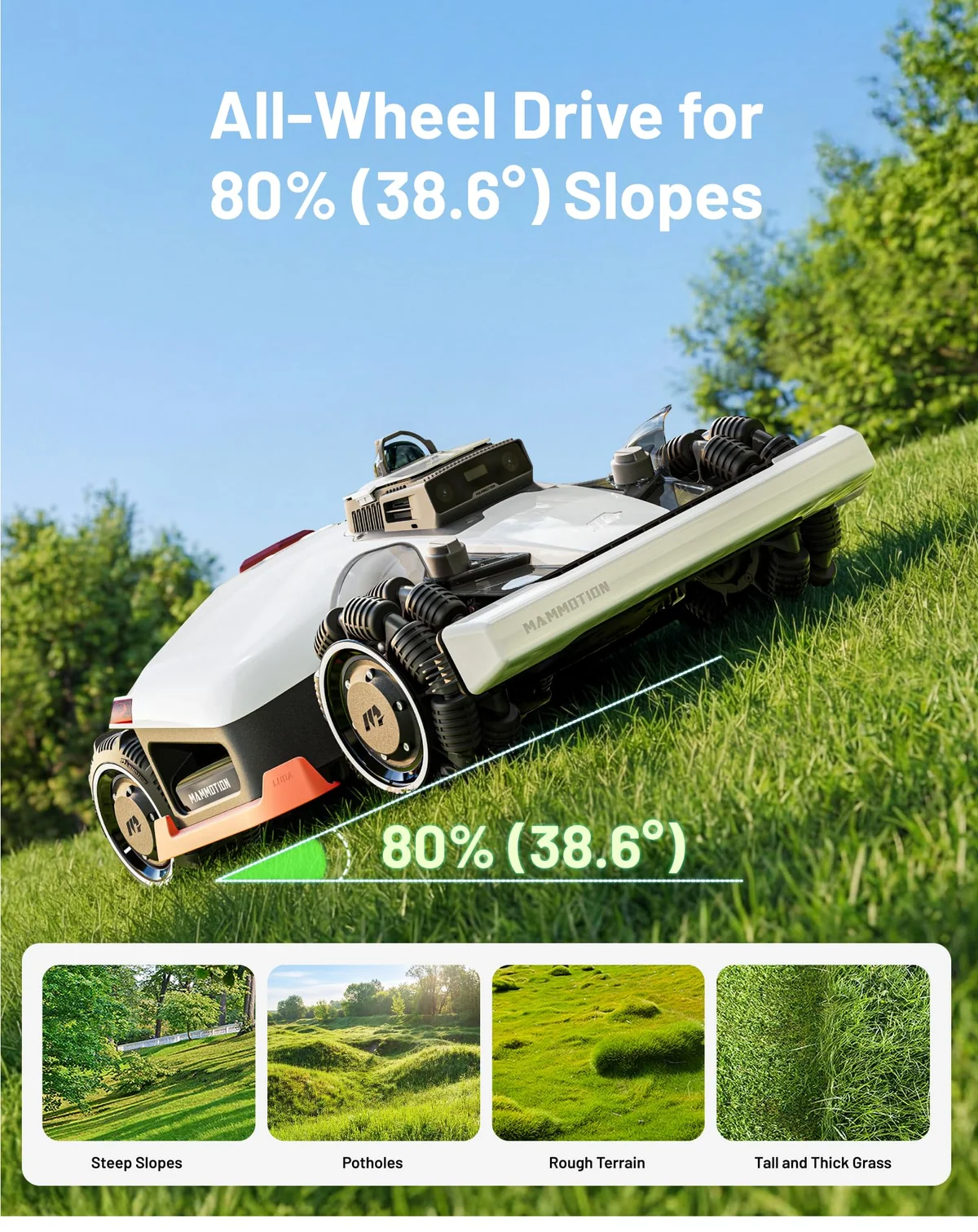
That combination is not marketing garnish. The mower can hold orderly lines beneath trees and beside buildings where satellite-only systems become uncertain, and it can continue at night without depending on camera light alone. On steep ground it is among the most convincing autonomous mowers available. An 80% grade means about 38.6°, not an 80° wall, and traction still changes with wet grass, loose needles and the direction of travel.
The drawback is just as physical as the advantage. LUBA turns by varying wheel speed rather than steering its front wheels, so the omni wheels can scrub soft ground while the rear wheels push the machine around. Firm turf may show nothing. Sandy, thin or wet grass can be excavated at perimeter turns, and repeated docking concentrates the same wear beside the charger. Multi-point turns help, but they do not redesign the chassis.
There is also a naming trap in this particular offer. B0GR8WTD73 is presented as the standard-height LUBA 3 AWD 5000 with a 1.0 to 2.7-inch range, not the taller-cut 5000H, even though inconsistent catalogue metadata mentions a 3000 garage variant. Confirm the selected variant before ordering, especially if the lawn must remain above 2.7 inches.
Key Specifications
No wire does not mean no setup
No perimeter cable is required. Boundaries, channels, no-go areas and mowing zones live in the Mammotion app, so a bed can be reshaped without digging up wire. The reliable way to create those boundaries is to drive LUBA around them manually. Automatic mapping can handle a simple fenced rectangle, but on an open property line it may wander, merge distinct lawns into one large zone or spend hours exploring grass that was never meant to be included.
Manual mapping is slow only once. Reverse out of a poor corner, leave generous clearance around ponds and drop-offs, connect zones with channels, then narrow the margins after watching a complete cut. Low septic covers, loose cables and thin marker flags can escape the obstacle system, so anything that could damage the mower or be shredded belongs inside a no-go zone rather than inside a leap of faith.
The intended setup uses Mammotion’s iNavi or NetRTK correction service without a local antenna pole, and that arrangement works where coverage and software cooperate. It is not a universal promise. Some US buyers have been able to mow immediately through NetRTK, while others had to connect the supplied physical RTK station before mapping or switching services. Check coverage and assume the pole may still leave the box.
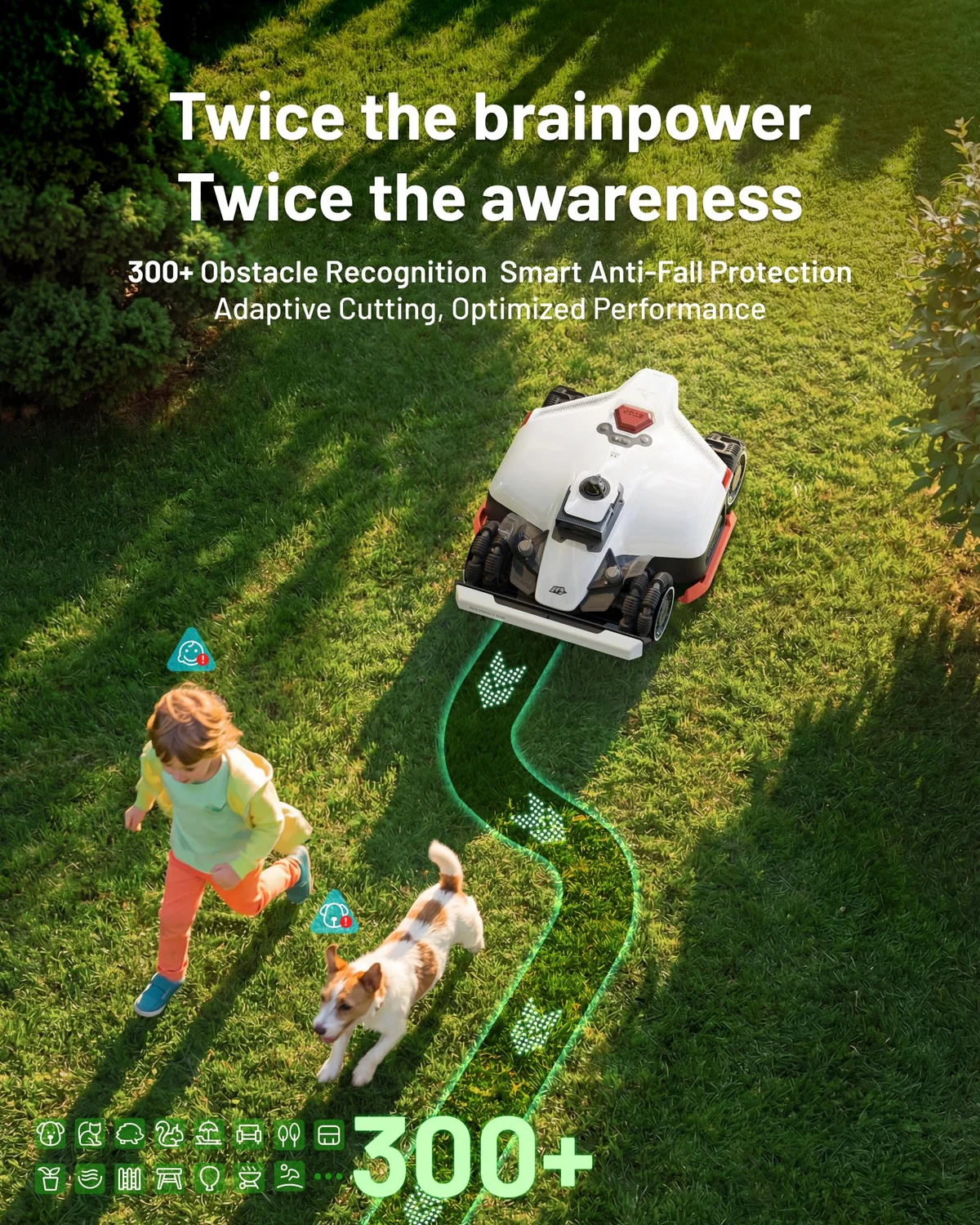
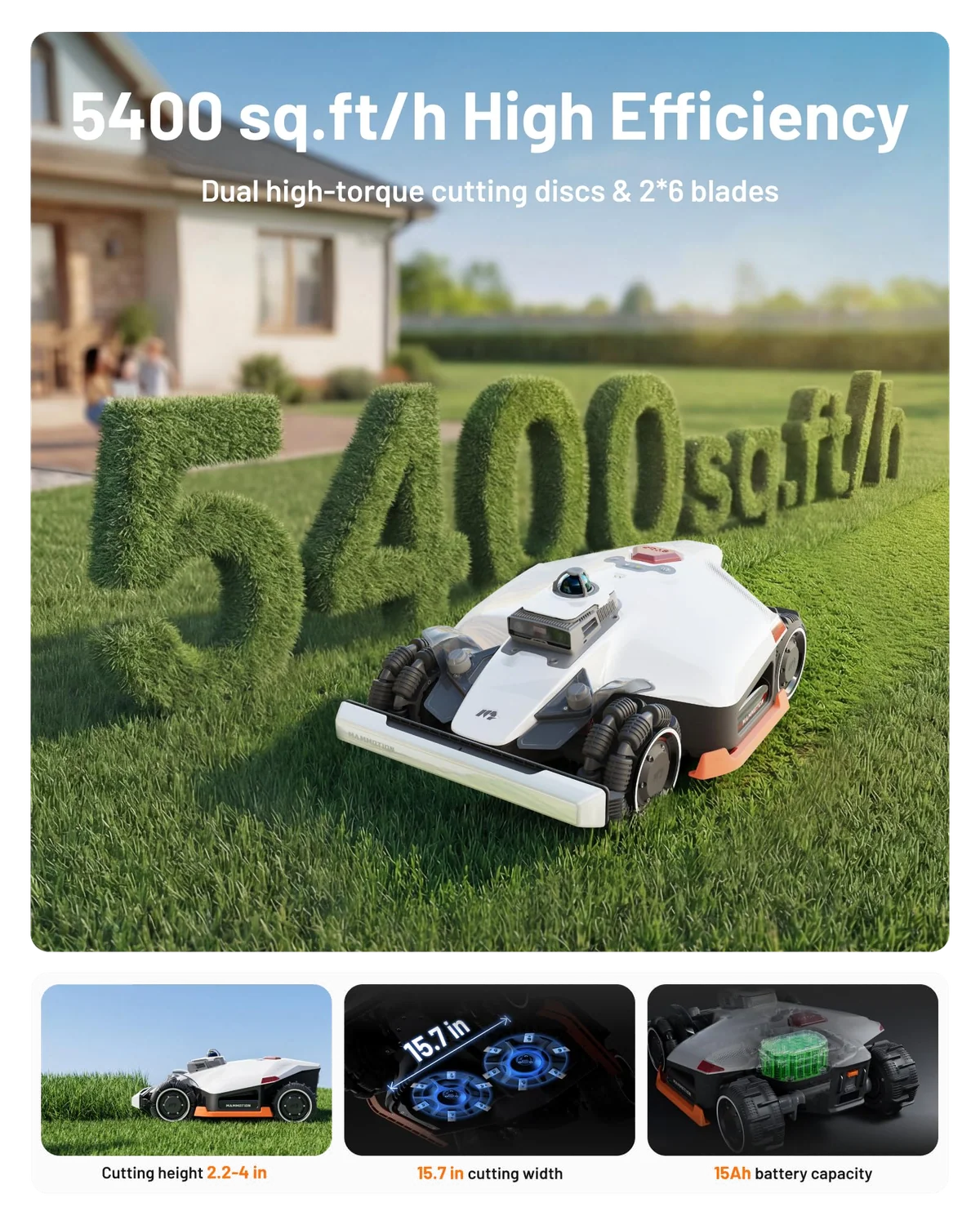
This is the meaningful leap over LUBA 2. LiDAR supplies local positioning under cover, NetRTK handles open areas, and the cameras identify objects. The redesigned twin-disc deck also carries 12 pivoting blades and resists fibrous grass wrapping more effectively. What did not disappear is the family’s learning curve, perimeter trimming and dependence on careful maps.
Strengths & Limitations
Strengths
- Four-wheel drive makes severe banks, ruts and rough transitions credible autonomous territory.
- LiDAR, NetRTK and dual cameras maintain position beneath trees and beside buildings.
- The wide 12-blade deck produces clean stripes when it is allowed to mow frequently.
- Long runtime and automatic recharge make the 1.25-acre management limit practical.
- Quiet operation allows long jobs without turning the yard into a work site.
Limitations
- Turning and docking can tear sandy, wet or fragile turf.
- Automatic mapping is unreliable enough that complex yards should be mapped manually.
- The app is powerful but firmware regressions and map-loss reports undermine confidence.
- Walls, posts and irregular borders still require regular string trimming.
- Return freight, repair access and long-term battery service need checking before purchase.
It climbs like a machine twice its size
On a long bank, the LUBA 3 can keep moving where smaller two-wheel robots spin or stop. It is happiest travelling up and down the fall line. Crossing a severe side slope asks more of the tires and control system, and downhill drift becomes more visible at high travel speed. Slowing the mower, changing the stripe angle and moving the virtual boundary away from a fence produce a calmer result.
All-wheel drive cannot manufacture grip. Wet clay, loose pine needles, deep holes and saturated turf can still stop the mower or provoke a digging turn. Those conditions do not erase its terrain advantage, but they explain why the maximum slope figure is a capability ceiling rather than a promise for every square foot of a property.
The first cut is not the cut to judge
The 15.7-inch twin-disc deck is a maintenance system, not a brush cutter. Give it grass already near the target height, schedule it every few days and the tiny clippings disappear into the lawn while consistent stripes build across repeated passes. Send it into six-inch growth and the wheels may flatten stalks before the blades reach them, long clippings can lie in clumps, and tall weeds may be interpreted as obstacles.
Slower travel, greater overlap and a second pass at another angle improve difficult areas. Reducing obstacle sensitivity can also make LUBA more assertive in tall growth, but that trades away protection for toys and wildlife. A conventional first cut is the better bargain. Once the lawn is under control, the robot can maintain it while consuming almost none of the owner’s time.
The 1.25-acre rating is the maximum managed lawn area, not one-charge coverage. The mower is specified for up to 215 minutes of work and about 0.42 acre per charge before docking and resuming; one long run reached roughly 210 minutes, close enough to make the runtime claim credible. Dense grass, checkerboard patterns and heavy overlap can turn one job into several charging cycles.
The edges remain yours
Flush pavers let the deck come close, while walls, tree beds, posts and irregular rock borders leave a visible strip. The gap can range from a few inches to much more around objects that trigger a conservative detour. Expect to use a string trimmer every week or two. The result can look professionally maintained, but LUBA does not deliver a bagged finish, collect leaves or erase every edge chore.
The expensive choice is not always the indulgent one
A push mower completes a small lawn faster and for far less money. LUBA earns its place by doing the work unattended, especially when the alternative is spending hours on acreage, paying for regular service or driving a ride-on across an uncomfortable bank. It is difficult to justify on a flat quarter acre and surprisingly rational on a complicated acre that consumes a weekend morning.
| Mower | Best reason to choose it | Reason to hesitate |
|---|---|---|
| LUBA 3 AWD 5000 | Steep, multi-zone ground with trees, buildings and difficult transitions | Fixed-wheel turns can scar soft turf, and the software demands patience |
| Segway Navimow X430 | Turf-friendly steering, a wider deck and a higher cutting range | Its navigation is less compelling where severe cover makes LiDAR especially valuable |
| LUBA Mini 2 1500H | A smaller difficult lawn where the full-size LUBA would be excessive | Far less area capacity, and even its dedicated edge disc does not eliminate trimming |
The full comparison with the Navimow X430 is the useful next step for a large lawn with delicate turf. The X430 is the safer default for most conventional yards; the LUBA 3 wins when trees, structures and complicated terrain make its richer navigation stack worth the extra friction.
For a smaller property, the LUBA Mini 2 1500H review explains what the compact sibling gives up in capacity. Buyers choosing between Mammotion’s two full-size coverage tiers should use the LUBA 3 3000H and 5000H comparison rather than paying for mapped area they will never use.
The hardware feels finished; the ownership system does not
The app exposes nearly everything an enthusiast could want: path spacing, blade speed, travel speed, stripe angle, turn style, obstacle sensitivity, return thresholds and individual zones. Basic mapping and starting a task are approachable. Finding advanced settings and recovering from a failure are not. Reports of lost maps, settings that unexpectedly apply across tasks and firmware updates that stop scheduled work make every major update feel more consequential than it should.
Cloud backup and rapid feature development may improve that picture, but a machine at this level should not ask an owner to recreate hours of boundaries because a setting changed. Keep screenshots of important maps, verify that backups can be restored on the installed software and avoid updating immediately before a critical mowing cycle.
Service is similarly uneven. Some owners receive prompt parts and clear help; others describe repeated requests for logs, unpaid freight on a defective 41-pound mower or months without a working machine. The three-year warranty is valuable only when the seller can execute it, so return shipping, local service and the identity of the actual seller deserve as much attention as the slope rating.
Routine care is straightforward but not trivial. Keep twigs and wire off the lawn, wipe the cameras and exposed LiDAR, inspect all 12 blades for free movement and clean wet clippings with a brush or gentle rinse. IPX6 water resistance is not permission to use a pressure washer. The battery is also not presented as a simple owner-swap component, which matters more as the mower moves beyond its first few seasons.
Frequently Asked Questions
Is B0GR8WTD73 the LUBA 3 AWD 5000H?
No, the supplied product record identifies it as the standard-height 5000 with a 1.0 to 2.7-inch cutting range, despite inconsistent variant metadata elsewhere in the catalogue.
Does the LUBA 3 AWD 5000 need a perimeter wire?
No, its boundaries, channels, mowing areas and no-go zones are created digitally in the Mammotion app.
Does it always work without an RTK antenna?
It can use iNavi or NetRTK without a local pole where coverage and software permit, but some US setups have still required the supplied antenna to be connected.
Can it really climb an 80% slope?
Its all-wheel-drive platform can tackle exceptionally steep ground, but 80% means a 38.6° grade and does not guarantee grip on wet, loose or severe side slopes.
Will the mower cut all 1.25 acres on one charge?
No, 1.25 acres is its managed-area limit, and a property that large will require automatic charging and task resumption.
What happens when the included 4G period ends?
Mammotion states that NetRTK correction remains included for the mower’s lifetime, while continued cellular remote features require paid 4G service after the first three years.
Does the garage arrive in the mower box?
The B0GR8WTD73 bundle title says the garage ships separately, so expect another parcel and confirm the seller’s fulfillment details before ordering.
Sources (18)
- Amazon listings and customer reviews — Mammotion Luba 3 Awd
- Owner and reviewer video, 26 channels
- Pcworld — Article — www.pcworld.com
- Toptenreviews — Article — www.toptenreviews.com
- Easylawnmowing — Article — easylawnmowing.co.uk
- Mammotion — Article — us.mammotion.com
- Thetechnologyman — Article — thetechnologyman.com
- Easylawnmowing — Article — www.easylawnmowing.com
- Homedepot — Article — www.homedepot.com
- Mammotion — Article — mammotion.com
- Carplaylife — Article — www.carplaylife.com
- Freshlycharged — Article — freshlycharged.com
- Androidauthority — Article — www.androidauthority.com
- T3 — Article — www.t3.com
- Facebook — Article — www.facebook.com
- Smarthomejunkie — Article — www.smarthomejunkie.net
- Iheart — Article — rocketerie.iheart.com
- Techradar — Article — www.techradar.com