Buy the Mowrator S1, not the AIWEIYA AWY-550
Choose the Mowrator S1 4WD for difficult ground unless you specifically need the AWY-550’s tracks and can repair, recover, and transport a failed 300-pound machine yourself.
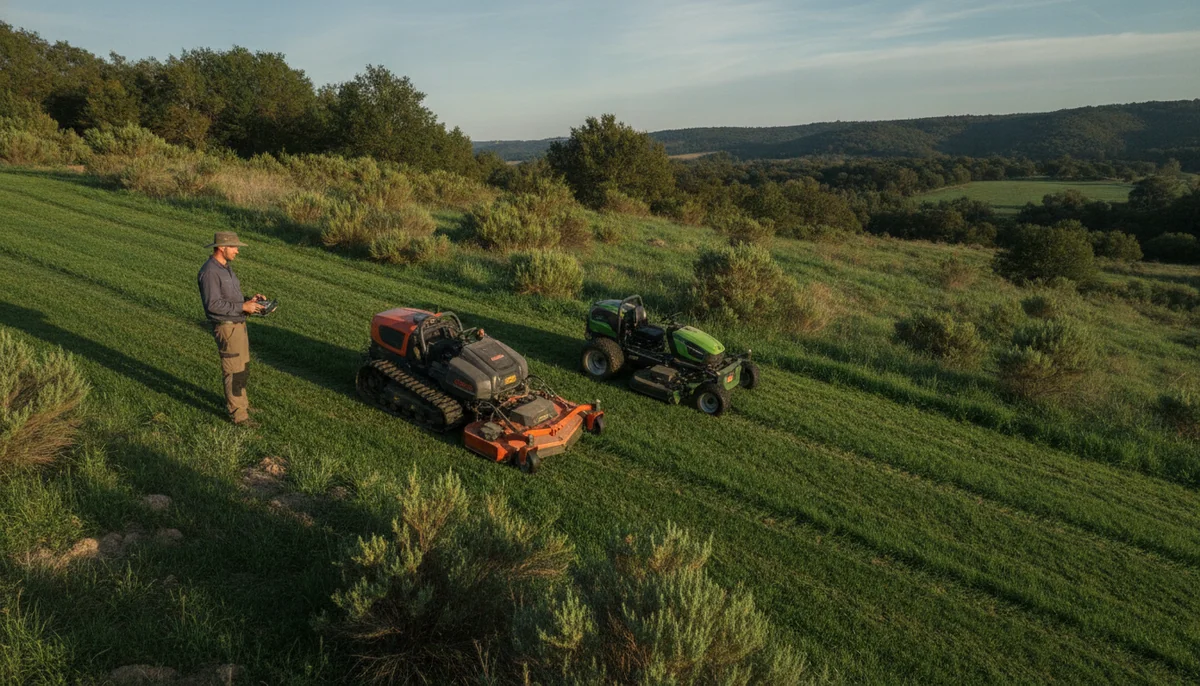
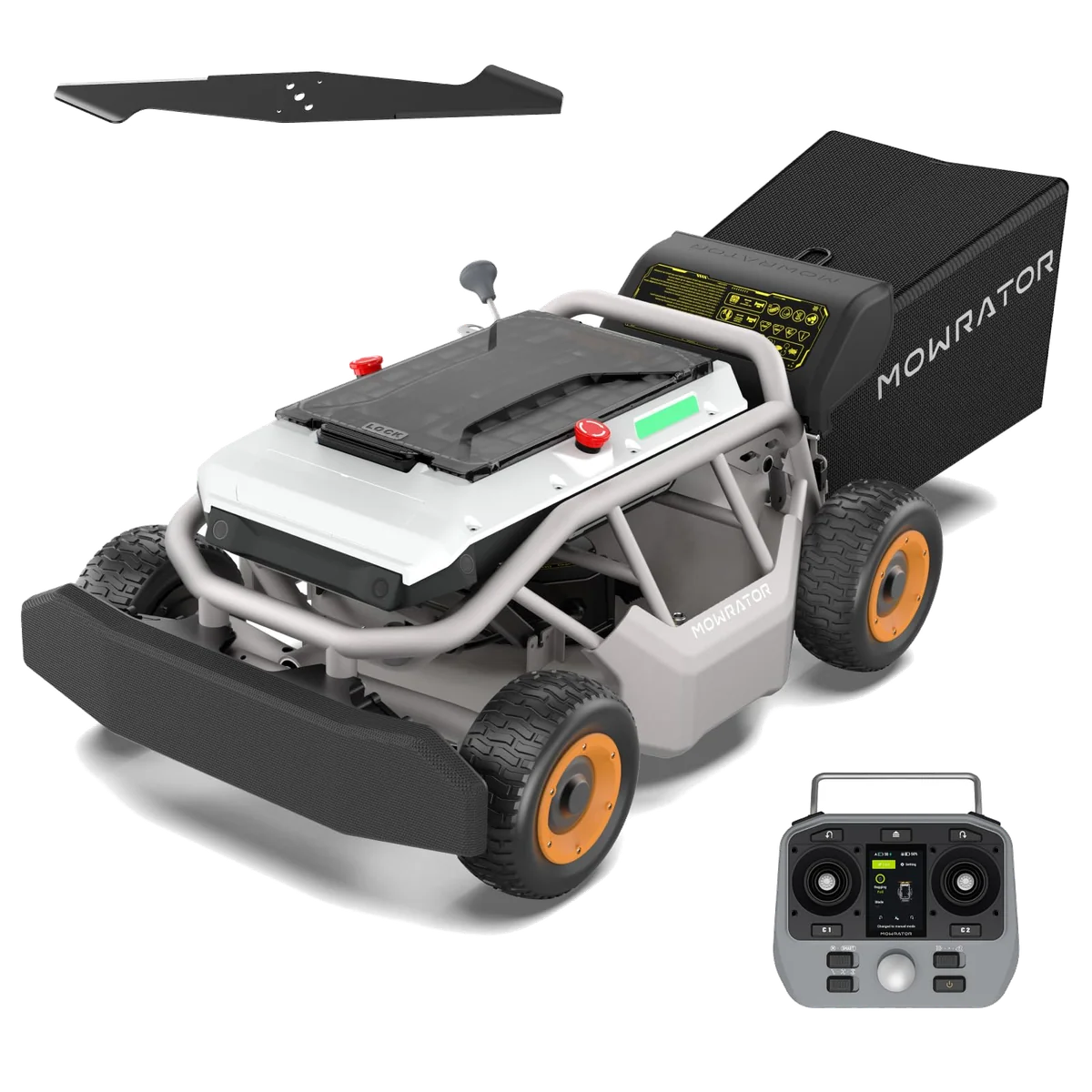
Mowrator S1 4wd
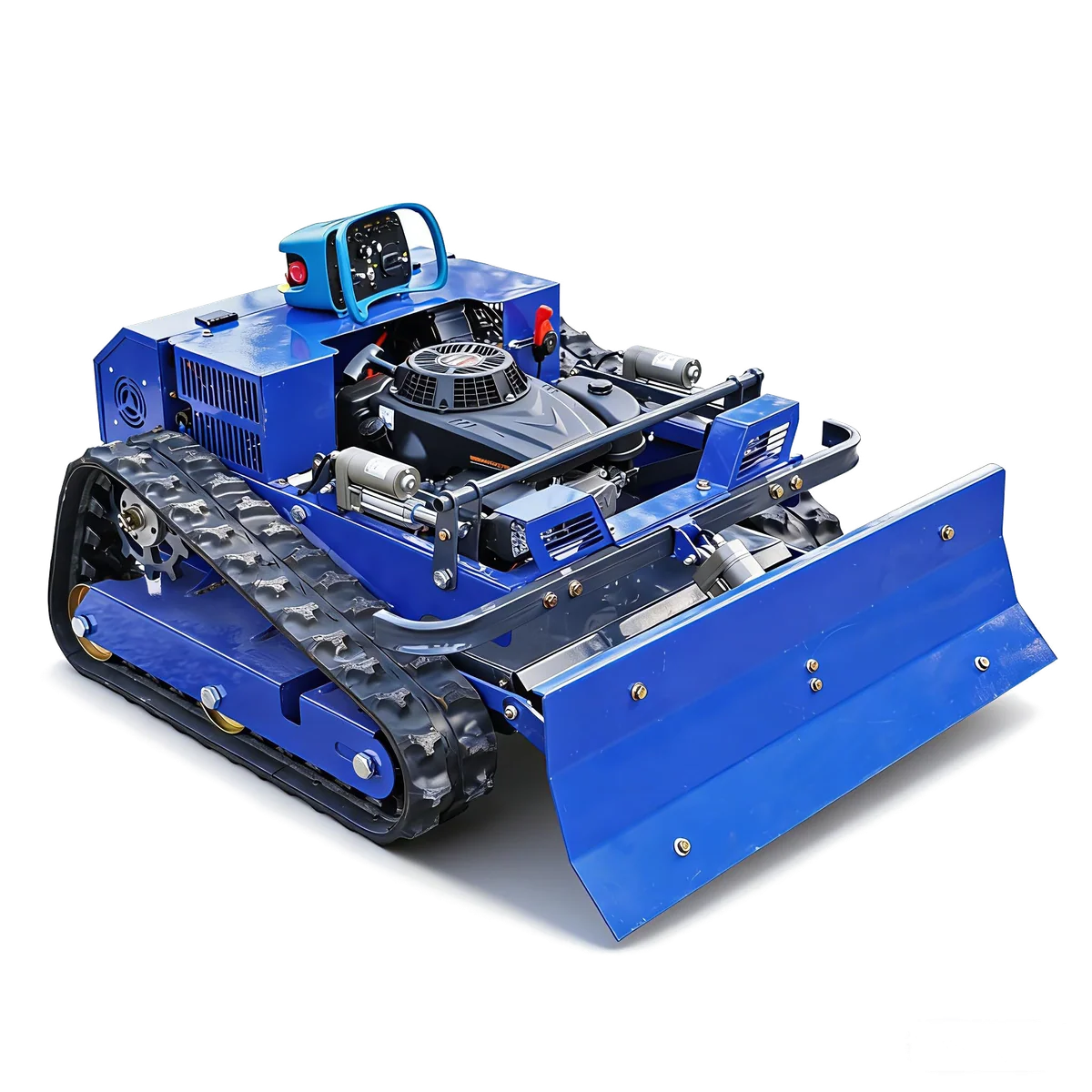
AIWEIYA AWY-550
Neither of these is an autonomous or AI-powered lawn robot. Both require a person at the controls for the entire cut, both turn by driving one side against the other, and neither maps the yard, follows a schedule, finds a dock, or charges itself. Their robot-like shapes disguise what they really are: remotely operated slope mowers that exchange walking behind a blade for standing nearby with a controller.
That exchange can be transformative on a bank where a rider feels unstable and a push mower punishes every step. The operator stays away from the deck, exhaust, insects, dust, poison ivy, and treacherous footing while retaining direct control over the route. It is physical relief rather than automation, a distinction worth settling before comparing motors or slope claims.
The Mowrator S1 is the better purchase because its 4WD electric chassis, conventional 21-inch blade, useful safety layers, and credible hill performance arrive in a more coherent package. It is still heavy, capable of tearing turf during tight turns, dependent on continuous supervision, and exposed to remote, firmware, and support complaints. The AIWEIYA AWY-550 adds aggressive crawler tracks, remote deck-height adjustment, and convincing rough-ground ability, but its short fuel stints and reports of fuel, electrical, controller, battery, starter, and crawler failures make the whole machine difficult to trust.
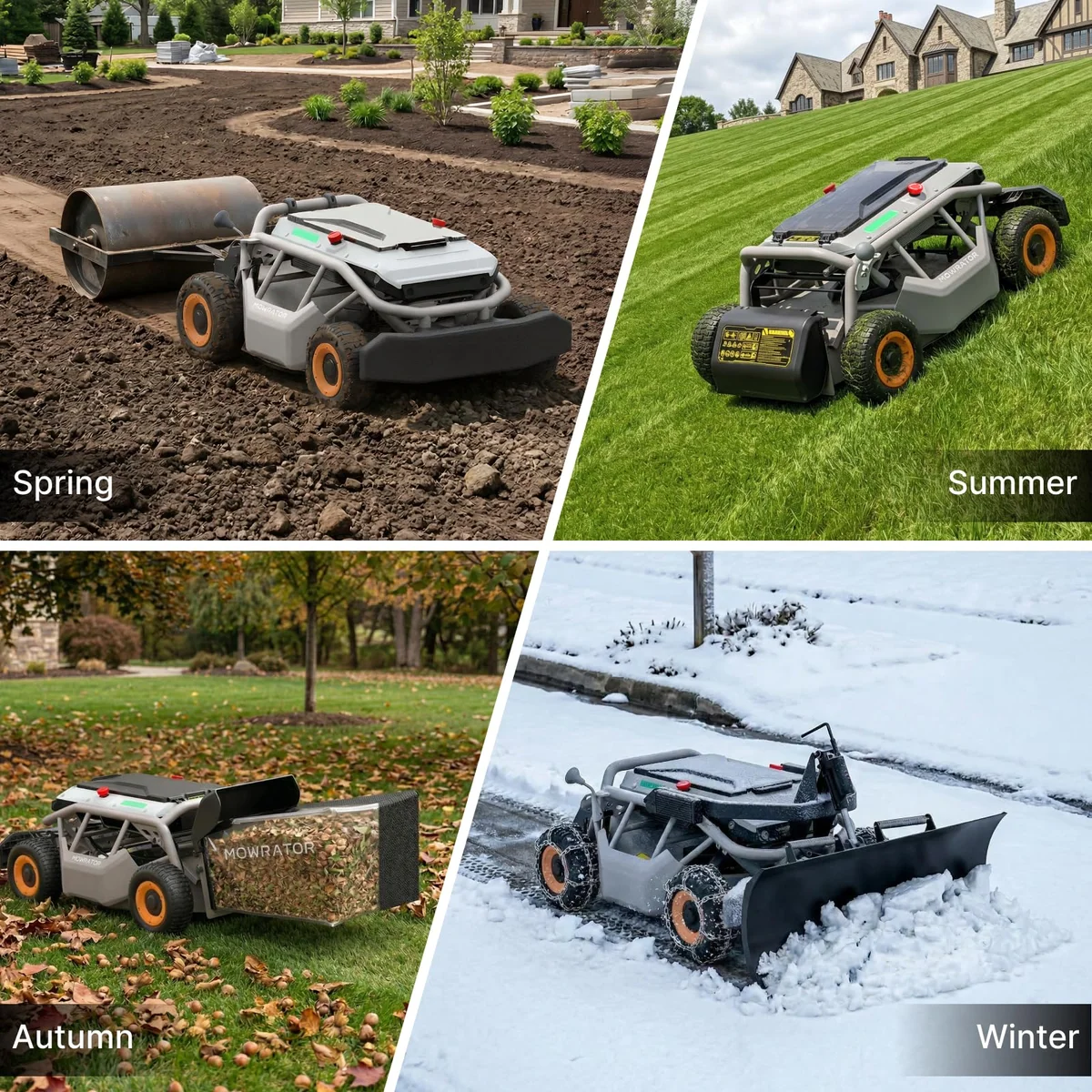
Mowrator S1 4wd
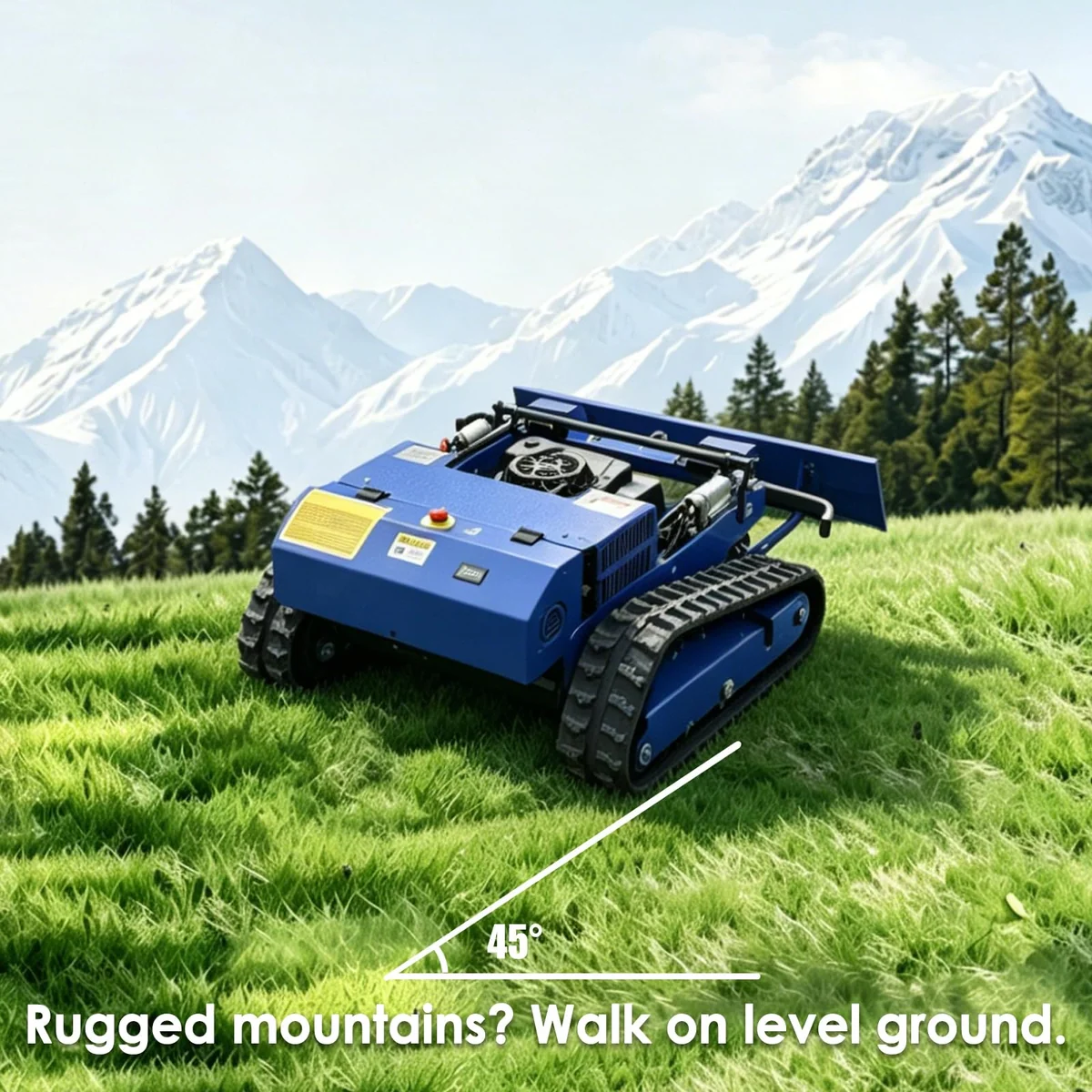
AIWEIYA AWY-550
At a Glance
| Feature | Editor's Pick Mowrator S1 4wd | AIWEIYA AWY-550 |
|---|---|---|
| Price Range | $3,000+ | $1,500–$3,000 |
| Cutting height | — | 1.1–5.9 inches |
| Cutting width | 21 inches | — |
| Check Price on Amazon | Check Price on Amazon |
The Mowrator wins before the slope number does
The headline specifications favor the AWY-550 in two places: its seller claims a 45-degree maximum slope against the Mowrator’s 37-degree rating, and its cutting-height range extends from 1.1 to 5.9 inches instead of roughly 1.5 to 4.3 inches. Neither advantage settles the decision. The AIWEIYA angle remains an unverified ceiling, while the Mowrator’s lower rating has stronger support from demanding hillside work.
| Decision point | Mowrator S1 4WD | AIWEIYA AWY-550 |
|---|---|---|
| What it is | Battery-electric remote mower with four driven wheels | Gas-electric remote mower on rubber crawler tracks |
| Cutting system | 21-inch conventional metal blade with mulching, bagging, and rear discharge | Swinging-blade setup intended for grass, weeds, pasture, and moderate brush |
| Claimed slope limit | 75% grade, equivalent to 37 degrees | 100% grade, equivalent to 45 degrees |
| Working interruption | Up to 1.5 hours claimed from the 12Ah battery, with about one hour reported in ordinary grass | About 15 to 20 minutes per fuel tank reported by two hillside owners |
| Recovery burden | Roughly 115 to 135 pounds, still awkward enough to require two people | Roughly 300 pounds, calling for ramps, a winch, a trailer, or machinery |
| Main ownership risk | Remote behavior, firmware friction, sensor interruptions, and inconsistent support | Early mechanical and electrical failures compounded by uncertain parts support |
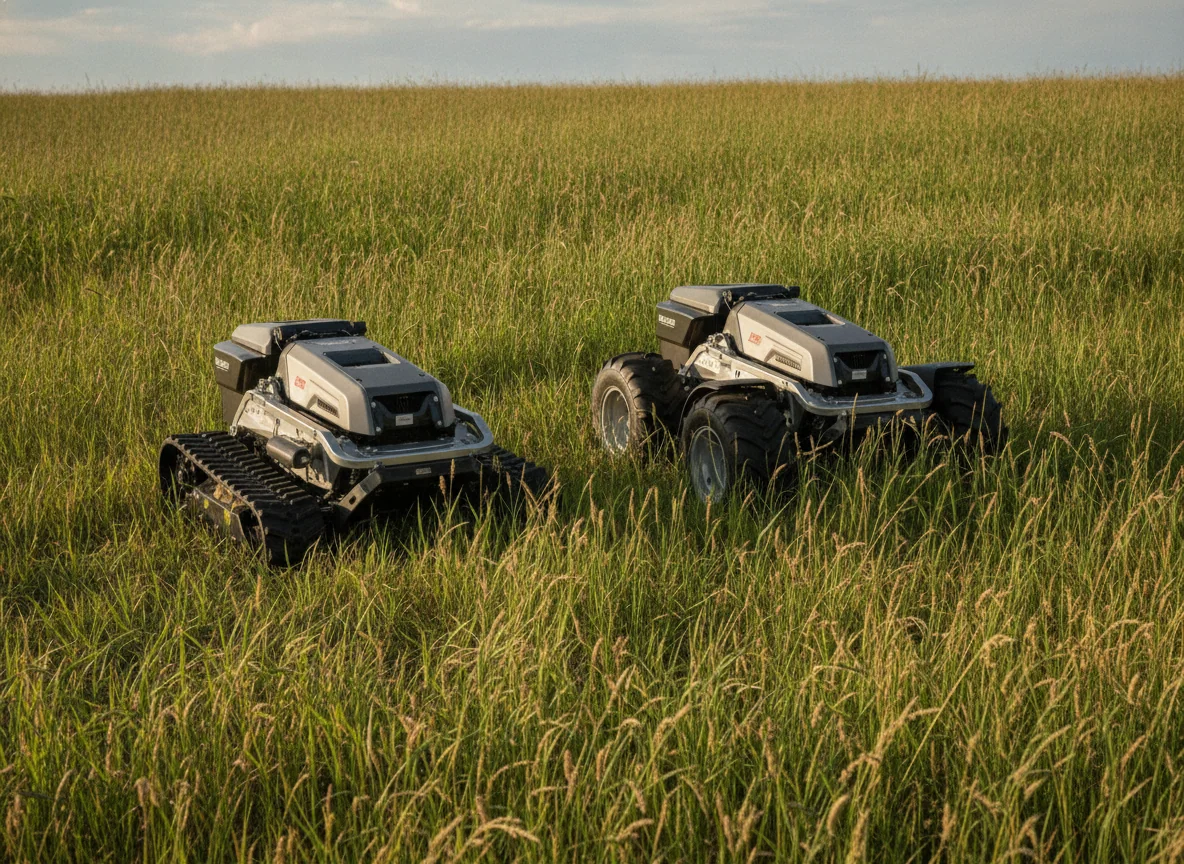
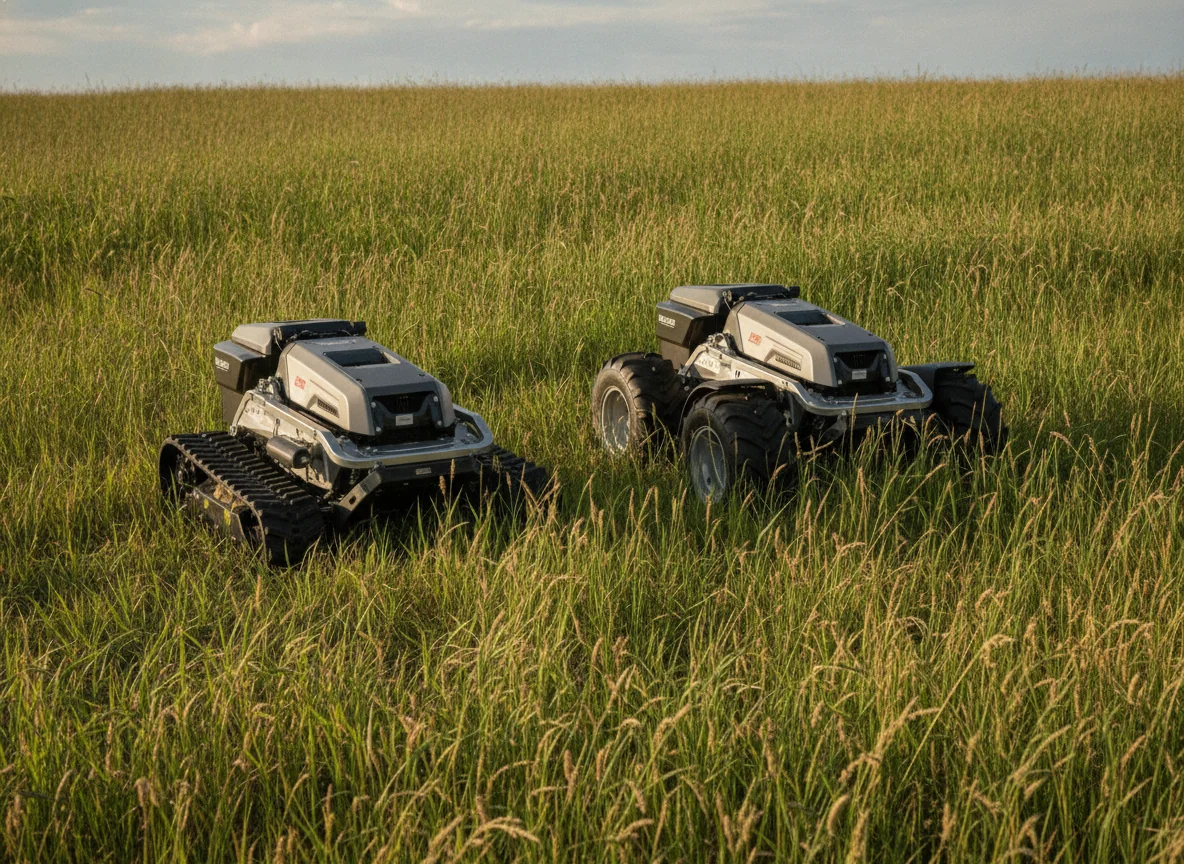
The Mowrator S1 4WD is the winner for buyers who need direct control on dangerous ground.
Its full-width blade, four driven wheels, electric powertrain, and better-supported hill performance make it the more complete remote slope mower.
It demands continuous steering, can scrub turf during tight skid turns, and remains heavy enough to make a ditch recovery a two-person problem.
The AIWEIYA AWY-550 is the specialist gamble for rough acreage and mechanically prepared owners.
Its tracks, broad remote-controlled height range, and swinging blades make persuasive work of steep grass, thistle, and moderate brush when the machine is functioning properly.
Fuel stops every 15 to 20 minutes and serious reports involving leaks, disabled crawlers, failed electronics, batteries, and starters make reliability the deciding weakness.
One feels like a mower; the other feels like equipment
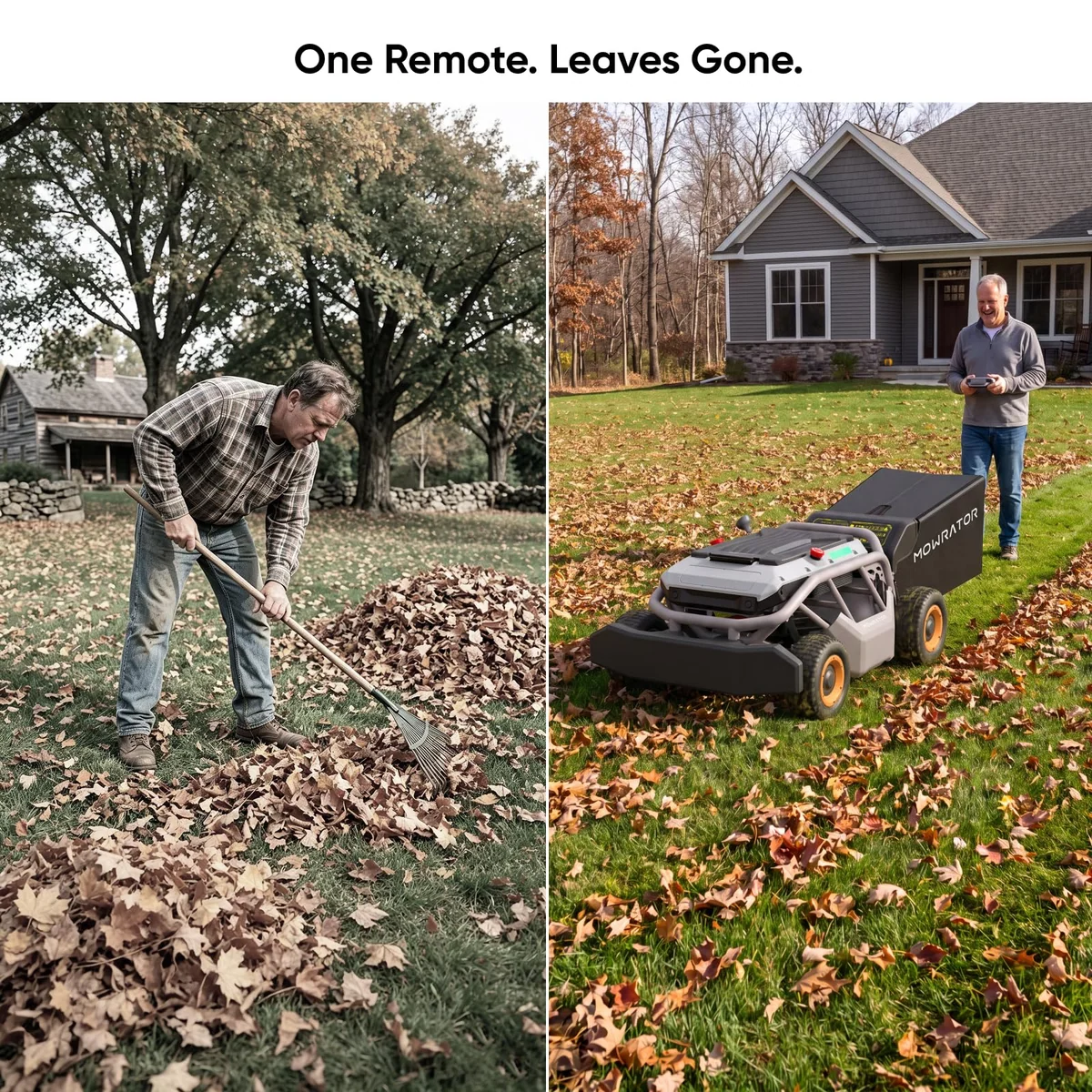
The Mowrator’s conventional blade gives it the cleaner identity. It can make a substantial first cut through tall grass, then mulch, bag, or rear-discharge like a familiar walk-behind mower. Its wide wheels and skid steering suit rough transitions, roots, ditches, and banks, although a stationary pivot can grind a bare circle into damp turf. Long rolling turns are kinder to the lawn and preserve more traction across a slope.
The AWY-550 belongs farther from the flower beds. Its tracks bite into difficult ground, and remote deck-height adjustment is genuinely useful when the route moves from open grass into coarse growth. Those same tracks can tear a neat lawn when the machine turns abruptly. The cut may be even, but a clean deck pass matters little if the turn at each end scars the surface.
This makes the AIWEIYA the more plausible brush-and-bank specialist, not the better lawn mower. A property with rough pasture, thistle, and no concern for stripes can exploit its strengths. A maintained lawn exposes its weight, turning damage, gasoline handling, and constant refueling without gaining anything from the tracked chassis.
The working rhythm separates them
The Mowrator’s 12Ah battery is advertised for up to 1.5 hours and 0.75 acre under ideal conditions, but an hour is the more conservative planning figure supported by an exact-model owner. Thick growth, slopes, repeated passes, sensor stops, and turning all shorten coverage. Even so, that is a usable session before the battery goes back onto its charger.
The AWY-550 can interrupt hillside work after only 15 to 20 minutes because its small gasoline tank must feed the engine while the machine cuts, propels its mass, and powers its electrical system. At the sixth refill, the attraction of remote mowing starts to look different. The operator may no longer be climbing behind a trimmer, but is still walking fuel to hot machinery throughout the day.
A breakdown is part of the terrain calculation
Any remote mower needs a route home after a dead battery, damaged blade, lost signal, or drive fault. The Mowrator is no lightweight, yet removing its 16-pound battery and adding another pair of hands can make recovery possible. Its divided service record still deserves caution: some owners received useful parts and firmware help, while others encountered silence after remote-range or arrival problems.
The AWY-550 changes the scale of the emergency. A failed crawler can strand roughly 300 pounds at the bottom of the property, and reported recoveries have involved dragging it a foot at a time or gathering friends to load it onto a trailer. Reports of leaking gasoline and water-damaged wiring also turn storage, inspection, and weather exposure into safety matters rather than cosmetic care. Do not start a machine that is leaking fuel, and do not send this one down a bank without knowing how it will come back.
Mowrator S1 4wd
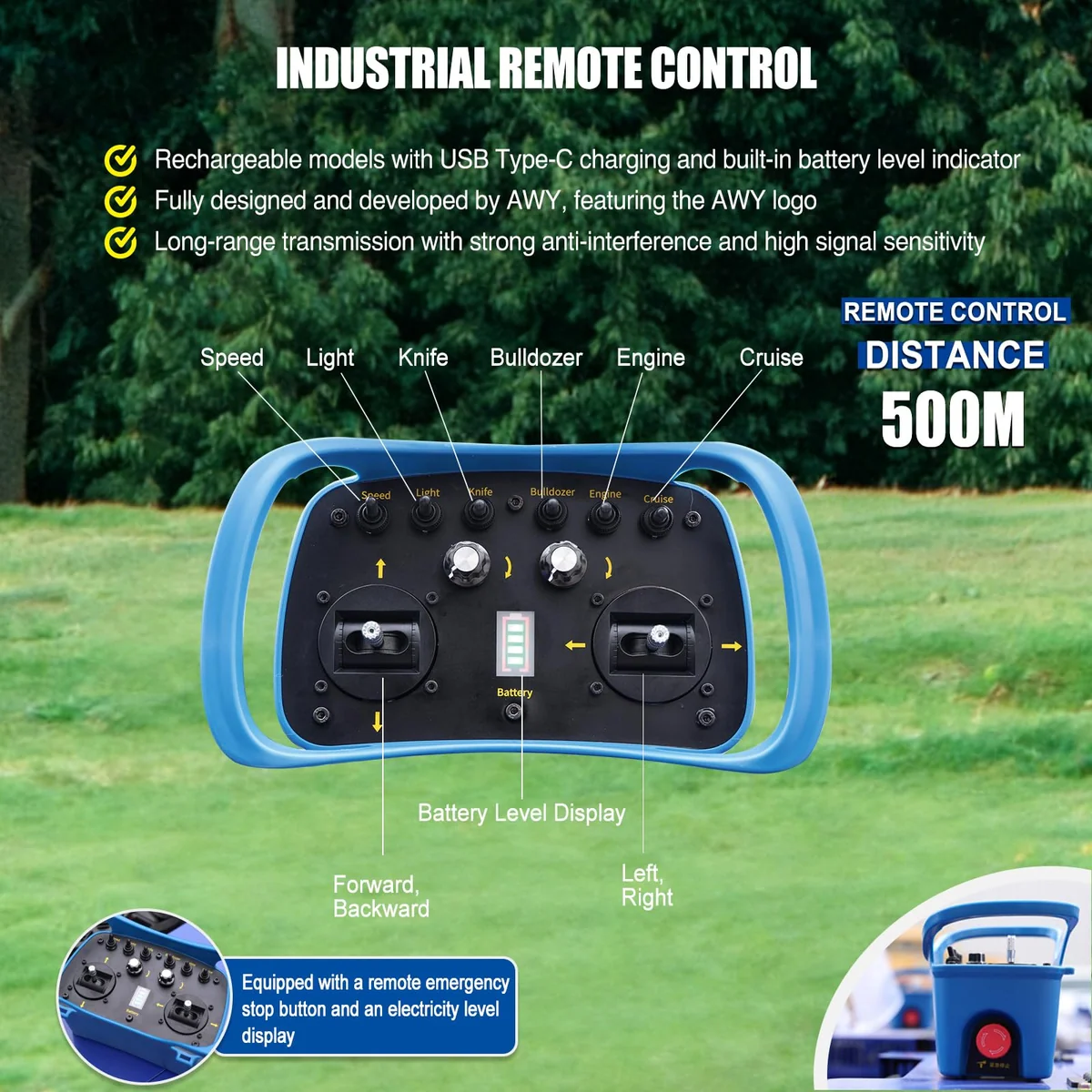
AIWEIYA AWY-550
Buy for the bank, not the badge
Choose the Mowrator S1 when the property has steep but navigable grass, rough transitions, clear sightlines, and a sheltered ground-level storage route. It makes particular sense for someone who can operate a controller comfortably but cannot safely walk behind a mower on the same terrain. The full Mowrator S1 4WD review covers its battery choices, safety sensors, turning behavior, and recovery burden in greater detail.
Consider the AWY-550 only when tracked traction, remote height adjustment, and rough vegetation control matter more than turf finish or ownership polish. The buyer should have mechanical confidence, written part numbers, a clear warranty path, suitable transport, and recovery equipment before delivery. The full AIWEIYA AWY-550 review explains why its impressive cutting reports do not outweigh the service risk for an ordinary owner.
Walk away from both if the actual goal is to stop mowing. A true autonomous machine such as the Mammotion LUBA 3 AWD 5000H maps a suitable property, follows planned routes, returns to charge, and handles routine maintenance without a controller being held throughout the job. It will not replace a rough-cut slope machine everywhere, but on established grass it solves the time problem that these remote mowers leave untouched.
The final choice is therefore narrower than the product category suggests. For dangerous ground that still permits wheels, buy the Mowrator. For severe rough acreage where tracks are essential and repair support already exists on the property, the AWY-550 may justify its gamble. For a navigable lawn that needs frequent unattended trimming, choose neither and start with the distinction between robotic and remote-control lawn mowers.
Frequently Asked Questions
Are the Mowrator S1 and AIWEIYA AWY-550 autonomous robot mowers?
No, both machines require continuous steering by remote control and neither maps, schedules, docks, or recharges itself.
Which mower is the better choice for a steep hill?
The Mowrator is the safer default because its 37-degree rating has stronger practical support, while the AWY-550 is worth considering only when tracked traction outweighs its reliability risk.
Which mower is better for brush and neglected ground?
The AWY-550 has the stronger specialist case for pasture, weeds, thistle, and moderate brush, although the Mowrator’s full-size blade also handles growth beyond routine robot-mower trimming.
Will either remote mower damage finished turf?
Yes, the Mowrator’s skid turns and the AWY-550’s crawler turns can both scuff or tear grass, particularly on damp ground or during abrupt pivots.
Which machine is easier to recover after a failure?
The Mowrator is easier by comparison at roughly 115 to 135 pounds, but even it can require two people, while the roughly 300-pound AWY-550 calls for dedicated recovery equipment.
Ready to Choose?
Sources (14)
- Amazon listings and customer reviews — Mowrator S1 4wd and Aiweiya Awy 550
- Owner reports across r/MowratorOfficial, r/automower, r/rctoys and 11 more threads
- Owner and reviewer video, 13 channels
- Freshlycharged — Article — freshlycharged.com
- Mowrator — Article — mowrator.com
- Trustpilot — Article — www.trustpilot.com
- Pcmag — Article — www.pcmag.com
- Pcworld — Article — www.pcworld.com
- Reviews — Article — www.reviews.org
- Wellbots — Article — www.wellbots.com
- Facebook — Article — www.facebook.com
- Myprosandcons — Article — mowrator.myprosandcons.com
- Tomsguide — Article — www.tomsguide.com
- Mowingmagic — Article — mowingmagic.com