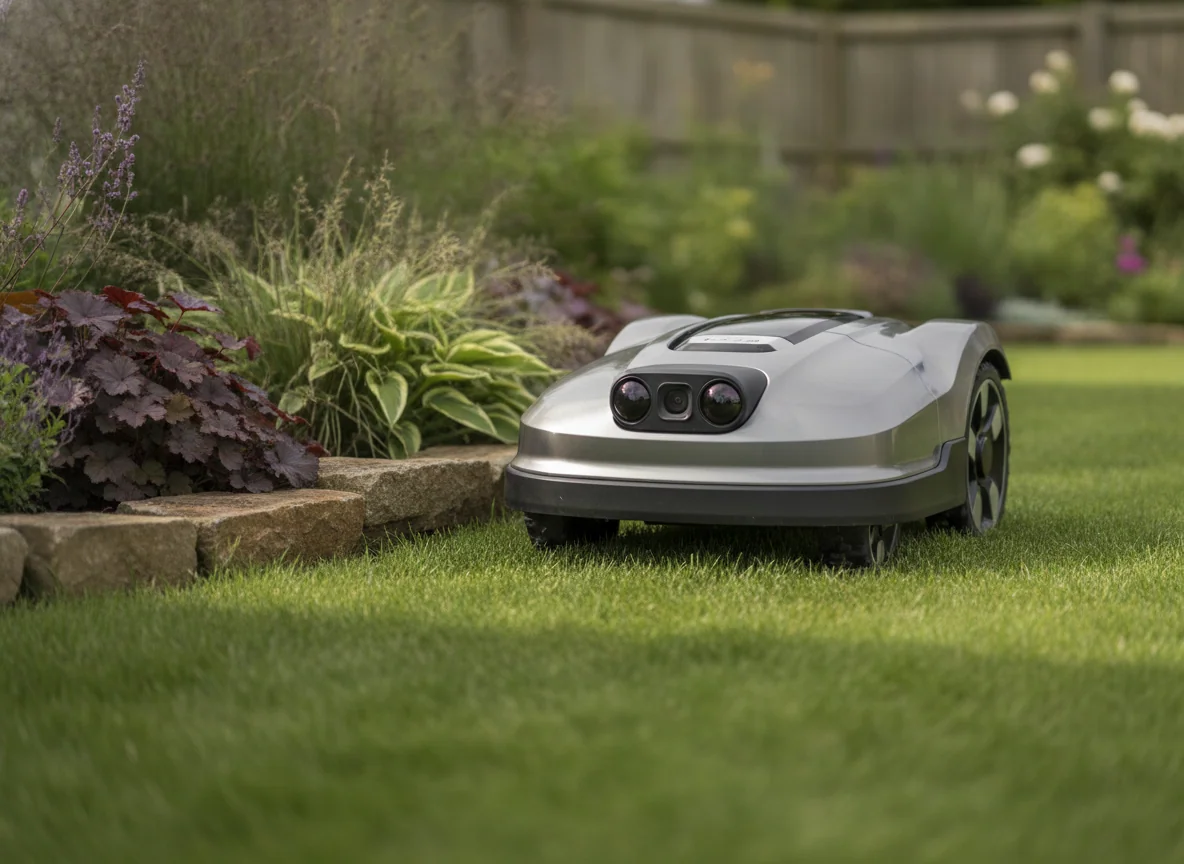
The best LiDAR robot mower is a mountain goat, not a lawn ornament.
LiDAR earns its place when the sky is the problem. A robot that locates itself from trees, walls, fences and buildings can keep mowing under a canopy where an RTK-dependent machine loses precision or demands an awkward antenna installation. The best models here remove the boundary wire and the reference pole without replacing them with random wandering.
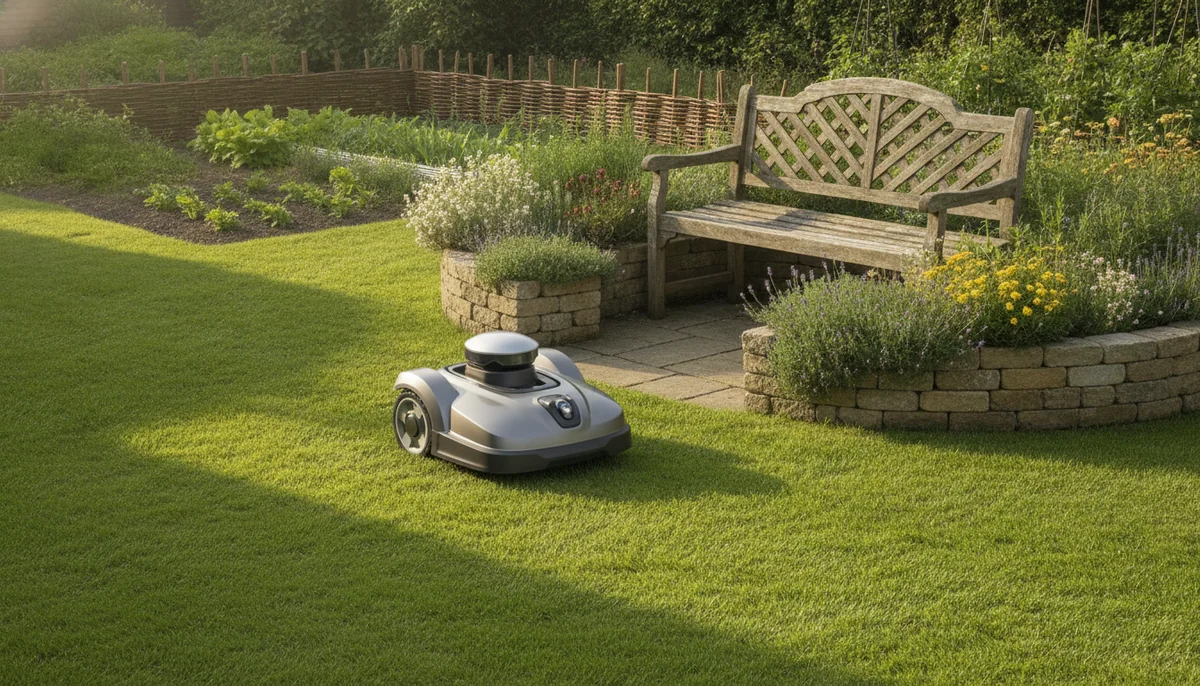
That does not make every LiDAR mower good. Some know their position beautifully and still strand a caster in a rut, refuse to dock or leave a hand-width of grass beside the fence. Others climb a bank that looks impossible, then carve the soft turning area in front of the charger into mud. Navigation, traction, cutting width, edge geometry and map software must all work together before the owner receives anything resembling autonomy.
The DREAME A3 AWD Pro 3500 gets closest. Its onboard LiDAR works beneath trees, four driven wheels handle firm slopes and rough transitions, and the 15.8-inch twin-disc deck covers meaningful ground while smaller machines are still making narrow lanes. Its flaw is not subtle: 52.7 pounds and four powered wheels can rut damp turf, dig into sand and wear a weak docking patch bare.
Choose the winner only if the ground can carry it. The Segway Navimow i215 is the more proportionate choice for a structured residential lawn, the ECOVACS GOAT A2000 is better when edge trimming matters, and the Mammotion LUBA models belong on the truly steep properties where two-wheel drive has already lost the argument. Readers still deciding whether LiDAR is the right navigation system should start with our comparison of RTK, LiDAR and camera-guided mowers.
| Yard problem | Best fit | Reason to hesitate |
|---|---|---|
| Large, steep and shaded | DREAME A3 AWD Pro 3500 | Heavy AWD turns can damage soft ground |
| Tree-covered residential lawn | Segway Navimow i215 | Rear drive dislikes ruts and severe traverses |
| Edges along paths and driveways | ECOVACS GOAT A2000 LiDAR PRO | Map correction is too restrictive |
| Extreme slopes and rough transitions | Mammotion LUBA 3 AWD | Turning can scrub fragile turf |
| Small, firm lawn on a tighter brief | MOVA LiDAX Ultra 1000 | Front casters become a rescue liability on bad ground |
At a Glance: All LiDAR robotic lawn mowers Compared
| Feature | Editor's Pick Dreame A3 AWD Pro 3500 | MOVA LiDAX Ultra 1000 | Mammotion LUBA Mini 2 1500H | HOOKII Neomow X2 SE | Sunseeker S4 | Navimow i215 LiDAR | ECOVACS goat A2000 LiDAR Pro | ECOVACS goat O1000 LiDAR Pro | Mammotion LUBA 3 AWD 5000 | Mammotion LUBA 3 AWD 3000H | [Latest Upgrade All-Terrain Wire-Free] DREAME |
|---|---|---|---|---|---|---|---|---|---|---|---|
| Price Range | $1,500–$3,000 | $500–$1,000 | Under $200 | Under $200 | $500–$1,000 | Under $200 | Under $200 | $500–$1,000 | Under $200 | $3,000+ | $1,500–$3,000 |
| Cutting height | 3–10 cm / 1.2–3.9 inches | 1.2–3.9 inches | — | — | 1.6–3.2 inches, manual dial | — | 1.18–3.54 inches, adjusted in the app | 1.18 to 3.15 inches | — | 2.2–4.0 inches | — |
| Recommended lawn size | Up to 3,500 m² / 0.87 acre | 0.25 acre | 0.37 acre / 1,500 m² | Up to 0.75 acre | 0.25 acre | — | Up to ½ acre over repeated mow-and-charge cycles | Up to 0.25 acre | 1.25 acres | Up to 0.75 acre / 3,000 m² | — |
| Cutting width | 40 cm / 15.8 inches | 7.9 inches | — | — | 7 inches | — | 12.96 inches | 8.66 inches | 15.7 inches | 15.7 inches | — |
| Check Price on Amazon | Check Price on Amazon | Check Price on Amazon | Check Price on Amazon | Check Price on Amazon | Check Price on Amazon | Check Price on Amazon | Check Price on Amazon | Check Price on Amazon | Check Price on Amazon | Check Price on Amazon |
The LiDAR mowers worth considering, ranked
1. Dreame A3 AWD Pro 3500 — The DREAME A3 AWD Pro 3500 is the best LiDAR mower for a substantial difficult lawn.
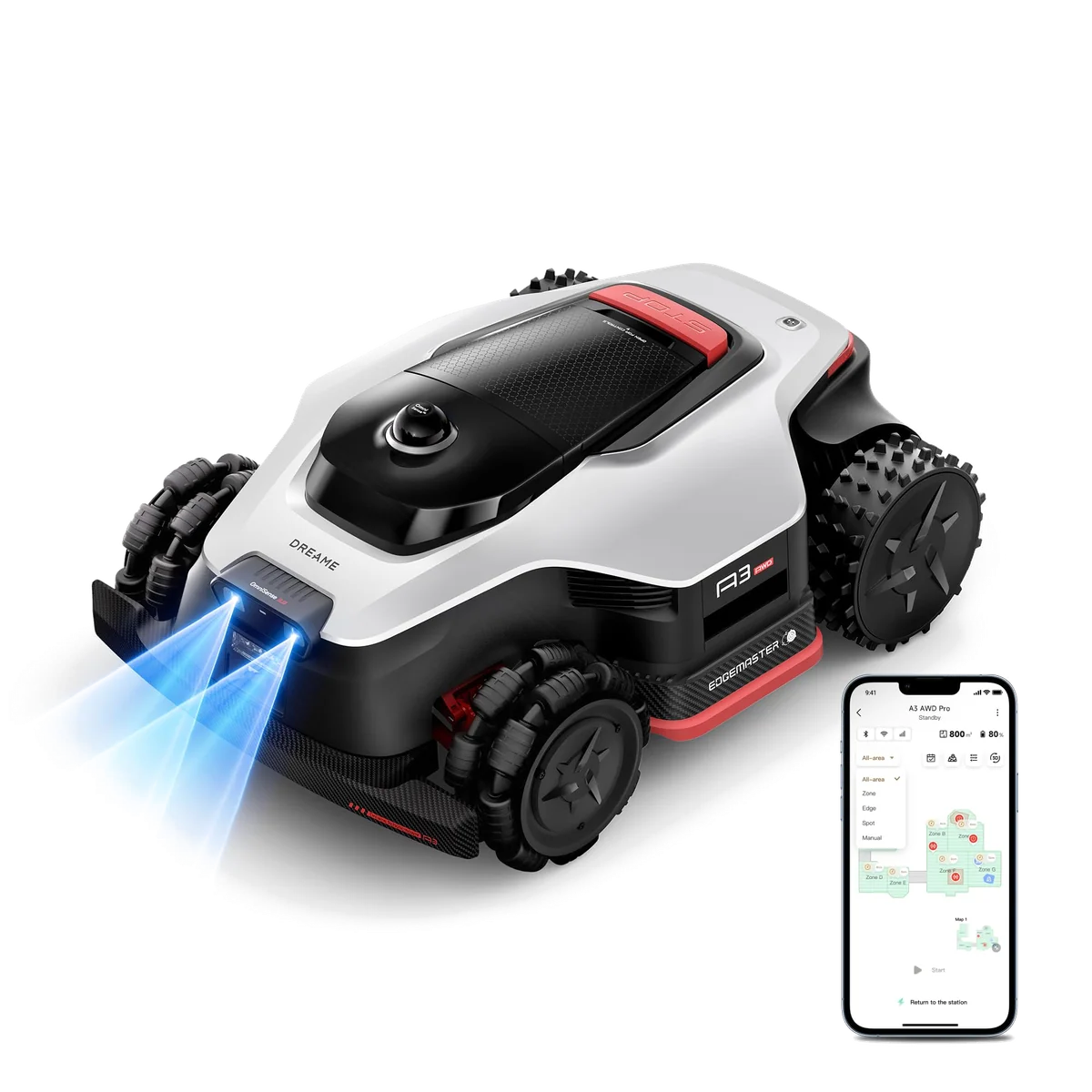
It wins by pairing satellite-free positioning with true four-wheel drive and a wide 15.8-inch twin-disc deck that makes its 0.87-acre brief credible.
Its 52.7-pound body can rut wet turf, dig into sand and wear a soft patch bare during repeated turns near the dock.
On firm established grass, the A3 turns hills, roots and tree cover from separate robot-mower problems into one manageable job. The cut is orderly, quiet and much faster than the narrow single-disc machines in this ranking.
EdgeMaster is the reason to remain skeptical. Its close pass drops to roughly 1.2 inches regardless of the main deck setting, so a taller lawn can acquire a pale scalped border. Disable it rather than allowing the edge feature to choose the lawn’s height, and read the full A3 AWD Pro 3500 review before trusting automatic mapping around water or exposed drops.
Strengths
- LiDAR navigation remains precise beneath trees and beside buildings without an external RTK antenna.
- True four-wheel drive handles firm slopes, roots and uneven transitions that stop ordinary robot mowers.
- The wide dual-disc deck produces clean stripes and fine mulch on frequently maintained grass.
- Obstacle recognition is unusually capable with ordinary garden objects and explains many detections in the app.
Limitations
- Its weight and turning routine can rut wet turf or dig into sand, thin grass and loose soil.
- EdgeMaster cuts at a fixed 3 cm and can visibly scalp lawns maintained higher.
- Automatic mapping is unreliable around ambiguous borders and dangerous drop-offs.
- Software, docking and early hardware reliability remain less consistent than the underlying mowing hardware.
2. MOVA LiDAX Ultra 1000 — The MOVA LiDAX Ultra 1000 is the value choice for a small, smooth and shaded lawn.
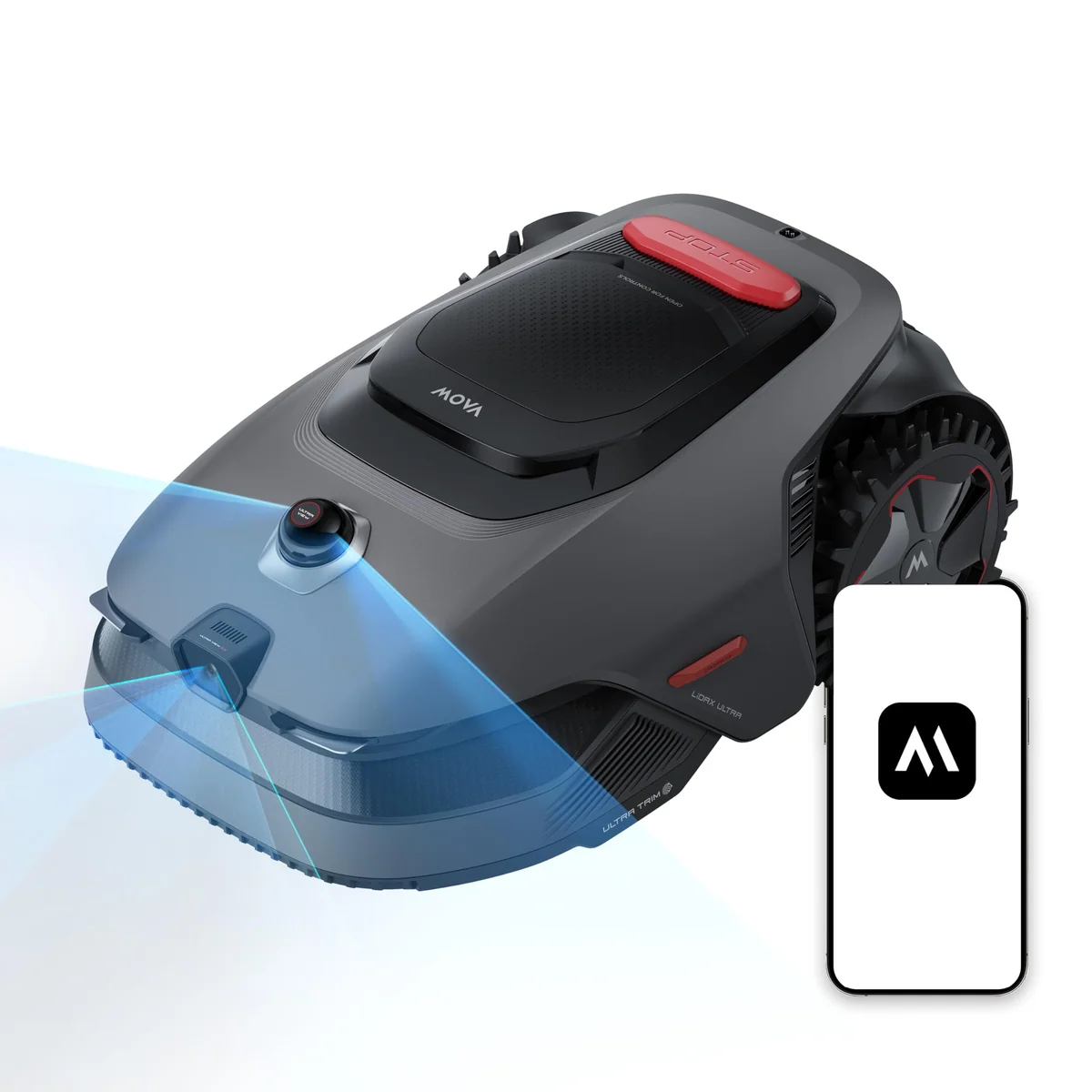
It delivers quiet systematic mowing, a broad electronic height range and unusually deep zone controls without a wire or RTK antenna.
Its passive front casters can strand the mower on sand, runners, soft soil, ledges and abrupt transitions.
The MOVA becomes impressive after the yard stops challenging its nose. Firm turf and conservative mapping can produce a neat, deliberate finish, while two maps and extensive scheduling make it unusually flexible for its size.
The quarter-acre badge conceals a slow workday because the 7.9-inch deck may need several mowing and charging cycles. UltraTrim can also cut a harsh low line around grass maintained near the top of the mower’s 3.9-inch range. The LiDAX Ultra 1000 and 2000 comparison is the better next step for anyone near the capacity limit.
Strengths
- LiDAR navigation removes the boundary wire and RTK antenna without surrendering organized mowing under trees.
- The main deck produces a clean systematic cut across an unusually broad 1.2–3.9-inch height range.
- Quiet operation, automatic recharge and deep zone controls suit frequent background maintenance.
Limitations
- Passive front casters can strand the mower on sand, soft soil, small ledges and awkward transitions.
- The quarter-acre map rating can mean several charges and most of a day rather than one quick session.
- UltraTrim cuts at a fixed low height, so it may scalp the very tall-cut lawn the main deck otherwise handles well.
- Edges, low objects, occasional rescues and immature map editing prevent genuine set-and-forget ownership.
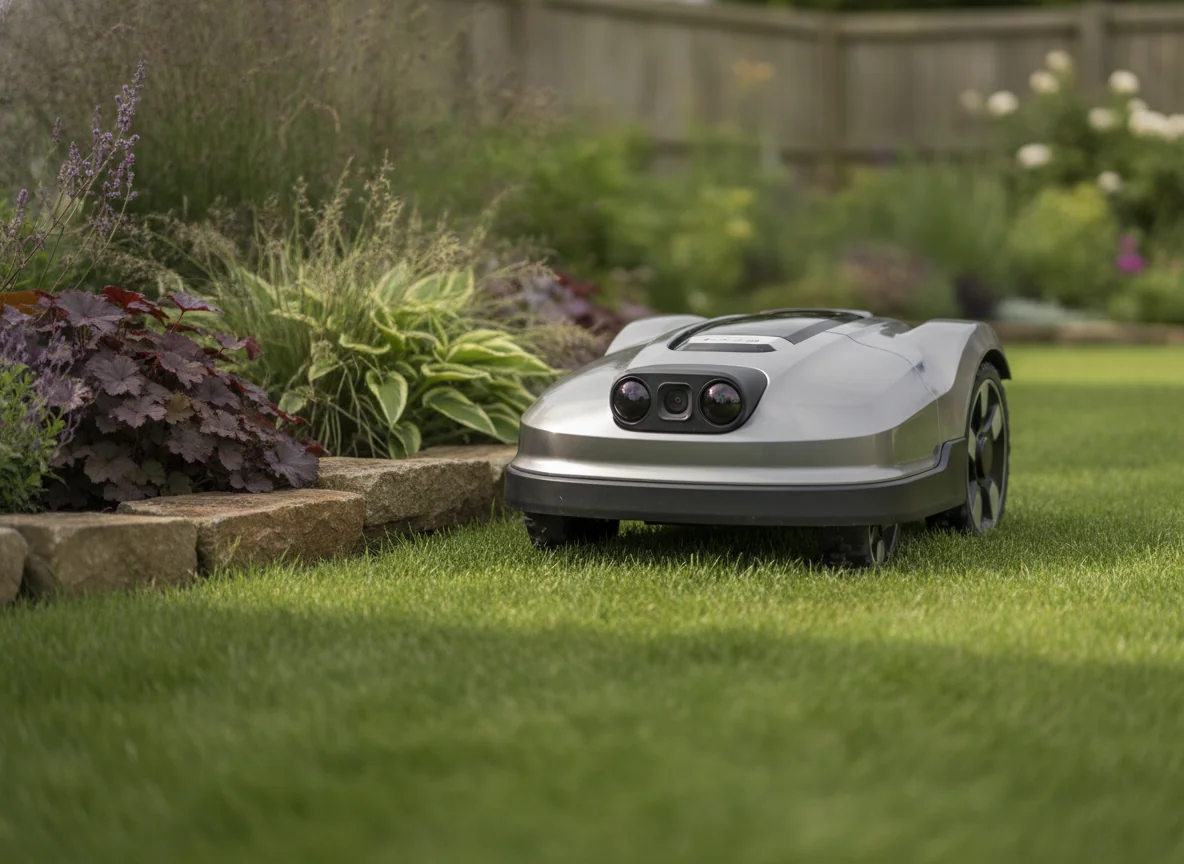
3. Mammotion LUBA Mini 2 1500H — The Mammotion LUBA Mini 2 1500H puts real AWD traction into a compact LiDAR mower.
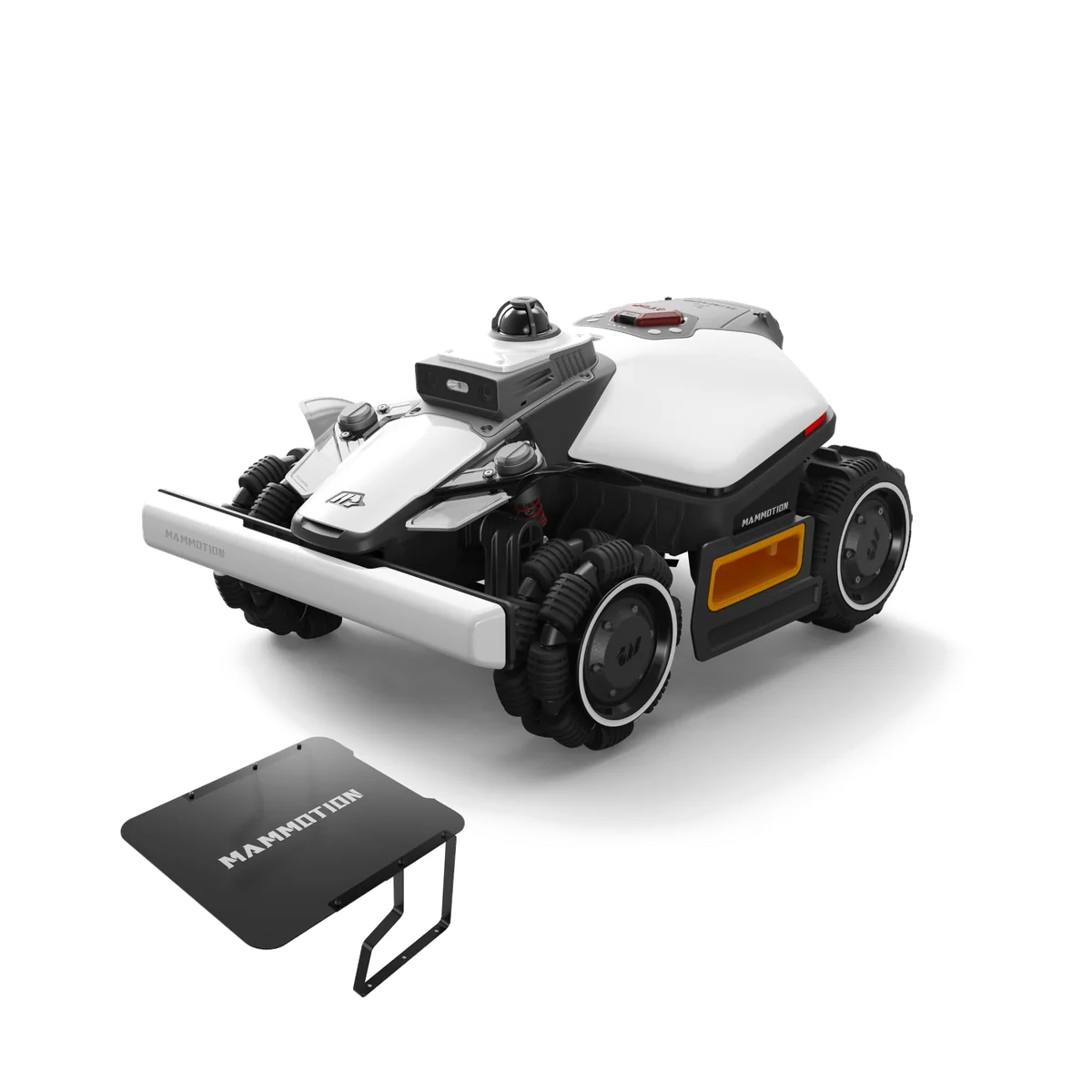
It is the strongest compact option for a sloped, rooty or uneven lawn where a two-wheel machine would spend its life requesting rescue.
Its slow coverage, incomplete edges and uneven app behavior keep the capable chassis from feeling like a finished appliance.
Four driven wheels and adaptive suspension are the reasons to pay attention. The Mini crosses awkward ground with more authority than its size suggests, and its 2.2-to-4-inch cutting range suits lawns that should remain tall.
That traction can scrub damp or sandy turf during tight turns, while a lawn near the 0.37-acre limit will require several charges. The separately shipped garage provides shade and debris protection, not theft security or permission to ignore docking clearance. See the complete LUBA Mini 2 1500H review for the catalogue identity warning attached to this listing.
Strengths
- Four-wheel drive gives it genuine authority on banks, roots, dips and rough transitions.
- LiDAR and dual cameras remove both the perimeter wire and the physical RTK antenna.
- The edge disc, multi-zone mapping and replaceable battery make the compact chassis unusually capable.
Limitations
- Raised edges and tight corners still leave enough grass to require a string trimmer.
- Near its area limit, a complete cut can consume several charges and much of the mowing day.
- App quirks, firmware changes and inconsistent support make ownership less settled than the hardware suggests.
4. HOOKII Neomow X2 SE — The HOOKII Neomow X2 SE is the large-capacity gamble for a maintained lawn under trees.
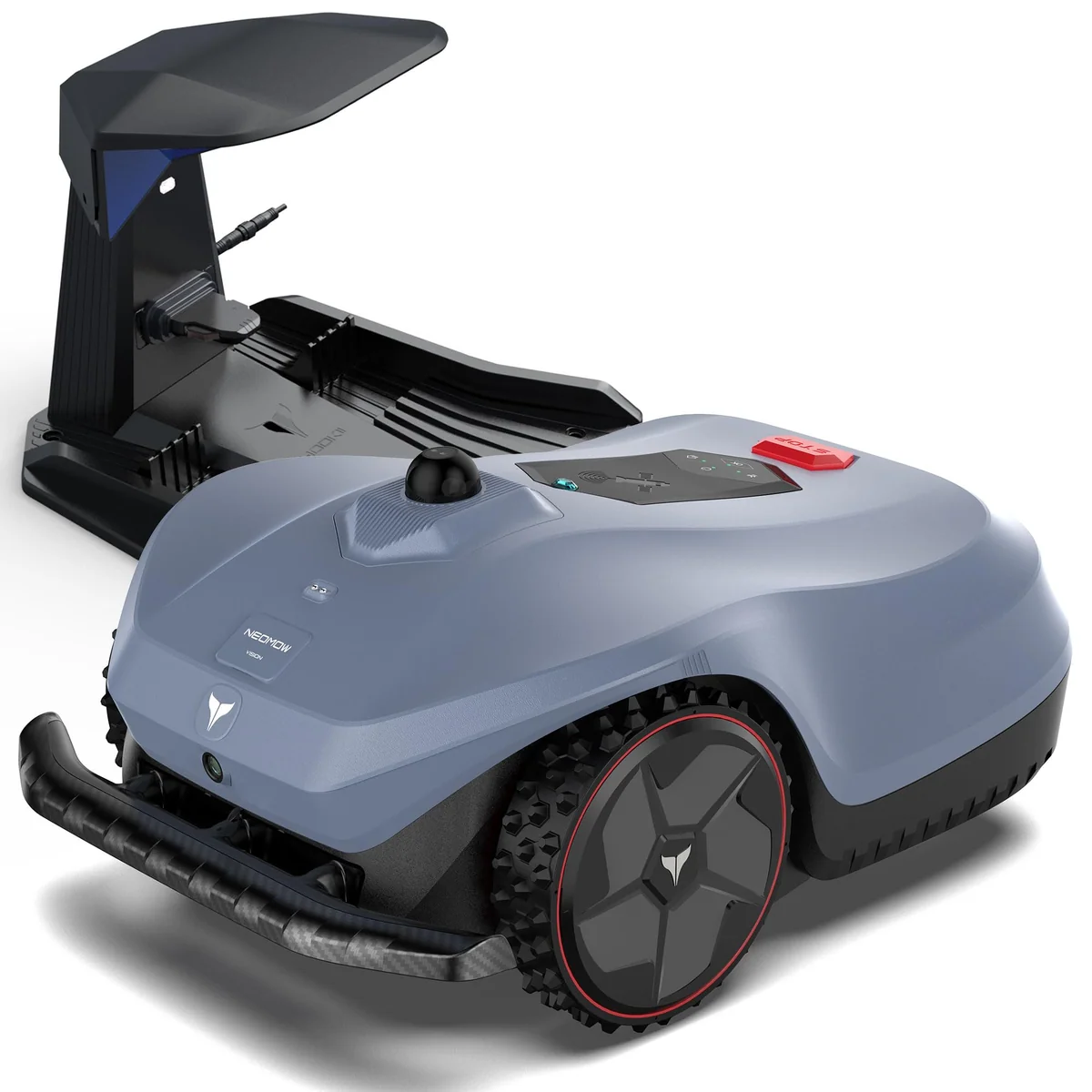
Its 13Ah battery and three-quarter-acre rating give antenna-free LiDAR navigation a reach that most compact rivals cannot match.
Software failures, unreliable docking, weak recovery behavior and a reported wheel-retention problem make unattended ownership too uncertain.
The best Neomow experience is compelling: straight quiet lanes, useful battery endurance and stable positioning beneath cover. The worst version misses rows, invents dock obstructions or sits in the lawn until its battery expires.
Automatic mapping may also depend on an optional triple-vision module rather than the base package. Confirm that hardware, continuing 4G terms and regional parts access before ordering. HOOKII support has sometimes been excellent, but support that rescues a failed mower is not equivalent to a mower that does not fail.
Strengths
- Three-dimensional LiDAR gives tree-covered and building-shadowed lawns a wire-free route around RTK signal problems.
- Systematic mowing can produce straight, well-overlapped lanes with very little operating noise.
- The 13Ah battery and 0.75-acre managed-area claim make it relevant to lawns larger than the usual compact LiDAR mower serves.
- HOOKII support has delivered unusually hands-on help when replacements, map transfers, or engineering attention were required.
Limitations
- Software, docking, and error-recovery failures make unattended operation less dependable than the navigation hardware suggests.
- The centered cutting system leaves meaningful grass beside raised borders, walls, and drop edges.
- Long grass, loose ground, threshold lips, and wet slopes expose limits in cutting power and front-wheel-drive traction.
- Auto-mapping appears to depend on an upgrade module whose inclusion and total cost are not established by the base listing.
- A detailed wheel-retention failure and uncertain long-term parts access add hardware risk to an already young platform.
5. Sunseeker S4 — The Sunseeker S4 is the uncomplicated small-yard choice when trees defeat RTK.
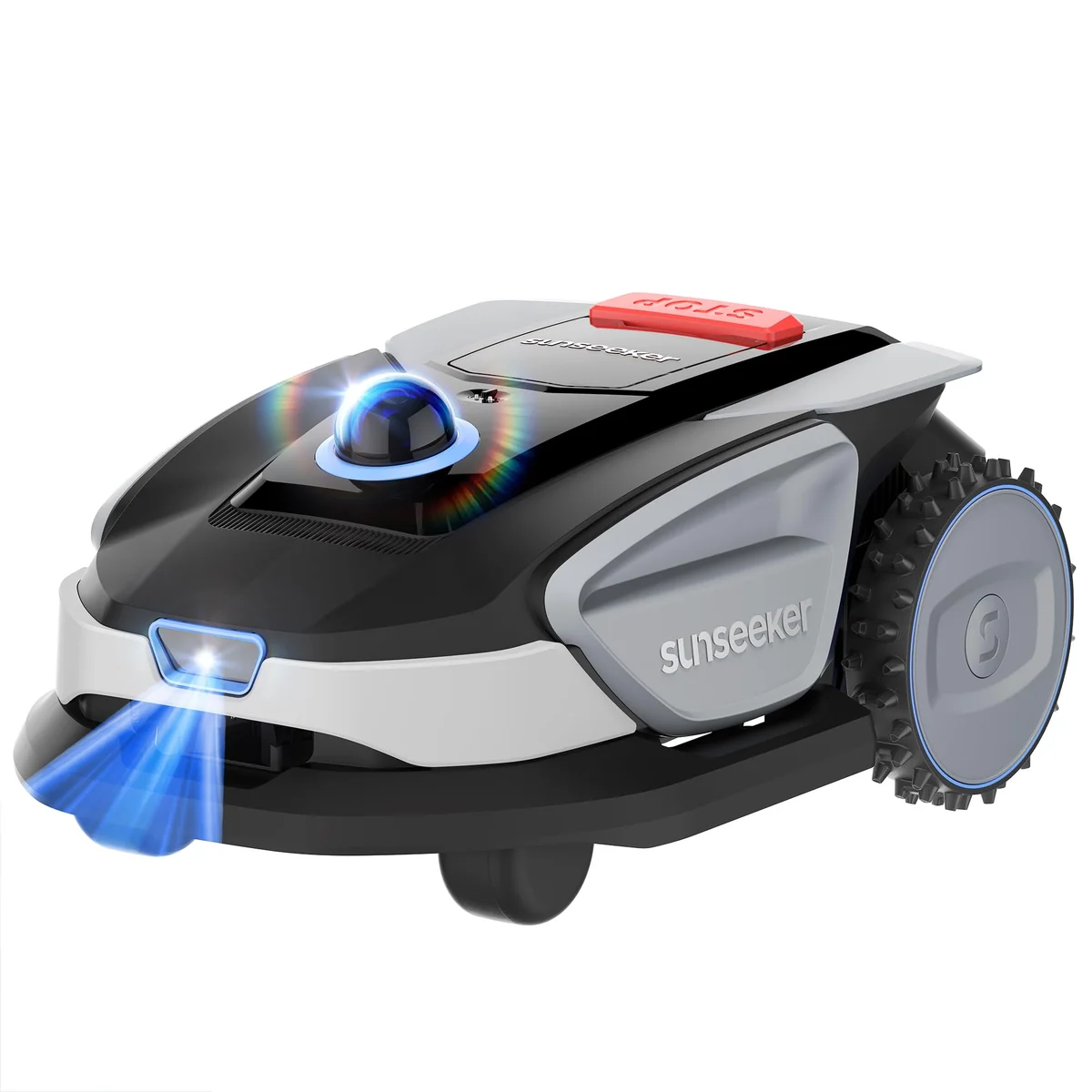
It combines reliable shaded-area positioning with clean systematic stripes and straightforward multi-zone mapping on a clearly bounded quarter acre.
The seven-inch deck is slow, vertical borders leave trimming and there is no native GPS or cellular safety net beyond Wi-Fi.
The S4 knows where it is beneath trees, beside buildings and under eaves, which is its entire reason for existing. It is quiet and capable of charging and resuming without drama, but a 0.2-acre lawn can still involve multiple dock visits.
Tall weeds may be treated as obstacles, abrupt pavement humps can catch the rear-drive chassis and cautious boundaries can leave a broad trim strip. Buyers deciding between this and Segway’s compact LiDAR model can use our Sunseeker S4 versus Navimow i215 comparison.
Strengths
- Onboard LiDAR removes both perimeter wire and RTK antenna placement from setup.
- Systematic mowing produces an even cut and convincing straight stripes.
- Automatic docking, charging and job resumption work as real conveniences.
- Obstacle avoidance is cautious around obvious tools, rocks and toys.
- Mapping supports several zones, corridors and awkward shaded sections.
Limitations
- The seven-inch deck and 90-minute runtime make coverage slow.
- Vertical borders leave a manual trimming strip because the blade sits well inside the body.
- Tall weeds can be mistaken for obstacles and remain standing.
- Rear-wheel drive can beach on abrupt humps and narrow depressions.
- There is no native GPS or cellular radio for tracking beyond Wi-Fi.
6. Navimow i215 LiDAR — The Segway Navimow i215 is the best balanced choice for an enclosed residential lawn.
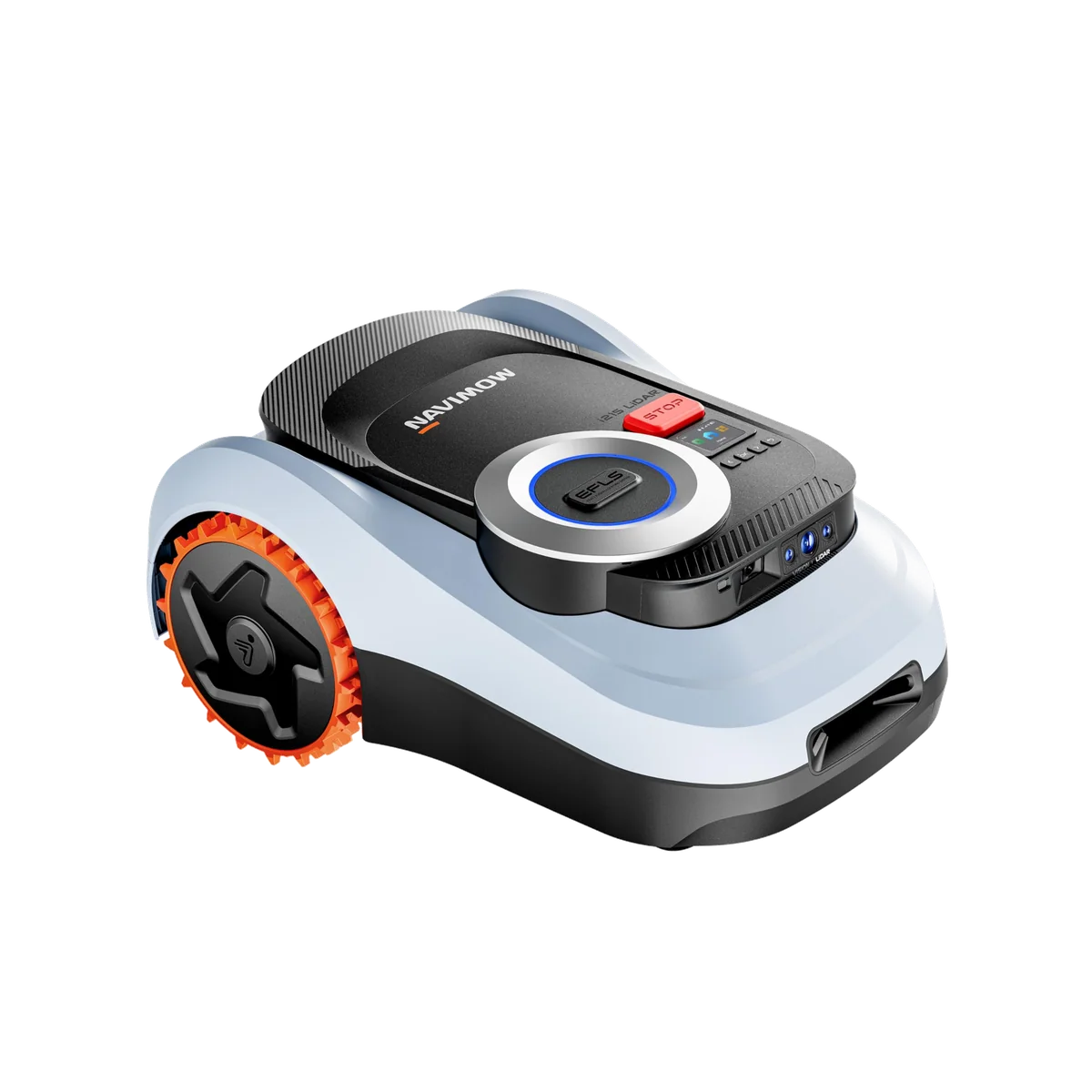
Its LiDAR and vision remove the antenna while polished zone controls, quiet mowing and automatic mapping make complicated tree-covered lawns manageable.
Rear-wheel drive, inconsistent docking and the absence of a dedicated cliff sensor demand caution around ruts, wet traverses and exposed drops.
The i215 is easier to recommend than many ambitious LiDAR machines because its size suits real residential zones and its app provides useful control over direction, height, schedules and routes. It can maintain roughly 0.37 acre, but larger divided lawns may occupy many charging cycles.
Off-road tread does not turn it into an AWD mower. Thick turf, leaves, soft sidewalk seams and lateral slopes can still stop it, while raised boundaries leave string-trimmer work. The Navimow i215 review explains why a successful first map is only the start of the return-window trial.
Strengths
- LiDAR and vision remove the perimeter wire and external RTK antenna from a genuinely complicated setup.
- Editable zones, schedules, directions, and cutting heights make it adaptable to divided residential lawns.
- Frequent systematic mowing is quiet, leaves tiny mulched clippings, and can keep the main lawn consistently presentable.
- Tree cover, fences, and buildings can become useful navigation landmarks instead of satellite obstacles.
Limitations
- Docking, missed strips, and connector routes are inconsistent enough that the first successful map cannot be trusted by itself.
- Rear-wheel drive struggles with some ruts, thick turf, leaves, wet transitions, and lateral slopes.
- There is no dedicated cliff sensor, so immediate drop-offs need a deliberately conservative virtual boundary.
- Raised edges and cautious obstacle avoidance leave real string-trimmer work behind.
7. ECOVACS goat A2000 LiDAR Pro — The ECOVACS GOAT A2000 LiDAR PRO is the best choice for reducing edge work on a medium lawn.
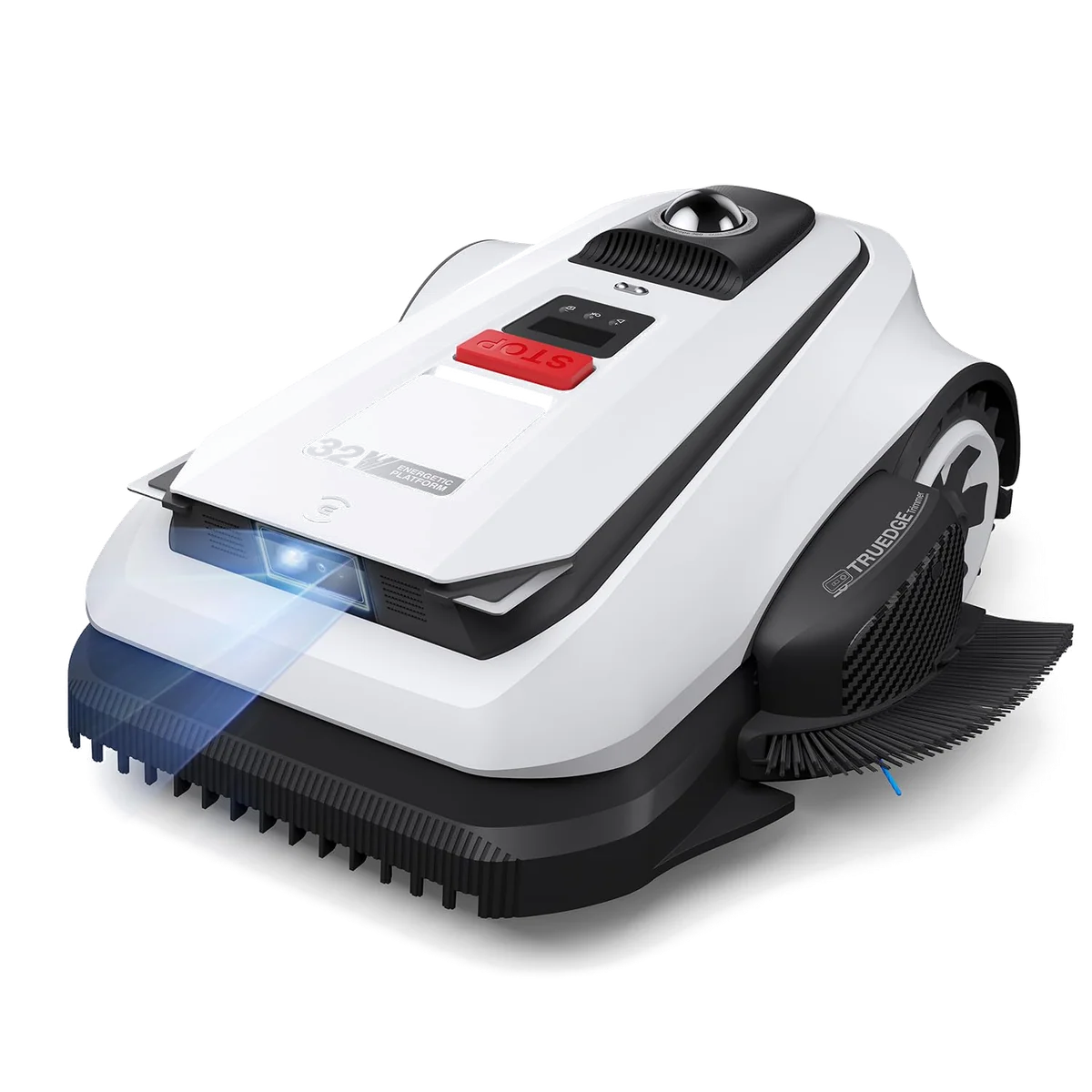
Its nearly 13-inch dual-disc deck and separate TruEdge string head cut more grass per lane and clean accessible borders better than centered-disc rivals.
The 50-minute battery and stubborn map correction make fenced zones, narrow passages and complicated boundaries harder than the polished hardware suggests.
The A2000 is a convincing mower on firm, clearly bounded turf. Dual LiDAR removes the sky-view problem, the broad deck produces tidy lanes and the side trimmer can turn weekly cleanup along a straight driveway into occasional touch-up.
Closely adjoining zones can confuse the software into inventing a route through a fence, and exclusions may require physically tracing the hazard. Rough grades also expose its small front casters. The O1000 and A2000 comparison shows when its extra width justifies stepping up.
Strengths
- Dual LiDAR maps without boundary wire, an RTK pole, or a clear view of the sky.
- The wide overlapping deck produces tidy systematic lanes on frequently maintained grass.
- The integrated string trimmer substantially reduces cleanup along straight, accessible borders.
- Automatic charging, resumption, zone settings, and quiet operation suit frequent unattended maintenance.
Limitations
- Map correction is too restrictive when automatic boundaries or merged zones are wrong.
- The 50-minute battery can require several charging stops on lawns far below the headline capacity.
- Rear-wheel drive and small front casters are vulnerable on rough grades, loose soil, and drop-off edges.
- Corners, irregular rocks, flattened grass, leaves, and heavy overgrowth still require conventional tools.
8. ECOVACS goat O1000 LiDAR Pro — The ECOVACS GOAT O1000 LiDAR PRO brings real edge trimming to a compact quarter-acre mower.
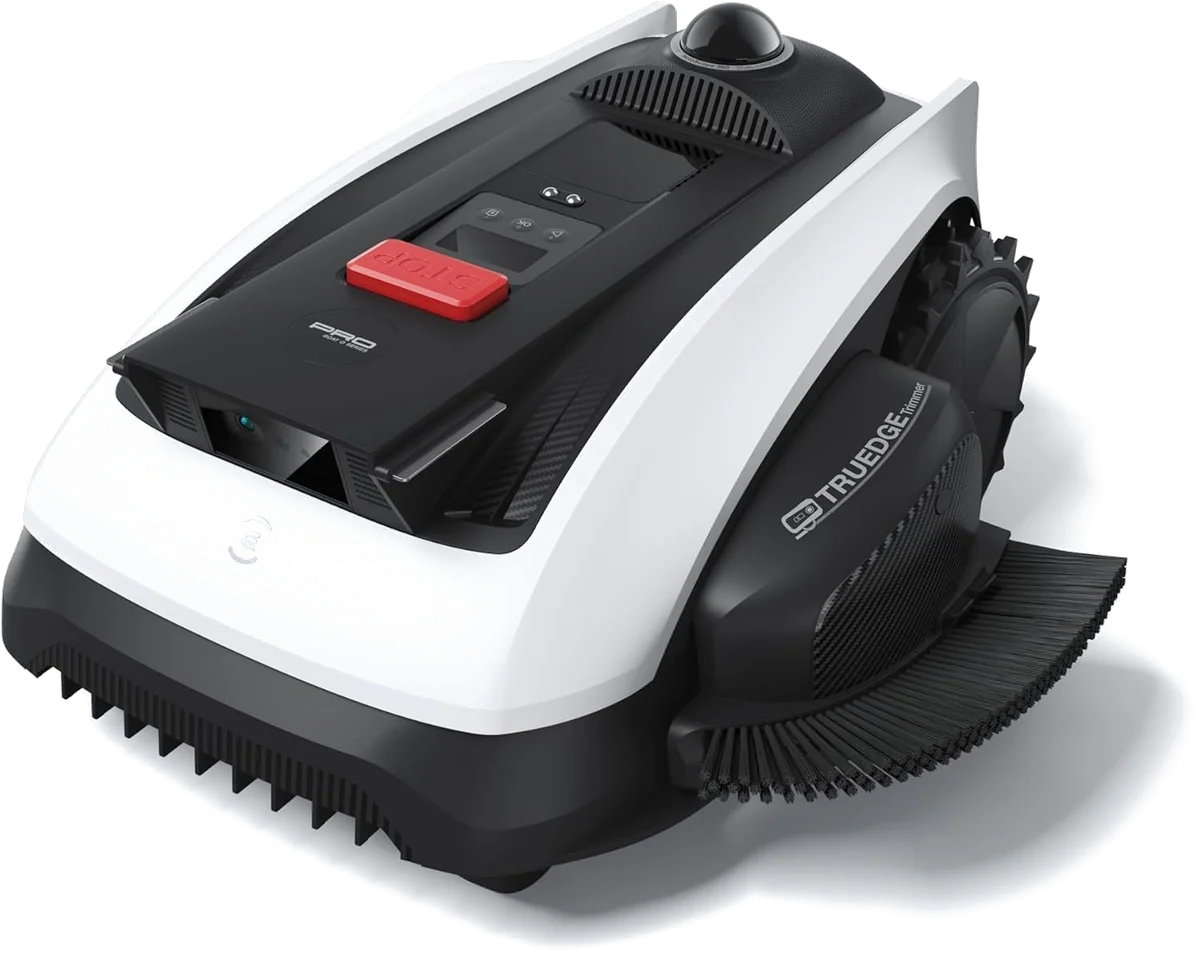
Its narrow body, dual-LiDAR navigation and separate trimmer suit connected small lawns with trees, walls and tight side passages.
Manual mapping is fussy, the narrow deck is slow near its area ceiling and TruEdge still misses fences, corners and raised borders.
The O1000 is the right-sized GOAT for a small lawn where the A2000 would be unnecessary. It mows orderly lines, resumes after charging and reaches tighter corridors than the larger chassis.
Do not buy it solely for the words “edge mowing.” The trimmer works best beside long flush hardscape and becomes hesitant around precisely the posts, corners and walls that most need attention. Soft ground is another reason to leave because the rear-drive chassis and small casters are not terrain hardware.
Strengths
- Dual onboard LiDAR removes the buried wire, external antenna and clear-sky positioning problem.
- Systematic mowing produces clean lines and continues automatically after charging.
- The compact chassis, quiet mower and configurable zones suit complicated small properties.
- The real side trimmer can substantially reduce cleanup along long, flush borders.
Limitations
- Manual mapping makes straight invisible boundaries unnecessarily difficult.
- TruEdge still misses fences, tight corners, raised edges and buffered no-go zones.
- The narrow deck needs multiple sessions as lawn area approaches a quarter acre.
- Rear drive and small front casters are poor insurance on soft, rough or steep ground.
- Specialty-parts supply and technical support remain ownership risks.
9. Mammotion LUBA 3 AWD 5000 — The Mammotion LUBA 3 AWD 5000 is the LiDAR heavyweight for a genuinely difficult acre.
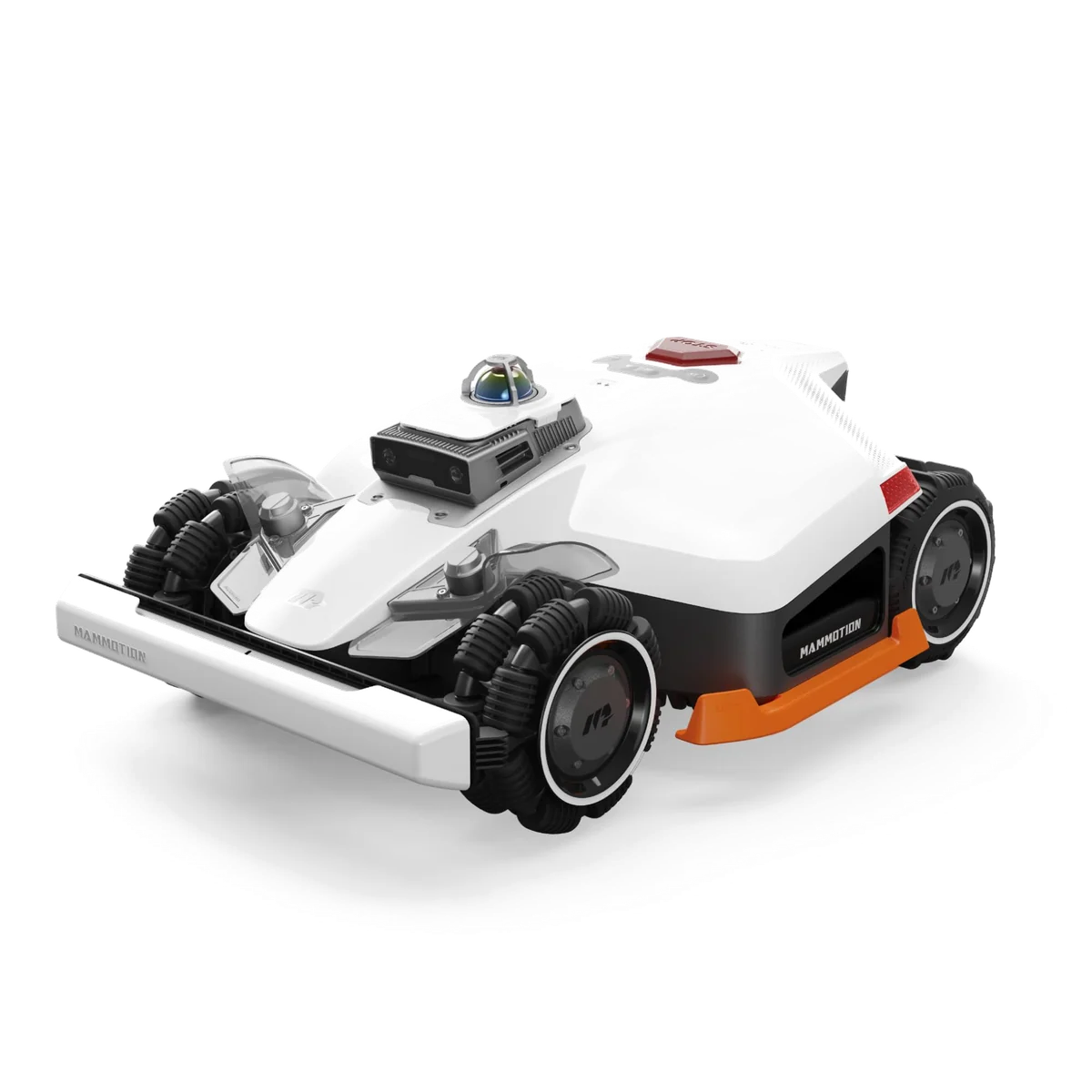
Its LiDAR, NetRTK, cameras, four driven wheels and long runtime make steep multi-zone properties credible autonomous territory.
Fixed-wheel turns can excavate sandy or wet turf, while firmware changes and map-loss reports weaken trust in an expensive machine.
This is the mower for banks, roots, gravel transitions and tree cover, not for a flat suburban rectangle. The 15.7-inch twin-disc deck and long operating window give the 1.25-acre managed-area claim substance, although a full property still requires charging and resumption.
The standard 5000 cuts only from 1.0 to 2.7 inches, so do not confuse it with the taller-cut 5000H. The LUBA 3 AWD 5000 versus Navimow X430 comparison is essential when delicate turf matters more than navigation beneath cover.
Strengths
- Four-wheel drive makes severe banks, ruts and rough transitions credible autonomous territory.
- LiDAR, NetRTK and dual cameras maintain position beneath trees and beside buildings.
- The wide 12-blade deck produces clean stripes when it is allowed to mow frequently.
- Long runtime and automatic recharge make the 1.25-acre management limit practical.
- Quiet operation allows long jobs without turning the yard into a work site.
Limitations
- Turning and docking can tear sandy, wet or fragile turf.
- Automatic mapping is unreliable enough that complex yards should be mapped manually.
- The app is powerful but firmware regressions and map-loss reports undermine confidence.
- Walls, posts and irregular borders still require regular string trimming.
- Return freight, repair access and long-term battery service need checking before purchase.
10. Mammotion LUBA 3 AWD 3000H — The Mammotion LUBA 3 AWD 3000H is the specialist for steep lawns kept tall.
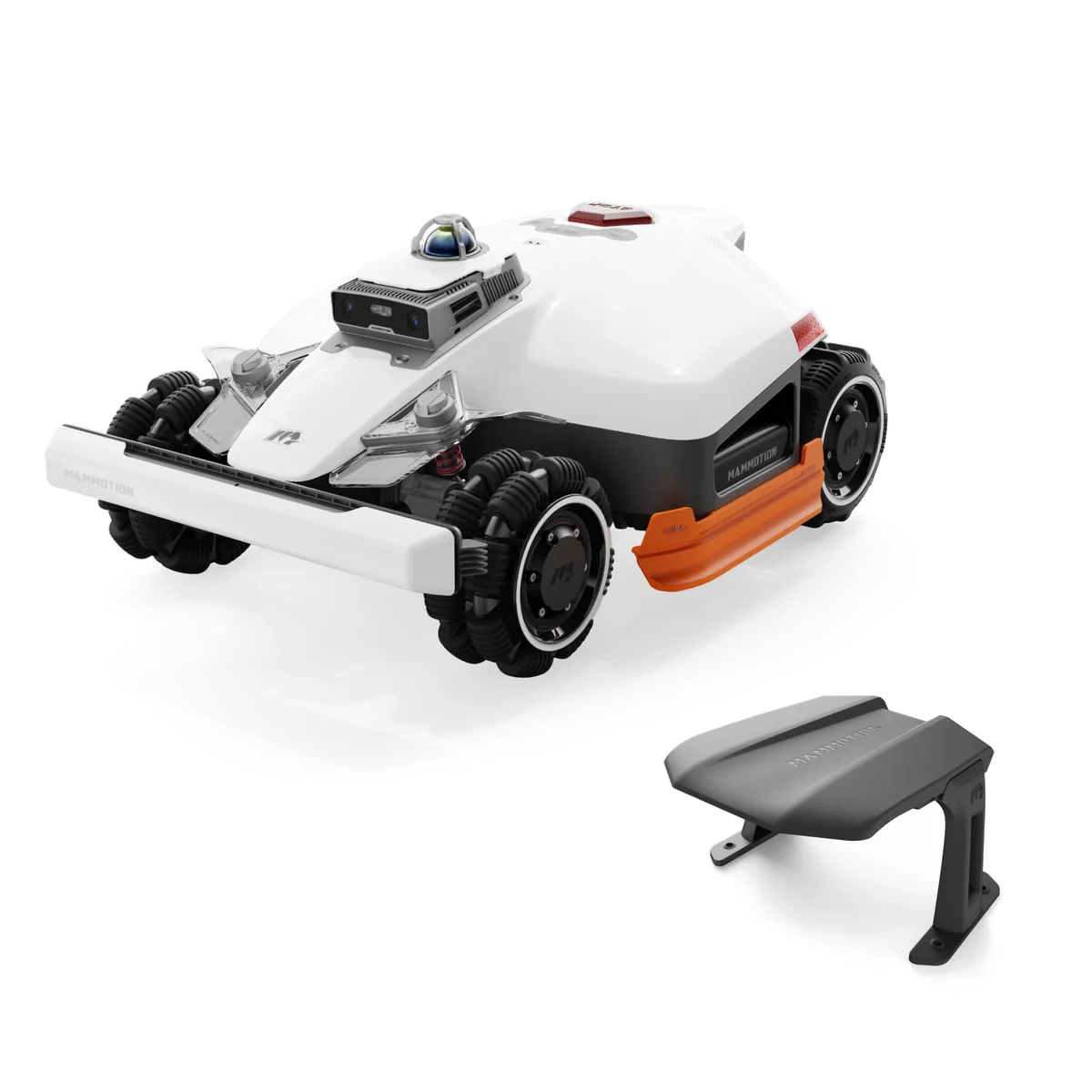
Its 2.2-to-4-inch range, wide twin-disc deck and tri-fusion navigation solve a combination of rough ground, tree cover and high-cut turf that few rivals address.
Its front rollers can scar weak grass, and app lag, damaging updates and uncertain repair times remain expensive ownership risks.
The H suffix earns its place on cool-season grass and rougher country lawns that should not be shaved low. AWD carries the mower through banks, roots and holes, while LiDAR supplies local shape when trees interrupt satellite corrections.
Automatic mapping is still the wrong gamble around an invisible property line or a fatal drop, and walls or tree beds remain string-trimmer territory. Choose the capacity carefully because the area tier is software-limited; our LUBA 3 3000H versus 5000H guide separates cutting height from acreage.
Strengths
- AWD traction carries it across banks, roots, ruts and transitions that stop many two-wheel-drive robots.
- LiDAR, NetRTK and dual cameras maintain useful navigation across both open grass and obstructed areas.
- The 2.2- to 4-inch range suits lawns that should not be scalped to standard robot-mower heights.
- Its wide twin-disc deck leaves clean patterns once the lawn is on a frequent maintenance schedule.
Limitations
- Fixed front rollers and pivot turns can scar soft, sandy, wet or thin turf.
- Automatic mapping is unreliable around invisible boundaries and complex hazards.
- App lag, connection failures and firmware regressions remain credible ownership risks.
- Battery access, parts availability and repair turnaround are weak points for such expensive equipment.
11. [Latest Upgrade All-Terrain Wire-Free] DREAME — The DREAME A3 AWD 1000 is the small-yard climber for terrain that looks oversized for the lawn.
![[Latest Upgrade All-Terrain Wire-Free] DREAME](/assets/b0h46ddhkc.webp)
It brings LiDAR, dual vision, suspension and genuine AWD to a wooded or uneven quarter acre without forcing the buyer into the huge Pro chassis.
Its single eight-inch disc covers open grass slowly, while ambiguous borders can turn automatic mapping into hours of manual correction.
The A3 AWD 1000 beats RTK machines when trees and walls are the positioning problem, and it beats ordinary rear-drive robots when banks, holes and hard transitions are the traction problem. It can move between mapped zones and maintain them quietly over successive days.
It is not the smaller version of every Pro feature. The deck is almost half as wide, the battery is smaller and the closest edging requires an optional module. Choose the A3 AWD Pro 3500 instead when the lawn materially exceeds a quarter acre or completion speed matters.
Our #1 Pick: Dreame A3 AWD Pro 3500
Check Price on Amazon
LiDAR was only the first gate
A mower ranked well when its sensors solved an actual positioning problem and the rest of the machine could complete the job. That meant staying inside the virtual boundary, crossing ordinary transitions, cutting systematic lanes, returning to the dock, charging and resuming without turning every schedule into a search party.
Terrain claims received less credit than terrain behavior. A slope percentage describes an ideal maximum, not what happens during a wet cross-slope turn or when a caster reaches an eroded seam. AWD matters on rough ground, but so do machine weight, wheel geometry and the way the chassis pivots. The mowers selected specifically for steep and uneven lawns separate climbing ability from the broader question of whether a machine treats the turf well.
Managed acreage was treated as a workload ceiling rather than one-charge coverage. A mower can maintain a large area by cutting, docking and resuming over many hours, which is acceptable when nobody is waiting for the lawn. It becomes a problem when gates, pets or family use leave only a narrow operating window. Our guide to robot mower acreage ratings explains why capacity headroom matters more than matching the number on the box.
Edges were judged by the grass left behind, not by the name of the feature. A moving disc or powered string head can reduce cleanup beside flush paving, but walls, posts, raised beds and inside corners still impose physical limits. Any mower promising the end of string trimming has volunteered its least believable sentence.
Buy the machine for the failure your yard will cause
Choose LiDAR because the sky is obstructed
Trees, buildings, eaves and covered docking areas are strong reasons to prefer onboard LiDAR. A broad open field is not automatically a LiDAR showcase because some systems orient more confidently when fences, trunks and structures provide stable geometry. An open lawn with clean satellite reception may be better served by one of the site’s broader wire-free mower choices.
Choose AWD because the ground is difficult
LiDAR answers “Where am I?” while AWD answers “Can I get there?” The two questions are independent. The Navimow i215 and Sunseeker S4 can navigate beneath trees yet still struggle with soft transitions, cross-slopes or ruts. DREAME and Mammotion combine LiDAR with driven wheels at all four corners, but their weight and turning behavior can damage weak turf.
Leave room below the acreage limit
A mower rated for exactly the measured grass area has no margin for dense growth, obstacles, narrow passages or a short mowing window. Buy comfortable capacity when the property is divided or complicated. Automatic charging is normal, but a mower that needs most of two days to finish may conflict with pets, children and locked gates even when it eventually covers every blade.
Map danger more conservatively than grass
Virtual boundaries are useful, editable instructions, not physical barriers. Pools, roads, retaining drops, drainage channels and steep curb edges deserve generous setbacks and, where a failure could cause harm, a real barrier. The first several complete runs should include docking, recharge, resumption and every connecting route, not just an attractive first lap.
Expect a maintenance mower rather than a tiny brush cutter
These machines work by clipping small amounts frequently and leaving fine clippings as mulch. They do not bag grass, lift flattened stems like a powerful rotary mower or reliably reclaim a neglected lawn. Bring tall growth down conventionally, remove sticks and toys, then schedule shallow cuts often enough that the robot never faces the same recovery job again. The guide to robotic mowing and grass clippings explains what remains on the turf.
Frequently Asked Questions
Do LiDAR robot mowers need a perimeter wire or RTK antenna?
The models ranked here navigate without either installation, although some hybrid Mammotion configurations may still use a physical RTK station when network correction is unavailable.
Do LiDAR robot mowers work under trees?
Yes, onboard LiDAR is particularly useful beneath trees and beside buildings because it does not depend on a clear satellite view for mowing position.
Is LiDAR better than RTK for every lawn?
No, LiDAR is strongest around stable physical landmarks while RTK can be simpler and less expensive on an open lawn with excellent sky visibility.
Can a LiDAR mower handle steep hills?
LiDAR does not provide traction, so severe slopes still call for an AWD chassis, firm ground and a mowing direction that avoids dangerous lateral travel.
Will a LiDAR robot mower finish the whole lawn on one charge?
Not necessarily, because advertised acreage usually describes the area maintained through automatic mowing, charging and resumption rather than single-charge coverage.
Will these mowers eliminate string trimming?
No, movable decks and powered side trimmers reduce cleanup beside accessible paving, but walls, posts, raised beds and tight corners still leave manual work.
Can LiDAR prevent a mower from falling into a pool or off a retaining edge?
No, dangerous drops require conservative virtual setbacks and a physical barrier wherever a positioning or mapping failure could cause harm.
Which LiDAR robot mower is best for a small lawn?
The MOVA LiDAX Ultra 1000 suits smooth firm turf, while the DREAME A3 AWD 1000 is the stronger choice when a small lawn also has serious slopes or rough transitions.
Our Top Pick
The Dreame A3 AWD Pro 3500 earns the top spot. The DREAME A3 AWD Pro 3500 is the best LiDAR mower for a substantial difficult lawn.
Compare Top Picks
Sources (110)
- Amazon listings and customer reviews
- Owner reports across r/roboticLawnmowers, r/MammotionTechnology, r/automower and 15 more threads
- Owner and reviewer video, 224 channels
- Walmart listing
- Costco listing
- Tech — Article — us.mova.tech
- Freshlycharged — Article — freshlycharged.com
- Facebook — Article — www.facebook.com
- Slashgear — Article — www.slashgear.com
- Newatlas — Article — newatlas.com
- Tech — Article — au.mova.tech
- at — Article — www.galaxus.at
- Basic Tutorials — Article — basic-tutorials.com
- Appleinsider — Article — appleinsider.com
- Notebookcheck — Article — www.notebookcheck.net
- Maison Et Domotique — Article — www.maison-et-domotique.com
- Au — Article — www.gadgetguy.com.au
- MOVA Tech — Article — us.forum.mova-tech.com
- Au — Article — www.techguide.com.au
- Wellbots — Article — www.wellbots.com
- Nytimes — Article — www.nytimes.com
- Novabot — Article — novabot.com
- Techiwant — Article — techiwant.com
- Samsclub — Article — www.samsclub.com
- Heyupnow — Article — community.heyupnow.com
- T3 — Article — www.t3.com
- Tech — Article — uk.mova.tech
- Robocleaners — Article — www.robocleaners.com
- Mowscout — Article — mowscout.com
- Mammotion — Article — us.mammotion.com
- Trustpilot — Article — www.trustpilot.com
- Pcworld — Article — www.pcworld.com
- Toptenreviews — Article — www.toptenreviews.com
- Trustpilot — Article — au.trustpilot.com
- Mammotion — Article — eu.mammotion.com
- Mammotion — Article — uk.mammotion.com
- Easylawnmowing — Article — www.easylawnmowing.com
- Easylawnmowing — Article — easylawnmowing.co.uk
- Therobotmower — Article — therobotmower.co.uk
- Trustpilot — Article — uk.trustpilot.com
- Androidauthority — Article — www.androidauthority.com
- Au — Article — robotlawnmowers.com.au
- Cnet — Article — www.cnet.com
- Consumerreports — Article — www.consumerreports.org
- Expertreviews — Article — www.expertreviews.co.uk
- Pcmag — Article — www.pcmag.com
- Gardenersworld — Article — www.gardenersworld.com
- Smarthomescene — Article — smarthomescene.com
- HOOKII — Article — hookii.com
- Mammotion — Article — ca.mammotion.com
- Tractorsupply — Article — www.tractorsupply.com
- Substack — Article — jjtechish.substack.com
- Smarthomeassistent — Article — www.smarthomeassistent.de
- Mein Gartenexperte — Article — www.mein-gartenexperte.de
- Techreviewer — Article — www.techreviewer.de
- Mowingmagic — Article — mowingmagic.com
- Fr — Article — maniaques.fr
- Basic Tutorials — Article — basic-tutorials.de
- Frandroid — Article — www.frandroid.com
- Appgefahren — Article — www.appgefahren.de
- Shopsunseekertech — Article — shopsunseekertech.com
- Tomsguide — Article — www.tomsguide.com
- Warehouserunner — Article — app.warehouserunner.com
- Electricrevolutionreviews — Article — electricrevolutionreviews.com
- Sunseekertech — Article — sunseekertech.com
- Bestbuy — Article — www.bestbuy.com
- Sunseekerelite — Article — sunseekerelite.com
- Bobvila — Article — www.bobvila.com
- Segway — Article — navimow.segway.com
- Trustedreviews — Article — www.trustedreviews.com
- Navimow — Article — navimow.com
- Au — Article — segway.com.au
- Lifehacker — Article — lifehacker.com
- Theverge — Article — www.theverge.com
- Au — Article — roboticmower.com.au
- Lowes — Article — www.lowes.com
- Techadvisor — Article — www.techadvisor.com
- Homedepot — Article — www.homedepot.com
- Tv — Article — www.stuff.tv
- Cnygreenteam — Article — cnygreenteam.com
- Outdoor Usa — Article — outdoor-usa.com
- Protoolreviews — Article — www.protoolreviews.com
- Homebuilding — Article — www.homebuilding.co.uk
- Techradar — Article — www.techradar.com
- Gizmodo — Article — gizmodo.com
- Suncolawns — Article — shop.suncolawns.com
- Smartyardnw — Article — smartyardnw.com
- the Ambient — Article — www.the-ambient.com
- Outdoorica — Article — outdoorica.com
- Robomowlab — Article — robomowlab.com
- Eftm — Article — eftm.com
- ECOVACS — Article — www.ecovacs.com
- Au — Article — www.harveynorman.com.au
- Thespruce — Article — www.thespruce.com
- Pcmag — Article — uk.pcmag.com
- 9to5google — Article — 9to5google.com
- Mensjournal — Article — www.mensjournal.com
- Lawncraftsupply — Article — lawncraftsupply.com
- Smarthomecompared — Article — smarthomecompared.com
- Smarthomeexplorer — Article — www.smarthomeexplorer.com
- Hunker — Article — www.hunker.com
- Lbtechreviews — Article — www.lbtechreviews.com
- Dreametech — Article — yardcare.dreametech.com
- Ign — Article — www.ign.com
- Glroboticsusa — Article — www.glroboticsusa.com
- Thetechnologyman — Article — thetechnologyman.com
- Mammotion — Article — mammotion.com
- Carplaylife — Article — www.carplaylife.com
- Smarthomejunkie — Article — www.smarthomejunkie.net
- Iheart — Article — rocketerie.iheart.com