The GOAT A2000 cuts beautifully, but its map can outsmart itself
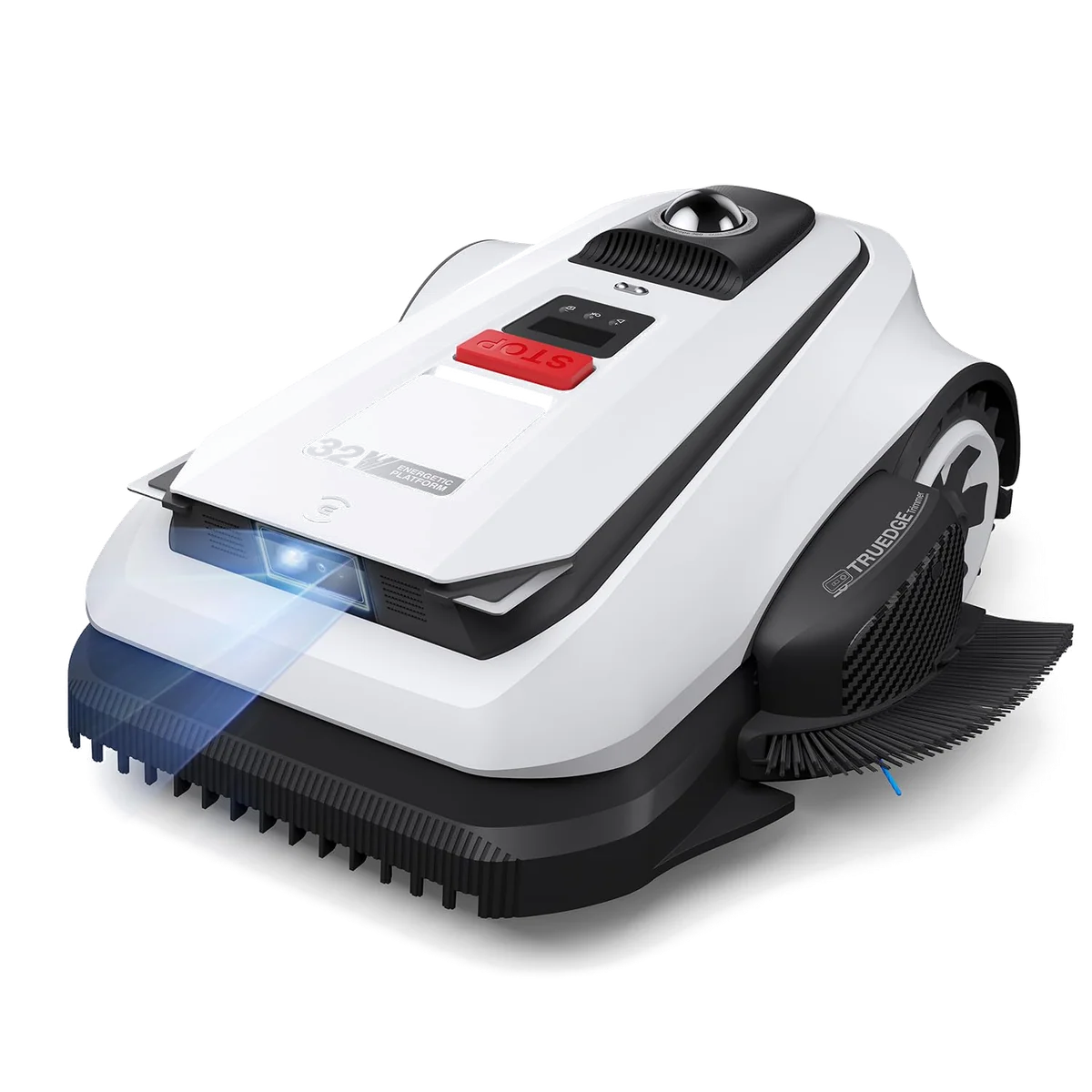
Buy the ECOVACS GOAT A2000 LiDAR PRO for a clearly bounded, reasonably smooth lawn up to half an acre, but walk away if fences, curb drops, narrow passages, or irregular slopes make precise map control non-negotiable.
The right yard makes this GOAT look much smarter
Buy it for firm, reasonably smooth grass with distinct boundaries, safe transitions, useful outdoor Wi-Fi, and no more than about half an acre to maintain. Trees and buildings that complicate satellite reception actually strengthen its case. Give it frequent work, let it recharge without watching the clock, and accept that a corner or post may still need a quick finishing pass.
Do not buy it for severe slopes, exposed curb or pool drops, narrow rock-lined passages, loose ground, or fenced zones that nearly touch on the digital map. It is also a poor match for anyone expecting collected clippings, leaf mulching, recovery from serious overgrowth, or truly maintenance-free edges. The A2000 removes the weekly grind more convincingly than it removes every last lawn chore.
Best for: Edge cutting
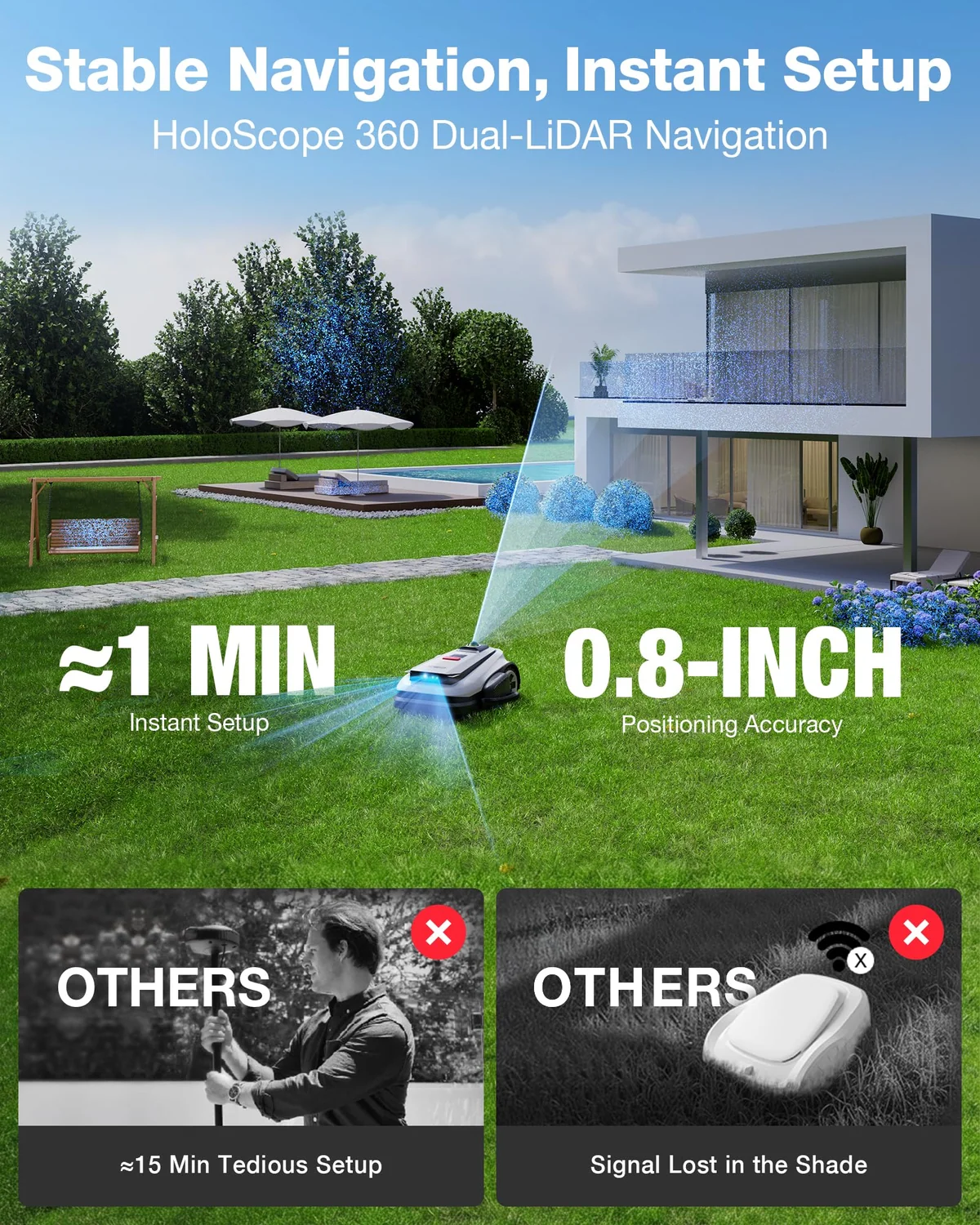
The A2000’s best trick is not that it mows without a perimeter wire. Plenty of current machines do that. Its advantage is doing so without an RTK antenna or a dependable view of the sky. The rotating LiDAR and forward-facing depth sensor build and follow a local map, so trees, walls, shade, and cloudy weather do not create the satellite-placement puzzle found with RTK mowers. For the right property, that removes the most irritating part of going wire-free.
It is also a convincing mower once the map is right. Two overlapping cutting discs make orderly lanes across a maintained lawn, while the separate side-mounted string trimmer reaches closer to accessible borders than a centered blade deck can. The result can look deliberate rather than merely short: broad stripes, useful overlap, and far less grass waiting beside the driveway.
The qualification matters. This is a frequent-maintenance machine, not a robotic version of a bagging push mower. It shaves small pieces from upright grass and leaves those clippings behind. It does not create enough draft to lift flattened blades, and it will not mulch fallen leaves. Run it every day, every other day, or two to three times a week and the tiny clippings largely disappear into the turf; send it into a neglected lawn after a wet fortnight and the illusion of effortless mowing falls apart.
Key Specifications
The mower is easier to install than the map is to correct
There is no wire to bury and no pole to mount. A simple lawn can be ready in tens of minutes after the trimmer and dock are assembled, the station is staked on level ground, firmware is installed, and the mower has traced the boundary. ECOVACS’ one-minute language describes the beginning of automatic mapping, not the complete setup. The dock still needs power, useful outdoor 2.4GHz Wi-Fi, and room for a clean approach.
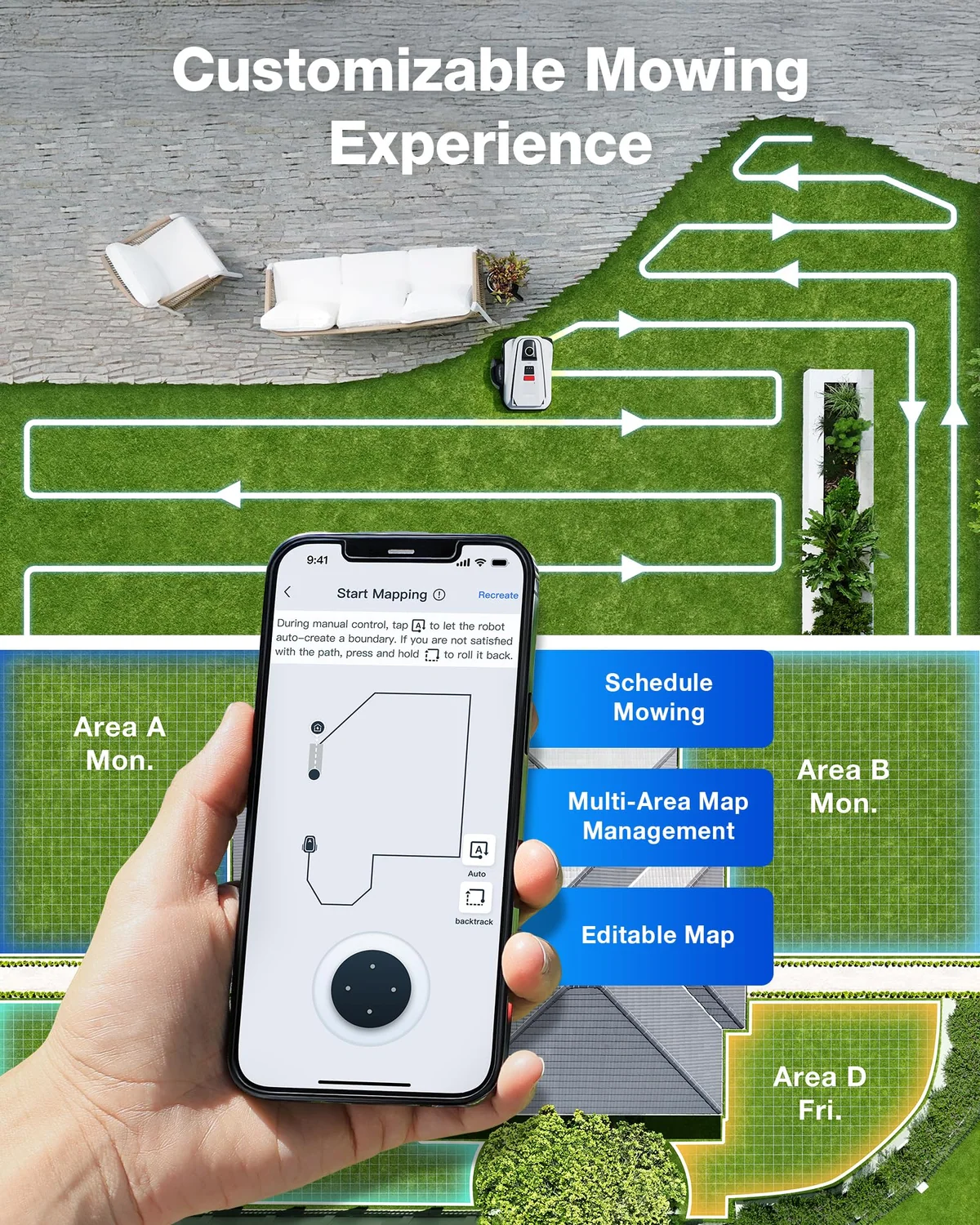
Automatic mapping is impressive where grass meets a wall, path, patio, mulch bed, or other legible edge. An undefined grass-to-grass property line needs manual steering, and complicated yards may need paths and no-go zones added before scheduling begins. Nearby Bluetooth is used while mapping, so this is a walk beside the mower rather than a job completed from the kitchen.
The app offers serious control once the lawn exists on screen: per-zone height, direction and speed; mowing schedules; separate trimming schedules; rain delays; travel paths; split and merged areas; camera viewing; and automatic changes of mowing direction. A gate can connect front and rear zones if it remains open, and a mapped path can cross a safe driveway or sidewalk. The route recorded during path creation becomes the route the mower repeatedly follows.
The weakness is local correction. A bad exclusion may have to be traced by driving the mower around the physical hazard instead of drawing a clean virtual line on the phone. More seriously, closely adjoining front and rear lawns divided by a fence have been combined automatically by the software. In that failure, the map decides a route already exists through the fence, refuses the real path, and keeps sending the mower toward the obstruction. That is not a cosmetic app complaint; it can make an otherwise suitable multi-zone yard unworkable.
Firmware has also changed mapping behavior after purchase, which makes the software risk harder to dismiss as a one-time setup nuisance. Smart Lawn Bots would supervise the entire first mow, the first trip between zones, and the first return to the dock before trusting a schedule. A wire-free installation saves physical labor, but a difficult property can replace that labor with boundary refinement and occasional rescue.
Strengths & Limitations
Strengths
- Dual LiDAR maps without boundary wire, an RTK pole, or a clear view of the sky.
- The wide overlapping deck produces tidy systematic lanes on frequently maintained grass.
- The integrated string trimmer substantially reduces cleanup along straight, accessible borders.
- Automatic charging, resumption, zone settings, and quiet operation suit frequent unattended maintenance.
Limitations
- Map correction is too restrictive when automatic boundaries or merged zones are wrong.
- The 50-minute battery can require several charging stops on lawns far below the headline capacity.
- Rear-wheel drive and small front casters are vulnerable on rough grades, loose soil, and drop-off edges.
- Corners, irregular rocks, flattened grass, leaves, and heavy overgrowth still require conventional tools.
A fine finish, provided the lawn stays within the brief
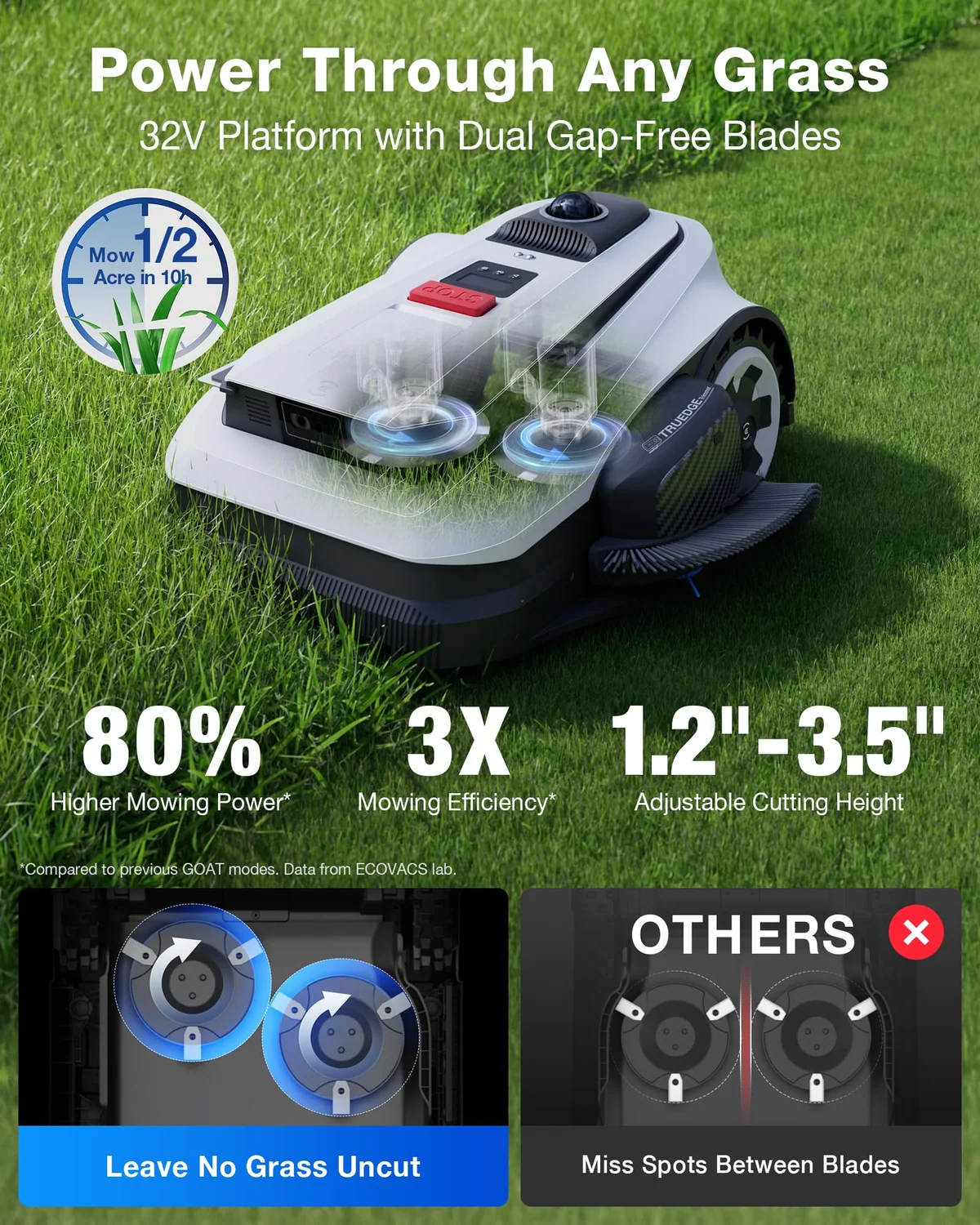
The 32V cutting platform is the reason to choose this GOAT over a smaller single-disc model. Six pivoting razor blades sit across two staggered discs, avoiding an uncut stripe down the middle and covering almost 13 inches per pass. Maintained Bermuda can be kept near the bottom of the 1.18-inch height range, while slower travel gives dense turf more chances to meet a blade. Alternating direction prevents the wheels and repeated passes from pressing the same pattern into the grass.
Moderately tall growth may take several sessions. High-grass mode makes the mower less likely to mistake long blades for obstacles, but that lower sensitivity is a poor trade when toys, hoses, pets, or children share the lawn. A severely overgrown yard deserves one conventional reset cut before the robot takes over. From there, frequent short cuts are what keep the surface clean without visible piles of clippings.
TruEdge replaces most routine trimming, not every awkward minute
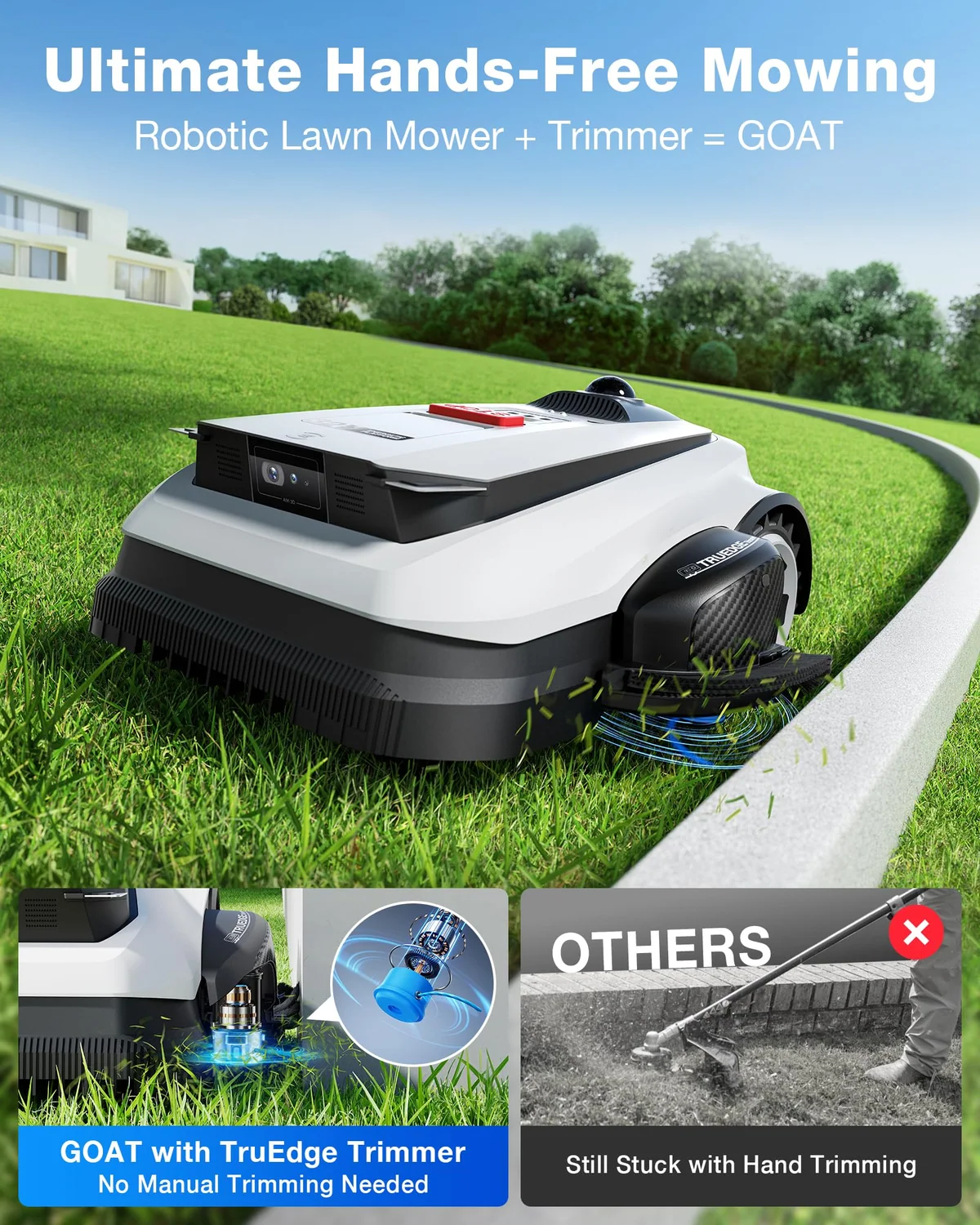
The integrated string head is more useful than the optimistic “edge-to-edge” label suggests, because it attacks a real weakness of robot mowers rather than shifting the same blade disc a little closer to the shell. Along a straight fence, flush path, driveway, or square bed, it can remove the strip that normally demands a second tool. It runs as a separate task, however, so mowing and trimming need distinct jobs or schedules.
Geometry determines the result. Tight inside corners, downspouts, irregular rocks, narrow sloped edges, conservative virtual boundaries, and inaccessible details can still leave grass behind. If a person approaches, the trimmer shuts off for safety while the mower may continue moving, which can produce a missed section rather than a paused task. The practical verdict is that TruEdge can turn weekly string trimming into occasional touch-up, but it cannot retire the trimmer completely; our guide to robot-mower edge cutting explains why the last strip remains so difficult.
The half-acre label describes a workday, not a battery
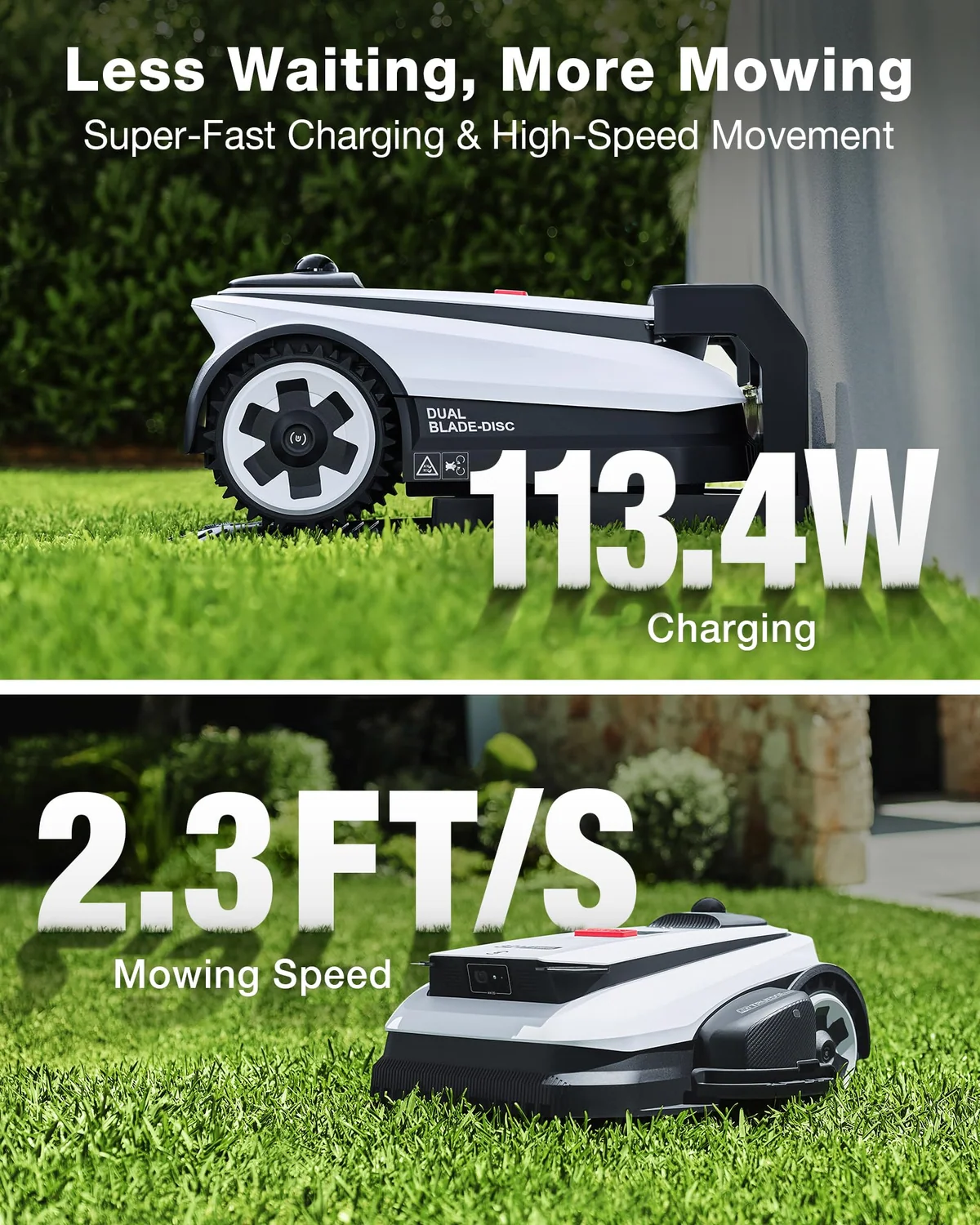
The A2000 officially mows for about 50 minutes, charges for about 50 minutes, and resumes unfinished work automatically. Its half-acre rating therefore describes the area it can maintain through repeated autonomous shifts. It does not promise a half-acre pass on one charge, and even a lawn far smaller than that may require multiple dock visits once slopes, turns, dense grass, obstacle avoidance, and trimming are involved.
That small battery is not a flaw when the mower can quietly work while nobody waits for it, but it is the wrong compromise for anyone who wants the whole lawn finished in one uninterrupted session. The A2000 is patient rather than tireless.
A 27-degree claim does not make this an all-terrain mower
The rear wheels can move the mower across ordinary firm slopes, but the free-swiveling front casters reveal its limits on divots, loose soil, rock-lined grades, and wet ground. It can slide downhill, churn turf while trying to push a caster over a bump, or become trapped beside an irregular edge. The official 50% grade applies inside a work area; the permitted virtual-boundary slope is only 20%, so a steep bank beside a street, pool, or retaining drop needs much more caution.
A five-inch curb is a hazard, not a boundary to let the automap discover. Permanent drops, water, fragile beds, and difficult rock sections deserve physical separation or deliberately traced exclusions. Buyers dealing with genuinely steep, rough ground should start with the Mammotion LUBA 3 AWD 5000H review, because four-wheel drive and a much higher slope rating make that machine the more credible terrain specialist.
Choose capacity without paying twice for the same mower
| Model | Best fit | Cutting platform | Battery behavior |
|---|---|---|---|
| GOAT O1000 LiDAR PRO | Lawns around ¼ acre | Single disc, approximately 8.66 inches | Small-yard duty |
| GOAT A2000 LiDAR PRO | Lawns up to ½ acre | Dual disc, 12.96 inches | 50-minute shifts with frequent charging |
| GOAT A3000 LiDAR PRO | Lawns up to ¾ acre | Same basic dual-disc platform | Much longer 160-minute runtime |
The A2000 beats the smaller O1000 LiDAR PRO on deck width, coverage speed, maintained area, and headline slope capability, but a straightforward quarter-acre lawn may not benefit enough to justify stepping up. Our O1000 and A2000 comparison separates those two sizes without confusing the LiDAR O1000 with the distinct RTK Care version.
The A3000 LiDAR PRO is not a fundamentally better navigator or cutter. It is mostly the same idea with a much larger battery and a three-quarter-acre brief. Choose the A2000 if repeated short charge cycles are invisible to your routine; choose the larger platform only when fewer interruptions or more grass materially changes the job.
Owning it still involves a hose, blades, line, and judgment
Routine care is modest but real. Keep mud off the camera and LiDAR dome, rinse the IPX6 mower with an ordinary garden hose rather than a pressure washer, inspect the wheels and underside, and replace or flip the six razor blades when the finish declines. Blade life varies sharply with soil, debris, grass, and schedule, so a calendar promise is less useful than watching the cut. The trimmer also needs line and eventually a replacement brush.
Rain detection sends the mower home or pauses work, with a configurable delay before it resumes. Several lost mowing days can leave growth beyond its comfortable maintenance range, at which point a conventional mower may need to reset the lawn. LiDAR can navigate in darkness and ordinary mowing is notably quiet, although there are no headlights and the trimmer is noticeably louder. Night capability should not override animal-protection hours or the need to keep children and pets away from an operating mower.
A garage is optional. The dock is intended to remain installed outdoors, while shelter mainly limits sun and weather exposure rather than enabling charging. Theft protection is also deterrence rather than prevention: a lift alarm, PIN lock, app location features, and optional cellular hardware make the mower harder to use or lose quietly, but one adult can still carry away its 39-pound body.
The largest long-term uncertainty is software, not the cutting deck. Support reports range from responsive help to unresolved mapping failures, and firmware can change behavior after a lawn has already been working. Buyers comfortable refining maps and checking the first run after a significant update will tolerate that exposure better than anyone expecting an appliance that disappears into the background forever.
Sources (17)
- Amazon listings and customer reviews — Ecovacs Goat A2000 Lidar
- Owner and reviewer video, 16 channels
- Cnet — Article — www.cnet.com
- Robomowlab — Article — robomowlab.com
- Facebook — Article — www.facebook.com
- Bobvila — Article — www.bobvila.com
- Eftm — Article — eftm.com
- ECOVACS — Article — www.ecovacs.com
- Au — Article — www.harveynorman.com.au
- Pcmag — Article — www.pcmag.com
- Bestbuy — Article — www.bestbuy.com
- Thespruce — Article — www.thespruce.com
- Pcmag — Article — uk.pcmag.com
- Pcworld — Article — www.pcworld.com
- 9to5google — Article — 9to5google.com
- Mensjournal — Article — www.mensjournal.com
- Tomsguide — Article — www.tomsguide.com