The GOAT O1000 is the smarter mower until your lawn outgrows it
Buy the GOAT O1000 LiDAR PRO for a connected lawn under a quarter acre, and choose the A2000 only when a wider deck and half-acre capacity matter more than compact access, longer mowing shifts, and lower commitment.
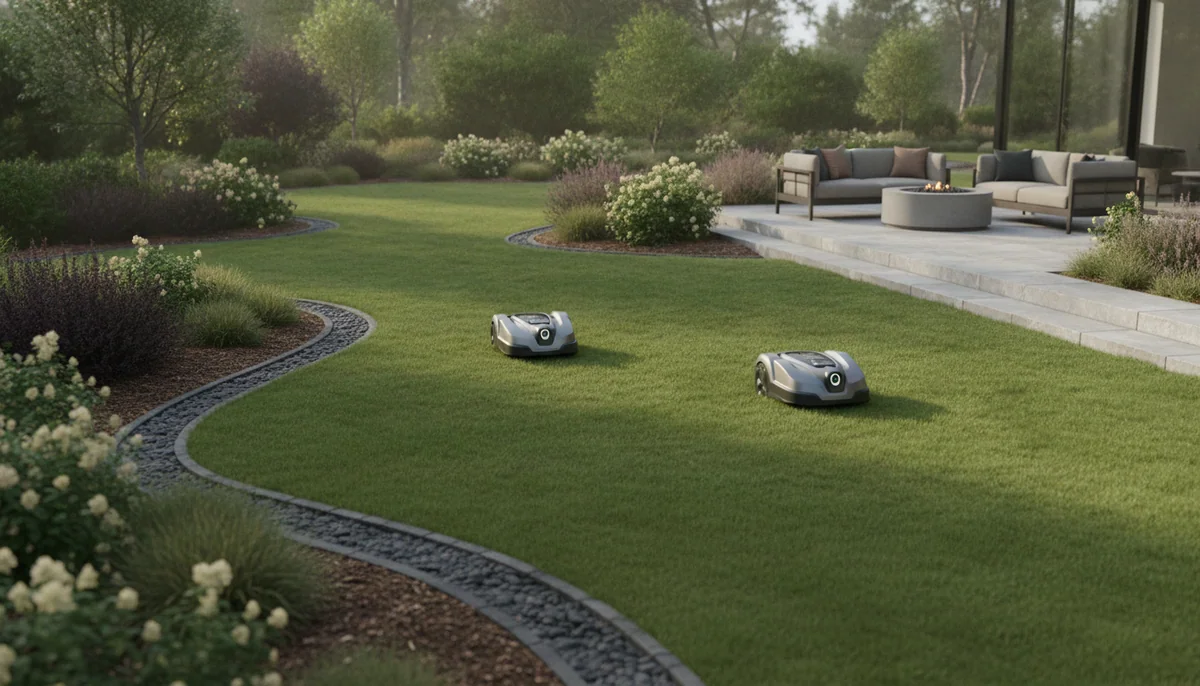
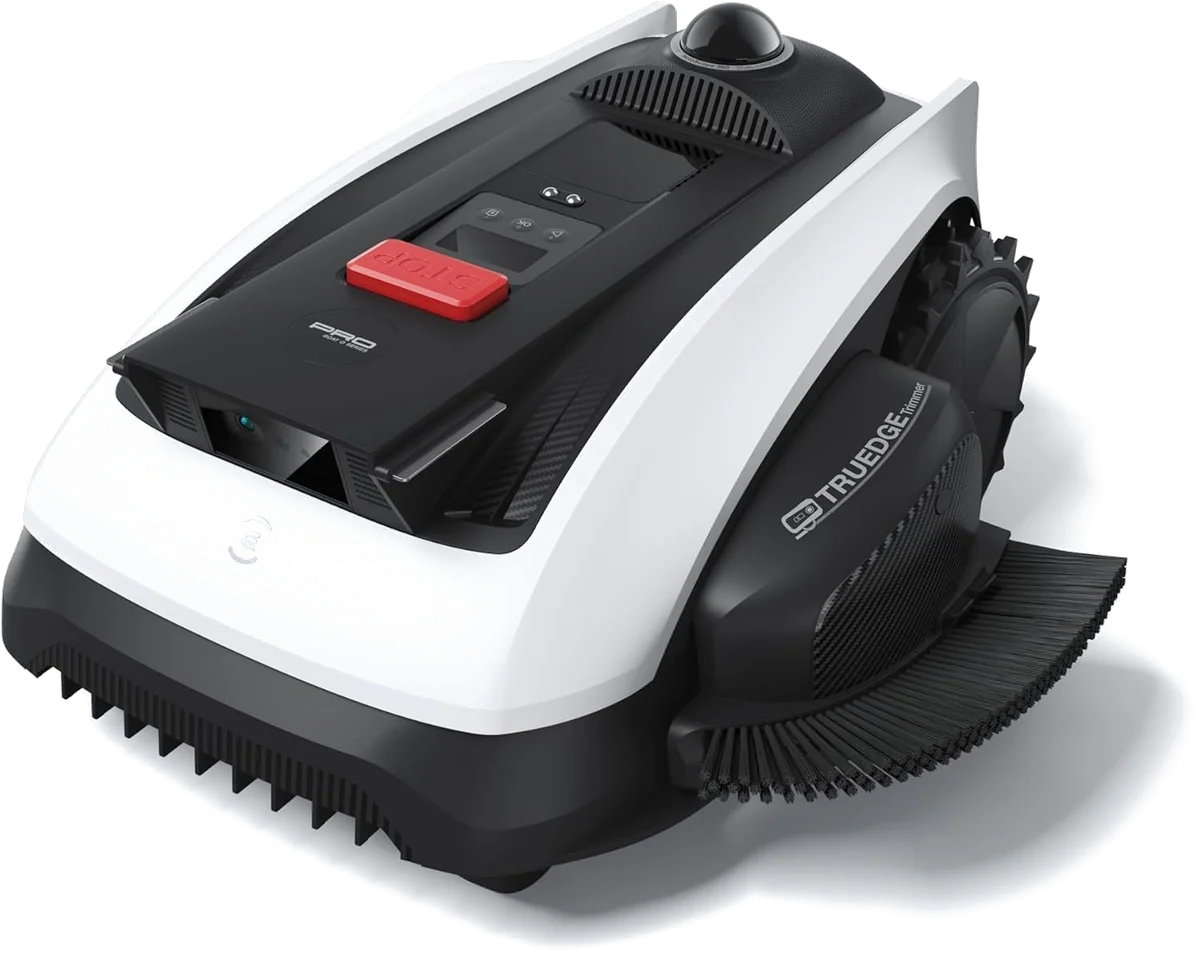
ECOVACS goat O1000 LiDAR Pro
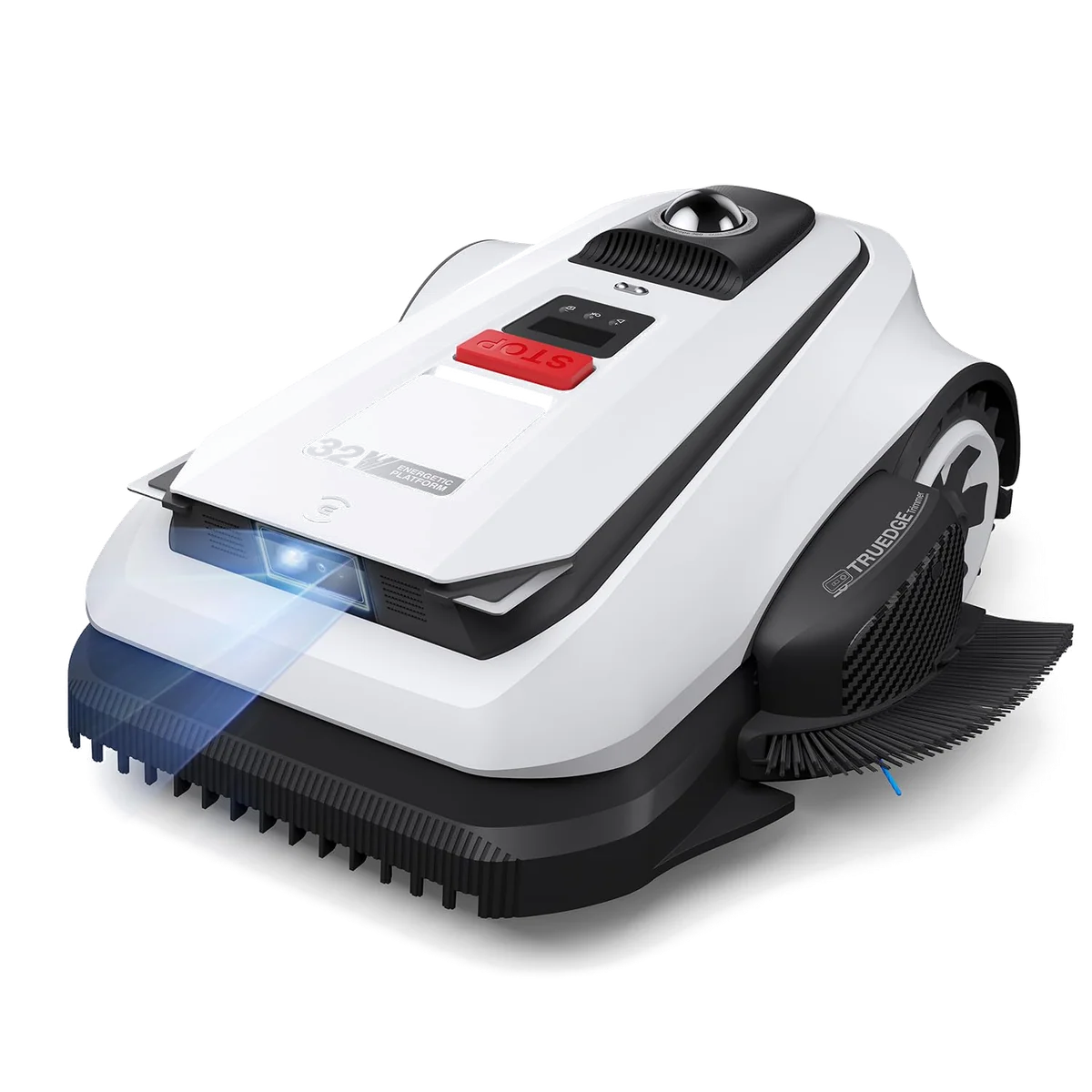
ECOVACS goat A2000 LiDAR Pro
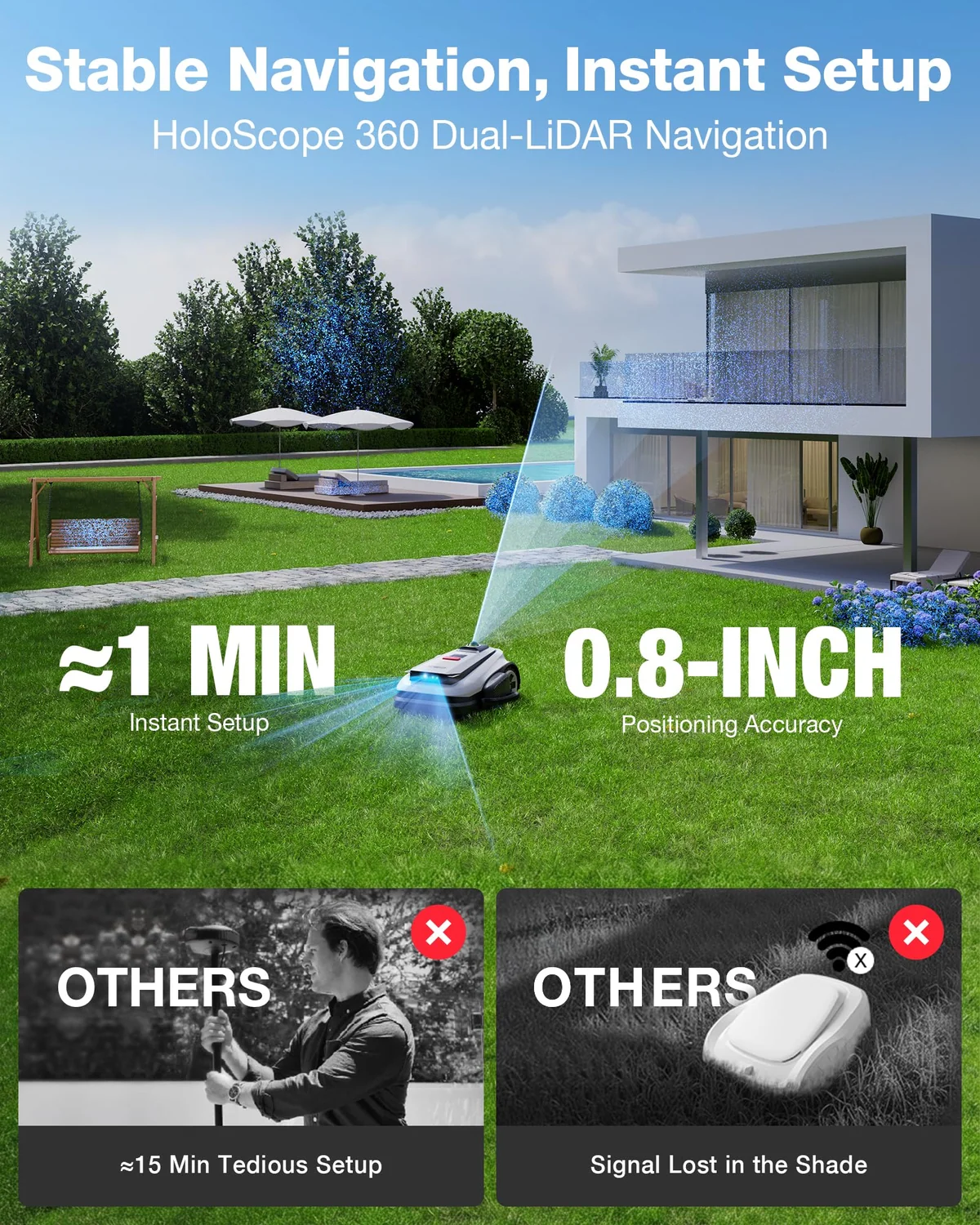
These two ECOVACS mowers share the technology that matters most. Both navigate with onboard LiDAR and AI vision, so neither needs a buried perimeter wire, an RTK antenna, or a dependable view of the sky. Both mow in orderly lanes, return to charge, resume unfinished work, and run a side-mounted string trimmer as a separate edging task.
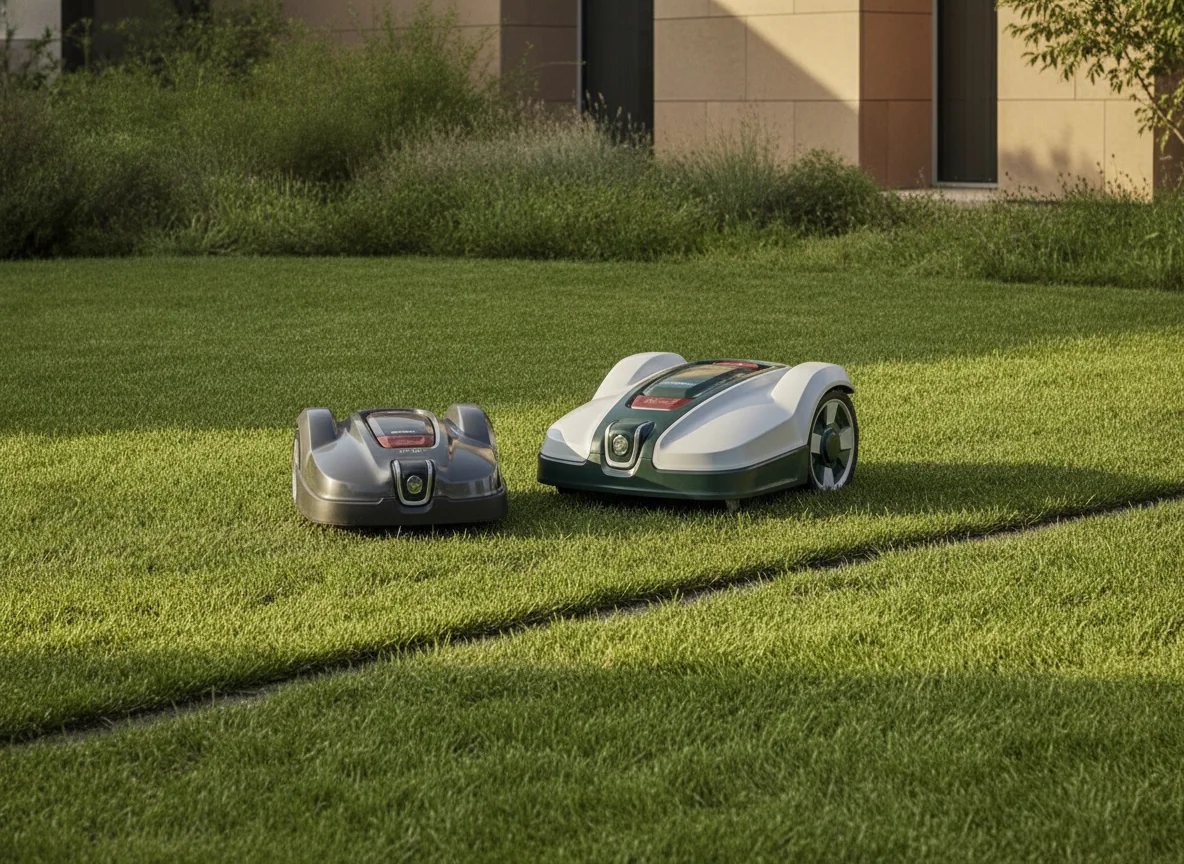
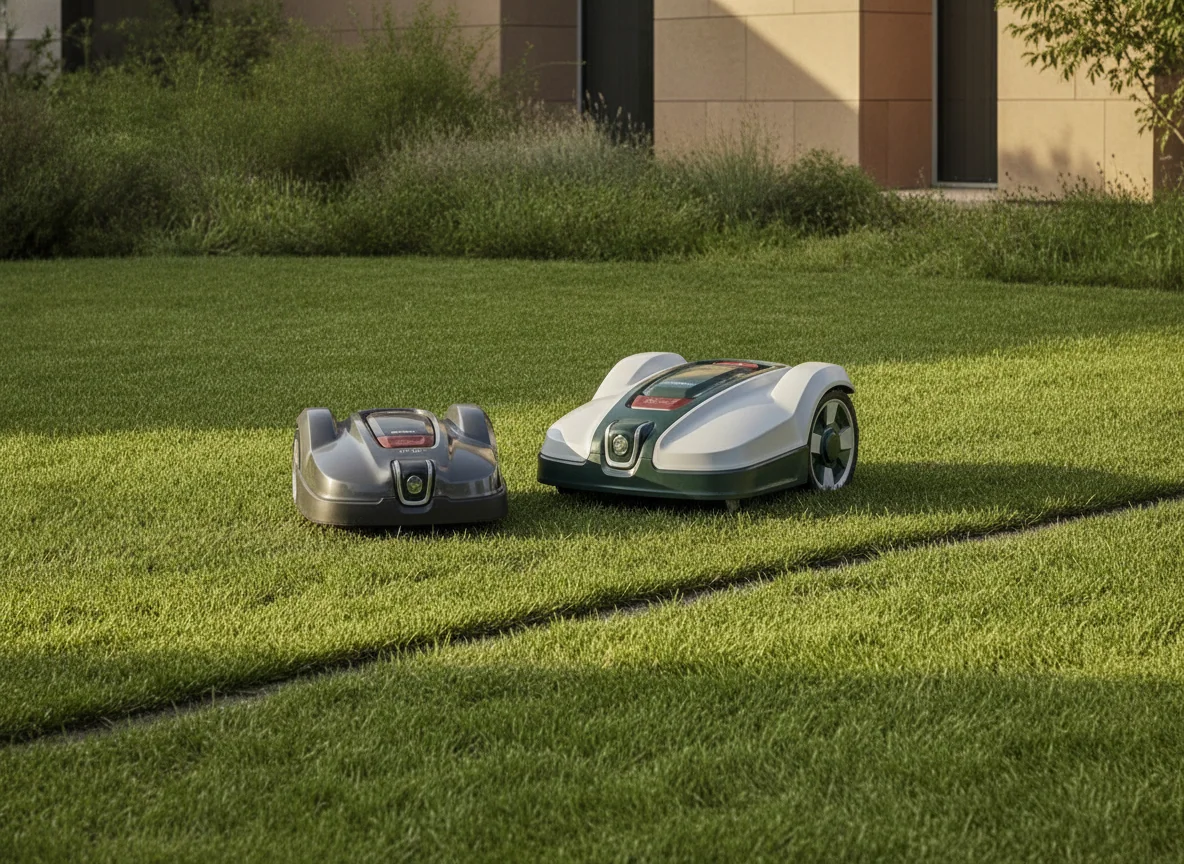
The decision is therefore not LiDAR versus LiDAR. It is a choice between two sizes of the same idea. The O1000 has a narrow single-disc deck and a compact body built for side passages, small zones, and lawns around a quarter acre. The A2000 stretches to nearly 13 inches of cutting width, adds a dual-disc platform, cuts slightly taller, and is rated for twice the area.
That makes the A2000 look like the automatic upgrade. It is not. Its wider chassis is unnecessary on a modest lawn, its official mowing shift is shorter, and its software can become especially troublesome when fences or closely adjoining zones confuse the map. The O1000 has its own awkward manual steering and weak spots around edges, but it asks less machine to negotiate the sort of compact property that makes satellite-free navigation valuable in the first place.
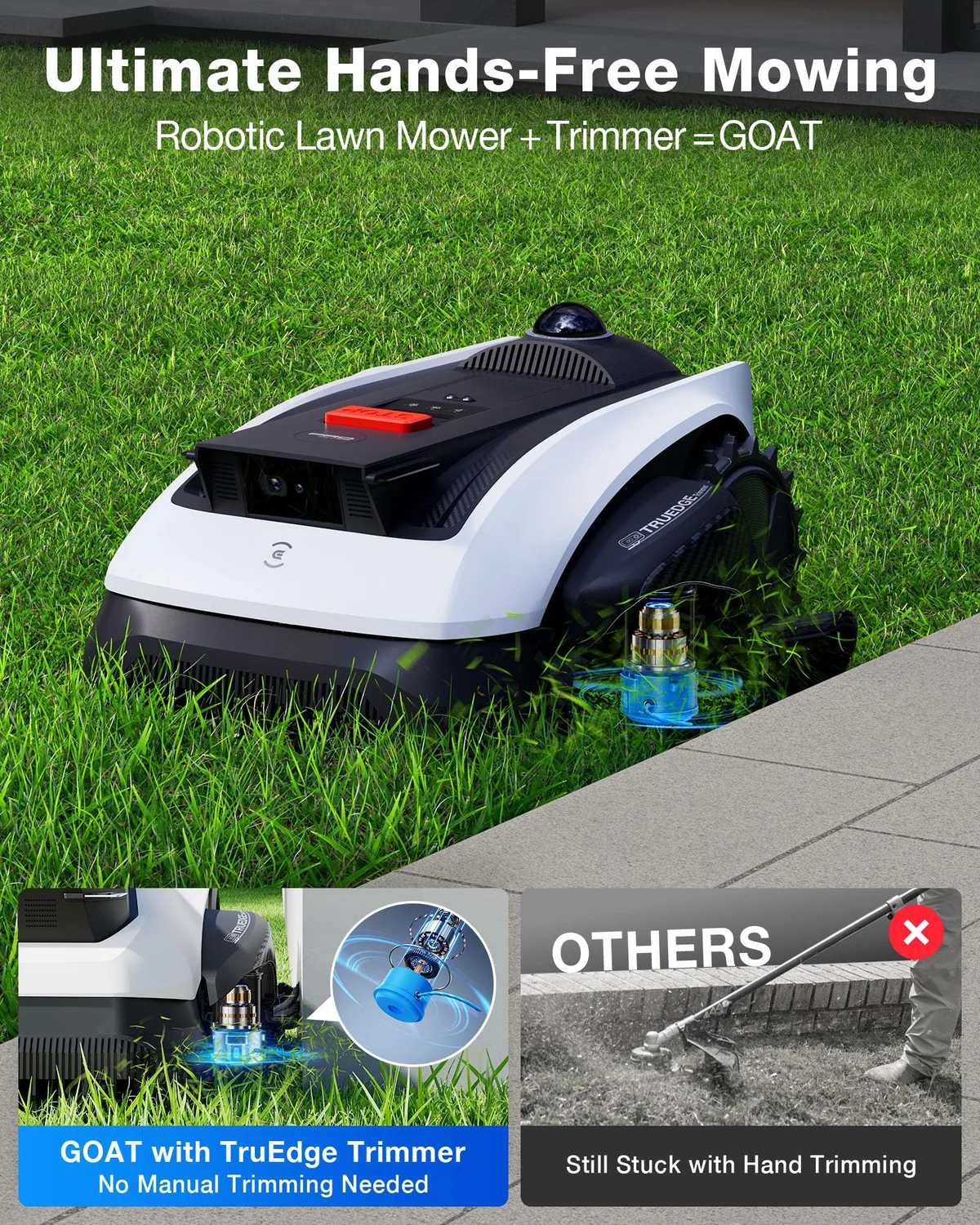
ECOVACS goat O1000 LiDAR Pro
ECOVACS goat A2000 LiDAR Pro
At a Glance
| Feature | ECOVACS goat O1000 LiDAR Pro | ECOVACS goat A2000 LiDAR Pro |
|---|---|---|
| Price Range | $500–$1,000 | Under $200 |
| Cutting height | 1.18 to 3.15 inches | 1.18–3.54 inches, adjusted in the app |
| Recommended lawn size | Up to 0.25 acre | Up to ½ acre over repeated mow-and-charge cycles |
| Cutting width | 8.66 inches | 12.96 inches |
| Check Price on Amazon | Check Price on Amazon |
The deck gets bigger, but the judgment does not disappear
On an open rectangle, the A2000 earns its extra footprint. Two overlapping cutting discs cover 12.96 inches per lane, compared with the O1000’s 8.66-inch single-disc cut. Fewer lanes mean faster progress across open turf, and the A2000’s 3.54-inch maximum setting gives it a little more room for grasses kept above the O1000’s 3.15-inch ceiling.
The battery figures complicate that advantage. The O1000 is specified for roughly 90 minutes of mowing followed by about 70 minutes of charging. The A2000 works in approximately 50-minute shifts and charges for about the same length of time. Both resume automatically, so elapsed time matters less than it would with a mower requiring supervision, but the A2000’s half-acre label describes repeated autonomous cycles rather than one uninterrupted sweep.
| Decision point | GOAT O1000 LiDAR PRO | GOAT A2000 LiDAR PRO |
|---|---|---|
| Best lawn size | Connected lawns up to ¼ acre | Maintained lawns up to ½ acre |
| Cutting width | 8.66-inch single-disc deck | 12.96-inch dual-disc deck |
| Cutting height | 1.18 to 3.15 inches | 1.18 to 3.54 inches |
| Mowing and charging | About 90 minutes mowing and 70 minutes charging | About 50 minutes mowing and 50 minutes charging |
| Strongest reason to choose it | Compact access and small-yard efficiency | Faster coverage across wider, more open turf |
| Most important caution | Slow near its area limit and inconsistent at awkward edges | Restrictive map correction and frequent dock visits |
Neither model turns an overgrown lawn into a finished one. These are maintenance mowers that shave small clippings from upright grass and leave them behind. Flattened blades, wet growth, fallen leaves, and a lawn ignored for two weeks can still require a conventional reset cut. Once the grass is under control, frequent scheduled passes are what make the clippings disappear and the parallel lanes look intentional.
TruEdge reduces the finishing work without finishing every edge
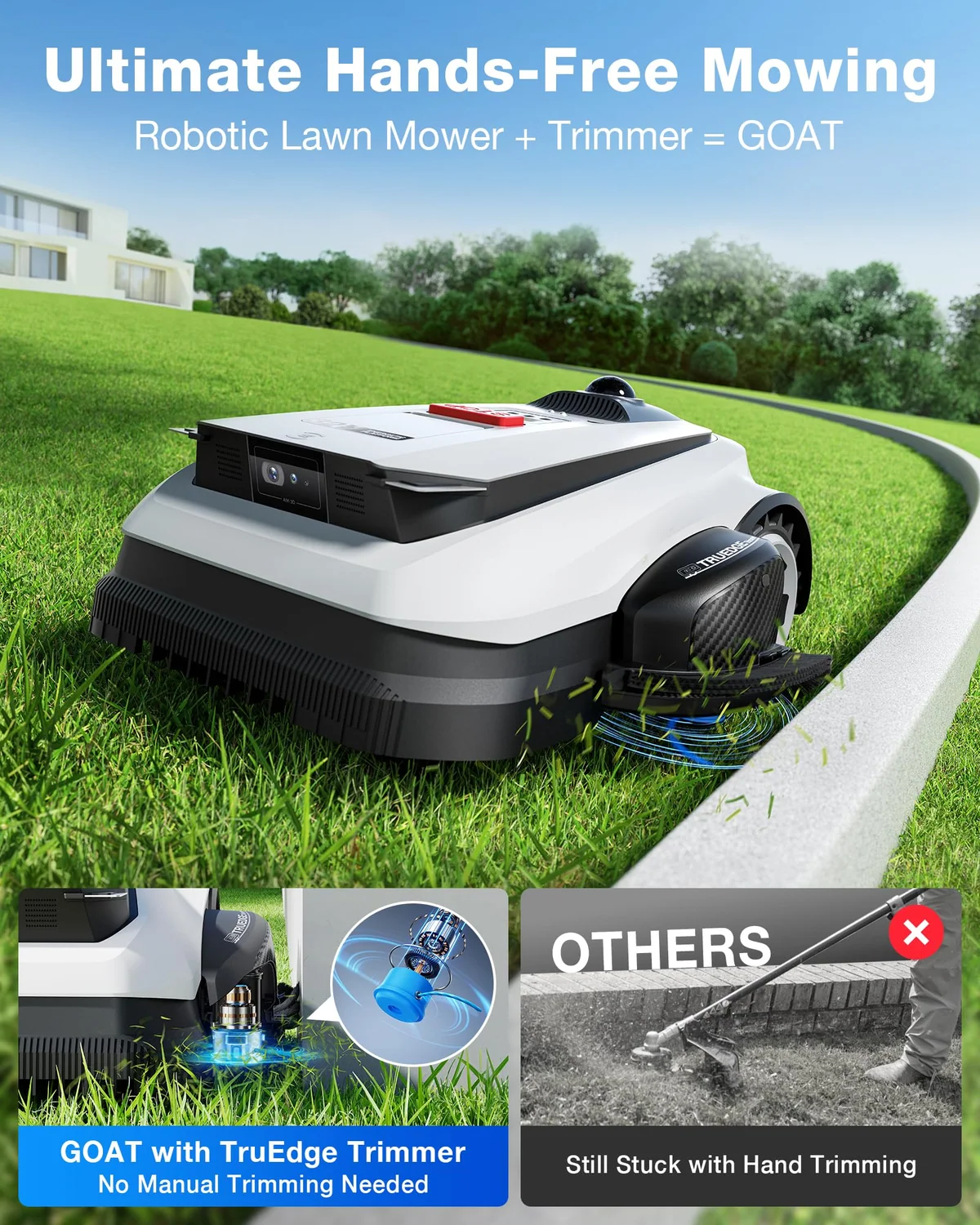
The side trimmer is a real advantage over robot mowers that merely offset a blade disc toward the shell. Beside a long flush sidewalk or uncomplicated driveway, either GOAT can remove most of the strip that normally survives the main cut. The trimmer is louder than ordinary mowing and runs as its own task, so it needs a separate schedule rather than quietly working during every pass.
Fences, raised beds, tight inside corners, posts, rocks, and conservative no-go zones expose the limitation. The safety system keeps the chassis away from obstacles, while the trimmer needs proximity to do its job. The result can be a clean straight run followed by an obviously untouched corner. The powered trimmer reduces routine cleanup, but the handheld tool still has a job.
The same LiDAR system meets two different kinds of difficult yard
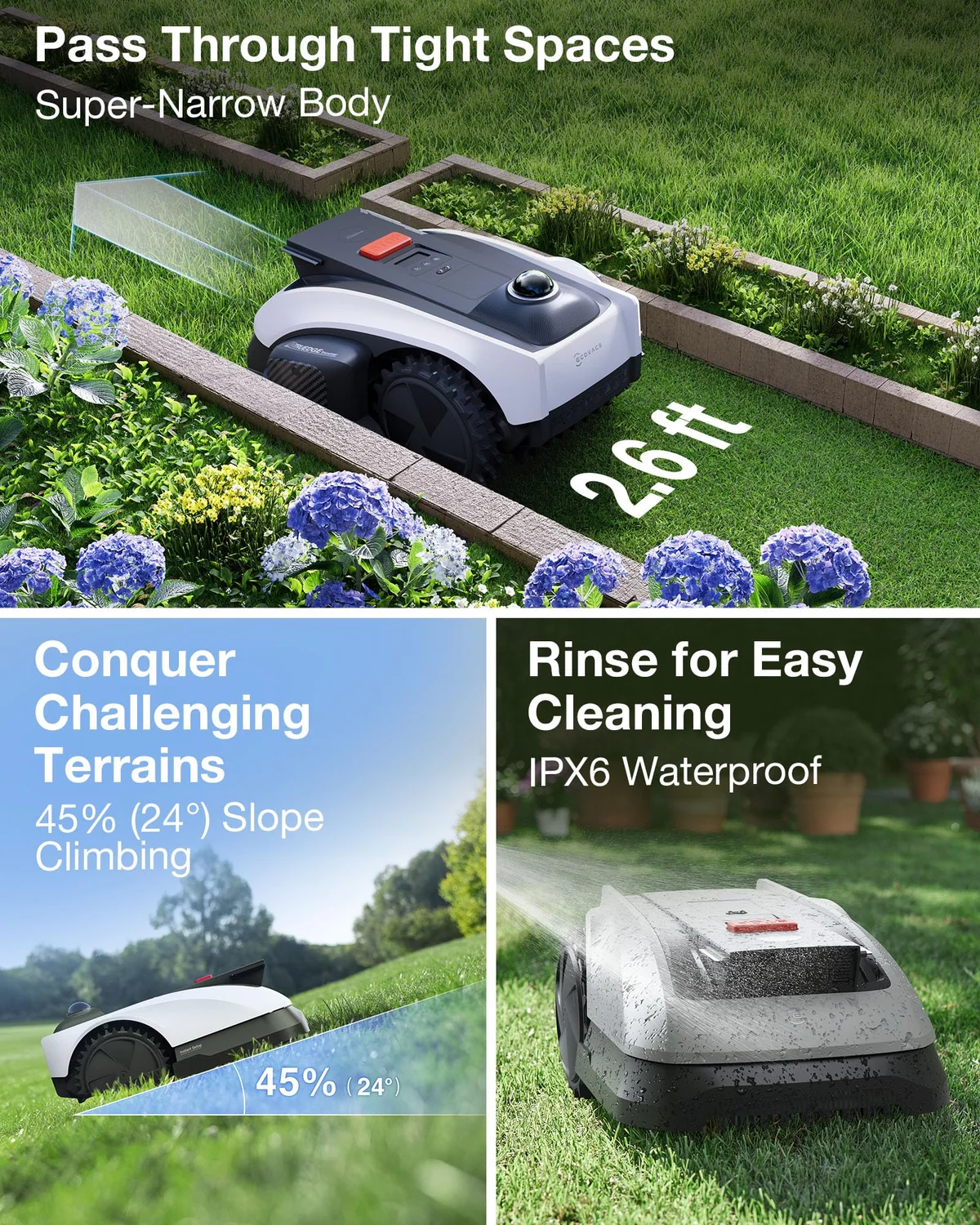
The O1000 is the easier fit when the problem is physical access. Its narrow body can pass through a corridor rated down to 31.5 inches under suitable conditions, and its smaller deck wastes less room turning inside compact zones. A shaded side lawn between a house and fence is exactly where onboard LiDAR solves a real problem without introducing an antenna elsewhere in the garden.
The A2000 is better when the problem is acreage. Its wider cut pays back every time it crosses an open lawn, but complicated zone geometry can make the software more consequential than the hardware. Closely adjacent front and rear lawns separated by a fence can be merged incorrectly on the digital map, after which the mower may insist that a route exists through the obstruction. A simple half-acre lawn flatters the A2000; a fragmented one can defeat its advantage.
The GOAT O1000 LiDAR PRO is the small-lawn winner.
Its compact body, 90-minute mowing shift, and antenna-free navigation make it the more sensible choice for firm, connected lawns below a quarter acre.
The narrow deck becomes slow near its coverage limit, while manual mapping and TruEdge both struggle with invisible boundaries, fences, and tight corners.
Choose it when trees, walls, or deep shade make RTK placement awkward and the mower must reach narrow side areas without being carried. Do not choose it because the box promises perfect edging or serious slope performance. Rear-wheel drive, small front casters, and a 1.2-inch obstacle rating leave little margin on wet banks, loose soil, ruts, or abrupt transitions.
The full GOAT O1000 LiDAR PRO review covers its mapping controls, trimming supplies, and long-term parts concern in greater detail.
The GOAT A2000 LiDAR PRO is the open-lawn upgrade.
Its wide dual-disc deck and half-acre brief justify the larger machine when open turf would make the O1000 spend too much of the day drawing narrow lanes.
The 50-minute mowing cycle and stubborn map correction make fences, separated zones, rough grades, and exposed drops much harder to trust.
Choose it for firm, reasonably smooth grass with legible borders and a clean path back to the dock. The larger deck is particularly useful on maintained lawns where straight runs dominate the job. Walk away when narrow rock-lined passages, curb drops, or digital boundaries demand precise local editing, because the software can turn one incorrect assumption into repeated rescues.
The complete GOAT A2000 LiDAR PRO review examines the dual-disc finish, multi-zone behavior, and ownership risks beyond this size comparison.
ECOVACS goat O1000 LiDAR Pro
ECOVACS goat A2000 LiDAR Pro
Measure the awkward part of the lawn, not just the grass
A buyer with 7,000 square feet of open, connected turf should take the A2000. Its broader deck is the meaningful upgrade, and automatic charging makes the short work cycles tolerable. A buyer with 7,000 square feet split among a front lawn, fenced rear lawn, narrow side passage, and several undefined borders should be much more cautious. Nominal area alone does not describe the mapping job.
For a smaller shaded property, the O1000 is the sharper choice. It delivers the same central LiDAR advantage in a body better suited to confined ground, and its longer mowing shift offsets some of the narrow deck’s lost throughput. If the lawn is a simple rectangle with reliable sky exposure, compare the LiDAR model with the GOAT O1000 RTK Care before paying for a navigation system the property does not need.
Neither ECOVACS is the right answer for genuinely rough or steep terrain. Their published gradient limits describe controlled work areas, not wet banks, loose soil, deep ruts, or an exposed slope above a pool or road. The Mammotion LUBA 3 AWD 5000H is the more credible rival when traction is the purchase, while the steep-hill mower guide separates useful slope capability from an optimistic percentage.
The final choice is pleasantly unglamorous. Buy the O1000 when access, shade, and compact geometry define the yard. Buy the A2000 when open area and cutting width define it. Walk away from both when the property requires perfect map correction, all-terrain traction, or the complete disappearance of manual edging.
Frequently Asked Questions
Does either GOAT need a perimeter wire or RTK antenna?
No, both models use onboard LiDAR and AI vision to map and navigate without buried wire or an external RTK reference station.
Is the A2000 simply a better O1000?
No, the A2000 covers open ground faster and handles more area, while the O1000 fits narrower access and spends longer mowing between charges.
Can the A2000 mow half an acre on one charge?
No, its half-acre rating depends on repeated mowing, charging, and automatic resumption rather than one continuous battery cycle.
Will either model eliminate string trimming?
No, TruEdge can substantially reduce work along accessible flush borders but still leaves grass around fences, raised edges, posts, and tight corners.
Which model is better under trees or beside buildings?
Both avoid the clear-sky weakness of RTK navigation, so lawn size and passage width should decide between them rather than tree cover alone.
Ready to Choose?
Sources (24)
- Amazon listings and customer reviews — Ecovacs Goat O1000 Lidar and Ecovacs Goat A2000 Lidar
- Owner reports across r/MammotionTechnology, r/roboticLawnmowers, r/ECOVACSGOATFamily and 1 more threads
- Owner and reviewer video, 34 channels
- Robomowlab — Article — robomowlab.com
- ECOVACS — Article — www.ecovacs.com
- Bobvila — Article — www.bobvila.com
- Lawncraftsupply — Article — lawncraftsupply.com
- Consumerreports — Article — www.consumerreports.org
- Pcmag — Article — www.pcmag.com
- Bestbuy — Article — www.bestbuy.com
- Smarthomecompared — Article — smarthomecompared.com
- Smarthomeexplorer — Article — www.smarthomeexplorer.com
- Mowscout — Article — www.mowscout.com
- Hunker — Article — www.hunker.com
- Cnet — Article — www.cnet.com
- Facebook — Article — www.facebook.com
- Eftm — Article — eftm.com
- Au — Article — www.harveynorman.com.au
- Thespruce — Article — www.thespruce.com
- Pcmag — Article — uk.pcmag.com
- Pcworld — Article — www.pcworld.com
- 9to5google — Article — 9to5google.com
- Mensjournal — Article — www.mensjournal.com
- Tomsguide — Article — www.tomsguide.com