The ECOVACS GOAT O1000 LiDAR PRO is the one to buy, and the antenna is why
Buy the GOAT O1000 LiDAR PRO for almost any compatible quarter-acre lawn; choose the RTK Care only when the yard is open, every route is wide and the saving is large enough to justify weaker mapping, shorter mowing sessions and manual edging.
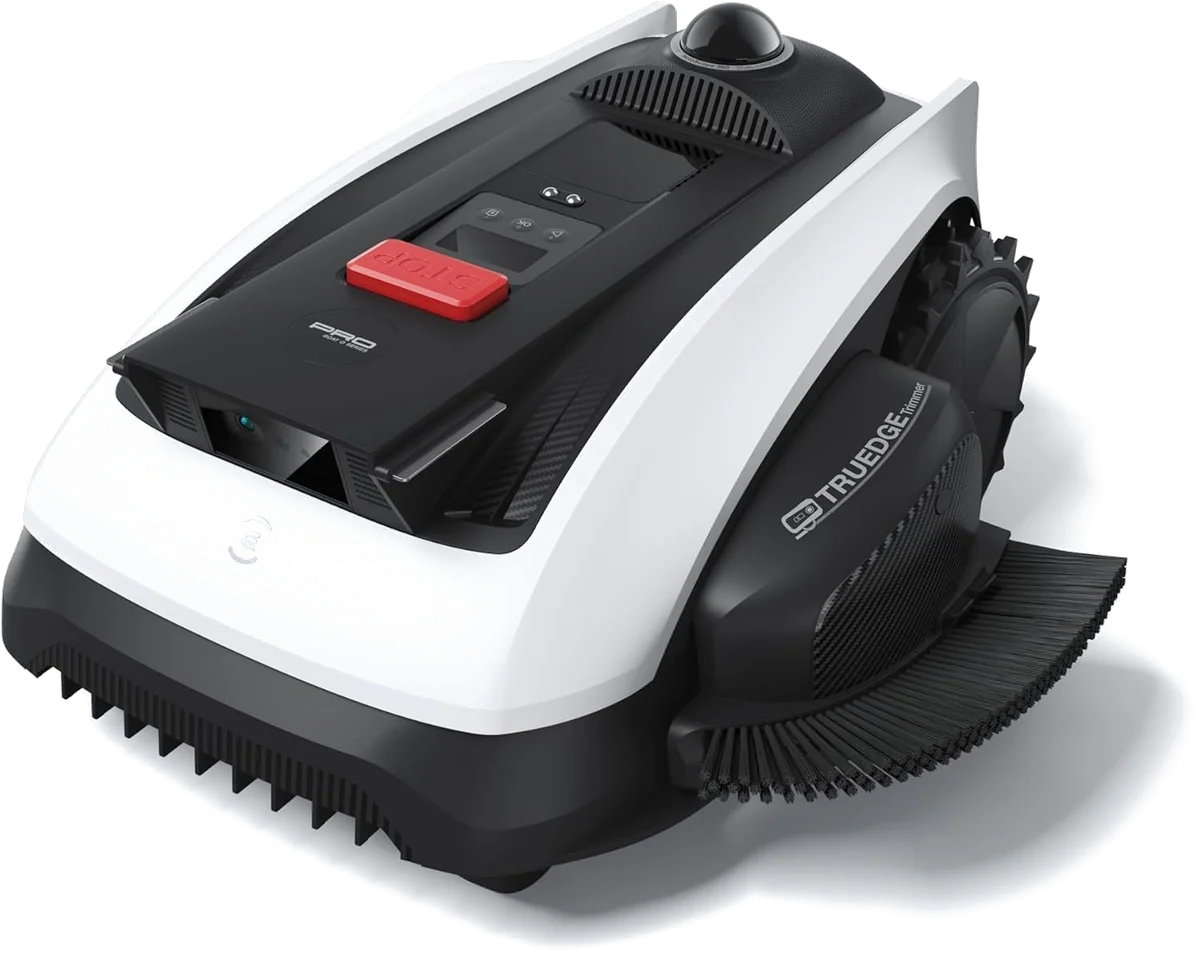
ECOVACS goat O1000 LiDAR Pro
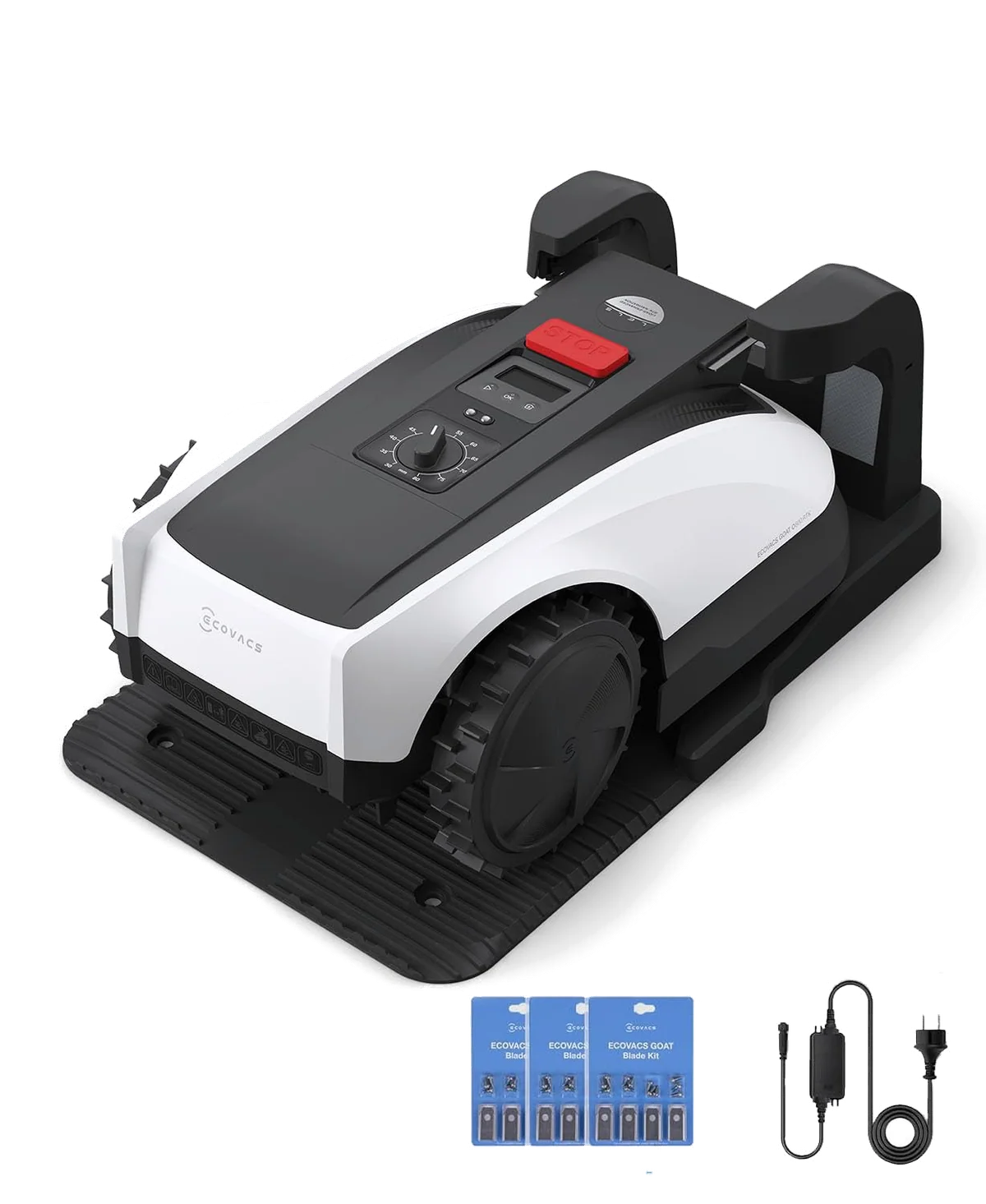
ECOVACS goat O1000 RTK Care
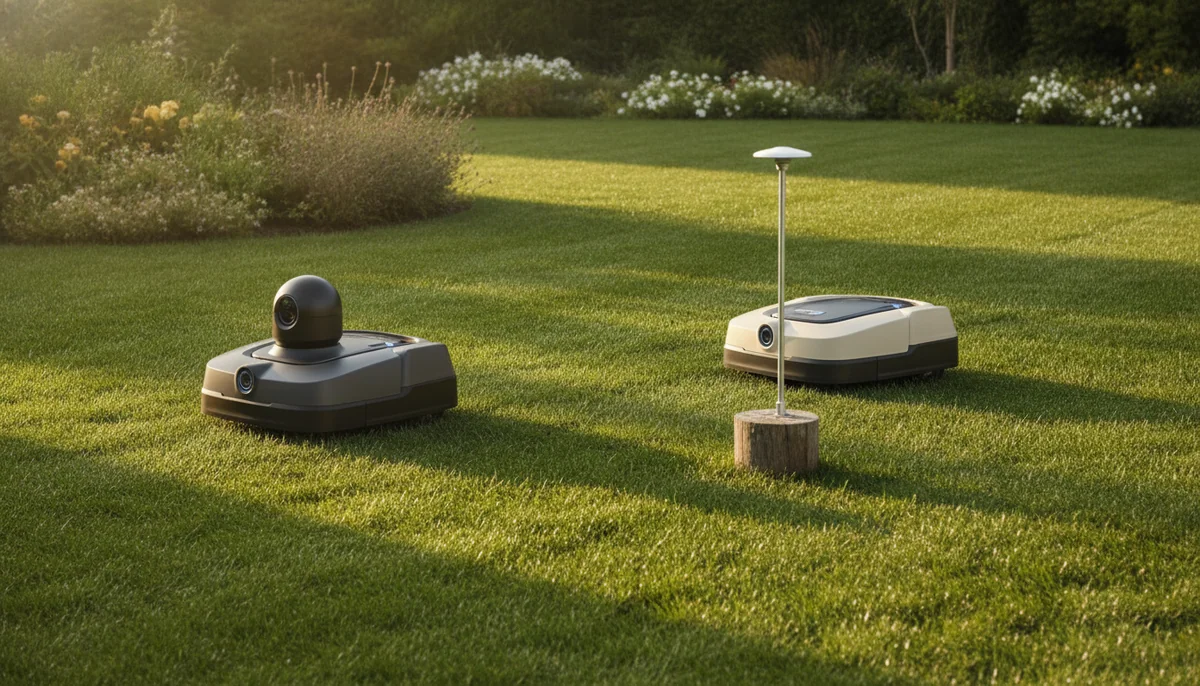
These are not two navigation options wrapped around the same mower. The O1000 LiDAR PRO carries its positioning system onboard, adjusts cutting height through the app and adds a powered side trimmer. The O1000 RTK Care depends on an external satellite reference station, uses manual height adjustment and edges with its recessed cutting disc. Even their work cycles differ.
That matters more than the shared quarter-acre badge. Picture the dock beside a house, a maple shading the back lawn and a narrow strip joining front to rear. The LiDAR PRO can read that physical space without waiting for a clean satellite relationship. The RTK Care asks for clear sky above its antenna and a dependable route between zones, then becomes the riskier machine precisely where navigation is hardest.
The LiDAR model is not flawless. Its front casters dislike loose ground, its manual boundary control is unnecessarily fussy, and its much-advertised trimmer still leaves grass beside fences, raised borders and tight corners. The choice is nevertheless decisive because the RTK Care keeps those basic terrain and app weaknesses while adding antenna placement, route failures and less capable edging.
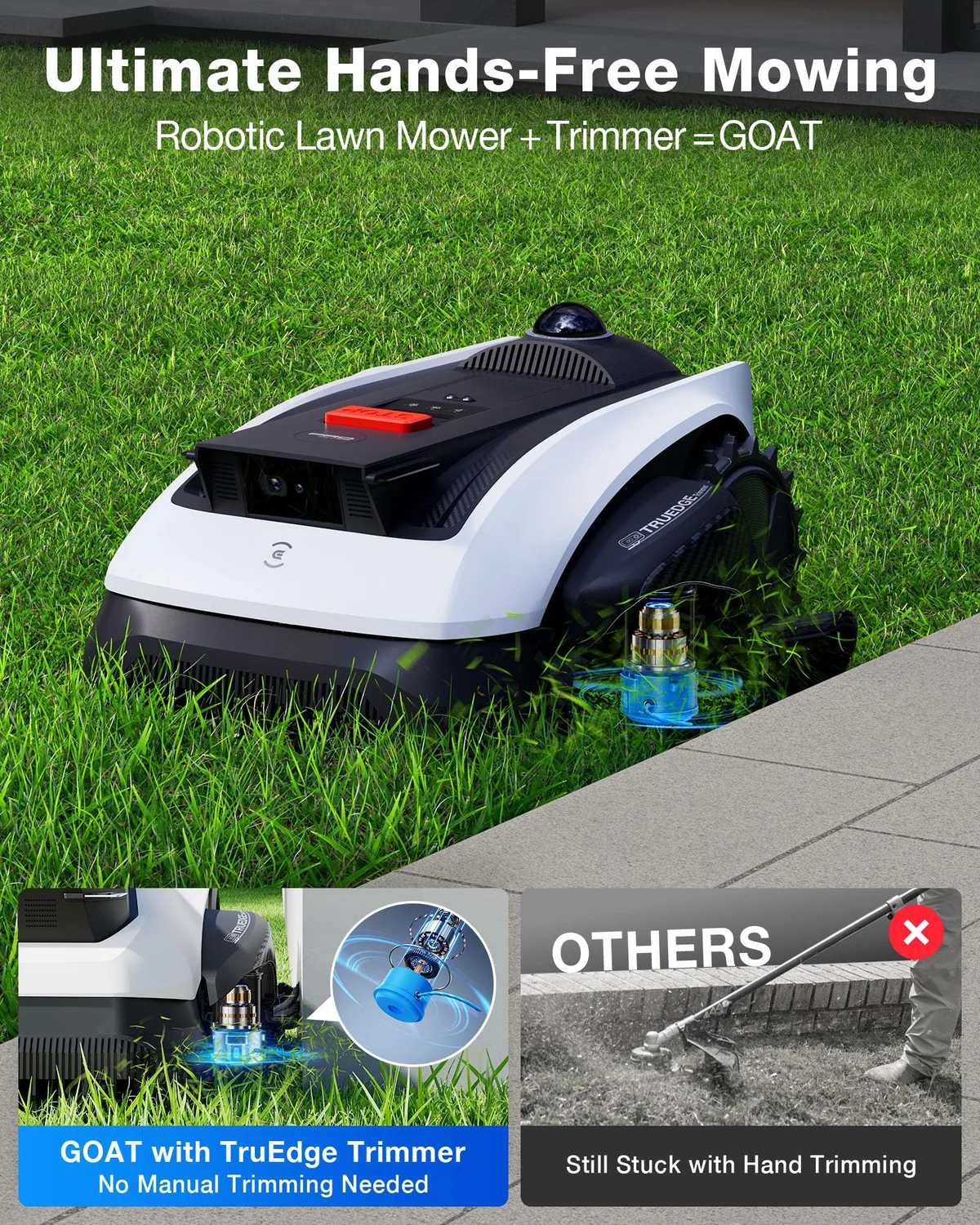
ECOVACS goat O1000 LiDAR Pro
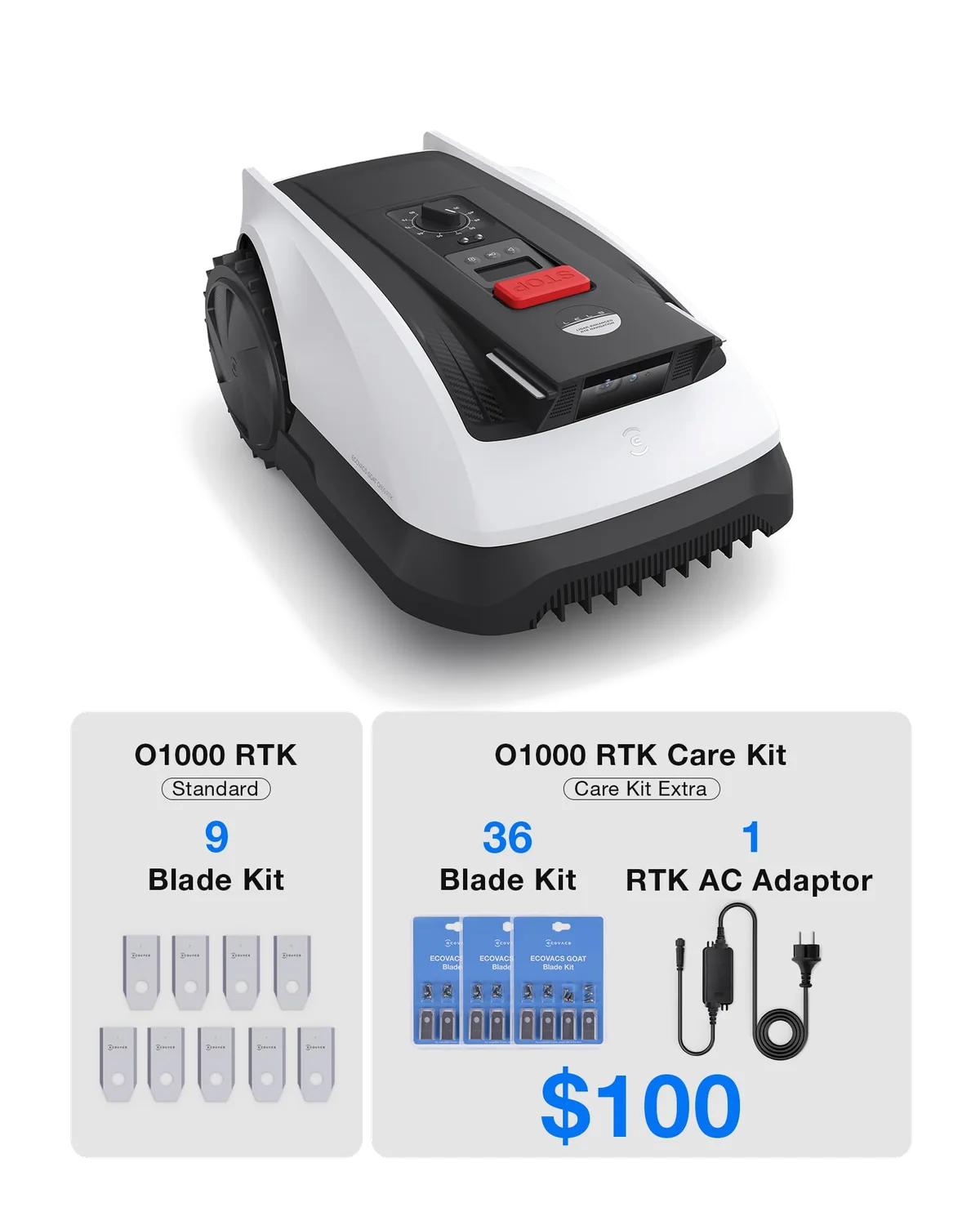
ECOVACS goat O1000 RTK Care
At a Glance
| Feature | ECOVACS goat O1000 LiDAR Pro | ECOVACS goat O1000 RTK Care |
|---|---|---|
| Price Range | $500–$1,000 | $500–$1,000 |
| Cutting height | 1.18 to 3.15 inches | 1.2 to 3.2 inches, manually adjusted |
| Recommended lawn size | Up to 0.25 acre | Up to 1/4 acre |
| Cutting width | 8.66 inches | 8.66 inches |
| Check Price on Amazon | Check Price on Amazon |
One name, two very different ownership bargains
Choose the O1000 LiDAR PRO when the mower must understand the yard from ground level.
Dual onboard LiDAR, longer mowing sessions, electronic height control and a real side trimmer make this the more complete O1000 for shaded, enclosed or tightly connected small lawns.
Its powered trimmer still misses difficult borders, while the narrow deck and small front casters make a full quarter acre, soft turf or rough slopes a poor fit.
The strongest reason to buy this model is not the fashionable sensor dome. It is freedom from designing the installation around an RTK antenna. Trees, walls and shaded side yards remain visible to the mower’s own sensors, so the property does not have to provide a patch of clear sky simply to establish position. Automatic mapping works best where fences, paving and beds define the lawn physically; an invisible property line still has to be driven manually with a touchy single joystick.
Once mapped, the LiDAR PRO follows parallel lanes, changes cutting direction and returns to finish after charging. Its 8.66-inch disc is narrow enough for a passage around 31.5 inches wide, but that agility costs throughput on open grass. A 90-minute mowing session followed by roughly 70 minutes at the dock means a lawn near the maximum rating becomes an all-afternoon job, not one uninterrupted lap.
TruEdge is useful with the marketing volume turned down. The powered string trimmer can remove most cleanup along a long, flush sidewalk, which is more than a centered blade can promise. It runs as a separate, noticeably louder task and cannot place the chassis correctly around every post, inside corner or raised bed. Smart Lawn Bots would still keep a handheld trimmer for the awkward five minutes at the end.

Choose the O1000 RTK Care only for a simple lawn that gives satellite navigation an easy life.
Its orderly cut, low 1.2-inch setting and compact body can automate a flat, open lawn when the antenna has clear sky and every mowing zone is joined by a broad route.
Map merging, failed zone transfers and physical-reset lockouts can turn a fence-separated or narrow multi-zone property into repeated rescue work.
The RTK Care can produce the same satisfying robot-mower scene when the property cooperates: quiet passes, straight stripes, automatic charging and no weekly push-mower circuit. It also includes an RTK extension cable and a substantial supply of replacement blades. None of that fixes a bad match between satellite positioning and the yard.
The external reference station needs a powered installation with a clear view of the sky. Trees, buildings and metal shelter above the dock complicate that arrangement. More troublingly, strong satellite counts do not guarantee that the mower will traverse a narrow side yard reliably or understand that two lawns separated by a fence are distinct zones. A robot that decides the route runs through a fence has not saved any labor.
Its shorter rhythm compounds the problem. Expect about 65 minutes of mowing followed by roughly 100 minutes of charging, with automatic resume rather than one-charge quarter-acre coverage. Cutting height is changed manually, and the model’s TruEdge label describes blade positioning beside passable borders rather than the LiDAR PRO’s powered string trimmer. Walls, posts, raised curbs and corners therefore remain conventional edging work.
| Decision point | O1000 LiDAR PRO | O1000 RTK Care |
|---|---|---|
| Positioning | Dual onboard LiDAR with AI vision | Satellite positioning through an external RTK station |
| Installation | No perimeter wire or reference antenna | No perimeter wire, but antenna placement and power are required |
| Best environment | Firm, defined lawns near trees, fences and buildings | Open, mostly level lawns with clear sky and wide routes |
| Mow and charge cycle | About 90 minutes mowing and 70 minutes charging | About 65 minutes mowing and 100 minutes charging |
| Cutting height | Electronic app adjustment from about 1.18 to 3.15 inches | Manual adjustment from about 1.2 to 3.2 inches |
| Edge system | Separate powered string-trimming task | Centered blade moves closer to flush, passable borders |
| Main drawback | Inconsistent trimming and weak traction on difficult ground | Unreliable mapping and zone travel on complicated properties |

The lawn matters more than the sensor acronym
A physically defined, connected lawn comfortably below a quarter acre is the LiDAR PRO’s sweet spot. It can navigate beside buildings and under trees without turning the installation into a hunt for antenna signal. The broader explanation of RTK, LiDAR and camera navigation is worth reading if the distinction still sounds like a specification-sheet argument rather than a property decision.
Neither O1000 is an all-terrain machine. Both use rear drive with small front casters, and a published 45% work-area grade does not make wet banks, loose shoulders, roots or sharp curb transitions sensible territory. The boundary itself has a much lower slope limit. If traction is the reason for shopping, the Mammotion LUBA Mini 2 1500H is the better rival because AWD addresses the actual problem rather than decorating it with a larger gradient number.
The MOVA LiDAX Ultra 1000 is the sharper alternative when antenna-free quarter-acre navigation matters but the GOAT’s imperfect trimmer does not. For a larger lawn, neither small O1000 should be stretched to fit: the GOAT A2000 LiDAR PRO brings a wider dual-disc cut, faster charging and half-acre capacity. The O1000 LiDAR PRO wins the compact-yard contest, while the A2000 beats it on throughput.
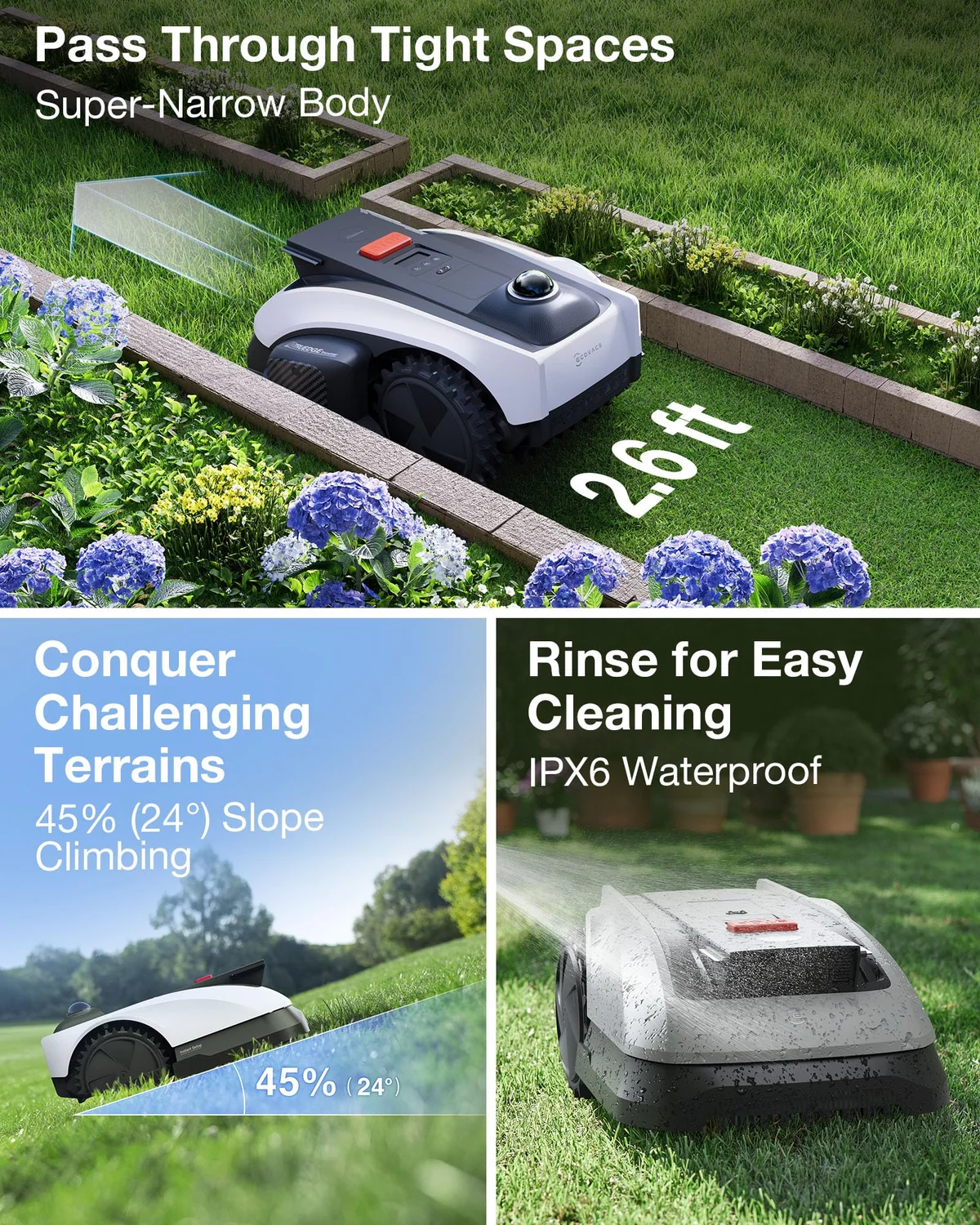
ECOVACS goat O1000 LiDAR Pro
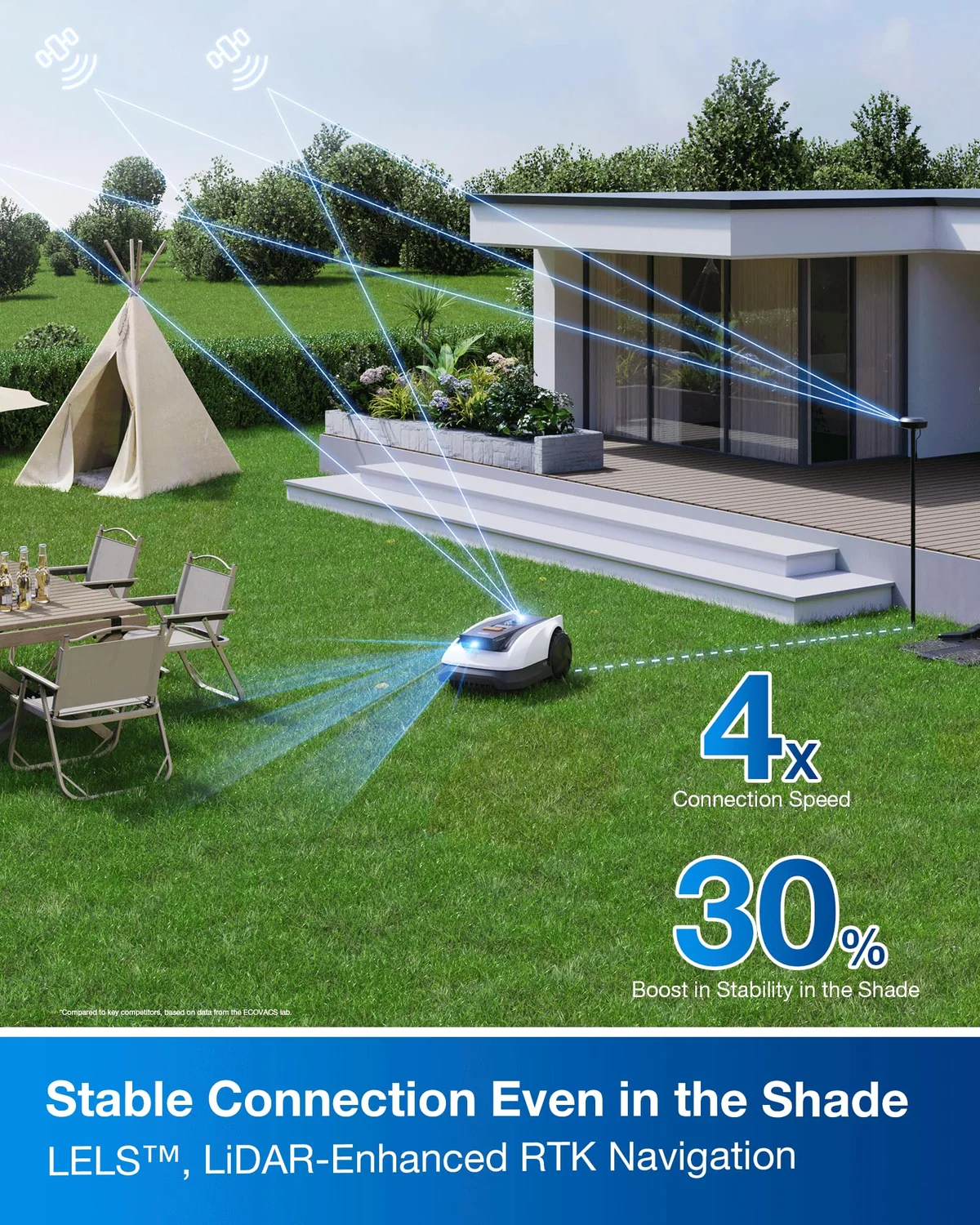
ECOVACS goat O1000 RTK Care
Choose by the worst part of the yard
The LiDAR PRO buyer
Buy the LiDAR PRO if the lawn runs beside the house, disappears under tree cover or passes through a narrow side yard. It is also the better choice when changing cut height in the app and reducing cleanup along flush paving will be noticed every week.
The RTK Care buyer
Consider the RTK Care only if the lawn is one open, firm patch, the antenna has an obvious clear-sky position and the mower never needs to interpret adjacent zones divided by a fence. Any saving must compensate for the shorter work cycle, manual height control and continued string-trimmer duty.
The buyer who should leave both behind
Walk away from both for wet slopes, loose soil, deep ruts, repeated curb transitions or a lawn that genuinely demands AWD. Also move up in size when the property approaches half an acre, because automatic recharge does not make an 8.66-inch cutting path efficient.
The final recommendation is simple: buy the O1000 LiDAR PRO when a compact GOAT fits the lawn, and treat the RTK Care as a narrowly conditional alternative rather than the default bargain.
Frequently Asked Questions
Is LiDAR better than RTK for an ECOVACS O1000?
LiDAR is the better choice around trees and buildings because it positions from onboard sensors, while RTK is reasonable only where an external antenna has clear sky and routes remain open.
Does either O1000 need a perimeter wire?
No, both use virtual boundaries, although the RTK Care still requires a powered external reference antenna.
Do both O1000 models have the same edge trimmer?
No, the LiDAR PRO has a powered side string trimmer, while the RTK Care relies on its cutting disc approaching flush borders.
Will either mower finish a quarter acre on one charge?
No one-charge completion should be assumed near the maximum rating because both models are designed to dock, recharge and resume.
Which O1000 is better for a fence-separated front and back lawn?
The LiDAR PRO is the safer choice, although any narrow connecting route and manually drawn boundary should be checked carefully during initial runs.
Should I choose the O1000 or move up to the A2000?
Choose an O1000 for compact access and a lawn under a quarter acre, then move to the A2000 when wider cutting, faster completion and half-acre capacity matter more.
Ready to Choose?
Sources (22)
- Amazon listings and customer reviews — Ecovacs Goat O1000 Lidar and Ecovacs Goat O1000 Rtk
- Owner reports across r/MammotionTechnology, r/roboticLawnmowers, r/ECOVACSGOATFamily and 1 more threads
- Owner and reviewer video, 34 channels
- Robomowlab — Article — robomowlab.com
- ECOVACS — Article — www.ecovacs.com
- Bobvila — Article — www.bobvila.com
- Lawncraftsupply — Article — lawncraftsupply.com
- Consumerreports — Article — www.consumerreports.org
- Pcmag — Article — www.pcmag.com
- Bestbuy — Article — www.bestbuy.com
- Smarthomecompared — Article — smarthomecompared.com
- Smarthomeexplorer — Article — www.smarthomeexplorer.com
- Mowscout — Article — www.mowscout.com
- Hunker — Article — www.hunker.com
- Cnet — Article — www.cnet.com
- Facebook — Article — www.facebook.com
- Eftm — Article — eftm.com
- Au — Article — www.harveynorman.com.au
- Thespruce — Article — www.thespruce.com
- Pcmag — Article — uk.pcmag.com
- Mensjournal — Article — www.mensjournal.com
- Tomsguide — Article — www.tomsguide.com