The GOAT O1000 LiDAR PRO solves the antenna problem, then overpromises the edge
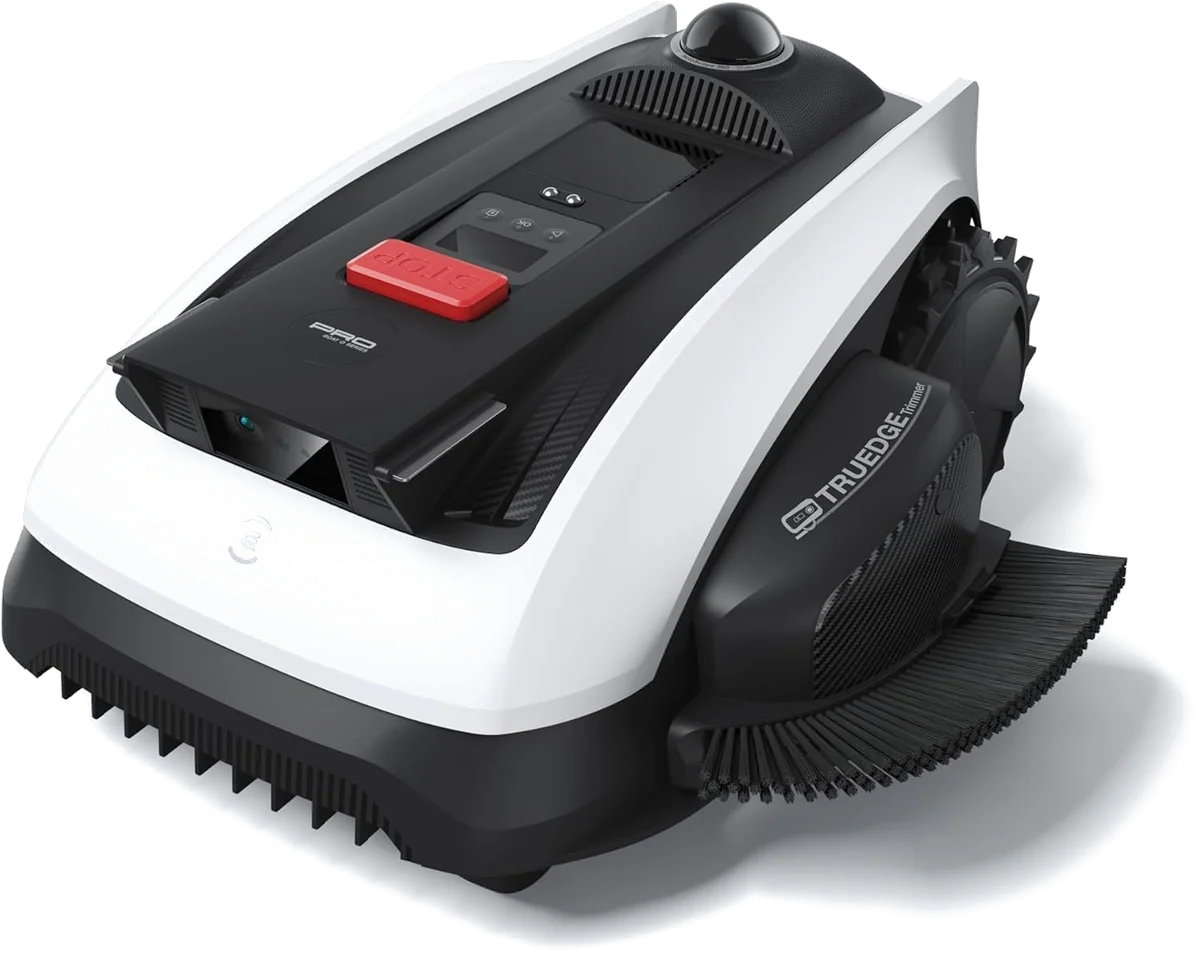
Buy the GOAT O1000 LiDAR PRO for a firm, connected lawn under a quarter acre when RTK is awkward, but walk away if perfect edging or AWD-grade traction is the reason for spending more.
Who should buy it
Choose the O1000 LiDAR PRO for a connected, physically defined lawn comfortably below its maximum rating, especially when tree cover or nearby buildings make satellite correction unattractive. Avoid it for loose soil, serious slopes, disconnected areas that require carrying, or a garden full of corners and raised obstacles where edge work is the main reason for buying.
The GOAT O1000 LiDAR PRO is easy to recommend when the lawn matches its actual strengths: compact dimensions, firm ground and difficult satellite reception. It is much harder to recommend when the purchase rests on the words “zero edge” or “45% slope,” because those are the two promises most likely to collide with the yard.
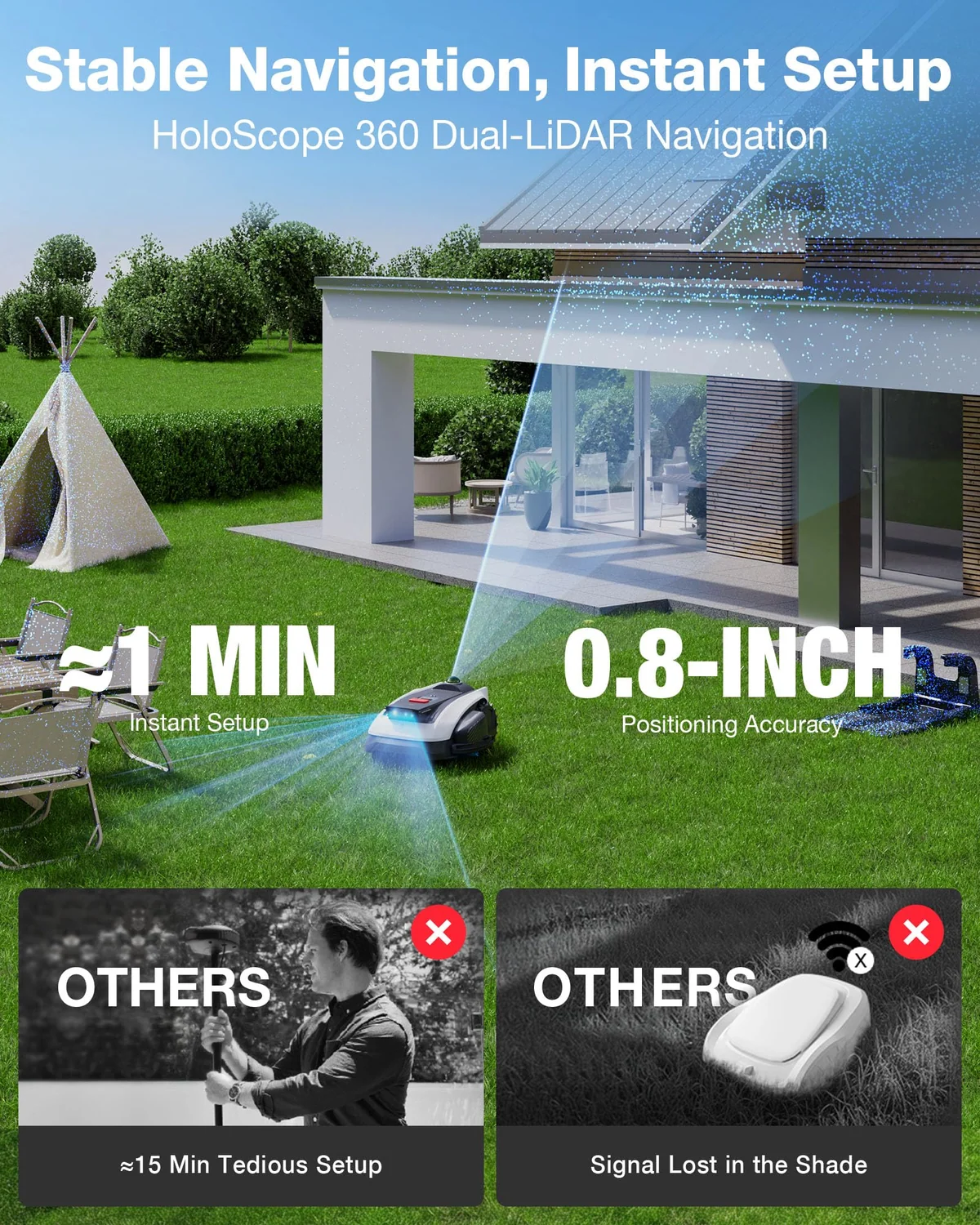
The useful part of the ECOVACS GOAT O1000 LiDAR PRO is not that it is wire-free; plenty of current robot mowers have escaped the perimeter-wire spool. Its advantage is that it also escapes the RTK antenna. The rotating LiDAR, forward 3D sensor and camera build a real map from the mower itself, so trees, walls and shaded side yards do not create the clear-sky installation problem that defines many satellite-guided machines.
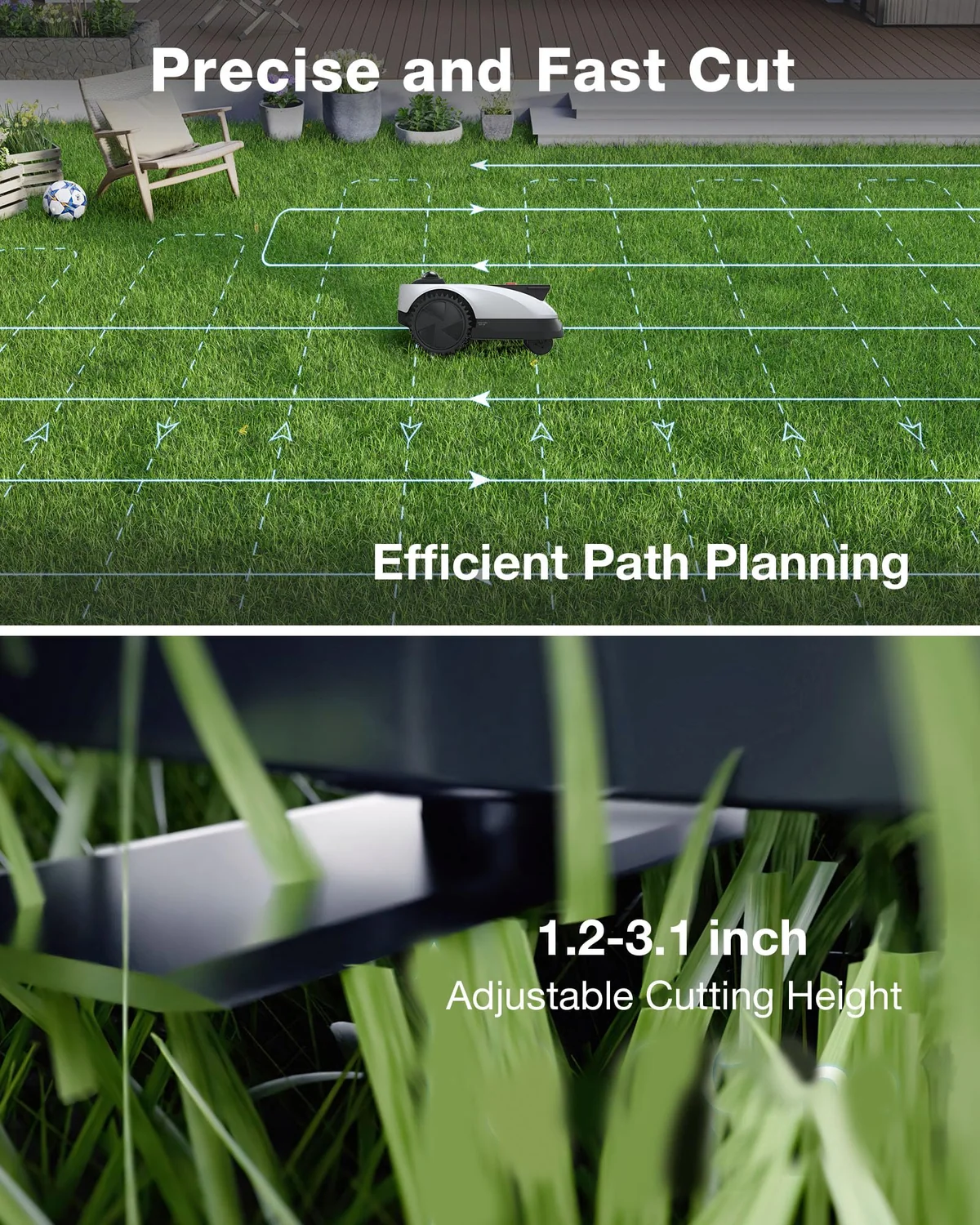
Once the map is right, the central mowing job is convincing. The GOAT follows orderly parallel lanes, changes cutting direction and returns to the dock before resuming an unfinished task. On grass already brought down to maintenance height, the result is clean and even rather than the patchwork left by an old random-bounce mower. It is also quiet enough that the machine can cross the lawn after dark with little more than a soft fan hum, although wildlife-friendly scheduling remains the better use of that capability.
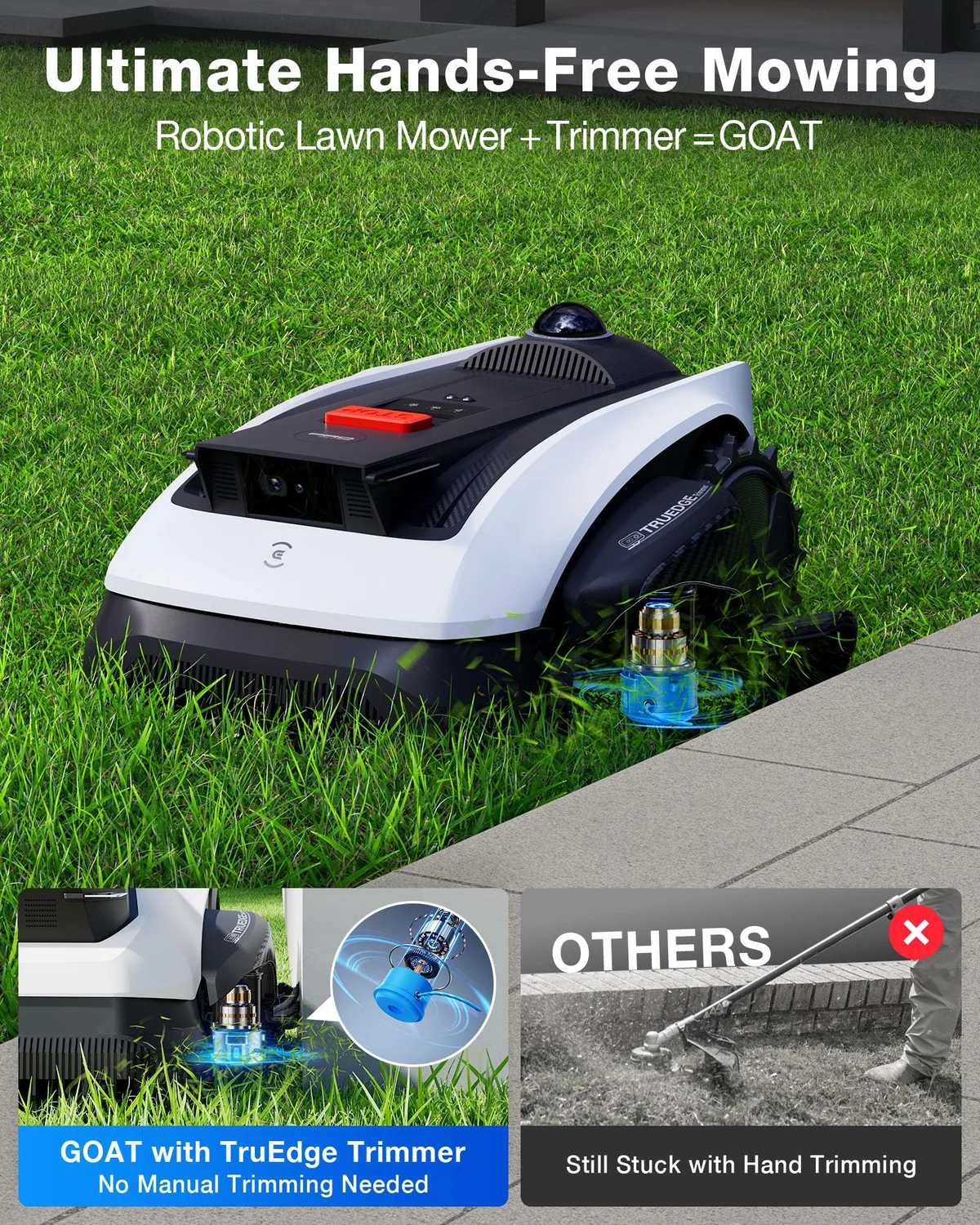
The drawback is the feature printed most loudly on the box. TruEdge is a genuine side-mounted string trimmer, but it does not produce a perfect border everywhere. It can make long runs beside flush concrete look excellent, then leave an inside corner, fence line or buffered no-go zone visibly unfinished. The trimmer runs as a separate task rather than during normal mowing, and difficult yards still need a conventional string trimmer for the last few minutes.
That gap between the excellent mower and inconsistent edging is the whole decision. This is a low-touch maintenance machine for a compatible small lawn, not a universal replacement for mowing, trimming and judgment.
Key Specifications
LiDAR removes the antenna, not the setup
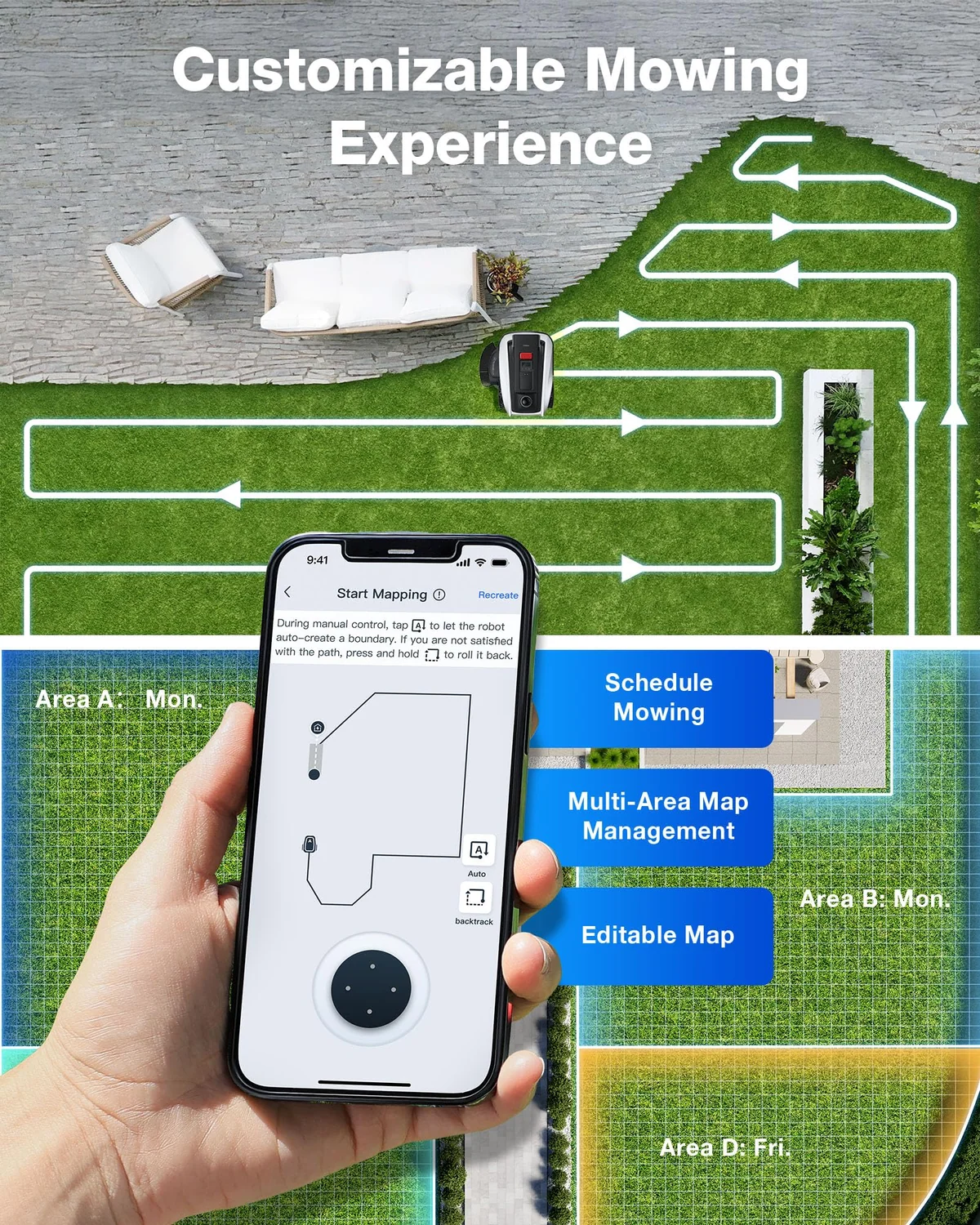
On a lawn bounded by a fence, driveway, house wall or clear mulch border, automatic mapping can get from an unopened box to a first cut in well under an hour. The app displays the scanned yard, lets each zone use its own height and direction, and supports paths, no-entry areas, rain behavior, schedules and lower-avoidance zones. The mower can also adapt its route through a narrow strip instead of wasting the afternoon on tiny turns.
An invisible property line is different. The robot cannot infer where one continuous sheet of grass changes ownership, so the boundary has to be driven manually. ECOVACS gives that job a fussy single virtual joystick, and small caster movements become bends in the saved line. Several complete mapping attempts can disappear into the job before a straight border looks straight. Automatic mapping is easy when the landscape supplies the answer; manual mapping is the app at its least polished.
The same caution applies around hazards. A window well, pool edge or drop deserves a physical barrier during the first runs, not blind faith in a line drawn on a phone. A mower that becomes stuck can remember the location as something to avoid, which prevents a repeat rescue but may also preserve a taller patch until the map is corrected.
It wants short grass often
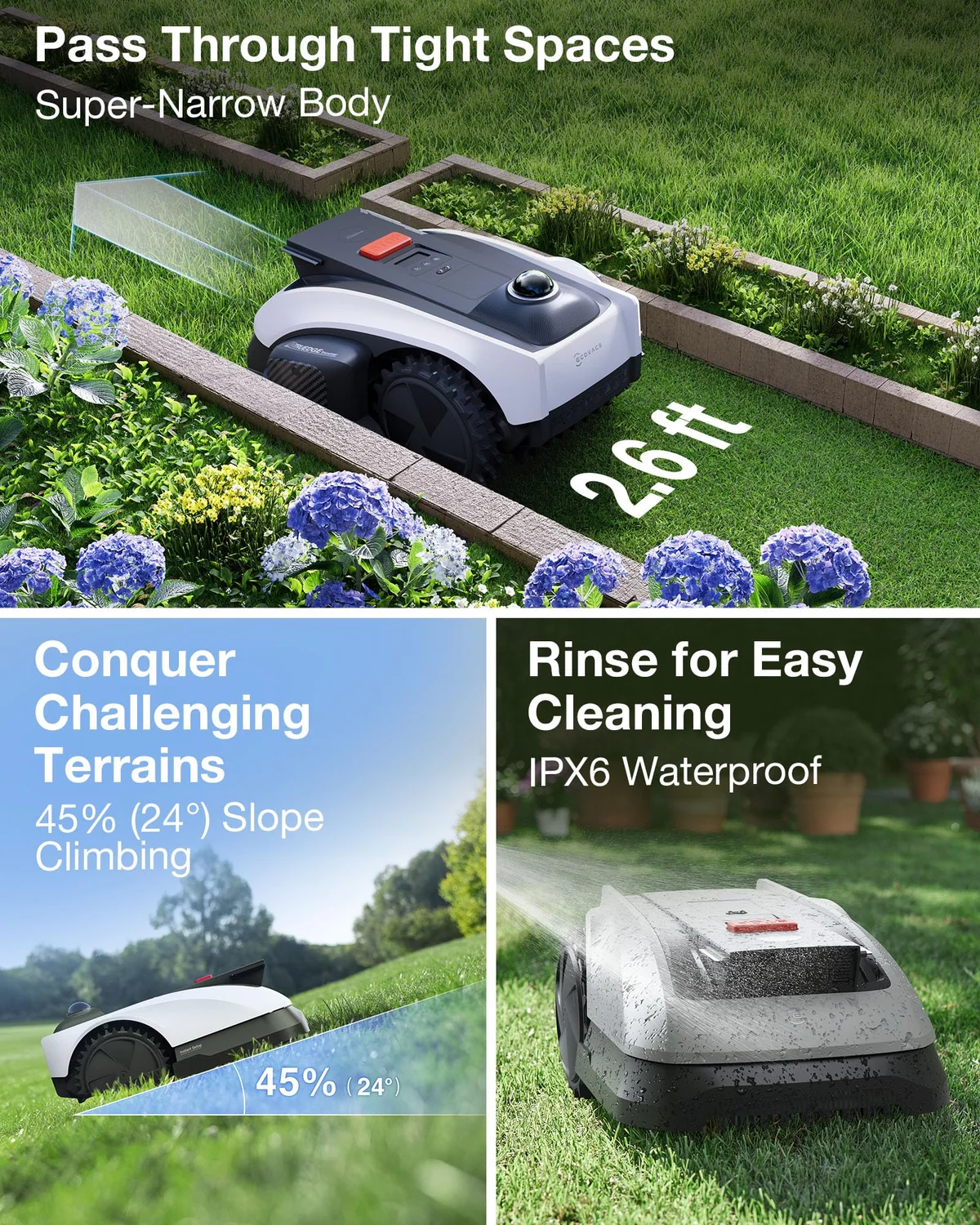
The narrow 8.66-inch disc is well matched to compact passages, but every inch saved in width becomes another pass across open turf. One documented 2,304-square-foot job took about 144 minutes and included a charging interruption. Near the quarter-acre rating, expect several cutting stints and several hours of elapsed time rather than a one-charge sweep.
That is not a failure if the dock remains accessible. Let the GOAT cut every few days and the small clippings disappear back into the lawn while the machine handles charging on its own. Send it into tall spring growth, clover or an overdue lawn and it may leave clumps, miss stems or treat the grass itself as an obstacle. A conventional first cut followed by frequent robotic maintenance is the reliable pattern.
The broader question of what these machines automate, and what they leave behind, is covered in our guide to systematic mowing, mulching and autonomous charging.
Strengths & Limitations
Strengths
- Dual onboard LiDAR removes the buried wire, external antenna and clear-sky positioning problem.
- Systematic mowing produces clean lines and continues automatically after charging.
- The compact chassis, quiet mower and configurable zones suit complicated small properties.
- The real side trimmer can substantially reduce cleanup along long, flush borders.
Limitations
- Manual mapping makes straight invisible boundaries unnecessarily difficult.
- TruEdge still misses fences, tight corners, raised edges and buffered no-go zones.
- The narrow deck needs multiple sessions as lawn area approaches a quarter acre.
- Rear drive and small front casters are poor insurance on soft, rough or steep ground.
- Specialty-parts supply and technical support remain ownership risks.
The edge trimmer is useful precisely because it is not magic
TruEdge lowers and spins only during a dedicated trimming operation. Along a flush sidewalk, where the mower can hold a clean line without negotiating posts or height changes, it can remove most of the weekly cleanup. That is materially better than calling an offset blade “edge cutting” while leaving a broad strip beside every wall.
Geometry defeats it. A tight inside corner gives the chassis nowhere to place itself, while a fence is both the surface the trimmer needs to approach and an obstacle the safety system wants to avoid. Raised borders, overhanging plants, parked cars just outside the map and generous no-go buffers can all push the cutting line inward. Mapping sharp corners inward reduces scraping and snapped line, but it also concedes the zero-edge promise.
Expect the powered trimmer to remove most of the work on long compatible borders, not all of it. Its 81 dBA official noise level is also conspicuously above the mower body’s 61 dBA, so trim during the day even if ordinary mowing happens quietly in the evening. Our explanation of robot-mower edge clearance shows why walls and flush paving produce such different results.
Firm turf matters more than the slope headline
The published work-area limit is a 45% grade, or roughly 24 degrees, but the O1000 is rear-wheel drive with two small front casters. Dry, established grass on a smooth moderate incline is plausible territory. Wet banks, loose sand, exposed runners, ruts and sharp transitions are not. The separate virtual-boundary limit is only 17%, an especially important restriction beside a curb, retaining edge or pool.
The front casters can shift during tight turns, disturb a carefully driven boundary or catch where a larger wheel would roll through. A 1.2-inch obstacle-crossing rating reinforces the point: this is a compact lawn machine, not a terrain machine. Buyers shopping specifically for wet slopes or rough ground should choose an AWD model such as the Mammotion LUBA Mini 2 1500H, while our hill-mower guide explains when published gradient ratings stop being useful.
Buy the navigation system, not the acreage badge
The O1000 LiDAR PRO makes sense when its selling price sits among other quarter-acre wire-free mowers. The dual-LiDAR system, app-controlled cutting height and physical side trimmer then pay for a clear use case: a shaded or enclosed lawn where installing an RTK reference station would be awkward. At the manufacturer’s much higher reference price, the narrow deck, rear-wheel drive and uneven edging become difficult to excuse because larger and more capable machines enter the same conversation.
| Model | Best reason to choose it | Reason to move on |
|---|---|---|
| O1000 LiDAR PRO | Compact, antenna-free navigation for shaded lawns up to a quarter acre | Narrow deck and rear drive make large or rough lawns slow and risky |
| O1000 RTK Care | Lower-cost family option for an open lawn with a suitable antenna location | External RTK hardware, shorter sessions and no dedicated string trimmer |
| A2000 LiDAR PRO | Wider, faster cutting for lawns approaching half an acre | Larger body and higher cost are unnecessary for a compact yard |
Against the RTK O1000, the LiDAR PRO earns its premium under trees, beside buildings and anywhere an antenna would be an installation compromise. The full LiDAR-versus-RTK comparison also covers the battery, height adjustment and trimming differences. Against the A2000, the smaller mower wins on tight access while the larger model wins on throughput, cutting width, taller settings and area capacity.
The MOVA LiDAX Ultra 1000 is the honest alternative for a buyer who wants quarter-acre LiDAR navigation but does not place much value on the GOAT’s string-trimmer module. Anyone still deciding among navigation types should start with our RTK, LiDAR and vision comparison rather than paying for sensors that do not solve the problems in their particular yard.
The sixth week still includes five minutes of lawn care
Once the boundary is settled, ownership becomes simple rather than effortless. Keep the LiDAR dome and forward sensors clean, clear sticks and toys before a run, and schedule mowing after dew has lifted from soft ground. The IPX6 body tolerates ordinary rinsing, but a pressure washer has no place near its seals or sensors.
The three pivoting blades, trimmer line and trimmer brush are consumables, and the app tracks their use. Blades and trimming supplies are listed through normal ECOVACS channels, while batteries, sensors and drive components are a more serious concern. Exact-model owners have reported sourcing specialty parts from European distributors because North American supply was limited.
Support is similarly uneven. Straightforward problems can receive quick, thorough help, while technical questions about fence trimming and even the distinction between RTK and LiDAR have produced poor scripted answers. Before buying, confirm the exact retailer’s warranty path, return window and access to major replacement parts; the available evidence does not support a confident promise about painless long-term repair.
Frequently Asked Questions
Does the GOAT O1000 LiDAR PRO need a perimeter wire or RTK antenna?
No, its onboard dual-LiDAR system maps and positions the mower without a buried boundary wire or external RTK reference station.
Will it mow a quarter acre on one charge?
No one-charge completion should be expected near the maximum rating because the mower runs for about 90 minutes, docks for roughly 70 minutes and resumes automatically.
Does TruEdge replace a handheld string trimmer?
No, it can handle much of a long flush border but commonly leaves work around fences, raised edges, no-go zones and tight corners.
Does LiDAR work under trees and beside buildings?
Yes, onboard LiDAR does not depend on clear satellite reception, which makes shaded and enclosed lawns the strongest reason to choose this model.
Does the mower need Wi-Fi across the whole lawn?
LiDAR navigation happens onboard, but setup, app communication and remote monitoring rely on Bluetooth and 2.4 GHz Wi-Fi, with no cellular connection to fill coverage gaps.
Should I buy the O1000 or the A2000 LiDAR PRO?
Choose the O1000 for compact lawns and narrow access, then move to the A2000 when greater area, deck width, cutting height or daily completion speed matters more.
Sources (14)
- Amazon listings and customer reviews — Ecovacs Goat O1000 Lidar
- Owner reports across r/MammotionTechnology, r/roboticLawnmowers, r/ECOVACSGOATFamily and 1 more threads
- Owner and reviewer video, 25 channels
- Robomowlab — Article — robomowlab.com
- ECOVACS — Article — www.ecovacs.com
- Bobvila — Article — www.bobvila.com
- Lawncraftsupply — Article — lawncraftsupply.com
- Consumerreports — Article — www.consumerreports.org
- Pcmag — Article — www.pcmag.com
- Bestbuy — Article — www.bestbuy.com
- Smarthomecompared — Article — smarthomecompared.com
- Smarthomeexplorer — Article — www.smarthomeexplorer.com
- Mowscout — Article — www.mowscout.com
- Hunker — Article — www.hunker.com