The GOAT O1000 is the better small-lawn mower, unless the map is the hard part.
Buy the ECOVACS GOAT O1000 LiDAR PRO for most firm quarter-acre lawns, but choose the Sunseeker S4 when precise manual mapping and cautious obstacle avoidance matter more than powered edging.
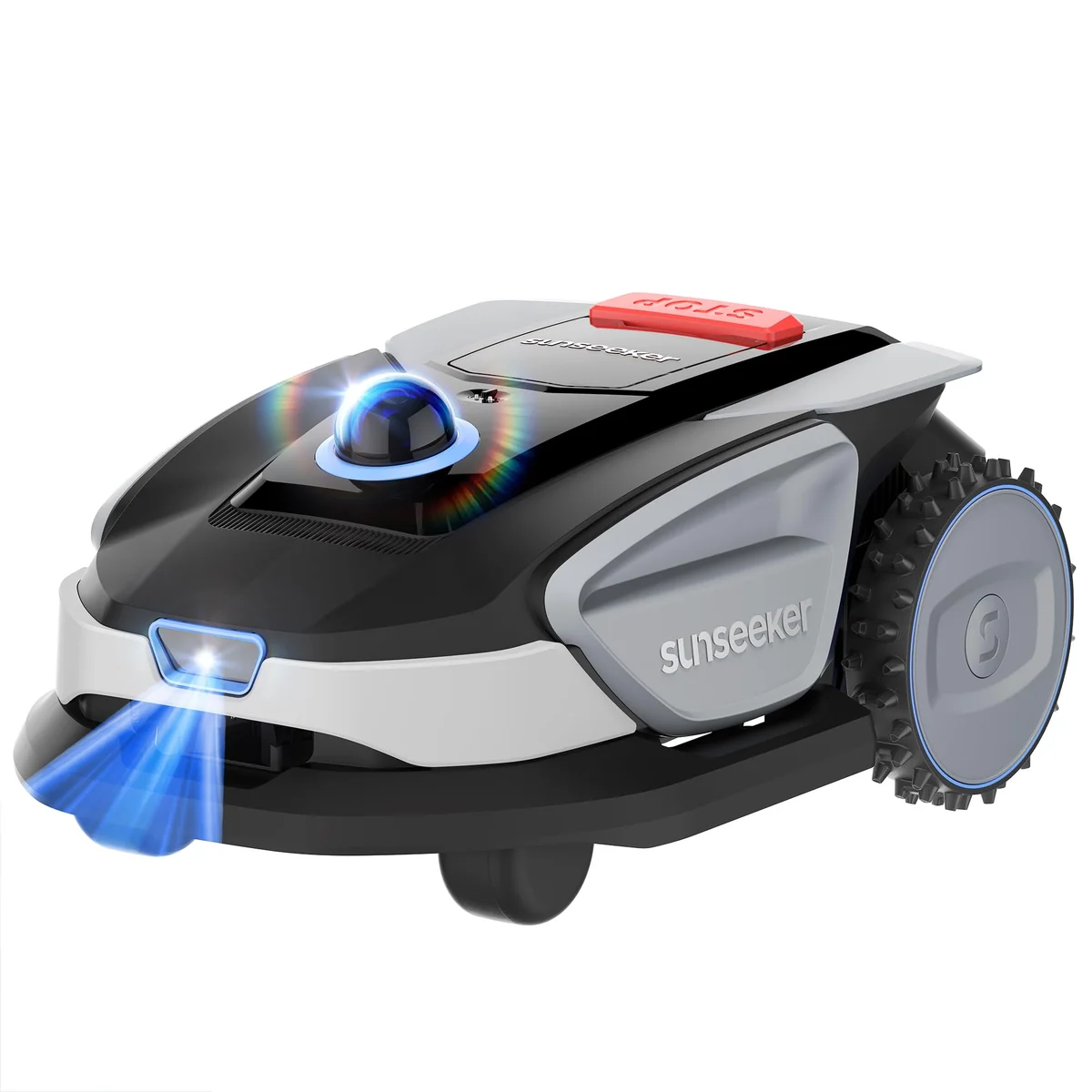
Sunseeker S4
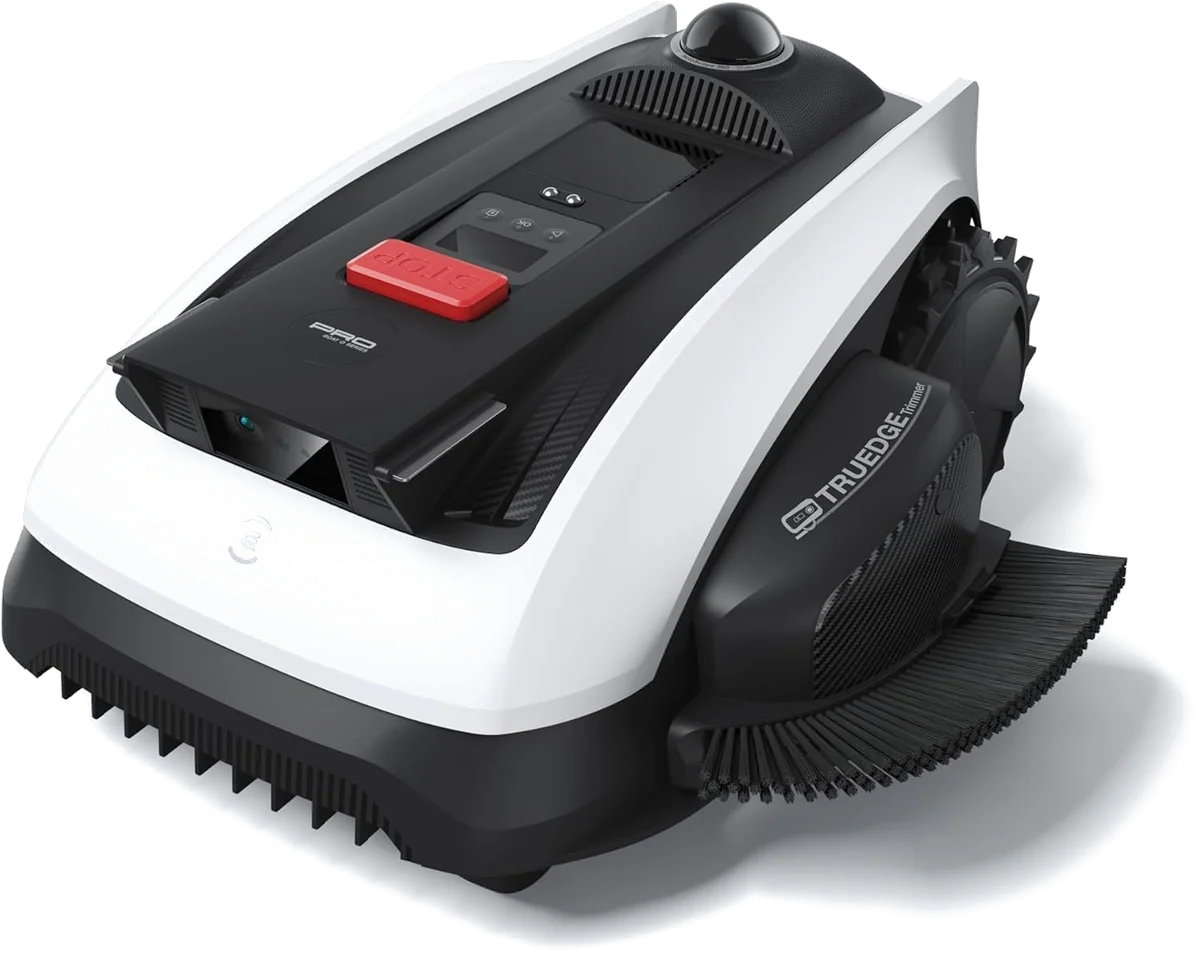
ECOVACS goat O1000 LiDAR Pro
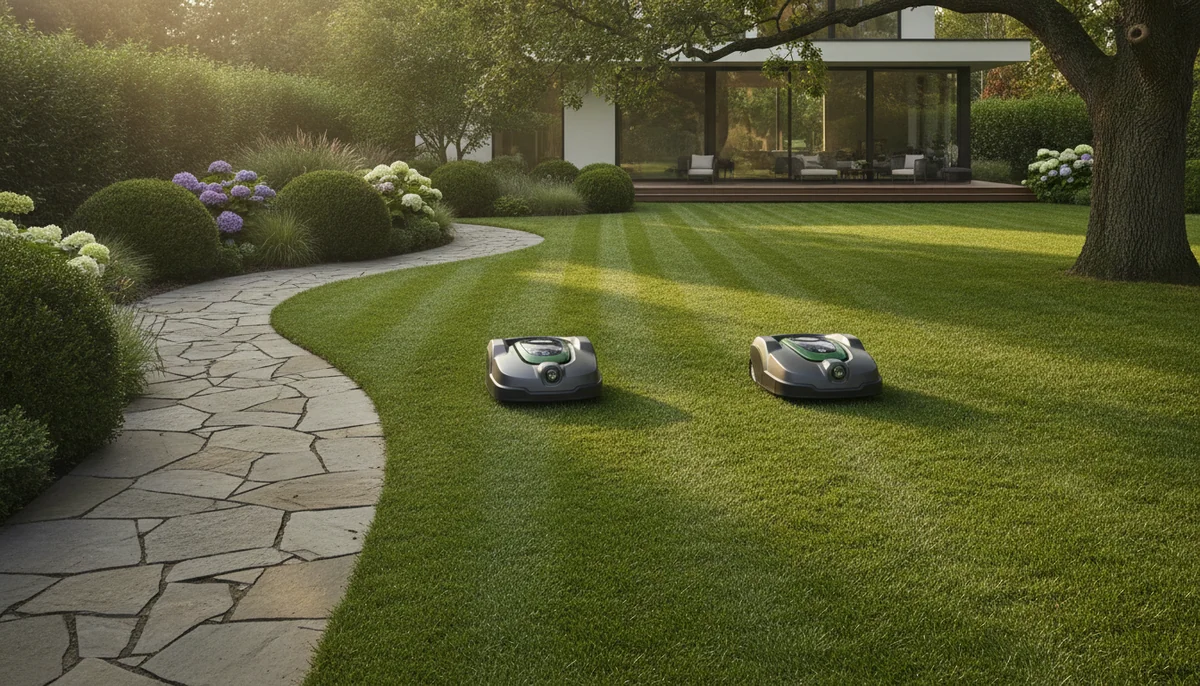
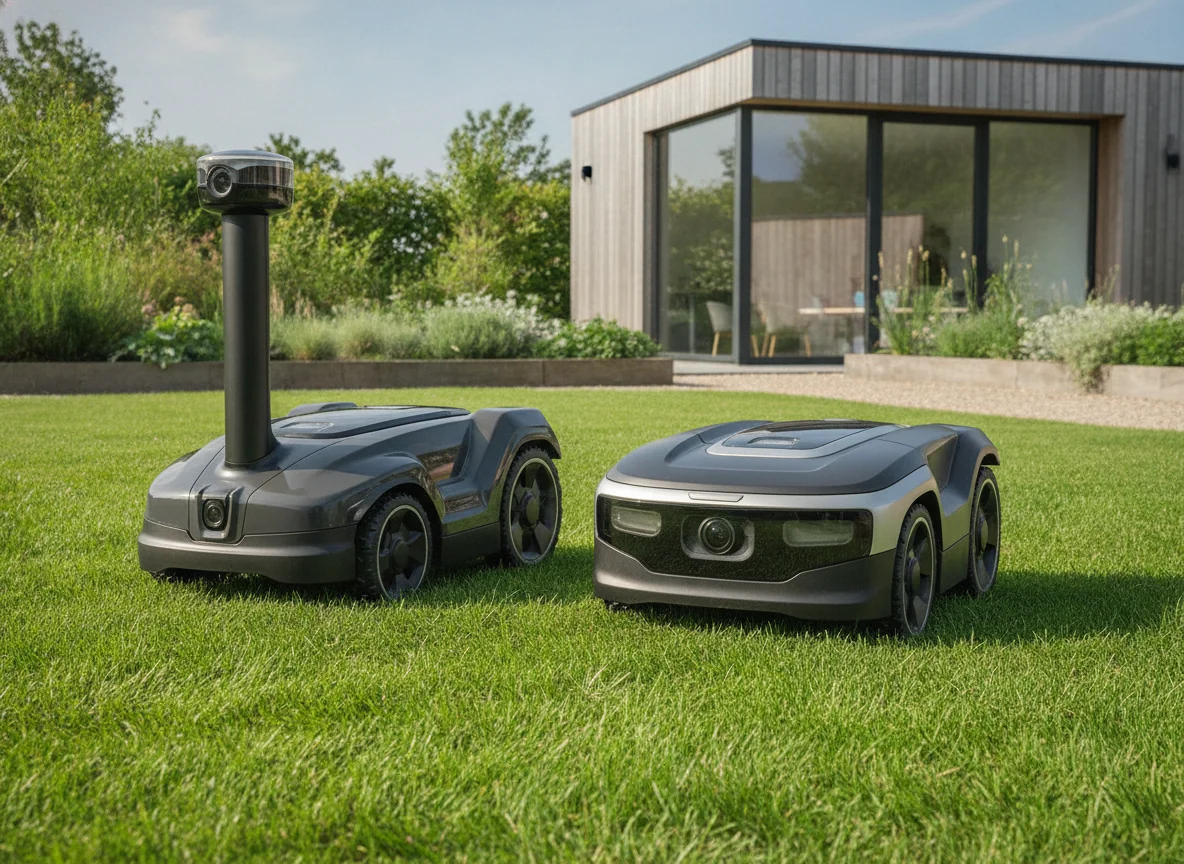
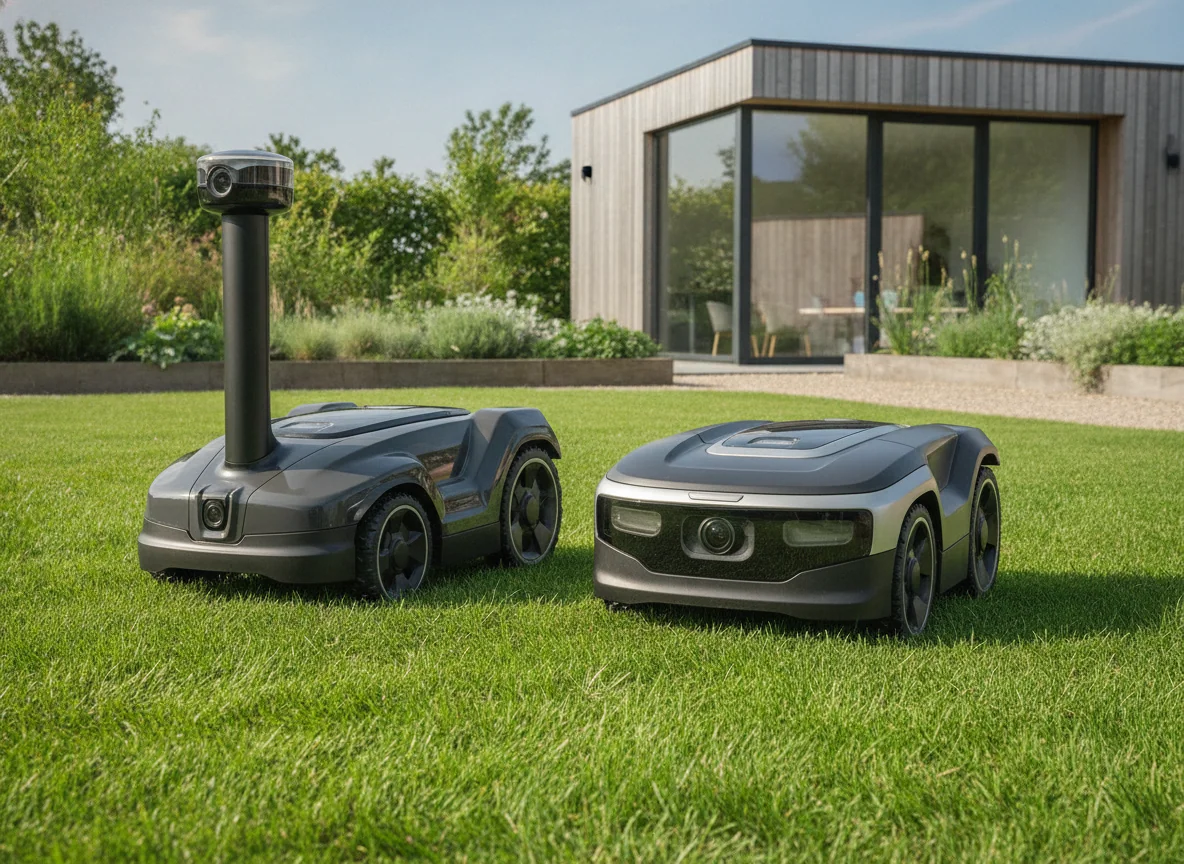
These two mowers solve the same problem in the same important way. Both carry LiDAR on the mower, so neither needs a buried perimeter wire, an RTK antenna or a clear view of the sky. A shaded side yard, a lawn beneath mature trees and the narrow strip beside the house are their natural territory.
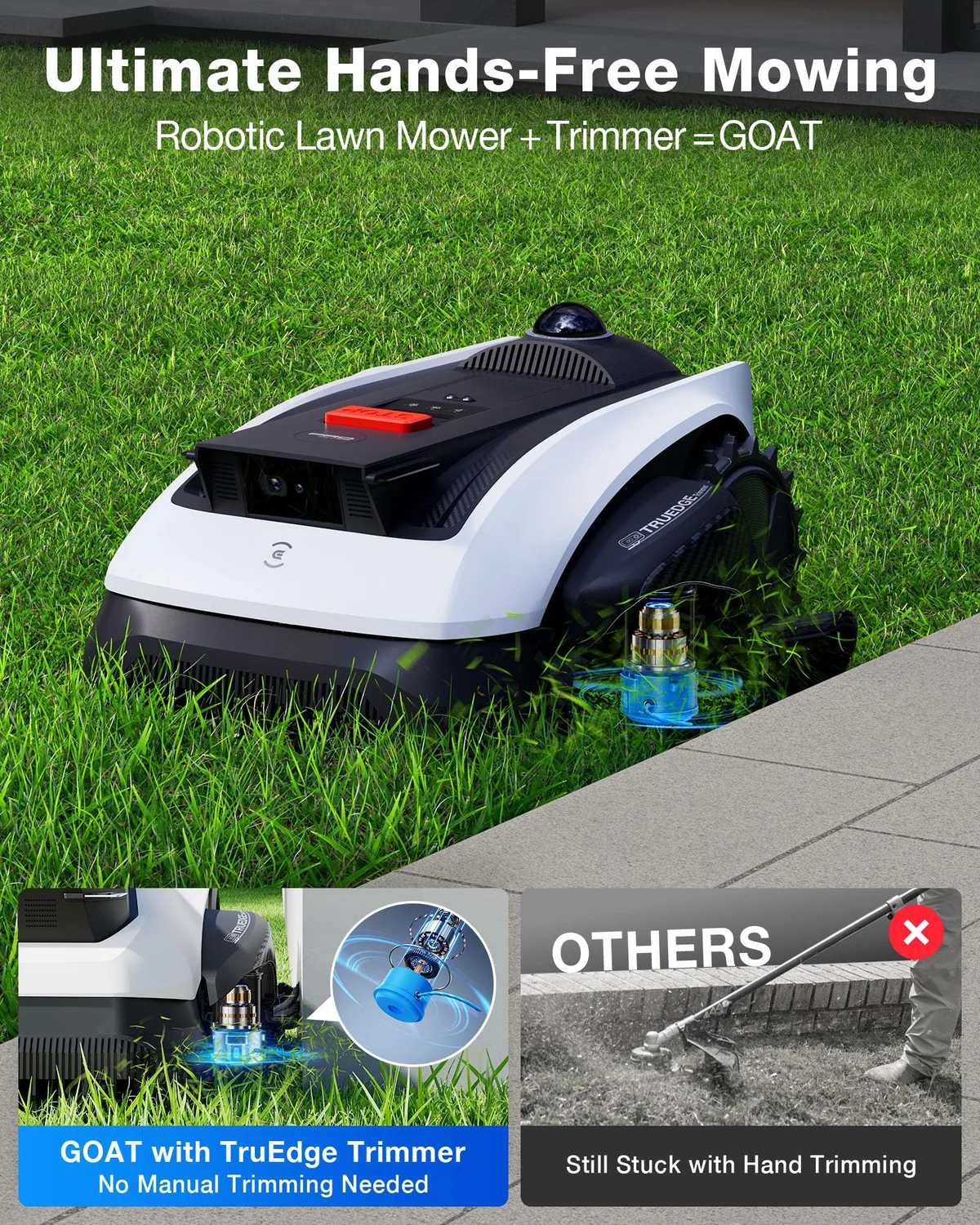
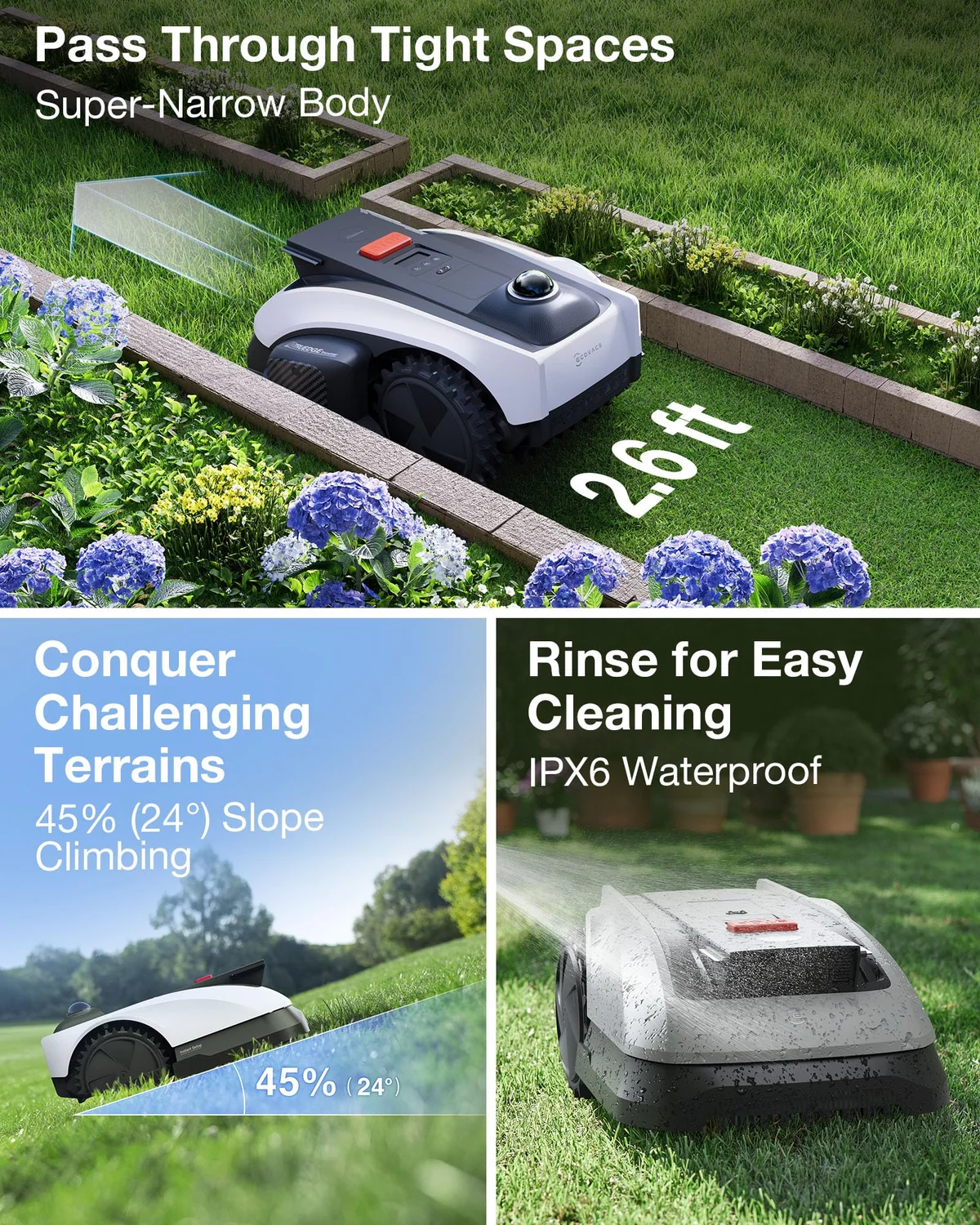
The tie ends once the blades reach the boundary. The GOAT has an 8.66-inch cutting width, app-controlled height adjustment and a real side-mounted string trimmer. The S4 uses a narrower seven-inch disc, a manual height dial and no comparable trimming mechanism. ECOVACS therefore asks less of its owner during an ordinary week, even though its TruEdge system falls well short of eliminating the handheld trimmer.
The S4 answers with the more forgiving manual-mapping experience and conservative behavior around obvious obstacles. That advantage matters on a property with an invisible line between neighboring lawns, several curved beds or hazards that need careful virtual boundaries. On a yard whose fence, driveway and house already describe the perimeter, the GOAT’s automatic mapping avoids most of its app’s weakest moments.

Sunseeker S4
ECOVACS goat O1000 LiDAR Pro
At a Glance
| Feature | Sunseeker S4 | ECOVACS goat O1000 LiDAR Pro |
|---|---|---|
| Price Range | $500–$1,000 | $500–$1,000 |
| Cutting height | 1.6–3.2 inches, manual dial | 1.18 to 3.15 inches |
| Recommended lawn size | 0.25 acre | Up to 0.25 acre |
| Cutting width | 7 inches | 8.66 inches |
| Check Price on Amazon | Check Price on Amazon |
The GOAT wins the routine, while the S4 wins the awkward first hour
Both escape the RTK antenna
LiDAR is the reason to consider either mower. Trees and buildings give their onboard sensors useful features to read rather than blocking a satellite correction signal. Both can build zones, follow systematic parallel routes, return to charge and resume an unfinished job. They also share the less obvious LiDAR limitation: an open, featureless field can be harder to interpret than a compact lawn surrounded by recognizable objects.
Clear physical borders make the GOAT unusually easy to introduce to a yard. Automatic mapping can follow a fence, wall, driveway or defined bed without requiring the owner to drive every inch. An invisible property line exposes the ECOVACS app’s clumsy single joystick, where tiny steering errors become bends in the saved boundary.
The Sunseeker app is better suited to that manual work. It is easier to guide the S4 around curves, drops and ambiguous grass-to-grass borders, then correct the resulting map with zones, corridors and no-go areas. That does not make setup instant, but it lowers the chance that a crooked phone-controlled drive becomes a permanent strip of missed grass.
| Decision point | ECOVACS GOAT O1000 LiDAR PRO | Sunseeker S4 |
|---|---|---|
| Navigation | Dual onboard LiDAR with AI vision | 360-degree 3D LiDAR with Vision AI |
| Rated lawn area | Up to 0.25 acre | Up to 0.25 acre |
| Cutting width | 8.66 inches | 7 inches |
| Cutting height | 1.18 to 3.15 inches, app controlled | 1.6 to 3.2 inches, manual dial |
| Typical mowing session | About 90 minutes before charging | About 90 minutes before charging |
| Edge treatment | Separate powered TruEdge trimming task | Ride-on-edge mode with a centrally mounted disc |
| Best setup case | Automatic mapping around physical borders | Manual mapping around ambiguous borders |
| Drive | Rear-wheel drive with small front casters | Rear-wheel drive |
The wider deck matters every time it leaves the dock
Neither mower is fast enough to treat a quarter acre as a one-charge assignment. Each works for roughly 90 minutes, returns to the dock and continues later. ECOVACS claims the better recharge interval at about 70 minutes, compared with approximately 80 minutes for the S4, but the larger practical advantage is its wider cutting disc. An extra 1.66 inches across many parallel passes reduces the amount of travel needed to finish the same lawn.
Both are maintenance mowers rather than machines for reclaiming an overgrown yard. A conventional first cut should bring the grass down before mapping. Frequent runs then create small clippings, clean stripes and an even surface. Tall weeds, clover and dandelion stalks can be treated as obstacles, especially by the cautious S4, leaving proud stems in an otherwise finished lawn.
The GOAT also gives each zone an electronically controlled cutting height. That is more than app decoration when a sunny front lawn and shaded rear lawn need different settings. The S4’s manual dial is simple and dependable, but changing heights means walking outside and touching the mower.
TruEdge reduces trimming rather than abolishing it
The GOAT’s side trimmer is the decisive advantage, but its name oversells the result. During a dedicated trimming task, it can follow a long flush driveway or sidewalk and remove most of the strip that a centrally mounted blade cannot reach. The operation is much louder than ordinary mowing, so it belongs in daylight rather than an overnight schedule.
Fences, tight inside corners and raised beds produce a different result. The chassis needs room to position the trimmer, while the obstacle system wants distance from the same wall or post the line is supposed to approach. No-go buffers and overhanging plants push it farther inward. Those sections still leave manual work, and a fence-heavy garden can erase much of the feature’s advantage.
The S4 makes no comparable promise. Its cutting disc sits about 4.3 inches inside the housing, so a wall or fence inevitably leaves grass beyond the blades. Flat paving can accept some wheel overlap and produce a tidier finish, but abrupt borders keep the string trimmer in regular service. Buyers chiefly concerned with this last strip should also see the site’s guide to robot mowers selected for edge cutting.
Neither slope badge turns rear-wheel drive into AWD
The specifications slightly favor the GOAT, with a 45% work-area grade against the S4’s 42% rating, but those numbers should not decide this comparison. Both rely on rear-wheel drive. Soft ground, wet grass, sharp dips and raised pavement transitions can defeat them before the headline gradient does.
The GOAT’s small front casters are particularly vulnerable to ruts, loose soil and curbs. Its virtual-boundary slope limit is also only 17%, which matters more than the broader work-area rating when the incline ends beside a drop or retaining edge. The S4 can likewise beach on a modest grass-to-pavement hump despite handling a smooth rolling lawn without drama.
Obstacle avoidance is not permission to leave the yard untidy. The S4 gives obvious toys, tools and rocks a cautious berth, while the GOAT recognizes a broad range of common objects. Thin sticks, hoses, low waste and wildlife remain poor tests of either safety system. Clear the lawn before a run and keep children and animals outside the working area.
The ownership risks are different
The Sunseeker needs its LiDAR dome, camera and cutting disc kept clean, and its six small blades require routine inspection. A model-specific replacement battery part number and owner-replacement procedure are not confirmed in the available record. Its dock shelters only part of the mower, although a separate S4-specific garage exists.
The GOAT adds trimmer line and a trimmer brush to the usual blade and sensor maintenance. Ordinary consumables are obtainable, but exact-model specialty parts such as sensors, motors and batteries have been harder to source through North American channels. ECOVACS support can handle straightforward questions well, yet technical answers about trimming and navigation have been inconsistent.
Neither uncertainty overturns the comparison, but both make the retailer’s return terms, warranty path and parts access worth checking before mapping the lawn. A robot mower saves time only while it can charge, navigate and cut.
Choose the GOAT when the lawn is firm and its borders are mostly physical.
Its wider deck, app-controlled height and powered side trimmer make it the more complete small-lawn maintenance machine.
Manual mapping is frustrating, and TruEdge still leaves cleanup around fences, corners and raised borders.
Choose the S4 when drawing the right map is harder than cutting the grass.
Its antenna-free LiDAR, better manual steering and cautious obstacle behavior suit shaded yards with ambiguous or complicated boundaries.
The narrow deck works slowly, while vertical borders leave a substantial strip for manual trimming.

Sunseeker S4
ECOVACS goat O1000 LiDAR Pro
Choose for the yard you have, not the sensor list you want
Buy the GOAT for a defined, connected lawn
The ECOVACS is the stronger choice when a fence, driveway, wall or clear bed gives automatic mapping something obvious to follow. Firm turf, long flush borders and several zones with different desired cutting heights play directly to its advantages. It will still need several sessions near the quarter-acre limit, but the dock handles those interruptions without turning them into the owner’s problem.
Buy the S4 for an awkward boundary beneath trees
The Sunseeker earns its place where RTK reception would be troublesome and the lawn’s perimeter cannot be inferred automatically. It is also the calmer choice around a yard full of obvious obstacles. Accept it only if slow coverage and routine string trimming are tolerable, and read the full S4 review before relying on its slope rating or acreage badge.
Walk away from both on rough ground
Neither mower is the answer to wet banks, loose sand, deep ruts or severe transitions. An AWD machine chosen from the site’s guide to robot mowers for steep and uneven ground is better insurance than arguing over a three-point difference in published gradient ratings.
Lawns approaching half an acre also need more throughput than either compact chassis provides. The GOAT O1000 and A2000 comparison explains when ECOVACS’ wider A2000 becomes the more sensible move. For an open quarter-acre lawn with a suitable antenna location, the O1000 LiDAR and O1000 RTK Care comparison shows whether onboard LiDAR is worth choosing at all.
The final result is close but not indecisive: the GOAT O1000 LiDAR PRO is the better mower for a compatible small lawn, while the S4 is the better mapping tool for the yard that refuses to be simple.
Frequently Asked Questions
Which mower works better beneath trees and beside buildings?
Both use onboard LiDAR rather than satellite correction, so either is well suited to shaded or enclosed lawns where RTK reception would be unreliable.
Does the GOAT’s edge trimmer replace a handheld string trimmer?
No, it substantially reduces cleanup along long flush borders but still leaves grass around fences, tight corners, raised edges and conservative no-go zones.
Which mower is easier to map manually?
The Sunseeker S4 is easier to steer around an invisible property line or complicated boundary because the ECOVACS app’s single virtual joystick makes straight manual mapping unnecessarily difficult.
Will either mower finish a quarter acre on one charge?
No one-charge finish should be expected near the maximum rating because both typically mow for about 90 minutes before docking and resuming later.
Which mower is better for steep or rough ground?
Neither is a strong rough-ground choice because both use rear-wheel drive and can struggle with soft turf, ruts and abrupt transitions despite their published slope ratings.
Should a small lawn get the GOAT O1000 or the larger A2000?
Choose the compact O1000 for quarter-acre lawns and narrow access, then move to the A2000 when greater coverage, cutting width and daily completion speed justify a larger mower.
Ready to Choose?
Sources (24)
- Amazon listings and customer reviews — Sunseeker S4 and Ecovacs Goat O1000 Lidar
- Owner reports across r/StrangeNewWorlds, r/MammotionTechnology, r/roboticLawnmowers and 2 more threads
- Owner and reviewer video, 46 channels
- Costco listing
- Walmart listing
- Shopsunseekertech — Article — shopsunseekertech.com
- Tomsguide — Article — www.tomsguide.com
- T3 — Article — www.t3.com
- Warehouserunner — Article — app.warehouserunner.com
- Facebook — Article — www.facebook.com
- Electricrevolutionreviews — Article — electricrevolutionreviews.com
- Sunseekertech — Article — sunseekertech.com
- Bestbuy — Article — www.bestbuy.com
- Sunseekerelite — Article — sunseekerelite.com
- Bobvila — Article — www.bobvila.com
- Pcmag — Article — www.pcmag.com
- Robomowlab — Article — robomowlab.com
- ECOVACS — Article — www.ecovacs.com
- Lawncraftsupply — Article — lawncraftsupply.com
- Consumerreports — Article — www.consumerreports.org
- Smarthomecompared — Article — smarthomecompared.com
- Smarthomeexplorer — Article — www.smarthomeexplorer.com
- Mowscout — Article — www.mowscout.com
- Hunker — Article — www.hunker.com