The Navimow i215 is the better mower; the Sunseeker S4 is the better specialist.
Buy the Navimow i215 for most structured lawns up to 0.37 acre, but buy the Sunseeker S4 instead when the yard is no larger than a quarter acre and dependable navigation beneath trees matters more than coverage, connectivity or cutting-height range.
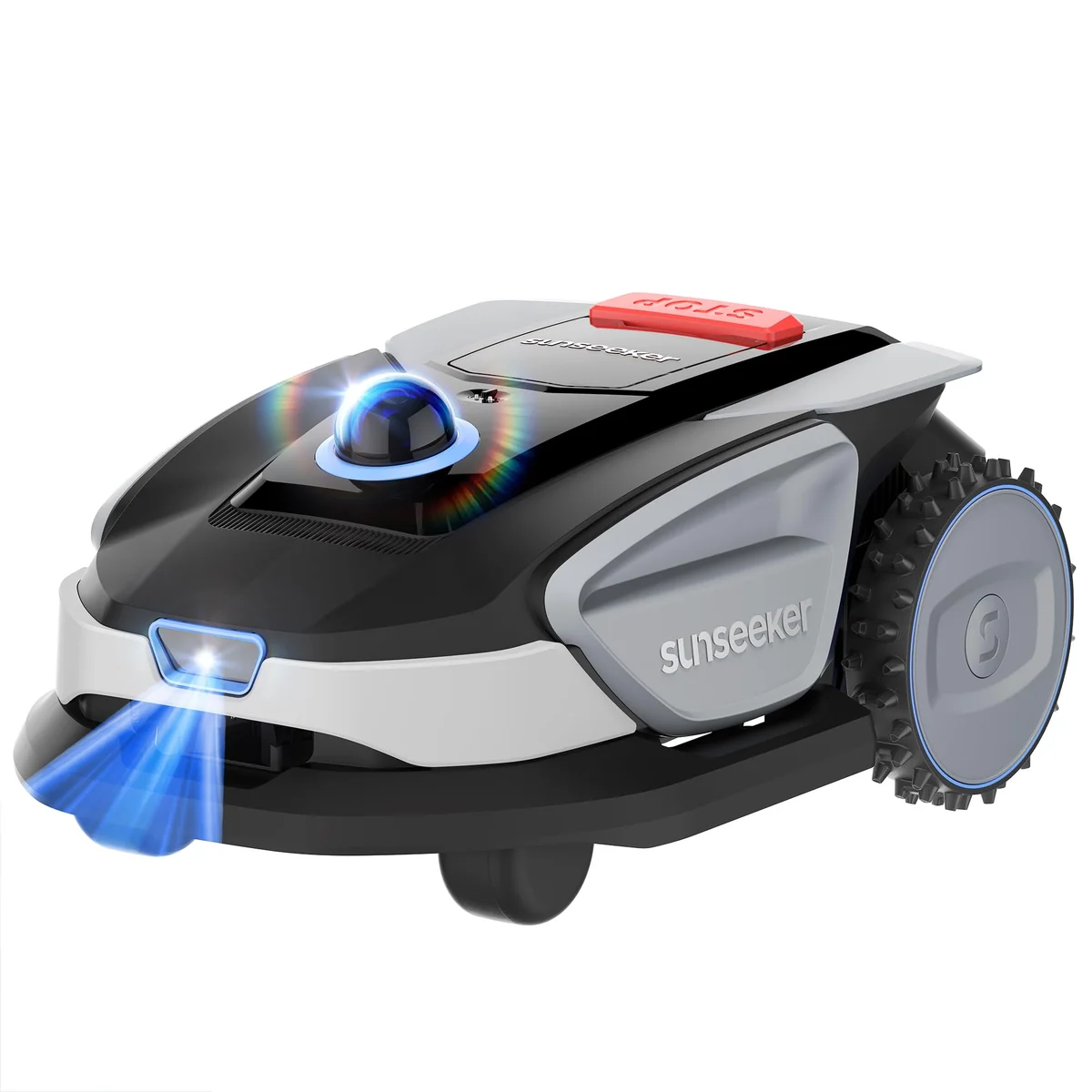
Sunseeker S4
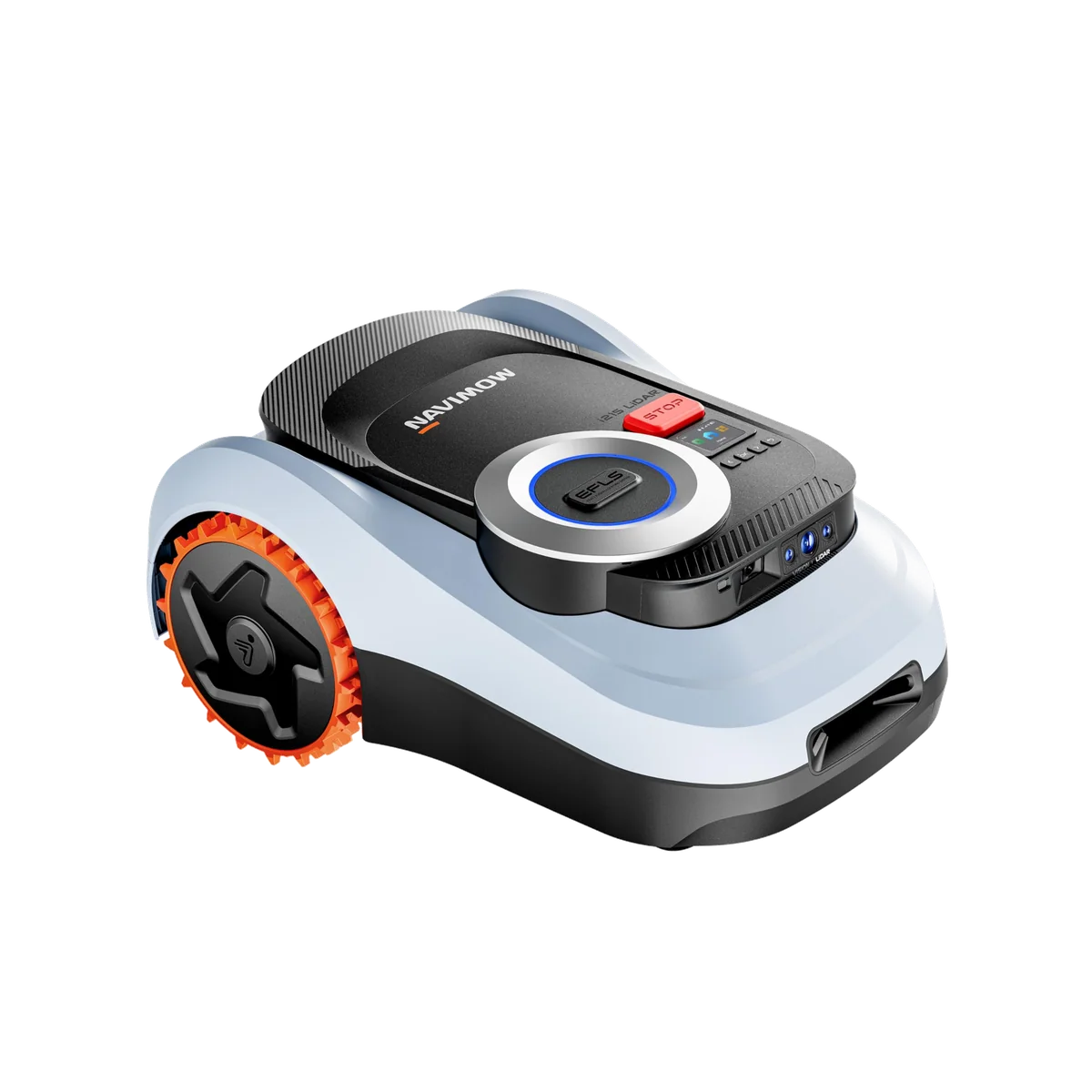
Navimow i215 LiDAR
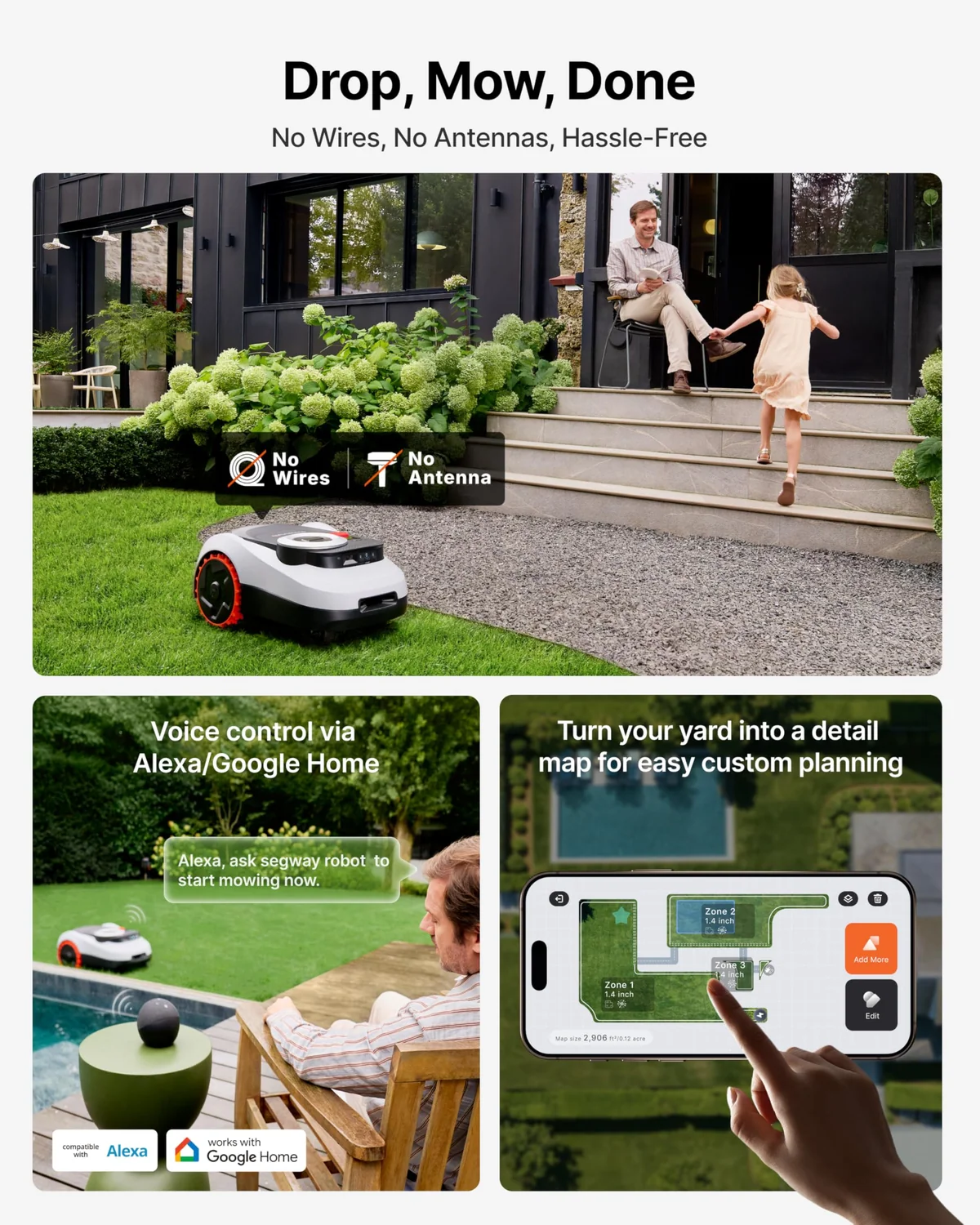
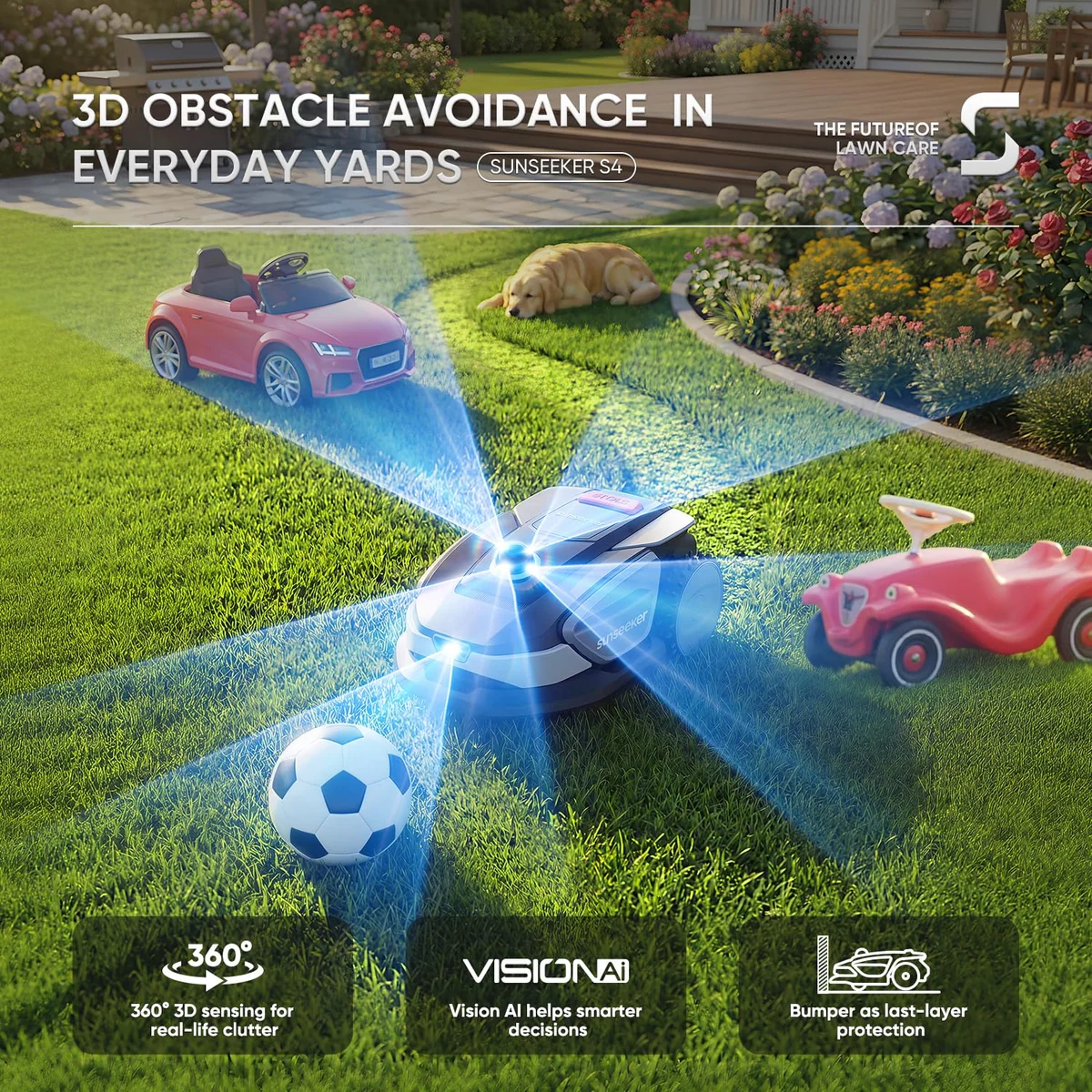
The Sunseeker S4 and Segway Navimow i215 attack the same modern robot-mower problem: satellite positioning becomes least dependable in exactly the yards where automation would be most useful. Trees block the sky, buildings hem in the grass, and an RTK antenna demands a clear location that may not exist. Both mowers put LiDAR on the machine itself, add camera vision and draw virtual boundaries without a buried wire.
The i215 does more with that formula. It carries a higher 0.37-acre rating, adjusts its 2-to-4-inch cutting height from the app, offers GPS-based security features and works with a map that can divide a complicated property into as many as 20 zones. The S4 stops at a quarter acre, uses a manual dial for its 1.6-to-3.2-inch height range and has neither native GPS tracking nor cellular fallback.
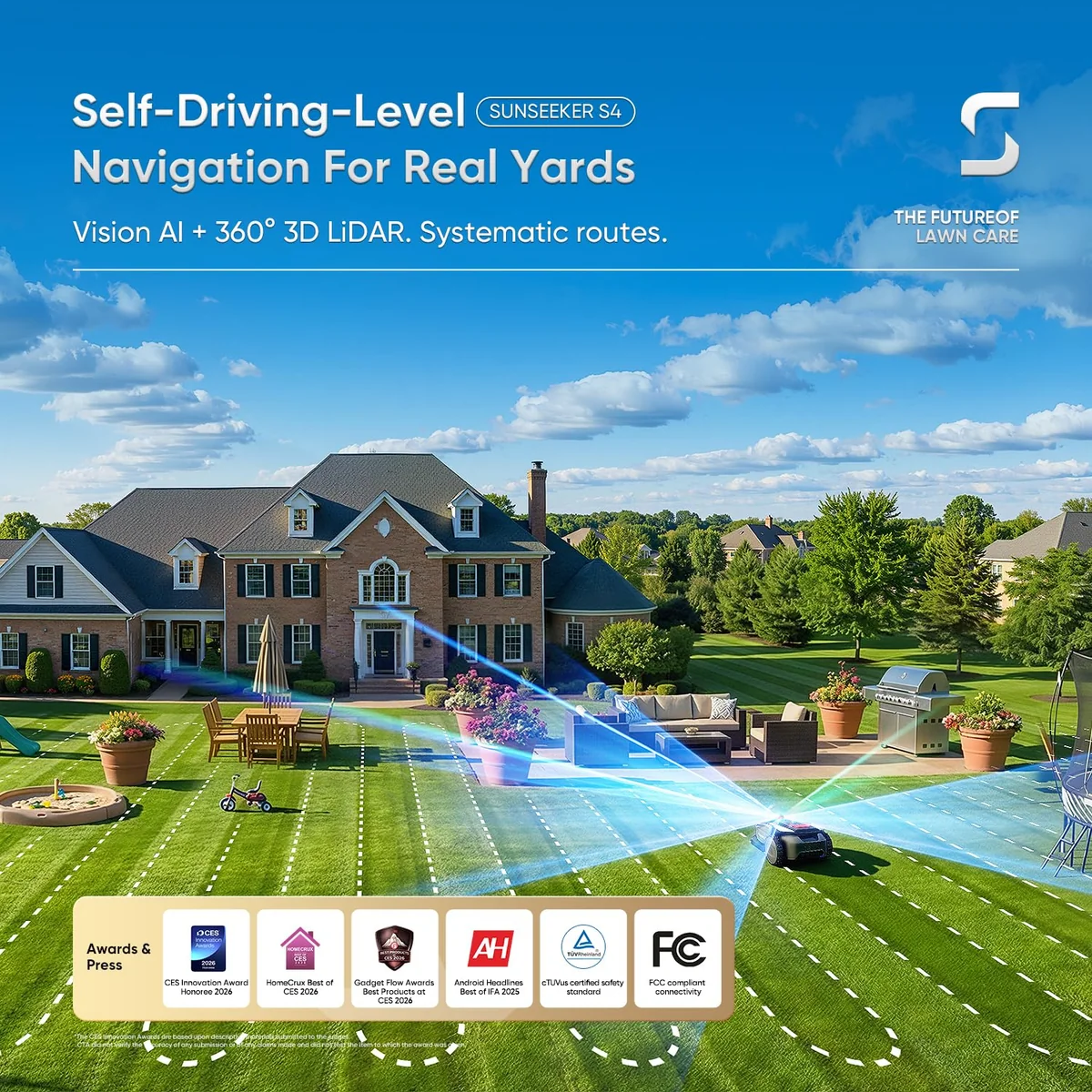
That does not make the S4 redundant. Its rotating 3D LiDAR is particularly convincing in compact yards full of stable landmarks, and its systematic passes can leave clean, straight stripes beneath the same trees that unsettle an RTK mower. The S4 is the simpler recommendation when the lawn closely matches its specialty. The i215 wins because it accommodates more lawns without giving up the antenna-free navigation that makes either mower interesting.
Sunseeker S4
Navimow i215 LiDAR
At a Glance
| Feature | Sunseeker S4 | Editor's Pick Navimow i215 LiDAR |
|---|---|---|
| Price Range | $500–$1,000 | Under $200 |
| Cutting height | 1.6–3.2 inches, manual dial | — |
| Recommended lawn size | 0.25 acre | — |
| Cutting width | 7 inches | — |
| Check Price on Amazon | Check Price on Amazon |
The i215 wins on range, not on invincibility
| Decision point | Navimow i215 | Sunseeker S4 |
|---|---|---|
| Rated lawn area | 0.37 acre | 0.25 acre |
| Navigation | Solid-state LiDAR and vision | Rotating 3D LiDAR and vision |
| Drive | Two driven rear wheels | Two driven rear wheels |
| Rated maximum slope | 45% grade, about 24° | 42% grade, about 22° |
| Cutting width | 7.1 inches | 7 inches |
| Cutting height | 2–4 inches, app controlled | 1.6–3.2 inches, manual dial |
| Rated noise | 59 dB(A) | 60 dB |
| Security beyond Wi-Fi | GPS, geofencing and Apple Find My alerts | No native GPS or cellular radio |
Both escape the RTK antenna, but neither escapes setup
LiDAR is a real advantage here rather than a badge on the box. Both machines can navigate under tree cover and beside buildings without asking an antenna to maintain a clean satellite view. They still need a level charging station, a safe approach, deliberate virtual boundaries and several observed runs before the schedule can be trusted. The useful distinction between these systems and satellite-dependent models is explained in the site’s guide to RTK, LiDAR and camera navigation.
The surrounding yard also matters. Fences, trunks, beds and buildings give LiDAR stable geometry to recognize, while an open field with few fixed features can be a worse environment despite its simpler appearance. Neither mower belongs at the top of a large, featureless lawn merely because it avoids RTK.
The acreage numbers describe a season, not one battery charge
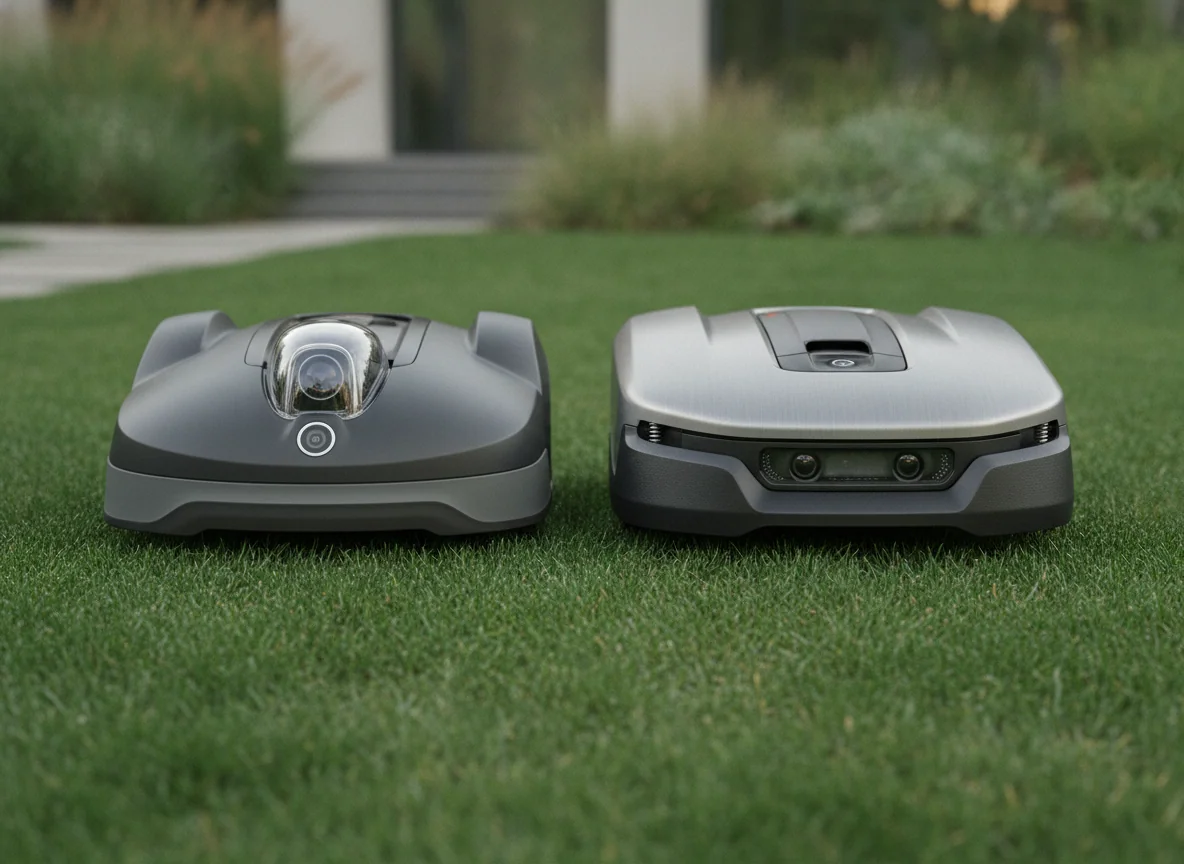
The i215’s extra capacity is its clearest victory. Its 0.37-acre rating gives divided lawns and larger residential plots more breathing room, while the S4’s narrow deck and 4Ah battery make even a 0.2-acre lawn a multicharge job. The S4 resumes correctly after charging, so the delay is tolerable when gates stay open and the mower can work without supervision.
The i215 is not fast simply because the rating is larger. A 6,500-square-foot front-and-back installation can consume roughly one charge per section, and more difficult yards may require several charging cycles. Acreage ratings describe the area a mower can maintain through repeated work; they do not promise that the whole lawn will be finished before lunch. Buyers close to either limit should use the practical guide to robot mower acreage ratings rather than treating the advertised maximum as a target.
The Navimow’s greater capability carries the greater reliability question
The i215 can become almost invisible once its zones, routes and boundaries are right. It can also miss a docking approach, lose a connector route, leave strips or stop on an error that the owner cannot clear. Its strongest long-run results required boundaries moved inward, a safer route to the charger, physical corrections around low edging and a dry approach ramp. That is acceptable preparation for a season of autonomous mowing, but it is not “drop and mow” in any meaningful sense.
The S4’s drawback is less dramatic and more constant. Its seven-inch deck works slowly, the central blade disc sits far inside the body, and conservative mapping can leave a broad strip beside walls or fences. Abrupt grass-to-paving humps and shallow planter dips can strand the rear-drive chassis even when the surrounding lawn looks flat. It is easier to understand than the i215, but its limitations appear on every pass.
Neither mower retires the string trimmer
Both can overlap flush paving and produce an acceptably close border where a wheel is allowed to ride beyond the grass. A fence, wall, raised bed or tree trunk exposes the blade geometry. The cutting discs remain inside their housings, while cautious obstacle avoidance can enlarge the untouched area around an object. The i215 is the better overall mower, but it is not the better answer to a buyer who considers manual edging a deal breaker.
The same caution applies to slopes. The i215’s 45% rating narrowly exceeds the S4’s 42%, yet both rely on two driven rear wheels. The i215 can climb a steep line more convincingly than it can traverse one, particularly on wet grass, leaves or soft soil. The S4 can handle rolling ground but dislikes sharp transitions and narrow depressions. If traction is the property’s hardest problem, the Navimow i210 AWD is the more relevant comparison, provided its smaller area rating and satellite-based positioning suit the lawn.
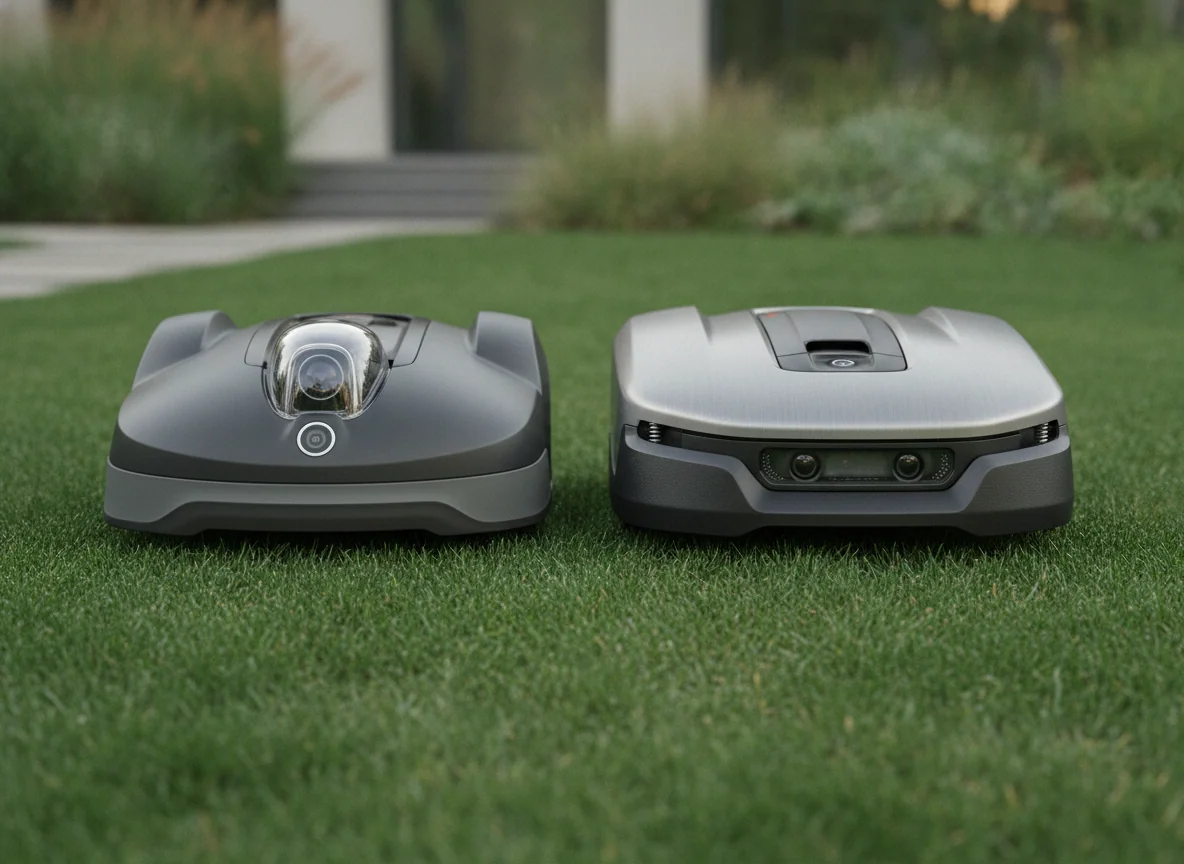
First place: the Navimow i215 is the more complete choice for a complicated residential lawn.
Its larger working area, app-controlled cutting height, flexible zoning and GPS-backed security outweigh the S4’s tidier specialization.
Docking failures, lost routes, hazardous edges and inconsistent support can turn a difficult installation into an occasional retrieval job.
Second place: the Sunseeker S4 is the focused choice for a small lawn beneath trees.
Its onboard 3D LiDAR, straightforward mapping and disciplined cutting pattern make sense when shaded navigation is the yard’s defining problem.
The narrow deck, slow multicharge coverage, manual edging and lack of GPS or cellular tracking ask too much outside that narrow use case.
Sunseeker S4
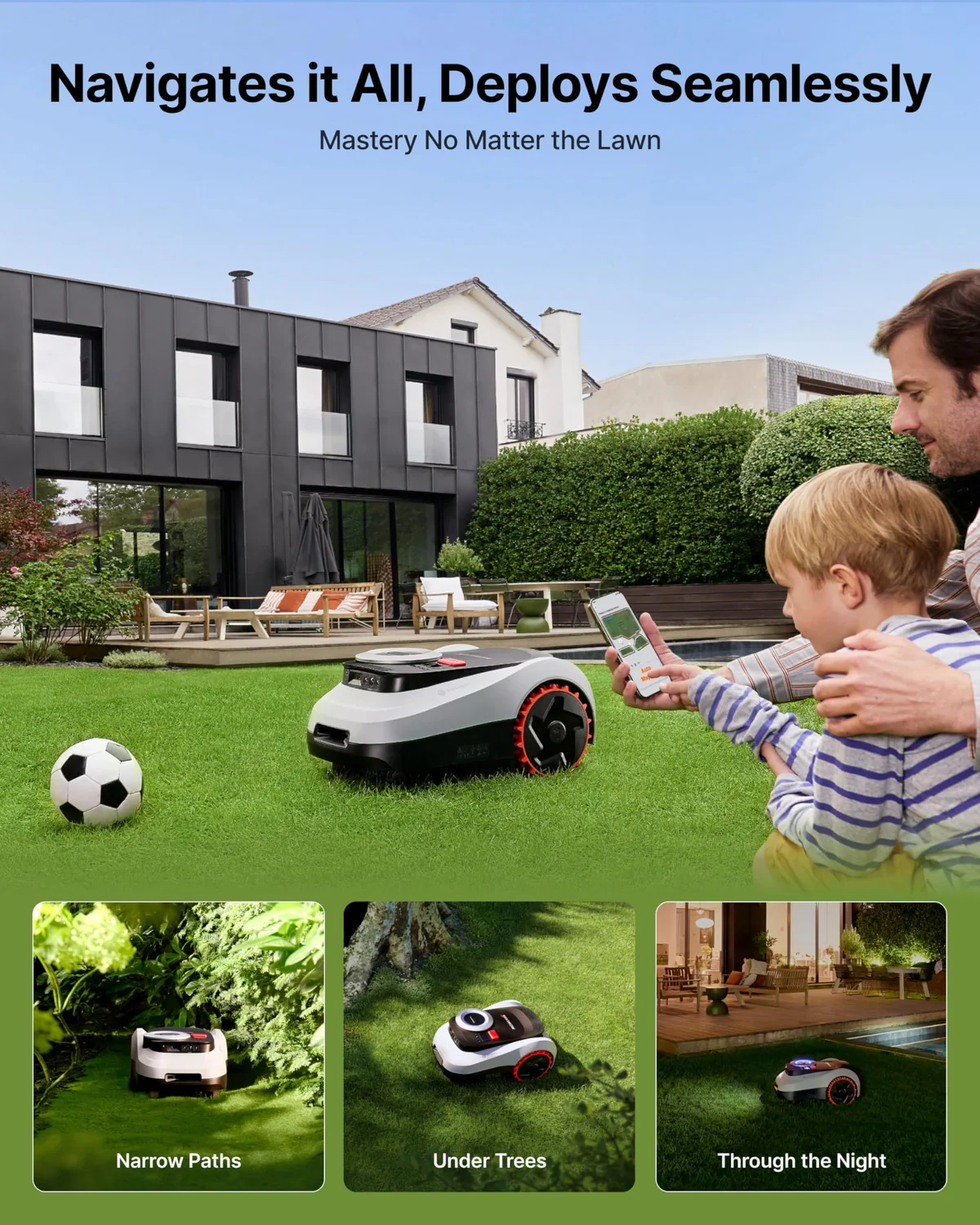
Navimow i215 LiDAR
Buy for the yard’s failure point
Choose the Navimow i215 for a larger, divided or security-conscious property
The i215 is the sensible winner when the mowable grass extends beyond a quarter acre, the lawn needs several scheduled zones, the preferred height changes through the season or theft tracking matters. Trees and buildings should form useful landmarks rather than liabilities, and the ground should be firm enough for rear-wheel drive. Set conservative boundaries beside roads, steps, pools and retaining walls because the mower does not have a dedicated downward-facing cliff sensor.
Choose the Sunseeker S4 when the quarter-acre limit is comfortable
The S4 earns its place in a clearly bounded, shaded lawn where trees, walls and eaves make RTK placement awkward. It suits an owner who values clean parallel lines, can leave the mower time to recharge and already expects to trim vertical edges manually. Its shorter cutting-height range also needs to suit the grass; Sunseeker’s own compatibility guidance rules out Zoysia and St. Augustine.
Walk away from both when traction or throughput is the real problem
Neither compact rear-drive mower is the right answer for severe cross-slopes, persistent mud, deep ruts or abrupt drops. A larger rough property points toward the four-wheel-drive Navimow X430, while a smaller difficult slope favors the i210 AWD when satellite reception is adequate. A buyer whose main concern is grass left against walls should start with the site’s best robot mowers for edge cutting instead of choosing between two machines that still expect a string trimmer.
The final answer remains the i215 for most buyers in this comparison. Its advantage is practical rather than absolute: it covers more ground, accommodates more grass heights and provides better security hardware, while the S4 wins only when a compact, landmark-rich yard fits its LiDAR specialty closely enough to make those omissions unimportant.
Frequently Asked Questions
Do either of these robot mowers need a perimeter wire or RTK antenna?
No, both use onboard LiDAR and vision to navigate within app-defined virtual boundaries without a buried wire or local RTK positioning antenna.
Which mower is better beneath trees and beside buildings?
Both suit obstructed yards, but the i215 is the better all-round purchase while the S4 is especially persuasive on a clearly bounded lawn no larger than a quarter acre.
Can the Navimow i215 mow 0.37 acre on one charge?
No, the 0.37-acre figure describes its rated maintainable area, so a larger or divided lawn should involve automatic returns to the dock, charging and resumption.
Does the Sunseeker S4 have GPS theft tracking?
No, the S4 lacks native GPS and cellular radios, while the i215 includes GPS, geofencing and Apple Find My alerts for security.
Which mower cuts closer to a fence?
Neither cuts flush against a vertical fence because each cutting disc sits inside the body, although both can work closer where a wheel may overlap level paving.
Is the i215’s 45% slope rating the same as 45 degrees?
No, a 45% grade is about 24°, and wet grass, soft ground, turning and sideways travel can reduce usable slope performance well before that limit.
Ready to Choose?
Sources (44)
- Amazon listings and customer reviews — Sunseeker S4 and Navimow I215 Lidar
- Owner reports across r/StrangeNewWorlds, r/roboticLawnmowers, r/Navimow_Segway and 6 more threads
- Owner and reviewer video, 60 channels
- Costco listing
- Walmart listing
- Shopsunseekertech — Article — shopsunseekertech.com
- Tomsguide — Article — www.tomsguide.com
- T3 — Article — www.t3.com
- Warehouserunner — Article — app.warehouserunner.com
- Facebook — Article — www.facebook.com
- Electricrevolutionreviews — Article — electricrevolutionreviews.com
- Sunseekertech — Article — sunseekertech.com
- Bestbuy — Article — www.bestbuy.com
- Sunseekerelite — Article — sunseekerelite.com
- Bobvila — Article — www.bobvila.com
- Pcmag — Article — www.pcmag.com
- Toptenreviews — Article — www.toptenreviews.com
- Expertreviews — Article — www.expertreviews.co.uk
- Segway — Article — navimow.segway.com
- Trustedreviews — Article — www.trustedreviews.com
- Therobotmower — Article — therobotmower.co.uk
- Navimow — Article — navimow.com
- Trustpilot — Article — www.trustpilot.com
- Pcworld — Article — www.pcworld.com
- Au — Article — segway.com.au
- Lifehacker — Article — lifehacker.com
- Theverge — Article — www.theverge.com
- Maison Et Domotique — Article — www.maison-et-domotique.com
- Au — Article — roboticmower.com.au
- Lowes — Article — www.lowes.com
- Techadvisor — Article — www.techadvisor.com
- Homedepot — Article — www.homedepot.com
- Tv — Article — www.stuff.tv
- Cnygreenteam — Article — cnygreenteam.com
- Outdoor Usa — Article — outdoor-usa.com
- Easylawnmowing — Article — www.easylawnmowing.com
- Protoolreviews — Article — www.protoolreviews.com
- Homebuilding — Article — www.homebuilding.co.uk
- Techradar — Article — www.techradar.com
- Gizmodo — Article — gizmodo.com
- Suncolawns — Article — shop.suncolawns.com
- Smartyardnw — Article — smartyardnw.com
- the Ambient — Article — www.the-ambient.com
- Outdoorica — Article — outdoorica.com