The Navimow X430 wins the hill, but the i215 wins where trees block the sky.
Choose the Navimow X430 for substantial acreage, rough transitions or serious slopes; choose the i215 for a smaller, structured lawn where trees and buildings make satellite positioning unreliable.
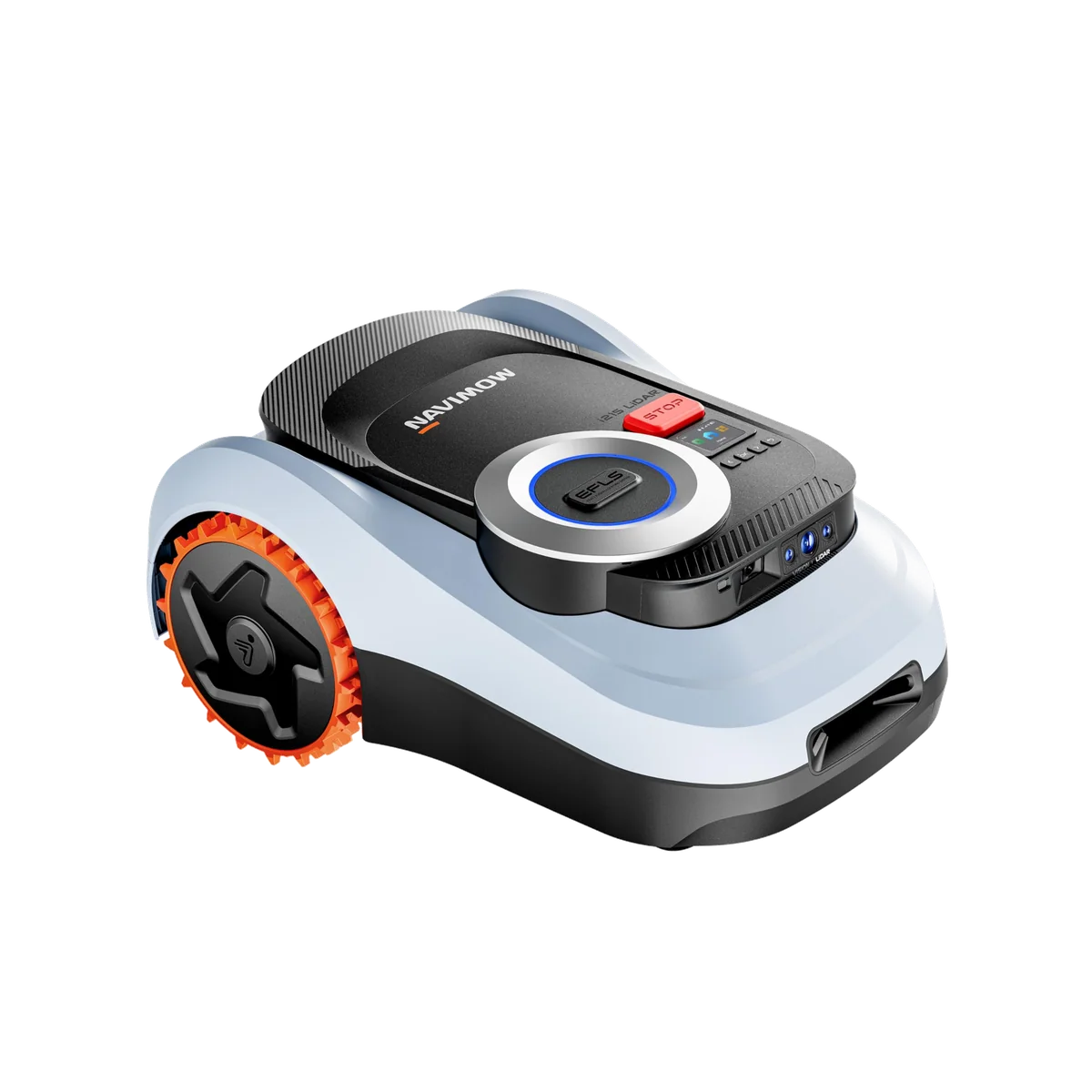
Navimow i215 LiDAR
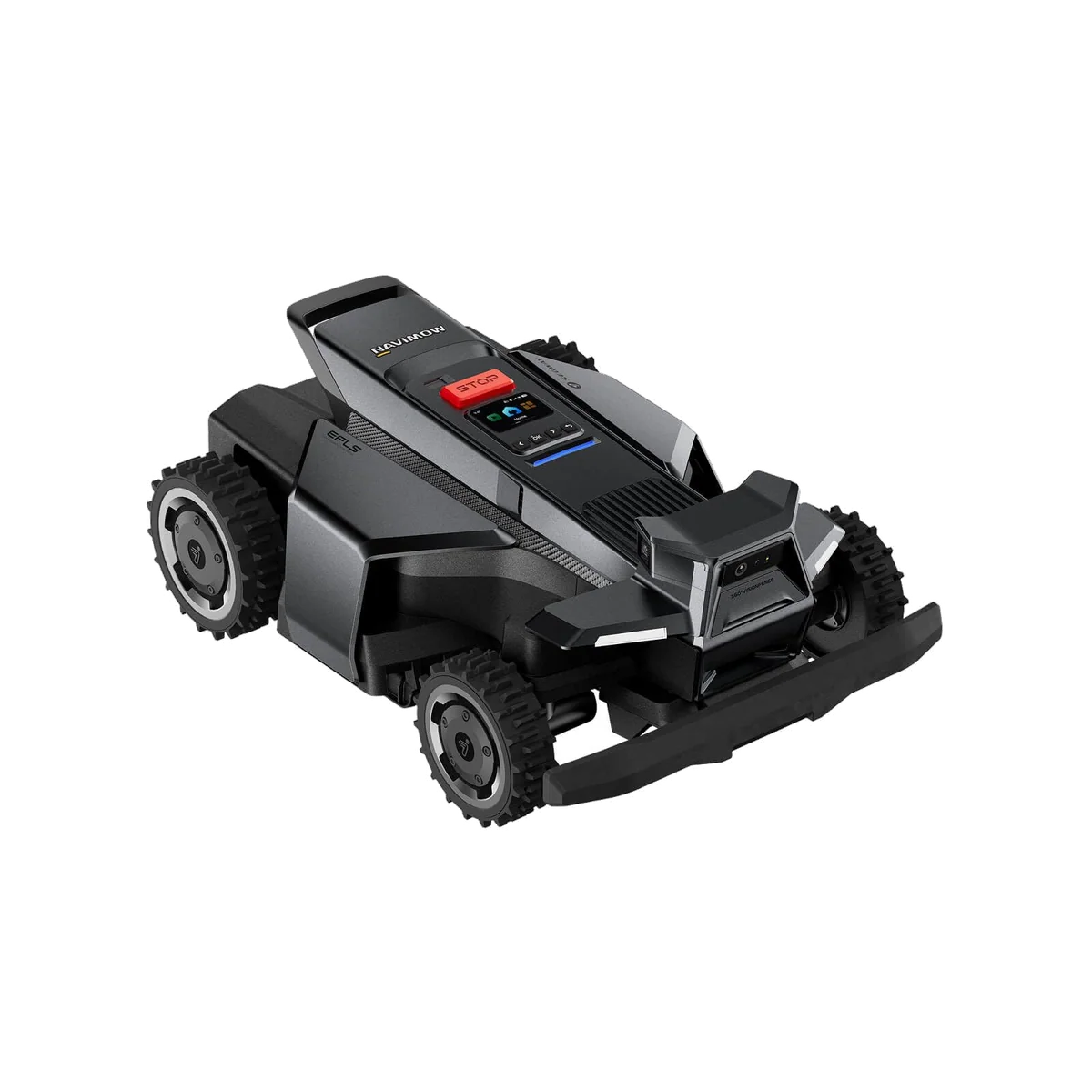
Navimow X430
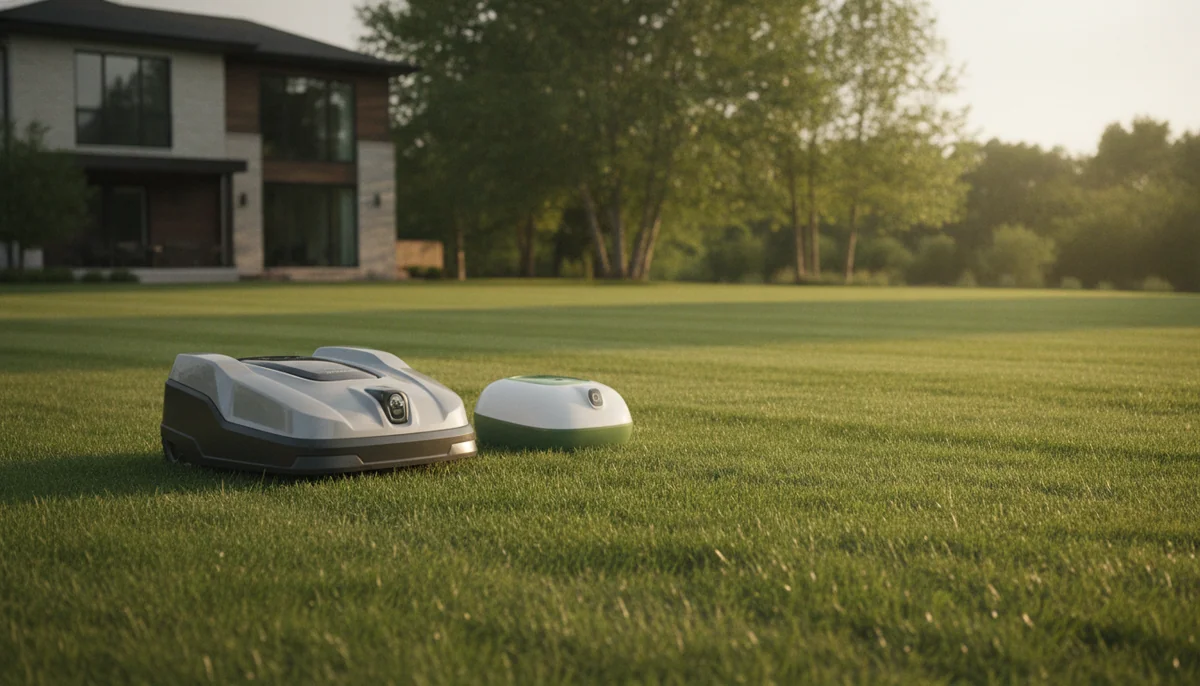
The model numbers make these two Navimows look like steps on one ladder. They are not. The i215 is a compact LiDAR mower built to navigate without an RTK antenna, while the X430 is a much larger four-wheel-drive machine that uses Network RTK, cameras and a wide dual-disc deck to maintain as much as an acre.
The X430 wins this comparison on capability. It cuts a 17-inch path, reaches four inches in height, turns with steerable front wheels and brings the traction to cross terrain that can strand a rear-wheel-drive robot. Those advantages are real only when the property needs them. Put this 24-inch-wide machine on a modest enclosed lawn and its footprint, positioning demands and premium hardware become complications rather than benefits.
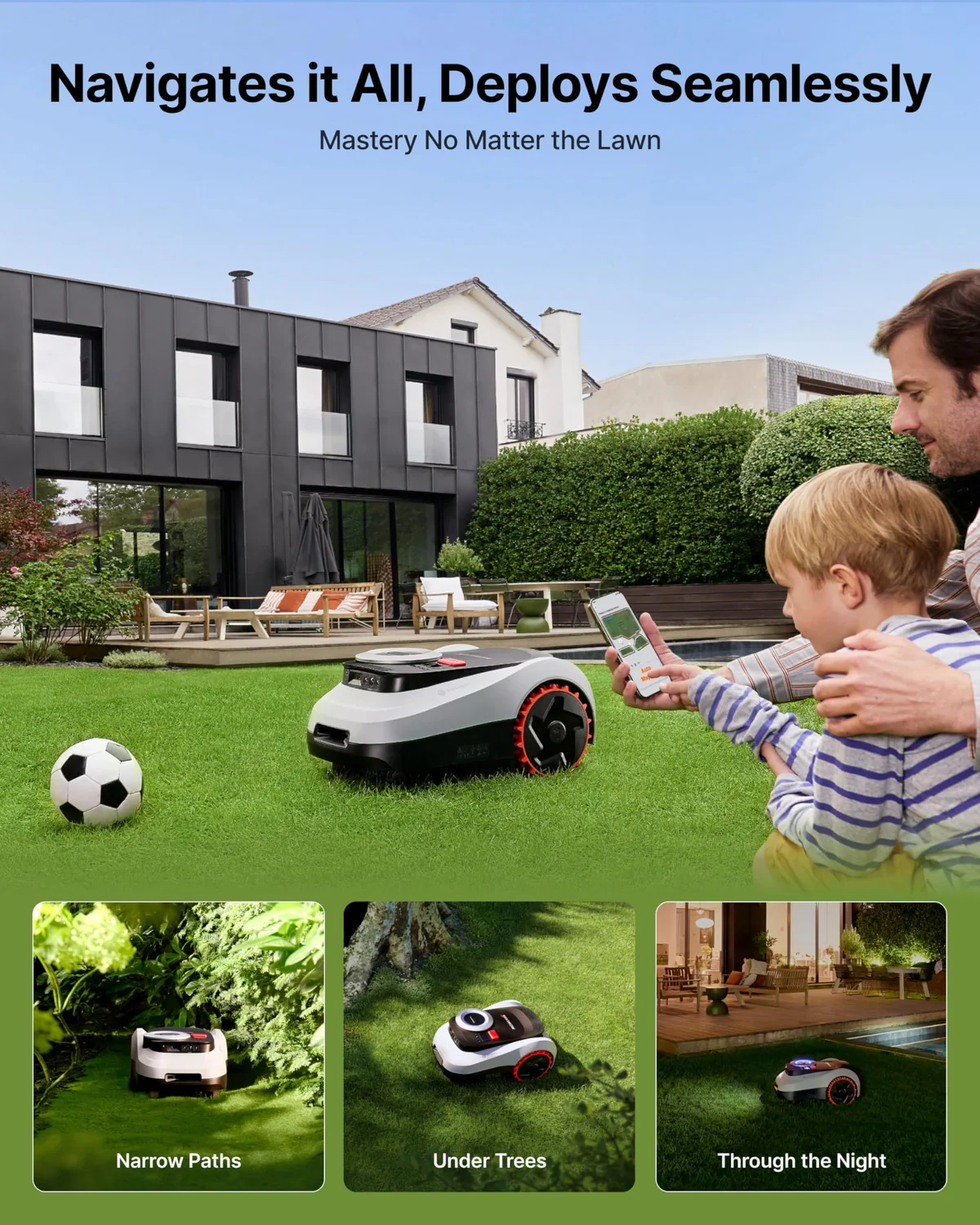
The i215 answers a quieter but common frustration. A house, tall fence and mature canopy can leave an RTK mower searching for a dependable view of the sky. The i215 turns those surroundings into LiDAR landmarks, maps without a buried wire or positioning pole and works particularly well on divided residential lawns with stable, visible boundaries. Its limits arrive under the wheels: soft ruts, damp transitions and steep cross-slopes expose the difference between off-road tread and all-wheel drive.
Neither mower deserves the phrase “set it and forget it” on installation day. A successful automatic map is the beginning of the property audition, not the end. Docking, recharge and resume, connector routes, hazardous edges and the worst patch of terrain all need to work repeatedly before either machine has earned an unattended schedule.

Navimow i215 LiDAR

Navimow X430
At a Glance
| Feature | Navimow i215 LiDAR | Navimow X430 |
|---|---|---|
| Price Range | Under $200 | $1,500–$3,000 |
| Cutting height | — | 0.75–4 inches |
| Recommended lawn size | — | Up to 1 acre of mapped grass |
| Cutting width | — | 17 inches |
| Check Price on Amazon | Check Price on Amazon |
The X430 wins only when the lawn asks the harder question
The Navimow X430 is the winner for large, steep and uneven lawns.
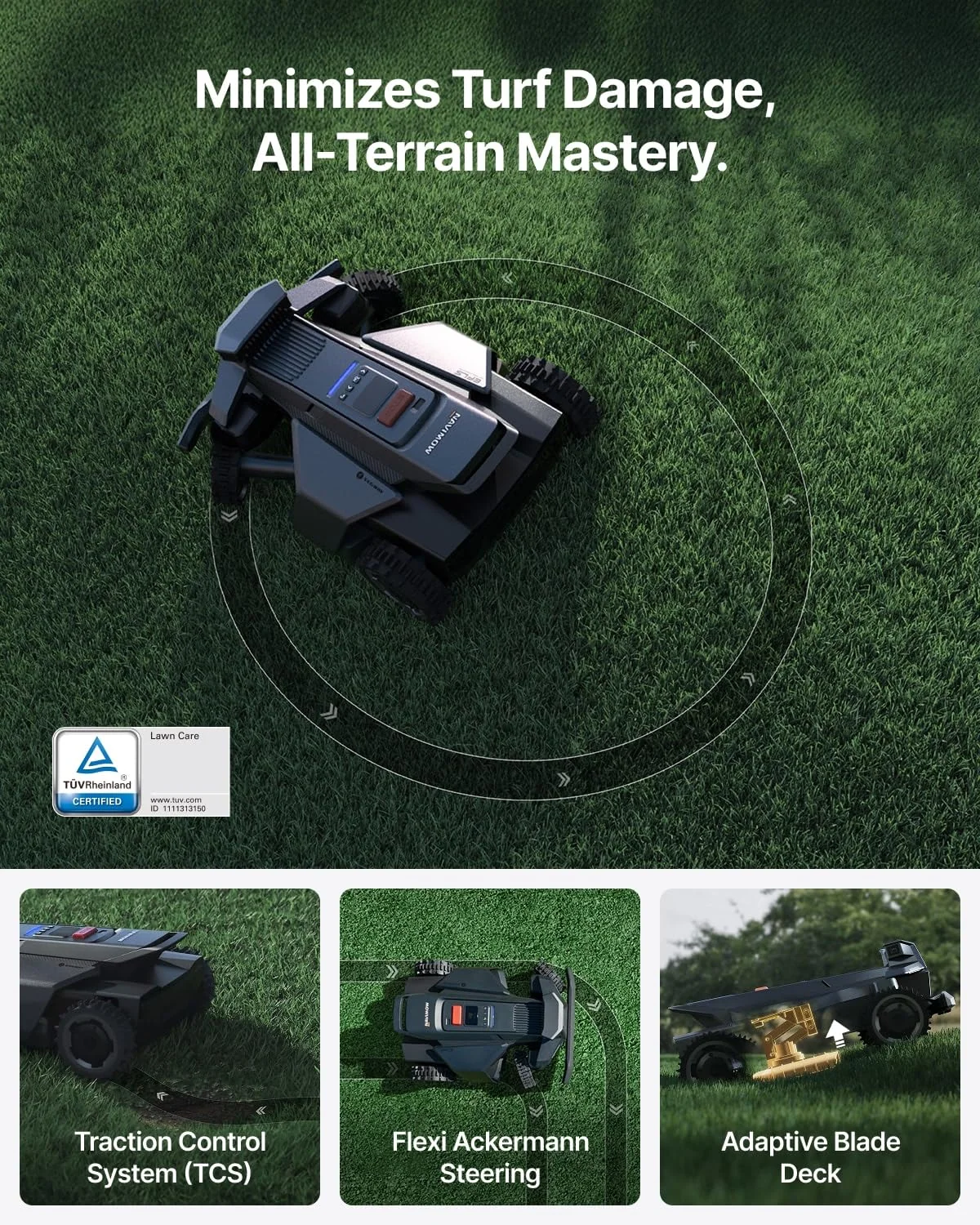
Its four-wheel drive, suspension, 17-inch cutting deck and 0.75–4-inch height range give it capabilities the compact i215 cannot reproduce.
Dock placement and satellite positioning can require substantial troubleshooting, and one alarming report of an uncontrolled height drop makes the return window part of the buying decision.
The Navimow i215 is the better fit for smaller lawns under trees or beside buildings.
Its onboard LiDAR and vision remove the external positioning antenna while its compact body and detailed zone controls suit structured residential yards.
Rear-wheel drive can slide across slopes or struggle in ruts, thick turf and damp transitions, while unreliable docking or routes can turn slow autonomous mowing into retrieval work.
| Decision point | Navimow i215 LiDAR | Navimow X430 |
|---|---|---|
| Rated lawn area | 0.37 acre of mapped grass | 1 acre of mapped grass |
| Primary positioning | Onboard solid-state LiDAR plus vision | Network RTK, cameras and visual-inertial positioning |
| Drive system | Two driven rear wheels | Four-wheel drive with suspension and steerable front wheels |
| Rated maximum slope | 45% grade, about 24° | 84% grade, about 40° |
| Cutting system | One 7.1-inch disc with six blades | Two discs, 12 blades and a 17-inch cutting width |
| Cutting-height range | 2–4 inches | 0.75–4 inches |
| Best match | Compact, enclosed or tree-covered residential lawns | Large lawns with slopes, roots, ruts or rough transitions |
| Main reason to walk away | Traction is inadequate for the property | The yard cannot provide a dependable dock and positioning location |
LiDAR solves blocked sky, not every navigation problem
The i215 has the cleaner positioning argument beneath heavy tree cover. It scans the surroundings directly, so a fence line, building and established beds can provide useful geometry even where satellite reception is poor. Automatic mapping can trace a clear perimeter, and the app allows boundaries, no-go areas, cutting directions, schedules and as many as 20 zones to be refined afterward.
That does not make the map infallible. LiDAR needs stable, recognizable surroundings, so an open and visually featureless field may suit satellite positioning better than a sensor looking for nearby structure. The i215 also lacks a dedicated downward-facing cliff sensor. Steps, retaining walls, roads, pools and drainage drops need conservative virtual offsets, followed by several supervised cycles.
The X430 takes the opposite route. Network RTK supplies its primary positioning without requiring a buried perimeter wire, while cameras help it recognize boundaries and obstacles. Heavy canopy does not automatically disqualify it, but nearby structures, reflected signals and the proposed charger location can make one property easy and the next miserable. Moving a dock only a few feet or restarting after firmware installation has transformed troubled setups, which is useful knowledge and an honest warning.
Buyers trying to separate the technologies rather than the models should start with the guide to RTK, LiDAR and camera navigation. The important difference here is practical: the i215 carries its local positioning sensor onboard, while the X430 asks the property to cooperate with a satellite-based system.
Four driven wheels matter more than the larger slope number
The i215’s advertised 45% grade is roughly 24 degrees, not 45 degrees. It can climb assertively in a straight line, but traversing a hill is harder because gravity pulls the undriven front end downhill. Direction controls can keep passes running up and down the slope, although avoiding sideways travel may leave thin missed strips that need another mowing angle.
The X430 is the credible choice when elevation comes with roots, uneven ground or awkward transitions. Its four-wheel traction and suspension keep the chassis moving, while steerable front wheels reduce the turf scrubbing associated with dragging a skid-steer mower through every turn. Navimow’s 84% rating remains a laboratory-style maximum rather than a sensible target for wet grass, loose soil or a bank beside water, but the hardware advantage over the i215 is decisive.
Gentler steering does not prevent all lawn wear. Every trip to the same charger and every narrow channel between zones concentrates traffic. A beautiful stripe pattern can still acquire a worn diagonal path if the dock sits on the wrong side of the property. Route design belongs in the setup plan, particularly for the heavier X430.
Acreage is about throughput, not one heroic battery cycle
The i215’s 0.37-acre rating and the X430’s one-acre rating describe the grass each system is intended to maintain, not what either mower clears on one charge. Returning to the dock is normal. What matters is whether the machine docks, charges, resumes at the correct place and completes the work inside the schedule.
The X430’s wide deck makes those cycles productive. It covers more ground per lane and is far better matched to a long daily workload. The i215 can maintain divided front and back lawns by alternating zones, but asking its narrow disc to work at the top of its acreage allowance leaves little room for complicated boundaries, frequent turns or recovery after rain.
Measure actual grass rather than the whole parcel. Then measure gates and passages. The X430 body is 24 inches wide before useful clearance is added, so its theoretical acre means little if it cannot reach half the lawn. For properties exceeding one acre of mowable grass, the Mammotion LUBA 3 AWD 5000H comparison covers the larger-capacity rival that beats the X430 on advertised area.
Both replace mowing, not lawn care
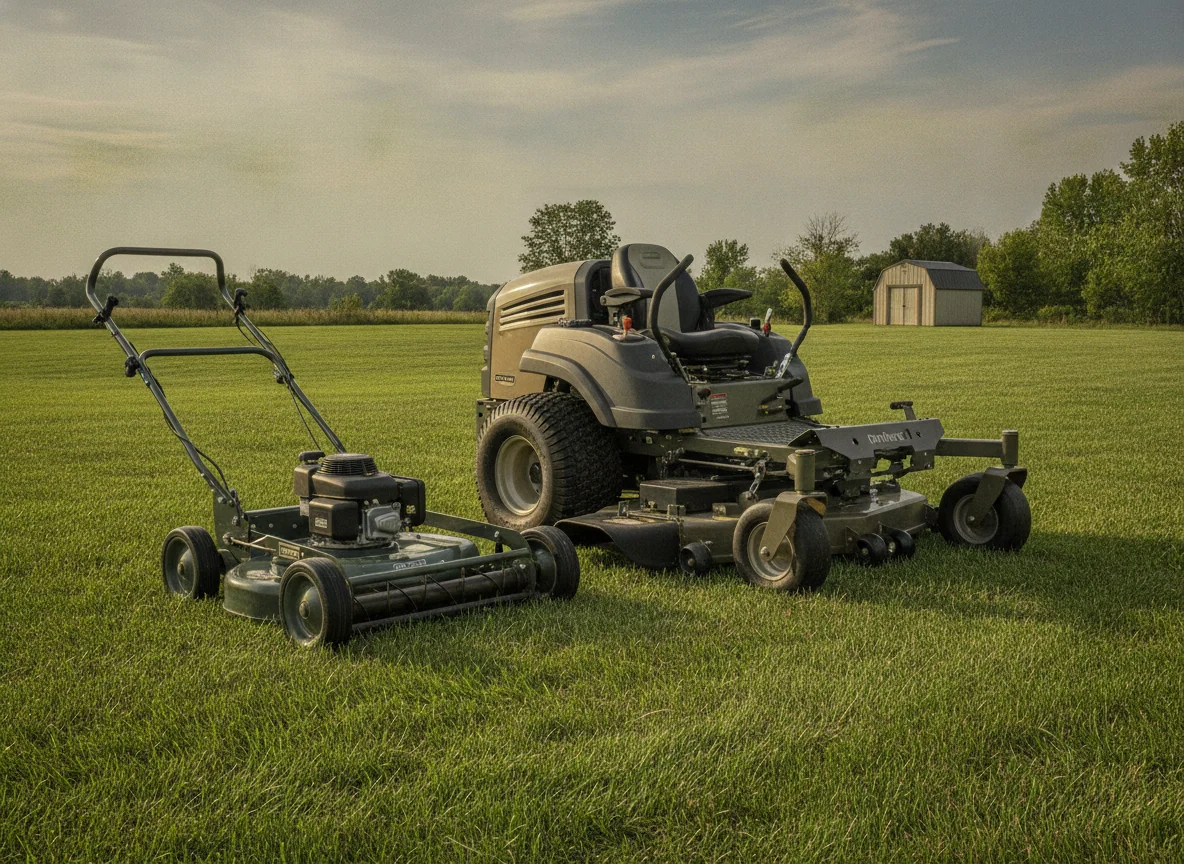
Frequent light cuts are the benefit of either robot. Tiny clippings fall into the turf, the noise stays unobtrusive and the lawn looks maintained without a weekly session behind a conventional mower. Neither machine collects grass, creates much suction or enjoys an overgrown first cut. Bring tall grass down before mapping, then let repetition rather than brute force produce the finish.
Edges remain unfinished where the deck cannot overlap flush paving. Fences, raised beds, tree trunks, inside corners and cautiously avoided obstacles still need a string trimmer. The X430’s wider deck does not change the fact that its cutting discs sit inside the body, and the i215 can swing surprisingly wide around recognized objects.
Leaves, cords, straps, pine cones and storm debris also survive the marketing transition from mower to robot. Cameras can steer around conspicuous furniture or a person, but thin objects can disappear beneath the deck. The cameras, LiDAR window and mower underside need cleaning; blades need inspection and replacement; somebody still needs to reach a stranded machine. The broader account of robot mower problems and disadvantages is worth reading before autonomy becomes an expectation rather than a tool.
Navimow i215 LiDAR
Navimow X430
Buy for the failure your lawn is most likely to produce
Choose the i215 when the sky is the obstacle
The i215 is the sharper purchase for up to 0.37 acre of structured lawn surrounded by mature trees, fencing or buildings. It also suits an owner willing to refine several zones, pull hazardous boundaries inward and accept occasional trimming. Its smaller body is an advantage around compact residential geometry.
Walk away if the route includes persistent mud, deep ruts, steep lateral travel or abrupt transitions that already defeat wheeled equipment. If the lawn is smaller but traction is the defining problem, the Navimow i210 AWD comparison explains why four driven wheels can matter more than LiDAR.
Choose the X430 when the ground is the obstacle
The X430 earns its place on a half-acre to one-acre lawn with sustained slopes, tall-cut fescue, roots, rough transitions or several connected zones. It is also the more convincing remote-property mower because its deck and chassis can finish substantial work without living outside every hour of the week.
Walk away if every route is narrow, the dock must hide against a signal-blocking building or the lawn is too small to justify a 24-inch-wide machine. Preserve the packaging while testing the height control, positioning, docking and recharge cycle, because a premium mower that scalps the lawn or cannot find home has failed regardless of how formidable its chassis looks.
Smart Lawn Bots gives the head-to-head win to the X430 because it can do jobs the i215 physically cannot, but the i215 remains the better buy whenever its antenna-free LiDAR solves the property’s real problem without asking for unused acreage and terrain hardware.
Frequently Asked Questions
Does either Navimow need a perimeter wire?
No, both use editable virtual boundaries, although the i215 navigates locally with LiDAR while the X430 primarily relies on Network RTK and vision.
Which model is better beneath trees?
The i215 is the safer choice when canopy and buildings compromise satellite reception, while the X430 can still work under trees if its Network RTK positioning and dock location remain dependable.
Which Navimow is better for steep or uneven ground?
The X430 is substantially better equipped for difficult terrain because it combines four-wheel drive, suspension and steerable front wheels, while the rear-driven i215 is more vulnerable on cross-slopes, ruts and soft transitions.
Can either mower eliminate edging and trimming?
No, both can cut closely beside suitable flush borders, but fences, walls, raised beds, corners and awkward obstacles leave grass beyond the reach of their recessed cutting discs.
Is the X430 automatically better because it covers more grass?
No, its extra capacity is useful only when the lawn needs it, and the smaller i215 is easier to justify on compact properties where onboard LiDAR solves unreliable satellite reception.
Ready to Choose?
Sources (46)
- Amazon listings and customer reviews — Navimow I215 Lidar and Navimow X430
- Owner reports across r/roboticLawnmowers, r/Navimow_Segway, r/SegwayNavimow and 5 more threads
- Owner and reviewer video, 62 channels
- Toptenreviews — Article — www.toptenreviews.com
- Expertreviews — Article — www.expertreviews.co.uk
- Segway — Article — navimow.segway.com
- Trustedreviews — Article — www.trustedreviews.com
- Therobotmower — Article — therobotmower.co.uk
- Navimow — Article — navimow.com
- Trustpilot — Article — www.trustpilot.com
- Pcmag — Article — www.pcmag.com
- Pcworld — Article — www.pcworld.com
- Facebook — Article — www.facebook.com
- Au — Article — segway.com.au
- Lifehacker — Article — lifehacker.com
- Theverge — Article — www.theverge.com
- Maison Et Domotique — Article — www.maison-et-domotique.com
- Au — Article — roboticmower.com.au
- Lowes — Article — www.lowes.com
- Techadvisor — Article — www.techadvisor.com
- Homedepot — Article — www.homedepot.com
- Tv — Article — www.stuff.tv
- Cnygreenteam — Article — cnygreenteam.com
- Outdoor Usa — Article — outdoor-usa.com
- Easylawnmowing — Article — www.easylawnmowing.com
- Protoolreviews — Article — www.protoolreviews.com
- Homebuilding — Article — www.homebuilding.co.uk
- Techradar — Article — www.techradar.com
- Gizmodo — Article — gizmodo.com
- Suncolawns — Article — shop.suncolawns.com
- Smartyardnw — Article — smartyardnw.com
- the Ambient — Article — www.the-ambient.com
- Outdoorica — Article — outdoorica.com
- T3 — Article — www.t3.com
- Notebookcheck — Article — www.notebookcheck.net
- Mowingmagic — Article — mowingmagic.com
- Smart Dots — Article — www.smart-dots.com
- Nytimes — Article — www.nytimes.com
- Trustpilot — Article — ie.trustpilot.com
- Homeandgardenselect — Article — homeandgardenselect.com
- Cnet — Article — www.cnet.com
- Yarbo — Article — www.yarbo.com
- Mammotion — Article — us.mammotion.com
- Consumerreports — Article — www.consumerreports.org
- Easylawnmowing — Article — easylawnmowing.co.uk
- Eu — Article — www.letemsvetemapplem.eu