The Navimow i215 is the better default, but the i210 AWD is the better mower for bad ground.
Buy the i215 unless your lawn is no larger than 0.25 acre, has dependable satellite visibility, and routinely defeats two-wheel traction, because only that combination makes the i210 AWD the smarter choice.
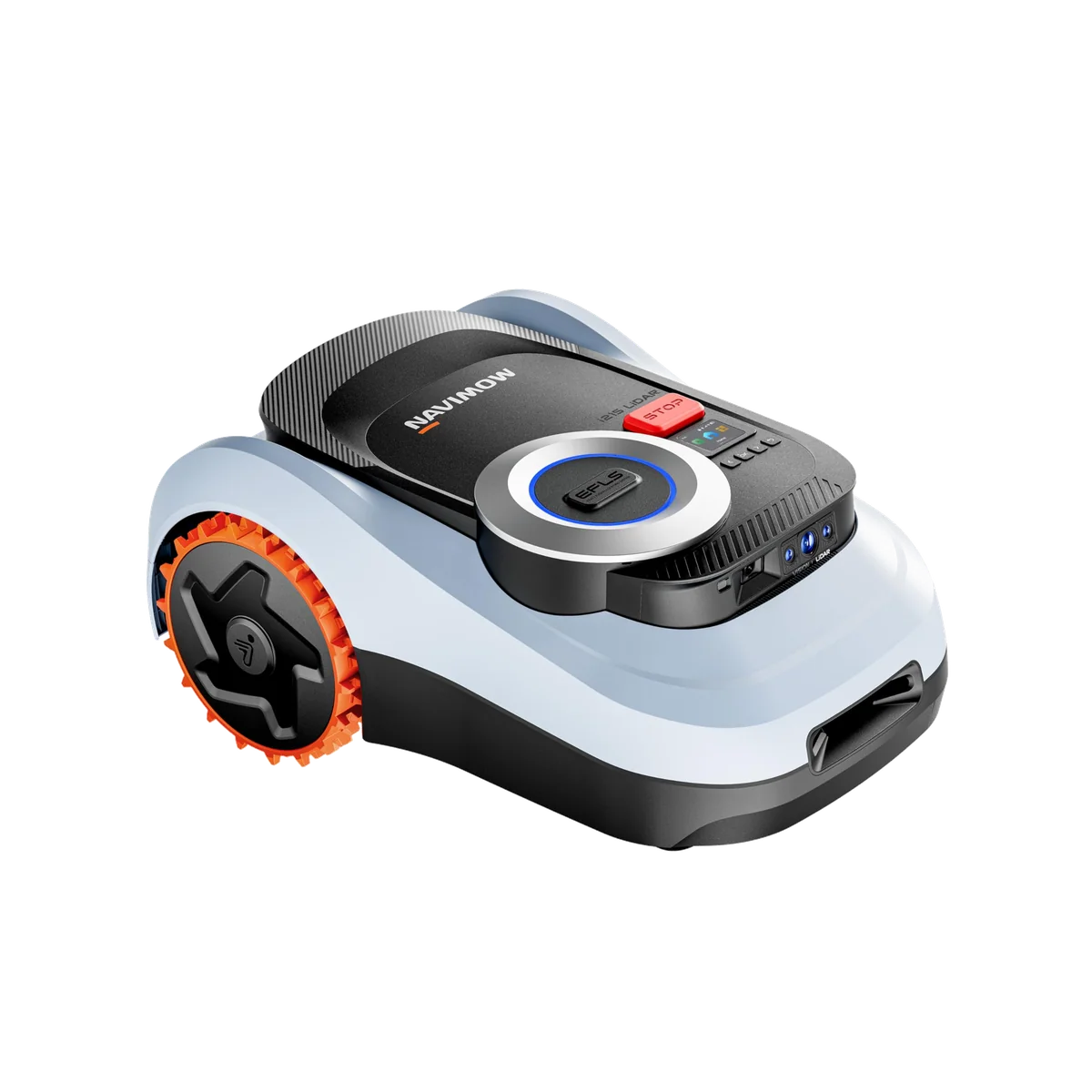
Navimow i215 LiDAR
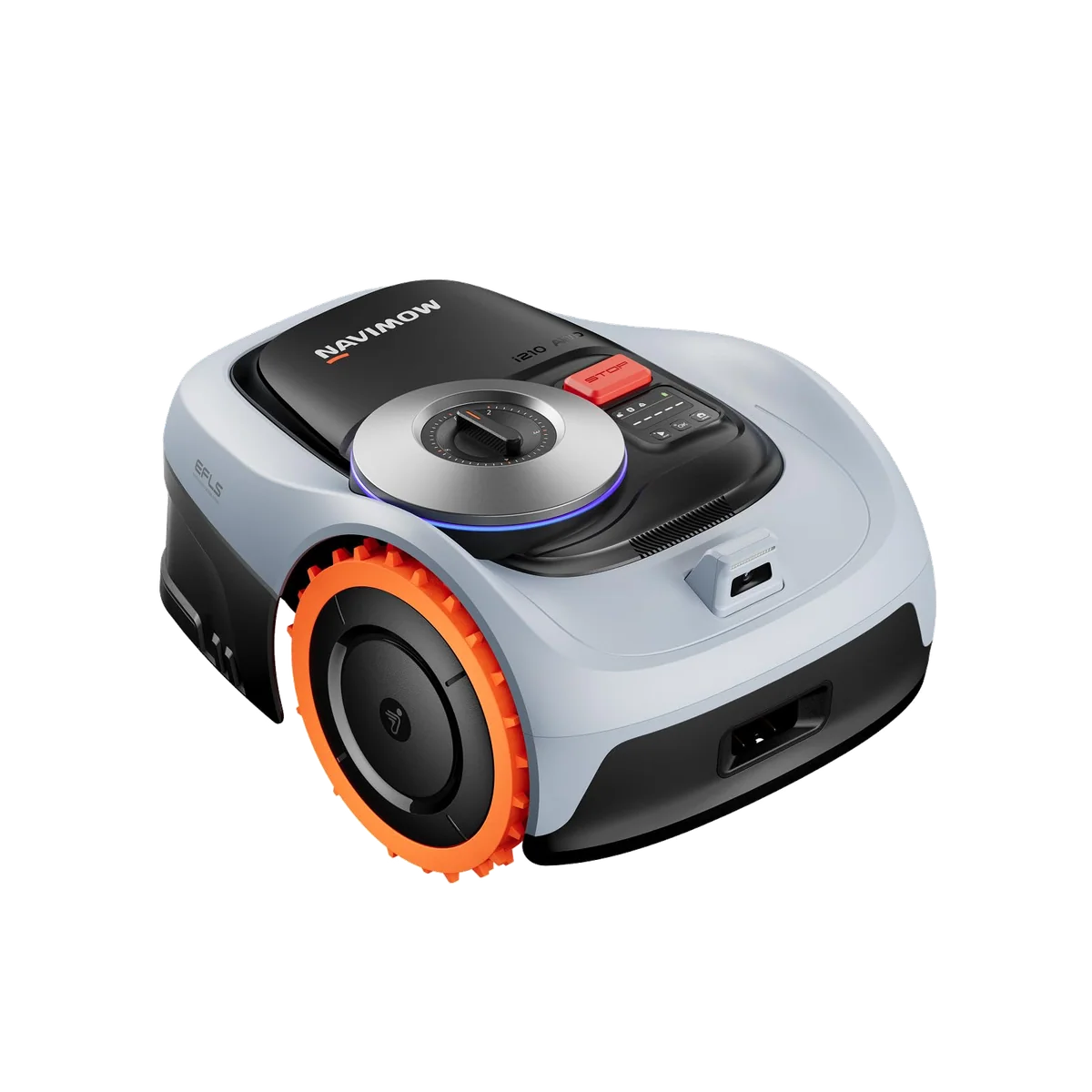
Segway Navimow i210 AWD Robot
These two Navimows solve different reasons a robot mower gets stranded. The i215 uses onboard LiDAR and vision to navigate without depending on an RTK antenna or a clear view of the sky. The i210 AWD uses satellite positioning and camera assistance, then puts power through an unusual third wheel when slopes, ruts, thick grass, or awkward transitions demand more grip.
Positioning is the more fundamental problem. A mower that slips occasionally may recover, reverse, or succeed with a different mowing direction. A mower that cannot establish where it is may cancel the schedule before cutting anything. That is why the i215 wins overall, especially in the tree-covered and building-lined yards where wire-free navigation is hardest to make reliable.
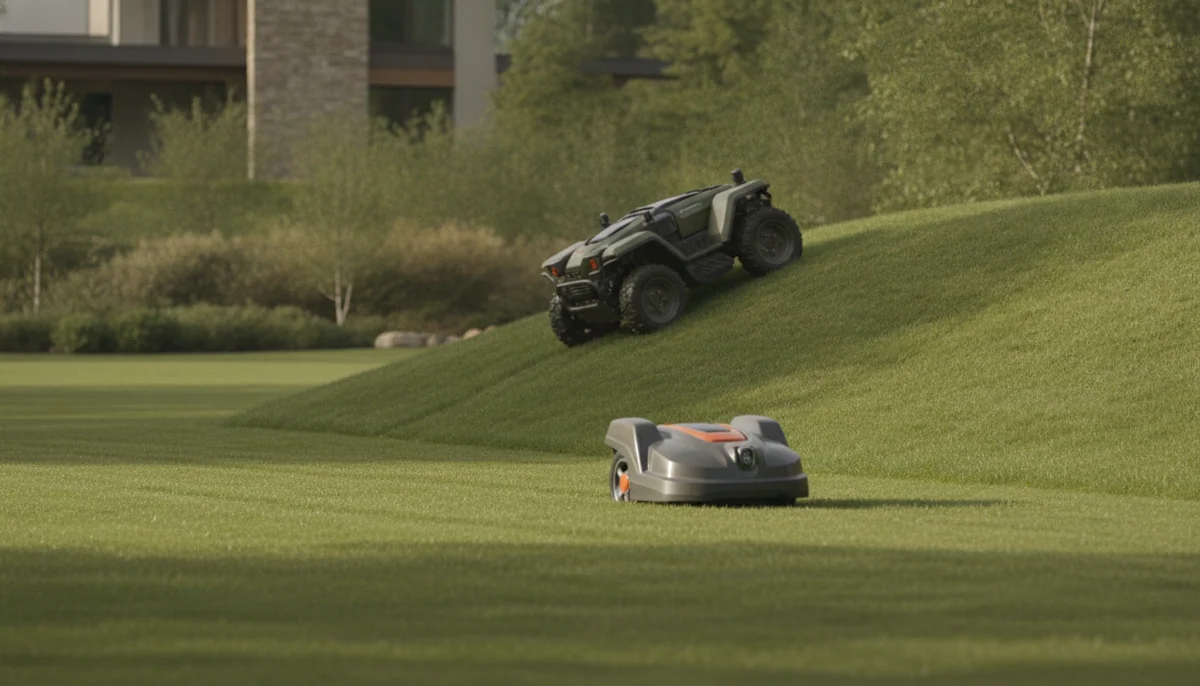
The i215 is not simply the more capable machine. Its two driven rear wheels can struggle on damp ramps, soft soil, sidewalk ruts, thick turf, and cross-slopes. The i210 AWD is the sharper choice when the sky is open but the ground is not. Choosing between them means identifying the lawn’s first likely failure, not comparing two feature lists and counting badges.
Navimow i215 LiDAR
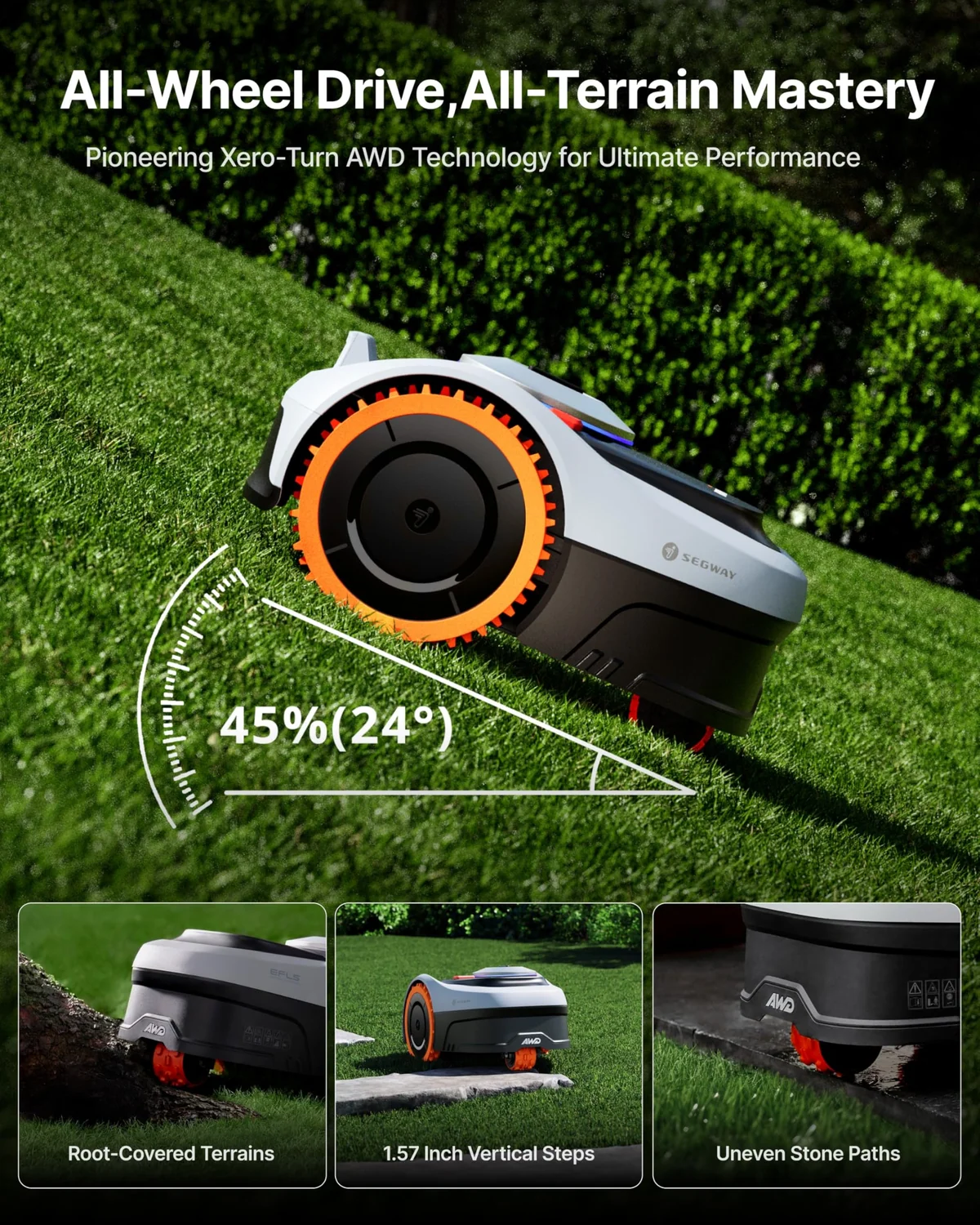
Segway Navimow i210 AWD Robot
At a Glance
| Feature | Editor's Pick Navimow i215 LiDAR | Segway Navimow i210 AWD Robot |
|---|---|---|
| Price Range | Under $200 | $1,000–$1,500 |
| Check Price on Amazon | Check Price on Amazon |
LiDAR versus AWD is really location versus traction
The i215 knows where it is without asking the sky
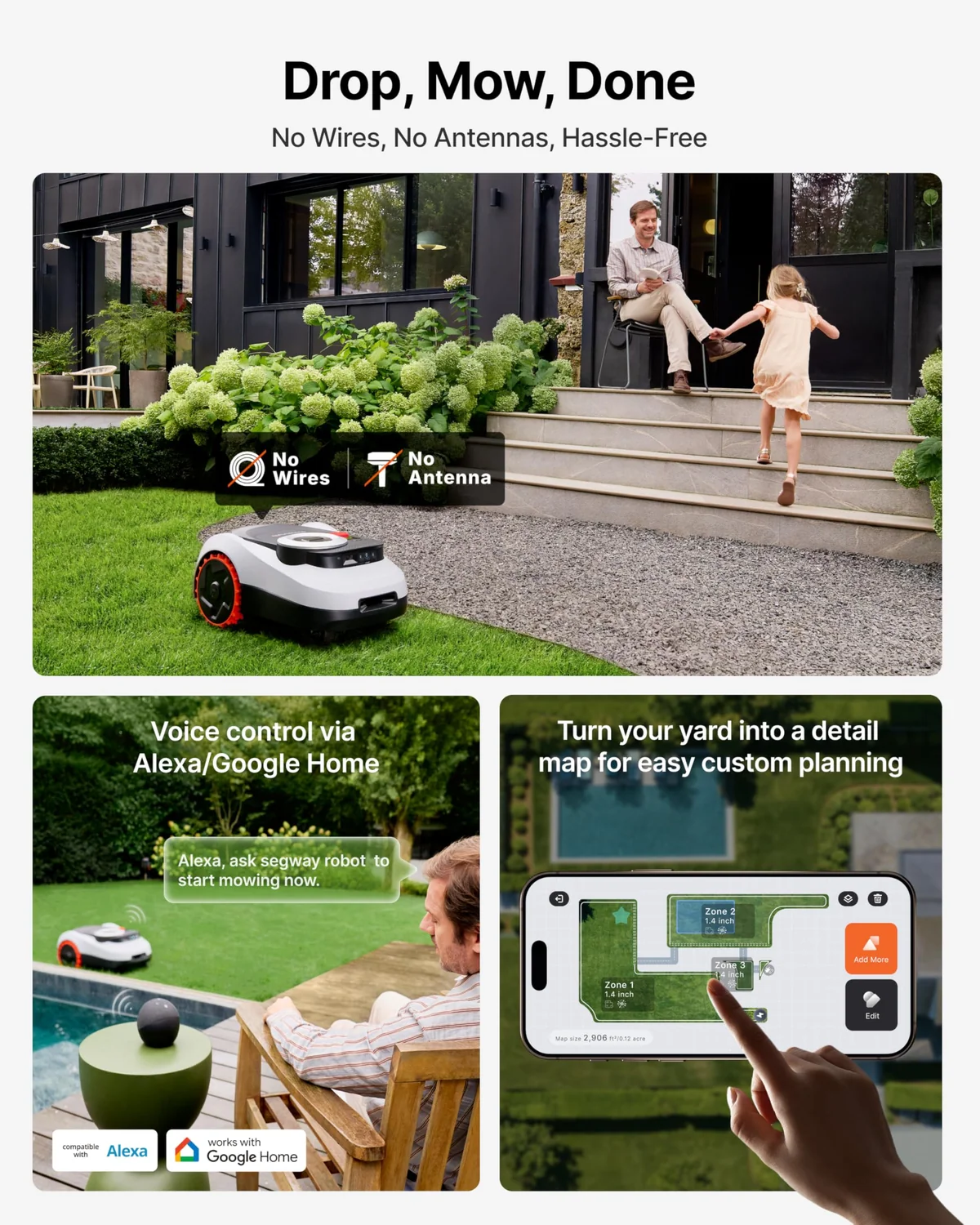
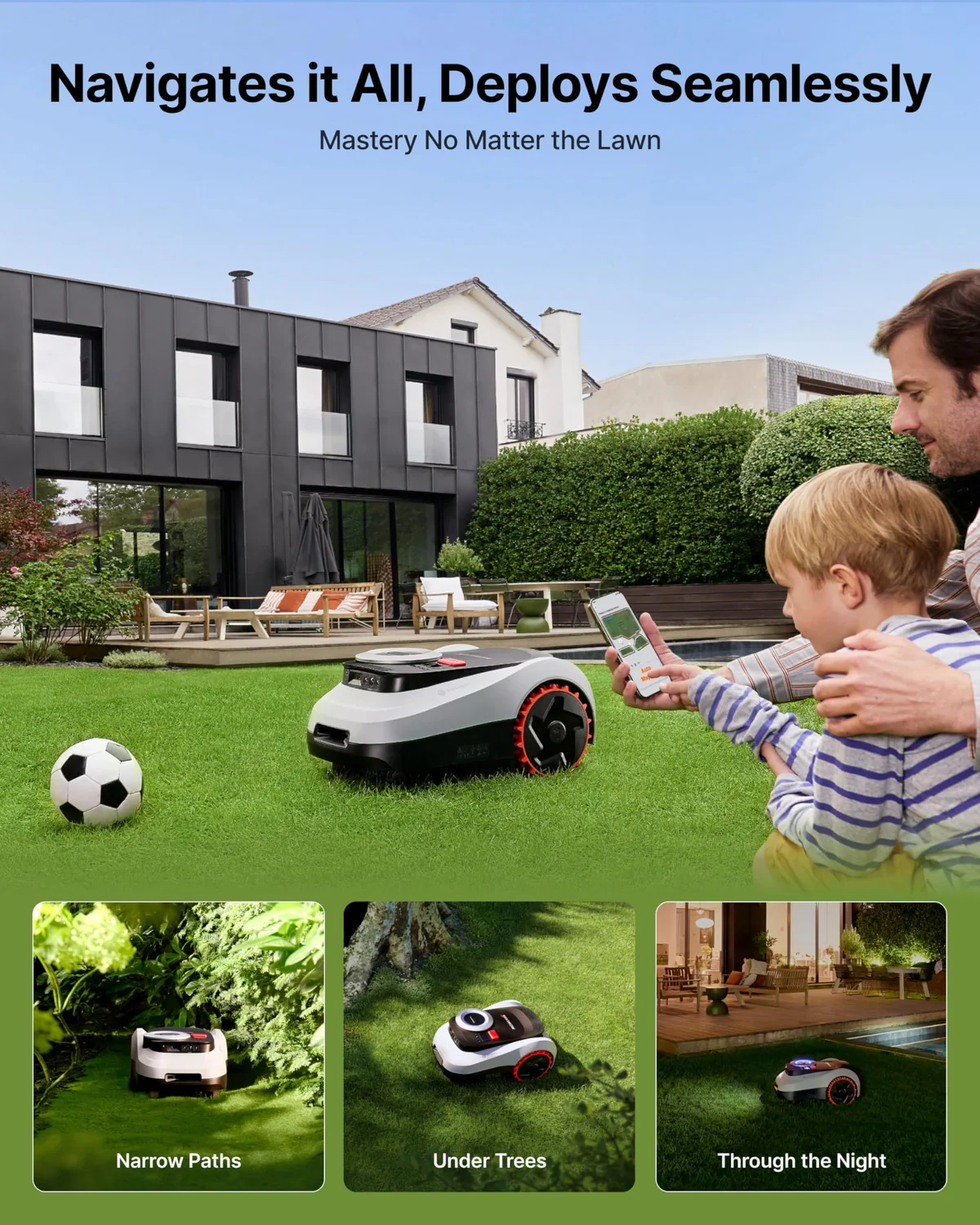
The i215 scans stable surroundings with solid-state LiDAR and uses vision to recognize obstacles. Trees, fences, buildings, and beds can become useful navigation structure rather than interference between the mower and a satellite. There is no boundary cable to bury and no local RTK pole to position, although the charging station still needs power, level ground, and a clean approach.
That advantage is strongest in enclosed suburban yards. A horseshoe-shaped lawn beneath trees more than 100 feet tall is an ugly assignment for satellite positioning but a sensible one for LiDAR. The i215 can map such a space, divide it into zones, follow systematic paths, return to charge, and continue later. Its 0.37-acre rating also gives it more scheduling headroom than the i210’s 0.25-acre ceiling.
LiDAR changes the dependency rather than abolishing it. Stable, distinctive surroundings help the i215 orient itself; a broad and nearly featureless field gives it less useful geometry. Automatic mapping also deserves supervision near steps, retaining walls, pools, drainage channels, roads, and other hazardous edges because the mower has no dedicated downward-facing cliff sensor. A successful first lap is an invitation to refine the map, not permission to stop watching.
The other cost is traction. The i215 can climb a straight slope more confidently than it can traverse one. Its advertised 45% grade is about 24°, but damp grass, leaves, loose soil, abrupt paving transitions, and sideways travel can expose the rear-drive chassis before that theoretical ceiling. Off-road tread does not make it an AWD mower.
The i210’s third driven wheel is more than a sticker
The i210 AWD has two main drive wheels and a powered concentric third wheel that joins the work when needed. The arrangement permits tight turns without dragging an idle caster across the turf, while giving the mower another way to reverse or change its approach when a hole, rut, wet patch, or sunken paving block interrupts the route.
That hardware makes the i210 the better ground machine. It is more credible on uneven paving, thick St. Augustine, moderate slopes, shallow depressions, and transitions that can leave the i215 spinning. It still cannot float over mud or climb out of every crater. Tall wet grass can lift the chassis away from firm ground, and repeated trouble spots should be filled rather than preserved as an AWD demonstration course.
The compromise sits above the mower. Network RTK can provide accurate wire-free positioning without erecting the included antenna where service and reception cooperate, but trees and buildings still matter. Camera assistance can bridge some weak-signal areas; it cannot turn dense canopy into open sky. The bad version of this ownership story includes aborted schedules, missed patches, boundary drift, and a machine waiting for a position fix despite having plenty of traction.
The i210 also asks more patience near its acreage limit. Its rated 0.25 acre describes the lawn it can maintain through repeated mowing, charging, and resuming, while its claimed coverage per charge is only about 2,690 square feet. That is normal robot-mower behavior, but it leaves less room for divided zones, inefficient turns, narrow working windows, or an isolated front lawn that cannot reach the dock.
Neither mower finishes the border
Both machines use a narrow 7.1-inch cutting system set inside the body. The i215 carries six pivoting blades and offers a 2-to-4-inch range; the i210 uses five blades and a manually adjusted 2-to-3.6-inch range. Frequent light cuts can leave an orderly, freshly maintained lawn, but neither is meant to recover tall, wet growth in one heroic session.
Flush paving lets a wheel overlap the edge and brings the blades closer to the boundary. Fences, walls, raised beds, trunks, and tight corners leave a strip for the string trimmer. Vision can increase that unfinished area when the mower swings broadly around an obstacle. The machine may avoid the tree perfectly while leaving a green halo around it.
Both also require ordinary care. Packed clippings need clearing from beneath the deck, pivoting blades must remain free, and wheels, sensors, charging contacts, and the base need attention. Quiet autonomous mowing replaces the weekly walk behind a mower; it does not repeal cleaning, map correction, or occasional retrieval.
The Navimow i215 is the default winner for obstructed residential lawns.
Its antenna-free LiDAR navigation, larger 0.37-acre rating, and useful app control make it the stronger choice when trees and buildings threaten satellite positioning.
Its rear-wheel-drive chassis can slide or dig in on damp transitions, soft ruts, thick turf, and lateral slopes, while hazardous drop-offs demand conservative mapping.
The Navimow i210 AWD is the specialist for small lawns with difficult footing.
Its driven third wheel earns the recommendation on open-sky yards where uneven ground, persistent slopes, or rough transitions are more threatening than weak positioning.
Dense tree cover can disrupt its RTK-dependent navigation, and its 0.25-acre rating may require several charge cycles even on a lawn that officially fits.
Navimow i215 LiDAR
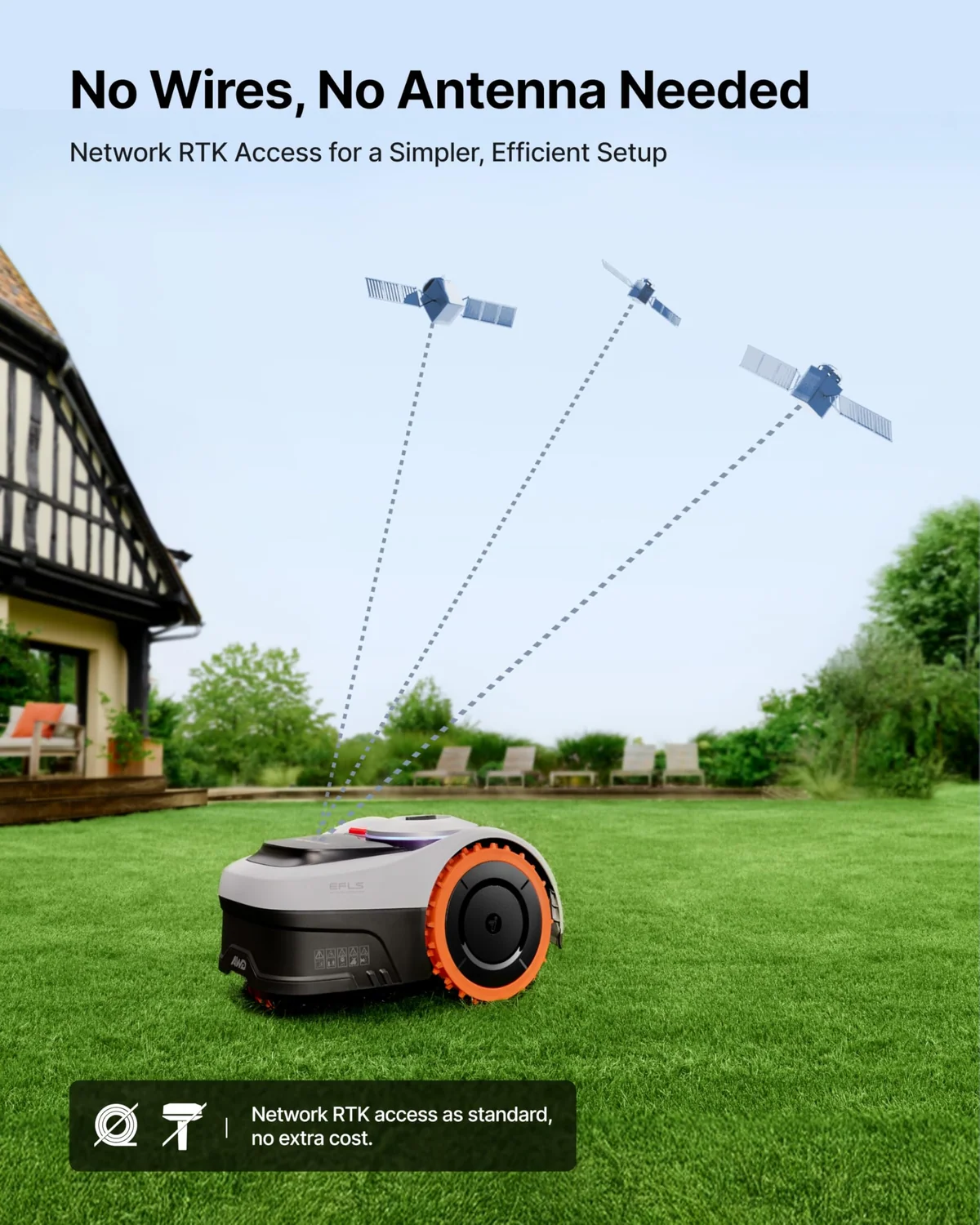
Segway Navimow i210 AWD Robot
Let the hardest part of the yard cast the deciding vote
Choose the i215 for blocked sky
Pick the i215 when most of the grass sits beneath mature trees, beside tall walls, around several buildings, or in an enclosed backyard where antenna placement would become the project. It also suits lawns between 0.25 and 0.37 acre, provided the ground is firm and the route between zones remains practical. Its ideal property has visible landmarks, conservative boundaries, manageable slopes, and enough schedule time for automatic charging.
A small open rectangle does not automatically justify LiDAR. Less complicated positioning can already work there, so the i215’s advantage shrinks unless the extra rated area or 4-inch cutting height matters. Buyers comparing navigation methods rather than just these two models can use the guide to RTK, LiDAR, and vision robot mowers to match each system to the yard around it.
Choose the i210 AWD for hostile ground
Pick the i210 when the mowable grass stays within a quarter acre, enough sky remains visible for dependable positioning, and the recurring nuisance is physical: ruts, bumpy paving, thick turf, modest hills, or damp areas that defeat a passive third wheel. Its drivetrain is a meaningful upgrade over older two-wheel Navimows, not a claim that terrain no longer matters.
Measure gates and connecting passages before committing. The i210 calls for at least 27.6 inches of passage width, and a closed gate turns the lawn beyond it into a carry-and-start zone. If the property is both heavily wooded and seriously rough, neither compact Navimow solves both halves cleanly. The broader lists of mowers for poor satellite reception and mowers for steep or uneven ground are better places to widen the search.
Walk away from both when the boundary cannot tolerate error
Virtual boundaries are convenient because they can be edited without digging. They are still software-defined lines interpreted by a moving machine. Neither mower belongs inches from an unprotected pond, road, drop, or valuable flower bed unless there is a generous buffer or a physical barrier. Firmware changes, positioning drift, wheel slip, and an ambitious automatic map can all turn a neat digital edge into the wrong real-world path.
The same caution applies to obstacle avoidance. Larger objects are the easier assignment; small balls, hoses, sticks, pet waste, and low decorations should be cleared before a run. Daylight mowing after dew has dried is kinder to traction, cleaner beneath the deck, and safer for wildlife than sending a quiet robot out overnight.
The final choice is plain. The i215 wins for most complicated residential lawns because dependable location comes before clever wheel drive. The i210 AWD overturns that verdict only when satellite visibility is trustworthy and the ground itself is what keeps lesser mowers from finishing.
Frequently Asked Questions
Does the Navimow i215 need a perimeter wire or RTK antenna?
No, the i215 uses onboard LiDAR and vision for mowing navigation, so it needs neither a buried boundary wire nor a local RTK positioning antenna.
Is the Navimow i210 AWD a four-wheel-drive mower?
No, it uses two main drive wheels plus a powered concentric third wheel that adds traction and steering assistance when needed.
Which Navimow is better beneath trees?
The i215 is the better choice beneath dense tree cover because LiDAR does not depend on the clear satellite visibility that the i210’s RTK positioning needs.
Which model handles rough or damp ground better?
The i210 AWD is better equipped for ruts, uneven transitions, thick turf, and moderate slopes because its third wheel can actively contribute traction.
Can either mower cover its entire rated lawn on one charge?
The acreage figures describe maintainable area rather than guaranteed single-charge coverage, so both may return to the dock and resume during larger jobs.
Will either Navimow eliminate string trimming?
No, flush mowing borders can reduce the leftover strip, but fences, walls, trees, raised beds, and tight corners still require periodic trimming.
Ready to Choose?
Sources (41)
- Amazon listings and customer reviews — Navimow I215 Lidar and Segway Navimow I210 Awd
- Owner reports across r/roboticLawnmowers, r/Navimow_Segway, r/SegwayNavimow and 5 more threads
- Owner and reviewer video, 44 channels
- Walmart listing
- Toptenreviews — Article — www.toptenreviews.com
- Expertreviews — Article — www.expertreviews.co.uk
- Segway — Article — navimow.segway.com
- Trustedreviews — Article — www.trustedreviews.com
- Therobotmower — Article — therobotmower.co.uk
- Navimow — Article — navimow.com
- Trustpilot — Article — www.trustpilot.com
- Pcmag — Article — www.pcmag.com
- Pcworld — Article — www.pcworld.com
- Facebook — Article — www.facebook.com
- Au — Article — segway.com.au
- Lifehacker — Article — lifehacker.com
- Theverge — Article — www.theverge.com
- Maison Et Domotique — Article — www.maison-et-domotique.com
- Au — Article — roboticmower.com.au
- Lowes — Article — www.lowes.com
- Techadvisor — Article — www.techadvisor.com
- Homedepot — Article — www.homedepot.com
- Tv — Article — www.stuff.tv
- Cnygreenteam — Article — cnygreenteam.com
- Outdoor Usa — Article — outdoor-usa.com
- Easylawnmowing — Article — www.easylawnmowing.com
- Protoolreviews — Article — www.protoolreviews.com
- Homebuilding — Article — www.homebuilding.co.uk
- Techradar — Article — www.techradar.com
- Gizmodo — Article — gizmodo.com
- Suncolawns — Article — shop.suncolawns.com
- Smartyardnw — Article — smartyardnw.com
- the Ambient — Article — www.the-ambient.com
- Outdoorica — Article — outdoorica.com
- T3 — Article — www.t3.com
- Trustpilot — Article — ie.trustpilot.com
- Homeandsmart — Article — www.homeandsmart.de
- Basic Tutorials — Article — basic-tutorials.com
- Smarthomeexplorer — Article — www.smarthomeexplorer.com
- Tweakers — Article — tweakers.net
- Pcwelt — Article — www.pcwelt.de