The MOVA LiDAX Ultra 1000 wins because the Ultra 2000 doubles the promise, not the mower.
Buy the LiDAX Ultra 1000 for most suitable small lawns because the Ultra 2000 retains the same narrow deck, rear-wheel-drive chassis and vulnerable front casters while asking its modestly longer battery to maintain twice the mapped area.
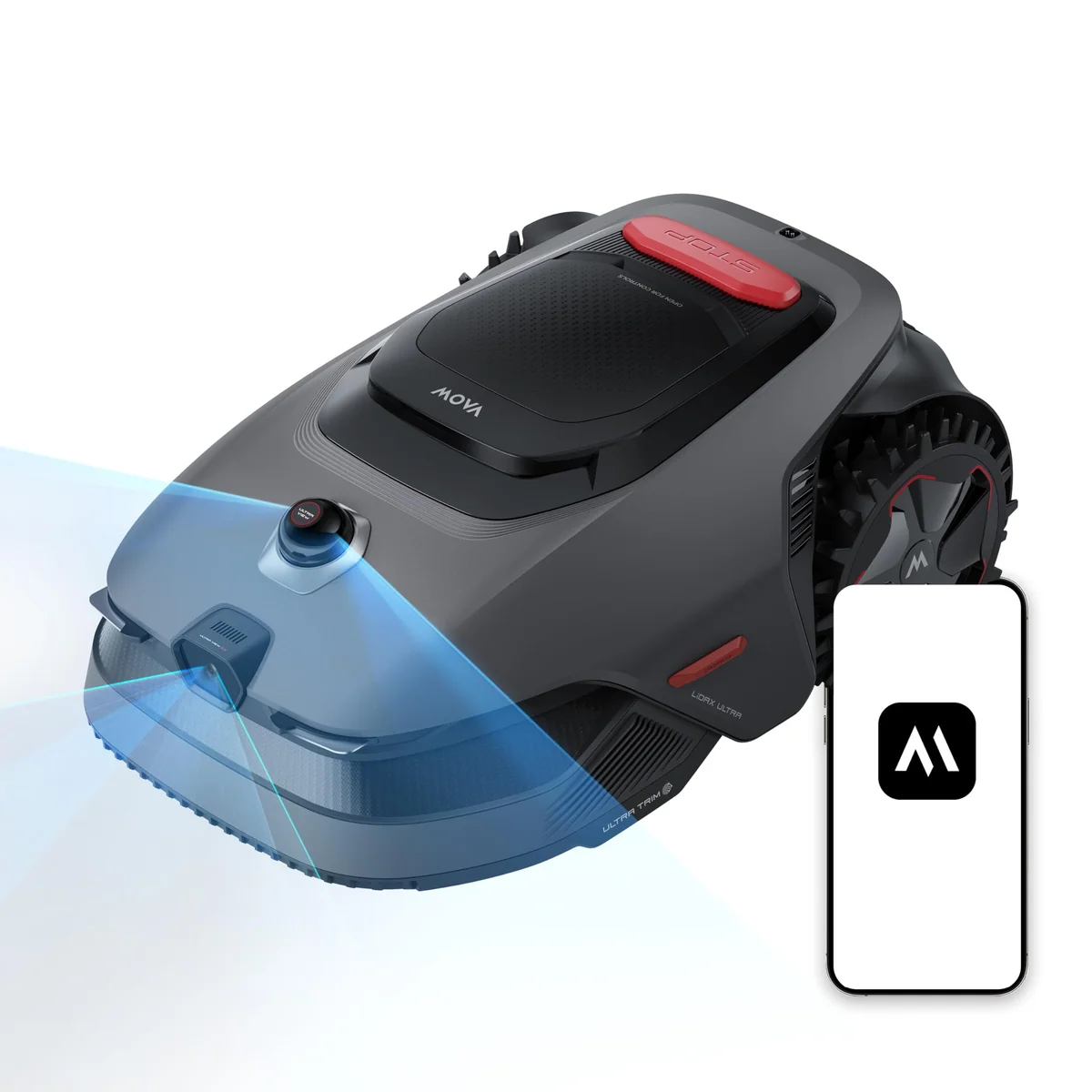
MOVA LiDAX Ultra 1000
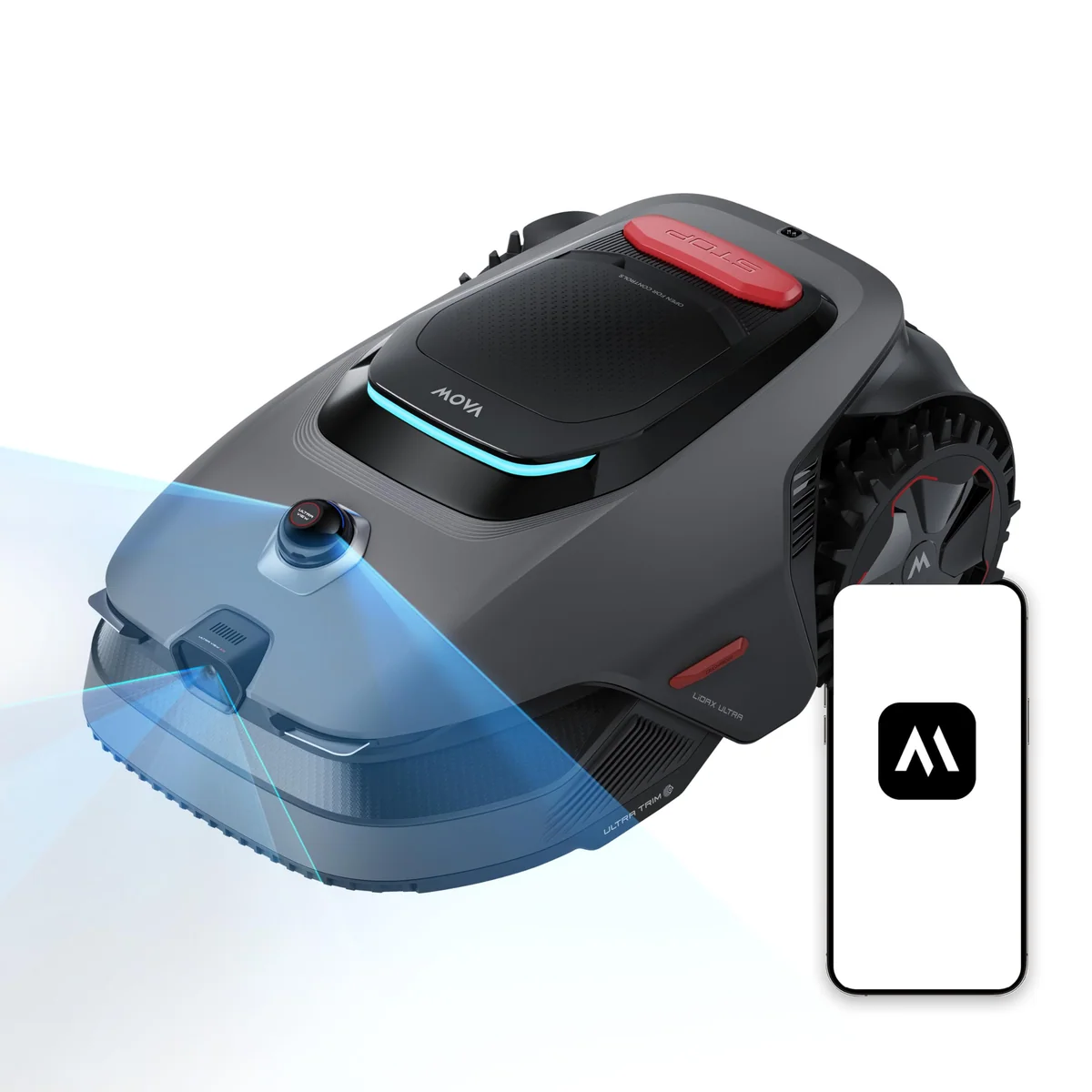
MOVA LiDAX Ultra 2000 Robot
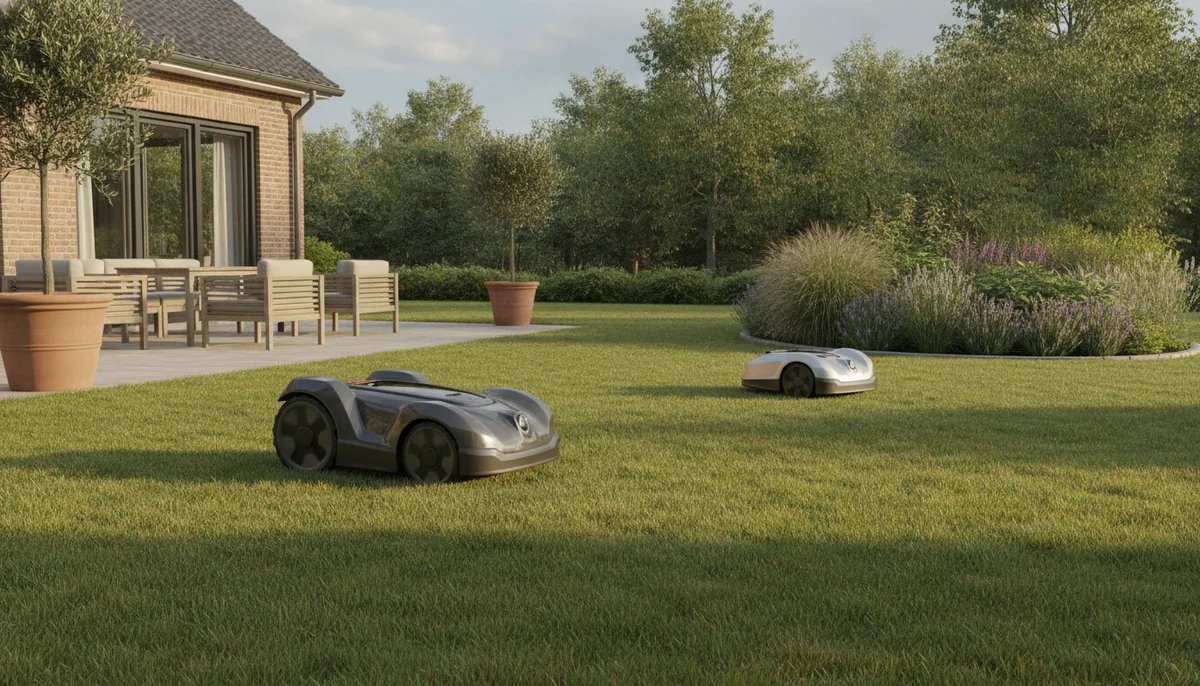
The number on a MOVA LiDAX Ultra mower is easier to understand as a software allowance than as a measure of muscle. The Ultra 1000 accepts up to 0.25 acre of mapped grass. The Ultra 2000 raises that ceiling to 0.5 acre and adds 4G connectivity, but it does not become the wide, four-wheel-drive mower that the larger number may suggest.
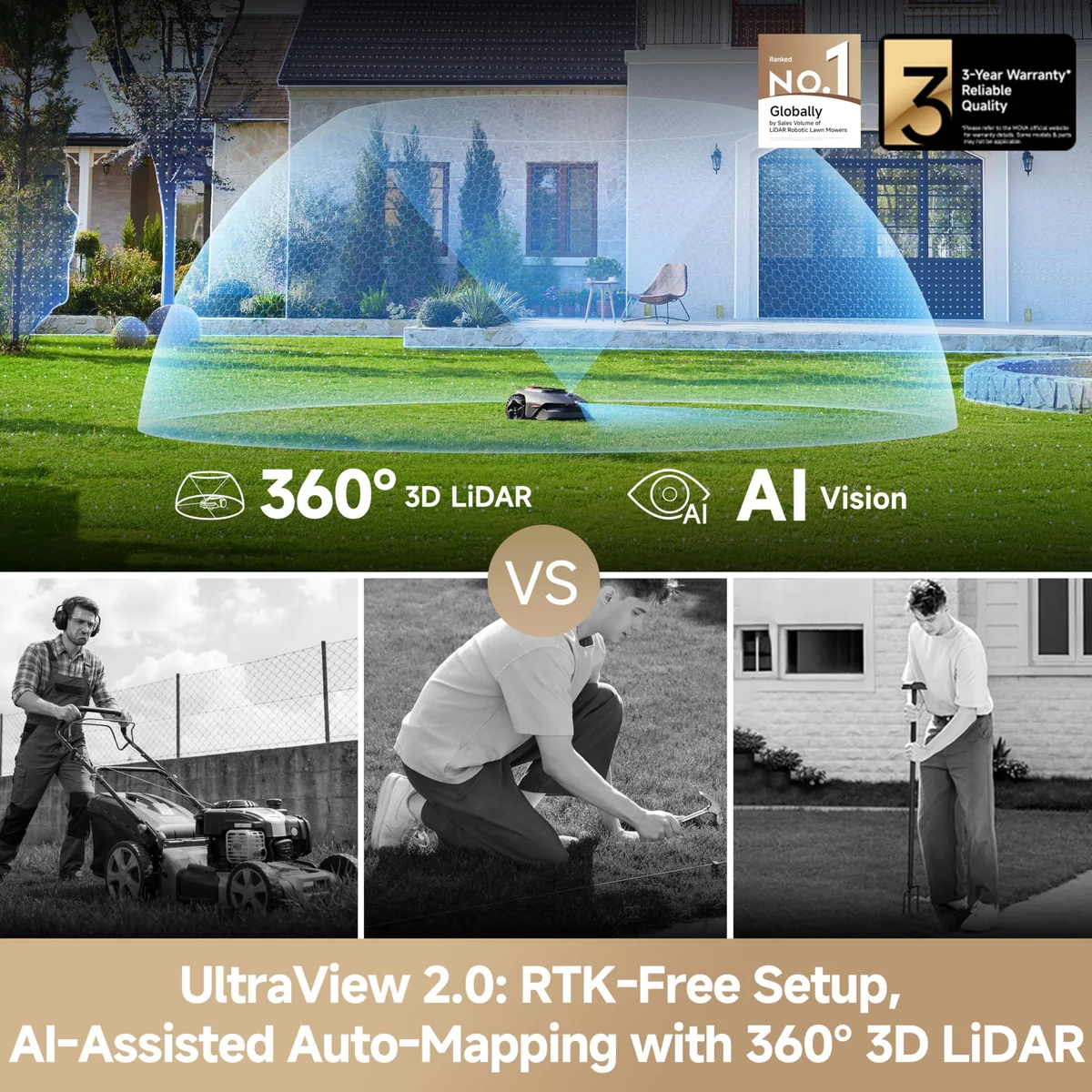
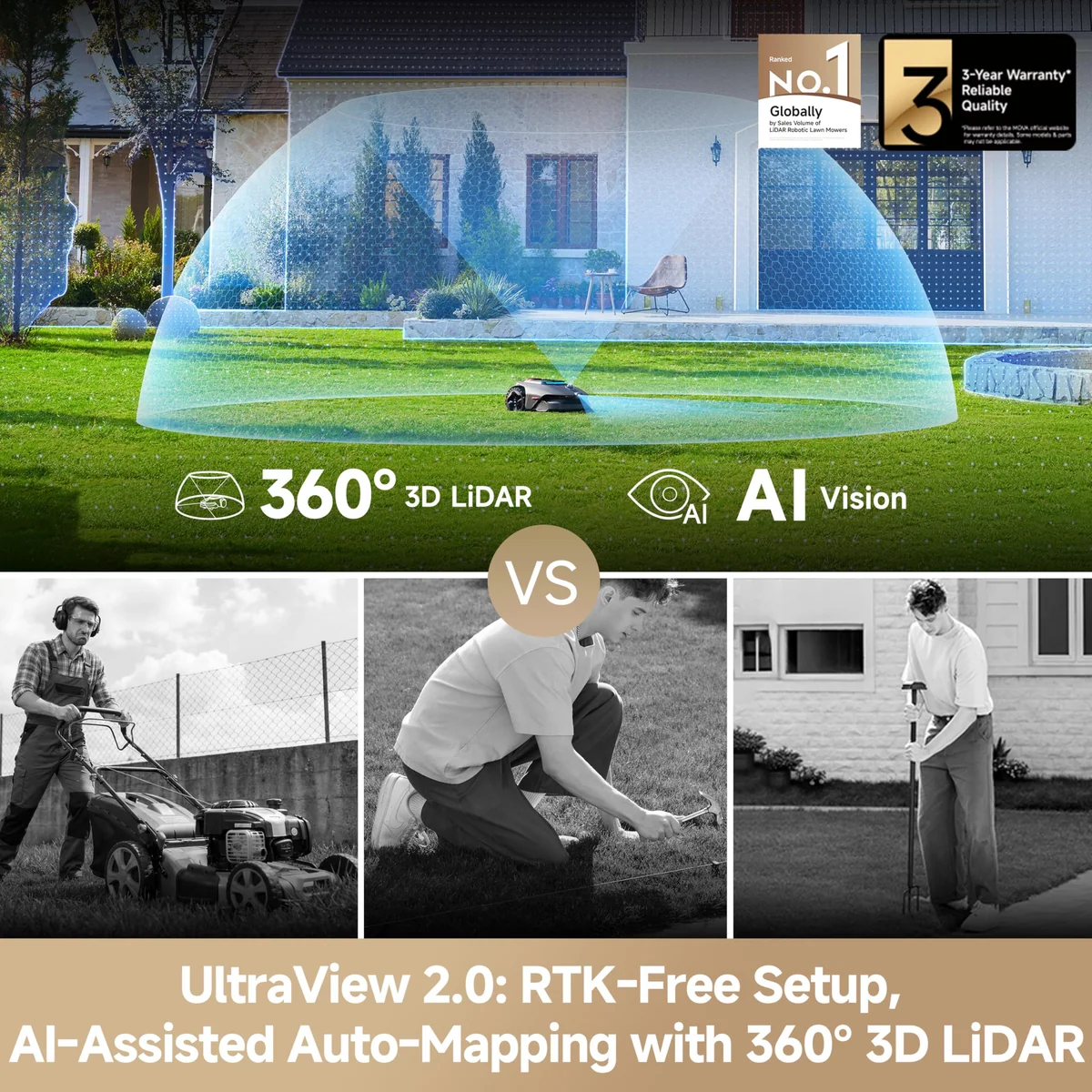
Both machines navigate without a perimeter wire or an RTK antenna. Both combine 360-degree LiDAR with a camera, cut orderly lanes with a 7.9-inch single disc and drive through the rear wheels while two passive casters carry the nose. Both offer a 1.2–3.9-inch electronic cutting range, two maps and extensive zone controls. The Ultra 2000 stretches mowing endurance from roughly 60–80 minutes to 70–90 minutes, which is useful but nowhere near a doubling of productive capacity.
That makes the Ultra 1000 the sensible choice when either mower fits. It provides the navigation, quiet maintenance cut and sophisticated app that make this family attractive without paying for unused map area. The Ultra 2000 earns consideration only after the actual grass exceeds the smaller model’s map limit, and only when that extra lawn is firm, smooth and available for several quiet mowing and charging cycles.
Neither model is a shortcut around difficult terrain. A caster caught in sand, a rut or an abrupt transition stops the same way on both machines, while the driven wheels can dig into the turf behind it. The larger map allowance merely gives the Ultra 2000 more opportunities to meet the wrong patch of ground.
MOVA LiDAX Ultra 1000
MOVA LiDAX Ultra 2000 Robot
At a Glance
| Feature | Editor's Pick MOVA LiDAX Ultra 1000 | MOVA LiDAX Ultra 2000 Robot |
|---|---|---|
| Price Range | $500–$1,000 | $1,000–$1,500 |
| Cutting height | 1.2–3.9 inches | — |
| Recommended lawn size | 0.25 acre | — |
| Cutting width | 7.9 inches | — |
| Check Price on Amazon | Check Price on Amazon |
The number changes more than the mowing hardware
The LiDAX Ultra 1000 is the better buy for most suitable lawns.
It delivers the family’s antenna-free navigation, tall cutting range and detailed zone control without charging extra for capacity a genuinely small lawn will never use.
Its passive front casters can strand it on soft ground and abrupt seams, while the narrow cutting disc may need much of a day to maintain a complicated lawn near the quarter-acre limit.
The Ultra 1000 belongs on firm, established turf with gentle transitions and enough capacity margin that obstacles do not turn the maximum map size into a daily endurance test. In that setting, it can work quietly in the background, return to charge and resume without requiring an antenna to see the sky. Trees, neighboring buildings and a shaded dock are reasons to prefer its LiDAR approach.
The cut is methodical rather than fast. Its three small blades shave frequent light growth in structured lanes, so the lawn looks best when the mower runs several times a week instead of confronting a tall weekend crop. A complete job can involve several charging stops, but that is tolerable when nobody needs the whole yard cleared by lunchtime. The full strengths and ownership cautions are covered in the LiDAX Ultra 1000 review.
The LiDAX Ultra 2000 is the capacity fix, not the performance upgrade.
Its larger map allowance and integrated 4G functions make sense when a smooth lawn will not fit inside the Ultra 1000’s quarter-acre software ceiling.
The same 7.9-inch deck and rear-drive chassis make half an acre a long assignment, and 4G can report a stranded mower without freeing it.
The Ultra 2000 is easy to mistake for an all-terrain step up, especially when the family also contains newer AWD machines with wider dual-disc decks. This model is not one of them. It is the original rear-wheel-drive Ultra 2000, and its roughly 70–90-minute mowing window is only a small endurance gain over the Ultra 1000.
Its real advantages are permission to map more grass and a cellular connection for remote status, alerts, location and camera access. Those features matter on a larger connected property, but they do not accelerate the narrow passes or improve physical recovery. A branch in a wheel, a caster in a depression or a failed return through a tight side passage still calls for a person.
| Decision point | LiDAX Ultra 1000 | LiDAX Ultra 2000 |
|---|---|---|
| Maximum mapped area | 0.25 acre | 0.5 acre |
| Typical mowing window | About 60–80 minutes | About 70–90 minutes |
| Cutting system | 7.9-inch single disc | 7.9-inch single disc |
| Drive system | Rear-wheel drive with passive front casters | Rear-wheel drive with passive front casters |
| Navigation | 360° LiDAR and AI vision | 360° LiDAR and AI vision |
| Cutting height | 1.2–3.9 inches | 1.2–3.9 inches |
| Cellular functions | Require the optional Link Module and applicable service | 4G connectivity is included with this model, subject to ongoing service terms |
| Best reason to choose it | The complete LiDAR experience for a genuinely small lawn | A simple lawn that cannot fit inside the smaller map allowance |
The lawn matters more than the capacity badge
The decisive inspection happens at ground level. Firm grass, broad turns and continuous slopes let either mower concentrate on cutting. Sand, damp loam, exposed roots, eroded seams and small ledges ask the swiveling front wheels to do work they were not designed to do. The advertised 45% slope rating is about 24 degrees, but even a gentler incline can cause trouble when the mower must turn across it or recover from a divot.
LiDAR solves a different problem. It gives both MOVAs a stable physical map beneath trees and beside buildings, where an RTK mower may struggle to maintain a clean satellite view. It also supports systematic mowing in difficult light. Compared with the vision-only eufy E15, either MOVA offers a broader cutting-height range and more controllable mapping, zones and mowing patterns.
The navigation system still depends on a careful first map. A rectangular lawn with obvious borders can be commissioned quickly, while curves, beds, ditches and shared grass often need manual steering around the perimeter. Fine boundary correction is less graceful than it should be, so an inaccurate outline can mean repeating work rather than dragging a point into place. The larger model becomes especially unforgiving at its limit because a map that slightly exceeds half an acre may be rejected instead of saved.
Do not pay for “zero edge” without understanding the bargain
The offset UltraTrim disc reaches close to raised boundaries and can straddle correctly mapped flush paving, but neither model eliminates trimming around walls, corners, tree bases or hazardous drop-offs. More importantly, UltraTrim makes its outward pass at about 1.2 inches regardless of the main deck height. On grass maintained near three or four inches, the result can be a pale, scalped border around an otherwise healthy lawn.
Turning UltraTrim off preserves the chosen height and leaves more work for a string trimmer. That is the honest choice for tall fescue and other long-cut turf. The feature is useful when a low border suits the lawn, not a universal reason to choose one model over the other because it behaves the same way on both.
The Ultra 2000 earns its place in a narrow strip of lawn sizes
The step up becomes rational when careful measurement shows that the grass will not fit inside the Ultra 1000’s hard map ceiling. Lot size is not enough; buildings, paving, beds and driveways must be removed from the calculation. The acreage guide explains why a mower’s coverage rating is a ceiling rather than a promise of quick completion.
Even then, the extra area should be uncomplicated and the schedule should have room to breathe. Automatic recharge and resume can make a six-hour assignment hands-off, but it cannot make the assignment short. A busy family lawn that must be available at predictable times may be better served by a wider, faster machine than by asking the Ultra 2000 to spend most of the day drawing narrow stripes.
MOVA LiDAX Ultra 1000

MOVA LiDAX Ultra 2000 Robot
Choose by the problem you need the mower to avoid
Choose the Ultra 1000 for a small, forgiving lawn
Smart Lawn Bots puts the Ultra 1000 first for firm turf comfortably below 0.25 acre, particularly where trees or buildings make antenna placement unattractive. It is the better value when slow background mowing is acceptable and the first map can leave conservative margins around troublesome transitions.
Choose the Ultra 2000 only for more map and cellular reach
The Ultra 2000 fits a smooth lawn that genuinely exceeds the smaller model’s map allowance but remains comfortably below half an acre. Its 4G connection is useful when Wi-Fi does not cover the property, provided someone can still reach the mower when an alert describes a physical problem.
Choose neither for a yard that fights the chassis
Roots, soft slopes, ruts and abrupt level changes call for more ground tolerance rather than more MOVA map capacity. The Segway Navimow i215 LiDAR is the stronger antenna-free alternative when faster completion and better tolerance of rooty terrain matter more than close edge cutting or a 3.9-inch maximum height.
Walk away from both near their advertised limits
A complicated quarter acre already stretches the Ultra 1000, while a complicated half acre asks too much of the Ultra 2000’s narrow disc and frequent charging. Buyers dealing with meaningful grades, loose soil or scarred ground should start with the site’s mowers for steep and uneven yards rather than treating a larger coverage number as traction.
The Ultra 1000 is the winner because it asks the right-sized lawn to accept this chassis’s limitations; the Ultra 2000 asks nearly the same machine to carry twice the expectation.
Frequently Asked Questions
Is the MOVA LiDAX Ultra 2000 an AWD mower?
No, this LiDAX Ultra 2000 is a rear-wheel-drive, single-disc model and should not be confused with MOVA’s wider AWD versions.
Can the Ultra 2000 mow half an acre on one charge?
No, half an acre is its maximum mapped area and a large job requires repeated mowing, charging and resuming cycles.
Is the Ultra 2000 worth choosing for a lawn below a quarter acre?
Usually not, because the Ultra 1000 provides the same core navigation, drive layout, cutting width and height range for a lawn that fits comfortably inside its map limit.
Do either of these MOVA mowers need a perimeter wire or RTK antenna?
No, both models map and localize with 360-degree LiDAR and AI vision, although each still needs a powered dock and a carefully prepared virtual map.
Can either mower maintain separate front and back lawns?
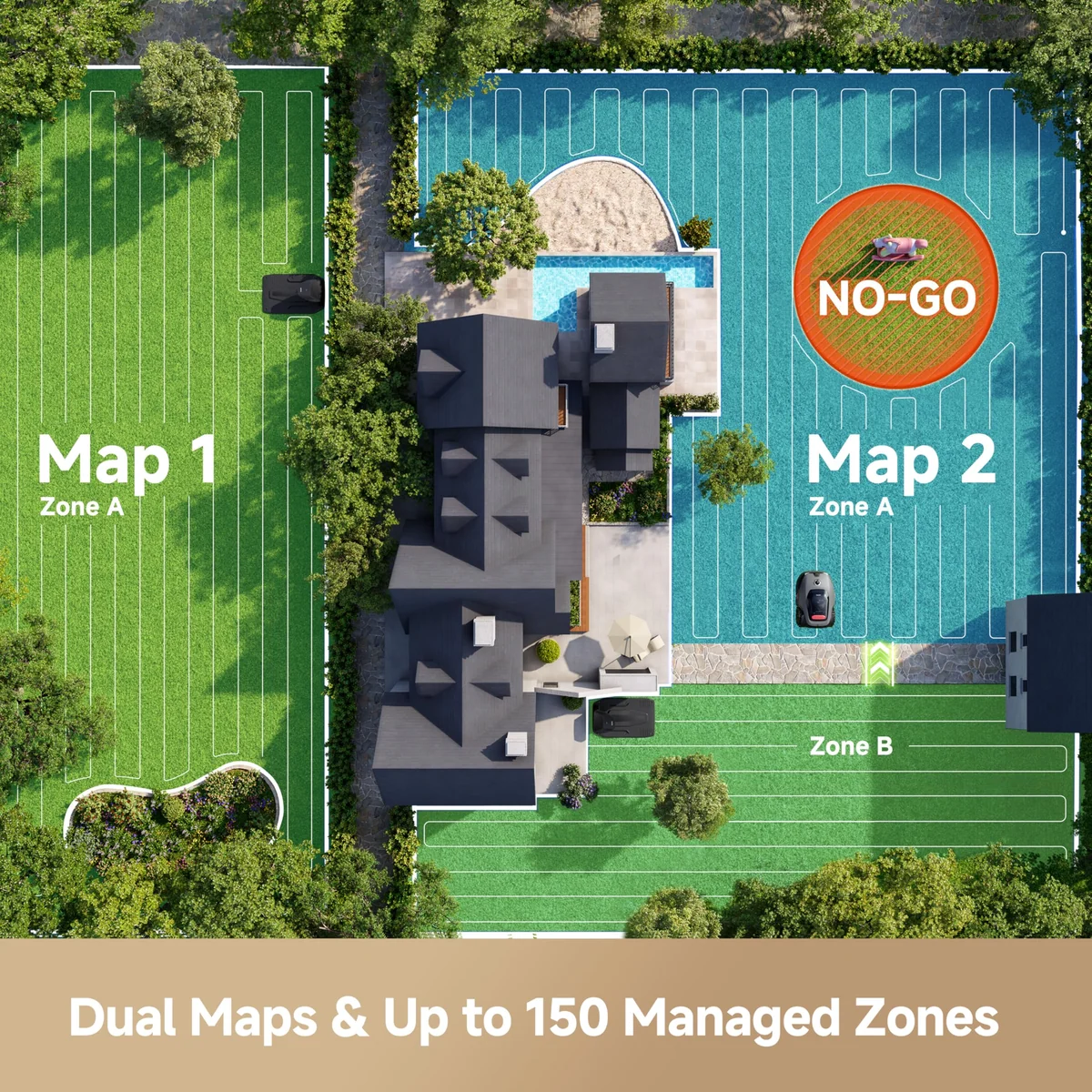
Both can store two maps, but disconnected lawns may still require carrying the mower, keeping a connecting route open or providing a compatible charging arrangement.
Does 4G make the Ultra 2000 fully autonomous at a remote property?
No, cellular access can provide status, tracking, camera views and alerts, but a trapped wheel or triggered safety sensor still needs someone at the property.
Ready to Choose?
Sources (30)
- Amazon listings and customer reviews — Mova Lidax Ultra 1000 and Mova Lidax Ultra 2000
- Owner reports across r/roboticLawnmowers, r/lawnmowers, r/automower and 2 more threads
- Owner and reviewer video, 48 channels
- Walmart listing
- Tech — Article — us.mova.tech
- Freshlycharged — Article — freshlycharged.com
- Facebook — Article — www.facebook.com
- Slashgear — Article — www.slashgear.com
- Newatlas — Article — newatlas.com
- Tech — Article — au.mova.tech
- at — Article — www.galaxus.at
- Basic Tutorials — Article — basic-tutorials.com
- Appleinsider — Article — appleinsider.com
- Notebookcheck — Article — www.notebookcheck.net
- Maison Et Domotique — Article — www.maison-et-domotique.com
- Au — Article — www.gadgetguy.com.au
- MOVA Tech — Article — us.forum.mova-tech.com
- Au — Article — www.techguide.com.au
- Wellbots — Article — www.wellbots.com
- Nytimes — Article — www.nytimes.com
- Novabot — Article — novabot.com
- Techiwant — Article — techiwant.com
- Samsclub — Article — www.samsclub.com
- Heyupnow — Article — community.heyupnow.com
- T3 — Article — www.t3.com
- Tech — Article — uk.mova.tech
- Robocleaners — Article — www.robocleaners.com
- Mowscout — Article — mowscout.com
- Something for Him — Article — something-for-him.com
- Technicallyjeff — Article — technicallyjeff.com