The GOAT O1000 wins the awkward quarter acre; the WORX WR320 only wins when the lawn gets bigger.
Buy the ECOVACS GOAT O1000 LiDAR PRO for a compact, shaded or enclosed lawn, but choose the WORX WR320 only when firm turf and a need to maintain more than a quarter acre outweigh its rougher app, weaker traction and unfinished edges.
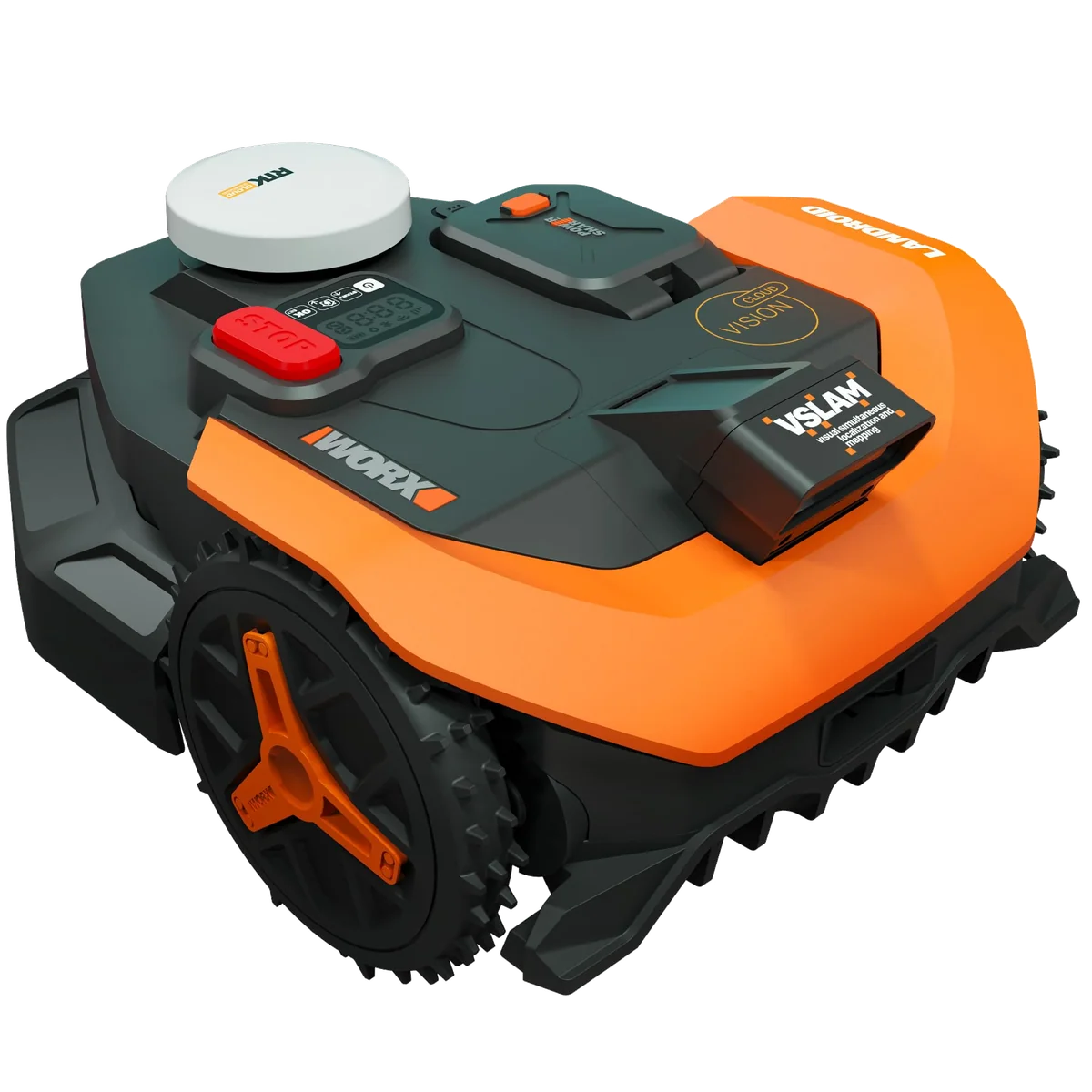
WORX WR320
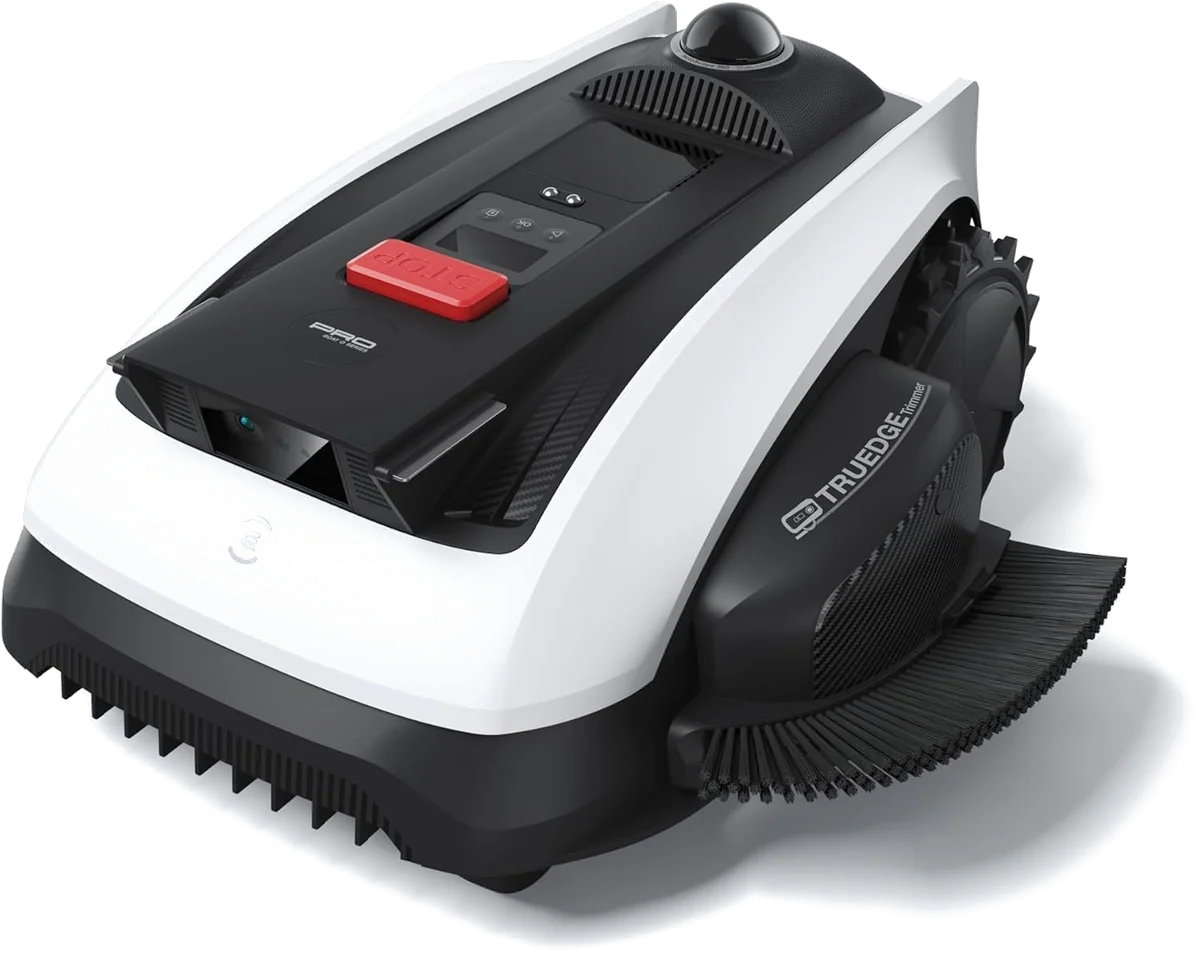
ECOVACS goat O1000 LiDAR Pro
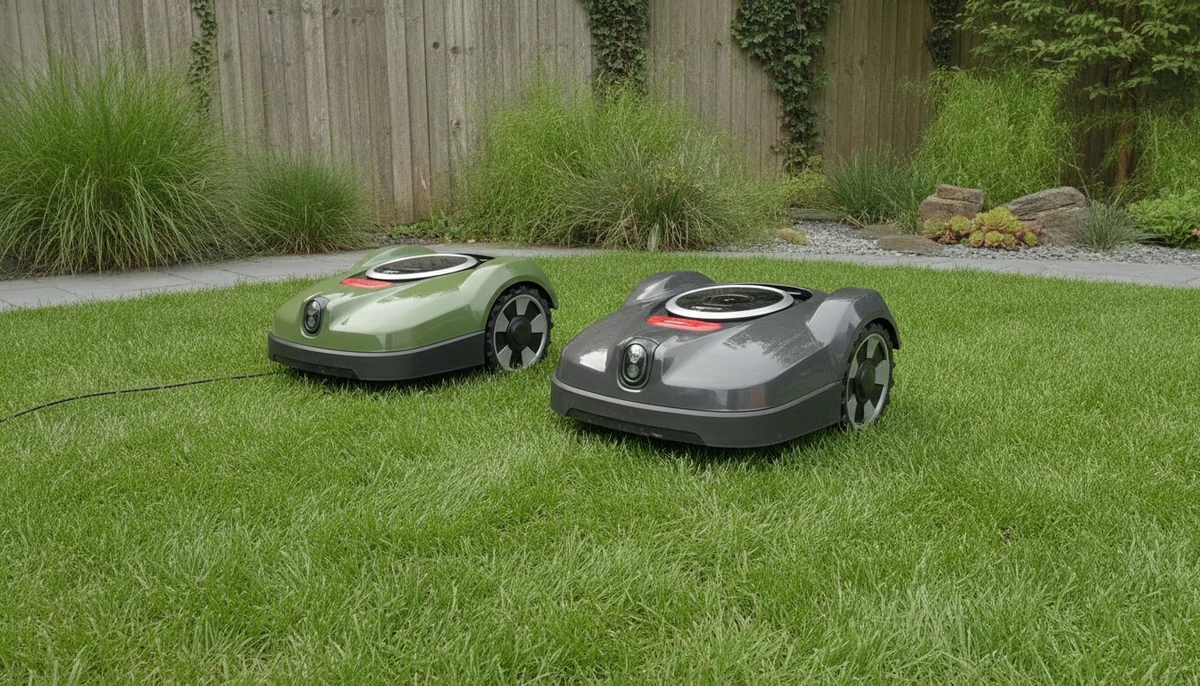
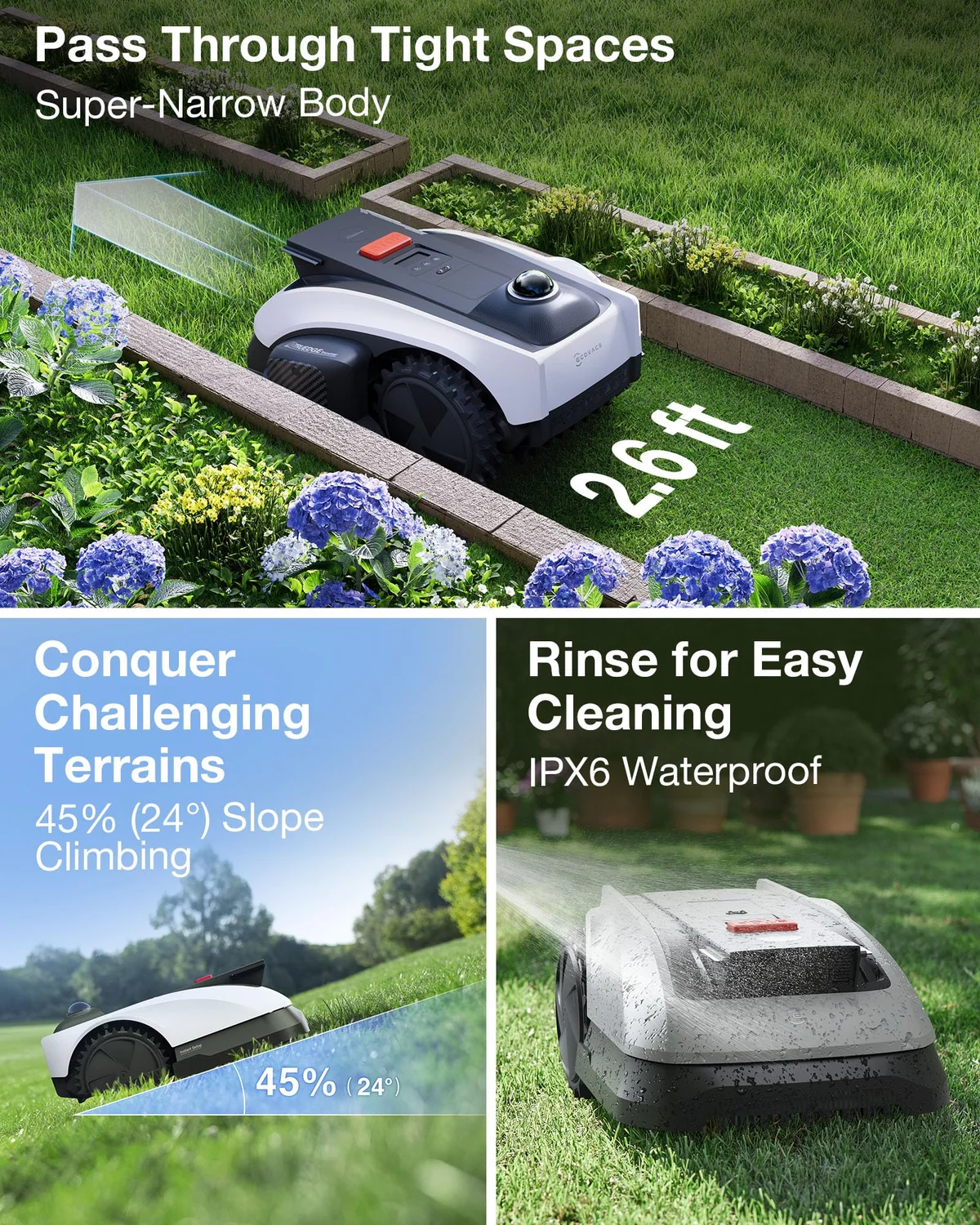
This looks like a contest between LiDAR and cloud RTK, but lawn size makes the first cut. The GOAT O1000 is rated for a quarter acre and built narrowly enough to thread through a 31.5-inch passage. The WR320 stretches the promise to half an acre, then relies on repeated mowing and charging to fulfill it. One is the sharper tool for a small, complicated space; the other is the slower answer to having more grass.
Neither machine needs a buried perimeter wire or a local RTK antenna. ECOVACS carries its positioning hardware onboard, using dual LiDAR and vision to work beside buildings and beneath trees without waiting for a clean view of the sky. WORX receives RTK corrections through the cloud and leans on vision and V-SLAM when shade interferes. That fallback can be effective, but it is not as compelling as choosing navigation that never depended on satellite reception in the first place.
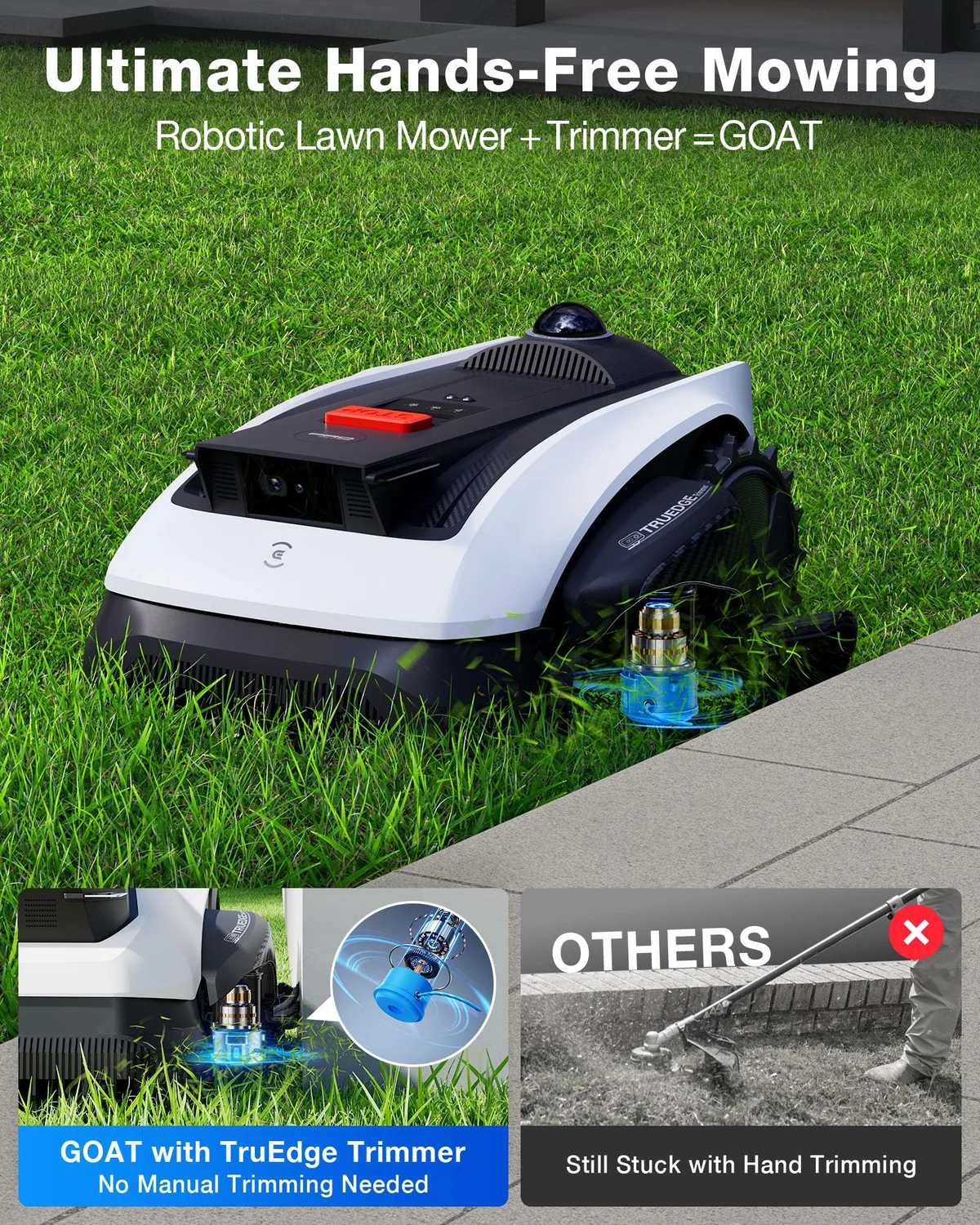
The GOAT wins this comparison because it turns that navigation advantage into a more useful small-yard machine. It mows systematic lanes, fits confined side lawns, works after dark and has a real side-mounted trimmer. The trimmer is also its most inflated promise: fences, raised edges and tight corners still leave visible work, and manual mapping becomes maddening when the property line exists only in a deed.
The WR320 has no equivalent answer for its own weak points. The plain model lacks the optional Cut-to-Zero module and headlights, its two-wheel drive can disturb soft or stressed turf, and its app makes boundary corrections and error recovery feel like unpaid technical support. Its larger rating matters, but only on a firm lawn that lets the mower stay outside without frequent rescue.

WORX WR320
ECOVACS goat O1000 LiDAR Pro
At a Glance
| Feature | WORX WR320 | ECOVACS goat O1000 LiDAR Pro |
|---|---|---|
| Price Range | $1,000–$1,500 | $500–$1,000 |
| Cutting height | — | 1.18 to 3.15 inches |
| Recommended lawn size | Up to half an acre | Up to 0.25 acre |
| Cutting width | — | 8.66 inches |
| Check Price on Amazon | Check Price on Amazon |
The better robot is the one that stays out there
The GOAT O1000 is the better small-yard mower.
Its onboard LiDAR, narrow chassis and orderly cutting make it the stronger choice below a quarter acre when trees, walls or tight access undermine satellite-guided alternatives.
Its separate TruEdge pass still leaves fences, raised borders and inside corners for the handheld trimmer, while its rear drive and small casters dislike soft or broken ground.
The ideal GOAT lawn has boundaries the mower can see: a driveway, fence, house wall or clear bed. Automatic mapping can then turn the first setup into a useful map without much theatre. Zones can receive different cutting heights and directions, paths can connect areas, and the mower returns to its dock before resuming an unfinished task.
An invisible line between neighboring lawns exposes the weaker half of the experience. That boundary must be driven manually with a single virtual joystick that makes straight travel unnecessarily difficult. Tiny caster movements become bends in the saved map, and correcting them can mean another lap around the yard rather than a clean edit on the screen. LiDAR solves positioning; it does not rescue clumsy mapping software.
Once mowing begins, the O1000 behaves like the premium machine its sensor stack suggests. Parallel lanes leave an even surface, obstacle avoidance keeps reasonable distance from toys and furniture, and the compact body reaches strips that force larger mowers into awkward turns. Its 8.66-inch cutting disc is agile rather than fast, so a lawn near the area limit will take several hours and may include a charging stop.
TruEdge earns partial credit. The powered line trimmer can make a long flush sidewalk look substantially more finished than a conventional offset disc can, but it runs as a separate, louder operation. Near a fence, the safety system wants distance from the exact object the trimmer must approach. Inside corners leave nowhere for the chassis to stand, while no-go buffers move the cutting line inward. Expect less weekly trimming, not its disappearance.
Firm ground remains nonnegotiable. The published slope figure does not turn rear-wheel drive and small front casters into an all-terrain chassis. Dry, established grass on a smooth incline is reasonable; wet banks, loose soil, ruts and abrupt transitions are better served by an AWD mower.

The WR320 is the coverage specialist with conditions attached.
The WR320 earns second place by maintaining up to half an acre without buried wire or a local antenna, particularly on firm turf with clear visual boundaries.
The app turns map edits and error recovery into chores, and two-wheel drive can spin, dig or ask for rescue on soft turf and awkward transitions.
WORX gives the larger lawn a convincing cut. Parallel, checkerboard and diamond routes replace random wandering with deliberate lines, and the mower is quiet enough to work during the day without owning the patio. Automatic mapping can also be excellent where paving, fencing or beds make the perimeter obvious.
The half-acre badge needs translating. It describes how much maintained lawn the WR320 can service through a schedule, not what it will finish on one battery or necessarily in one day. Charging interruptions are normal, and complicated geometry adds time. The removable PowerShare battery is a genuine advantage because a compatible spare can shorten downtime and may already fit other WORX tools.
Cloud RTK removes the antenna installation that makes many wire-free mowers awkward. Vision and V-SLAM can preserve navigation beneath partial tree cover, yet performance around trees varies enough that a shaded property should not be bought on faith. The GOAT’s onboard LiDAR is the more direct solution when poor satellite reception defines the yard.
The app is the reason the WR320 finishes behind it. Changing a boundary means walking with the mower and driving the revision instead of drawing it. Stale errors, lost positioning links, height settings that reset and overcomplicated rescue routines add friction after the hardware has already shown that it can cut well. Removing a weekly chore loses much of its appeal when the replacement chore is troubleshooting outside.
Traction sets the final boundary. Two driven wheels are adequate on firm, reasonably smooth turf and moderate grades, but narrow aggressive tires can pull runners or dig into stressed grass when they spin. The WR320 can cover more ground than the GOAT; it cannot make that ground more suitable for a robot.
| Decision | GOAT O1000 LiDAR PRO | WORX WR320 | Winner |
|---|---|---|---|
| Rated lawn size | Up to 0.25 acre | Up to 0.5 acre | WR320 |
| Trees and buildings | Onboard dual LiDAR avoids the clear-sky problem | Cloud RTK with vision and V-SLAM fallback | GOAT O1000 |
| Narrow access | Rated for passages as narrow as 31.5 inches | Larger coverage is the design priority | GOAT O1000 |
| Edge cleanup | Dedicated trimmer helps on long, flush borders | Plain model lacks the Cut-to-Zero module | GOAT O1000 |
| Battery flexibility | Automatic docking and resumption | Removable PowerShare battery | WR320 |
| Rough or soft ground | Rear drive and small casters are limiting | Two-wheel drive can slip and dig | Neither |
Smart Lawn Bots gives the comparison to the GOAT O1000 because the quarter-acre buyer gets the more convincing navigation system, better access and less border work. The WR320 remains the rational choice when the lawn exceeds that limit, but capacity is not absolution. It still needs the easier property and the more patient owner.

WORX WR320
ECOVACS goat O1000 LiDAR Pro

Draw the lawn before drawing a conclusion
Choose the GOAT O1000 when the grass forms one connected, physically defined area comfortably below a quarter acre. It is particularly persuasive in a shaded side yard, between close buildings or through a narrow passage where an external antenna would be awkward and a larger chassis would waste time turning. Accept that its impressive-looking trimmer reduces cleanup instead of eliminating it.
Choose the WR320 when the maintained area pushes beyond a quarter acre, the turf is firm and the routes between zones are straightforward. It makes the most sense for someone already invested in WORX PowerShare batteries who values systematic cutting more than flawless software. Keep the string trimmer, schedule its work before dusk and expect mapping changes to require another walk outside.
Choose neither for wet slopes, loose soil, deep ruts or fragile runners. Buyers who otherwise like the WORX system should compare the WR320 with the four-wheel-drive WR344. For genuinely difficult terrain in a smaller footprint, the Mammotion LUBA Mini 2 1500H is the more honest alternative, and the steep-hill mower guide explains why a published gradient alone is not enough.
If the GOAT’s LiDAR approach is right but its area limit is wrong, the decision moves to the larger model rather than back to the WR320 by default. The GOAT O1000 and A2000 comparison covers the trade between compact access and the A2000’s wider, faster cutting. Buying a bigger mower for a tiny lawn is wasteful; buying the small one for a lawn it must chase all week is worse.
The final choice is therefore unusually clean. The GOAT O1000 is the winner for the compact, obstructed lawn it was designed to understand. The WR320 wins only when there is more firm, uncomplicated grass than the GOAT should be asked to maintain.
Frequently Asked Questions
Is the GOAT O1000 LiDAR PRO the same mower as the O1000 RTK Care?
No, the LiDAR PRO carries its positioning sensors onboard, while the distinct RTK Care model uses satellite correction and is compared separately in the O1000 LiDAR and RTK guide .
Are the WORX WR320 and WR320.1 identical?
No, ASIN B0GN8KK8XW is the plain WR320 without the Cut-to-Zero module or headlights, while the closely related WR320.1 includes different equipment.
Do either of these robot mowers collect grass clippings?
No, both are maintenance mowers that cut frequently and mulch small clippings back into grass that has already received its initial conventional cut.
Can a boundary be redrawn entirely from the app?
No, both machines require the mower to be driven along important boundary changes, although each app provides additional tools for zones and exclusions.
Ready to Choose?
Sources (24)
- Amazon listings and customer reviews — Worx Wr320 and Ecovacs Goat O1000 Lidar
- Owner reports across r/MammotionTechnology, r/roboticLawnmowers, r/ECOVACSGOATFamily and 1 more threads
- Owner and reviewer video, 47 channels
- Target listing
- Homedepot — Article — www.homedepot.com
- Lowes — Article — www.lowes.com
- Lawncraftsupply — Article — lawncraftsupply.com
- WORX — Article — www.worx.com
- Upzy — Article — www.upzy.com
- Facebook — Article — www.facebook.com
- Tomsguide — Article — www.tomsguide.com
- Trustpilot — Article — www.trustpilot.com
- Bestbuy — Article — www.bestbuy.com
- Newatlas — Article — newatlas.com
- Reviewed — Article — www.reviewed.com
- Robomowlab — Article — robomowlab.com
- ECOVACS — Article — www.ecovacs.com
- Bobvila — Article — www.bobvila.com
- Consumerreports — Article — www.consumerreports.org
- Pcmag — Article — www.pcmag.com
- Smarthomecompared — Article — smarthomecompared.com
- Smarthomeexplorer — Article — www.smarthomeexplorer.com
- Mowscout — Article — www.mowscout.com
- Hunker — Article — www.hunker.com