The WORX WR320 wins unless your lawn can justify the WR344’s four driven wheels.
Buy the WR320 for a firm lawn up to half an acre, and choose the WR344 only when steep banks, ruts or soft transitions make four-wheel drive worth its slower coverage and equally demanding software.
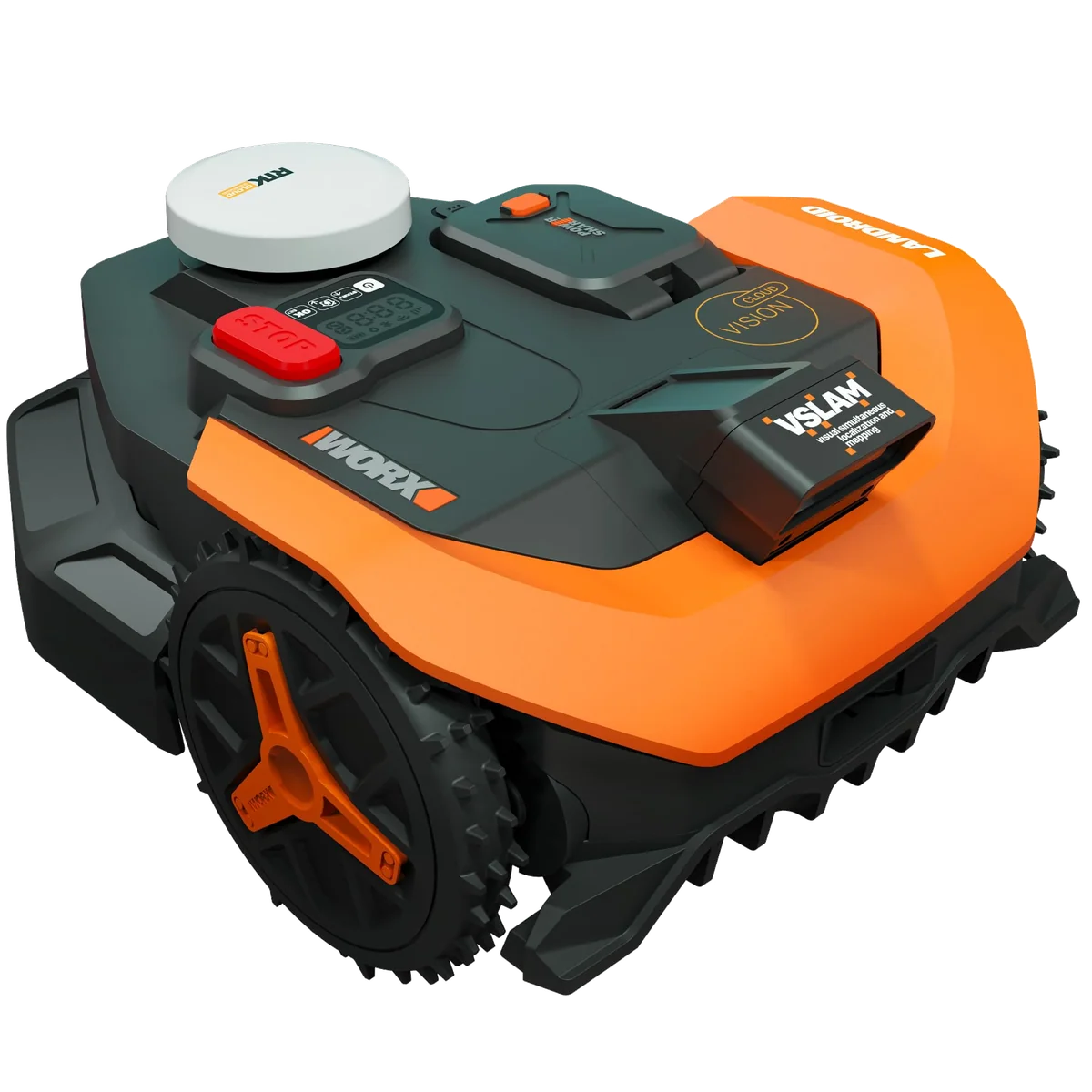
WORX WR320
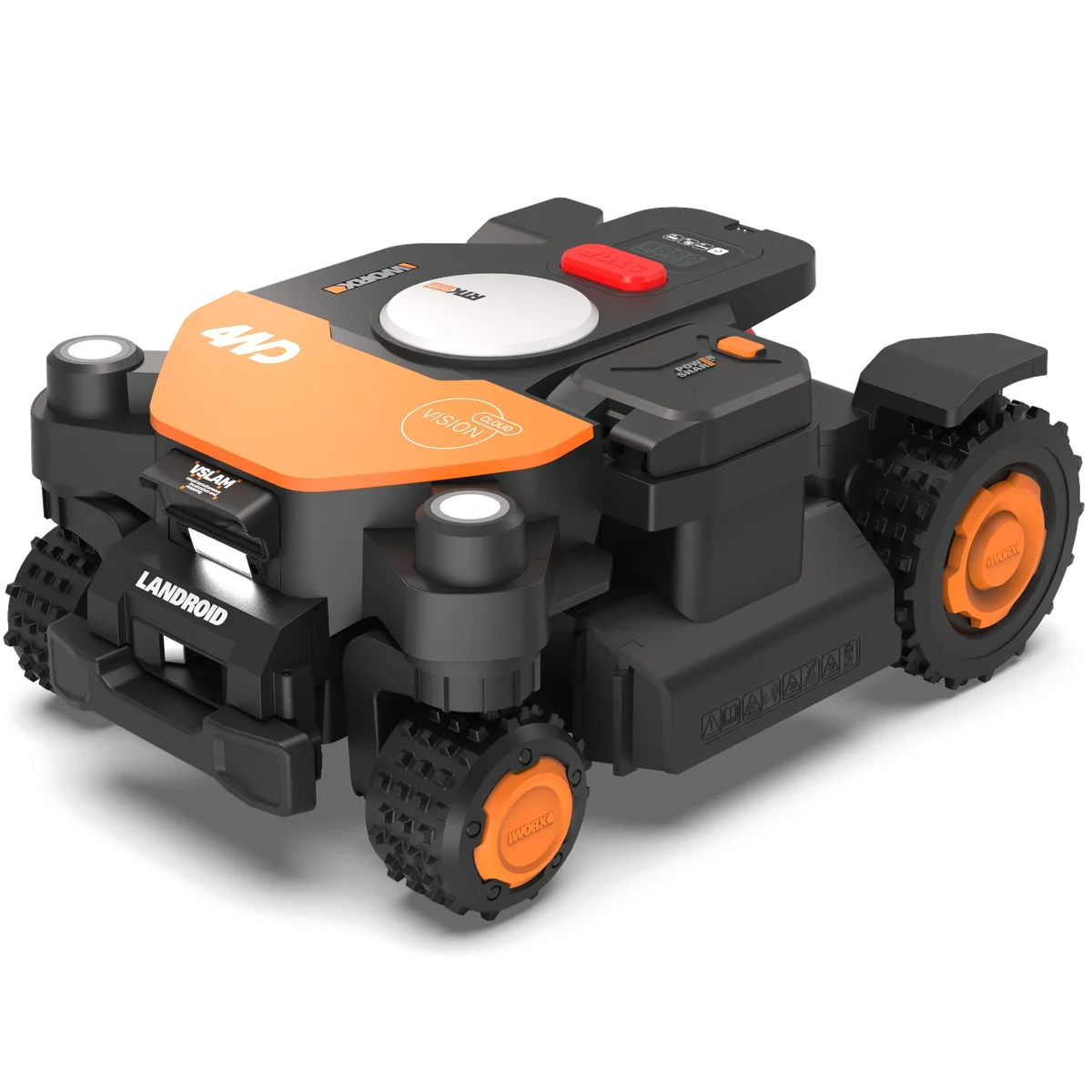
WORX WR344
The model numbers suggest a simple small-versus-large decision. The lawn tells a different story. These mowers share the same basic Vision Cloud proposition: virtual boundaries, RTK corrections delivered through the cloud, camera-assisted navigation and systematic cutting without a buried perimeter wire or local correction antenna. What separates them is not intelligence. It is traction.
On a level rectangle, the WR344 carries an expensive mechanical answer to a question the grass never asks. Its four driven wheels, articulated body and steering front axle become valuable only when the route crosses exposed roots, uneven transitions, steep cambers or ground that makes the WR320 spin and dig. The WR320 wins the ordinary lawn because it delivers the same fundamental escape from boundary wire without making the owner support a one-acre terrain machine.
Neither is an appliance in the toaster sense. Both depend on Wi-Fi, an app, firmware and cloud positioning, while ambiguous borders still require careful mapping. The hardware can quietly lay down neat parallel lanes while the software turns a boundary correction or stale error into an afternoon of phone taps. Buying the larger model does not buy freedom from that frustration.
Acreage is also the wrong shortcut. The WR320’s half-acre label and the WR344’s one-acre label describe lawns they can maintain through recurring mowing, docking and charging, not what either machine will finish in one uninterrupted outing. The WR344 has more territory to cover with an 8.7-inch cutting disc, so its larger rating can mean more hours in motion rather than a faster result.

WORX WR320
WORX WR344
At a Glance
| Feature | WORX WR320 | WORX WR344 |
|---|---|---|
| Price Range | $1,000–$1,500 | $1,500–$3,000 |
| Cutting height | — | 1.57–3.54 in |
| Recommended lawn size | Up to half an acre | Up to 1 acre |
| Cutting width | — | 8.7 in |
| Check Price on Amazon | Check Price on Amazon |
The chassis is the whole comparison
The WR320 uses two-wheel drive and belongs on reasonably smooth, firm turf. It can handle moderate slopes, but wet hollows, ruts, stressed grass and off-camber turns expose its limits quickly. Its narrow aggressive wheels may polish a repeated route or dig into soft ground, and St. Augustine lawns with vulnerable stolons deserve particular caution.
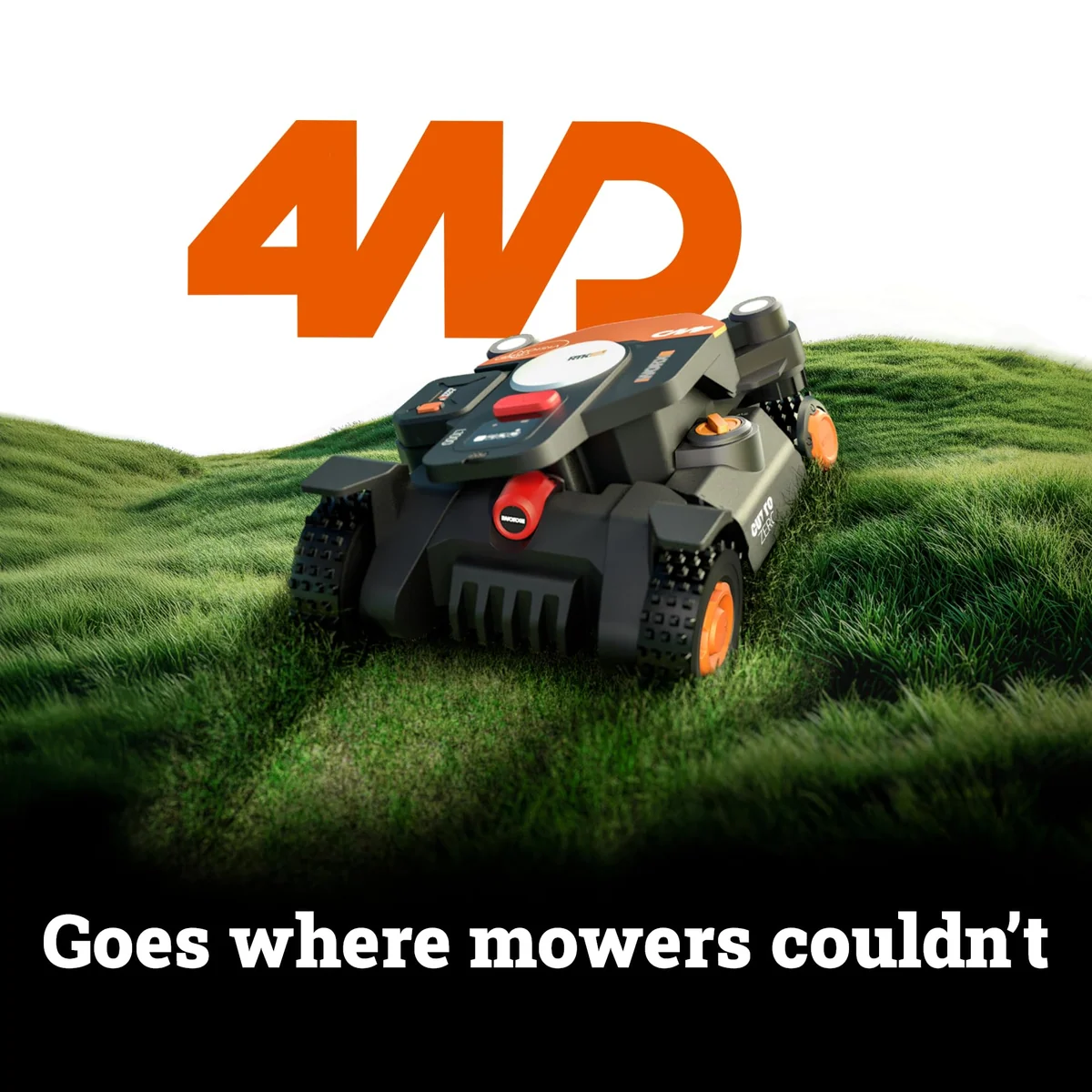
The WR344 attacks those conditions with genuine four-wheel drive. Its articulated chassis keeps the wheels in contact over changing terrain, while the front wheels steer instead of dragging one side of the mower through a skid turn. That combination is the upgrade: more climbing ability, fewer trapped errors caused by minor ground changes and gentler direction changes on turf. The claimed 84% maximum grade is about 40 degrees, but dry grass, firm soil and a forgiving approach remain part of that achievement.
| Decision point | WORX WR320 | WORX WR344 |
|---|---|---|
| Rated lawn area | Up to half an acre | Up to 1 acre |
| Drive system | Two-wheel drive | Four-wheel drive with articulation and front steering |
| Best terrain | Firm, maintained turf with moderate grades | Steep, rutted or badly uneven connected lawns |
| Navigation | Cloud RTK, Vision AI and V-SLAM | Cloud RTK, Vision AI and V-SLAM |
| Edge equipment | Flush-edge crossing, with Cut-to-Zero sold separately | Offset Cut-to-Zero blade included |
| After-dark operation | Requires the optional light | FiatLux lighting included |
| Battery ownership | Removable PowerShare battery | Removable 20V 5Ah PowerShare battery |
| Main reason to decline | Weak traction on soft or difficult ground | Slow acre coverage and immature connected software |
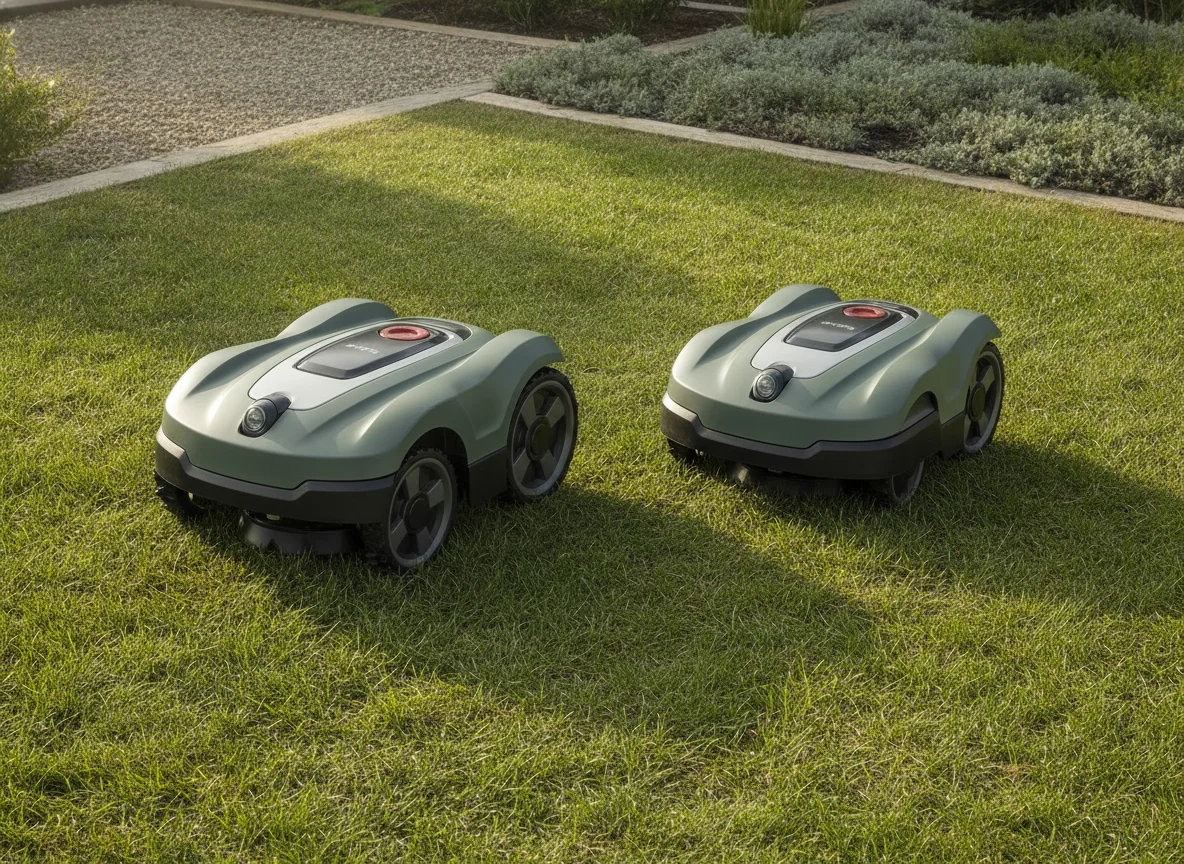
The WR320 is the better buy for a firm lawn up to half an acre.
It earns first place by pairing wire-free systematic mowing with a replaceable battery and enough navigation hardware for an uncomplicated residential lawn.
Its two driven wheels can dig into soft, heat-stressed or stolon-heavy turf, while the app makes rescues and map corrections harder than they should be.
Why the smaller mower wins
Give the WR320 a visible boundary against paving, fencing or beds and automatic mapping can be remarkably painless. Once scheduled, it replaces random wandering with parallel, checkerboard or diamond routes that leave the lawn looking deliberately maintained. It is quiet enough to work during the day without taking over the patio, and its cameras can navigate around larger everyday obstacles while V-SLAM helps beneath partial tree cover.
The clean result depends on frequent mowing. The WR320 is not meant to reclaim tall grass, collect leaves or clear the lawn before a party. It takes small clippings from an already controlled surface, returns to charge and resumes later. Even a modest zone may need another battery cycle, so the half-acre designation should be read as managed capacity rather than same-day speed.
The plain WR320 also arrives with fewer finishing features than its close relatives. It does not include the Cut-to-Zero module or headlights, and Find My Landroid should be treated as an optional purchase for this exact model. Flush paving still lets the mower overlap the edge and cut close, but walls, raised beds and fence lines leave string-trimmer work behind.
The larger ownership risk is software rather than cut quality. Boundary changes require driving the mower around the correction instead of simply redrawing a line, errors can linger after they have been cleared at the machine and settings may not remain where they were left. Cloud RTK removes a mast from the garden; it does not remove networking from the setup.
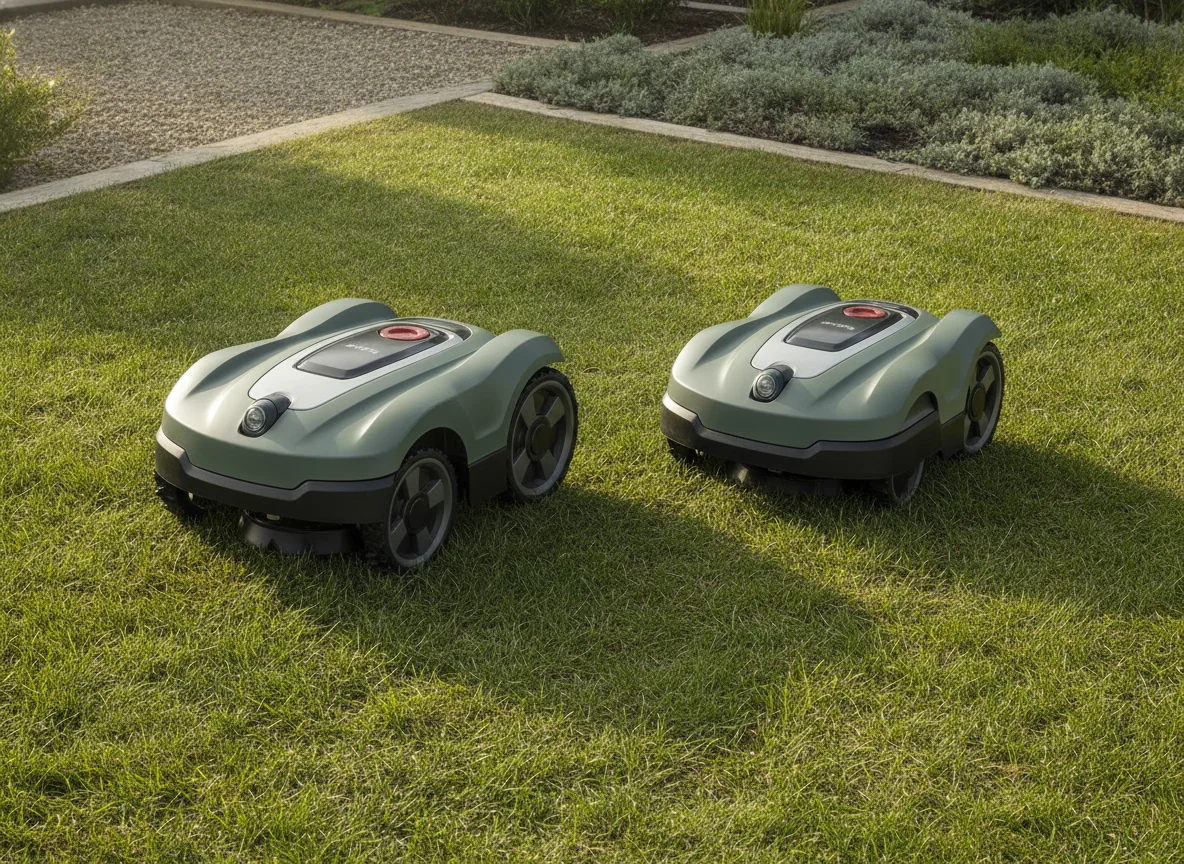
The WR344 is the right specialist for a connected lawn that fights back.
Its true 4WD chassis, articulated body and steering front wheels make it the decisive choice when roots, banks and awkward transitions would repeatedly strand the WR320.
The narrow deck covers a large lawn slowly, and Wi-Fi, activation, NTRIP or vision faults can leave excellent hardware waiting for software to cooperate.
Four driven wheels change the difficult parts
The WR344’s advantage appears at the edge of a rut, not in the middle of flat grass. All four wheels keep pulling while the chassis follows the ground, and the steering front axle changes direction without routinely twisting the tires across the same patch of turf. On a lawn with steep banks, raised transitions and tight landscaping, that control matters more than a wider cutting deck would.
The trade-off becomes obvious on an open acre. An 8.7-inch disc moving at roughly walking pace needs repeated 40-to-50-minute mowing bouts, charges and resumptions to maintain that area. The mower can work quietly across a long schedule, but it is the wrong machine if the entire property must look finished by lunchtime. A larger acreage rating does not make the WR344 a high-throughput mower.
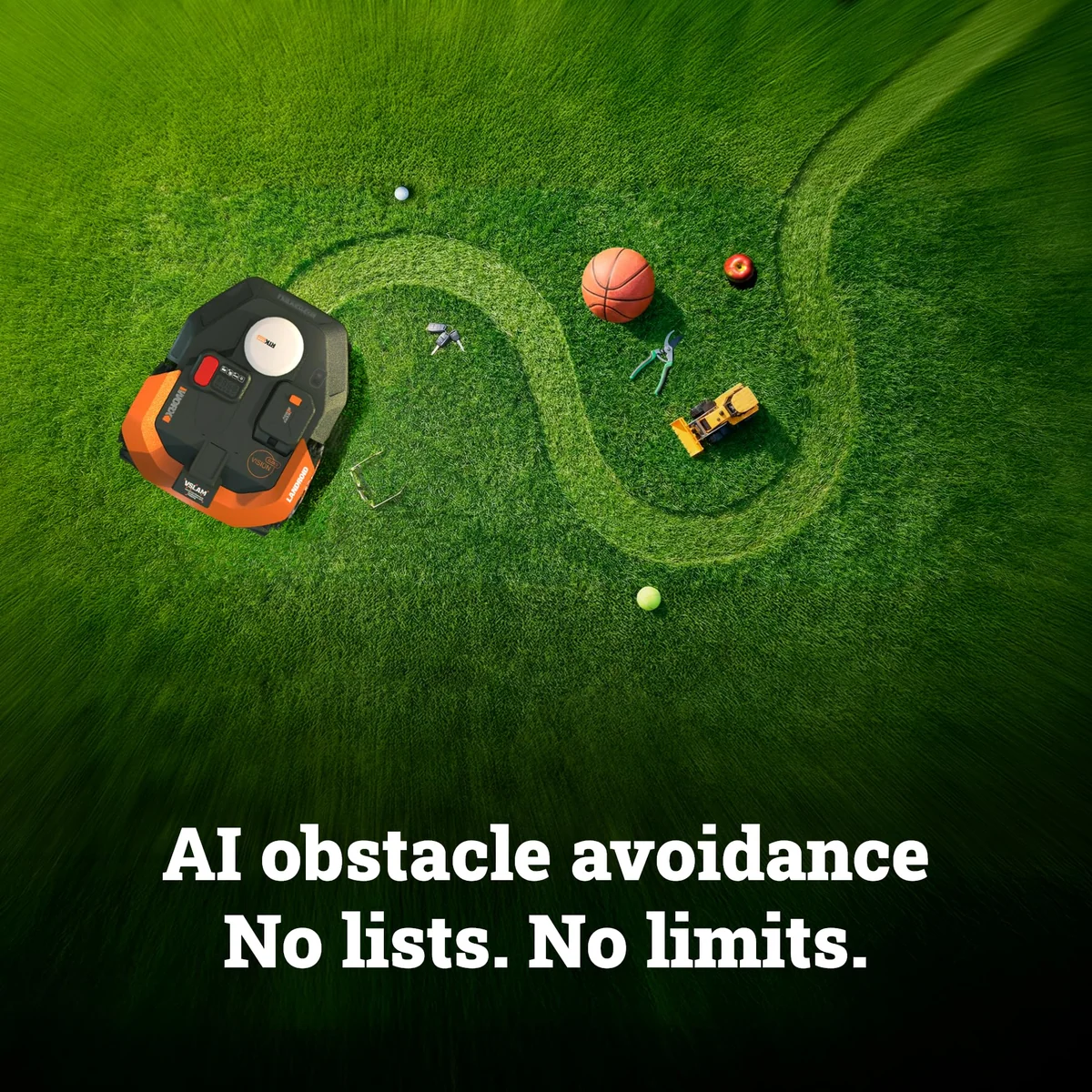
Its vision system is useful but cautious. People, pets, furniture and larger objects generally prompt a detour, while short sticks or flat debris may still pass underneath. Tall tufts, hard shadows, bare patches and low branches can create the opposite problem by becoming false obstacles. A no-vision zone may force progress through a cleared trouble spot, but it also suspends the protection that caused the stop.
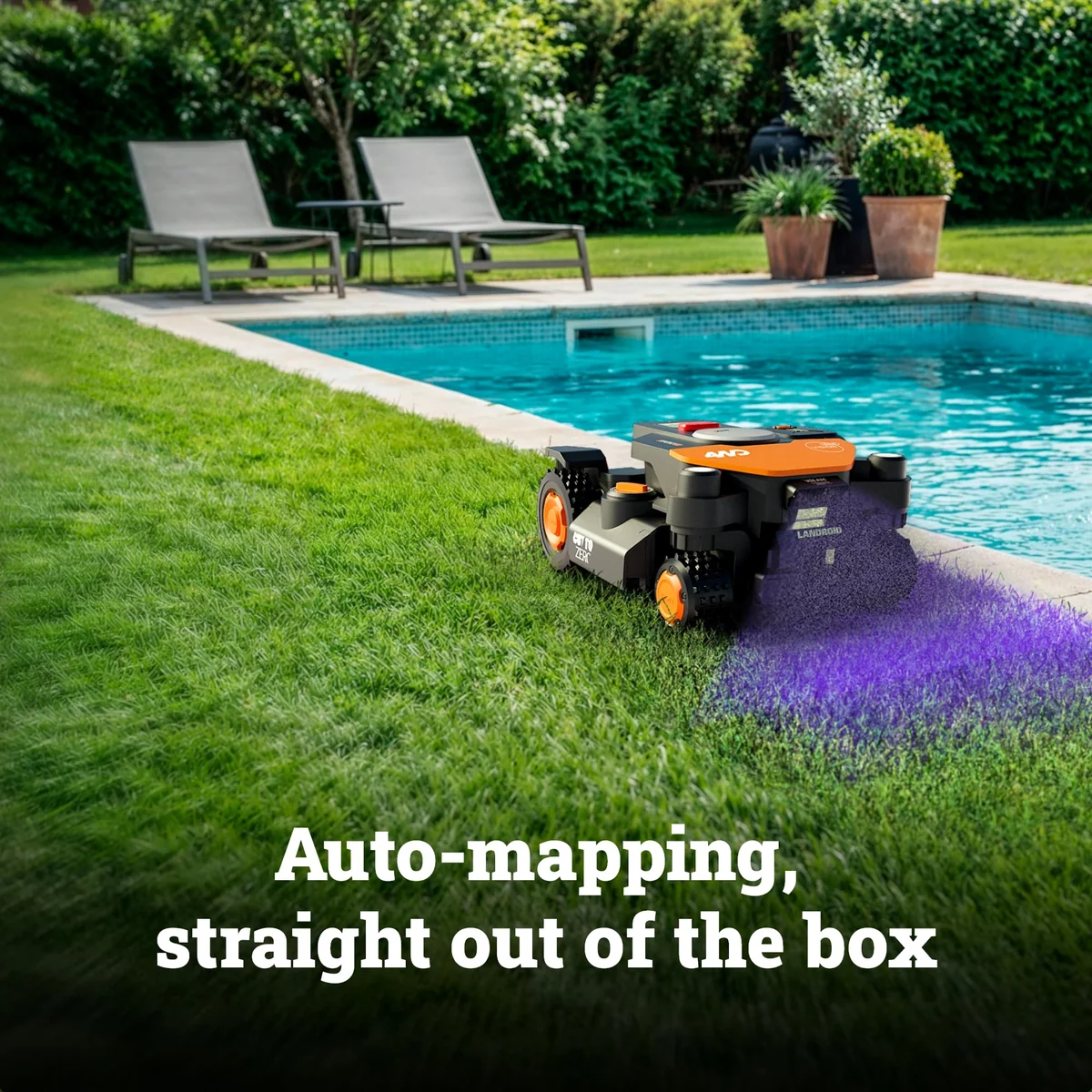
Cut-to-Zero reduces border work most effectively where a wheel can travel over a flush path or driveway. It cannot put the offset blade through a wall, fence post, raised kerb or tight inside corner, so the feature trims closer without delivering a literally finished edge. The WR344 is a capable maintenance mower, not the retirement plan for every string trimmer.
WORX WR320
WORX WR344
Walk away when terrain is not the real problem
A flat, mostly open acre does not make a convincing case for the WR344. Its traction hardware sits underused while the narrow deck spends most of the day tracing slim lanes. The WR344 and Segway Navimow X430 comparison explains why the much wider Navimow is the stronger direction when throughput matters more than compact, turf-friendly steering.
A small lawn with tight passages, difficult edges and heavy obstruction from trees presents a different objection. The WR320 can continue through partial shade, but cloud RTK and visual fallback are not guarantees beside every building or beneath every canopy. The WR320 and ECOVACS GOAT O1000 LiDAR PRO comparison is the better next stop for a quarter-acre property where local perception matters more than traction.
Both WORX models also become awkward when the lawn is split by a locked gate. Multiple mapped zones are useful only when the robot can travel between them and return to the single dock. Carrying a 39.9-pound WR344 into an isolated front yard turns autonomy into a recurring chore, and no software allowance for unlimited zones changes the fence.
Choose the WR320 if the lawn is easy and the main goal is escaping perimeter wire. Choose the WR344 if previous two-wheel-drive machines have spun, scarred the turf or stalled at the same transitions. Skip both if cloud dependence, firmware troubleshooting or occasional intervention would cancel the value of automated mowing.
Smart Lawn Bots gives this comparison to the WR320 because most buyers should purchase the simpler mower their lawn can support, not the most elaborate chassis WORX can put beneath it.
Frequently Asked Questions
Are the WORX WR344 and WR344E the same mower?
No, the WR344 is the U.S. one-acre model, while the WR344E is a closely related European version whose battery, accessories, warranty and cellular terms may differ.
Is the WR320.1 identical to the plain WR320?
No, the plain WR320 covered here omits the Cut-to-Zero module supplied with the closely related WR320.1.
Do either of these mowers need a perimeter wire or local RTK antenna?
No, both use virtual boundaries and cloud-delivered RTK corrections, although the dock still needs power, suitable ground and dependable connectivity.
Can the WR320 and WR344 manage several mowing zones?
Yes, both can map multiple zones and connecting paths, but autonomous operation still requires a traversable route from every zone back to the dock.
Do these WORX mowers collect grass clippings?
No, both mulch tiny clippings during frequent maintenance runs after tall grass, sticks, leaves and other debris have been cleared.
Ready to Choose?
Sources (26)
- Amazon listings and customer reviews — Worx Wr320 and Worx Wr344
- Owner reports across r/roboticLawnmowers, r/2011, r/pistols and 3 more threads
- Owner and reviewer video, 32 channels
- Target listing
- Walmart listing
- Homedepot — Article — www.homedepot.com
- Lowes — Article — www.lowes.com
- Lawncraftsupply — Article — lawncraftsupply.com
- WORX — Article — www.worx.com
- Upzy — Article — www.upzy.com
- Facebook — Article — www.facebook.com
- Tomsguide — Article — www.tomsguide.com
- Trustpilot — Article — www.trustpilot.com
- Bestbuy — Article — www.bestbuy.com
- Newatlas — Article — newatlas.com
- Reviewed — Article — www.reviewed.com
- Easylawnmowing — Article — easylawnmowing.co.uk
- Easylawnmowing — Article — www.easylawnmowing.com
- Freshlycharged — Article — freshlycharged.com
- Ai — Article — www.robotmower.ai
- Homeandgardenselect — Article — homeandgardenselect.com
- Dreamhomeplace — Article — dreamhomeplace.com
- Mensjournal — Article — www.mensjournal.com
- Ibisik — Article — www.ibisik.com
- Smarthomecompared — Article — smarthomecompared.com
- Requiemforadream — Article — www.requiemforadream.com