The WORX WR320 escaped the boundary wire and got tangled in its own app.
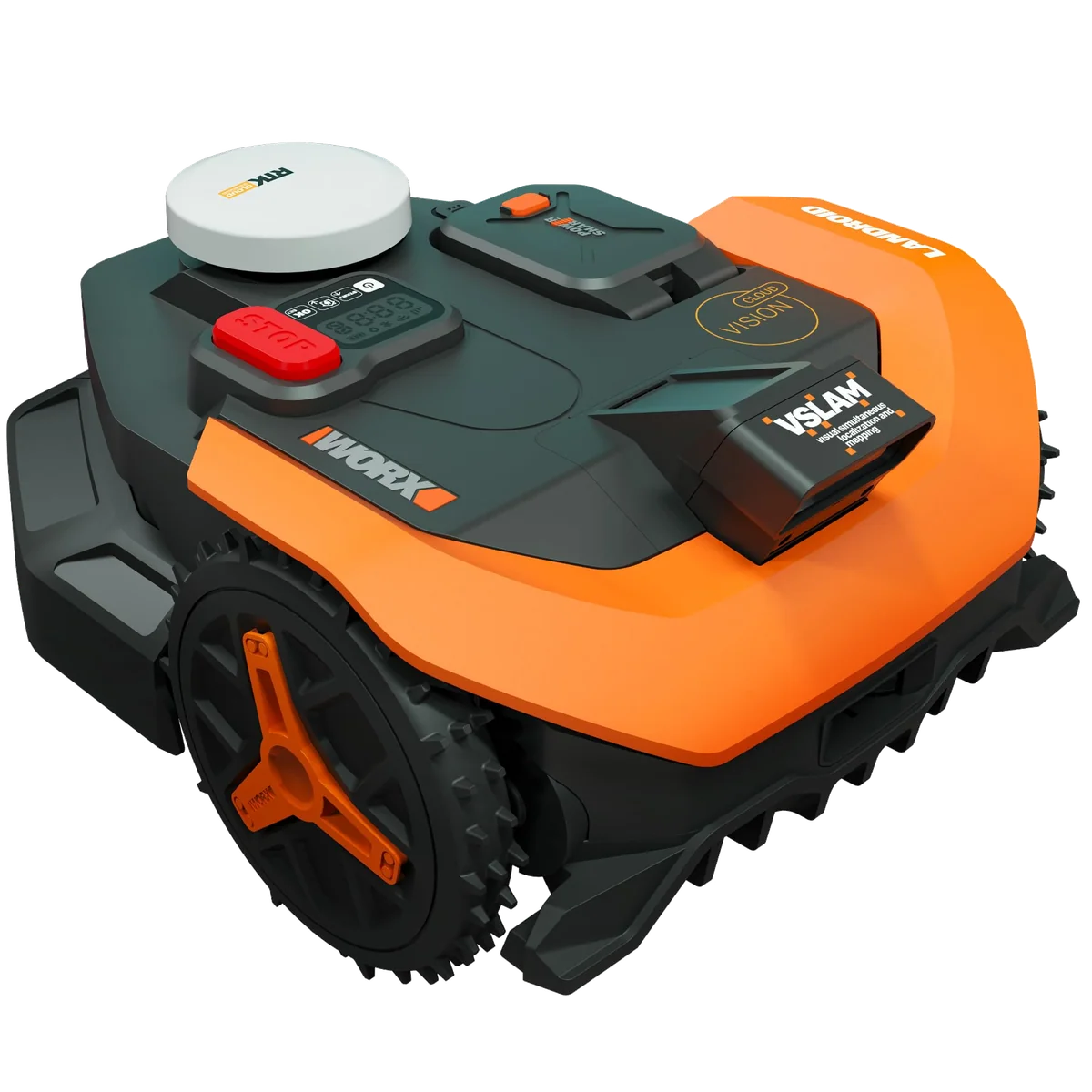
Buy the WORX WR320 for wire-free maintenance of a firm, moderate lawn, but choose a 4WD rival if traction matters and walk away if software troubleshooting will spoil the time it saves.
A qualified buy for an uncomplicated lawn
Smart Lawn Bots recommends the WR320 when the lawn is already kept, the turf is firm and the buyer values freedom from both perimeter wire and a separate RTK antenna. Its straight cutting, capable mapping and quiet routine can make an older random mower feel obsolete.
The recommendation ends where traction, edging or software tolerance becomes the priority. Rough ground belongs with 4WD, complex shaded spaces may suit LiDAR better and anyone expecting a perfect border should keep the string trimmer. The WR320 removes the weekly mow, not every lawn-care job around it.
The WR320 solves two old robot-mower irritations at once. It replaces the buried cable that eventually gets cut, disturbed or struck by lightning, then replaces random wandering with deliberate stripes. On the right lawn, those changes are transformative. The machine leaves a clean, maintained surface while its owner is somewhere cooler, and it returns to the charger without requiring a separate RTK antenna on a pole or roof.
That lawn needs to meet it halfway. The WR320 is a maintenance mower, not a rescue mower for five-inch grass. Give the lawn a conventional first cut, remove sticks, toys and pet waste, then let the robot take small amounts frequently. Its half-acre rating describes the area it can maintain through repeated mowing and charging, not the ground it will cover on one battery or necessarily finish in one day.
The principal drawback is not cut quality. It is the unfinished software around good hardware. Map changes require walking with the mower and driving the revised boundary instead of drawing a line on the screen. Owners also report stale errors, awkward task cancellation, lost positioning links, height settings that reset and rescue routines with too many taps. The app contains plenty of features, but it often makes a simple correction feel like technical support.
Model identity matters here. ASIN B0GN8KK8XW is the plain WR320, not the closely related WR320.1. Exact-model owners report that this version includes RadioLink but omits both the Cut-to-Zero module and headlights; the edge module and light can be added separately. Find My Landroid should also be treated as an optional purchase for this listing rather than assumed to be in the box.
Key Specifications
The antenna is gone, but the installation still has opinions
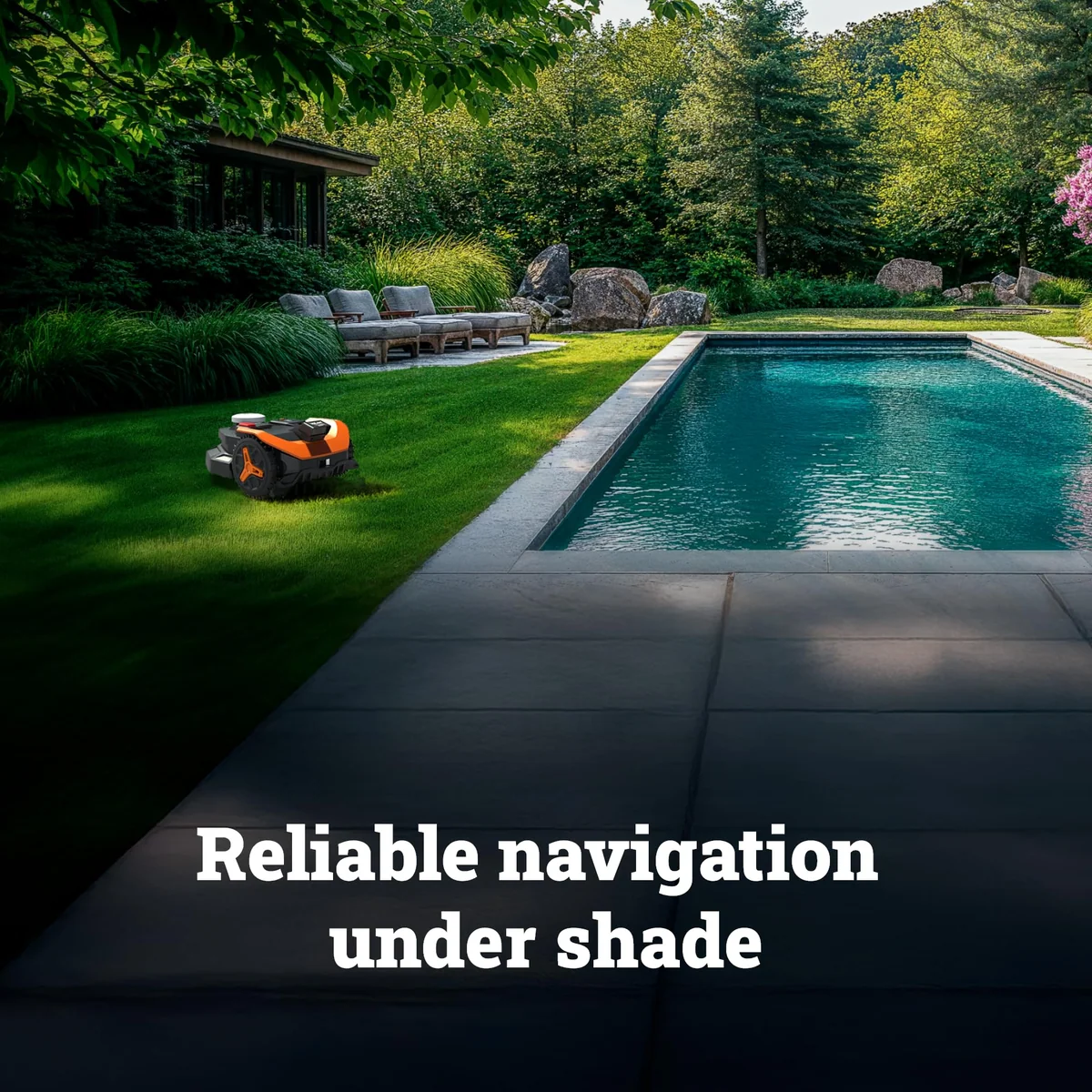
RTK corrections arrive through the cloud, while the cameras, V-SLAM, inertial sensing and wheel data help the WR320 continue beside buildings or under partial tree cover. That combination can work impressively beneath a canopy, and one heavily shaded zone became reliable after manual mapping. It is not immune to difficult properties, however. A single tree has been enough to trigger signal loss elsewhere, so V-SLAM is a credible fallback rather than a guarantee for every wooded yard.
The charging station remains fussy about its surroundings. It needs power, strong Wi-Fi, reasonably level ground and about 6.5 feet of clear space in front. WORX specifies no more than a 5° slope at the base, and even a slight incline has prevented successful redocking until the station was moved. It can sit beside the house or beneath cover if those practical requirements are satisfied.
Pairing requires a 2.4GHz network, Bluetooth and a sufficiently charged battery. The physical assembly is quick; firmware is what can consume the first afternoon. Updates have ranged from minutes to several hours, and one exact-model setup would not accept a Wi-Fi password containing special characters. Buyers with one combined network name, weak outdoor coverage or little patience for router settings should not mistake “no boundary wire” for “no setup.”
Automatic mapping is good until the boundary becomes ambiguous
On a clear lawn enclosed by paving, fencing or beds, automatic mapping can follow the perimeter with very little help. Grass that runs directly into a neighbor’s lawn needs a temporary visual boundary, such as the supplied patterned line or a garden hose. Manual mapping gives closer control around flush paving, while paths and additional zones must be driven into place.
The app advertises effectively unlimited zones, but that is a software allowance rather than proof of unlimited practicality. Three connected areas can work beautifully. Five zones joined by narrow passages, marginal Wi-Fi, slopes and closed gates create five opportunities for a rescue. The tools are flexible; the property is still physical.
The plain WR320 does not cut to zero or work after dark
The standard mower can run a wheel over a flush driveway or sidewalk and leave very little behind. Walls, fences, raised beds and tight corners still produce a strip for the string trimmer. The optional Cut-to-Zero attachment can reduce that work, but even the WR320.1 version equipped with it does not erase every border.
Without the optional light, dusk can end a run surprisingly early. Owners have seen an insufficient-light warning while usable daylight remained, so a long schedule cannot rely on the mower finishing after sunset. This is also a sensible wildlife constraint, not merely a missing accessory.
Strengths & Limitations
Strengths
- Cloud RTK removes both the buried boundary wire and a separate local antenna.
- Systematic patterns produce cleaner, more complete-looking coverage than older random Landroids.
- Automatic mapping works unusually well on lawns with clear visual boundaries.
- Vision and V-SLAM provide useful obstacle recognition and a credible fallback beneath partial tree cover.
- The removable PowerShare battery adds convenience for existing WORX tool owners.
Limitations
- The app makes boundary edits, task changes and error recovery harder than they should be.
- Two-wheel traction can dig into soft, stressed or stolon-heavy turf.
- The half-acre rating requires repeated charge cycles and does not promise same-day completion.
- The plain WR320 omits the Cut-to-Zero module and headlights.
- Vertical borders, debris clearing and occasional rescues remain human work.




The cutting is disciplined; the wheels are less convincing
The WR320’s strongest performance is visible in the lawn rather than the specification sheet. Parallel, checkerboard and diamond routes replace the patchy appearance of older random Landroids with straight, consistent lanes. The cutting system leaves small clippings to disappear into regularly maintained grass, and quiet operation makes daytime scheduling realistic around a patio, home office or sleeping child.
Obstacle avoidance is above average without being clairvoyant. The cameras can route around dogs, people, swings, ropes and scattered toys, yet small sticks and a dog bone have reached the blades. Leaves can also become false obstacles and leave islands of uncut grass. Clear the lawn anyway, because object recognition reduces interruptions rather than transferring responsibility to the mower.
Two-wheel drive is the decisive limitation. Firm, reasonably smooth turf and moderate slopes suit it; wet hollows, ruts, off-camber turns and stressed grass do not. Minor imperfections have produced trapped errors, while narrow aggressive wheels can spin into thin ground instead of climbing out. Manual control sometimes reveals more climbing ability than autonomous mode is willing to use, but walking outside to push a robot defeats the point quickly.
St. Augustine deserves a particular warning. One Florida owner found the wheels pulling stolons, digging holes in heat-stressed areas and reporting wheel errors even in dense three-inch grass. Other sloped lawns have caused no trouble, so the WR320 is not restricted to billiard-table ground, but buyers should judge firmness, transitions and turning points rather than relying on a maximum-grade number.
Half an acre is a schedule, not a battery claim
The mower returns to charge and resumes, which is exactly how a maintenance robot should work. It also means elapsed completion time can be long. One exact WR320 could not finish a 1,610-square-foot backyard on one battery, while a closely related WR320.1 needed seven hours and two charging stops for roughly 8,500 square feet. Geometry, grass growth, obstacles and route design matter more than a tidy acreage label.
The removable PowerShare battery is a genuine advantage. A compatible spare can be swapped in to shorten downtime, and existing WORX tool owners may already value the shared platform. Owners have fitted larger packs, but that is not established here as official WR320 guidance, and extra capacity does not increase the mower’s software-defined managed area.
Choose the lawn before choosing the robot
Against an older wired Landroid, the WR320 wins decisively. There is no perimeter cable to repair, coverage is systematic instead of random and virtual zones are easier to change than buried wire. Its value comes from displacing routine mowing time, particularly in hot climates, rather than from completing the job quickly.
| Property | Best direction | Why |
|---|---|---|
| Firm, clearly bounded lawn with moderate grades | WORX WR320 | No buried wire or local RTK antenna, with strong systematic cutting. |
| Soft, uneven or traction-sensitive ground | WORX WR344 4WD | Four-wheel drive addresses the WR320’s most consequential weakness. |
| Narrow or shaded quarter-acre lawn with difficult edges | ECOVACS GOAT O1000 LiDAR PRO | LiDAR navigation and active edge cutting better suit tight, satellite-challenged spaces. |
The WR320 and WR344 comparison is the useful next stop if wheel slip is the only doubt. Buyers deciding between larger coverage and a more compact LiDAR machine can instead see the WR320 and GOAT O1000 comparison. Paying for more mower is wasteful on easy grass, but buying too little traction turns every saved hour into another trip outside.
Ownership gets lighter, not hands-free
The recurring jobs are simple: clear debris, wipe the camera gently, remove packed clippings, inspect the travel route and replace the three small pivoting blades with their screws when worn. The deck can be rinsed with a hose after the mower is powered down and the battery removed, but a pressure washer can force water where it does not belong.
Repeated travel to the charger may wear one strip of turf, especially between zones, and wet grass increases both deck buildup and wheel slip. Winter storage and shelter from prolonged sun are sensible. The angular shell also catches grass and pollen, while the lack of a clean carry handle becomes obvious the first time an immobilized mower has to come home by hand.
The three-year manufacturer warranty is reassuring on paper, particularly after an owner received two machines with nonworking cutting systems. Support reports range from excellent help to unreachable phones, so return terms deserve attention during the initial setup period. A warranty is useful; it is not a promise that resolving a fault will be painless.
Frequently Asked Questions
Does the WORX WR320 need a boundary wire or separate RTK antenna?
No, it uses virtual boundaries and cloud-delivered RTK corrections, although its charging station still needs power, strong 2.4GHz Wi-Fi, level ground and clear approach space.
Can the WORX WR320 finish half an acre in one day?
Do not count on it, because the half-acre rating describes scheduled maintenance across repeated mowing and charging cycles rather than guaranteed single-day coverage.
Does the plain WR320 include the Cut-to-Zero attachment?
No, exact-model evidence identifies B0GN8KK8XW as the version without the Cut-to-Zero module, while the WR320.1 is the closely related version that includes it.
Can the WORX WR320 mow at night without an accessory light?
No, the plain WR320 lacks headlights and can stop with an insufficient-light warning at dusk unless the compatible light is added.
Will the WORX WR320 work under trees?
V-SLAM can keep it navigating beneath partial or even substantial tree cover, but positioning has failed around trees on some properties and should not be assumed reliable before mapping.
Can the WORX WR320 cut tall grass or collect leaves?
No, it is designed to mulch small grass clippings during frequent maintenance runs after a conventional first cut, while leaves, sticks and other debris still need clearing.
Can the WORX WR320 battery be replaced?
Yes, it uses a removable WORX PowerShare battery, although owner experiments with larger-capacity packs should not be confused with official exact-model compatibility guidance.
Can more than one family member control the WORX WR320?
A second user account was not supported in the reviewed app version, so households should not assume independent shared access without confirming that the software has changed.
Sources (14)
- Amazon listings and customer reviews — Worx Wr320
- Owner and reviewer video, 22 channels
- Target listing
- Homedepot — Article — www.homedepot.com
- Lowes — Article — www.lowes.com
- Lawncraftsupply — Article — lawncraftsupply.com
- WORX — Article — www.worx.com
- Upzy — Article — www.upzy.com
- Facebook — Article — www.facebook.com
- Tomsguide — Article — www.tomsguide.com
- Trustpilot — Article — www.trustpilot.com
- Bestbuy — Article — www.bestbuy.com
- Newatlas — Article — newatlas.com
- Reviewed — Article — www.reviewed.com