The WORX WR310 is the smarter buy until a quarter acre becomes too small.
Buy the WR310 for a firm lawn with no more than a quarter acre of mowable grass, and choose the WR320 only when the extra coverage is necessary because it brings the same software frustrations and two-wheel limitations to a larger job.
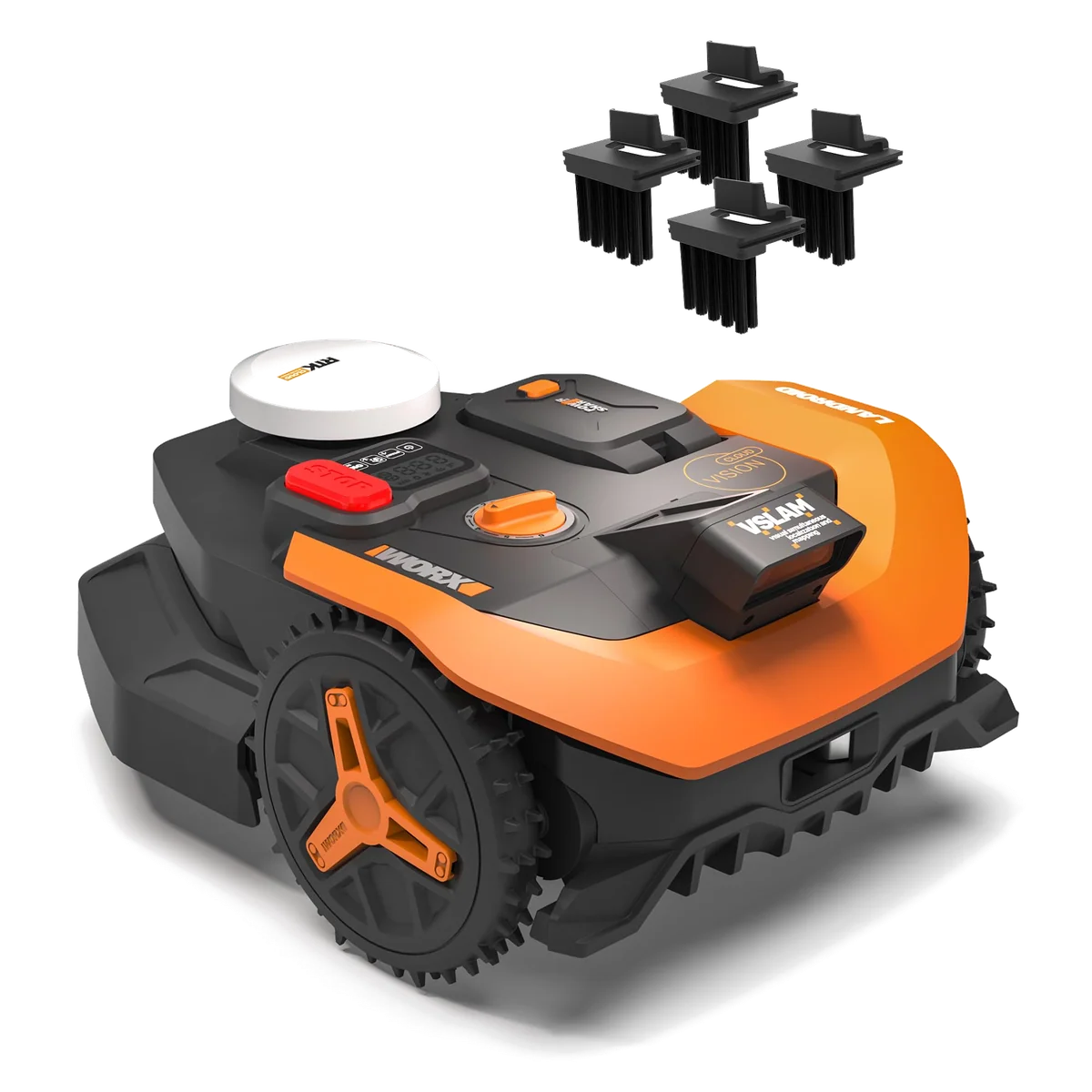
WORX Robot Lawn Mower for
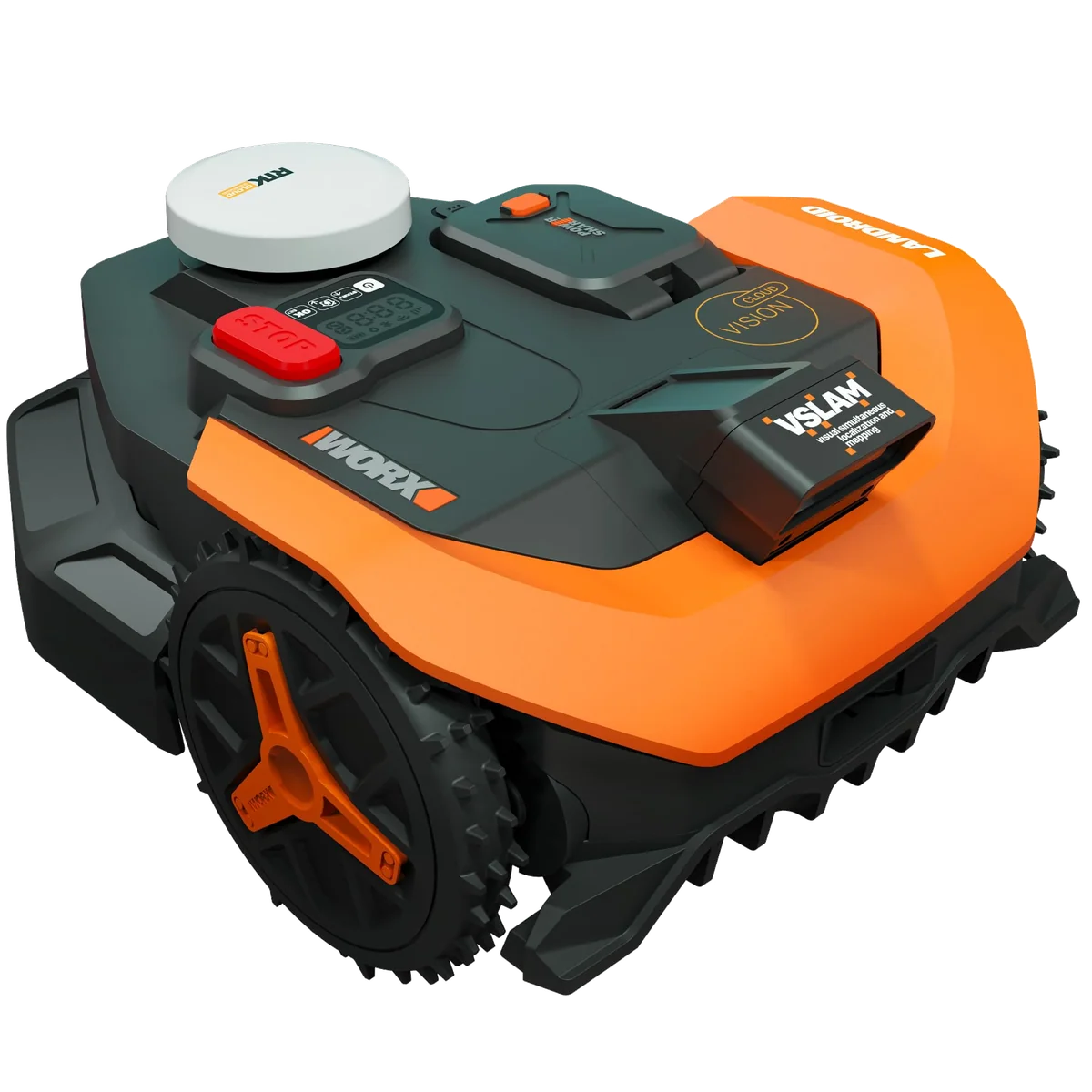
WORX WR320
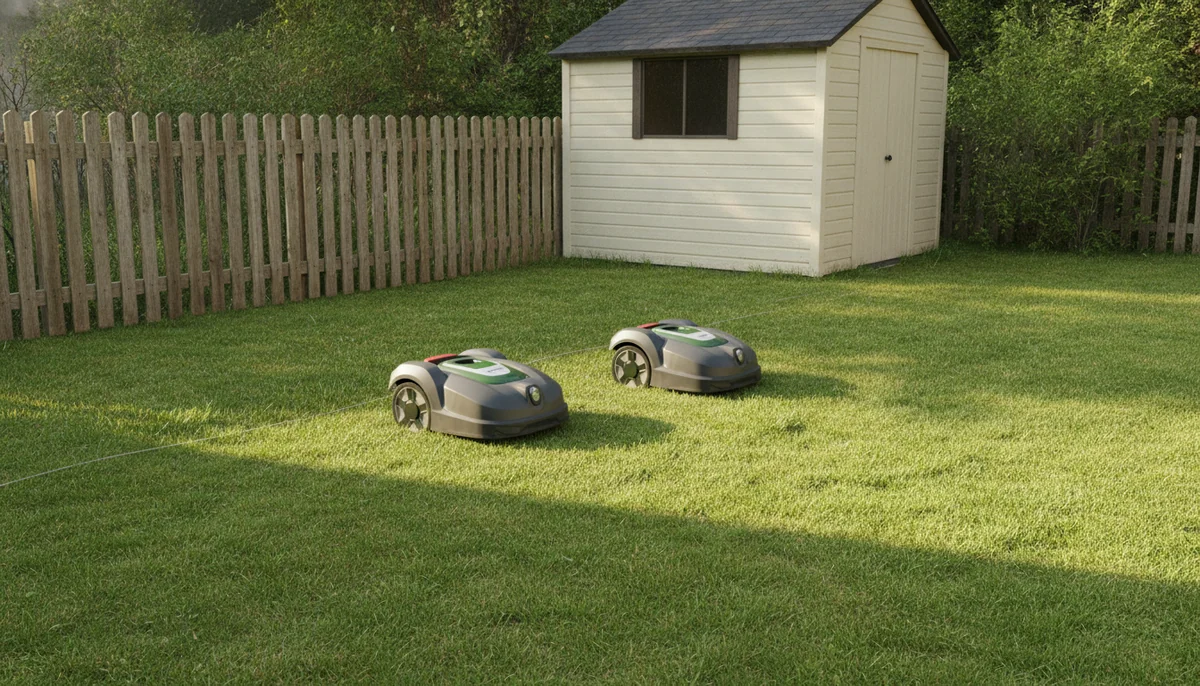
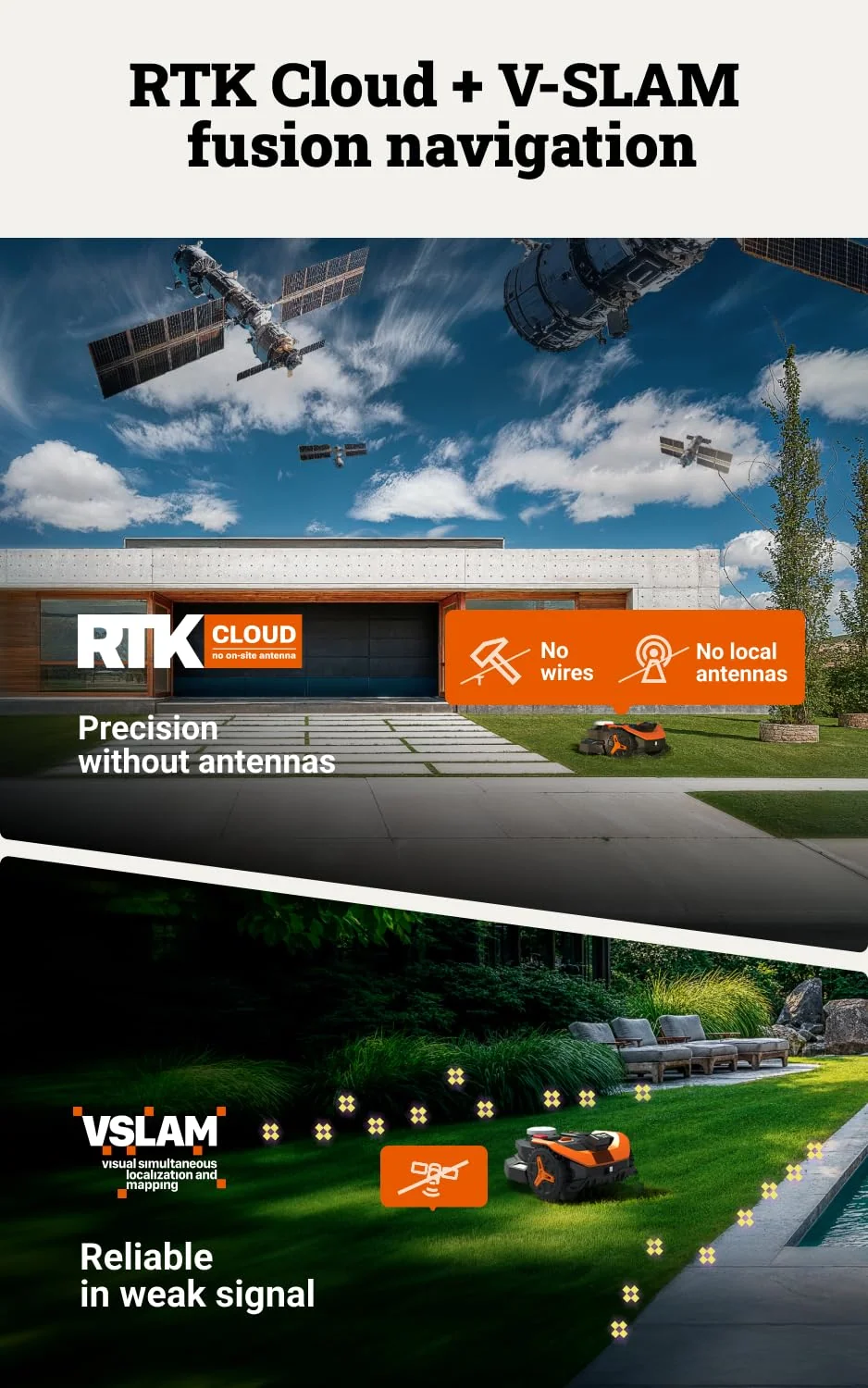
The WR310 and WR320 are not two different ideas about robot mowing. They are two sizes of the same idea: remove the perimeter wire, skip the local RTK antenna and let cloud corrections, cameras and V-SLAM guide systematic passes around the lawn. Both can leave the sort of straight, quiet stripes that make an older random Landroid look restless and dated.
The useful distinction is capacity. The WR310 is rated for up to a quarter acre of mowable grass; the WR320 stretches that ceiling to half an acre. That does not make the WR320 a tougher mower. Both are two-wheel-drive machines, both depend heavily on the app and both are happiest on firm, maintained turf with clear boundaries.
This is why the smaller model wins for the yard it fits. Buying extra acreage does not improve grip in a damp hollow, make boundary edits less tedious or remove the strip beside a wall. It gives the mower more lawn to maintain through repeated cutting and charging. If the grass area genuinely exceeds a quarter acre, that capacity matters. If it does not, the WR320 mainly enlarges a problem the WR310 can already solve.
Neither model is a hands-off answer for rough ground. The shared weakness appears when narrow driven wheels turn across soft turf, meet a shallow rut or work through stressed St. Augustine. By the sixth week, centimeter-level positioning matters less than whether the robot can reach its charger without somebody walking outside to push it.
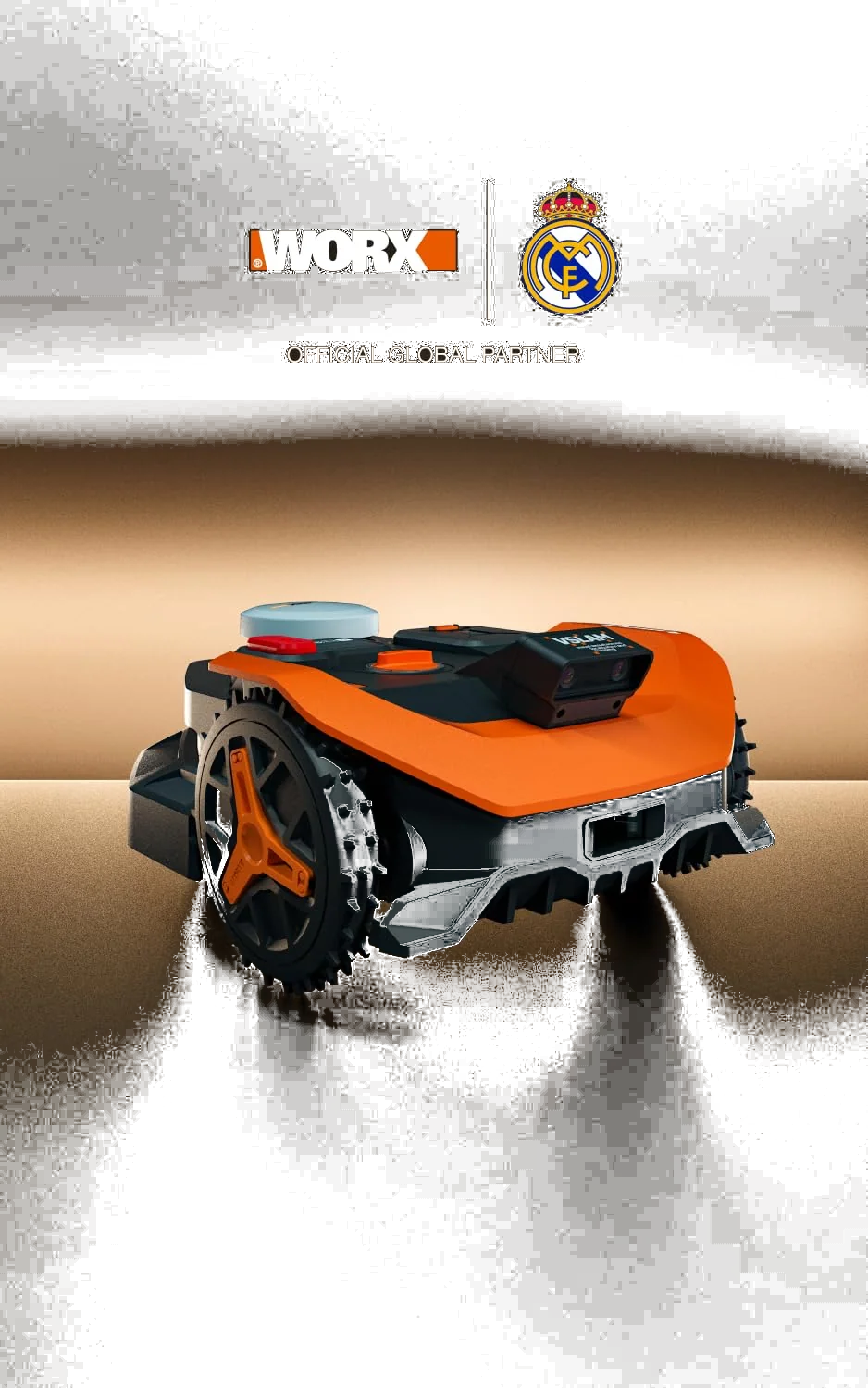
WORX Robot Lawn Mower for

WORX WR320
At a Glance
| Feature | WORX Robot Lawn Mower for | WORX WR320 |
|---|---|---|
| Price Range | $500–$1,000 | $1,000–$1,500 |
| Recommended lawn size | — | Up to half an acre |
| Check Price on Amazon | Check Price on Amazon |
The WR320 buys area, not a better mower underneath
| Decision point | WR310 | WR320 |
|---|---|---|
| Rated lawn area | Up to ¼ acre of mowable grass | Up to ½ acre of mowable grass |
| Drive system | Two-wheel drive | Two-wheel drive |
| Navigation | Cloud RTK, Vision AI and V-SLAM | Cloud RTK, Vision AI and V-SLAM |
| Boundary installation | No perimeter wire or local RTK antenna | No perimeter wire or local RTK antenna |
| Included extras established for the exact listing | Wheel brushes and six spare blades | RadioLink, but no Cut-to-Zero module or headlights |
| Best fit | Small, simple and mostly level lawns | Larger, simple lawns that remain firm under the wheels |
Acreage ratings describe ongoing maintenance, not a promise to finish the entire lawn on one charge or even within one day. The robot cuts, returns to its dock, recharges and resumes. A complicated half acre with narrow passages, obstacles and separate zones is a much larger assignment than an open rectangle of the same size. Measure only the grass, then leave capacity for growth, route inefficiency and days when weather shortens the schedule; the guide to robot-mower acreage ratings explains why the number on the box is a ceiling rather than a target.
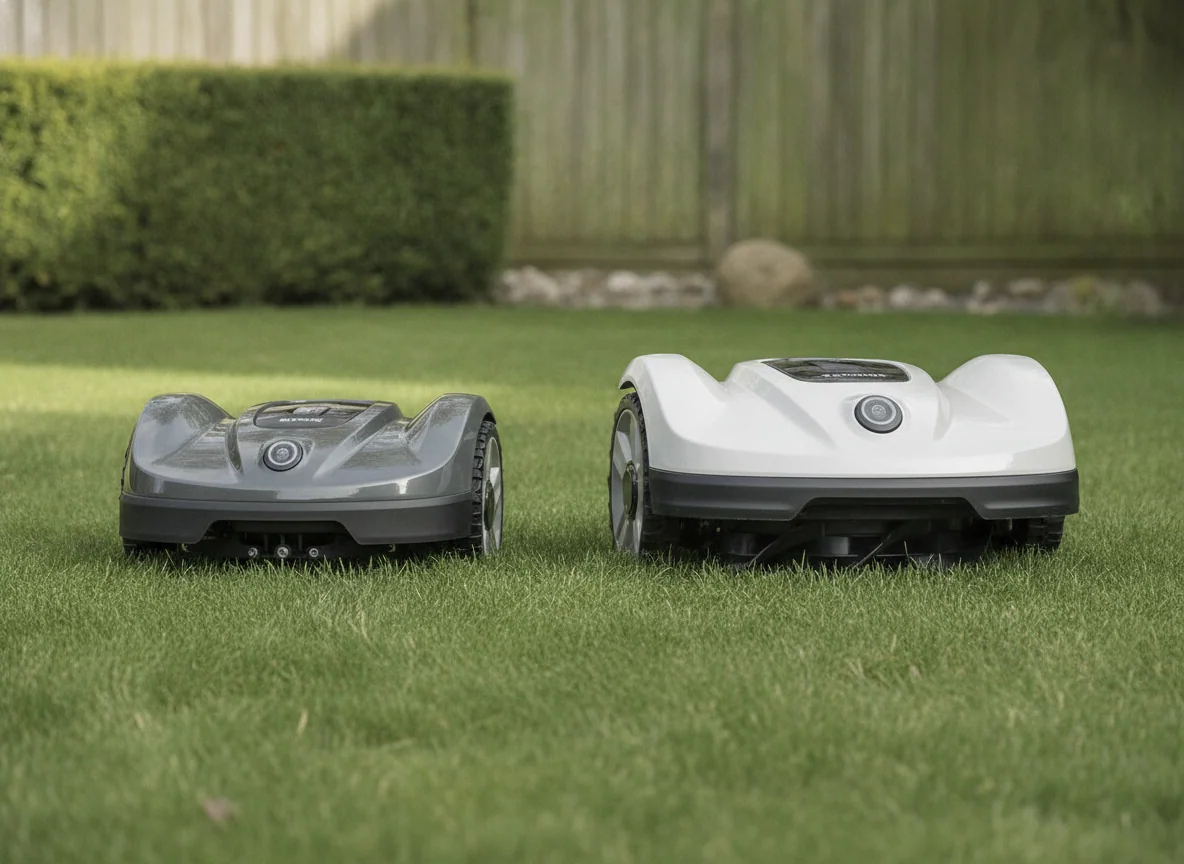
The cutting experience is fundamentally the same
On suitable ground, both machines make a persuasive case for wire-free mowing. Parallel, checkerboard, diamond and natural patterns replace random wandering with orderly coverage. Frequent passes mulch tiny clippings back into the lawn, and the low noise makes daytime operation practical near a patio or home office.
Both are maintenance cutters. They should take a little growth often, not confront tall grass after a wet week. Toys, cords, branches and pet waste still need clearing even though the cameras recognize many common objects. Cautious avoidance can also leave generous islands around posts or debris, so avoiding a collision is not always the same as completing the cut.
The app remains the least finished part of both machines
Removing the wire makes the physical installation easier, but it does not make setup trivial. The dock still needs power, level ground, outdoor connectivity and a clear approach. Pairing expects 2.4GHz Wi-Fi, while mapping, paths, zones, firmware and no-go areas all demand attention before the mower settles into a routine.
The irritation arrives when that first map needs correction. A boundary change can require guiding the mower along the revised line instead of redrawing it cleanly on the screen. Lost positioning links, stale errors, awkward job cancellation and settings that do not behave consistently turn a quick correction into app administration. The full WR320 review covers that ownership experience in detail.
The hybrid navigation is still a genuine advantage. Cloud RTK avoids mounting a local reference antenna, while vision and V-SLAM can help beneath partial tree cover or beside buildings. Some shaded zones work well after manual mapping; others expose positioning weaknesses. Buyers with heavy canopy and tight passages should compare the stronger options for yards with trees and poor satellite reception rather than treating “Vision Cloud” as a guarantee.
Accessories do not erase the edge problem
The WR310 listing includes wheel brushes that clear grass buildup from the wheels. They are maintenance accessories, not cutting brushes, and they do not turn two-wheel drive into an all-terrain system. Exact WR310 battery capacity, runtime, recharge time, cutting width and height range are not established well enough to borrow the WR320’s figures.
The plain WR320 includes RadioLink but should not be confused with the WR320.1. It does not include the Cut-to-Zero attachment or headlights. The removable PowerShare battery is useful, particularly in a household that already owns compatible WORX tools, but another battery changes downtime rather than traction or managed area.
Both models can run a wheel onto flush paving and cut close to the grass line. A wall, fence, raised bed or drop prevents that overhang, leaving a strip for the string trimmer. Optional edge hardware can reduce the work on compatible boundaries, not repeal geometry. Dusk is another practical limit for the plain WR320 because its cameras can stop a run when light becomes insufficient.
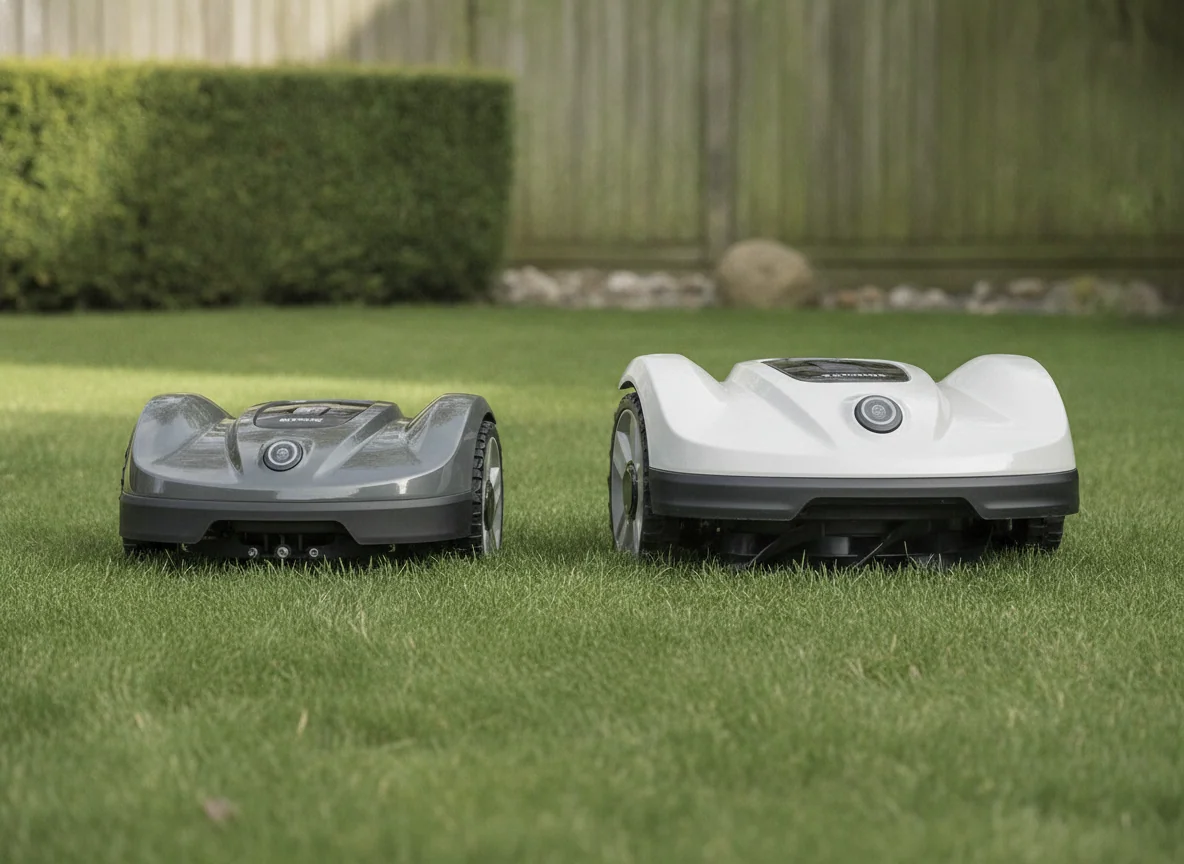
The WR310 is the better buy for a genuine quarter-acre lawn.
It delivers the family’s wire-free mapping and disciplined cutting without paying for capacity that a small, firm yard cannot use.
Its exact battery and cutting specifications remain poorly documented, while the two-wheel chassis still struggles with wet, uneven or stressed turf.
The WR320 is the necessary step up when the grass exceeds a quarter acre.
Its half-acre rating, systematic routes and removable PowerShare battery make it the credible sibling for a larger but still uncomplicated lawn.
The extra capacity comes with the same awkward map correction, unreliable error recovery, unfinished edging and limited two-wheel traction.
WORX Robot Lawn Mower for

WORX WR320
Choose by the worst patch of the lawn
Choose the WR310 when the measured grass area sits comfortably below a quarter acre, the surface stays firm and the boundaries are easy for a camera to understand. It is especially appealing when the alternative is burying wire around a modest backyard. Expect an involved first map, keep the lawn tidy and schedule frequent daytime cuts.
Choose the WR320 when the same kind of lawn extends beyond the WR310’s sensible workload. The half-acre model earns its place through capacity alone, which is enough when capacity is the actual problem. It does not deserve the upgrade merely because a larger model sounds safer.
Walk away from both if the yard stays wet, contains ruts, forces off-camber turns or has meaningful slopes. The WR320 versus WR344 comparison shows what moving to WORX four-wheel drive changes, while the guide to mowers for hills and uneven ground covers alternatives when traction should lead the decision.
Also walk away if every boundary must look freshly trimmed or if setting up Wi-Fi, firmware and virtual zones already sounds like the chore the mower was meant to remove. These Landroids can replace the recurring bulk of mowing on the right property, but they do not replace judgment, cleanup or the occasional string-trimmer pass.
Smart Lawn Bots recommends the WR310 for the smaller suitable lawn and the WR320 only for buyers who can point to the additional grass that justifies it. The WR320 is more mower by area, not more mower where this platform most needs improvement.
Frequently Asked Questions
What is the main difference between the WORX WR310 and WR320?
The WR310 is rated for up to a quarter acre of mowable grass and the WR320 for up to half an acre, while both use the same cloud RTK, vision, V-SLAM and two-wheel-drive approach.
Do either of these WORX mowers need a perimeter wire or RTK antenna?
No, both use virtual boundaries and cloud-delivered RTK corrections, although each still needs a powered charging station, suitable connectivity and a mapped lawn.
Is the WR320 better on slopes than the WR310?
No, both are two-wheel-drive machines and the larger coverage rating does not make the WR320 a better choice for wet slopes, ruts or soft turf.
Does the standard WR320 include edge-cutting hardware and headlights?
No, the plain WR320 listing does not include the Cut-to-Zero module or headlights, so it should not be confused with the related WR320.1 package.
What do the brushes included with the WR310 do?
The included wheel brushes sweep grass buildup from the wheels to reduce cleaning, but they neither cut vegetation nor guarantee better traction.
Can the WR320 battery be replaced?
Yes, the WR320 uses a removable WORX PowerShare battery, although a larger or spare pack does not increase its software-defined coverage rating.
Can either mower handle more than one lawn zone?
Yes, both support multiple virtual zones, connecting paths and no-go areas, but disconnected sections, closed gates and difficult passages can still require human intervention.
Ready to Choose?
Sources (20)
- Amazon listings and customer reviews — Worx Robot Mower For and Worx Wr320
- Owner reports across r/roboticLawnmowers threads
- Owner and reviewer video, 23 channels
- Target listing
- Homedepot — Article — www.homedepot.com
- Lowes — Article — www.lowes.com
- Lawncraftsupply — Article — lawncraftsupply.com
- WORX — Article — www.worx.com
- Upzy — Article — www.upzy.com
- Facebook — Article — www.facebook.com
- Tomsguide — Article — www.tomsguide.com
- Trustpilot — Article — www.trustpilot.com
- Bestbuy — Article — www.bestbuy.com
- Newatlas — Article — newatlas.com
- Reviewed — Article — www.reviewed.com
- Protoolreviews — Article — www.protoolreviews.com
- Easylawnmowing — Article — easylawnmowing.co.uk
- Pwcparts — Article — pwcparts.com
- Familyhandyman — Article — www.familyhandyman.com
- Sitejabber — Article — www.sitejabber.com