The WORX WR310 wins this small-lawn contest, but it still expects you to finish the software
Buy the WORX WR310 for a tidy, mostly level lawn up to a quarter acre; choose the YUKA Mini 600H only for a smaller garden where its compact body and included private RTK option outweigh its weak battery and troubling failure reports.
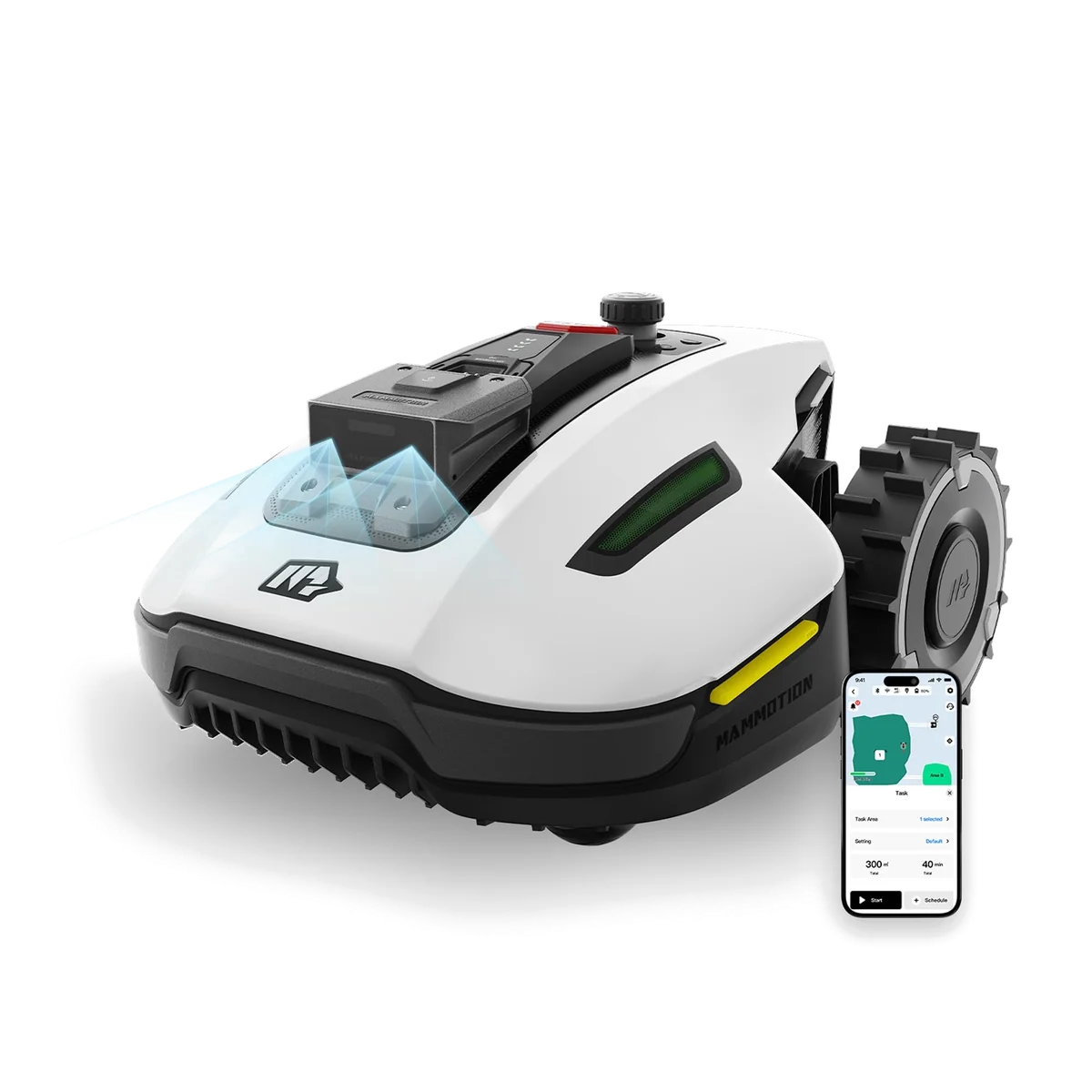
Mammotion YUKA Mini 600H
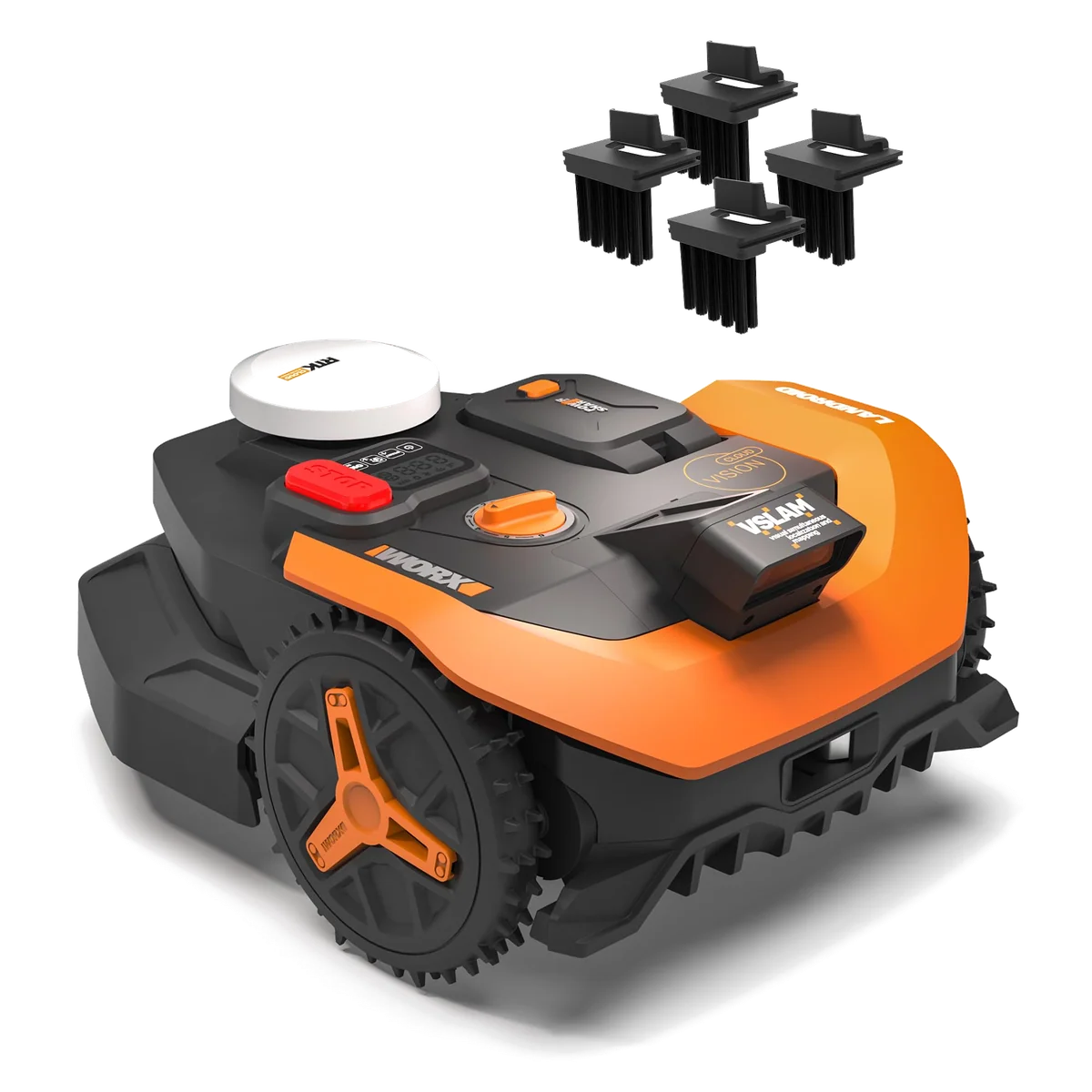
WORX Robot Lawn Mower for
These are both wire-free, two-wheel-drive maintenance mowers for modest lawns, yet they solve the job with different priorities. Mammotion made the YUKA Mini small, light and unusually configurable for its size. WORX gave the WR310 a broader quarter-acre brief, cloud-corrected positioning and a navigation system that can carry on beneath partial tree cover. Neither is the carefree appliance promised by its box.
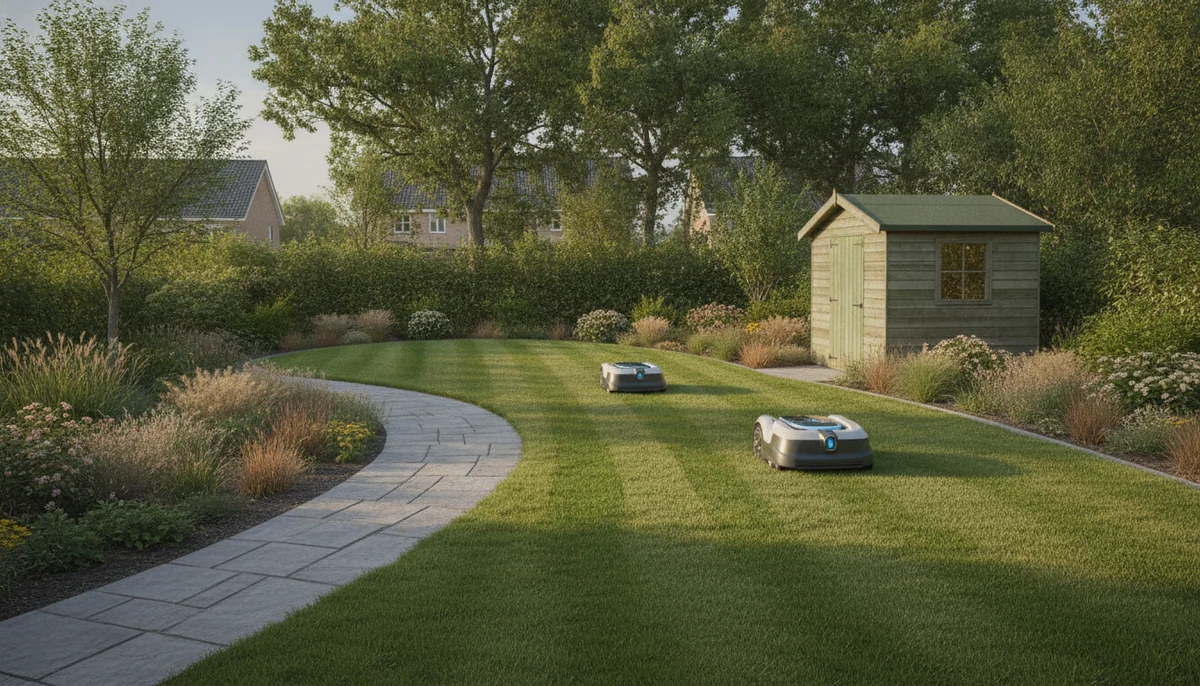
Smart Lawn Bots gives the WORX the win because its advantages survive contact with ordinary ownership. It can produce deliberate stripes, cross suitable paved borders for a closer edge and maintain multiple areas without a buried cable or local RTK antenna. Setup can be tedious, map correction is clumsy and two driven wheels still impose a hard terrain limit, but the machine has a credible path from frustrating first weekend to useful routine.
The YUKA Mini offers a lovelier best case and a worse downside. On firm, prepared grass well below 0.15 acre, it is quiet, precise and pleasantly manageable. Its 55-minute mowing cycle is restrictive, its camera can be cautious in the wrong places, and every retained review for this exact listing described a severe failure or support problem. That evidence is limited, but no buyer should pretend it is harmless.
| Decision | WORX WR310 | YUKA Mini 600H |
|---|---|---|
| Sensible lawn | Up to a quarter acre of maintained, mostly level turf | Preferably below its 0.15-acre recommended area |
| Positioning | Cloud RTK with vision and V-SLAM, without a local antenna | NetRTK with AI vision, plus an included private RTK station |
| Known cycle | Exact runtime and recharge figures are not established for this listing | About 55 minutes mowing followed by 90 minutes charging |
| Terrain | Two-wheel drive for firm, smooth ground | Two-wheel drive with similarly limited real-world traction |
| Ownership risk | Immature app behavior and laborious map correction | Severe exact-listing failures and uncertain support outcomes |
| Best reason to choose it | More convincing all-round choice for the right small lawn | Compact handling and a private positioning fallback |
Mammotion YUKA Mini 600H
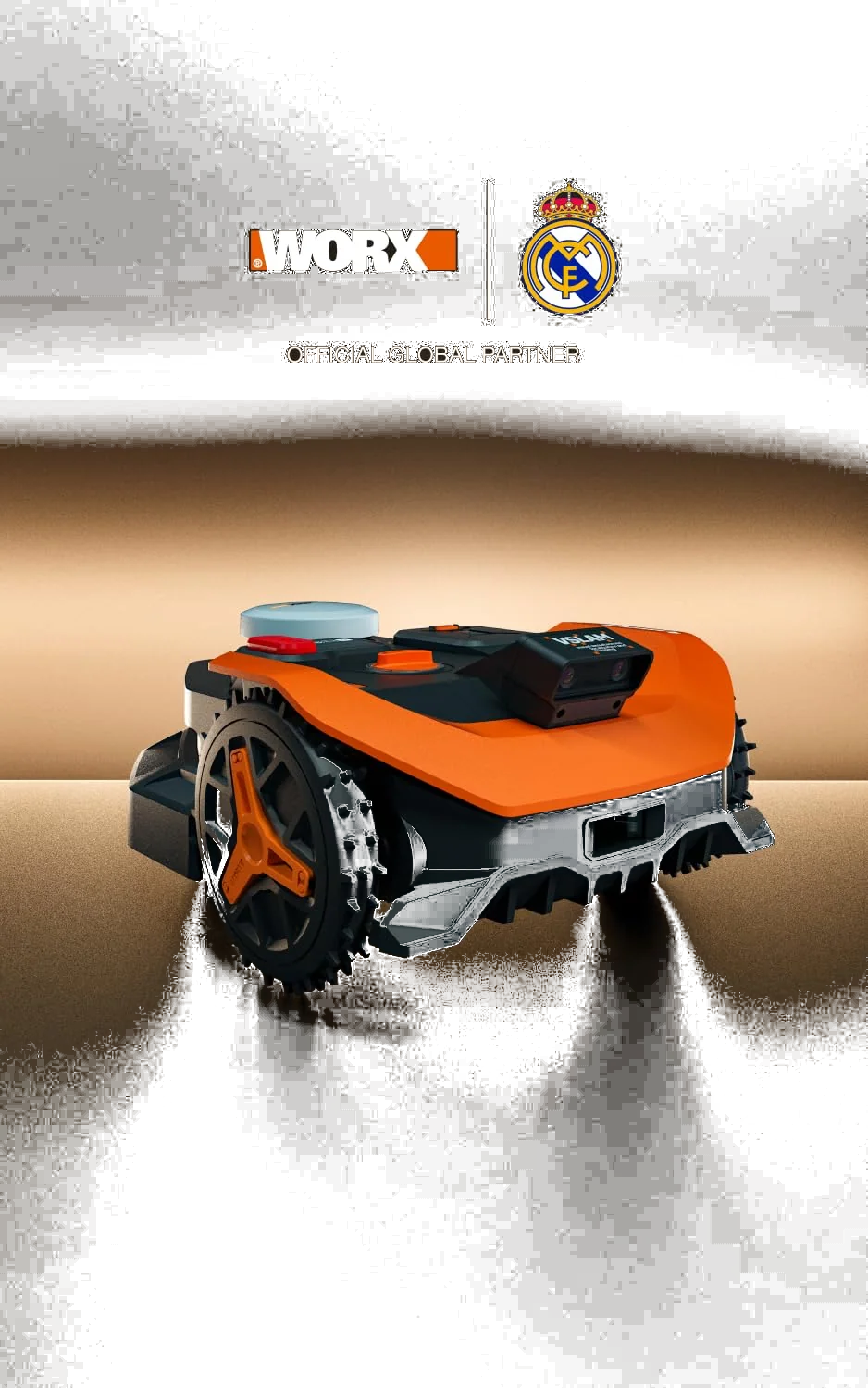
WORX Robot Lawn Mower for
At a Glance
| Feature | Mammotion YUKA Mini 600H | WORX Robot Lawn Mower for |
|---|---|---|
| Price Range | Under $200 | $500–$1,000 |
| Cutting height | 2–3.5 inches | — |
| Cutting width | 7.5 inches | — |
| Check Price on Amazon | Check Price on Amazon |
The ranking changes only when the lawn gets very small
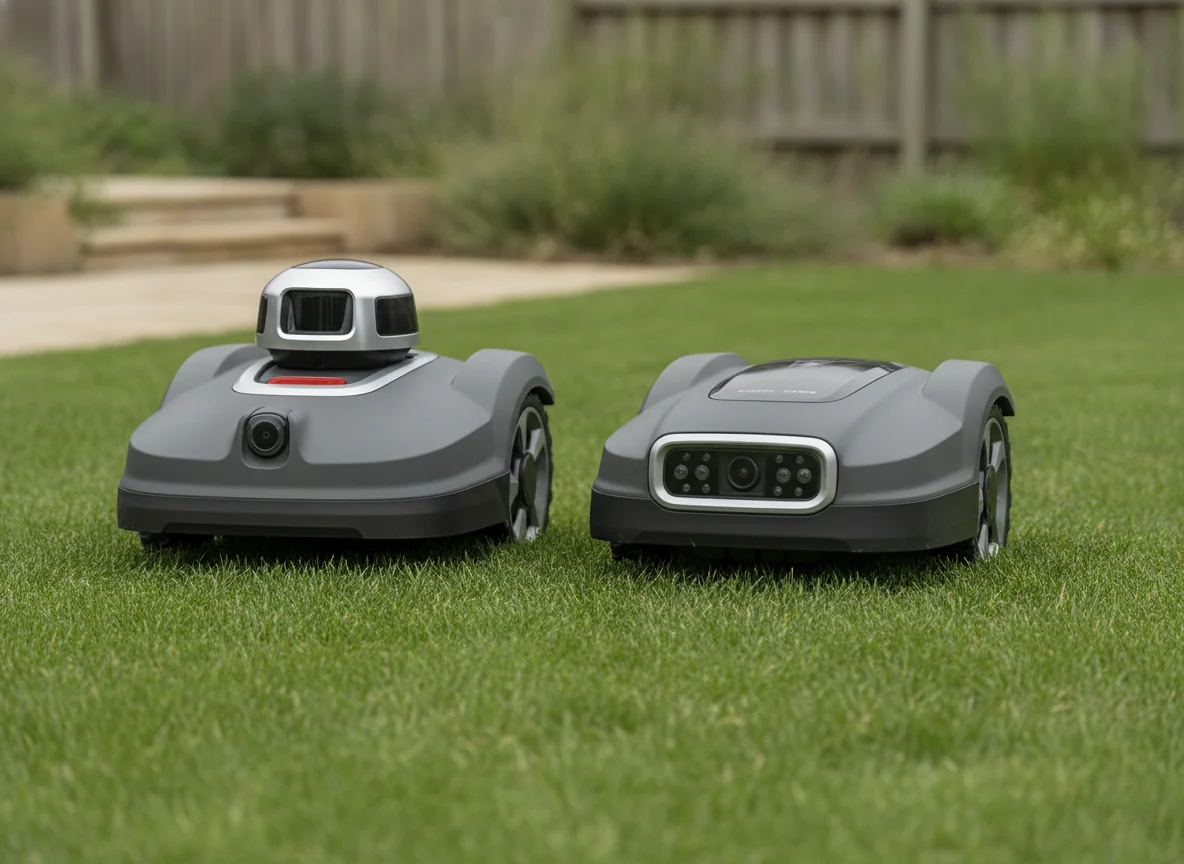
The WORX WR310 is the better small-lawn mower for an owner who can tolerate an unfinished app.
It wins with systematic cutting, antenna-free cloud positioning and a quarter-acre working brief that leaves more useful headroom than the Mammotion.
Its mapping workflow, connectivity requirements and two-wheel-drive traction can turn a rough or damp garden into repeated app work and outdoor rescues.
Its best work is visible from the kitchen
Once the map is sound, the WR310 follows organized parallel, checkerboard, diamond or natural patterns rather than roaming until chance fills the gaps. That difference is not cosmetic. Straight, consistent passes make the lawn look intentionally maintained, and frequent light cuts return fine clippings to the turf without a collection bag.
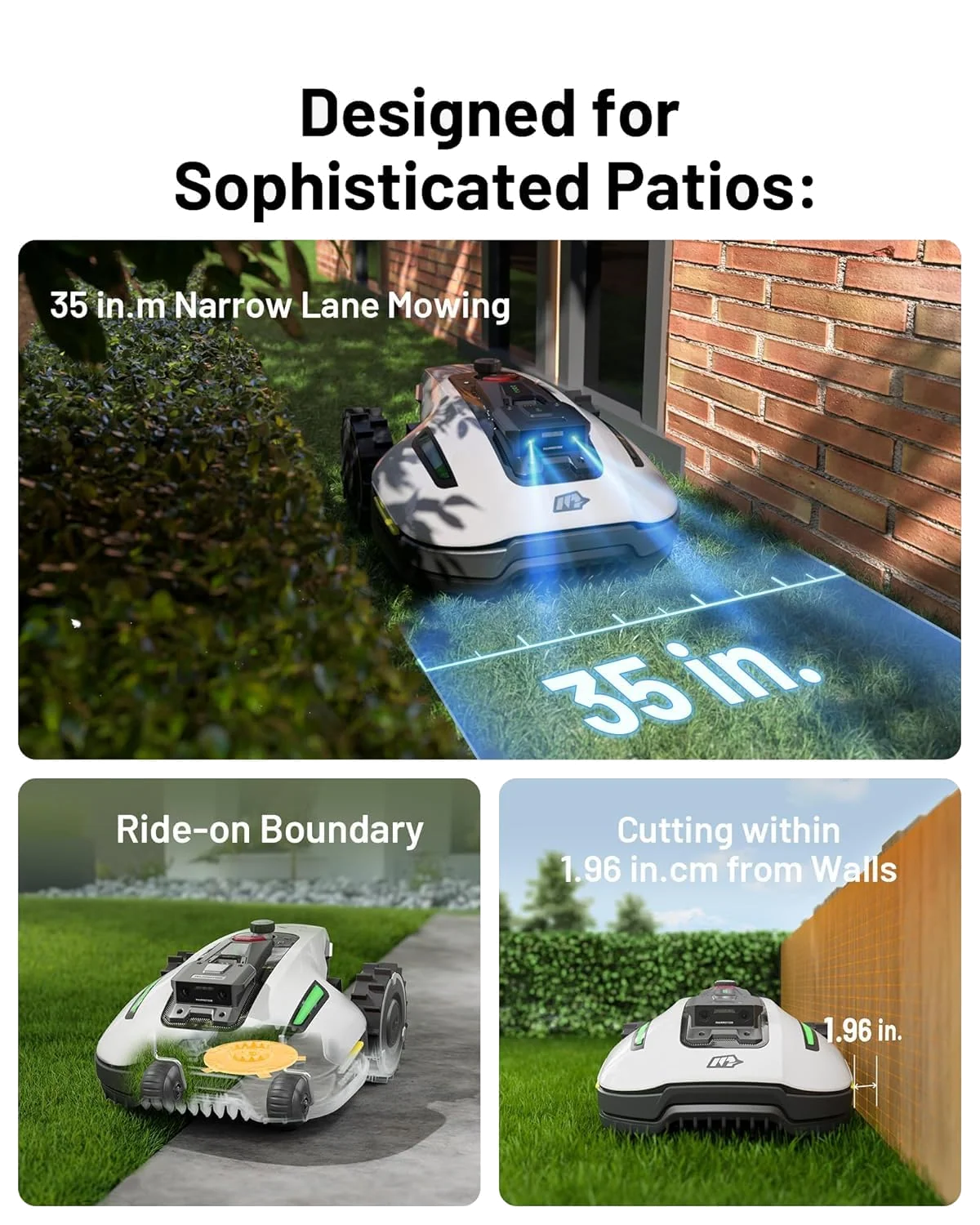
The mower can recognize ridable boundaries and let its wheels overlap a flush path, bringing the cutting system closer to the edge. A fence, wall or raised bed still leaves a strip because the chassis cannot occupy solid masonry. “Cut to edge” therefore means less trimming in a cooperative garden, not retirement for the string trimmer.
The cloud removes hardware, not setup
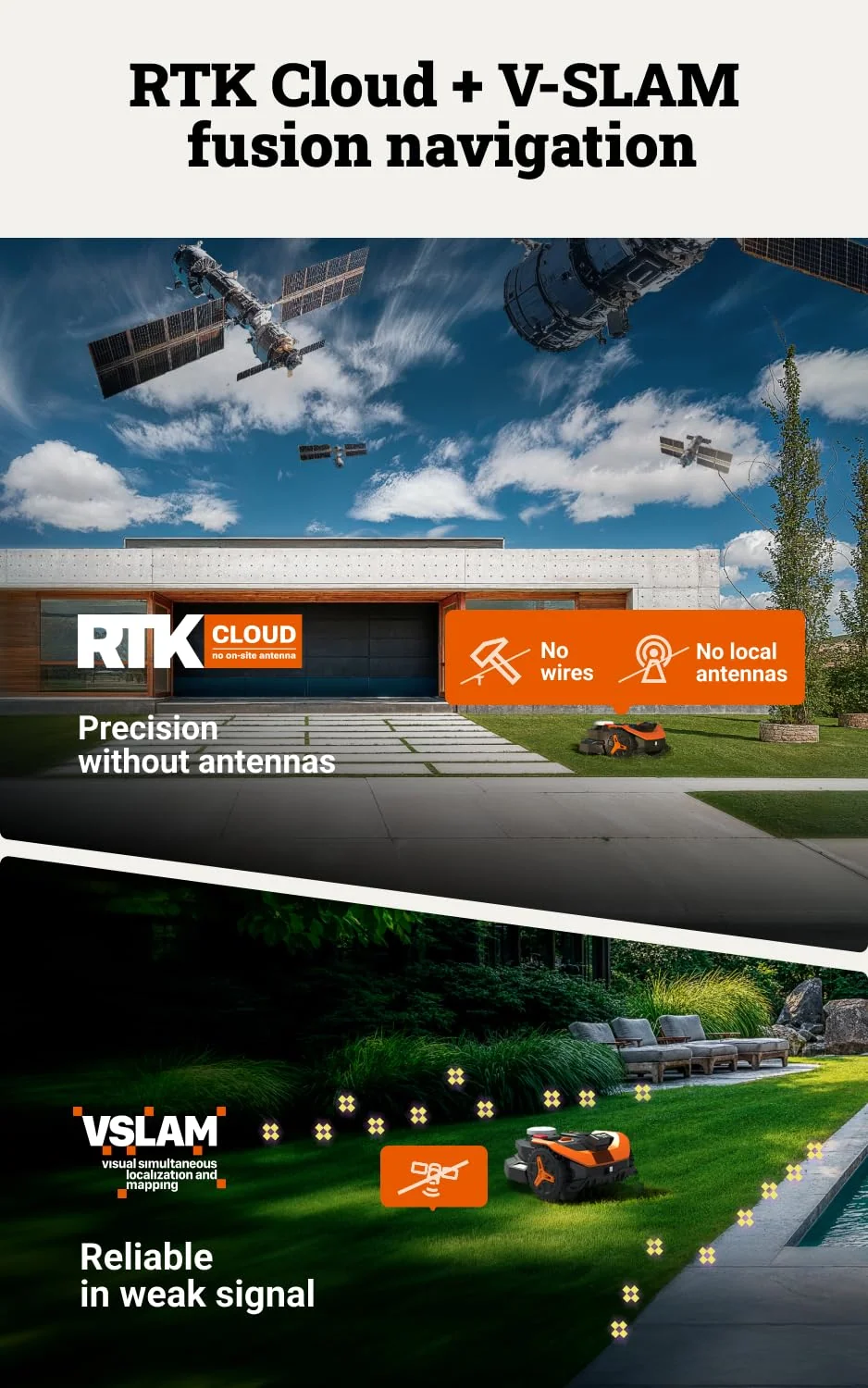
There is no perimeter cable to bury and no RTK pole to place, which makes the initial installation cleaner than either a wired Landroid or a conventional antenna-based robot. Cloud correction handles open ground while vision and V-SLAM help the mower continue through shade. The dock still needs power and dependable connectivity, and the owner still needs to inspect boundaries, connecting paths and no-go areas before an unattended schedule is sensible.
Changing a bad boundary is where the modern story becomes oddly physical. The related Vision Cloud platform can require the mower to be guided along a replacement line instead of accepting a simple edit on the screen. Stale errors, awkward cancellations and illogical route choices reinforce the same conclusion: the cutting hardware is ahead of its administration.
The WR310 also needs a tidy lawn. Its cameras can identify common obstacles, but conservative avoidance may leave a generous island of tall grass around a harmless post or toy. Pick up hoses, cords, branches and pet waste rather than treating object recognition as permission to abandon the yard.
Do not confuse this quarter-acre WR310 with the larger WR320. Search results frequently collapse the two, but WR320 battery, runtime, cutting and capacity figures do not become WR310 specifications through repetition. The exact WR310 record leaves those practical numbers unresolved, which is an irritating omission for anyone planning mowing around sprinklers, children or closed gates.
The YUKA Mini 600H is the specialist choice for a compact, firm lawn and a patient owner.
Its light 23-pound body, planned stripes, virtual boundaries and included RTK station make it unusually capable in a small, changeable garden.
The short mow-and-charge cycle is inconvenient, while exact-listing failures and inconsistent warranty experiences make every hardware fault more consequential.
A beautiful finish on a narrow brief
The YUKA Mini makes sense when the actual grass is small enough to suit the machine rather than merely fit beneath an advertised maximum. Its 7.5-inch cutting disc uses five pivoting blades, and the planned routes can leave open turf clean and evenly striped. At 23 pounds, it is also much easier to retrieve or carry to a disconnected patch than a large all-wheel-drive mower.
That compactness is purchased with a 2.4 Ah battery. Roughly 55 minutes of mowing followed by about 90 minutes of charging is adequate for frequent maintenance on a restrained map, but it is a slow way to attack anything near the listing’s 0.3-acre ceiling. Treat 0.15 acre as the outer sensible target and leave further margin for obstacles, slopes, edge passes and long grass.
The YUKA is not a recovery mower. Tall growth can be pushed flat or treated as an obstacle, so an overgrown lawn needs a conventional first cut before the robot begins its routine. Its centered cutting disc also leaves work beside vertical borders, while conservative vision settings can widen the untouched fringe around beds and trees.
The private RTK station is a useful escape hatch
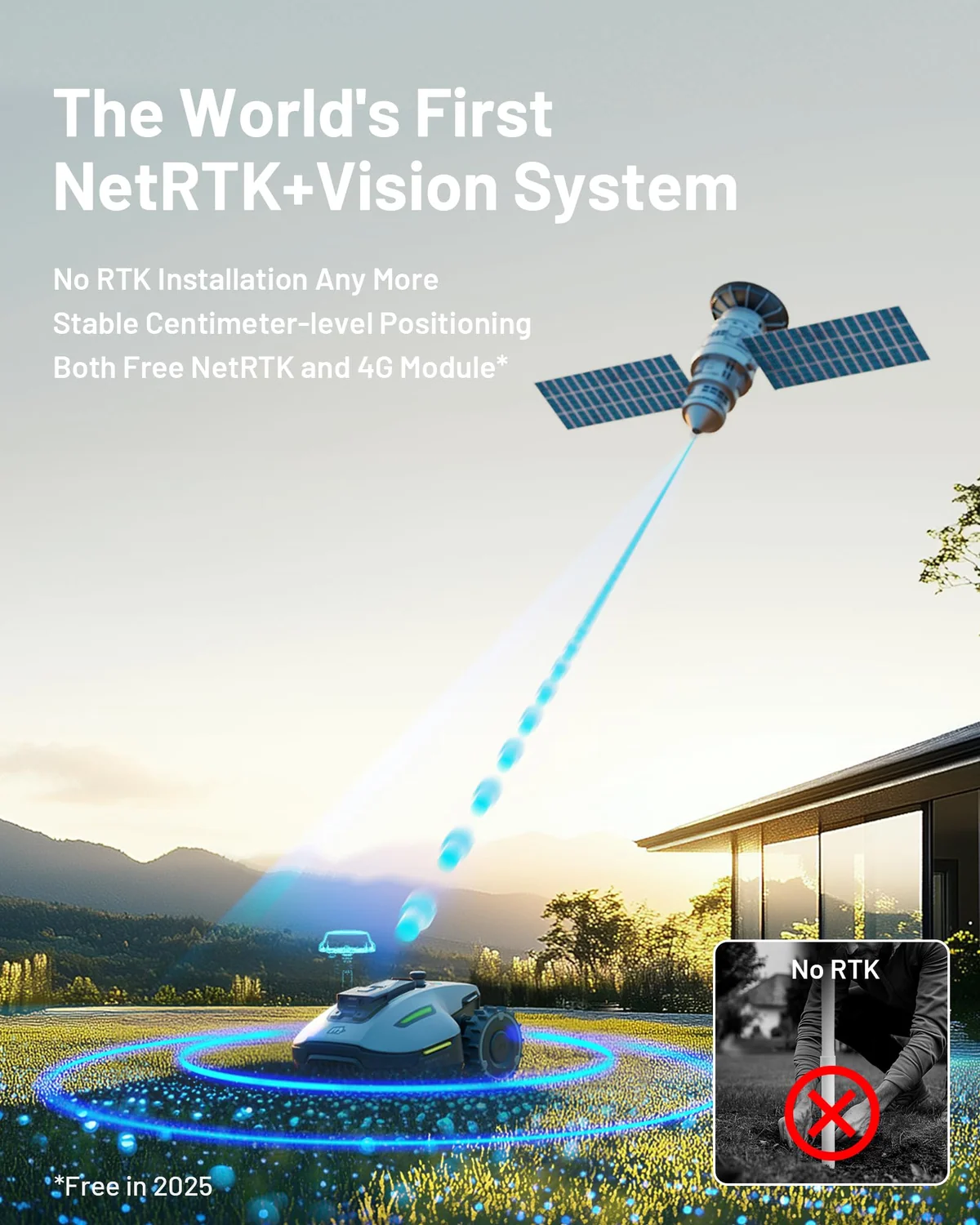
NetRTK allows operation without installing the included reference station, provided network coverage and the applicable service terms are acceptable. The station remains valuable because it offers an alternative to continuing dependence on network correction. Either route still deserves a carefully checked map, especially around water, retaining walls and indistinct grass boundaries.
The decisive objection is not a modest wheel, imperfect edge or lengthy charge. The exact-listing record includes a mower dying before reaching its dock, a front-wheel sensor fault after a second outing and a warranty dispute tied to an unauthorized sales channel. Three accounts do not reveal a population-wide failure rate, yet all three being severe one-star experiences is enough to make seller authorization, repair arrangements and written warranty terms part of the purchase decision.
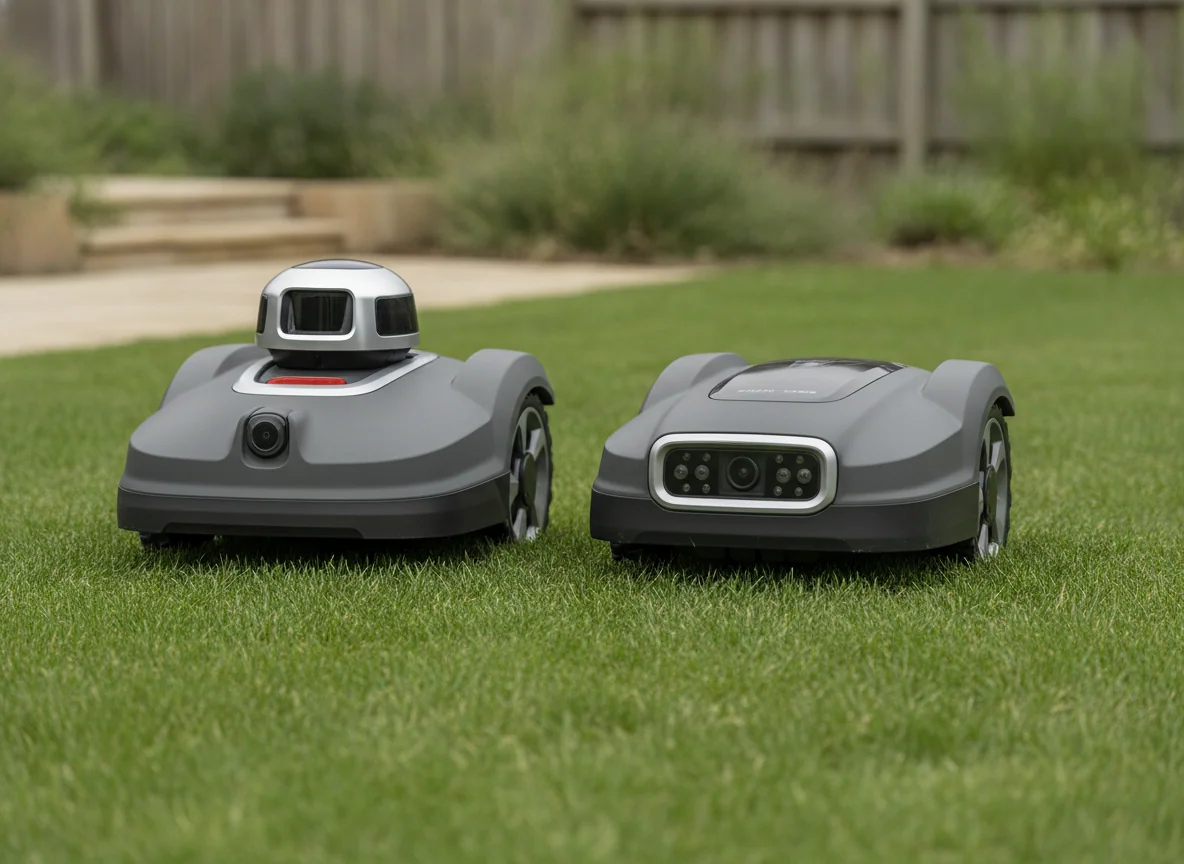
Neither smart navigation system can manufacture traction
Both machines use two driven wheels, so neither is the correct answer to a wet bank, rutted passage or soft turning area. Satellite accuracy can tell a mower where it is to the centimeter while its wheels dig in at exactly that location. The brochure’s maximum gradient matters less than whether the robot must turn across damp turf, climb over roots or reverse near a crest.
The YUKA listing alternates between 45% and 50% slope claims, but those figures describe favorable maximums rather than the lawn it should maintain every week. The WORX record does not establish an exact WR310 slope rating, and family experience already supplies the more useful warning: minor inclines, dew and depressions can demand a push. For difficult ground, start with the site’s guide to robot mowers for steep and uneven lawns.
A buyer who wants to stay with Mammotion should consider the LUBA Mini 2 1500H when traction is the problem to solve. Its all-wheel drive addresses the mechanical weakness shared by both mowers here, although a larger and heavier chassis is less graceful in a tight courtyard lawn.
Mammotion YUKA Mini 600H
WORX Robot Lawn Mower for
Choose by the worst corner, not the prettiest rectangle
Buy the WORX WR310 if
- Your mowable grass remains within a quarter acre.
- The surface is firm, mostly level and routinely kept short.
- Flush paving makes closer border cutting possible.
- A wire-free installation without a local RTK antenna is the main attraction.
- You are comfortable managing Wi-Fi, firmware and early map corrections.
Choose the YUKA Mini 600H if
- The lawn is comfortably below 0.15 acre and has narrow spaces.
- A 23-pound mower is meaningfully easier to carry between disconnected areas.
- You want the choice between NetRTK and an included private reference station.
- You can accept long charging pauses and verify support before ordering.
Walk away from both if
- The lawn stays wet, contains ruts or demands regular side-slope turns.
- Grass is often allowed to become tall before mowing.
- Walls, fences and raised borders must be cut without follow-up trimming.
- You expect automatic mapping to remove every setup decision.
- A cloud service or evolving app is unacceptable infrastructure for lawn care.
The final choice is less romantic than the technology. The WORX WR310 asks for patience during setup and then has the stronger chance of disappearing into a useful weekly routine. The YUKA Mini can be excellent on a smaller canvas, but its battery and ownership record narrow the recommendation too far for it to win overall.
Frequently Asked Questions
Which mower is better for a quarter acre?
The WORX WR310 is the better fit because a quarter acre is its stated class, while the YUKA Mini is most credible below its 0.15-acre recommended area.
Does either mower need a perimeter wire?
No, both use virtual boundaries and positioning sensors instead of a buried perimeter cable.
Does either mower need an RTK antenna?
The WORX relies on cloud correction without a local antenna, while the YUKA can use NetRTK or its included private reference station.
Which mower is better beneath trees?
The WORX has the more convincing hybrid-navigation case for partial cover, although dense canopy and difficult transitions still need verification during mapping.
Can either mower eliminate edge trimming?
No, both can reduce leftovers along flush paving but still leave grass beside walls, fences, raised beds and cautious obstacle buffers.
Are the WR310 and WR320 the same mower?
No, the WR310 is the quarter-acre model and specifications published for the larger WR320 should not be assigned to it.
Which one is better on hills?
Neither is a strong hill mower because both rely on two-wheel drive and can lose traction on damp, soft or uneven ground.
Ready to Choose?
Sources (34)
- Amazon listings and customer reviews — Mammotion Yuka Mini 600h and Worx Robot Mower For
- Owner reports across r/roboticLawnmowers, r/MammotionTechnology threads
- Owner and reviewer video, 59 channels
- Target listing
- Mammotion — Article — us.mammotion.com
- Trustpilot — Article — www.trustpilot.com
- Pcworld — Article — www.pcworld.com
- Toptenreviews — Article — www.toptenreviews.com
- Theverge — Article — www.theverge.com
- Trustpilot — Article — au.trustpilot.com
- Mammotion — Article — eu.mammotion.com
- Mammotion — Article — uk.mammotion.com
- Easylawnmowing — Article — www.easylawnmowing.com
- Easylawnmowing — Article — easylawnmowing.co.uk
- Therobotmower — Article — therobotmower.co.uk
- Trustpilot — Article — uk.trustpilot.com
- Freshlycharged — Article — freshlycharged.com
- Androidauthority — Article — www.androidauthority.com
- Au — Article — robotlawnmowers.com.au
- Techradar — Article — www.techradar.com
- Homedepot — Article — www.homedepot.com
- Lowes — Article — www.lowes.com
- Lawncraftsupply — Article — lawncraftsupply.com
- WORX — Article — www.worx.com
- Upzy — Article — www.upzy.com
- Facebook — Article — www.facebook.com
- Tomsguide — Article — www.tomsguide.com
- Bestbuy — Article — www.bestbuy.com
- Newatlas — Article — newatlas.com
- Reviewed — Article — www.reviewed.com
- Protoolreviews — Article — www.protoolreviews.com
- Pwcparts — Article — pwcparts.com
- Familyhandyman — Article — www.familyhandyman.com
- Sitejabber — Article — www.sitejabber.com