The Mammotion YUKA Mini 600H is a neat mower with a messy ownership risk
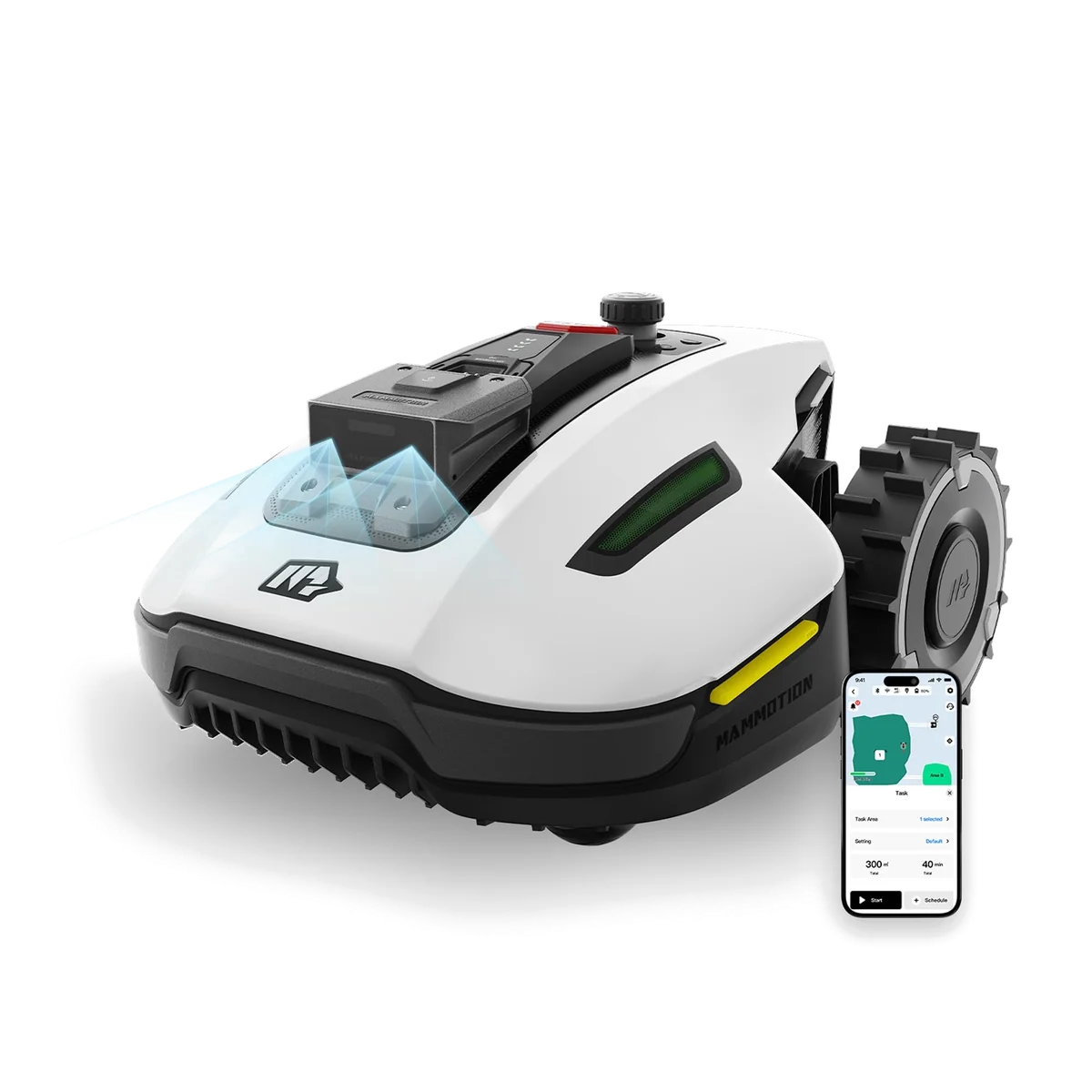
Do not buy the YUKA Mini 600H unless your lawn is small, firm and simple and you can tolerate an unusually uncertain support experience in exchange for excellent quiet cutting.
The case in plain English
The YUKA Mini 600H is an appealing specialist trapped inside an uneasy ownership proposition. It cuts a prepared small lawn quietly and neatly, maps without a buried wire and fits spaces that make larger robots clumsy. Its small battery, two-wheel-drive limits and imperfect edges are manageable if the lawn suits it. The exact-listing complaints and Mammotion’s broader support record are harder to dismiss because a mower waiting weeks for repair saves no time at all.
The cut is the easy part
The YUKA Mini 600H can make an ordinary small lawn look unusually deliberate. Its 7.5-inch disc carries five pivoting blades, follows planned lines instead of wandering randomly and leaves fine clippings behind as mulch. On open, regularly maintained grass, the result is clean, quiet and striped. A compact body also makes more sense between beds and around small terraces than one of Mammotion’s broad, heavy AWD machines.
That success depends on giving it the job it was designed to do. This is a maintenance mower, not a miniature brush cutter. Long grass gets flattened before the blades reach it or mistaken for an obstacle, so an overgrown lawn needs a conventional first cut and several closely spaced robot runs before the finish settles down. Once the grass is under control, frequent light cuts are where the Mini earns its keep.
The exact product record prevents a straightforward recommendation. All three retained Amazon reviews for this ASIN awarded one star. One mower reportedly died before reaching its dock, another developed a front-wheel sensor fault after its second outing, and owners described easy sticking and a repetitive support process. Three complaints cannot establish a failure rate, but their severity matters when the product is supposed to remove work rather than create a new troubleshooting hobby.
There is credible evidence on the other side. Longer Mini ownership reports describe crisp cutting, good general obstacle avoidance and weeks of operation without unforced rescues. The split is the point: when the hardware, map and lawn cooperate, the YUKA Mini can be excellent; when they do not, Mammotion’s uneven repair and support record makes a fault much more consequential.
Key Specifications
No boundary wire does not mean no infrastructure
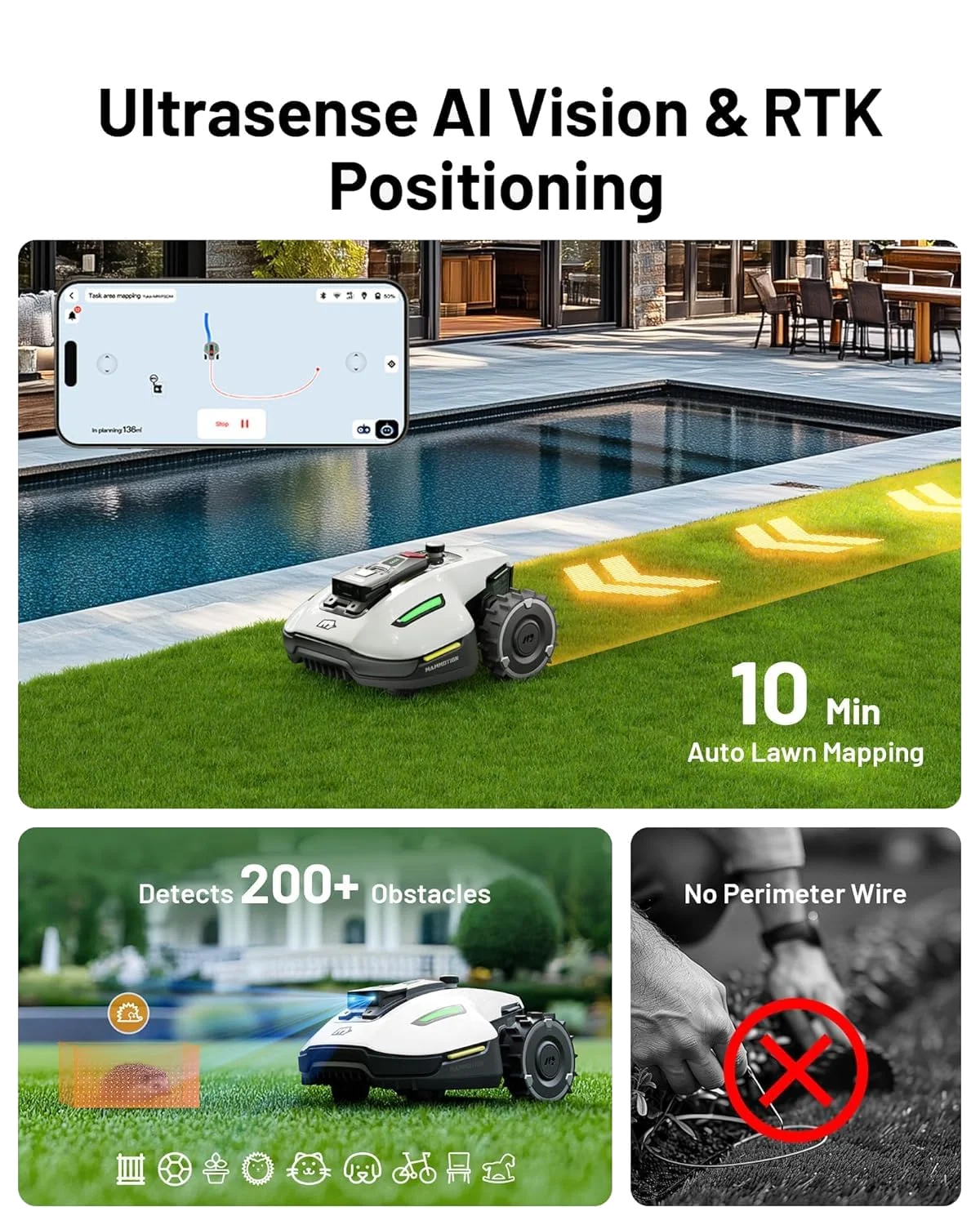
The 600H uses virtual boundaries, so there is no cable to trench around the garden or repair after an enthusiastic encounter with a spade. The app can create zones, paths and no-go areas, and those boundaries remain editable as beds or lawn shapes change. That is a decisive advantage over a traditional boundary-wire mower and the strongest reason to consider this model.
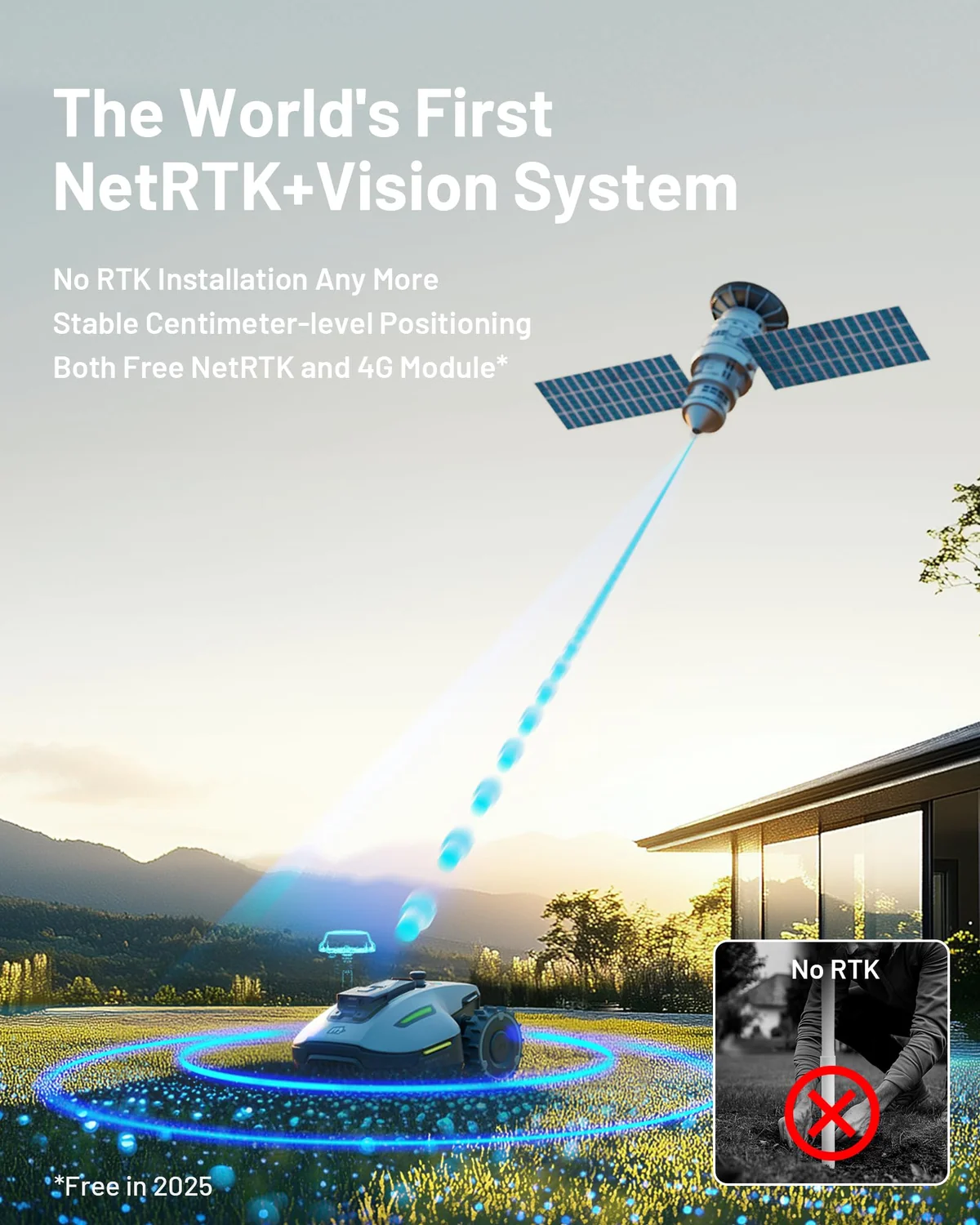
The phrase “no RTK installation” needs an asterisk. The package includes a private RTK reference station, but Mammotion’s network RTK service can deliver correction data through Wi-Fi or 4G instead. Skipping the antenna therefore trades physical installation for dependence on network coverage and service terms. Published free periods vary by model and region, so the duration and any later charge should be confirmed for the serial number and country before purchase.
Camera guidance can carry the mower through short losses of satellite correction, including beneath some tree cover, but its path becomes less precise. Buyers choosing between positioning systems should read the site’s guide to RTK, LiDAR and camera-based navigation rather than assuming “AI vision” makes signal conditions irrelevant.
Automatic mapping is worth trying on a rectangular lawn with obvious grass boundaries. A garden with hedges, exposed roots, narrow passages, water or irregular paving still deserves a manually checked perimeter. Map cautiously, watch the first complete boundary lap and move the line inward wherever the mower shuffles, touches an obstacle or approaches a drop. Fifteen-zone support is generous, but the 2–3.5-inch height is set with a physical dial, so separate zones cannot automatically receive different cutting heights.
Strengths & Limitations
Strengths
- Planned straight-line mowing leaves open, maintained grass clean and evenly striped.
- Virtual boundaries, multiple zones and editable paths avoid the burden of buried perimeter wire.
- The compact 23-pound body suits tight small lawns and remains manageable when a rescue or manual transfer is necessary.
- The replaceable battery and simple pivoting blades make routine mechanical upkeep approachable.
Limitations
- The 55-minute mowing cycle makes the claimed 0.3-acre maximum a ceiling rather than a sensible buying target.
- Two-wheel drive is vulnerable to wet slopes, roots, holes, soft ground and awkward turns.
- Vision avoidance can be cautious around harmless foliage yet still miss low or thin hazards.
- Exact-ASIN failures, firmware regressions and inconsistent repair experiences make after-sales support the decisive risk.
- The centered cutting disc leaves manual trimming beside fences, walls and cautious obstacle buffers.


A 55-minute mower cannot hurry
The 600H’s 2.4 Ah battery is its defining limitation. Published figures give it about 55 minutes of mowing followed by a 90-minute charge, with a later estimate of roughly 150 square metres covered per cycle. It returns to charge and resumes, so a larger map can eventually be completed, but “eventually” is doing useful work in that sentence. Obstacles, edge passes, slopes, overlap and longer grass all extend the day.
Treat 0.15 acre as the sensible sizing figure, not the opening bid. The listing’s 0.3-acre maximum conflicts with other published material that places the practical ceiling nearer 0.2 acre, and neither figure promises quick completion. A lawn substantially below 0.15 acre gives the mower room to absorb detours and charging without running from breakfast until evening. For a fuller explanation of why advertised area is not the same as comfortable capacity, see the guide to robot mower acreage ratings.
The slope number flatters it
The listing itself alternates between 45% and 50% gradient claims. Even the lower figure is about 24 degrees, not 45 degrees, and it describes an ideal maximum rather than an everyday recommendation. This remains a two-wheel-drive mower with modest wheels. Damp turf, side slopes, roots, holes, soft soil and turning near the crest can defeat it well before a brochure number does.
For a firm, moderately sloped lawn, the lighter YUKA can turn more gently than a tank-steering AWD mower. For ruts, ant mounds, wet inclines or off-camber ground, the Mammotion LUBA Mini 2 1500H is the better Mammotion because its all-wheel drive addresses the exact weakness that limits the YUKA. Buyers dealing primarily with gradient should start with the site’s mowers for steep and uneven lawns, not with the 600H’s headline percentage.
Vision sees plenty, not everything
Large toys, pets and obvious garden objects are often detected correctly, yet the same vision system can give leaves and low branches too much room while climbing onto a low chair foot or missing a thin hazard. The original Mini has no ultrasonic array or physical bumper to provide a second obstacle-detection layer. Clear sticks, cords, pet waste and small toys before mowing, and never use object recognition as the final barrier beside a pond, road or retaining wall.
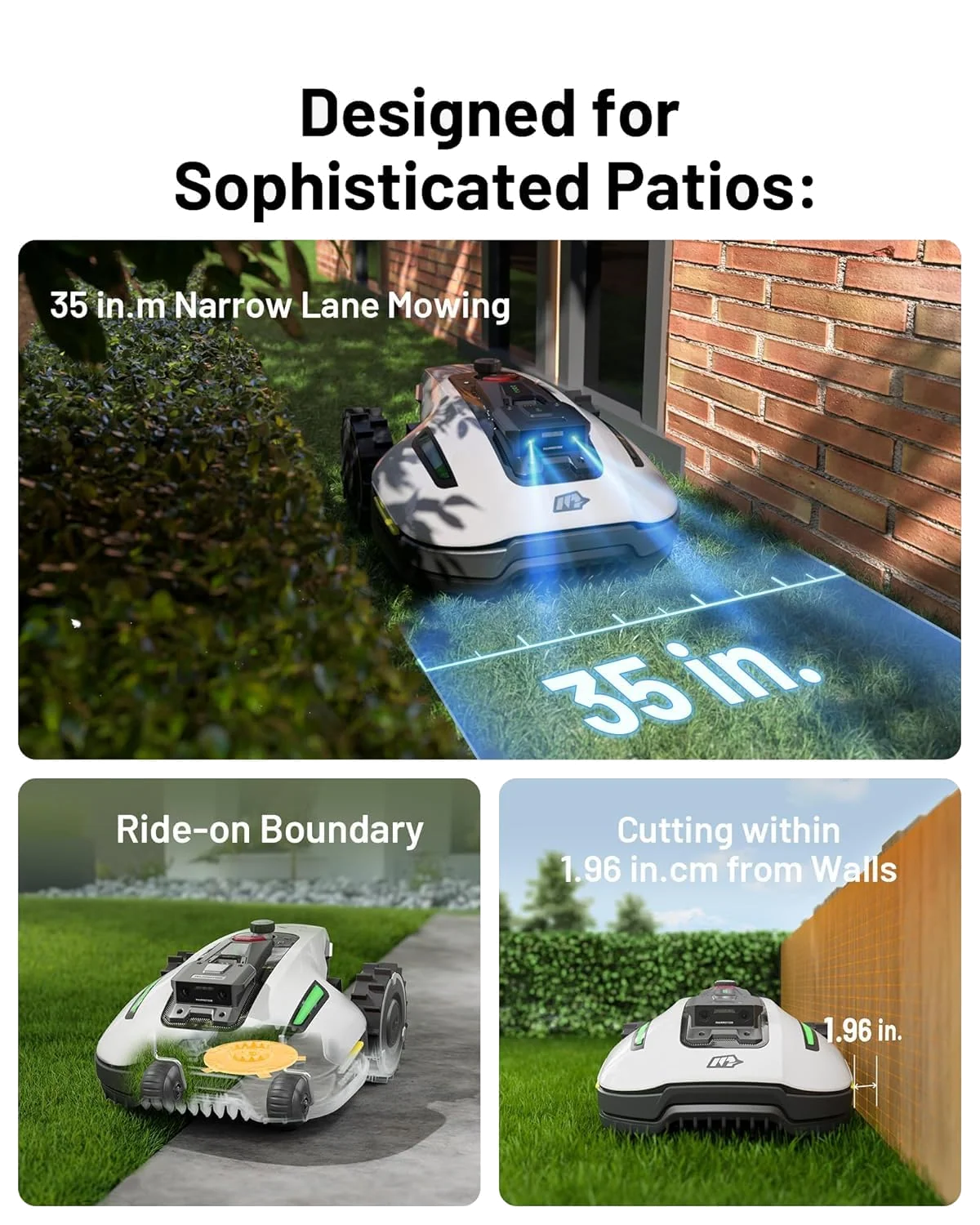
Conservative avoidance also costs grass coverage. It leaves wider margins near beds, trees and fences, and the centered cutting disc cannot trim flush against a vertical wall. A paving edge that lets the wheels overlap can produce a much cleaner border; otherwise, a string trimmer remains part of ownership. Turning avoidance down may reduce the fringe, but it also transfers more safety responsibility to the person setting the schedule.
Buy the saved weekends, not the specification sheet
The YUKA Mini 600H beats a basic boundary-wire robot when the lawn changes shape, contains several zones or needs crisp planned stripes. Editing a virtual line is better than digging up a cable, and its compact 23-pound body is manageable when a disconnected patch must be reached by carrying the mower and using drop-and-mow.
It loses that advantage when the lawn itself is hostile. A root-heavy garden can turn every smart feature into a sequence of rescues, while a yard near the claimed maximum makes the small battery spend much of the day alternating between grass and charger. The better value is not the machine with the largest stated area or slope figure; it is the one that can finish the actual lawn without regular intervention.
The ideal owner has a clearly bounded lawn well within 0.15 acre, reliable network RTK coverage or a suitable antenna position, and enough patience to refine the first map. Anyone expecting recovery of tall grass, perfect wall-to-wall edging, confident operation beside water or appliance-like support should walk away. The broader small-lawn mower guide offers alternatives when those compromises are wrong for the garden.
The app can improve the mower and move the goalposts
Mammotion’s app is powerful enough to control zones, patterns, schedules, speed, edge passes and camera viewing, yet the software record is inconsistent. Firmware updates have improved avoidance and navigation, but owners also report new stopping behaviour, altered turning options, ignored settings and machines destabilized after updates. A strong interface does not cancel the risk that purchased behaviour may change later.
Routine upkeep is refreshingly ordinary. The battery is accessible beneath a screw-secured panel and can be replaced, the blades are simple consumables, and published guidance puts blade replacement at about 100 operating hours. The mower, dock and RTK station are listed as IPX6, but wet mowing still reduces traction and packs grass underneath; clean the deck, wheels, camera and charging contacts without treating the rating as permission to use a pressure washer.
A garage is optional rather than necessary. A well-ventilated plastic shelter can reduce direct sun and rain exposure, provided it leaves room for the camera, signal reception and a straight docking approach. The charging base matters more than the roof: install it level, keep the contacts clean and verify that the mower can return with battery to spare.
Before checkout, confirm that the seller is an authorized channel, ask where warranty repairs are handled, save the written three-year warranty and clarify the NetRTK and 4G terms. One exact-ASIN owner says a replacement battery was refused because the mower came from eBay, while other Mammotion owners report successful parts support. The fair conclusion is not that the warranty is fictional; it is that support quality and channel eligibility are too uncertain to leave unexamined.
Frequently Asked Questions
Can the YUKA Mini 600H mow without a perimeter wire?
Yes, it uses app-defined virtual boundaries rather than a buried perimeter cable.
Does the YUKA Mini 600H need an RTK antenna?
No physical antenna is required when compatible NetRTK service and connectivity are reliable, although an RTK reference station is included as an alternative.
Does Mammotion require a subscription for this mower?
Private RTK operation can avoid continuing network-positioning dependence, but NetRTK and 4G free periods and later charges vary by model and region.
Can the 600H realistically maintain 0.3 acre?
It may eventually cover a large mapped area by charging and resuming, but its 0.15-acre rating is the more credible target for dependable completion.
Does the YUKA Mini 600H need a garage?
No, the mower and dock are listed as IPX6, although a signal-friendly shelter can reduce long-term exposure to sun and rain.
Can it work beneath trees?
Camera guidance can bridge some loss of satellite correction beneath trees, but accuracy may decline and dense cover remains a poor condition for precise unattended mowing.
Is the battery replaceable?
Yes, the 2.4 Ah battery is accessible beneath a screw-secured panel and is designed to be replaceable.
Sources (19)
- Amazon listings and customer reviews — Mammotion Yuka Mini 600h
- Owner reports across r/roboticLawnmowers, r/MammotionTechnology threads
- Owner and reviewer video, 36 channels
- Mammotion — Article — us.mammotion.com
- Trustpilot — Article — www.trustpilot.com
- Pcworld — Article — www.pcworld.com
- Toptenreviews — Article — www.toptenreviews.com
- Theverge — Article — www.theverge.com
- Trustpilot — Article — au.trustpilot.com
- Mammotion — Article — eu.mammotion.com
- Mammotion — Article — uk.mammotion.com
- Easylawnmowing — Article — www.easylawnmowing.com
- Easylawnmowing — Article — easylawnmowing.co.uk
- Therobotmower — Article — therobotmower.co.uk
- Trustpilot — Article — uk.trustpilot.com
- Freshlycharged — Article — freshlycharged.com
- Androidauthority — Article — www.androidauthority.com
- Au — Article — robotlawnmowers.com.au
- Techradar — Article — www.techradar.com