Robot lawn mowers leave the clippings behind, and that is usually the point
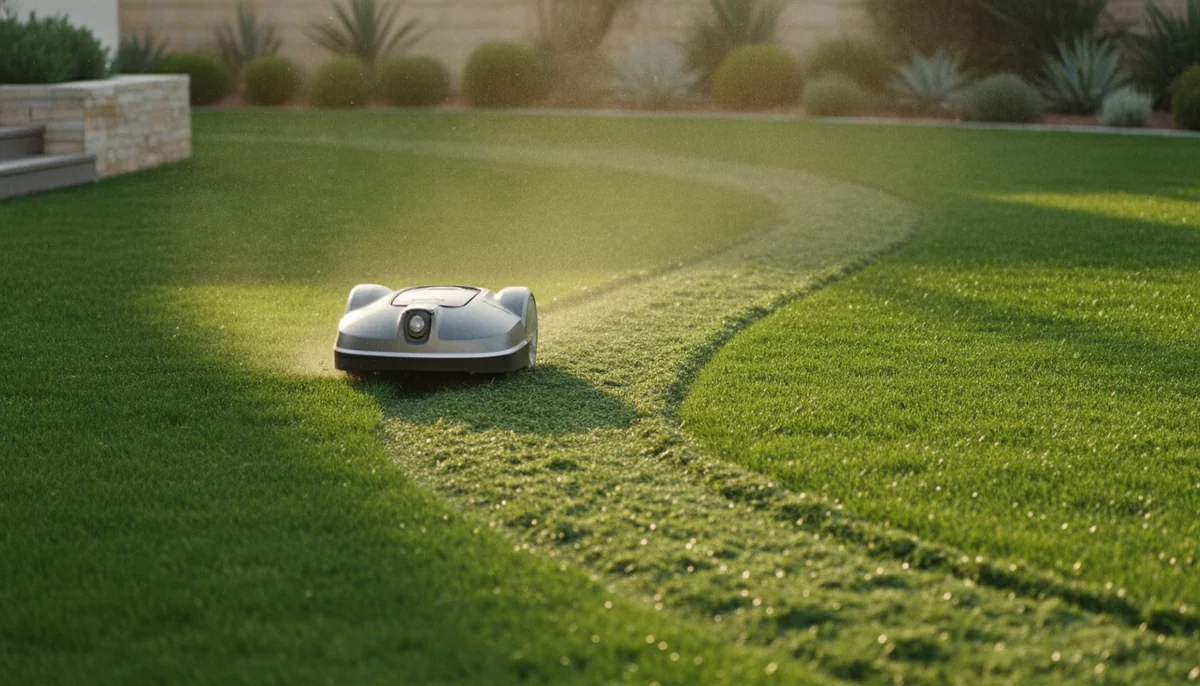
Almost every autonomous robot mower cuts without a grass box. Small pivoting blades trim the grass tips, and the cut material falls back into the turf. Run the machine often enough and those pieces are difficult to see; leave the lawn for a wet, fast-growing fortnight and the same mower can produce clumps, packed decks and an untidy finish.
This is commonly described as mulching, although grasscycling is more precise. A conventional mulching deck creates airflow, lifts grass and may recut it beneath a broad enclosed deck. Most robot mowers have little suction and no catcher. They make the clippings unobtrusive through shallow, repeated cuts rather than brute-force processing.
That distinction explains why owners can sincerely describe the same machine in opposite ways. One sees tiny fragments disappear between the blades and calls the result mulch; another looks beneath the chassis, sees no high-lift deck and says the mower simply drops what it cuts. Both observations fit the mechanism.
The missing bag is part of the system
An autonomous mower cannot remain autonomous if someone must follow it around emptying a catcher. Its answer is to remove so little grass on each trip that collection becomes unnecessary. The mower may spend hours crossing the lawn, dock to recharge and return later, but that is machine time rather than owner time.
| Method | What happens to the grass | What the owner does |
|---|---|---|
| Bagging | Cuttings enter a catcher and leave the lawn. | Empty the catcher, dispose of the grass and restart when required. |
| Robot grasscycling | Frequent, short tips settle into the standing grass and break down in place. | Keep the schedule running and clean buildup from beneath the mower. |
| Heavy discharge | Longer cuttings remain visible on top of the lawn and may form rows or clumps. | Rake, recut or collect them with another mower. |
A robot belongs in the middle row only while the lawn stays within its maintenance rhythm. The absence of a bag is convenient because there is normally nothing to empty, not because the grass has vanished.
Frequency does the work that suction cannot
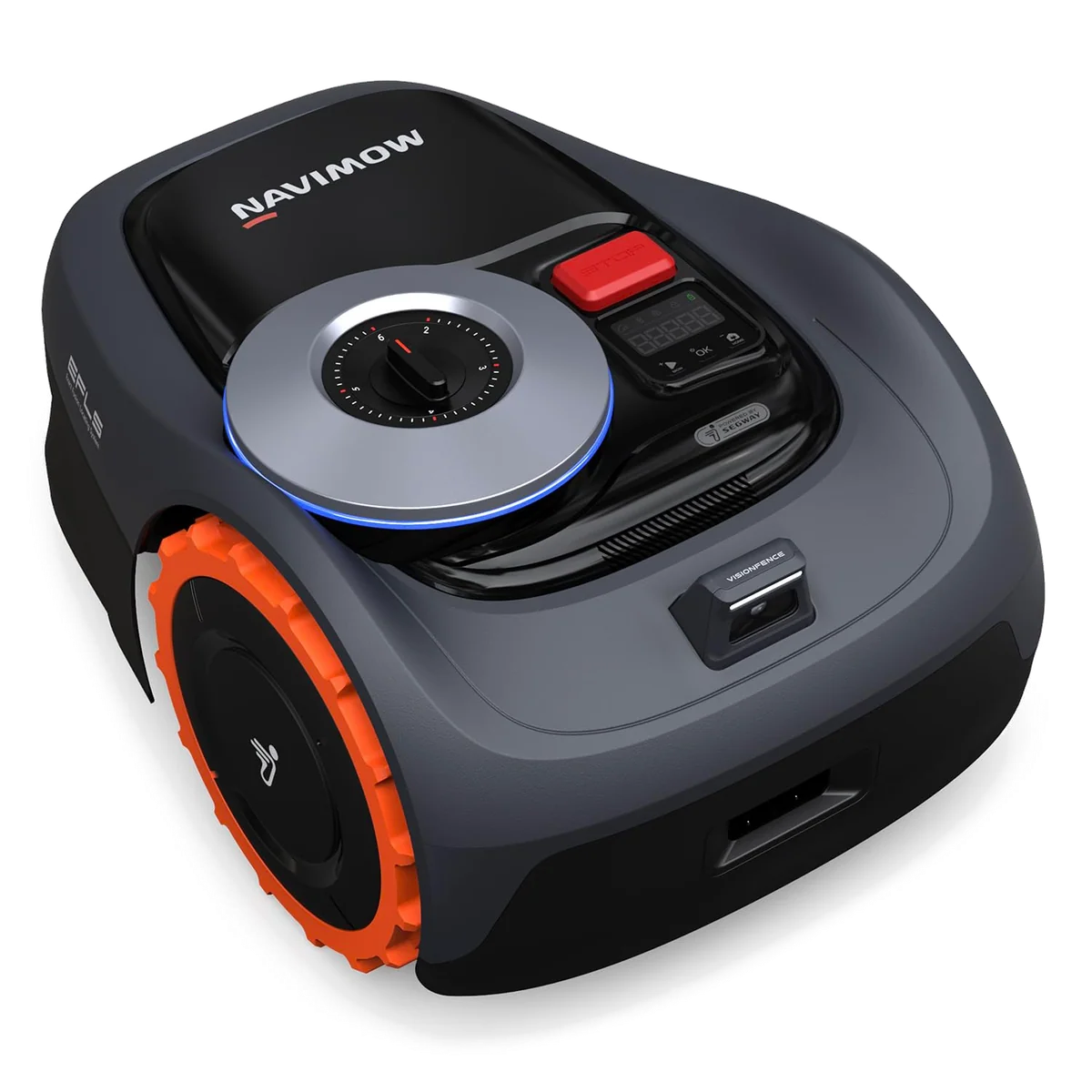
The reliable routine begins with an ordinary mower. Bring the lawn down to the height the robot will maintain, map the working area, then schedule several light cuts each week. A Navimow i110N owner removing roughly one eighth of an inch every other day could barely perceive the clippings; ECOVACS GOAT A2000 owners report the same clean appearance with two or three weekly sessions.
- Reset the height. Cut long grass conventionally before the robot’s first full schedule.
- Choose a sustainable setting. Avoid taking a dramatic amount off in one pass.
- Mow little and often. Daily, alternate-day or several-times-weekly operation suits fast growth better than a single weekly outing.
- Vary the direction. Later passes can catch flattened blades that a low-suction disc missed.
- Inspect underneath. Remove damp buildup before it stops the small blades pivoting freely.
A mower sized too close to its maximum area has less room for weather delays, charging stops or downtime. Once it falls behind, every later pass removes more material and the clipping advantage starts to unravel. An acreage label describes recurring maintenance capacity, not a promise to finish the whole lawn on one charge; our guide to robot-mower acreage ratings explains that distinction.
Tall and wet grass exposes the bargain
The first failure is visual. Longer pieces sit on top of the canopy instead of slipping between upright blades. Wet pieces stick together, trail behind the mower and pack around the cutting disc. Dense runners, mature weeds and lodged grass may bend beneath the chassis or survive as narrow standing strips.
More power does not change the collection method. The Mammotion LUBA 3 AWD 3000H uses twin discs, twelve blades and substantially more cutting hardware than a small-yard robot, yet it still leaves the material where it falls. Its traction and high cut make it compelling on rough, steep ground, but long wet growth can collect beneath the deck, while aggressive turns can scrub soft turf and its software experience is inconsistent; the full LUBA 3 AWD 3000H review covers that trade.
The smaller ANTHBOT M5 provides the clearest version of the normal robot-mower bargain. On an open, already-short lawn around one eighth of an acre, several scheduled runs can produce tidy lanes with tiny clippings lost in the turf. Overgrown grass can instead leave clumps and narrow “mohawks,” while tree cover, close buildings and difficult hills weaken its case; see the ANTHBOT M5 review before treating its five-blade disc as proof of conventional mulching power.
Wet grass also costs runtime and traction, even when a mower is weather-resistant. Rain tolerance protects the machine from an outdoor life; it does not make damp clippings behave like dry ones. The practical limits are covered separately in our guide to robot mowing in rain and wet grass.
Leaves, debris and borders remain your jobs
A robot mower is not a lawn vacuum. It does not collect fallen leaves, and a compact razor disc should not be treated as a leaf shredder. On the WORX WR320, leaves can even be mistaken for obstacles, creating islands of uncut grass rather than neat piles of processed material. Sticks, cords, toys and pet waste also need clearing because vision systems cannot guarantee that low objects stay away from the blades.
Clipping handling has no bearing on edging either. An inset cutting disc leaves a fringe beside walls, fences, raised beds and drops. Flush paving lets some machines overlap the boundary, while an offset edge cutter can reduce the strip, but a string trimmer still earns its place; our robot-mower edge guide shows where manual work remains.
The mower that bags is not the mower that leaves you alone
The Mowrator S1 is the important exception in this group. It has a conventional 21-inch blade and supports mulching, rear discharge and collection with a bag, so it is the sensible choice here when grass must physically leave the lawn. Its honest drawback is categorical rather than minor: it has no autonomous mapping, schedule or self-directed mowing, and someone must steer it continuously and empty the catcher; the Mowrator S1 4WD review explains what that hands-on control buys on slopes and rough growth.
The tracked AIWEIYA AWY-550 is also continuously driven by remote control, but no grass collector is established for it. Its heavier cutting hardware can tackle pasture, weeds and moderate brush that defeat small maintenance robots, then leaves the cut vegetation behind. Tracks can also disturb manicured turf, so it is a rough-ground tool rather than a route to a cleaner ornamental lawn.
| Machine type | Grass collection | Central compromise |
|---|---|---|
| Autonomous razor-disc mower | No catcher; fine maintenance clippings remain on the lawn. | Needs short, reasonably dry grass and a frequent schedule. |
| Mowrator S1 | Can mulch, rear-discharge or collect with its bag. | Requires continuous remote steering and manual bag emptying. |
| AIWEIYA tracked mower | No collector is established; cut material remains behind. | Handles tougher growth but can mark delicate turf. |
Buy the routine, not the word “mulching”
An autonomous robot is a good replacement for recurring center-lawn mowing when the grass can stay short and the clippings may remain. It is a poor replacement for a bagging mower when the lawn is allowed to grow long, heavy leaf fall is normal, diseased material needs removing or the finished surface must look collected immediately after an overdue cut.
Keep access to an ordinary mower for the first seasonal knockdown and recovery after rain, travel or repairs. Then let the robot make small, frequent cuts before the lawn looks ready for mowing. That is the point at which “no bag” stops being an omission and becomes the reason the machine can work without you; readers ready for that bargain can compare the site’s best robotic lawn mowers.
Frequently Asked Questions
Where do a robot mower’s clippings go?
They fall into the lawn, where frequent short cuttings settle between the standing blades and gradually break down.
Will the cut grass form visible clumps?
Dry maintenance cuts usually disappear, while long, wet or aggressively shortened grass is much more likely to leave clumps and trails.
Does a robot mower need an initial conventional cut?
Yes, an overgrown lawn should normally be brought close to the chosen maintenance height before the robot begins its recurring schedule.
Can a robotic mower collect or mulch fallen leaves?
No, ordinary autonomous models neither collect leaves nor reliably process heavy leaf cover, which can obstruct their cutting pattern.
Can a collection bag be added to an autonomous robot mower?
No compatible catcher is established for the autonomous razor-disc models covered here, and improvised hardware near their blades is unsafe.
How often should a robot mow to keep clippings hidden?
Several light cuts per week are the safer starting point, with faster-growing lawns often needing daily or alternate-day operation.
Will leaving fine clippings create the same mess as an overdue cut?
No, tiny routine cuttings settle into the turf very differently from long wet material, although the lawn still needs a reset when the machine falls behind.
Does bagless mowing eliminate lawn maintenance?
No, the owner still clears debris, cleans the underside, replaces blades, trims hard borders and occasionally tackles overgrowth with another mower.
Sources (141)
- Amazon listings and customer reviews
- Owner reports across r/MowratorOfficial, r/automower, r/rctoys and 41 more threads
- Owner and reviewer video, 271 channels
- Walmart listing
- Target listing
- Toptenreviews — Article — www.toptenreviews.com
- Pcworld — Article — www.pcworld.com
- Homedepot — Article — www.homedepot.com
- Lowes — Article — www.lowes.com
- Robotmowerlab — Article — robotmowerlab.com
- Forbes — Article — www.forbes.com
- Lifehacker — Article — lifehacker.com
- Makeuseof — Article — www.makeuseof.com
- Navimow — Article — navimow.com
- Segway — Article — navimow.segway.com
- Tomsguide — Article — www.tomsguide.com
- Site — Article — segway-navimow.my.site.com
- Consumerreports — Article — www.consumerreports.org
- Propartsdirect — Article — www.propartsdirect.net
- Facebook — Article — www.facebook.com
- Easylawnmowing — Article — easylawnmowing.co.uk
- Trustedreviews — Article — www.trustedreviews.com
- Cleva — Article — us.cleva.com
- Bestutahrealestate — Article — bestutahrealestate.com
- Cleva Uk — Article — www.cleva-uk.com
- Expertreviews — Article — www.expertreviews.co.uk
- Cleva — Article — eu.cleva.com
- Currys — Article — www.currys.co.uk
- Mowerbotlab — Article — mowerbotlab.com
- Gardentool360 — Article — gardentool360.co.uk
- Ukgardenreviews — Article — ukgardenreviews.com
- Gardenersworld — Article — tollbit.gardenersworld.com
- Freshlycharged — Article — freshlycharged.com
- Mowrator — Article — mowrator.com
- Trustpilot — Article — www.trustpilot.com
- Pcmag — Article — www.pcmag.com
- Reviews — Article — www.reviews.org
- Wellbots — Article — www.wellbots.com
- Myprosandcons — Article — mowrator.myprosandcons.com
- Mowingmagic — Article — mowingmagic.com
- Hedgecombers — Article — hedgecombers.com
- Bestrobovacuums — Article — www.bestrobovacuums.com
- Chewy — Article — www.chewy.com
- eufy — Article — www.eufy.com
- Substack — Article — robovacinsights.substack.com
- eufy — Article — service.eufy.com
- Countryliving — Article — www.countryliving.com
- Rtings — Article — www.rtings.com
- Vacuumwars — Article — vacuumwars.com
- Younghouselove — Article — www.younghouselove.com
- Womanandhome — Article — www.womanandhome.com
- Interlightus — Article — www.interlightus.com
- Coredy — Article — www.coredy.com
- Moderncastle — Article — moderncastle.com
- Thecarpentersdaughter — Article — thecarpentersdaughter.co.uk
- Techradar — Article — www.techradar.com
- Lbtechreviews — Article — www.lbtechreviews.com
- Zdnet — Article — www.zdnet.com
- Trustpilot — Article — uk.trustpilot.com
- Amgardaseeblick — Article — amgardaseeblick.com
- Pistonheads — Article — www.pistonheads.com
- Bestbuy — Article — www.bestbuy.com
- Ycombinator — Article — news.ycombinator.com
- Nytimes — Article — www.nytimes.com
- Cnet — Article — www.cnet.com
- Yarbo — Article — www.yarbo.com
- Mammotion — Article — us.mammotion.com
- Gardenersworld — Article — www.gardenersworld.com
- Mammotion — Article — ca.mammotion.com
- Easylawnmowing — Article — www.easylawnmowing.com
- Fredshed — Article — www.fredshed.co.uk
- Tv — Article — www.stuff.tv
- Yarbo — Article — forum.yarbo.com
- Yarboreview — Article — yarboreview.com
- Tech — Article — us.mova.tech
- Slashgear — Article — www.slashgear.com
- Newatlas — Article — newatlas.com
- Tech — Article — au.mova.tech
- at — Article — www.galaxus.at
- Basic Tutorials — Article — basic-tutorials.com
- Appleinsider — Article — appleinsider.com
- Notebookcheck — Article — www.notebookcheck.net
- Maison Et Domotique — Article — www.maison-et-domotique.com
- Au — Article — www.gadgetguy.com.au
- MOVA Tech — Article — us.forum.mova-tech.com
- Au — Article — www.techguide.com.au
- Novabot — Article — novabot.com
- Techiwant — Article — techiwant.com
- Samsclub — Article — www.samsclub.com
- Heyupnow — Article — community.heyupnow.com
- T3 — Article — www.t3.com
- Tech — Article — uk.mova.tech
- Robocleaners — Article — www.robocleaners.com
- Mowscout — Article — mowscout.com
- Wired — Article — www.wired.com
- Therobotmower — Article — therobotmower.co.uk
- Au — Article — segway.com.au
- Theverge — Article — www.theverge.com
- Au — Article — roboticmower.com.au
- Techadvisor — Article — www.techadvisor.com
- Cnygreenteam — Article — cnygreenteam.com
- Outdoor Usa — Article — outdoor-usa.com
- Protoolreviews — Article — www.protoolreviews.com
- Homebuilding — Article — www.homebuilding.co.uk
- Gizmodo — Article — gizmodo.com
- Suncolawns — Article — shop.suncolawns.com
- Smartyardnw — Article — smartyardnw.com
- the Ambient — Article — www.the-ambient.com
- Outdoorica — Article — outdoorica.com
- Smart Dots — Article — www.smart-dots.com
- Trustpilot — Article — ie.trustpilot.com
- Homeandgardenselect — Article — homeandgardenselect.com
- Eu — Article — www.letemsvetemapplem.eu
- Robomowlab — Article — robomowlab.com
- Bobvila — Article — www.bobvila.com
- Eftm — Article — eftm.com
- ECOVACS — Article — www.ecovacs.com
- Au — Article — www.harveynorman.com.au
- Thespruce — Article — www.thespruce.com
- Pcmag — Article — uk.pcmag.com
- 9to5google — Article — 9to5google.com
- Mensjournal — Article — www.mensjournal.com
- Lawncraftsupply — Article — lawncraftsupply.com
- Smarthomecompared — Article — smarthomecompared.com
- Smarthomeexplorer — Article — www.smarthomeexplorer.com
- Hunker — Article — www.hunker.com
- Trustpilot — Article — au.trustpilot.com
- Thetechnologyman — Article — thetechnologyman.com
- Mammotion — Article — mammotion.com
- Carplaylife — Article — www.carplaylife.com
- Androidauthority — Article — www.androidauthority.com
- Au — Article — robotlawnmowers.com.au
- Smarthomejunkie — Article — www.smarthomejunkie.net
- Iheart — Article — rocketerie.iheart.com
- WORX — Article — www.worx.com
- Upzy — Article — www.upzy.com
- Reviewed — Article — www.reviewed.com
- Ai — Article — www.robotmower.ai
- Dreamhomeplace — Article — dreamhomeplace.com
- Ibisik — Article — www.ibisik.com
- Requiemforadream — Article — www.requiemforadream.com