The MOVA LiDAX Ultra 1000 beats the DREAME A3 AWD Pro 3500 until the lawn gets serious.
Buy the MOVA LiDAX Ultra 1000 for a smooth quarter acre, but choose the DREAME A3 AWD Pro 3500 when the lawn is larger, firmly rooted and genuinely steep because the smaller rear-drive mower cannot substitute for AWD.
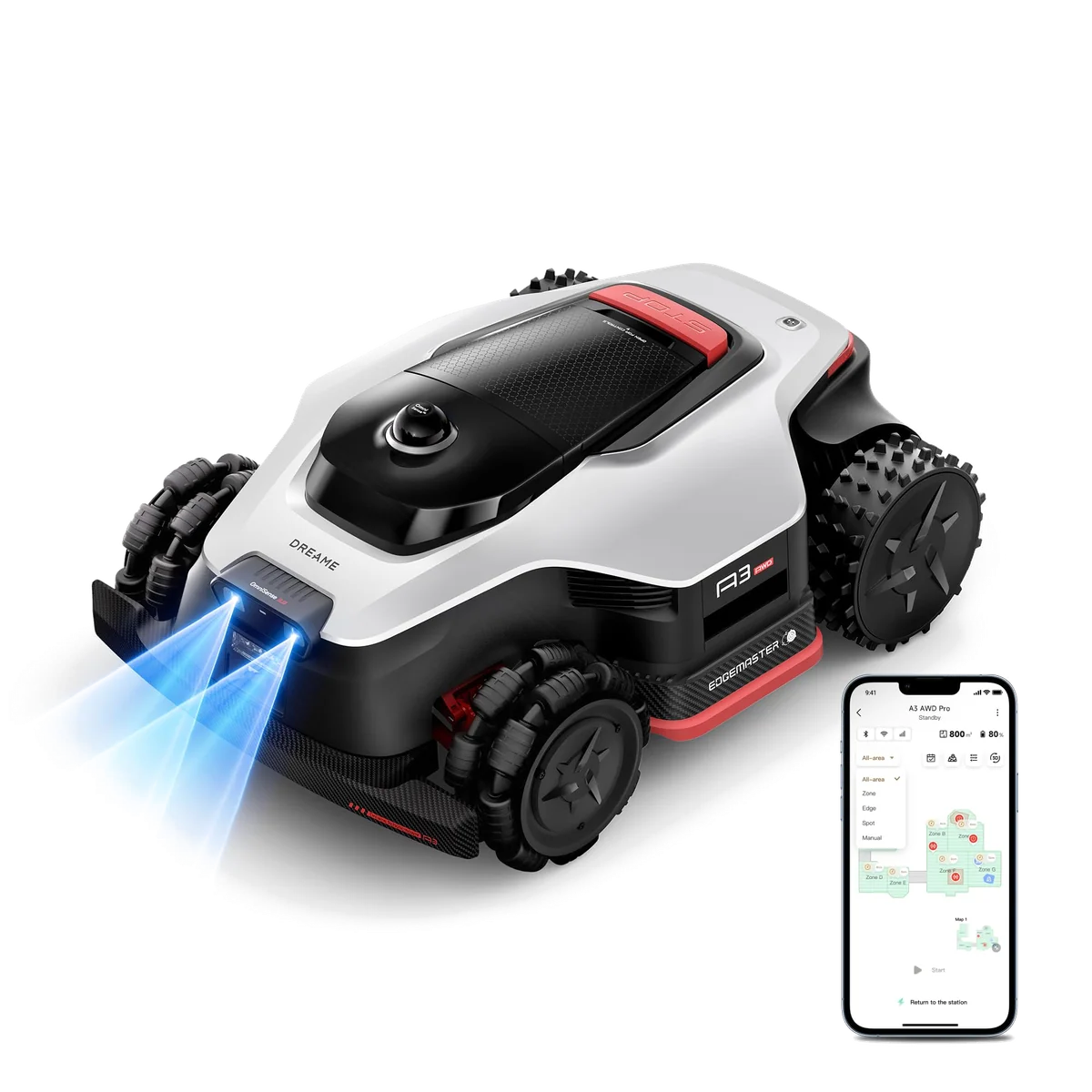
Dreame A3 AWD Pro 3500
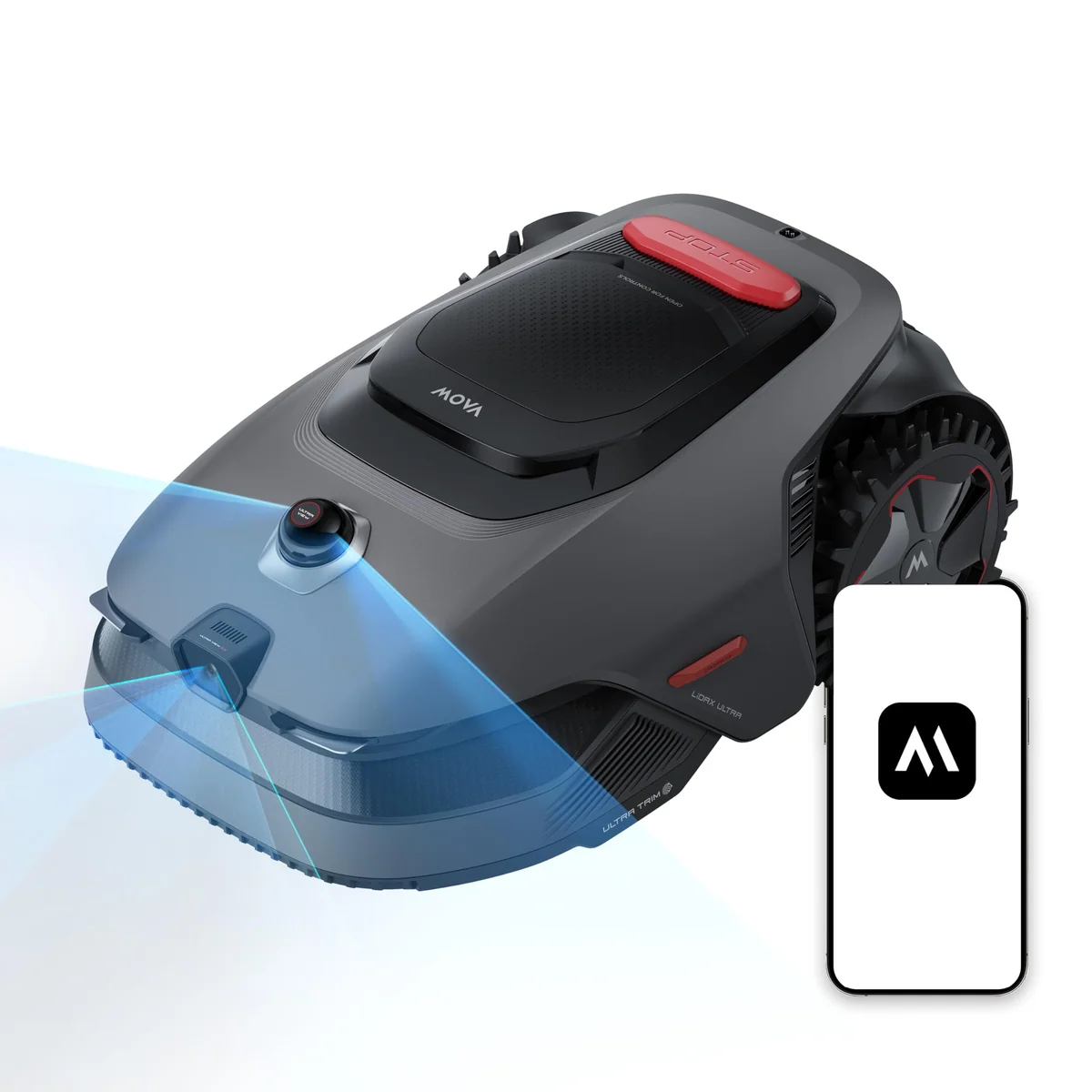
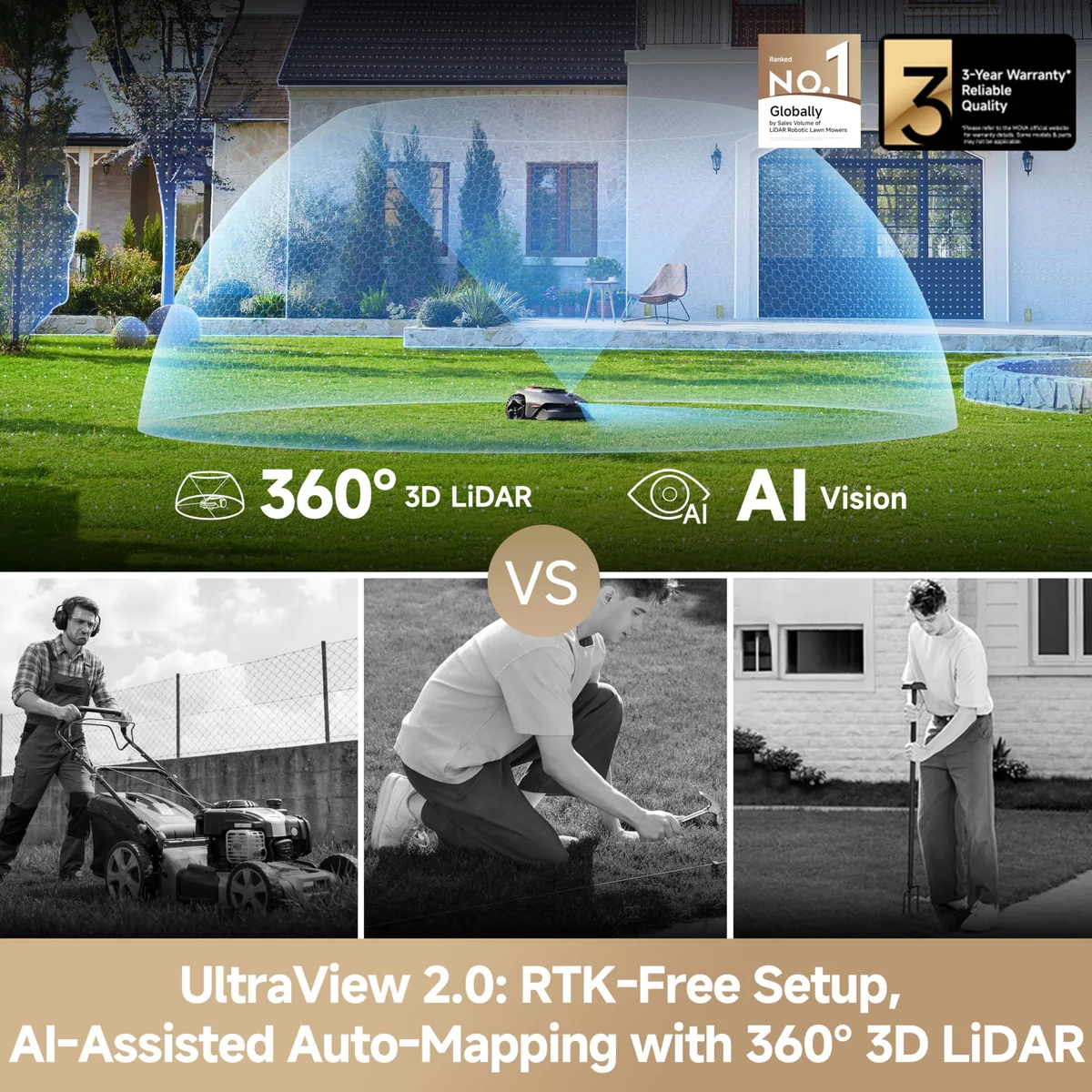
MOVA LiDAX Ultra 1000
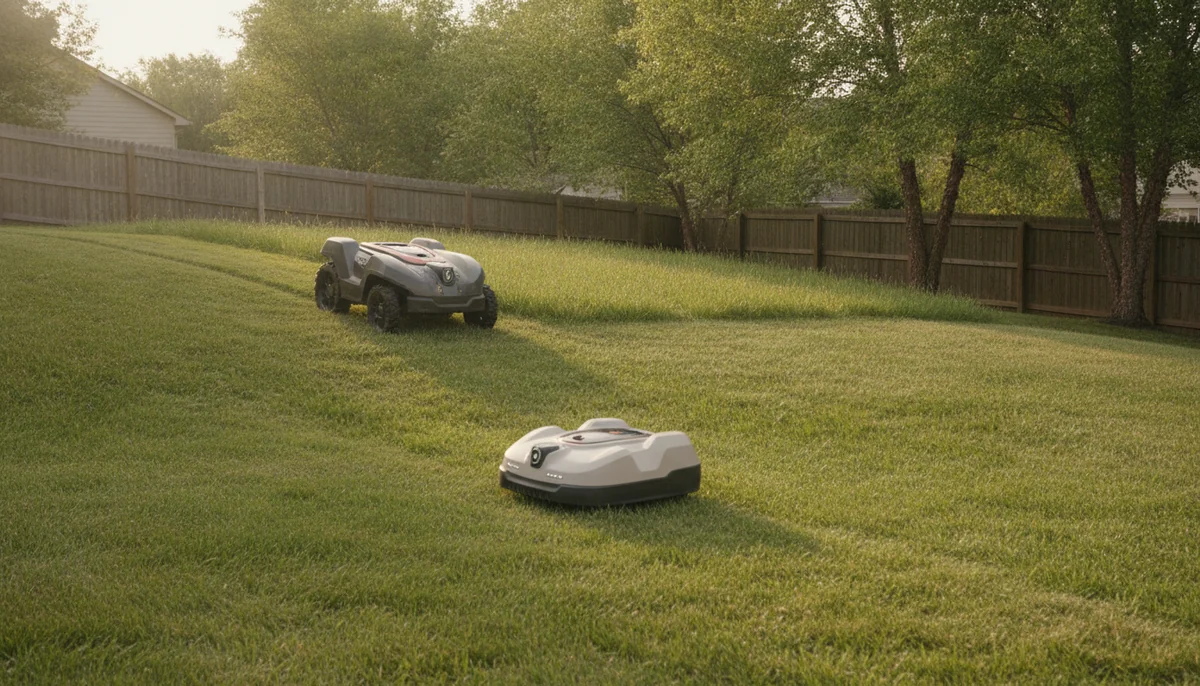
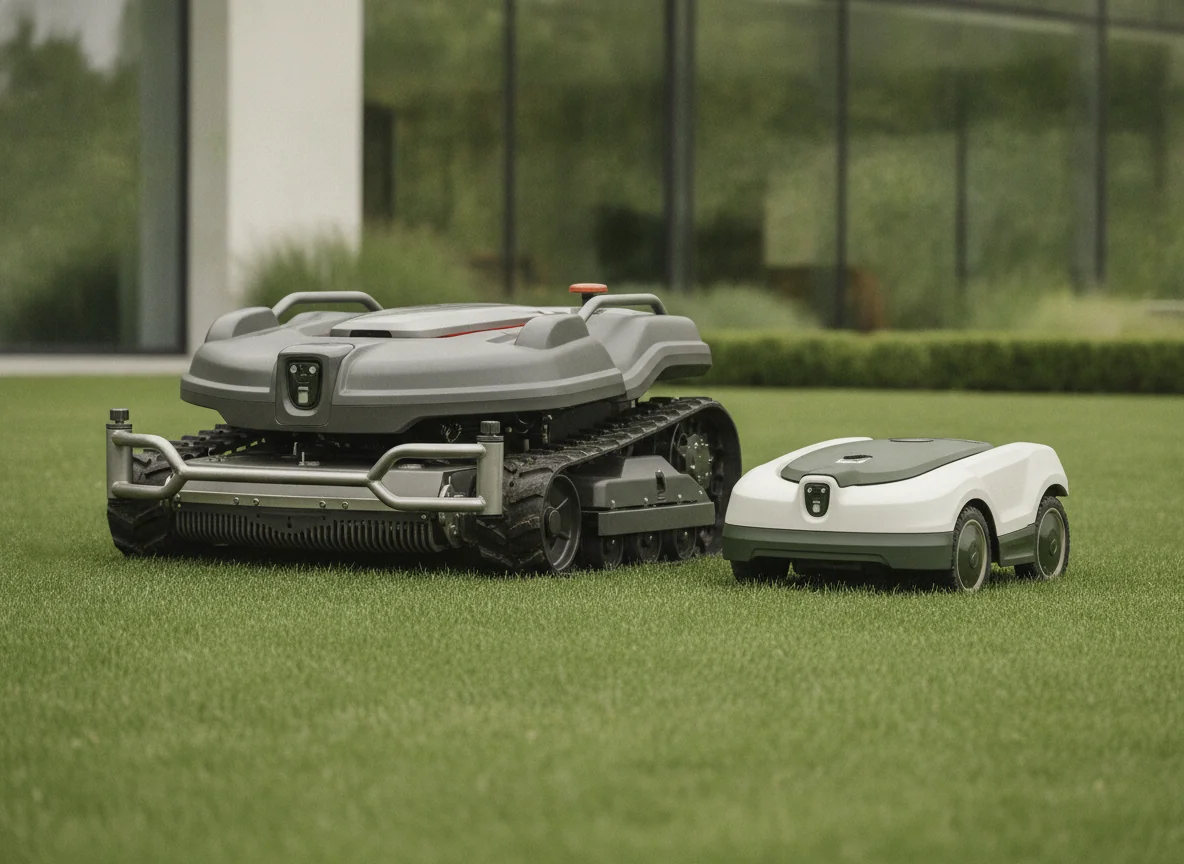
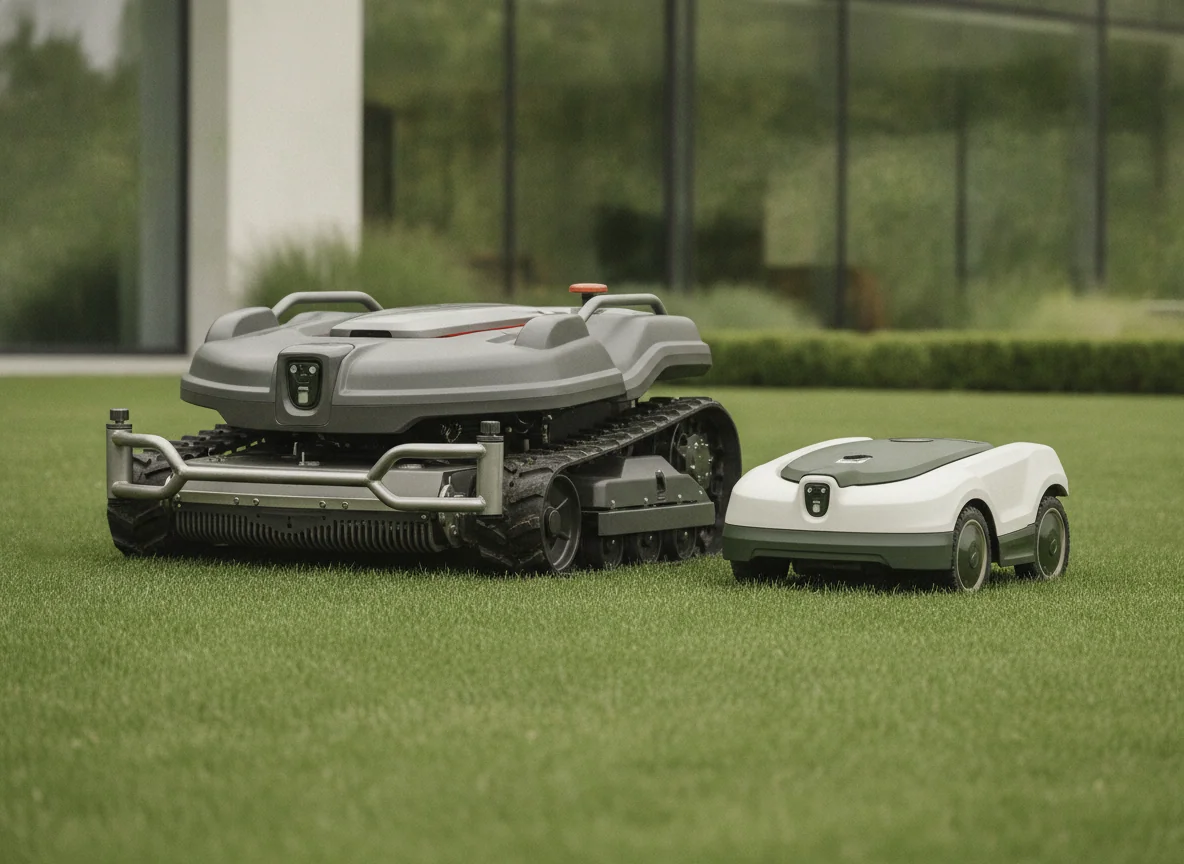
This looks like a comparison between two wire-free LiDAR mowers, but the shared navigation technology disguises a much larger difference underneath. The MOVA is a narrow, rear-drive maintenance mower for small lawns. The DREAME is a 52.7-pound, four-wheel-drive machine with twice the cutting width and enough managed capacity for 0.87 acre. One is the sensible default; the other is specialized equipment.
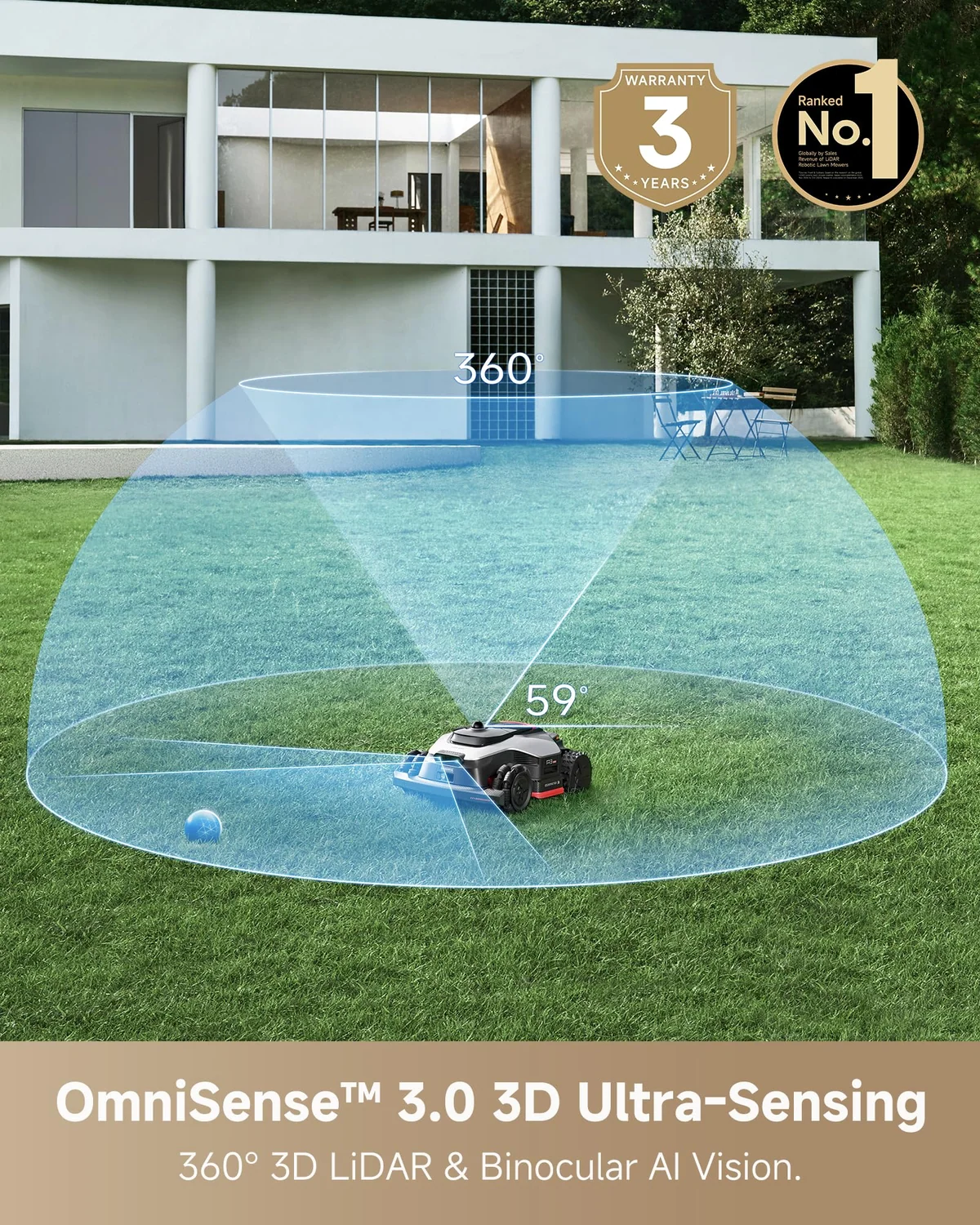
Both avoid the ritual of burying perimeter wire and finding an open patch of sky for an RTK antenna. Their spinning LiDAR sensors read the physical yard instead, so trees, fences and walls do not create the same positioning anxiety as satellite-dependent systems. That makes either one relevant to a shaded garden, but it does not make them equally capable once the wheels meet the ground.
On a level lawn behind a suburban house, the MOVA’s orderly lanes, quiet cutting and broad 1.2-to-3.9-inch height range do the required job without bringing a large AWD chassis into a space that does not need one. Move the same assignment onto roots, ruts, sustained grades or abrupt transitions and the balance reverses. The MOVA’s passive front casters can snag while its rear wheels dig; the DREAME can drive all four wheels across terrain that simply stops the smaller machine.
The catch is that AWD can damage as well as rescue. Damp loam, thin turf and loose sand give the heavy DREAME enough traction to excavate a turning patch, particularly around the dock. Six weeks into ownership, that worn circle by the charging station matters more than the impressive climb in the launch video. Firm turf is not a footnote here; it is the condition that makes the DREAME recommendation work.
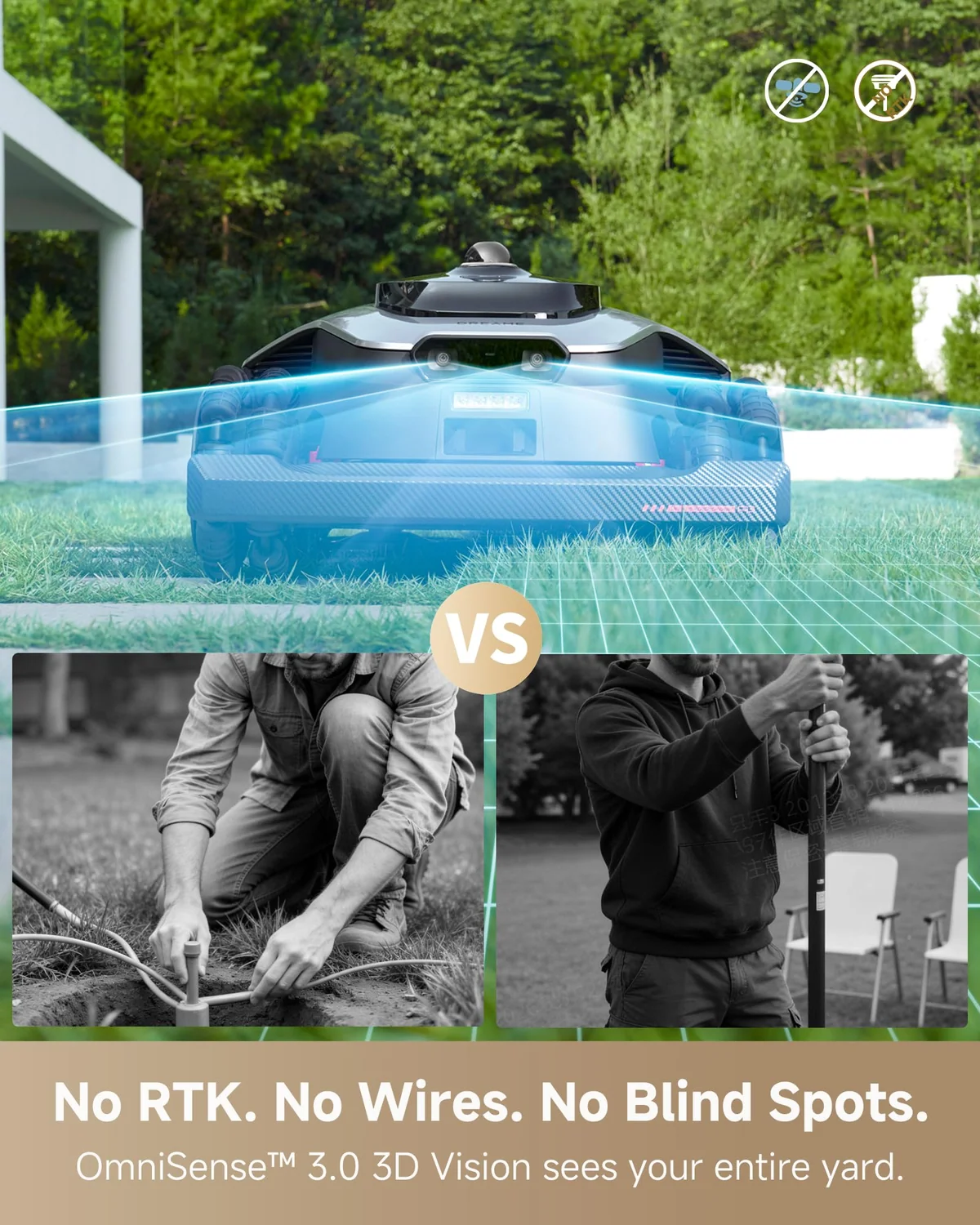
Dreame A3 AWD Pro 3500
MOVA LiDAX Ultra 1000
At a Glance
| Feature | Dreame A3 AWD Pro 3500 | MOVA LiDAX Ultra 1000 |
|---|---|---|
| Price Range | $1,500–$3,000 | $500–$1,000 |
| Cutting height | 3–10 cm / 1.2–3.9 inches | 1.2–3.9 inches |
| Recommended lawn size | Up to 3,500 m² / 0.87 acre | 0.25 acre |
| Cutting width | 40 cm / 15.8 inches | 7.9 inches |
| Check Price on Amazon | Check Price on Amazon |
Same eyes, completely different legs
| Decision point | MOVA LiDAX Ultra 1000 | DREAME A3 AWD Pro 3500 |
|---|---|---|
| Best lawn size | A small lawn comfortably below its 0.25-acre map ceiling | A substantial property that can use its 0.87-acre managed capacity |
| Drive and terrain | Rear drive with passive front casters, best on firm and smooth ground | True four-wheel drive for steep grades, roots and hard transitions |
| Cutting system | One 7.9-inch disc for quiet, patient maintenance mowing | Two discs spanning 15.8 inches for materially faster coverage |
| Navigation | On-board LiDAR and AI vision without wire or RTK antenna | On-board LiDAR and binocular vision without wire or RTK antenna |
| Main weakness | Casters strand easily on soft soil, runners, ledges and awkward seams | Weight and powered turning can rut wet, sandy or sparse turf |
| Edge system | UltraTrim reaches outward but makes its special pass at about 1.2 inches | EdgeMaster reaches outward but makes its special pass at a fixed 1.2 inches |
The MOVA is the sensible mower for a small, smooth lawn.
Its antenna-free mapping, quiet systematic cut and deep zone controls deliver the useful parts of autonomous mowing without buying far more machine than a quarter-acre yard requires.
The passive front casters can turn sand, damp soil, grass runners and small ledges into repeated rescue calls, while the narrow deck may need several charge cycles to finish a complicated lawn.
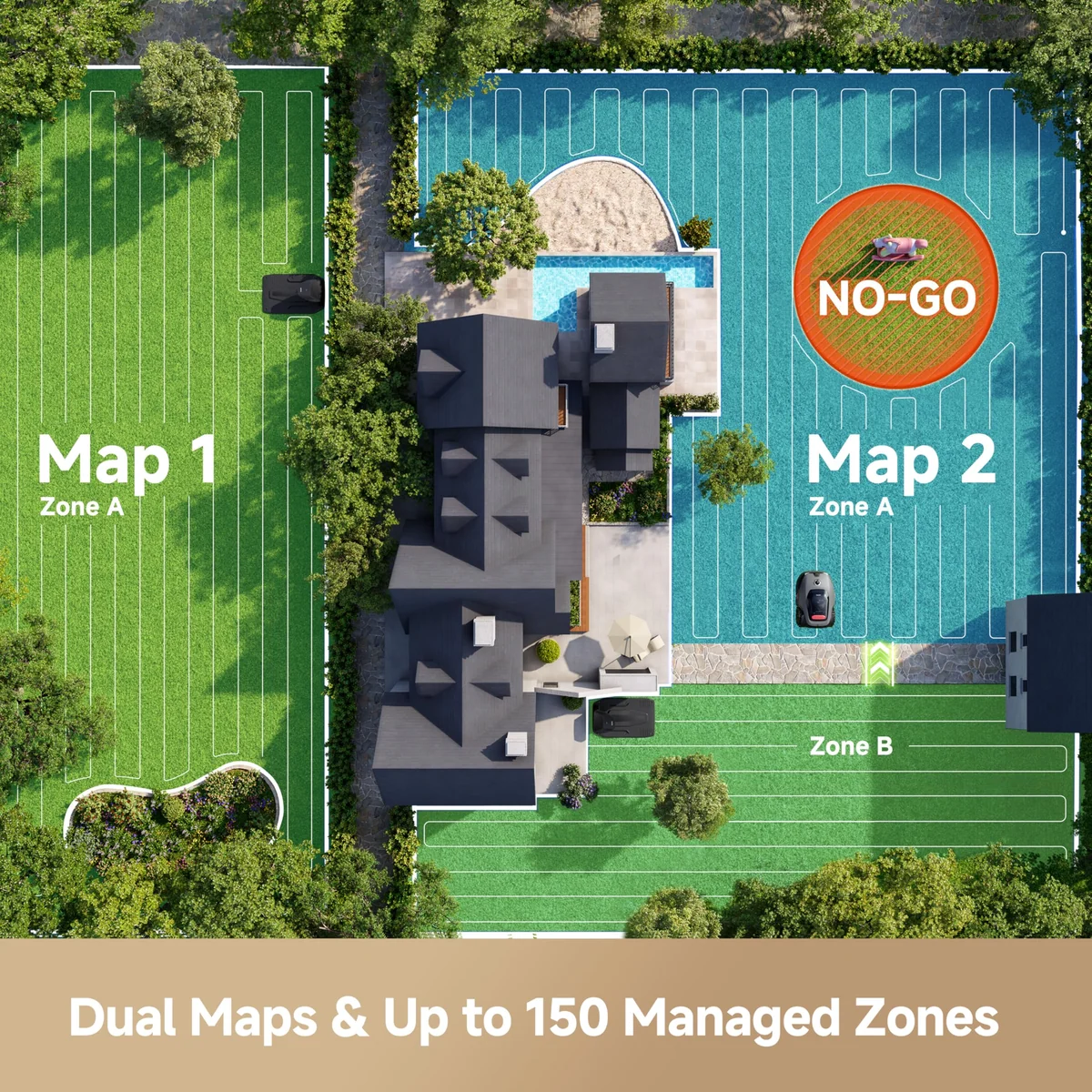
The MOVA wins this ranking because most buyers choosing between these exact models do not need a 0.87-acre AWD platform. On established turf, it can leave clean narrow stripes, recharge itself and resume while the household gets on with the day. The app supports two maps, multiple zones, paths, schedules, electronic height adjustment and several no-go-zone shapes, although refining an irregular perimeter can still mean remapping rather than dragging a few points into place.
Its quarter-acre label needs restraint. That number describes how much lawn the software can manage, not what the battery completes in one outing. A complex job near the limit can occupy most of a day as the mower alternates between 60-to-80-minute cutting sessions and charging stops. That is harmless when the lawn can remain occupied, but awkward when children or dogs need it clear at a predictable hour.
UltraTrim is not a reason to buy it. Flush paving gives the movable disc room to approach closely, while walls, fences, corners and drop-offs still leave trimming behind. Worse, the outward pass uses a low setting of about 1.2 inches even when the main lawn is kept much taller. Disable it if the first lap draws a pale, scalped outline around otherwise healthy grass.
The DREAME earns its bulk on large, steep and tree-covered ground.
The wide dual-disc deck, genuine AWD and LiDAR navigation make it the stronger machine when a substantial lawn combines poor satellite visibility with slopes, roots and firm uneven terrain.
Its heavy chassis can tear damp or loose ground, EdgeMaster can shave a tall lawn to 1.2 inches at the perimeter, and the software remains less dependable than the hardware.
The DREAME’s decisive advantages are mechanical. Four driven wheels can climb sustained firm slopes, cross roots and negotiate hard thresholds that catch the MOVA’s front casters. Its two cutting discs cover 15.8 inches, twice the MOVA’s width, so the larger capacity is backed by a deck able to make credible progress rather than merely store a larger map.
That capability should not be confused with delicacy. Repeated pivots can scuff thin grass, and the localization turn in front of the dock can wear soft ground into bare soil. Give the charging station a level, firm approach and avoid sending the mower out while the soil is saturated. Anyone whose yard combines steepness with mud or sand needs more than an impressive slope percentage; the guide to mowers for steep and uneven ground explains why traction and turf protection are separate questions.
The 3,500 m² rating is also a managed-area class, not a promise to mow 0.87 acre without charging. Obstacles, narrow zones, cautious avoidance and hills all reduce daily throughput. The DREAME is still substantially better equipped for a large job, but owners should expect autonomous recharge and resume to be part of ordinary operation.
EdgeMaster shares the MOVA’s most irritating design choice. Its cutting assembly can move closer to a flush boundary, yet the special edge pass drops to a fixed 3 cm even if the main deck is set at 7 or 8 cm. That can leave a shaved racetrack around tall turf or scalp the invisible seam between two adjacent zones. Close cutting is not useful when it cuts at the wrong height.
The app cannot negotiate with a rut
Both machines reward conservative mapping. Automatic detection is convenient around paving, gravel and sharply defined beds, but ambiguous transitions into woodland, neighboring grass or an open field need manual boundaries. Pools, retaining walls and roadside curbs deserve generous setbacks and physical barriers wherever a navigation mistake could damage the mower or hurt someone. LiDAR is positioning equipment, not fall protection.
Neither obstacle system makes lawn clearance optional. Balls, furniture and people are comparatively easy to recognize; hoses, wire, sticks, low timber and pet waste are not. Tall grass can be treated as an obstacle, while lower sensitivity accepts more contact in exchange for fuller coverage. The safer routine is still to walk the lawn before an unattended cycle.
The DREAME’s software exposes serious multi-zone controls but has produced failed updates, cryptic positioning errors, uncertain job completion and inconsistent docking behavior. The MOVA app is similarly deep and sometimes awkward, particularly around boundary revision and two-map scheduling. Neither is a zero-setup appliance. The first several cuts are commissioning runs during which the map, mowing direction and exclusions are adjusted to the real yard.
Both are maintenance mowers rather than machines for reclaiming an overgrown lot. Their small pivoting blades create little lift, so folded grass, mature weeds and tough runners can survive while long clippings collect in rows. Cut an overgrown lawn conventionally first, then use frequent shallow passes to preserve the chosen height. The result can be excellent, but only after the grass is placed within the machine’s working range.
Dreame A3 AWD Pro 3500
MOVA LiDAX Ultra 1000
Buy for the ground you have, not the acreage badge you want
Smart Lawn Bots puts the MOVA first for a firm, mostly level quarter acre where trees or buildings make RTK installation unattractive. It is the better proportioned answer when mowing can happen quietly in the background and a slow finish is acceptable. Walk away from it if a front caster is likely to meet sand, erosion channels, thick runners, abrupt curbs or regular on-slope turns.
Choose the DREAME when the property is too large for the MOVA, satellite visibility is poor and meaningful hills or hard transitions justify four-wheel drive. Its ideal lawn has mature grass with roots holding the soil together. Walk away if that same ground remains wet, loose or easily scarred, or if a 31.5-inch mower cannot pass through the route between zones.
If the yard is small but rooty and speed matters, the Segway Navimow i215 LiDAR is the stronger alternative to the MOVA because it tolerates difficult ground better and completes comparable areas sooner. If the property is large, open to the sky and vulnerable to pivot damage, the Segway Navimow X430 is the more mature alternative to the DREAME. Buyers whose main uncertainty is navigation rather than chassis choice should start with the guide to RTK, LiDAR and vision mower navigation.
What this pairing does well
- Both machines navigate beneath trees and beside buildings without a perimeter wire or external RTK antenna.
- The shared 1.2-to-3.9-inch main cutting range accommodates both short and relatively tall residential turf.
- MOVA covers the small-lawn brief while DREAME supplies a genuine mechanical step up for larger and harder properties.
What neither sales pitch admits loudly enough
- Both close-edge systems use a fixed low pass that can scalp grass maintained above 1.2 inches.
- Neither acreage rating promises that the listed area will be completed on one battery charge.
- Careful mapping, lawn clearance and occasional trimming remain part of ownership with either mower.
For a smooth quarter acre, take the MOVA and keep UltraTrim under suspicion; for a firm hillside or a lawn pushing beyond the smaller mower’s capacity, the DREAME’s AWD and wider deck justify the jump.
Frequently Asked Questions
Do either of these mowers need a perimeter wire or RTK antenna?
No, both use on-board LiDAR and camera vision to map and navigate without buried wire or an external satellite reference station.
Is the DREAME automatically better because it covers more lawn?
No, its extra capacity, width and AWD add unnecessary size and turf pressure when a small smooth yard does not need them.
Can the MOVA handle a 45-degree hill?
No, its advertised limit is a 45% grade, which is about 24 degrees, and soft ground or awkward turns can stop it below that maximum.
Which mower is better beneath mature trees?
Both avoid the satellite-view problem with LiDAR, so the ground conditions and lawn size matter more than the tree canopy in this comparison.
Will either mower eliminate string trimming?
No, raised borders, walls, corners and safety setbacks still leave grass behind even when the movable edge disc is enabled.
Which mower is safer for soft or damp turf?
The lighter MOVA is less aggressive on easy ground, but neither is a good choice for persistently soft terrain because its casters can strand while the DREAME’s driven wheels can dig.
Ready to Choose?
Sources (35)
- Amazon listings and customer reviews — Dreame A3 Awd Pro and Mova Lidax Ultra 1000
- Owner reports across r/automower, r/roboticLawnmowers, r/Dreame_Tech threads
- Owner and reviewer video, 66 channels
- Walmart listing
- Facebook — Article — www.facebook.com
- Notebookcheck — Article — www.notebookcheck.net
- Lbtechreviews — Article — www.lbtechreviews.com
- Gizmodo — Article — gizmodo.com
- Freshlycharged — Article — freshlycharged.com
- Dreametech — Article — yardcare.dreametech.com
- Mammotion — Article — us.mammotion.com
- Ign — Article — www.ign.com
- Glroboticsusa — Article — www.glroboticsusa.com
- Androidauthority — Article — www.androidauthority.com
- Basic Tutorials — Article — basic-tutorials.com
- Tech — Article — us.mova.tech
- Slashgear — Article — www.slashgear.com
- Newatlas — Article — newatlas.com
- Tech — Article — au.mova.tech
- at — Article — www.galaxus.at
- Appleinsider — Article — appleinsider.com
- Maison Et Domotique — Article — www.maison-et-domotique.com
- Au — Article — www.gadgetguy.com.au
- MOVA Tech — Article — us.forum.mova-tech.com
- Au — Article — www.techguide.com.au
- Wellbots — Article — www.wellbots.com
- Nytimes — Article — www.nytimes.com
- Novabot — Article — novabot.com
- Techiwant — Article — techiwant.com
- Samsclub — Article — www.samsclub.com
- Heyupnow — Article — community.heyupnow.com
- T3 — Article — www.t3.com
- Tech — Article — uk.mova.tech
- Robocleaners — Article — www.robocleaners.com
- Mowscout — Article — mowscout.com