The HOOKII Neomow X2 SE sees the yard better than it handles it.
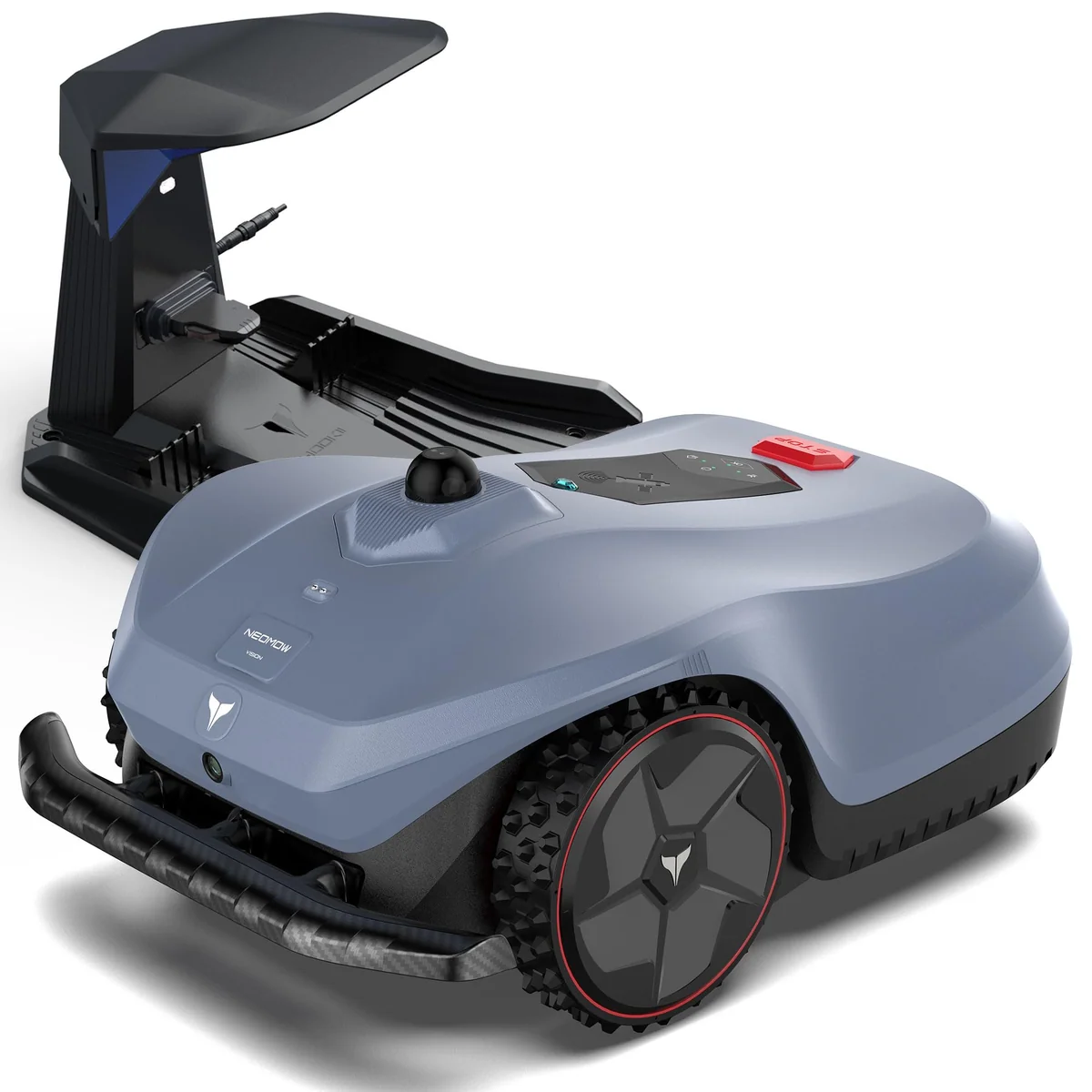
Buy the Neomow X2 SE only for a maintained, mostly even lawn where trees or buildings make RTK awkward, because its excellent LiDAR premise is paired with software, docking, and traction failures that rule it out for anyone who needs dependable autonomy.
Who should buy the Neomow X2 SE
Choose it for a maintained lawn beneath trees or beside buildings, especially when burying wire and placing an RTK antenna are both unattractive. The best fit is firm, reasonably even ground with a clean docking route, borders that can tolerate trimming, and somebody nearby who is willing to refine maps, install updates, and rescue the mower if recovery fails.
Walk away if the lawn is routinely overgrown, steep, wet, rutted, loose, or expected to run unattended at a remote property. Also walk away if “robotic” means never opening an app, never carrying the mower, and never using a string trimmer. The Neomow X2 SE can return hours of weekly mowing time, but it has not earned the right to be left entirely to itself.
The Neomow X2 SE is built around the right idea. Instead of asking for buried boundary wire, a roof-mounted reference antenna, or a pristine view of the sky, it uses LiDAR to locate itself against the physical yard. Trees, eaves, walls, and narrow spaces between buildings become useful reference points rather than satellite obstructions. For the right property, that is not a minor convenience. It is the difference between a viable robot mower and an expensive ornament searching for a signal.
The trouble begins after the mower knows where it is. Exact-model experiences divide sharply between straight, complete mowing and a machine that misses rows, invents obstacles, fails to dock, or waits in the yard until its battery expires. Responsive support has rescued several bad experiences, including replacing a defective mower and transferring its maps, but excellent recovery service is not the same thing as dependable hardware and software.
There is also a naming problem worth catching before purchase. The listing calls this the Neomow X2 SE, while the catalog model field calls it the Neomow X SE. Earlier Neomow X, X2 LE, and X2 Pro material describes related machines with different capacities and equipment, so specifications from those siblings should not be treated as confirmation of what ships with this exact version.
Key Specifications
LiDAR is the reason to consider it
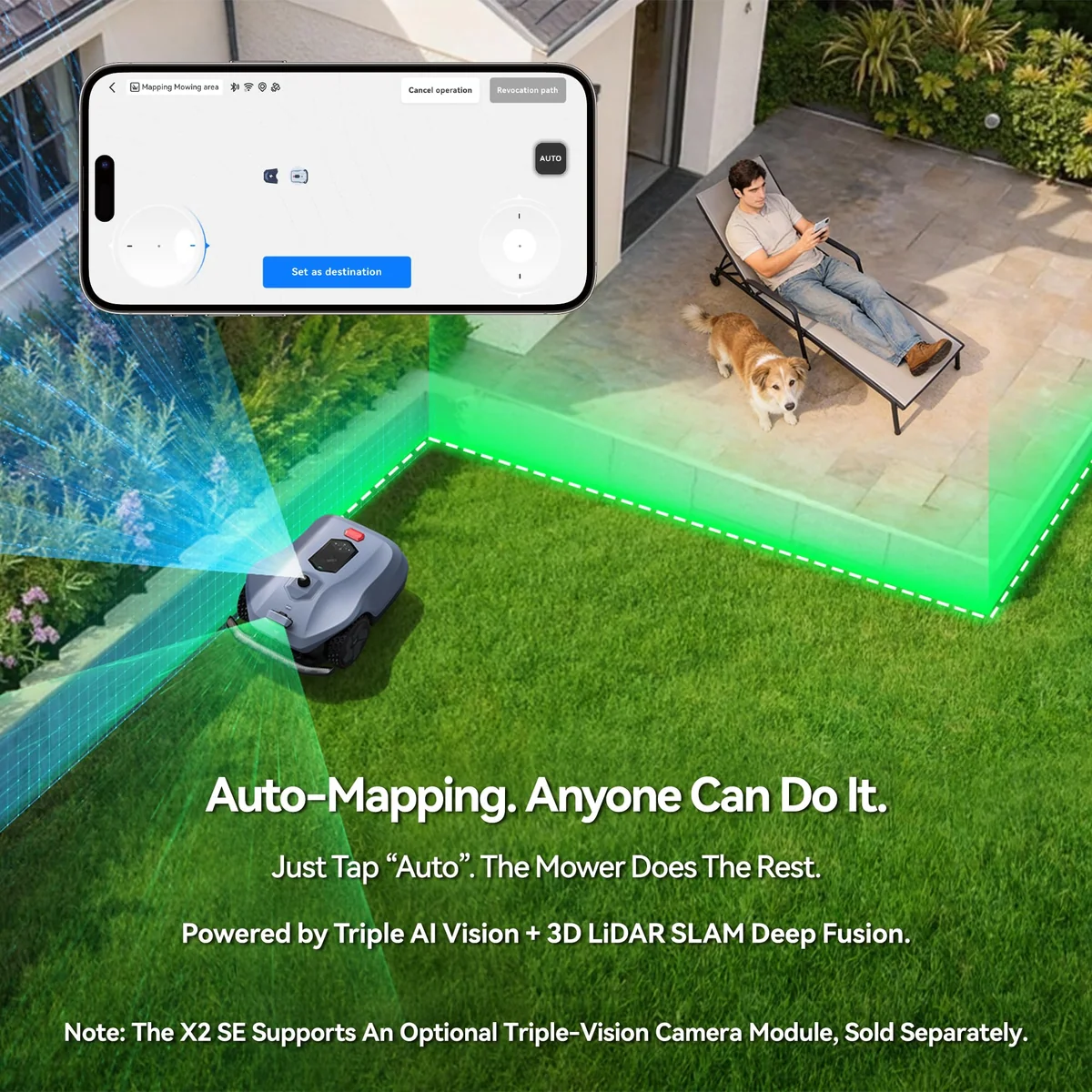
A wire-free mower still requires setup. The charging station needs power and a genuinely level approach, the mower must be paired and updated, and the lawn needs a virtual boundary. On the established Neomow platform, that boundary is created by walking behind the mower and steering it around the perimeter with the phone. A half-acre mapping session can take about 45 minutes, and the front-drive layout means the rear swings outward during tight turns.
Once the map is right, the appeal is obvious. The mower can work in systematic parallel lanes, manage zones and no-go areas, return for charging, and continue a normal job afterward. Its position does not collapse merely because the route passes under a tree or beside a house. That makes it a more natural fit for canopy-heavy yards than the smaller Segway Navimow i110N, whose RTK-led positioning is happier with a clear sky and whose stated coverage is only a quarter acre.
The same caution applies to obstacle recognition. LiDAR and vision have handled furniture, toys, hoses, branches, and other ordinary objects well in favorable conditions, but the mower can become too cautious. Tall grass may look like an obstacle, a bush can block a return route that was acceptable minutes earlier, and a nearby structure can confuse the docking approach. Raising the detection threshold may improve progress through long grass, but it also reduces protection against small objects.
Strengths & Limitations
Strengths
- Three-dimensional LiDAR gives tree-covered and building-shadowed lawns a wire-free route around RTK signal problems.
- Systematic mowing can produce straight, well-overlapped lanes with very little operating noise.
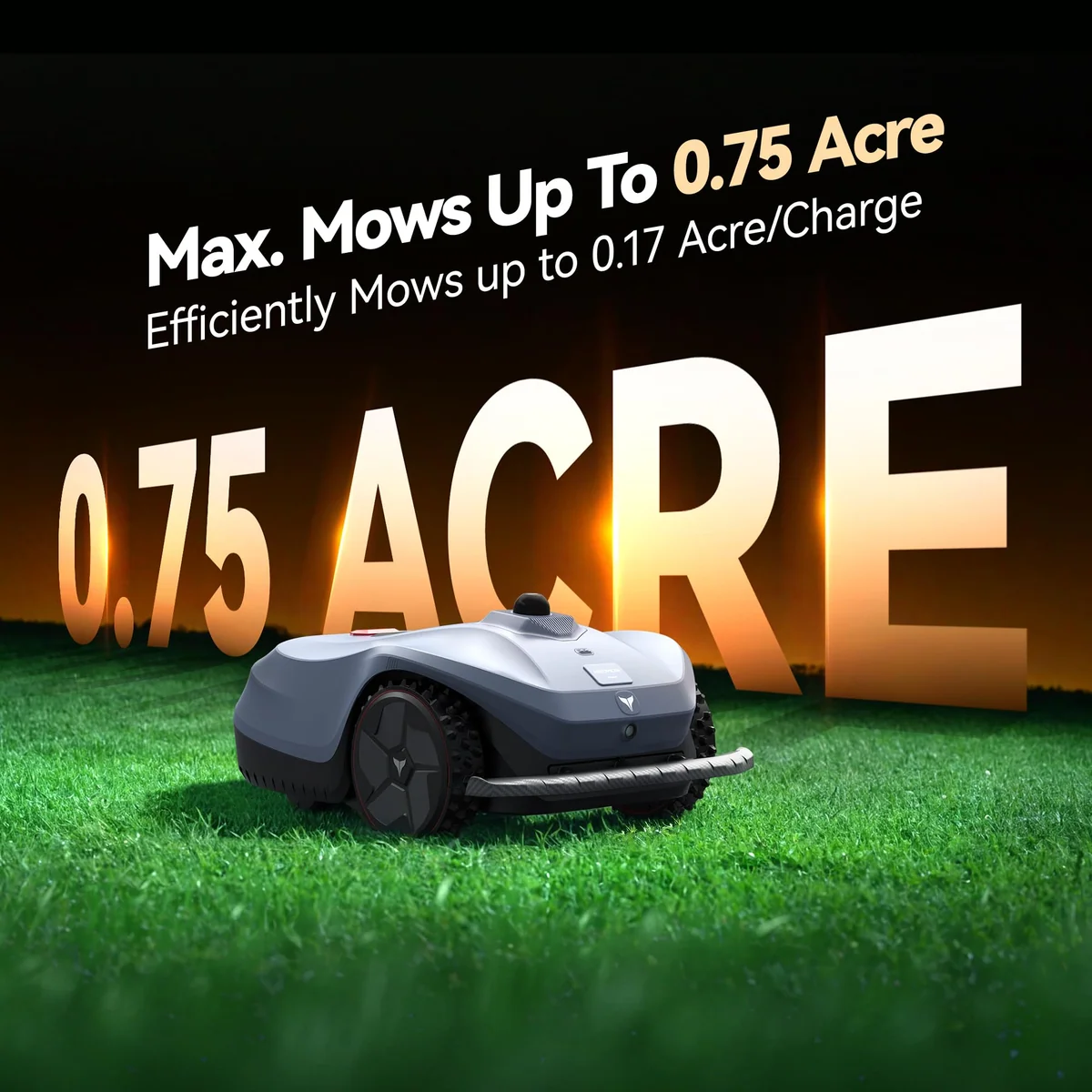
- The 13Ah battery and 0.75-acre managed-area claim make it relevant to lawns larger than the usual compact LiDAR mower serves.
- HOOKII support has delivered unusually hands-on help when replacements, map transfers, or engineering attention were required.
Limitations
- Software, docking, and error-recovery failures make unattended operation less dependable than the navigation hardware suggests.
- The centered cutting system leaves meaningful grass beside raised borders, walls, and drop edges.
- Long grass, loose ground, threshold lips, and wet slopes expose limits in cutting power and front-wheel-drive traction.
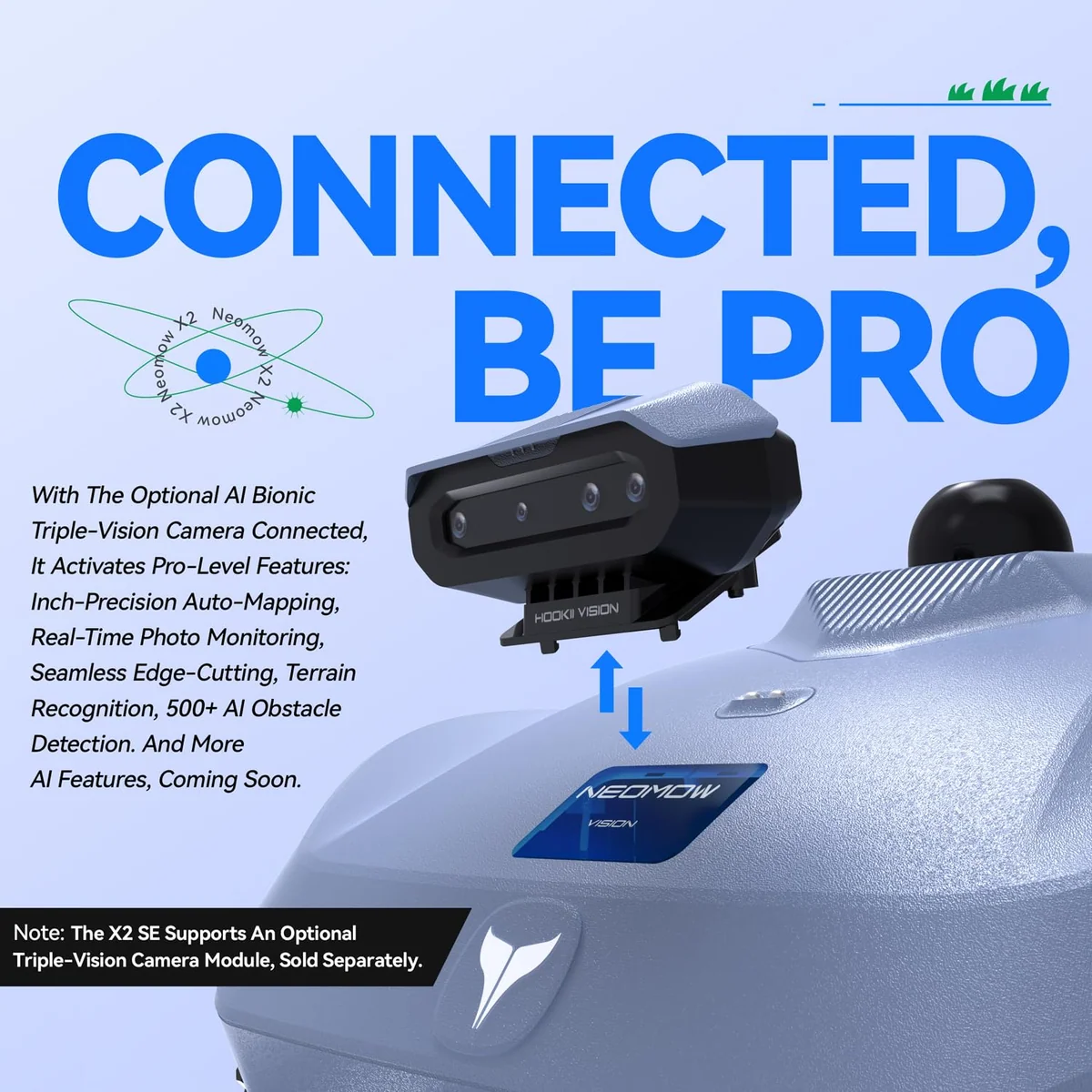
- Auto-mapping appears to depend on an upgrade module whose inclusion and total cost are not established by the base listing.
- A detailed wheel-retention failure and uncertain long-term parts access add hardware risk to an already young platform.
The cut can be excellent, but autonomy is inconsistent
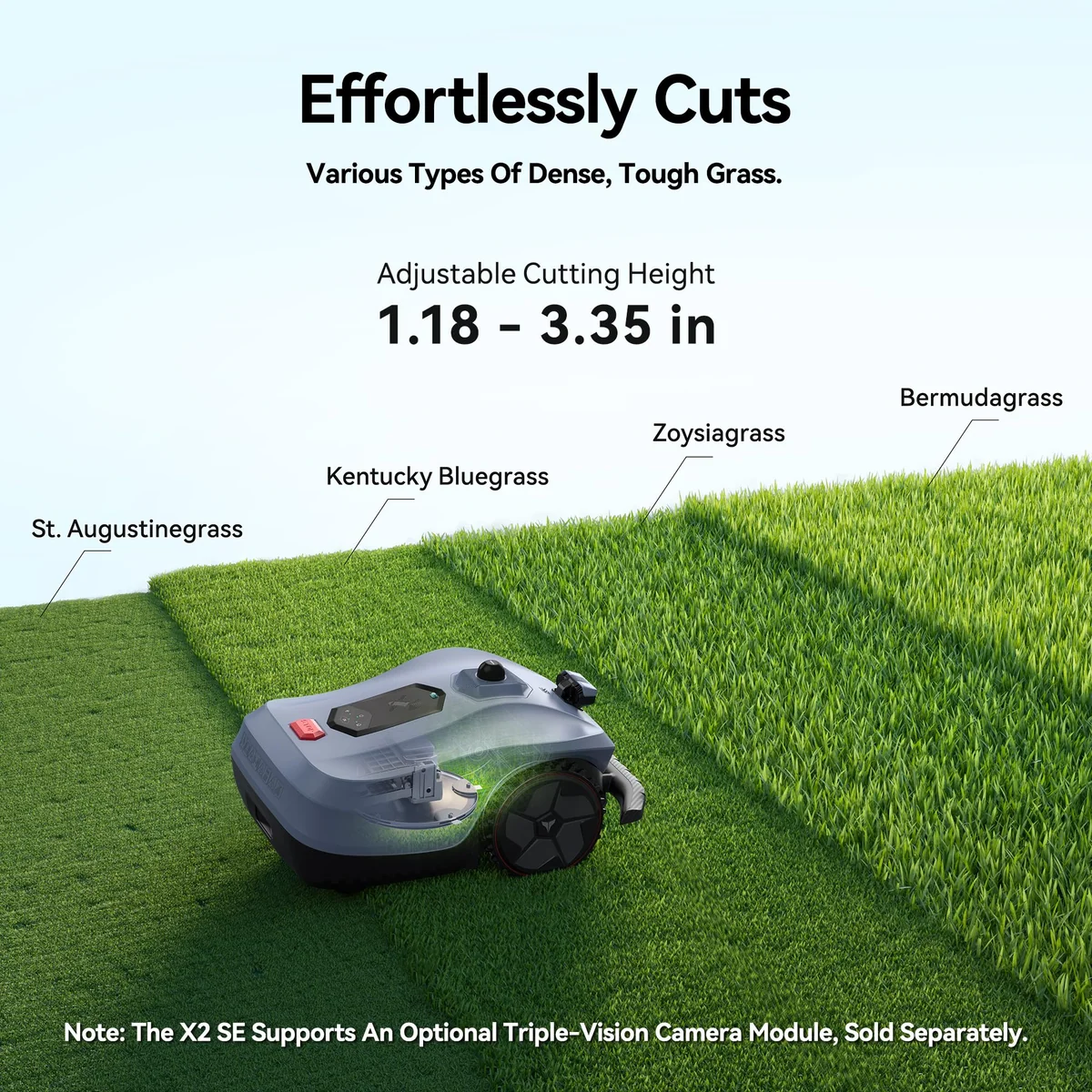
On maintained grass, the Neomow’s best work looks exactly as a systematic robot cut should. The lanes are straight, overlap is clean, noise is low, and frequent tip-cutting leaves fine clippings behind without a bagging job. An exact-model record covering roughly 0.65 acre over almost six months reports that the lawn usually finished in about one charge, with a string trimmer needed every other week rather than a push mower.
That is the good version of ownership. The bad version leaves missed lanes that stand above the lawn like comb teeth, gets stuck on ground described as nearly flat, or reports a blocked dock when nothing is present. These are not cosmetic app complaints. A robot mower that stops safely but cannot recover has converted mowing into a scavenger hunt.
| Yard condition | Likely result | Buyer implication |
|---|---|---|
| Tree cover and nearby buildings | LiDAR retains local references without an RTK antenna | This is the strongest reason to choose it |
| Short, frequently maintained grass | Systematic lanes can produce a neat, quiet finish | Schedule light cuts rather than occasional heavy ones |
| Long or dense grass | The deck may leave blades, need another pass, or mistake grass for an obstacle | Make the first recovery cut with a conventional mower |
| Raised borders and walls | The centered cutting system leaves a visible trim strip | Keep the string trimmer |
| Lips, loose gravel, wet slopes, and ruts | Traction and recovery become unpredictable | Choose an AWD mower for difficult terrain |
It maintains grass; it does not reclaim it
The X2 SE belongs on a lawn already brought under control. Robot mowers cut little and often, and their small pivoting blades create little lift. They are good at making fresh clippings disappear into the turf, not at standing flattened grass back up, pulverizing leaves, or powering through a neglected patch. Thick areas can need a cross-cut or second pass, while genuinely overgrown grass should be shortened conventionally first.
Precise navigation does not mean precise edging
The virtual boundary can be accurate while the blade remains physically too far inside the chassis to reach a wall or raised curb. An exact-model owner reports roughly 15cm of grass left at the edge, and related-platform observations range wider depending on the border. Flush paving helps because a wheel can overlap it; walls, beds, drops, and soft shoulders force a safer margin. Buyers seeking minimal trim work should start with the site’s guide to the best robot mowers for edge cutting, because this is not one of the convincing designs for that job.
The dock needs a cleaner approach than the lawn
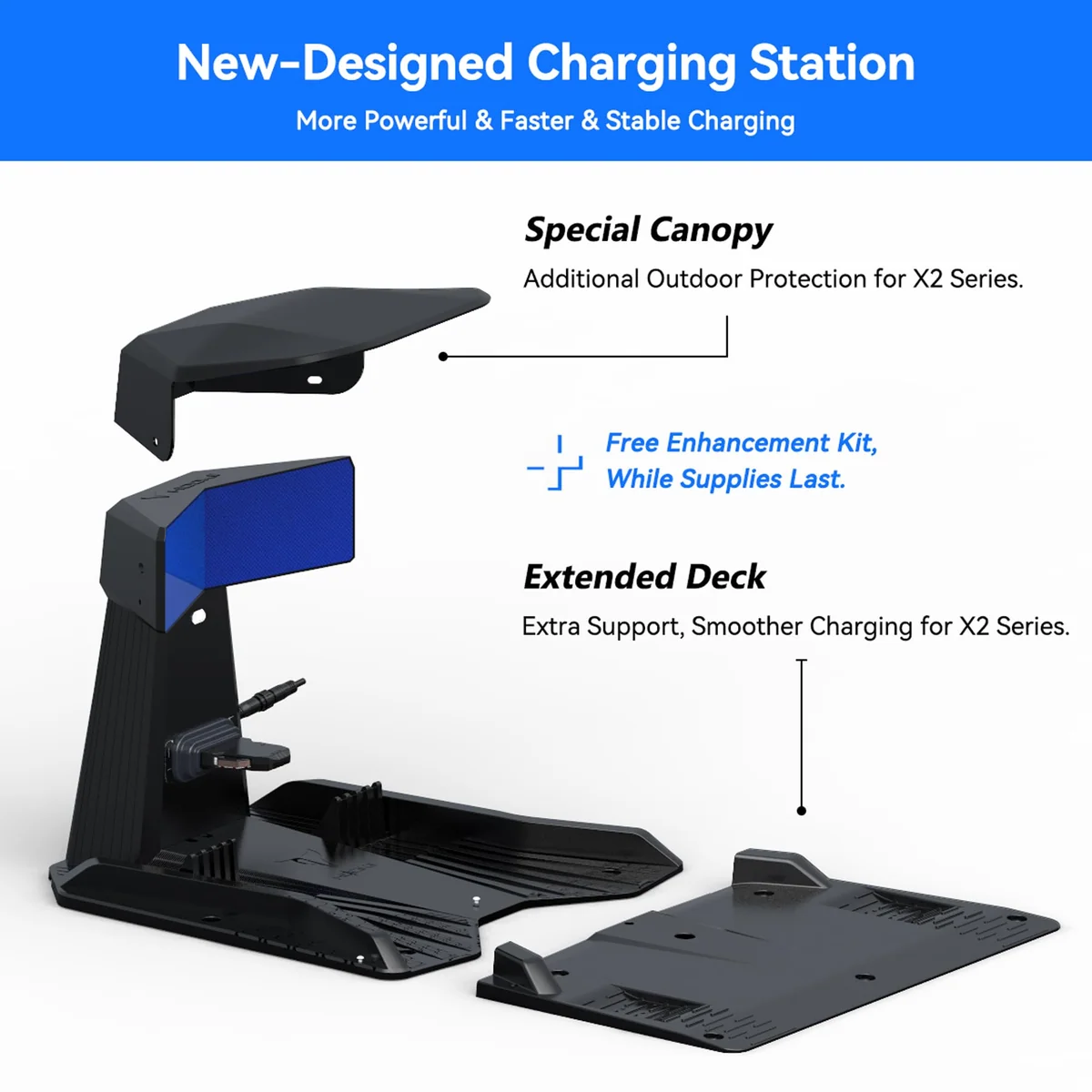
A station inside a shed sounds ideal until the mower meets a half-inch threshold and cannot climb it. Even without a lip, small changes in dock level can prevent firm contact, and nearby landings or walls can be interpreted as obstructions. The base should sit flat, remain fixed, and have a smooth, open route in front of it. A protected location is useful, but shelter does not compensate for an awkward transition.
Do not price the mower without pricing the uncertainty
No live price is needed to judge the central value problem. The base figure is incomplete until the triple-camera upgrade, any continuing 4G service, replacement blades, and the possibility of difficult returns are understood. The advertised 0.75-acre capacity is also a managed-area rating, not a promise that every three-quarter-acre lawn will finish in one charge or without intervention.
The ECOVACS Goat A2000 LiDAR PRO is the cleaner alternative for a buyer who wants LiDAR navigation without making software maturation part of the ownership experience. For steep banks, loose surfaces, or deep irregularities, the Mammotion LUBA 3 AWD 5000H is the more appropriate machine because four-wheel drive matters more there than the Neomow’s no-antenna simplicity.
The HOOKII still earns a narrow place between them. A mostly firm, moderately sized lawn under trees may be a poor match for satellite-led navigation and unnecessary territory for a large AWD mower. In that specific setting, the X2 SE’s LiDAR, large 13Ah battery, quiet maintenance cutting, and antenna-free setup form a credible package. The buyer simply needs to accept that credible is not the same as settled.
The sixth-week question is whether support can outrun the bugs
Firmware arrives frequently, and that has two meanings. It shows that HOOKII is fixing faults quickly, including problems involving no-go zones, but it also shows that the product is still being tuned in buyers’ yards. Updates have looped or failed, live status has become inaccurate, Wi-Fi setup has glitched, and one exact-model owner’s expected cellular service ended after about 60 days without a resolution.
Support is the strongest counterargument. Owners have received fast email replies, engineering involvement, replacement hardware, map transfers, pickup arrangements, and spare blades. Yet another owner was initially asked to disassemble a rain-affected machine to inspect internal connections, and unresolved parts or connectivity complaints remain. A young brand can provide outstanding individual help while still lacking the dealer network, parts depth, and long ownership record of an established mower company.
The most serious hardware allegation is a wheel assembly whose axle nut can loosen as a spinning wheel turns, eventually allowing the wheel to come off. That is one detailed exact-model report rather than a demonstrated fleet-wide defect, but it is too consequential to ignore. Before the return period closes, inspect both drive wheels after any repeated wheelspin and ask HOOKII whether the retention design on the delivered revision has been changed.
Keep the original packaging until mapping, docking, charging, connectivity, and a complete mowing cycle have all succeeded repeatedly. Also confirm that a replacement battery, charging station, wheel components, and the advertised vision module can actually be purchased in the buyer’s region. A replaceable part is only an ownership advantage when the part exists on the shelf.
Frequently Asked Questions
Does the Neomow X2 SE auto-map the lawn as sold?
The available evidence does not establish that it does, and the listing language indicates that automatic mapping may require the optional triple-vision upgrade.
Does it need a boundary wire or an RTK antenna?
It needs neither, but it still requires a powered charging station, app setup, and a virtual map of the mowing area.
Will it mow three-quarters of an acre on one charge?
Do not read the 0.75-acre rating as a one-charge promise because grass height, overlap, terrain, obstacles, passages, and mowing settings all change the work required.
Can it cut an overgrown lawn?
It is a maintenance mower for frequent light cuts, so tall or dense grass should be shortened conventionally before the robot takes over.
Does it eliminate edge trimming?
No, because the centered cutting system leaves grass beside raised borders and other edges the chassis cannot safely overlap.
How long is 4G service included?
The captured product record does not establish a dependable included period or renewal cost, so confirm the current terms and what remains available over Wi-Fi before purchase.
Can it mow safely at night?
LiDAR can localize without daylight, but visual recognition is less dependable in darkness and daytime scheduling is safer for small wildlife.
Is IPX6 permission to pressure-wash it?
No, because IPX6 is not a dust, submersion, or pressure-washer guarantee and cleaning should follow the exact X2 SE manual.
Sources (26)
- Amazon listings and customer reviews — Hookii Neomow X2 Se
- Owner and reviewer video, 23 channels
- Nytimes — Article — www.nytimes.com
- Cnet — Article — www.cnet.com
- Mammotion — Article — us.mammotion.com
- Consumerreports — Article — www.consumerreports.org
- Expertreviews — Article — www.expertreviews.co.uk
- Easylawnmowing — Article — easylawnmowing.co.uk
- Pcmag — Article — www.pcmag.com
- Gardenersworld — Article — www.gardenersworld.com
- Easylawnmowing — Article — www.easylawnmowing.com
- Smarthomescene — Article — smarthomescene.com
- HOOKII — Article — hookii.com
- Mammotion — Article — ca.mammotion.com
- Tractorsupply — Article — www.tractorsupply.com
- Substack — Article — jjtechish.substack.com
- Trustpilot — Article — www.trustpilot.com
- Basic Tutorials — Article — basic-tutorials.com
- Smarthomeassistent — Article — www.smarthomeassistent.de
- Mein Gartenexperte — Article — www.mein-gartenexperte.de
- Techreviewer — Article — www.techreviewer.de
- Mowingmagic — Article — mowingmagic.com
- Fr — Article — maniaques.fr
- Basic Tutorials — Article — basic-tutorials.de
- Frandroid — Article — www.frandroid.com
- Appgefahren — Article — www.appgefahren.de