A robot mower does not need a garage, but its parking place might
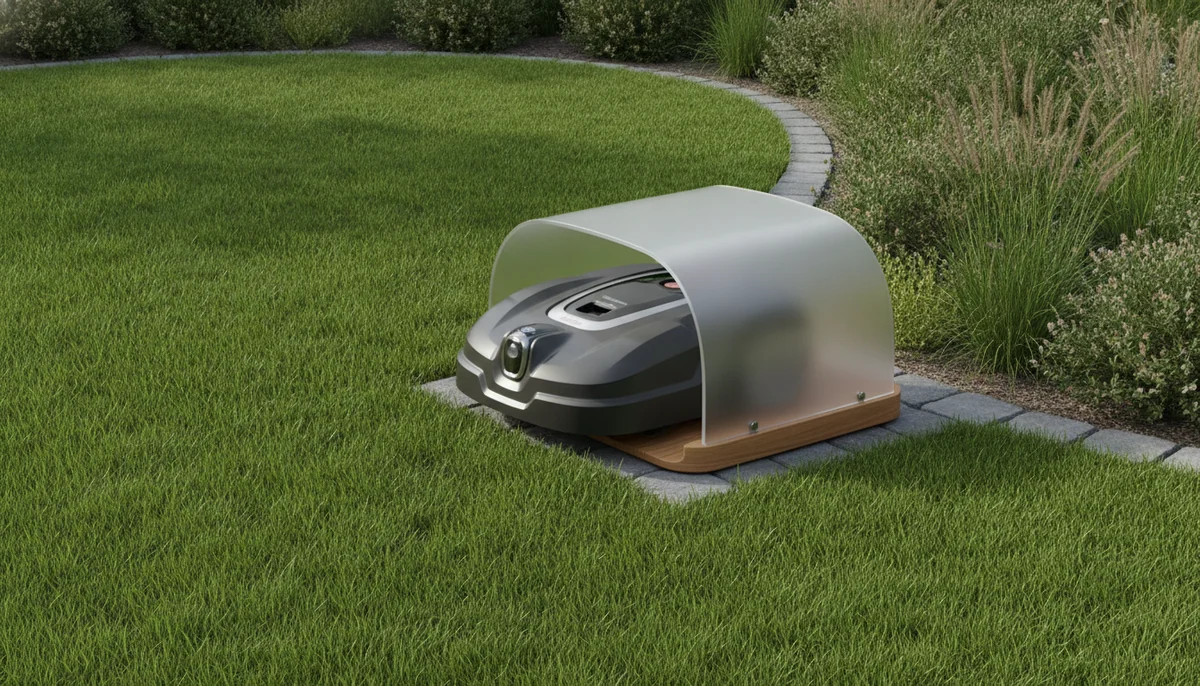
A robot mower already lives outdoors. A separate roof is not what makes it rain-resistant, capable of charging or willing to leave the dock. If the mower and station are installed according to their instructions, the machine should not become helpless merely because rain lands on it.
That does not make a shelter pointless. The mower may spend most of its life parked in one patch of direct sun, beneath falling debris and under the drip line of every passing storm. A modest roof can reduce that concentrated exposure. It can also create a darker, hotter, damper and more collision-prone parking space if it is chosen by appearance rather than by the mower’s actual movements.
The right question is therefore not whether every robotic mower needs a little house. It is whether this particular dock sits somewhere that benefits from overhead protection, and whether a shelter can provide it without compromising navigation, drainage, cooling or access.
A roof protects the parking place, not the whole machine
The useful job of a mower garage is narrow: it intercepts direct overhead sun, rain, leaves, bird mess and some falling debris while the mower is docked. Shade is particularly sensible when a dark chassis spends long afternoons in an exposed south- or west-facing position. Keeping the top controls and charging area out of repeated downpours can also make routine cleaning less tiresome.
An open-sided canopy does not create a dry room. Wind-driven rain, sprinkler spray and ground splash can still reach the mower. Damp grass still packs beneath the deck, charging contacts still need inspection, and wheels still carry mud into the station. A roof that encourages someone to stop checking these things has replaced weather exposure with neglect.
Nor is a garage a security enclosure. An open shelter leaves the mower visible and accessible, while walls and a door can obstruct its sensors or departure path. Anyone worried about theft should rely on the mower’s PIN, account lock, tracking features and sensible dock placement rather than expecting a plastic canopy to act as a safe; the separate guide to robot-mower theft and tracking explains what those protections can and cannot do.
The charging site decides whether shelter is worth adding
Walk outside at the time when the dock gets its hardest weather. A station beneath a deep, well-ventilated overhang may already have all the protection it needs. One standing in open grass with full afternoon sun and no overhead cover makes a much stronger case for a roof. A station beside a sprinkler or in a hollow where water gathers needs relocation or drainage work first, because a canopy cannot correct water arriving from below or sideways.
| Charging-site condition | Recommendation | Reason |
|---|---|---|
| Existing eave with good airflow and a clear approach | Skip another garage | The main overhead protection is already present. |
| Open site in direct sun and falling rain | Add a ventilated canopy | Shade and overhead cover address a real concentration of exposure. |
| Sprinkler aimed across the dock | Move or redirect the sprinkler first | An open shelter cannot stop lateral spray reliably. |
| Low spot with mud or standing water | Fix the base and drainage first | A roof does nothing about water beneath the mower. |
| Weak satellite reception at the proposed station | Resolve positioning before adding a roof | The garage cannot rescue a poor navigation location. |
| Loose soil or a windy exposed corner | Use secure, suitable anchoring | A broad canopy can behave like a sail. |
The power supply and cable connections are a separate installation problem. Keep them in the locations and orientations required by the manufacturer, away from standing water and from the mower’s wheels. Covering the mower while leaving an external power brick in runoff is not a complete weather plan.
A good mower garage has less architecture than you think
The safest design is usually a broad roof with open airflow, generous wheel clearance and no door. Plastic or another signal-friendly material is the conservative choice around RTK, GPS, Wi-Fi and cellular hardware. A metal roof may work in some installations, but it adds an avoidable variable when the mower or reference equipment depends on a clean view of the sky.
Measure the movement, not just the parked body. Some mowers reverse only partway before turning, perform a localization spin on departure or approach the charging contacts at a slight angle. A shelter can clear the stationary shell by several inches and still catch a wheel during the first turn. Mark the complete departure and return path, then leave additional tolerance for wheel slip and imperfect docking.
- Keep the front and sides open: the mower needs room to approach, reverse and pivot without meeting a post.
- Provide airflow: shade should not become a sealed pocket that holds summer heat or damp air.
- Pitch the roof: rain should run away from the charging approach rather than pool overhead or fall onto the contacts.
- Preserve access: controls, sensors, charging contacts and the mower itself should remain easy to inspect.
- Anchor for the ground: compact soil, loose loam, paving and concrete require different fastening decisions.
- Test before fastening: watch one full departure, mowing task and return before committing the shelter to the site.
A homemade canopy can be excellent if it follows those rules. A repurposed doghouse, storage box or narrow tent is riskier because its walls and legs were not designed around a robot’s wheel path. The clever-looking enclosure becomes a poor bargain the first time the mower spends the afternoon reversing into it.
The factory option buys fit, not complete protection
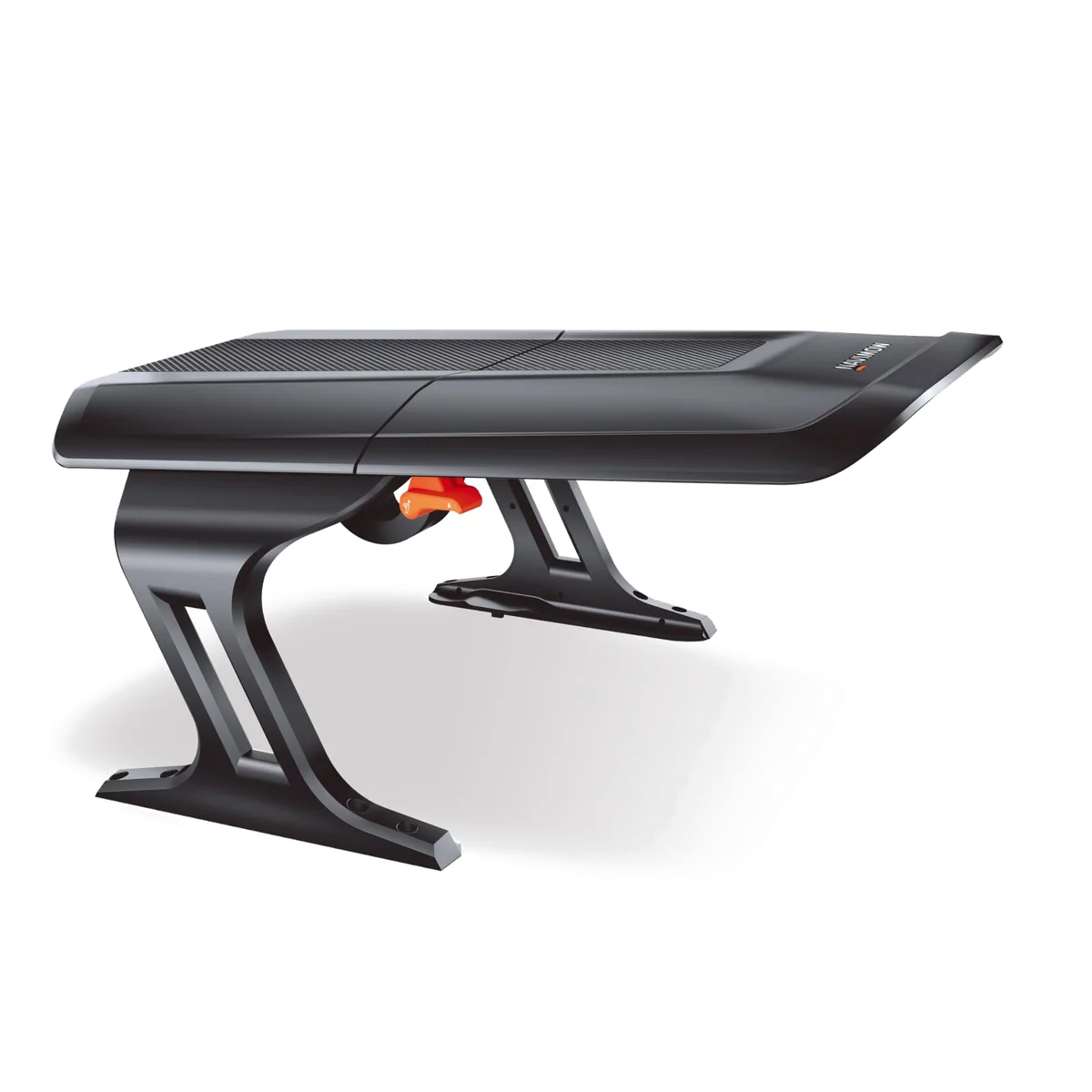
The Segway Navimow Garage X is the clearest example. Its hinged roof gives convenient access to an X430 or X450, and its open geometry accommodates the mower’s short reverse-and-pivot departure better than many generic boxes. Its honest drawback is equally clear: the open sides admit lateral weather, and the model-specific plastic canopy is difficult to justify at full retail when a suitable roof already exists.
Buy it when factory fit, clean appearance and known wheel clearance outweigh value, especially if it is discounted or bundled; the full Navimow Garage X review covers its assembly, anchoring and limited weather protection. Owners of smaller Navimow families need the different Garage S, not a forced installation of the larger accessory.
Mammotion’s LUBA 3 AWD 3000H bundle includes a garage that ships separately, and the package makes sense for a steep, rough lawn where the mower’s traction and high cutting range earn their keep. The drawback lies beyond the roof: the heavy AWD chassis can scar soft turf, while software and repair support remain less dependable than the mowing hardware. The LUBA 3 AWD 3000H review is the next step for that difficult-yard buyer.
The standard-height LUBA 3 AWD 5000 is the larger-ground choice, not an automatic upgrade. It can manage severe firm slopes and complicated zones, but fixed-wheel turns can dig into wet, sandy or fragile grass, and its 1.0- to 2.7-inch cutting range is wrong for lawns that must stay taller. Read the LUBA 3 AWD 5000 review before letting an included shelter make the mower decision.
Some mowers make shelter placement harder
RTK-guided machines need more than a dry parking spot. The ECOVACS GOAT O1000 RTK Care is a convincing cutter on a simple, open quarter-acre lawn, but unreliable mapping and route planning make it a poor choice for fence-separated zones and narrow side passages. Its external reference station needs a useful sky view, so adding metal or crowding the equipment beneath a structure can undermine the installation instead of improving it.
A garage cannot correct that navigation weakness. Buyers whose property genuinely suits the mower can use the GOAT O1000 RTK Care review to plan the antenna, station and routes before deciding whether overhead cover belongs there.
The DREAME A3 AWD Pro 3500 avoids an external RTK antenna by navigating with on-board LiDAR and binocular vision. It is a strong choice for a large, firm, tree-covered or steep lawn, but its heavy four-wheel-drive turning can rut damp soil, and direct sun can provoke LiDAR cooling pauses. A ventilated dock shelter is therefore worthwhile at an exposed station, although it cannot shade the sensor while the mower is crossing the lawn.
The mower also needs substantial maneuvering room in front of the dock, so a small decorative hut is exactly the wrong solution. The DREAME A3 AWD Pro 3500 review explains the ground, mapping and heat conditions that decide whether the machine itself belongs in the yard.
The Mammotion YUKA Mini 600H does not become a safer purchase because a roof fits over it. It can cut a small, smooth lawn neatly and quietly, but its short mowing cycle, two-wheel-drive limitations and severe exact-model failure reports leave too much ownership risk for a general recommendation. The YUKA Mini 600H review sets out the narrow case for buying it and the reasons most uncertain buyers should choose another small-lawn robot mower.
Rain protection and winter storage are different jobs
A summer canopy is not automatically suitable seasonal storage. It remains open to condensation, wind, frost, pests and prolonged cold. Follow the mower maker’s battery and storage instructions when the grass stops growing, clean and dry the machine, and treat any removable power equipment according to its own requirements. Leaving everything beneath a plastic roof for months is not the same as putting it away properly.
During the mowing season, the simpler routine wins. Keep the dock level, the approach firm, the contacts clean, the roof secure and the air moving. Add shelter when it fixes direct exposure at an otherwise good charging site. Skip it when the dock already has cover, and never let a tiny house overrule the space or signal the robot needs to come home.
Frequently Asked Questions
Can a robotic lawn mower stay outside in rain?
A mower designed and installed for outdoor use can remain outside within its published weather limits, although its charging site still needs correct drainage, electrical placement and routine inspection.
Will a garage interfere with GPS or RTK navigation?
A signal-friendly open shelter is the safer choice because metal, dense construction or poor station placement can interfere with the positioning conditions some mowers require.
Can a robot mower garage be completely enclosed?
A fully enclosed garage is usually a poor design unless it provides ample ventilation, sensor clearance and a door system that cannot obstruct departure or docking.
Should the charging station sit on grass or paving?
A firm, level and well-drained approach is preferable because repeated docking turns can wear soft grass into mud or ruts.
Does a garage stop a robotic mower from being stolen?
No, an open canopy provides little physical security, so account locks, PIN protection, tracking and discreet placement matter more.
Should the mower be stored in its outdoor garage through winter?
Not automatically, because seasonal storage should follow the manufacturer’s instructions for cleaning, battery care, temperature and protection from prolonged damp or frost.
Sources (56)
- Amazon listings and customer reviews
- Owner reports across r/roboticLawnmowers, r/SegwayNavimow, r/gadgets and 3 more threads
- Owner and reviewer video, 105 channels
- Walmart listing
- Toptenreviews — Article — www.toptenreviews.com
- Navimow — Article — navimow.com
- Trustpilot — Article — www.trustpilot.com
- Pcmag — Article — www.pcmag.com
- Tv — Article — www.stuff.tv
- Outdoor Usa — Article — outdoor-usa.com
- Gizmodo — Article — gizmodo.com
- Navimow — Article — be.navimow.com
- Gardenmachinerydirect — Article — www.gardenmachinerydirect.co.uk
- Segway — Article — navimow.segway.com
- Therobotmower — Article — therobotmower.co.uk
- Homedepot — Article — www.homedepot.com
- Trustpilot — Article — uk.trustpilot.com
- Trustpilot — Article — it.trustpilot.com
- Trustpilot — Article — de.trustpilot.com
- Facebook — Article — www.facebook.com
- Pcworld — Article — www.pcworld.com
- Easylawnmowing — Article — easylawnmowing.co.uk
- Mammotion — Article — us.mammotion.com
- Trustpilot — Article — au.trustpilot.com
- Thetechnologyman — Article — thetechnologyman.com
- Easylawnmowing — Article — www.easylawnmowing.com
- Mammotion — Article — mammotion.com
- Carplaylife — Article — www.carplaylife.com
- Freshlycharged — Article — freshlycharged.com
- Androidauthority — Article — www.androidauthority.com
- T3 — Article — www.t3.com
- Au — Article — robotlawnmowers.com.au
- Smarthomejunkie — Article — www.smarthomejunkie.net
- Iheart — Article — rocketerie.iheart.com
- Techradar — Article — www.techradar.com
- Cnet — Article — www.cnet.com
- Robomowlab — Article — robomowlab.com
- Bobvila — Article — www.bobvila.com
- ECOVACS — Article — www.ecovacs.com
- Eftm — Article — eftm.com
- Au — Article — www.harveynorman.com.au
- Consumerreports — Article — www.consumerreports.org
- Bestbuy — Article — www.bestbuy.com
- Thespruce — Article — www.thespruce.com
- Pcmag — Article — uk.pcmag.com
- Mensjournal — Article — www.mensjournal.com
- Tomsguide — Article — www.tomsguide.com
- Notebookcheck — Article — www.notebookcheck.net
- Lbtechreviews — Article — www.lbtechreviews.com
- Dreametech — Article — yardcare.dreametech.com
- Ign — Article — www.ign.com
- Glroboticsusa — Article — www.glroboticsusa.com
- Basic Tutorials — Article — basic-tutorials.com
- Theverge — Article — www.theverge.com
- Mammotion — Article — eu.mammotion.com
- Mammotion — Article — uk.mammotion.com