The Dreame A3 AWD Pro 3500 is the one to buy.
Buy the A3 AWD Pro 3500 for most large, hilly or tree-covered lawns, and step up to the 5000 only when the actual mowable grass approaches an acre.
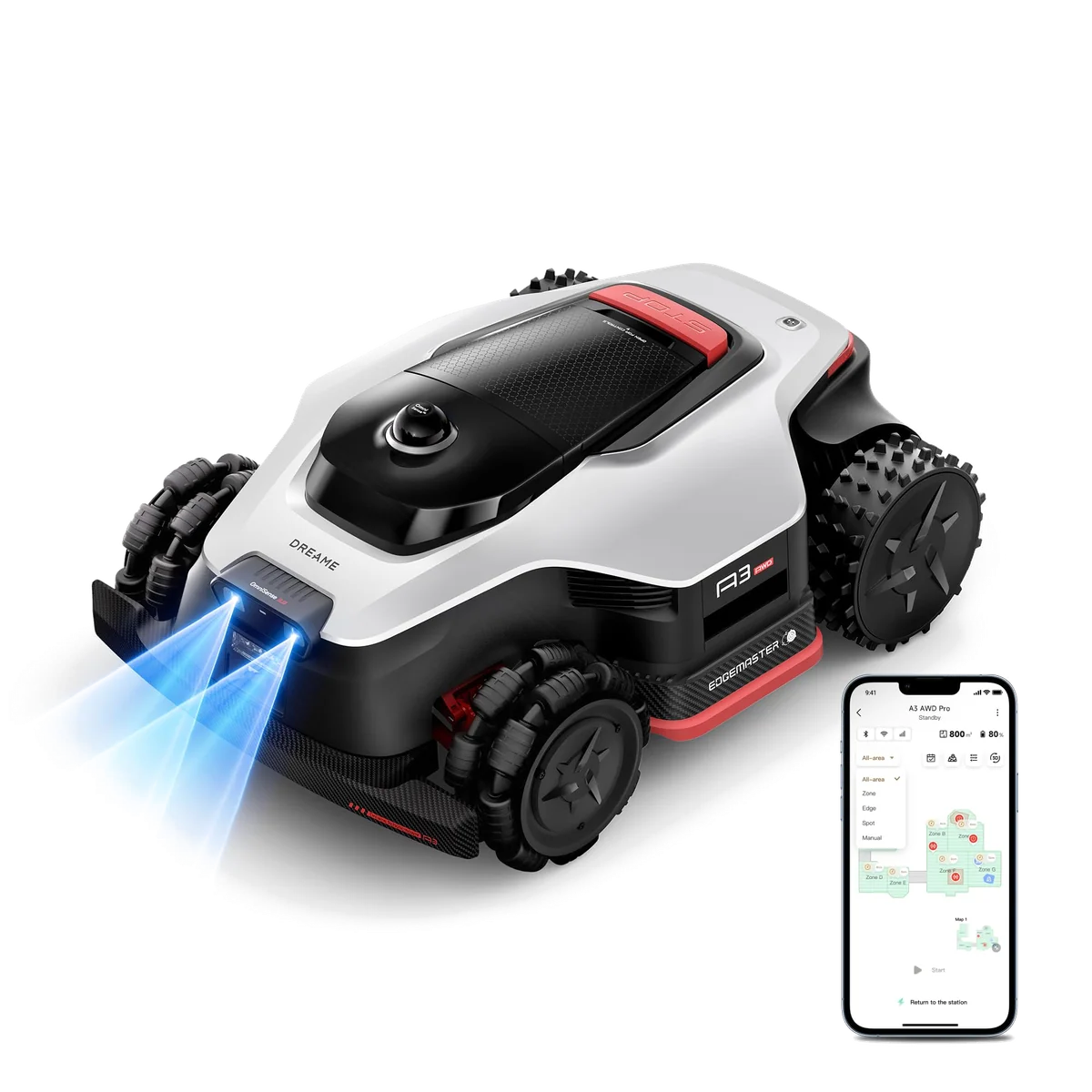
Dreame A3 AWD Pro 3500
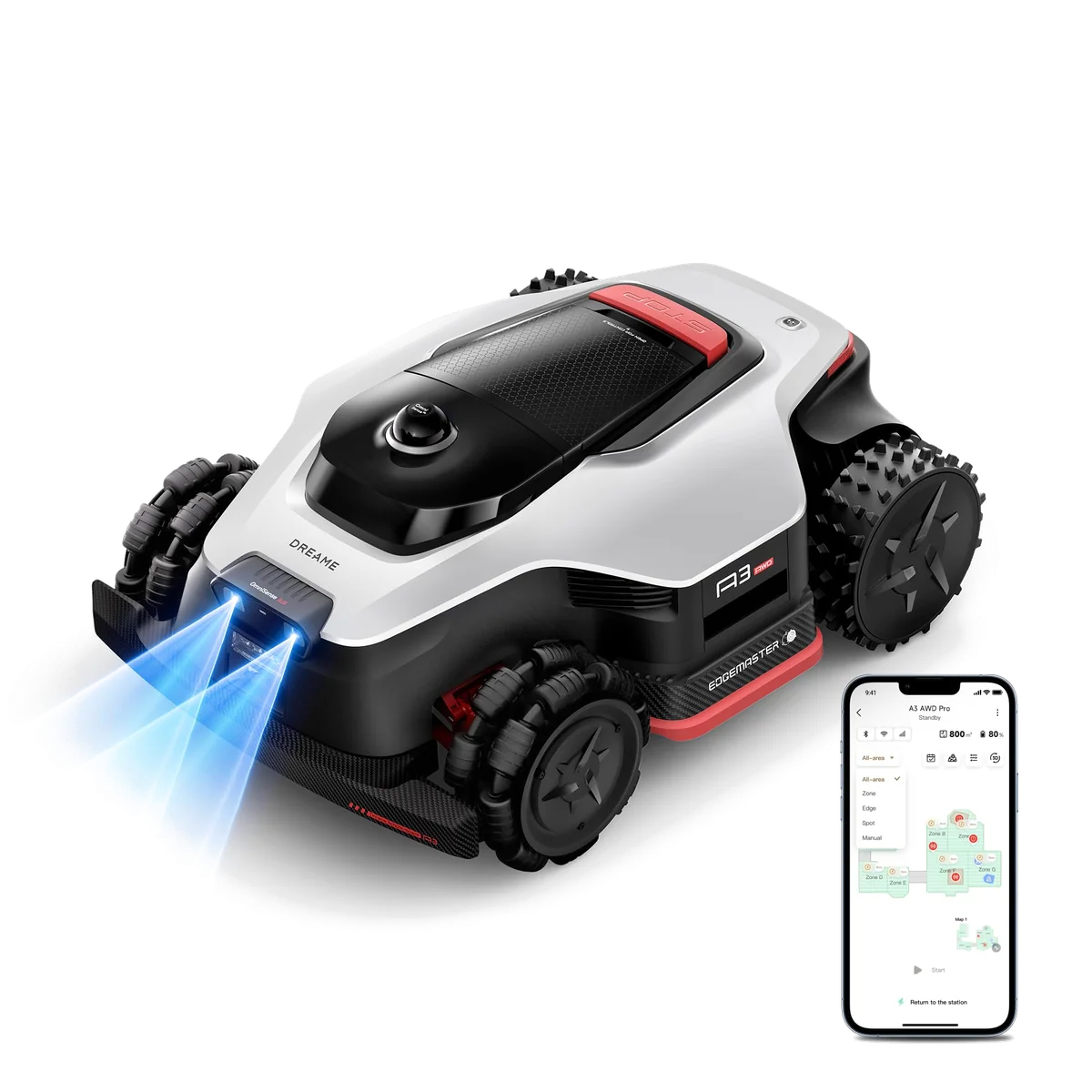
DREAME LiDAR Robot Lawn Mower
The choice sounds more complicated than it is. These are two capacities of the same broad Pro platform: four driven wheels, on-board LiDAR and binocular vision, a 15.8-inch dual-disc deck, wire-free mapping and the same unusually aggressive close-edge system. The 5000 does not navigate more intelligently, climb a steeper bank or leave a finer finish. It carries a 10 Ah battery instead of 7.5 Ah and raises the managed-area ceiling from 3,500 to 5,000 square metres.
That makes the 3500 the better-balanced machine. Its 0.87-acre rating already covers a substantial property, and automatic charging lets it finish work across multiple runs rather than demanding one heroic battery cycle. Buying the 5000 for a half-acre lawn is like fitting a larger fuel tank to a tractor that never leaves the paddock. Nothing gets cut better; more capacity simply sits unused.
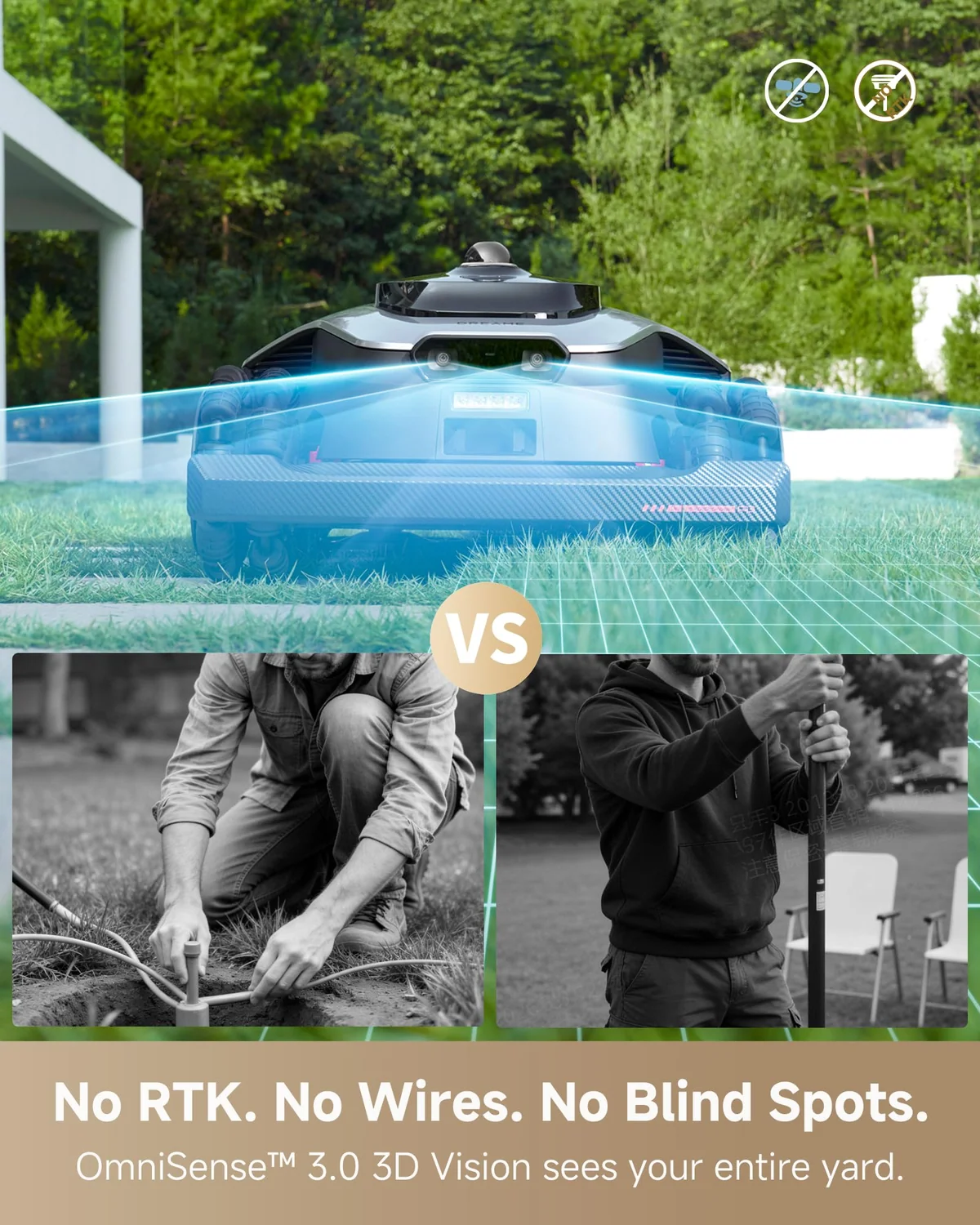
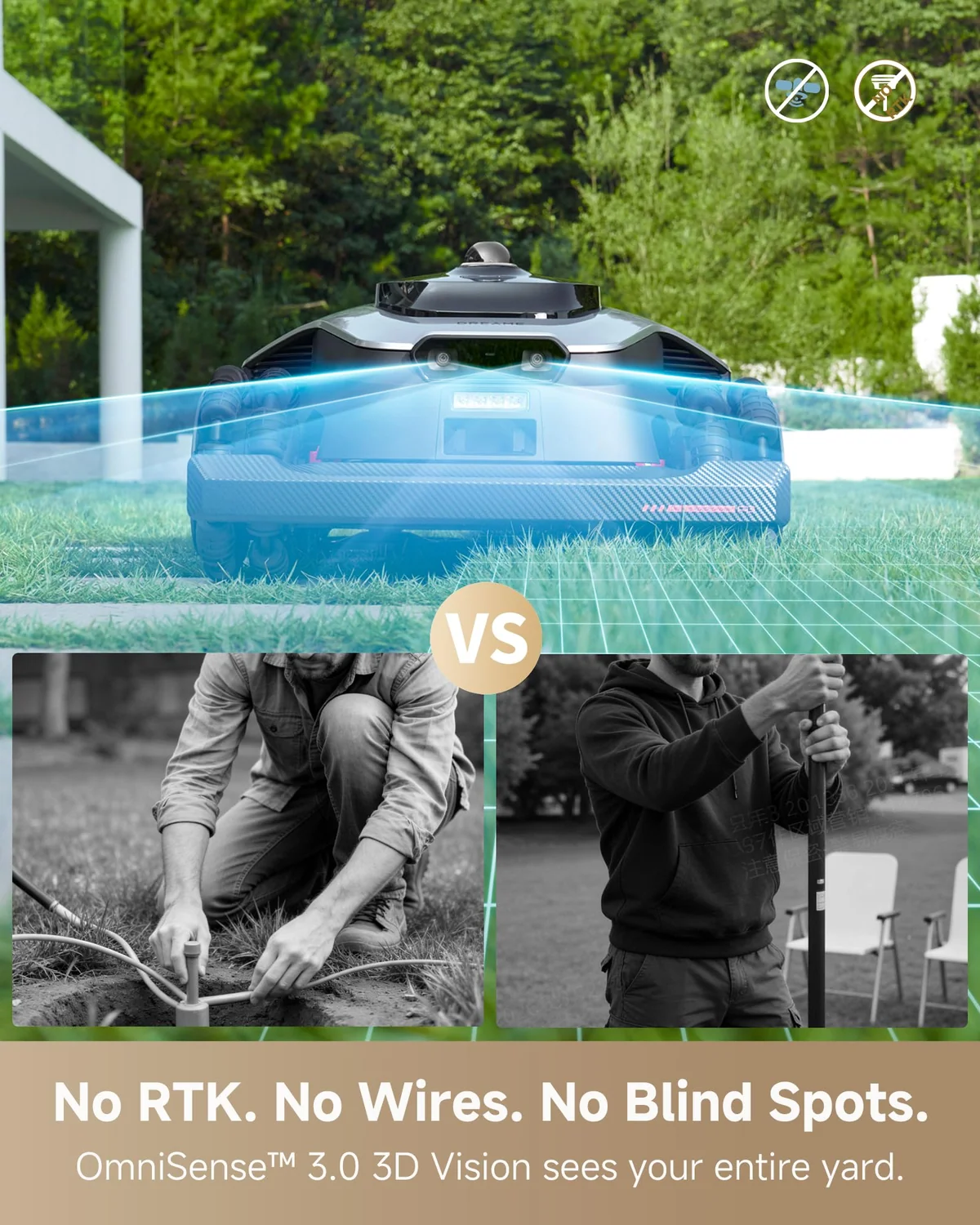
Both mowers earn attention for the same reason. Their LiDAR remains useful beneath mature trees and beside buildings, where an RTK mower can lose positioning precision or force an awkward antenna installation. Add genuine all-wheel traction, a wide maintenance deck and the ability to cross roots and firm uneven ground, and the A3 AWD Pro becomes a compelling answer to a difficult large yard.
Both also carry the same warning label. At 52.7 pounds, this is a heavy machine whose powered turns can scuff damp turf, excavate sand and wear a bare circle in front of the dock. EdgeMaster compounds the problem by cutting its close perimeter laps at a fixed 3 cm, even when the main lawn is kept much taller. Immature software, LiDAR cooling pauses and reports of wheel, blade-motor, charging and connectivity failures make either capacity a calculated purchase rather than a carefree premium appliance.
Dreame A3 AWD Pro 3500
DREAME LiDAR Robot Lawn Mower
At a Glance
| Feature | Editor's Pick Dreame A3 AWD Pro 3500 | DREAME LiDAR Robot Lawn Mower |
|---|---|---|
| Price Range | $1,500–$3,000 | $3,000+ |
| Cutting height | 3–10 cm / 1.2–3.9 inches | — |
| Recommended lawn size | Up to 3,500 m² / 0.87 acre | — |
| Cutting width | 40 cm / 15.8 inches | — |
| Check Price on Amazon | Check Price on Amazon |
The extra 1,500 square metres is the whole decision
Start with mowable grass, not the property line. Remove the house, driveway, beds, woodland, pond and every area the robot will never enter, then allow for slopes, obstacles, narrow passages and conservative operating modes. The resulting number matters more than the acreage on an estate-agent listing. Our guide to what robot-mower acreage ratings really mean explains why the figure on the box describes managed capacity, not a guaranteed single-charge cut.
| Decision point | A3 AWD Pro 3500 | A3 AWD Pro 5000 | What it means in the yard |
|---|---|---|---|
| Managed-area class | Up to 3,500 m² / 0.87 acre | Up to 5,000 m² / about 1.25 acres | The 5000 is justified only when the smaller model’s daily capacity would be tight. |
| Battery | 7.5 Ah | 10 Ah | The larger pack extends working capacity, but neither rating promises a full property on one charge. |
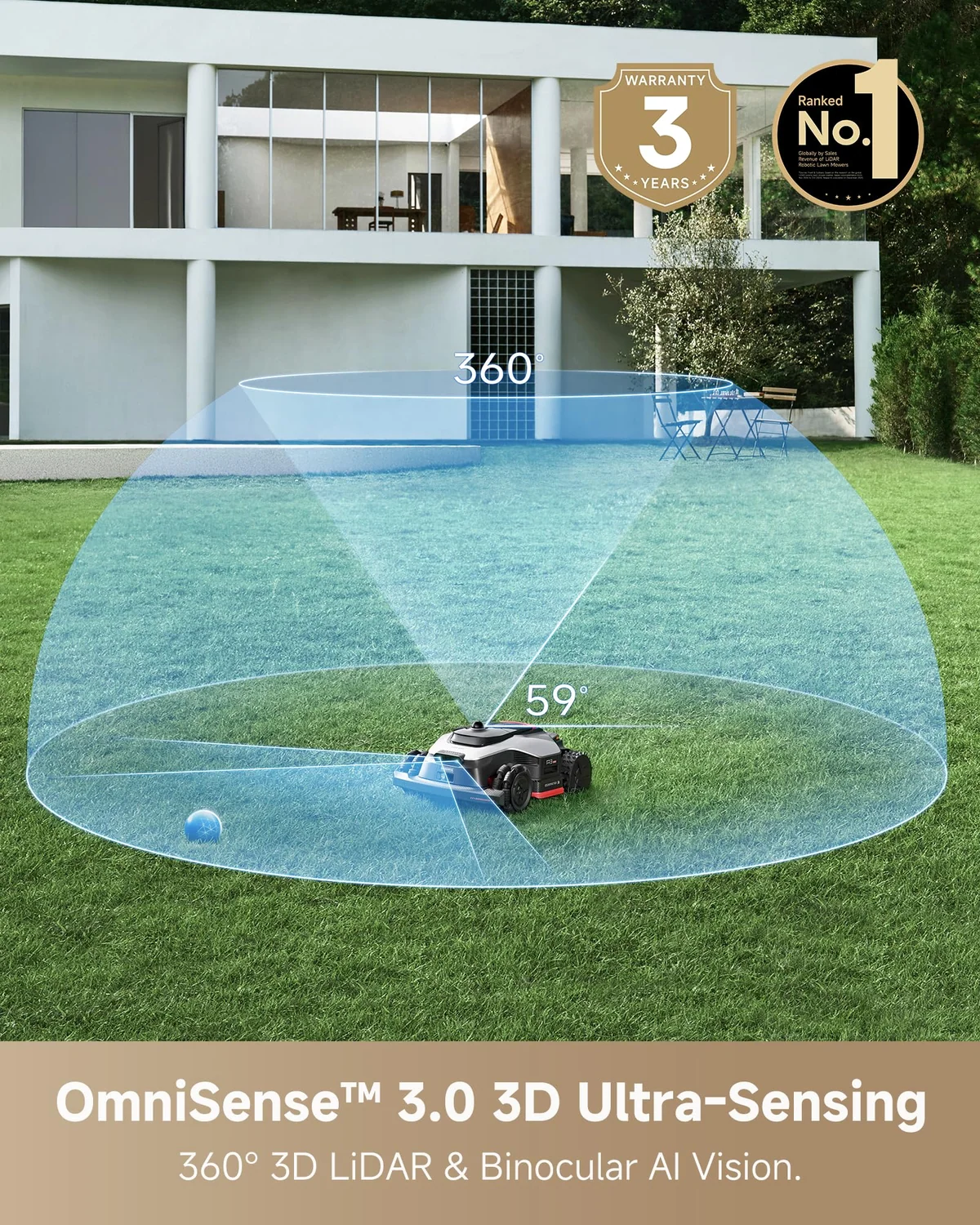
| Navigation | 360° 3D LiDAR and binocular vision | 360° 3D LiDAR and binocular vision | Both avoid an external RTK antenna and remain attractive around trees and buildings. |
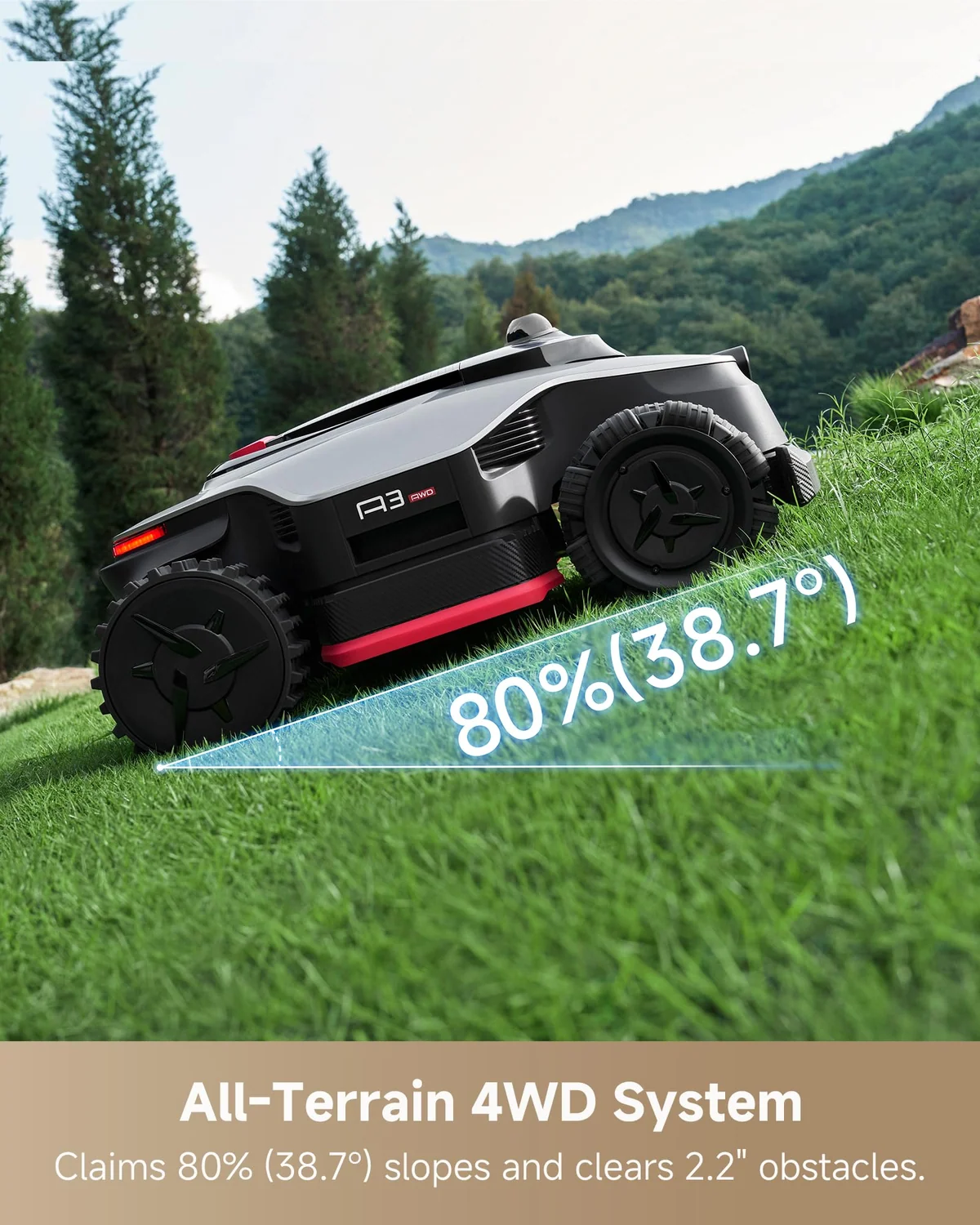
| Drive and claimed slope limit | Four-wheel drive, up to 38.7° | Four-wheel drive, up to 38.7° | Firm turf can exploit the traction; wet, sandy or thin ground may be damaged by it. |
| Cutting system | Dual discs, 15.8-inch width | Dual discs, 15.8-inch width | Expect the same broad, systematic maintenance cut rather than a finish upgrade with the 5000. |
| Close-edge behavior | EdgeMaster with a fixed 3 cm edge pass | EdgeMaster with a fixed 3 cm edge pass | Either model can scalp the perimeter of a taller lawn unless EdgeMaster is disabled. |
The 3500 leaves more room for reality
A robot rarely works in laboratory conditions. Tight zones, cautious obstacle avoidance, hills and frequent turns all consume time, while heat pauses and charging divide a long job into several sessions. The 3500 still has enough nominal capacity for a lawn that would feel large behind a conventional suburban house, and its wide deck gives it meaningful throughput on grass already under control.
It is not a machine for reclaiming an overgrown field. The small pivoting blades create little lift, so long folded grass, mature weeds and dandelions can survive while heavy clippings gather in rows. Cut an overgrown property conventionally first, then let the Dreame preserve the height with frequent shallow passes. That limitation does not improve when the badge changes from 3500 to 5000.
The 3500 is the right A3 AWD Pro for almost everyone.
It combines the full LiDAR, AWD and dual-disc experience with enough managed capacity for up to 3,500 m² of genuinely mowable lawn.
Its weight can damage soft ground, while the fixed low EdgeMaster pass and unsettled software demand more owner intervention than a premium mower should.
The 5000 is an acreage tool, not an upgrade package
The larger battery matters when an acre of grass has to be kept on schedule through charging stops, distant zones and slow obstacle-rich sections. On that property, the extra capacity provides useful operating margin and makes the 5000 less likely to spend the entire week catching up. It also suits an owner who expects the mowable area to expand soon, provided the current yard already benefits from this platform’s specialist strengths.
Do not confuse that margin with refinement. The 5000 retains the heavy chassis, the hard-coded low edge laps and the same exposure to cooling interruptions, mapping friction and early hardware failures. An expensive mower that develops a stuck wheel or refuses to charge is not rescued by a larger battery. Exercise both cutting discs, every wheel, docking, charging, Bluetooth and remote connectivity while the return route remains simple, and keep the packaging until the machine has proved itself.
The 5000 is for properties whose mowable grass genuinely approaches an acre.
Its 10 Ah battery and 5,000 m² managed-area class provide worthwhile headroom when the 3500 would spend too much of the schedule charging and resuming.
It asks for a larger commitment without correcting the platform’s turf damage, EdgeMaster, heat, software or reliability concerns.
Whichever badge you choose, prepare the yard for it
Automatic mapping is useful around unmistakable borders such as paving, gravel and defined beds, but manual mapping is the dependable starting point around woodland, adjoining grass or an open field. Drive the perimeter conservatively, create explicit no-go areas and watch the first complete job. A virtual boundary is not fall protection beside a pool, ditch or retaining edge, so use a physical barrier wherever a navigation mistake could put the mower in water or create a hazard.
The dock needs a firm, level and reasonably open approach. Each departure involves pauses and positioning turns, which concentrate the machine’s weight on the same patch. Pavers or a firm mat prevent the station entrance becoming a muddy roundabout. Shade helps with charging-site heat, although it cannot protect the LiDAR dome while the mower spends hours crossing an exposed lawn.
EdgeMaster should be treated as optional. It can leave almost no strip beside flush paving because the wheel can overlap the hard surface while the deck reaches outward. Beside walls, raised beds and tight curves, some trimming remains. More importantly, a lawn maintained above 3 cm will receive a visibly shorter perimeter, so disabling the feature is the sensible default for taller cool-season grass.
Dreame A3 AWD Pro 3500
DREAME LiDAR Robot Lawn Mower
The Dreame wins beneath trees, but not on every difficult lawn
Choose either A3 AWD Pro when the hard combination is poor satellite visibility, substantial acreage, roots, uneven transitions and meaningful slopes on established turf. The 3500 wins inside that group unless the calculated mowable area presses beyond its capacity. Owners comparing the smaller Pro with the regular single-disc model should read our standard A3 AWD and A3 AWD Pro comparison before paying for the wider chassis.
The platform beats the Mammotion LUBA 3 AWD 5000H when unreliable satellite reception is the central problem. Dreame’s on-board LiDAR removes the external reference-station puzzle while preserving serious four-wheel traction. The Mammotion remains a relevant large-yard alternative where open sky makes RTK straightforward, and the full trade is covered in our Dreame and LUBA 3 AWD comparison.
The Segway Navimow X430 is the better choice for an open, sun-beaten lawn where satellite reception is sound and smooth turning matters more than LiDAR independence. It moves more gently, avoids the Dreame’s spinning-LiDAR heat concern and comes from a more established mower-support lineage. Our Dreame and Navimow X430 comparison makes that alternative explicit rather than pretending the A3’s specialist advantage is universal.
Walk away from both Dreames if the lawn stays wet, contains broad sandy or thin patches, demands a tall immaculate edge, or belongs to someone who expects flawless mapping and mature support on the first afternoon. Smart Lawn Bots recommends the 3500 for the difficult yard that needs its navigation and traction, the 5000 for the same yard at close to an acre, and neither for a simple lawn that merely has room for an expensive mower.
What both models get right
- On-board LiDAR navigates beneath trees and beside buildings without an external RTK antenna.
- True four-wheel drive crosses firm slopes, roots and uneven transitions that stop lighter two-wheel-drive robots.
- The wide dual-disc deck cuts systematic stripes and fine mulch when grass is maintained frequently.
What neither capacity fixes
- The heavy powered chassis can rut damp turf and dig into sand or loose soil.
- EdgeMaster’s fixed 3 cm pass can scalp a lawn maintained at a taller cutting height.
- Software, heat management, hardware reliability and after-sales support remain less settled than the core mowing hardware.
Frequently Asked Questions
Does the A3 AWD Pro 5000 cut better than the 3500?
No, both use the same broad dual-disc cutting platform, while the 5000’s meaningful advantage is its larger battery and managed-area allowance.
Can the 3500 mow 0.87 acre on one charge?
No, 0.87 acre is its managed-area class rather than a promise of single-charge coverage.
Do these Dreame mowers need an RTK antenna or perimeter wire?
No, both navigate with on-board LiDAR and binocular vision, although they still require careful virtual mapping.
Which model makes sense for one acre of actual grass?
The 5000 is the safer capacity choice when the mowable area truly approaches an acre and includes slopes, obstacles or distant zones.
Does EdgeMaster follow the main cutting-height setting?
No, its close-edge laps cut at a fixed 3 cm, so owners of taller lawns should normally disable it.
Ready to Choose?
Sources (15)
- Amazon listings and customer reviews — Dreame A3 Awd Pro and Dreame Lidar Robot Mower
- Owner reports across r/automower, r/roboticLawnmowers, r/Dreame_Tech threads
- Owner and reviewer video, 20 channels
- Facebook — Article — www.facebook.com
- Notebookcheck — Article — www.notebookcheck.net
- Lbtechreviews — Article — www.lbtechreviews.com
- Gizmodo — Article — gizmodo.com
- Freshlycharged — Article — freshlycharged.com
- Dreametech — Article — yardcare.dreametech.com
- Mammotion — Article — us.mammotion.com
- Ign — Article — www.ign.com
- Glroboticsusa — Article — www.glroboticsusa.com
- Androidauthority — Article — www.androidauthority.com
- Basic Tutorials — Article — basic-tutorials.com
- Lawncareguides — Article — lawncareguides.com