The Dreame A3 AWD 1000 beats the Pro 3500 until the lawn outgrows it
Buy the A3 AWD 1000 for a wooded, uneven lawn around a quarter acre, and move up to the A3 AWD Pro 3500 only when faster coverage or substantially more ground justifies its heavier, harsher hardware.
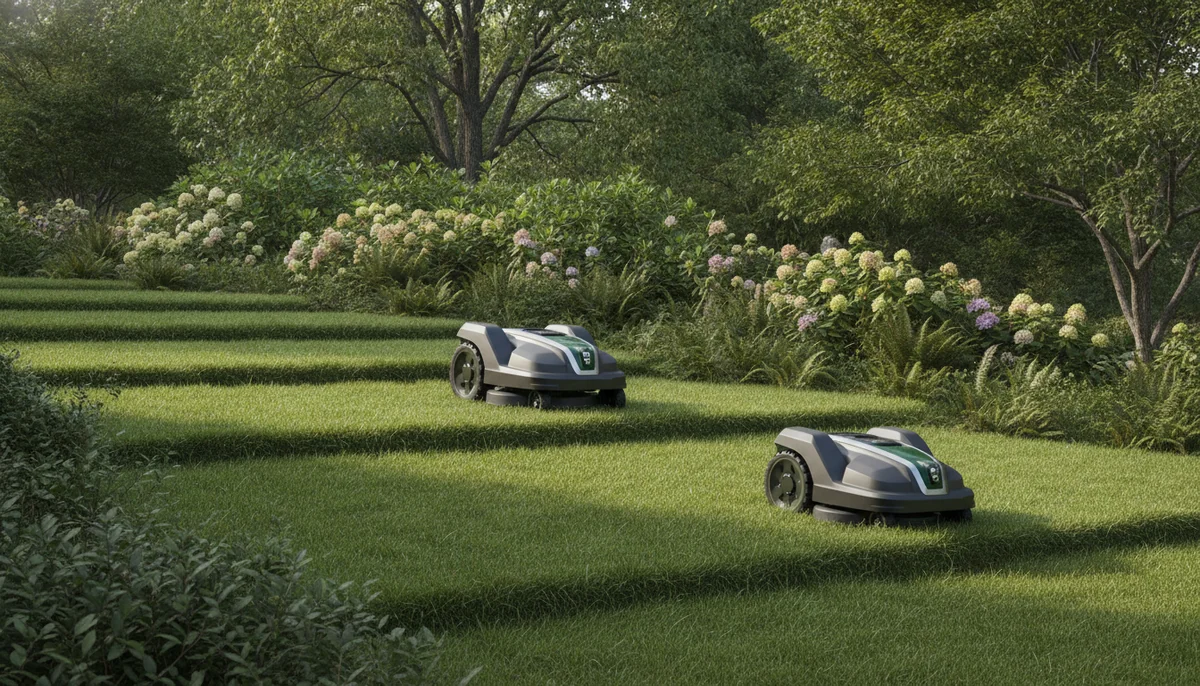
![[Latest Upgrade All-Terrain Wire-Free] DREAME A3 AWD 1000 Robot Lawn Mower, 360° 3D LiDAR & AI Dual Vision Smart Robotic Mower for 0.25 Acre, 80% Slopes & 45min Fast Charge](/assets/b0h46ddhkc.webp)
[Latest Upgrade All-Terrain Wire-Free] DREAME
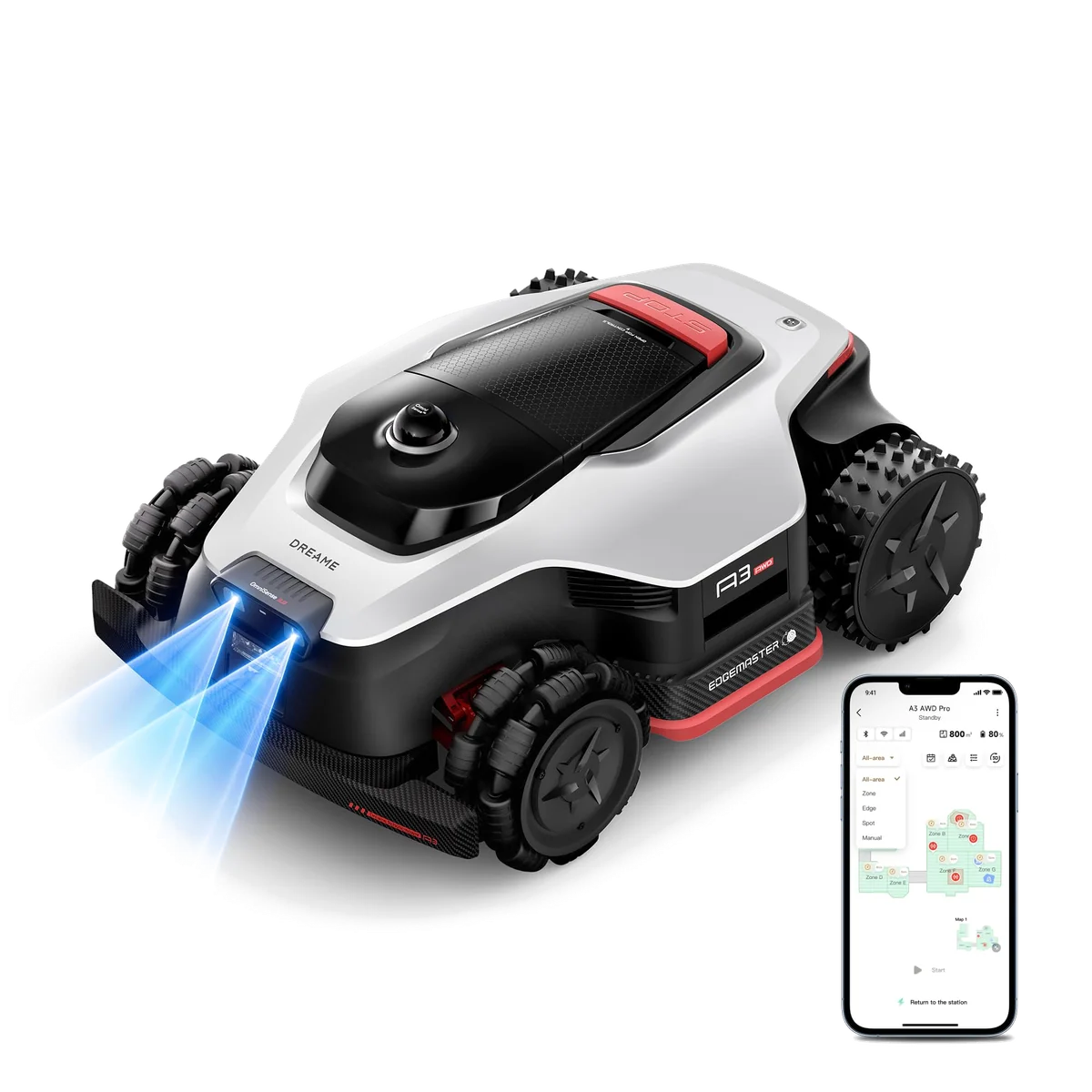
Dreame A3 AWD Pro 3500
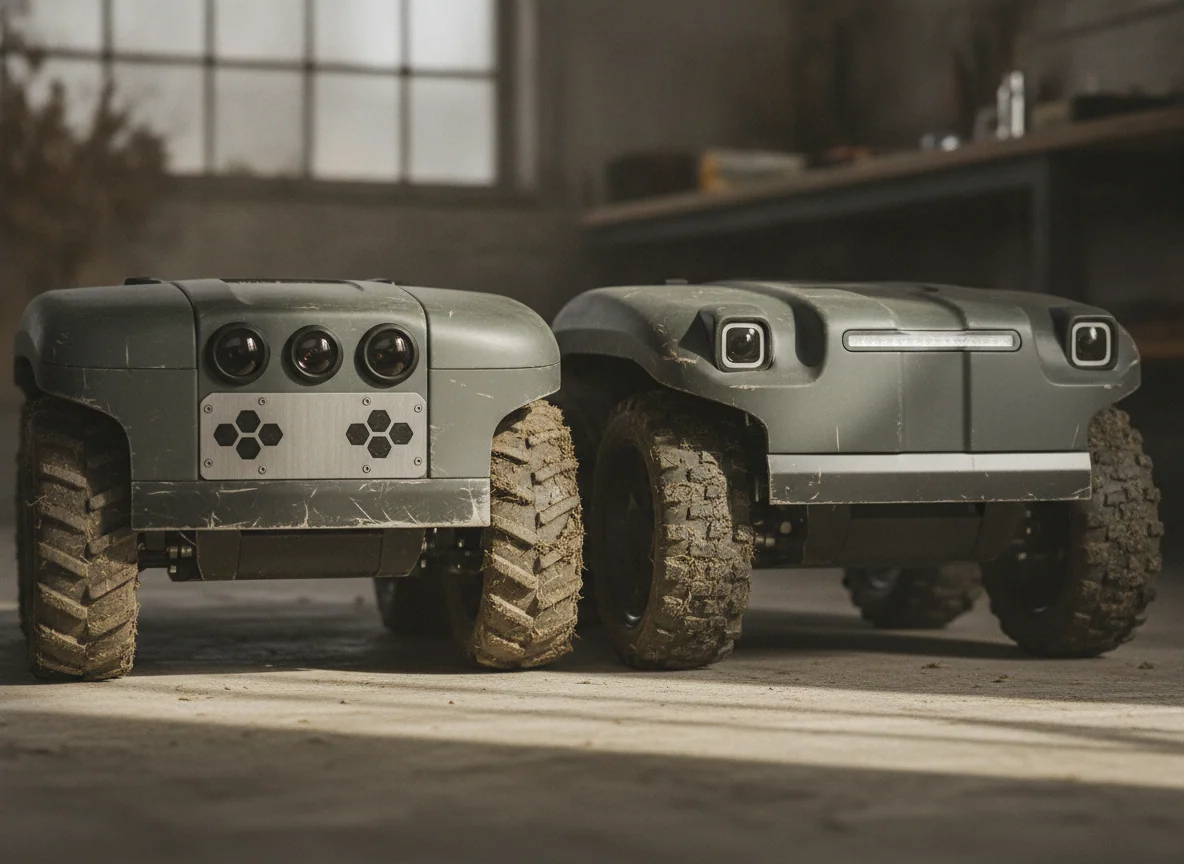
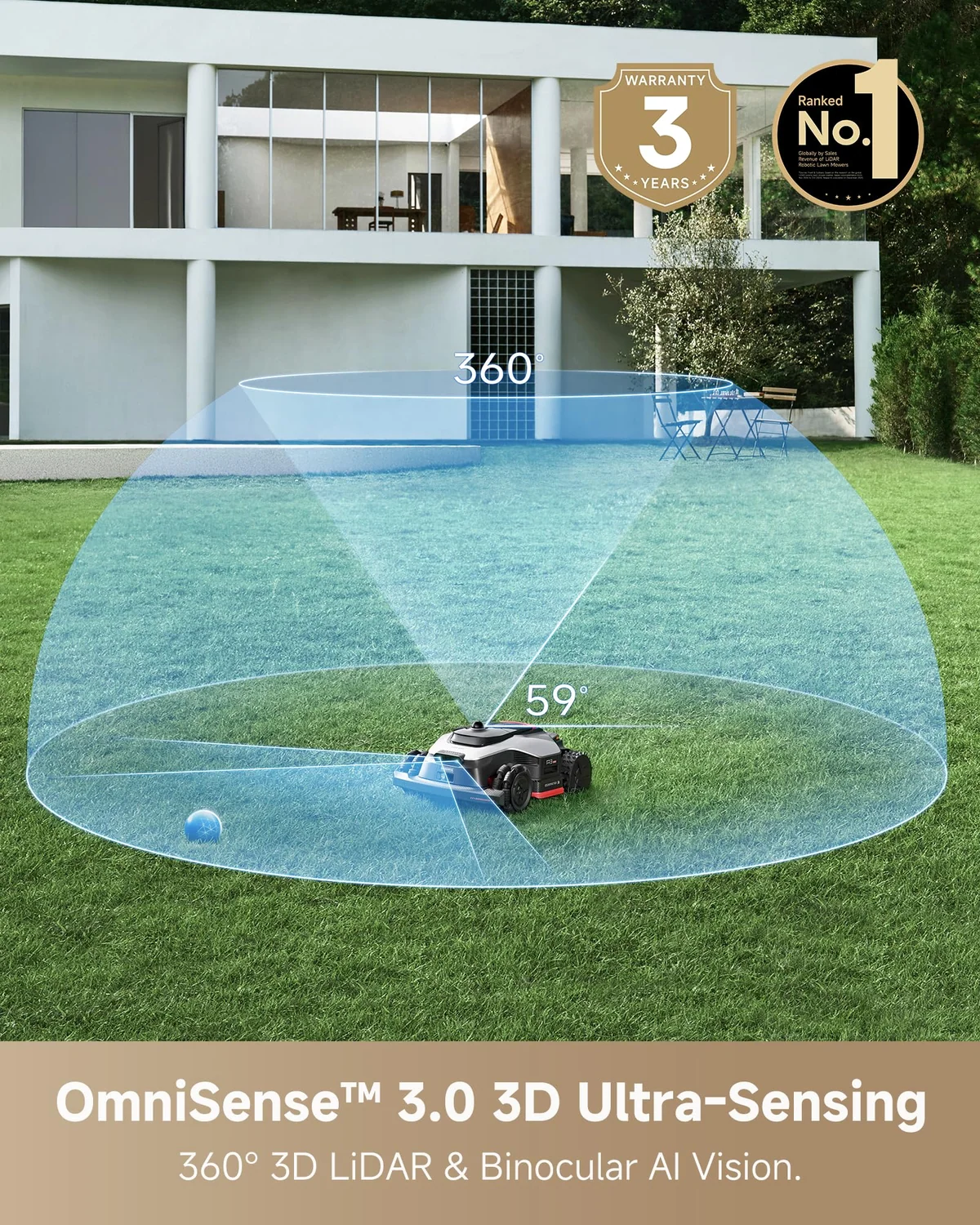
The model names make this look like a contest between ordinary and premium. It is really a question of scale. Both machines navigate with a rotating 360-degree LiDAR scanner, watch the ground ahead with two cameras, drive all four wheels and work without a perimeter wire or external RTK antenna. The Pro does not fundamentally know where it is better than the regular A3. It simply cuts far more grass each time it passes.
That makes the A3 AWD 1000 the better-balanced machine for the small yard that is difficult rather than large. Beneath mature trees, beside a tall house and across the lumpy bank behind a raised bed, its navigation and traction solve problems that defeat simpler satellite-dependent mowers. The Pro 3500 brings the same idea to properties approaching an acre, where an eight-inch cutting strip would turn autonomy into a very long wait.
Neither one is effortless out of the box. An ambiguous grass line can turn automatic mapping into an afternoon with a virtual joystick, thin branches can slip beneath the obstacle system, and saved boundaries are less pleasant to correct than they should be. The hardware feels ready for an awkward yard; parts of the software still feel ready for another firmware release.
![[Latest Upgrade All-Terrain Wire-Free] DREAME, view 2](/assets/b0h46ddhkc-angle-2.webp)
[Latest Upgrade All-Terrain Wire-Free] DREAME
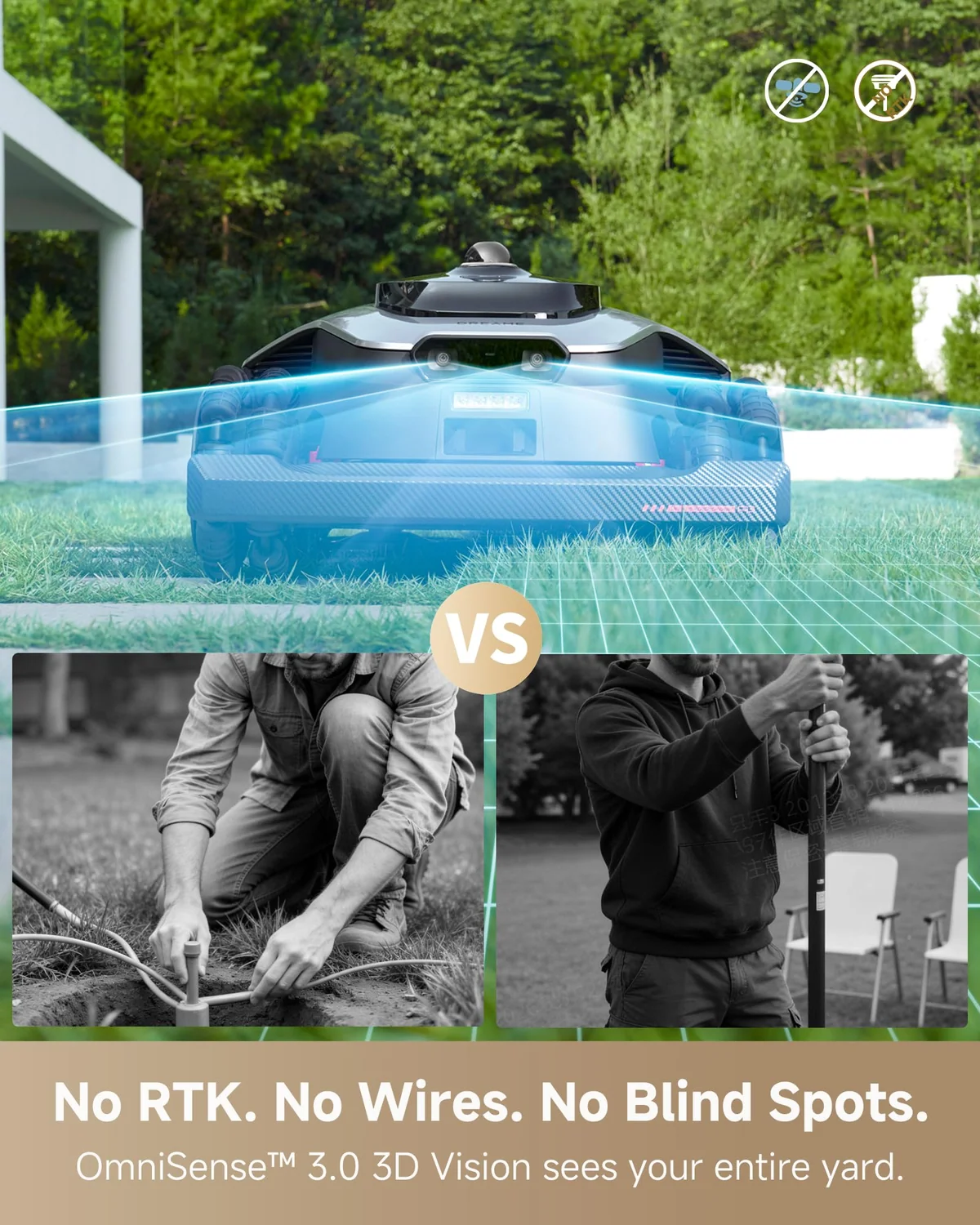
Dreame A3 AWD Pro 3500
At a Glance
| Feature | [Latest Upgrade All-Terrain Wire-Free] DREAME | Editor's Pick Dreame A3 AWD Pro 3500 |
|---|---|---|
| Price Range | $1,500–$3,000 | $1,500–$3,000 |
| Cutting height | — | 3–10 cm / 1.2–3.9 inches |
| Recommended lawn size | — | Up to 3,500 m² / 0.87 acre |
| Cutting width | — | 40 cm / 15.8 inches |
| Check Price on Amazon | Check Price on Amazon |
The Pro buys speed, width and capacity
The regular A3 uses one cutting disc with three small pivoting blades and clears a strip roughly eight inches wide. The Pro 3500 carries two discs, six blades and a 15.8-inch cutting width. That difference is visible before either mower finishes its first zone: the 1000 lays down many narrow rows, while the Pro removes almost twice as much grass on each straight run.
On a quarter acre, the narrow deck is not a defect if the mower goes out every couple of days. Robot mowers are maintenance tools, not rescue crews. Frequent shallow cuts disappear into the turf as fine mulch, and the mower can divide front, side and rear lawns across several scheduled sessions. The lawn stays cut even if the app never shows the entire property completed before dinner.
Let the same machine loose on half an acre or more and patience becomes the hidden cost. More passes mean more turns, more charging interruptions and more calendar time exposed to rain or heat. The Pro 3500 earns its size by reducing that workload, not by adding a radically different navigation system.
| Decision point | A3 AWD 1000 | A3 AWD Pro 3500 |
|---|---|---|
| Managed lawn class | Up to about 1,000 m² or 0.25 acre | Up to about 3,500 m² or 0.87 acre |
| Cutting system | One disc, three blades and a strip around eight inches wide | Two discs, six blades and a 15.8-inch cutting width |
| Best working rhythm | Frequent maintenance of several small zones across successive days | Faster systematic coverage of a substantial property |
| Navigation | On-board LiDAR and dual vision without an RTK antenna | On-board LiDAR and dual vision without an RTK antenna |
| Edging reality | About 1.97 inches from an edge unless the optional trimmer module is fitted | Closer mechanical reach, but EdgeMaster drops to a fixed 1.2-inch cut |
| Most important drawback | Slow coverage and immature boundary editing | Weight, turf damage and an edge mode that can scalp taller grass |
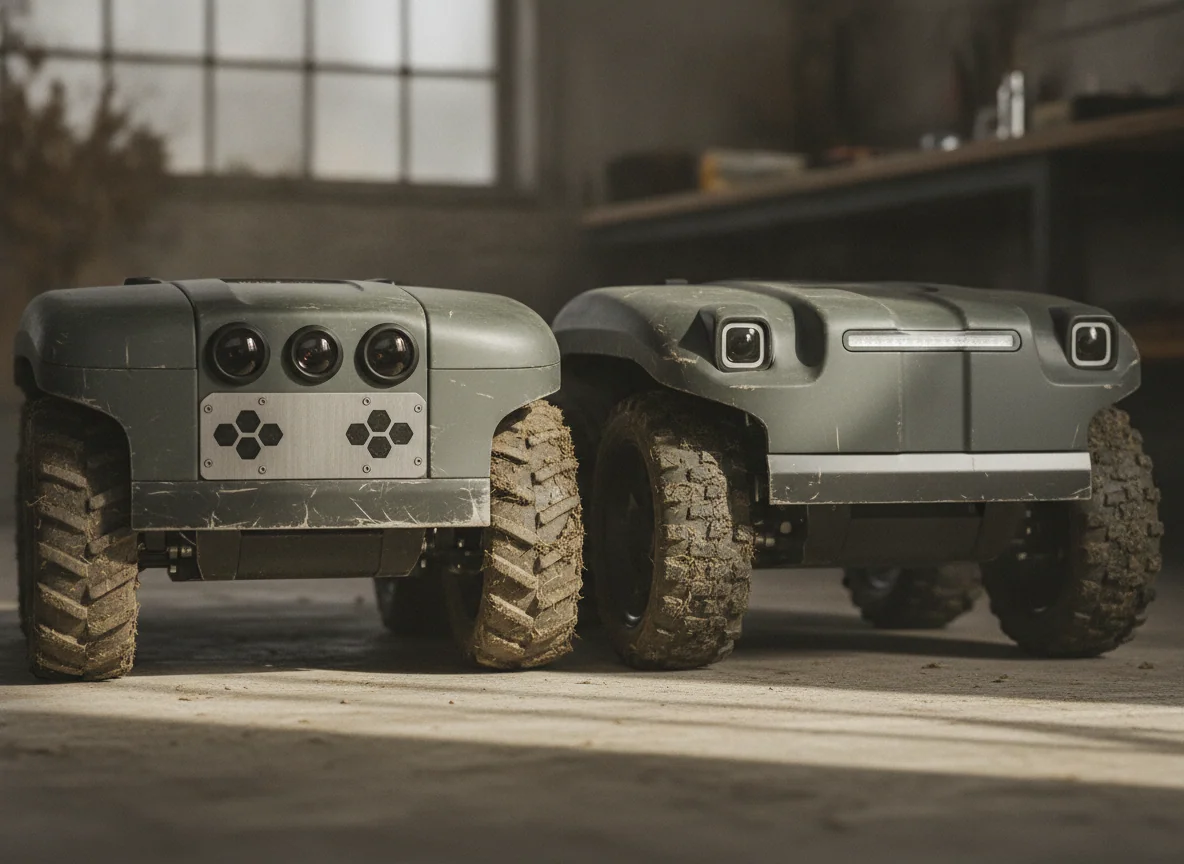
Both mowers are mountain goats with poor gardening manners
Four driven wheels let either A3 climb firm slopes, articulate over ruts and cross roots or hard lips that can strand a two-wheel-drive robot. The advertised 80 percent grade equals 38.7 degrees, but it is a ceiling under favorable conditions rather than a sensible design target. Ground condition, approach direction and turning space decide whether a steep bank is mowable.
Firm established turf is the happy case. Damp loam, loose sand and worn ground around the charging station are not. A wheel that grips on a grassy incline can dig on a nearly level bare patch, especially while the mower pivots to localize itself after leaving the dock. The Pro’s 52.7-pound body makes that risk harder to ignore. Give either model a level, firm approach to the station and avoid sending it out while the soil yields underfoot.
The first cut also needs realistic expectations. Small swinging blades have little lift, so a mower can press down tall weeds and folded grass before the deck reaches them. Bring an overgrown lawn to its intended height with a conventional mower, then let the robot maintain it. The promise is freedom from routine cutting, not a mechanical conquest of waist-high neglect.
LiDAR solves the sky problem, not the boundary problem
The best reason to choose either Dreame is the absence of satellite dependence. Under tree canopy or beside buildings, LiDAR can keep a map stable without an antenna searching for open sky. That makes the A3 family especially persuasive for the properties covered in our guide to robot mowers for yards with trees and poor satellite reception.
The mower still needs to know where grass ends. Clean transitions to paving or gravel are relatively easy to infer. Yellow turf, pine needles, open fields, neighboring lawns and sprawling borders can confuse automatic mapping, which leaves manual steering as the dependable fallback. Pools, drops and retaining edges need conservative no-go setbacks and physical protection where a navigation mistake could be dangerous.
Map flush paving with the outside wheels overlapping the hard surface or both machines can leave a needless green ribbon along the edge. Raised borders are different because the chassis cannot straddle them. The regular A3 leaves a narrow strip for trimming, while the Pro’s moving EdgeMaster deck reaches farther but introduces a worse problem: its close pass cuts at a fixed 3 cm, or 1.2 inches. On grass maintained much higher, that becomes a shaved racetrack around the lawn.
The Pro’s closer edging is therefore not a clean upgrade. Disable EdgeMaster on tall turf and accept some string trimming. Owners considering either machine specifically for border work should first read what robot mower edge cutting can and cannot eliminate.
The ranking
The A3 AWD 1000 is the best choice for most difficult quarter-acre lawns.
It keeps the family’s excellent LiDAR navigation and genuine all-wheel traction without making a small property carry the Pro’s size and excess capacity.
Its narrow single-disc deck works slowly, while unreliable automatic mapping and awkward saved-boundary editing can consume the time the mower was meant to return.
The A3 AWD Pro 3500 is the capacity upgrade, not the automatic winner.
Its wide dual-disc deck and larger working capacity make it the right Dreame for a firm, complicated lawn that extends well beyond a quarter acre.
The heavy chassis can scar soft ground, and EdgeMaster’s fixed 1.2-inch pass can scalp a lawn maintained at a taller setting.
The alternatives expose each Dreame’s limits
On a small, flat lawn with clear sky and obvious borders, the A3 1000 is more engineering than the job requires. The Segway Navimow i110N is the simpler comparison to make when severe terrain and blocked satellite reception are not the problem. Dreame wins when those conditions become the problem.
The Pro 3500 has the opposite fight. It is more natural than a satellite-led AWD mower beneath dense trees, but the Segway Navimow X430 is the stronger choice on an open, hot lawn that is vulnerable to pivot damage. The X430 gives up Dreame’s freedom from satellite visibility in exchange for gentler turning behavior and a more mature ownership proposition; our Dreame and Navimow X430 comparison separates those priorities in detail.
![[Latest Upgrade All-Terrain Wire-Free] DREAME, view 4](/assets/b0h46ddhkc-angle-4.webp)
[Latest Upgrade All-Terrain Wire-Free] DREAME
Dreame A3 AWD Pro 3500
Choose by the lawn that must be crossed, then by the lawn that must be cut
Buy the A3 AWD 1000 when the property is around a quarter acre and its real difficulty comes from trees, walls, slopes, roots, separate zones or poor satellite visibility. Expect to refine the map over the first few mowing cycles, divide the property into sensible zones and keep sticks, toys and hoses off the grass. Once that work is done, its slow pace matters less because it can maintain each section while nobody watches.
Buy the Pro 3500 when the same obstacles are spread across substantially more ground and the regular mower’s eight-inch deck would be overwhelmed. It belongs on firm turf with broad enough passages for a large chassis and enough work to justify two cutting discs. The 0.87-acre label describes managed capacity, not a promise to finish the whole property on one charge.
Walk away from both if effortless automatic mapping is the main reason for buying, the property has visually ambiguous or dangerous unprotected boundaries, or the ground stays soft and wet. Walk away from the Pro specifically if the lawn is small, narrow, sandy or maintained high enough for its fixed low edge pass to look like damage.
The A3 AWD 1000 wins this comparison because most quarter-acre buyers need the navigation and traction more than they need industrial throughput. The Pro 3500 becomes the better decision only after the smaller mower’s coverage rate becomes the bottleneck. That is an upgrade earned by acreage, not by the word “Pro.”
Frequently Asked Questions
Do either of these Dreame mowers need a boundary wire or RTK antenna?
No, both navigate with on-board LiDAR and binocular vision instead of a buried perimeter wire or external RTK reference station.
Does the Pro 3500 mow 0.87 acre on one charge?
No, 0.87 acre is its maximum managed-area class rather than guaranteed single-charge coverage.
Can the A3 AWD 1000 really climb an 80 percent slope?
The traction is formidable, but 80 percent is a best-case maximum and firm slopes around 30 degrees are a more credible planning assumption.
Does the Pro 3500 always cut closer than the A3 1000?
Its EdgeMaster deck reaches closer mechanically, but the fixed 1.2-inch edge height makes that advantage unsuitable for taller lawns.
Which model is better for a wooded quarter acre?
The A3 AWD 1000 is the better fit because it retains LiDAR and four-wheel drive without charging the lawn a size and capacity penalty it does not need.
Ready to Choose?
Sources (14)
- Amazon listings and customer reviews — Latest Upgrade All Terrain and Dreame A3 Awd Pro
- Owner reports across r/furry, r/SteamDeck, r/monzo and 4 more threads
- Owner and reviewer video, 20 channels
- Facebook — Article — www.facebook.com
- Notebookcheck — Article — www.notebookcheck.net
- Lbtechreviews — Article — www.lbtechreviews.com
- Gizmodo — Article — gizmodo.com
- Freshlycharged — Article — freshlycharged.com
- Dreametech — Article — yardcare.dreametech.com
- Mammotion — Article — us.mammotion.com
- Ign — Article — www.ign.com
- Glroboticsusa — Article — www.glroboticsusa.com
- Androidauthority — Article — www.androidauthority.com
- Basic Tutorials — Article — basic-tutorials.com