Do not buy the Yarbo Lawn Mower as your only mower
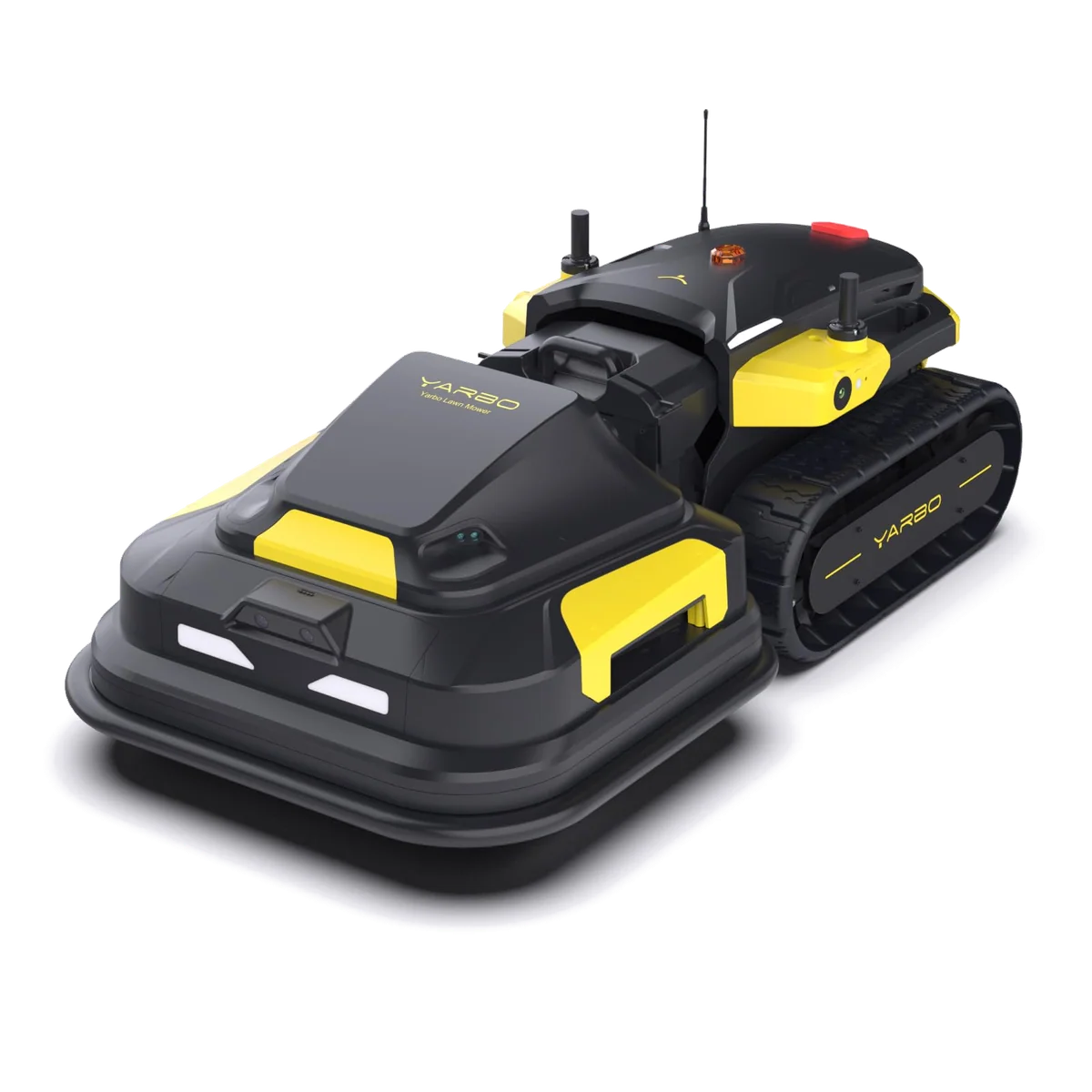
Do not buy this Yarbo as a mower-only replacement; consider it only for a large, open, multi-season property if you are technically confident, keep backup equipment, and verify that Yarbo has fixed the documented remote-access flaws.
Who should still consider it
The narrow case for buying is a large, mostly open property with difficult terrain, excellent sky visibility, several seasonal jobs and an owner who enjoys commissioning machinery. That owner should retain a zero-turn, tractor or mowing service for recovery, verify local parts and repair arrangements, keep all freight packaging, and demand a written answer about the security fixes before connecting the machine to a home network.
Everyone else should walk away. Yarbo proves that a tracked modular robot can remove a remarkable amount of outdoor labor, but this standard M1 package asks its buyer to insure the product against its own downtime, finish its edges, monitor its navigation and trust a security story that is not yet settled enough for autonomous power equipment.
Strengths
Weaknesses
Yarbo has built the robot mower that owners of five-acre lawns keep asking for: wide, tracked, heavy enough to cross rough ground, and capable of returning to its dock before continuing a job that may occupy most of the week. When it is running properly, the result can be excellent. Open lawns settle into a consistent height, long parallel passes leave convincing stripes, and several hours of weekly seat time become a few minutes of supervision.
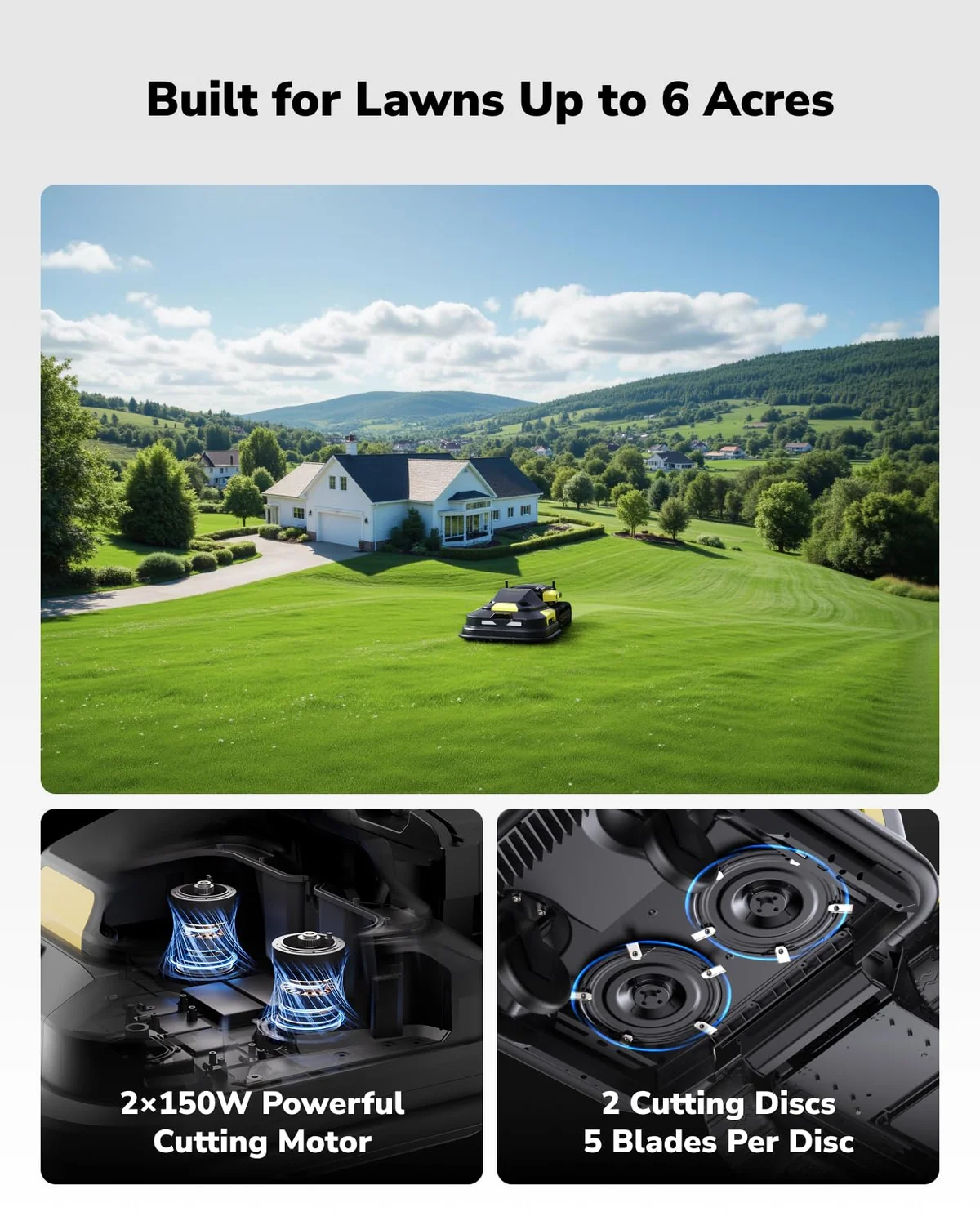
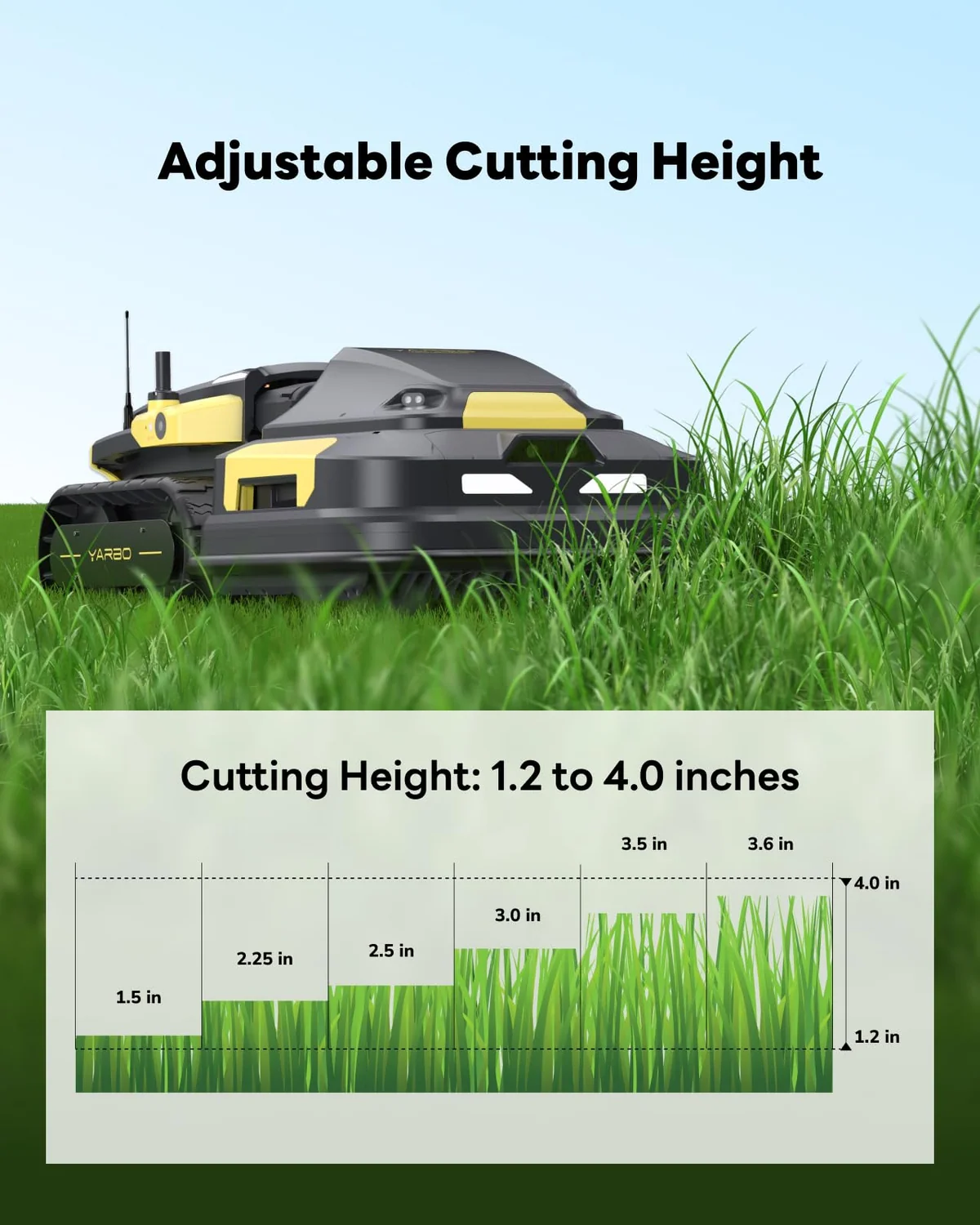
That upside is not imaginary, but it is conditional. The standard M1 deck in this listing uses two razor-disc cutters rather than the stronger straight-blade system promoted with the newer Pro module. It maintains short, dry grass well; it is much less convincing after rain, a missed week, or a failure that lets a large property become overgrown. Grass can wrap around the blade hardware, guards can clog, sticks and pinecones can jam or damage the discs, and flattened blades of grass may stand back up after the mower passes.
The decisive problem is not whether Yarbo can cut grass. It can. The problem is whether this complicated, cloud-connected platform will remain available often enough to keep a large lawn within the narrow conditions its standard deck prefers.
Key Specifications
Wire-free still comes with wire, work and a weekend
Commissioning begins before the mower reaches the grass. The Data Center needs a broad view of the sky, wired power-over-Ethernet and a position that will not move after mapping. The charging pad needs power, level ground and enough open space for a roughly 200-pound tracked machine to align. Then every boundary, exclusion and connecting path must be driven manually. Moving the positioning equipment later can mean rebuilding the maps.
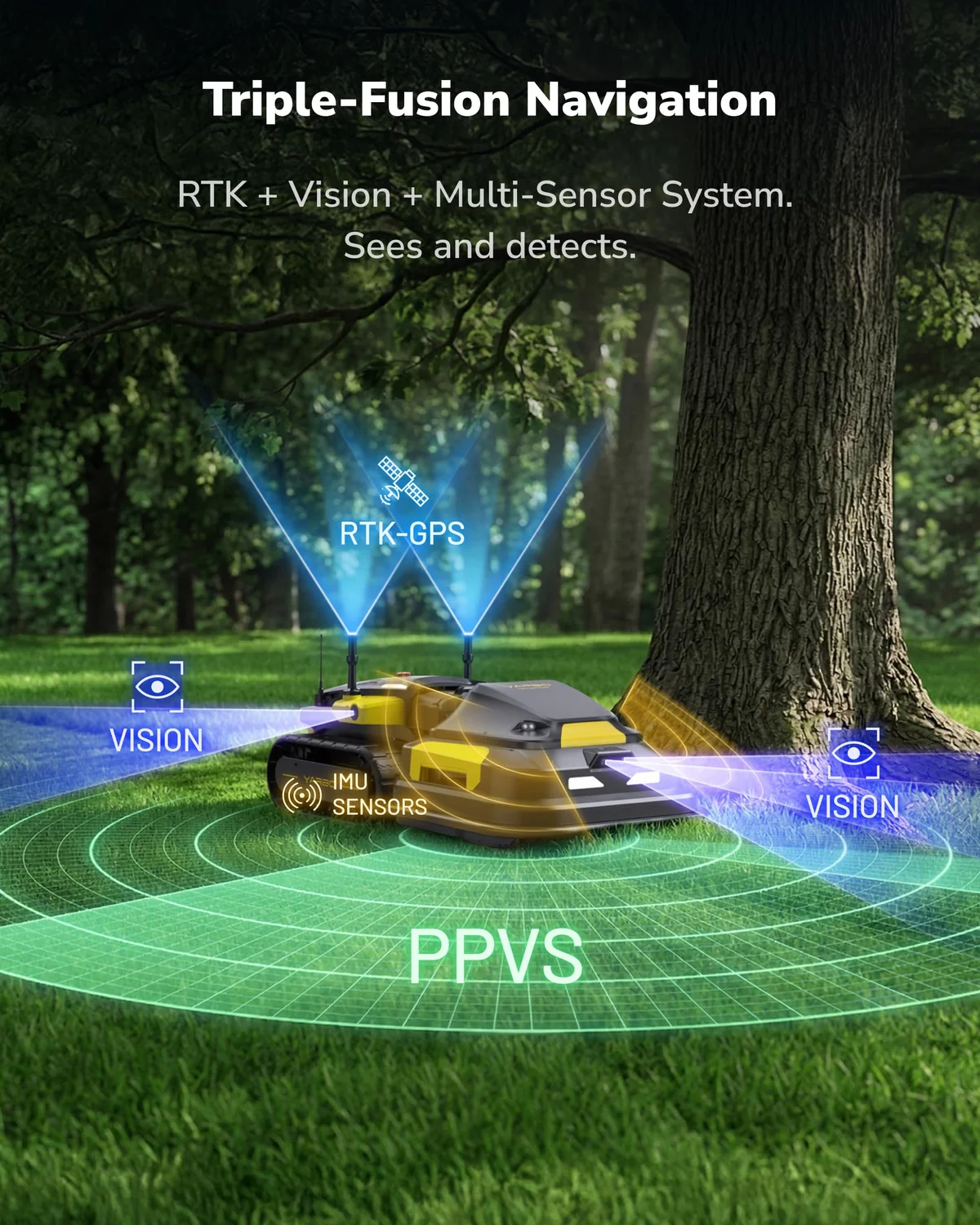
Satellite reception is property-specific. Yarbo has worked well on some heavily treed acreage, yet tall perimeter trees and buildings have also caused repeated signal loss, interrupted mapping and large skipped patches. Cameras do not make RTK irrelevant. A buyer with dense canopy should start with our guide to mowers for yards where trees and buildings block the sky, because an antenna-free LiDAR model may be the more dependable answer.
The app offers deep control over zones, overlap, direction, speed, obstacle sensitivity and turn style. That depth is valuable after the property has been tuned, but it is not simplicity. Boundary editing remains clumsy, errors can be vague, and notifications have not always made a stopped mower obvious. The machine can save hours only after the owner spends time teaching it where not to waste them.
Strengths & Limitations
Strengths
- The 20-inch deck and automatic charge-and-resume cycle can maintain substantially more open grass than ordinary residential robot mowers.
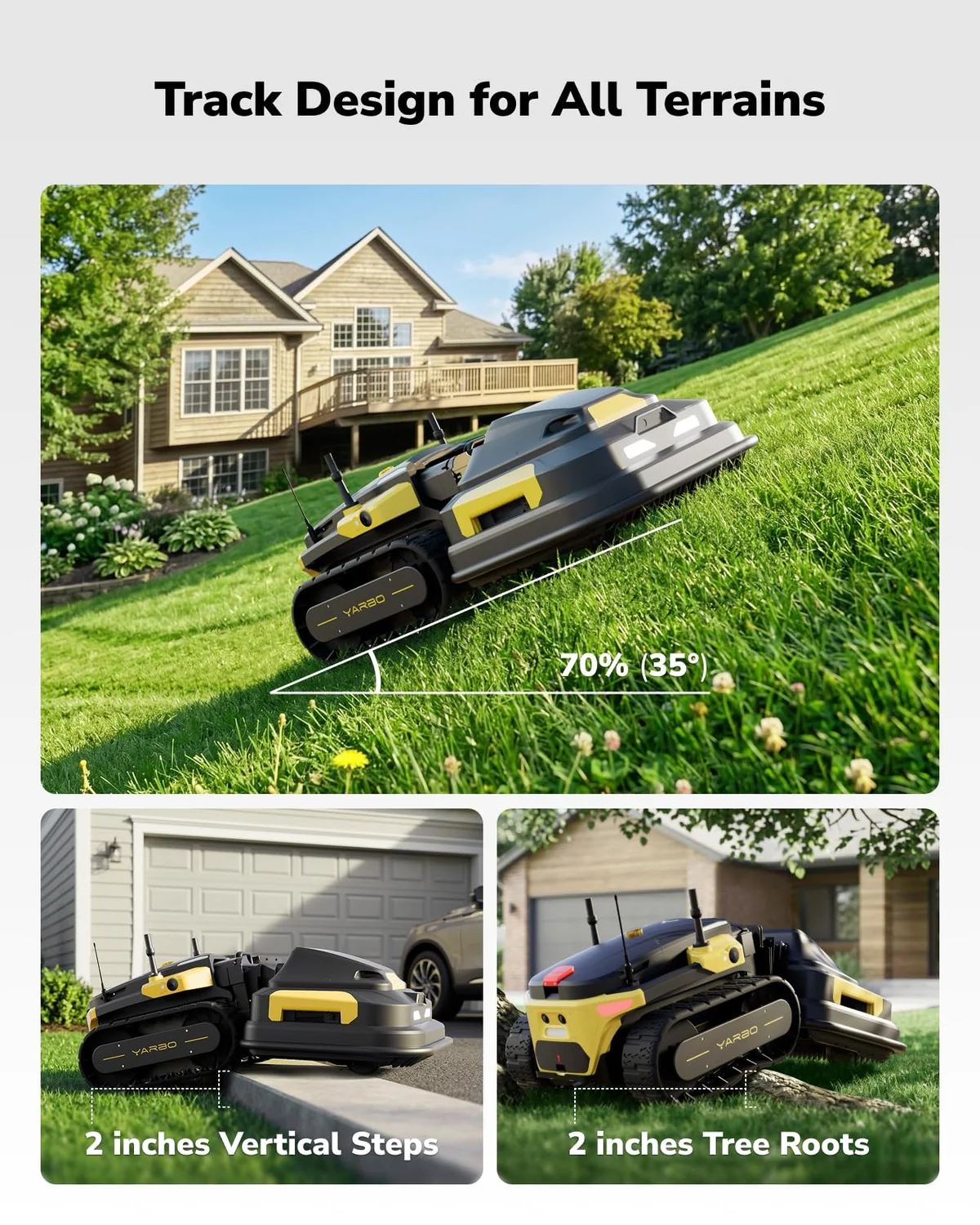
- The tracked chassis has genuine advantages on sand, mud, slopes and uneven multi-acre properties.
- Frequent dry mowing can produce a consistently short lawn with crisp directional patterns.
- Interchangeable snow and leaf modules give the Core a credible year-round purpose for the right property.
Limitations
- Repeated Core, charging, battery, track, mower-module and Data Center failures make it unsafe to rely on as the only mower.
- The standard razor-disc deck clogs and falls behind when grass is wet, tall, coarse or littered with debris.
- RTK installation, wired networking, manual mapping and route tuning make the wire-free label sound easier than the setup is.
- The heavy tracks can wear turning points and travel routes while broad avoidance margins leave substantial trimming.
- Documented remote-access and stop-control failures require clear, version-specific proof of remediation.
The six-acre claim hides a calendar
Yarbo’s acreage figure is a maintenance-capacity ceiling, not the area it cuts on one charge. The machine works slowly, docks, recharges, resumes, and repeats. A property near the advertised maximum may require almost continuous operation during peak growth. That works while the mower stays on schedule; it leaves little margin for rain, mapping trouble, a blocked blade, or a replacement part that takes weeks to arrive.
This is how robotic mowing works in general: tiny clippings are cut frequently and left to mulch rather than collected in a bag. Yarbo’s large deck scales that process to acreage, but it does not turn the M1 into an autonomous zero-turn. The lawn should be brought down to the target height first, then cut several times a week. Buyers comparing capacity figures should read our explanation of what robot-mower acreage ratings actually mean before treating 6.2 acres as a promise of rapid recovery.
| Claim | Practical meaning |
|---|---|
| Up to 6.2 acres | Repeated mowing and charging over several days, with enough spare capacity to survive interruptions. |
| Wire-free | No buried perimeter loop, but the dock, Data Center, power, Ethernet and manually driven maps still require installation. |
| All-terrain tracks | Excellent traction on sand, mud and uneven ground, with greater risk of worn routes and damaged turf during repeated turns. |
| Autonomous schedules | Automatic docking and resumption are useful, but errors, weak alerts and obstacle mistakes can leave the mower waiting for intervention. |
| Modular design | One Core can support other yard jobs, although extra modules cost more, require storage and share the Core as a single point of failure. |
Terrain is where the machine earns its scale. The tracks cope with loose sand, shallow mud, root bumps and slopes that stop lighter small-wheel robots. The same mass becomes a liability beside soft turf, narrow passages and dock approaches. Repeated pivot turns can grind a bare patch into the lawn, while a fixed route between zones may become a visible track. Smart turns and route offsets help, but they consume more room and time.
A mower-only buyer should spend elsewhere
Yarbo’s economic case depends on using the platform, not merely admiring it. A large-property owner who needs mowing, snow clearing and cart towing can spread the Core’s cost and storage footprint across several jobs. Someone who only wants a dependable lawn cut is paying for a huge modular chassis, network infrastructure and an immature support chain without collecting the benefit that justifies them.
For a lawn within its rated area, the Mammotion LUBA 3 AWD 5000H is the more focused large-lawn alternative. For roughly an acre, the Segway Navimow X430 is easier to defend as a mower-first purchase. Neither matches Yarbo’s multi-acre ceiling or interchangeable winter equipment, but that is precisely the trade: they are mowers rather than yard-robot platforms.
The standard Yarbo should also not be confused with the Lawn Mower Pro module. The Pro doubles the nominal deck-motor output, adds a straight-blade option and claims better performance in thick or wet grass. Those improvements do not belong to this ASIN. Our Yarbo Lawn Mower versus Lawn Mower Pro comparison explains why the distinction changes the purchase.
Built like a tank is not the same as dependable
The metal chassis and tracks feel substantial, but the ownership record contains repeated failures of the parts that make autonomy possible. Cores have lost wireless charging, tracks have failed, batteries have stopped charging far enough for work to resume, mower modules have reported spinning blades that were not moving, and Data Centers have required resets or replacement. A particularly revealing year-long history progressed from genuine satisfaction after two months to four Cores, a replaced mower module, a replaced battery and a recommendation to buy a zero-turn instead.
Support is willing to replace hardware in many cases, which is better than denial, but replacement approval is not the same as preserved mowing uptime. Diagnosis can stretch across multiple day-separated replies, heavy parts must be shipped, maps may need restoration, and instructions have sometimes arrived after the component. A multi-acre lawn continues growing while a courteous support ticket waits for its next answer.
Security makes this more than an ordinary early-adopter complaint. A controlled remote-takeover investigation reported access to Yarbo driving and camera functions, exposed location and credential data, shared privileged credentials, and commands capable of reversing the robot’s stopped state. The supplied record does not establish that every architectural problem has been fully remediated. Until Yarbo identifies the affected versions, documents the firmware fixes and explains whether the emergency stop now enforces a hardware-level cut, remote cameras and property patrol are liabilities rather than bonus features.
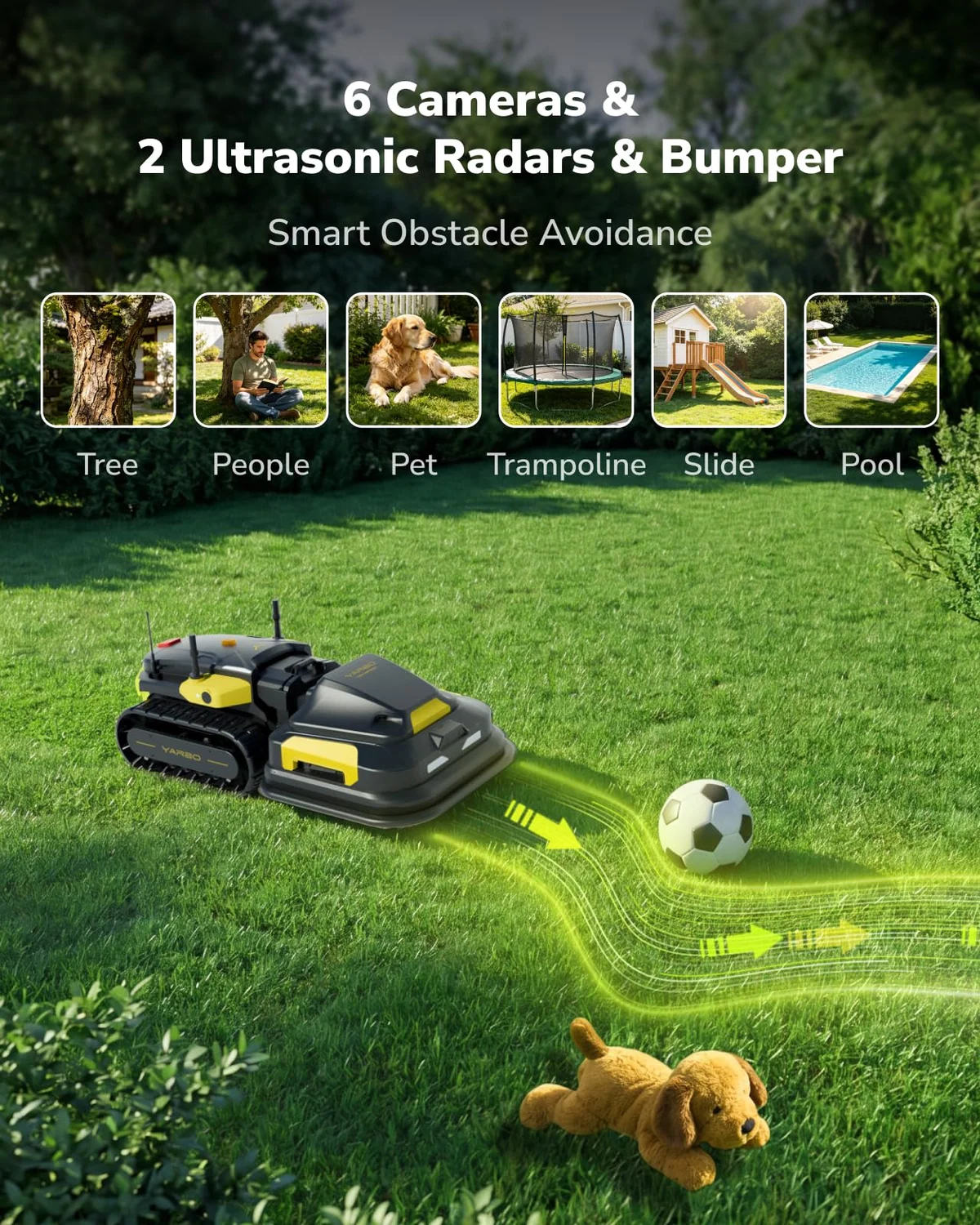
Keep children, pets and vehicles away while the mower operates. Front-facing avoidance can work well, but reports include backing into posts, attempting to pass beneath parked vehicles, treating empty grass as an obstacle and crossing mapped boundaries. No-go zones remain essential around ponds, drops, roads, open garages and anything the machine cannot be allowed to touch.
Frequently Asked Questions
Can the Yarbo mow 6.2 acres on one charge?
No, 6.2 acres is an advertised maintenance-capacity ceiling achieved through repeated mowing, docking and charging rather than one 120-minute run.
Will the Yarbo work beneath mature trees?
It can work on some treed properties, but dense canopy and nearby buildings can interrupt satellite positioning badly enough to stop mapping or leave grass uncut.
Does this Yarbo include the snow blower?
No, this listing includes the standard mower configuration while the snow and leaf-blower modules are separate purchases.
Can the standard Yarbo recover an overgrown lawn?
It may reduce moderately tall grass over repeated passes, but its razor-disc deck is designed for frequent maintenance and should not replace a conventional mower or brush cutter for recovery work.
Does the Yarbo eliminate edge trimming?
No, walls, fences, structures and conservative no-go zones can leave wide margins that still need a string trimmer or conventional mower.
Sources (24)
- Amazon listings and customer reviews — Yarbo Lawn Mower
- Owner reports across r/roboticLawnmowers, r/RobotMowerTalk, r/brisbane and 11 more threads
- Owner and reviewer video, 31 channels
- Nytimes — Article — www.nytimes.com
- Cnet — Article — www.cnet.com
- Yarbo — Article — www.yarbo.com
- Facebook — Article — www.facebook.com
- Mammotion — Article — us.mammotion.com
- Consumerreports — Article — www.consumerreports.org
- Expertreviews — Article — www.expertreviews.co.uk
- Easylawnmowing — Article — easylawnmowing.co.uk
- Pcmag — Article — www.pcmag.com
- Gardenersworld — Article — www.gardenersworld.com
- Trustpilot — Article — www.trustpilot.com
- Freshlycharged — Article — freshlycharged.com
- Pcworld — Article — www.pcworld.com
- Lowes — Article — www.lowes.com
- Mammotion — Article — ca.mammotion.com
- Zdnet — Article — www.zdnet.com
- Easylawnmowing — Article — www.easylawnmowing.com
- Fredshed — Article — www.fredshed.co.uk
- Tv — Article — www.stuff.tv
- Yarbo — Article — forum.yarbo.com
- Yarboreview — Article — yarboreview.com