The ANTHBOT M5 beats the M9 by making fewer promises and keeping more of them.
Choose the ANTHBOT M5 for roughly 1/8 acre of open, maintained grass, and skip the M9 unless you knowingly accept a less proven machine to gain quarter-acre capacity.
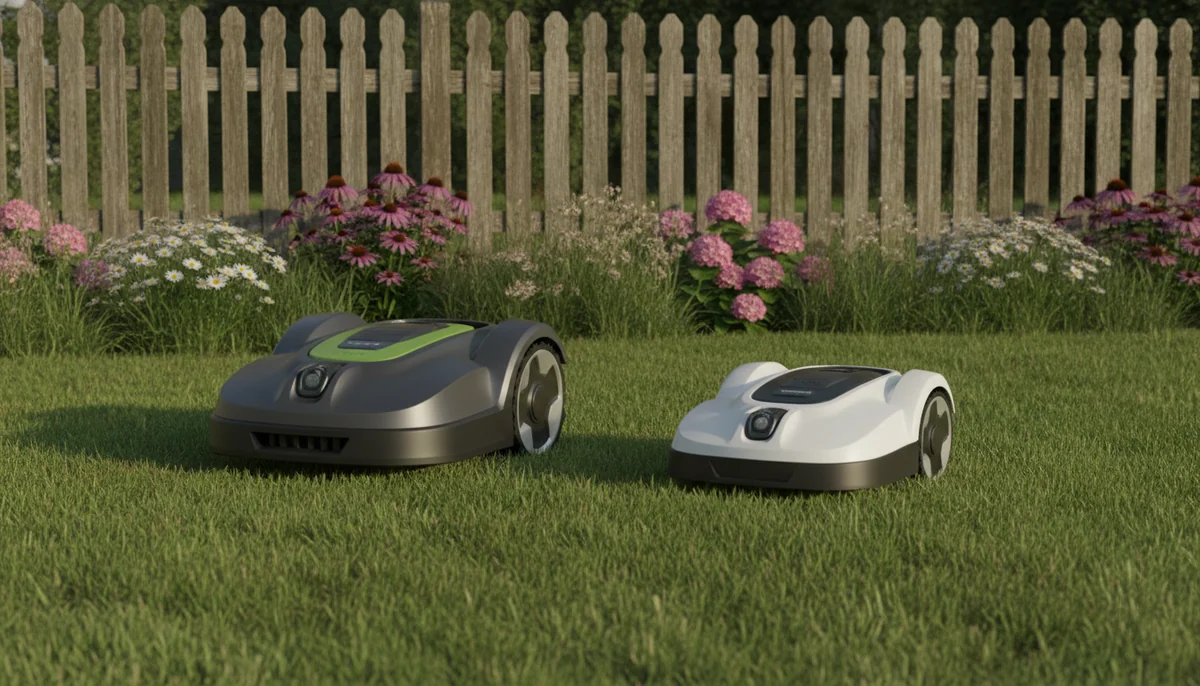
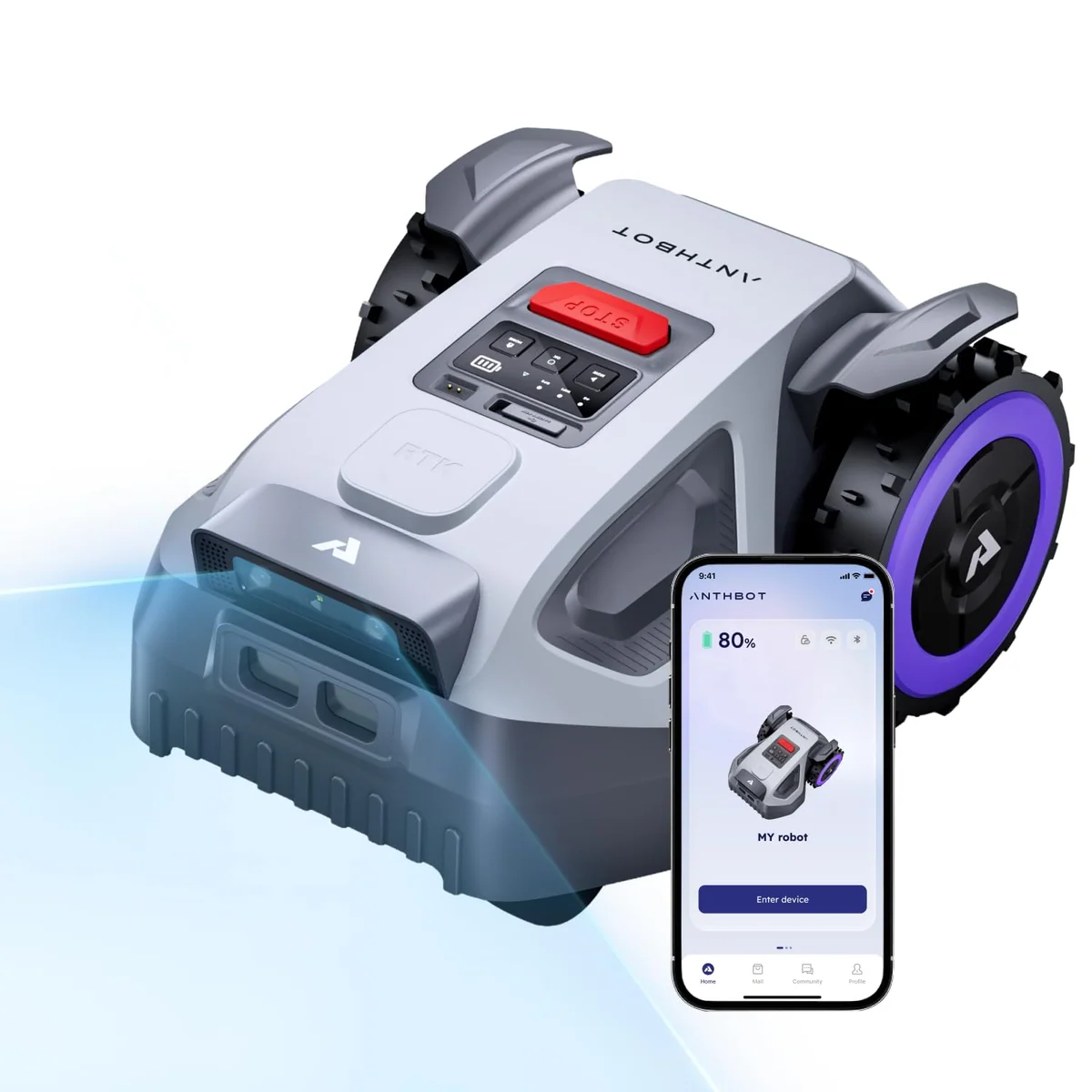
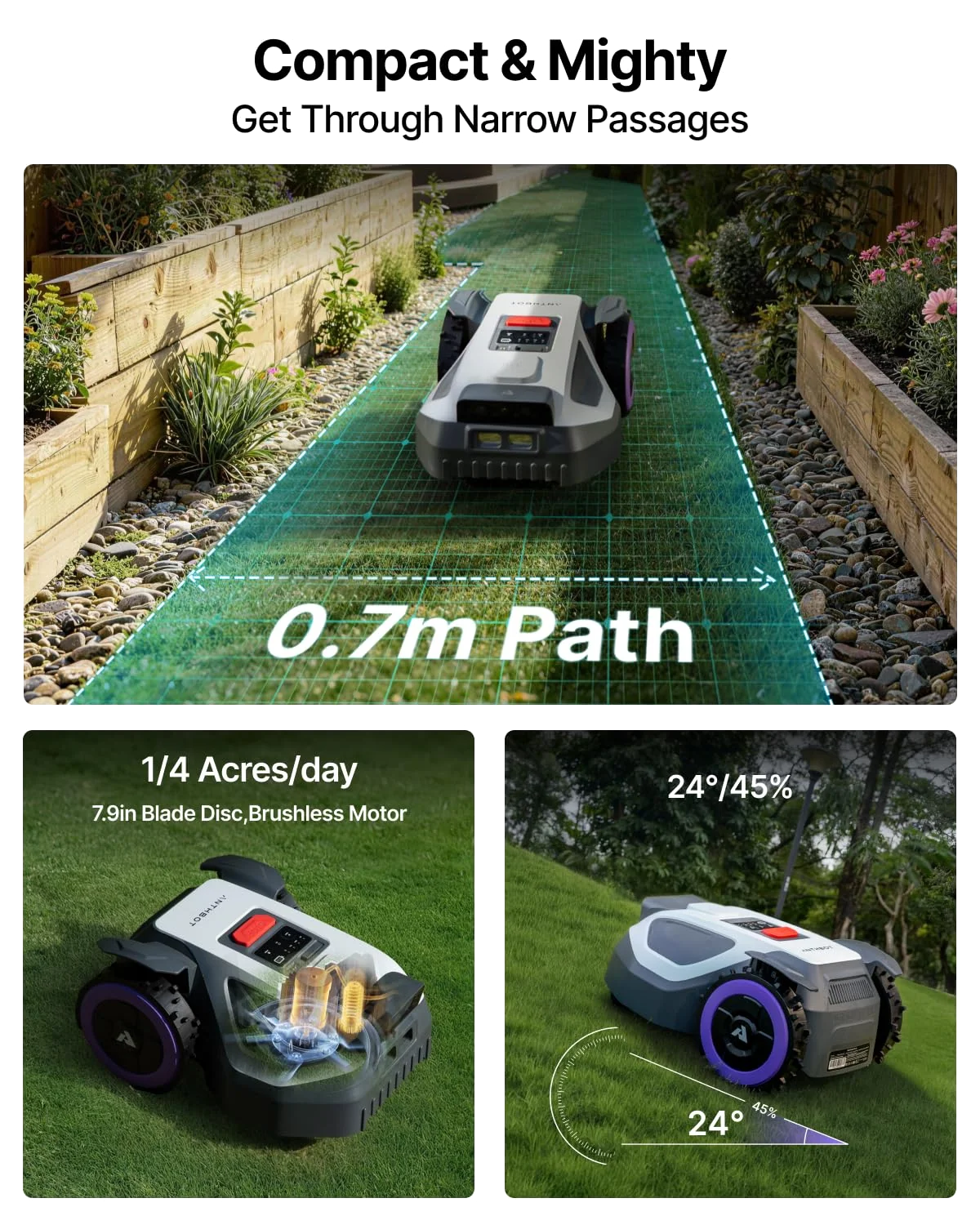
ANTHBOT M5
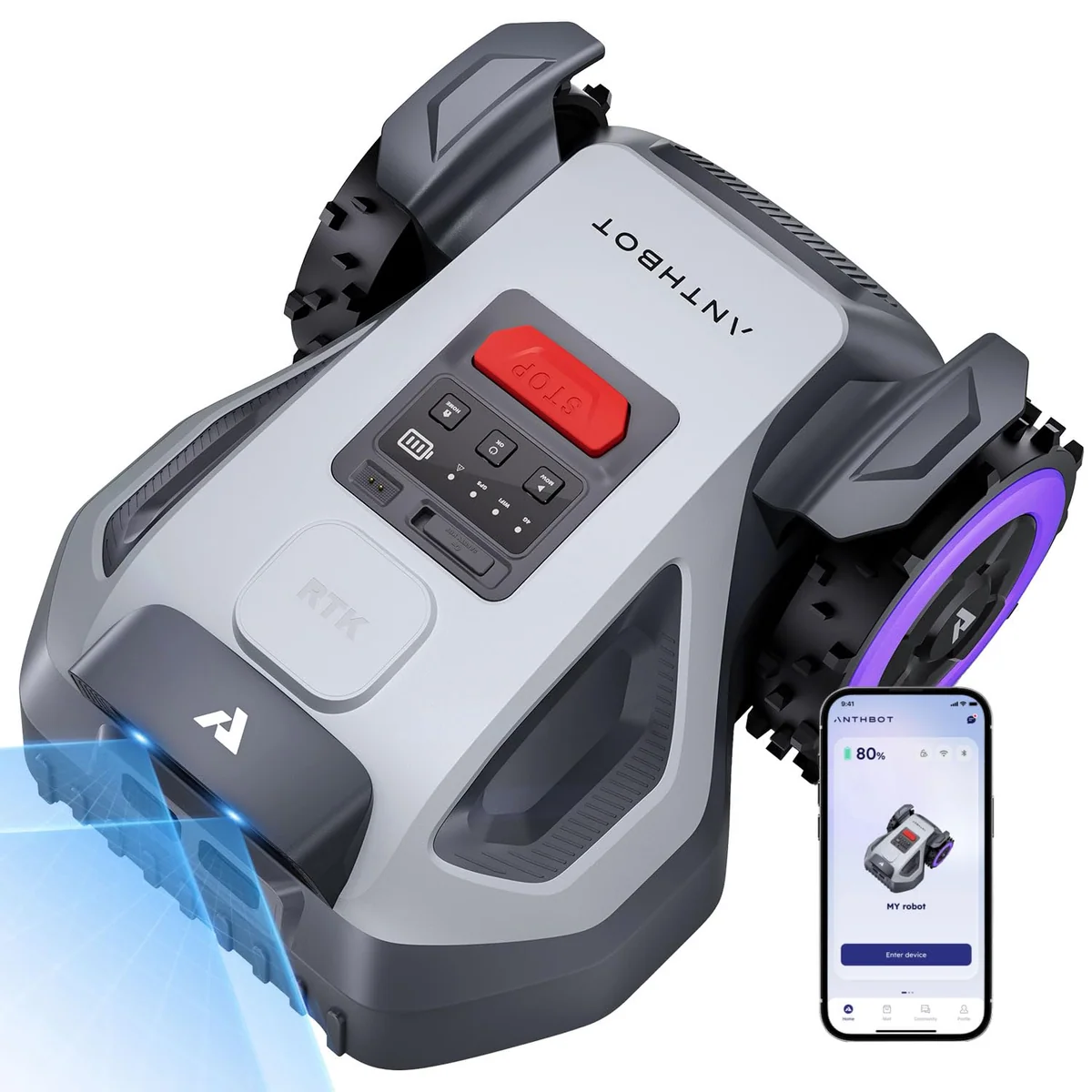
ANTHBOT M9 Robot Lawn Mower
The M5 wins this comparison before either mower reaches the lawn. It has the clearer job, the stronger owner record, and fewer gaps between the specification sheet and the experience it promises. The M9 offers more acreage and ten additional mapped zones, but its 3.2-star owner rating turns that upgrade into a bet rather than a recommendation.
Both machines chase the same appealing idea. They map virtual boundaries instead of following buried wire, navigate in systematic lanes, use dual cameras to help recognize obstacles, return to charge, and resume unfinished work. That is what a robotic lawn mower does well: it removes frequent maintenance passes across the main lawn while leaving the owner to handle edges, debris, and occasional rescue work.
The difference is confidence. The M5 has a coherent record of orderly cutting, manageable mapping, useful app controls, and quiet operation on suitable small lawns. Its limitations are equally clear. The RTK antenna needs open sky, the inset cutting disc leaves a fringe beside hard boundaries, and difficult slopes are not its strength.
The M9 reads like the same concept inflated to fit a larger yard. Its headline coverage rises to one-quarter acre, its zone allowance grows from 20 to 30, and NRTK joins the navigation vocabulary. Yet battery capacity, runtime, charging time, NRTK terms, weather protection, warranty coverage, replacement-parts support, and long-term map reliability remain unresolved. A mower bought to remove uncertainty should not arrive carrying this much of it.
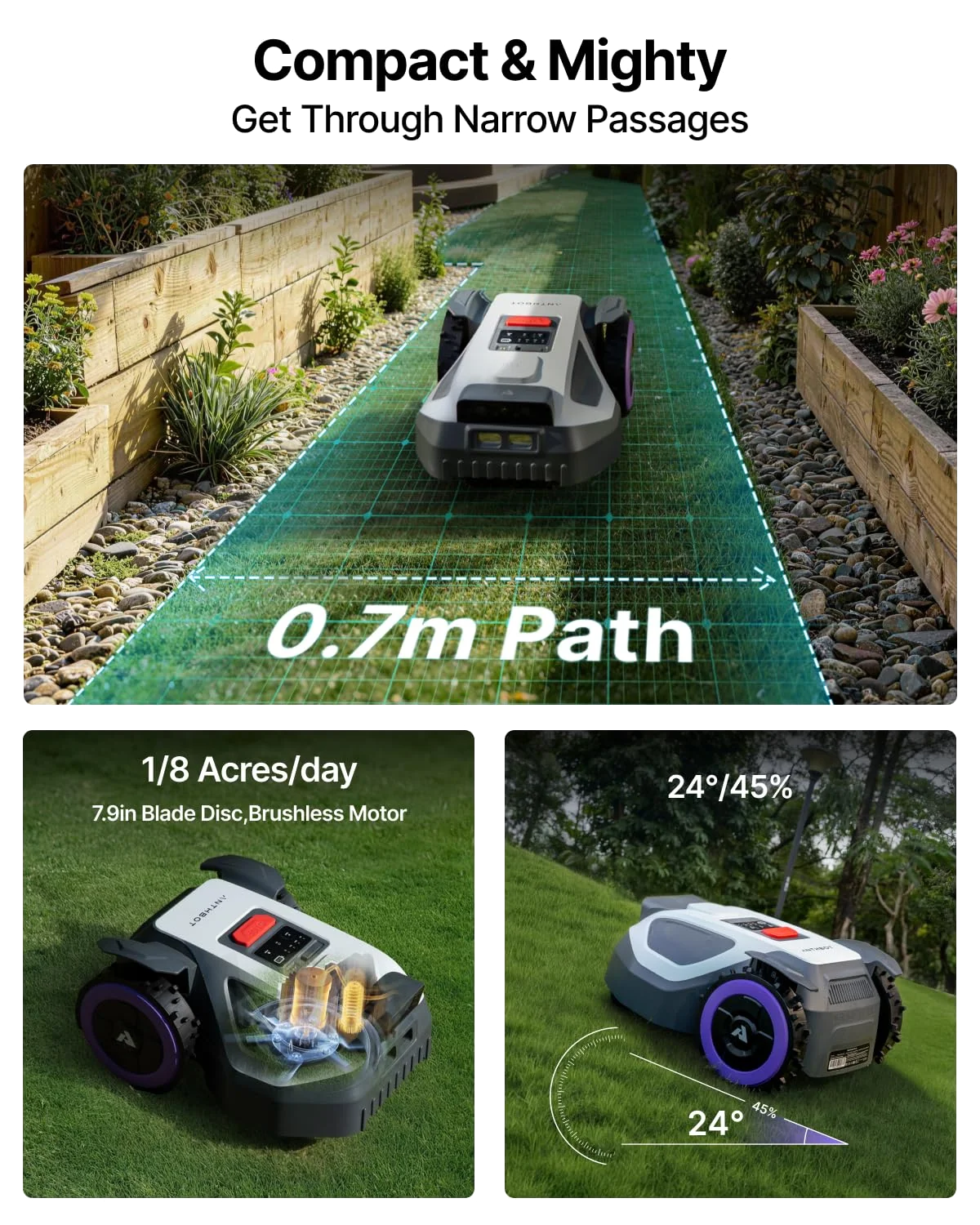
ANTHBOT M5
ANTHBOT M9 Robot Lawn Mower
At a Glance
| Feature | Editor's Pick ANTHBOT M5 | ANTHBOT M9 Robot Lawn Mower |
|---|---|---|
| Price Range | $500–$1,000 | Under $200 |
| Recommended lawn size | About 1/8 acre | — |
| Check Price on Amazon | Check Price on Amazon |
The M5 is a mower; the M9 is still a proposition
| Decision point | ANTHBOT M5 | ANTHBOT M9 |
|---|---|---|
| Sensible planning area | About 1/8 acre | About 1/4 acre |
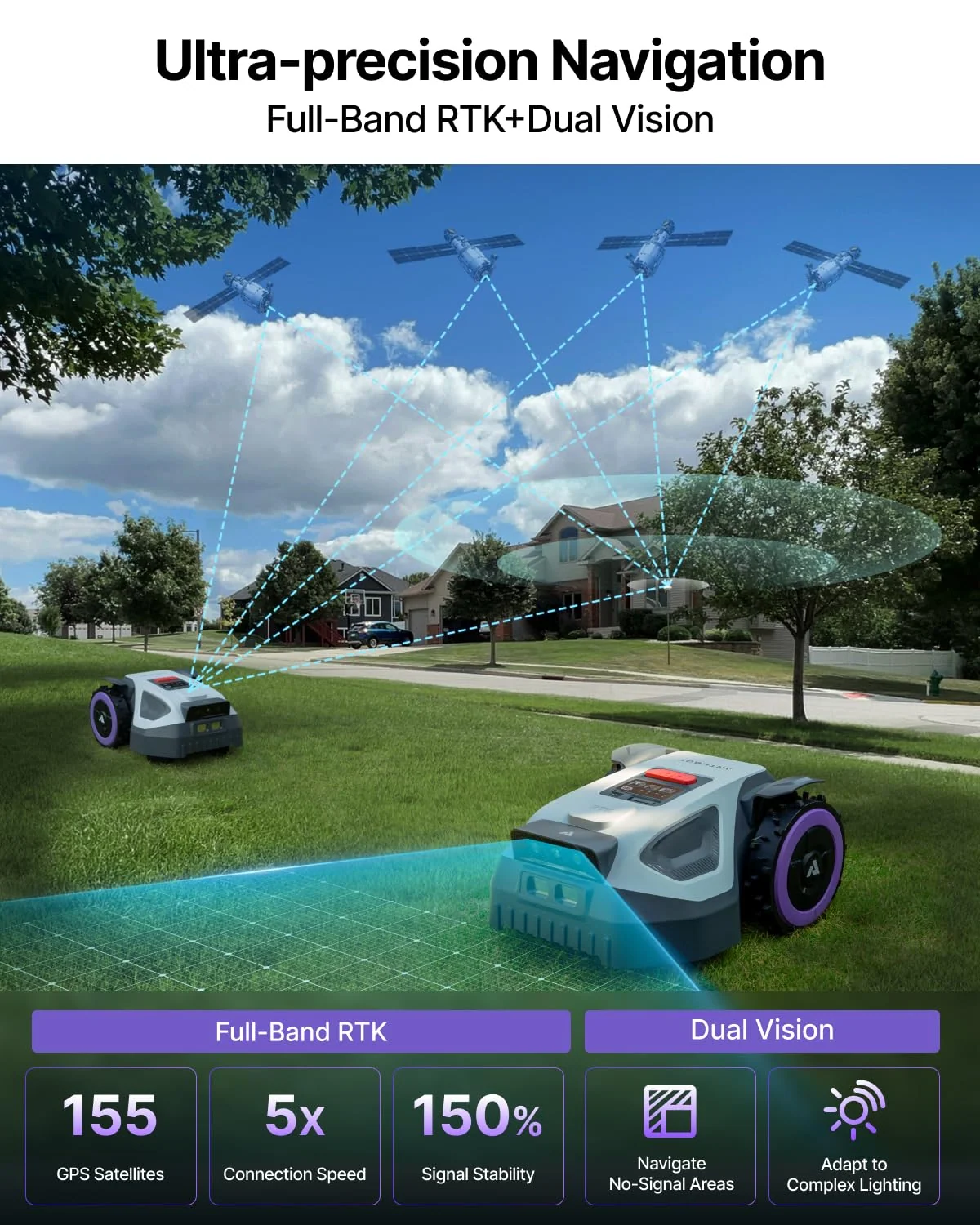
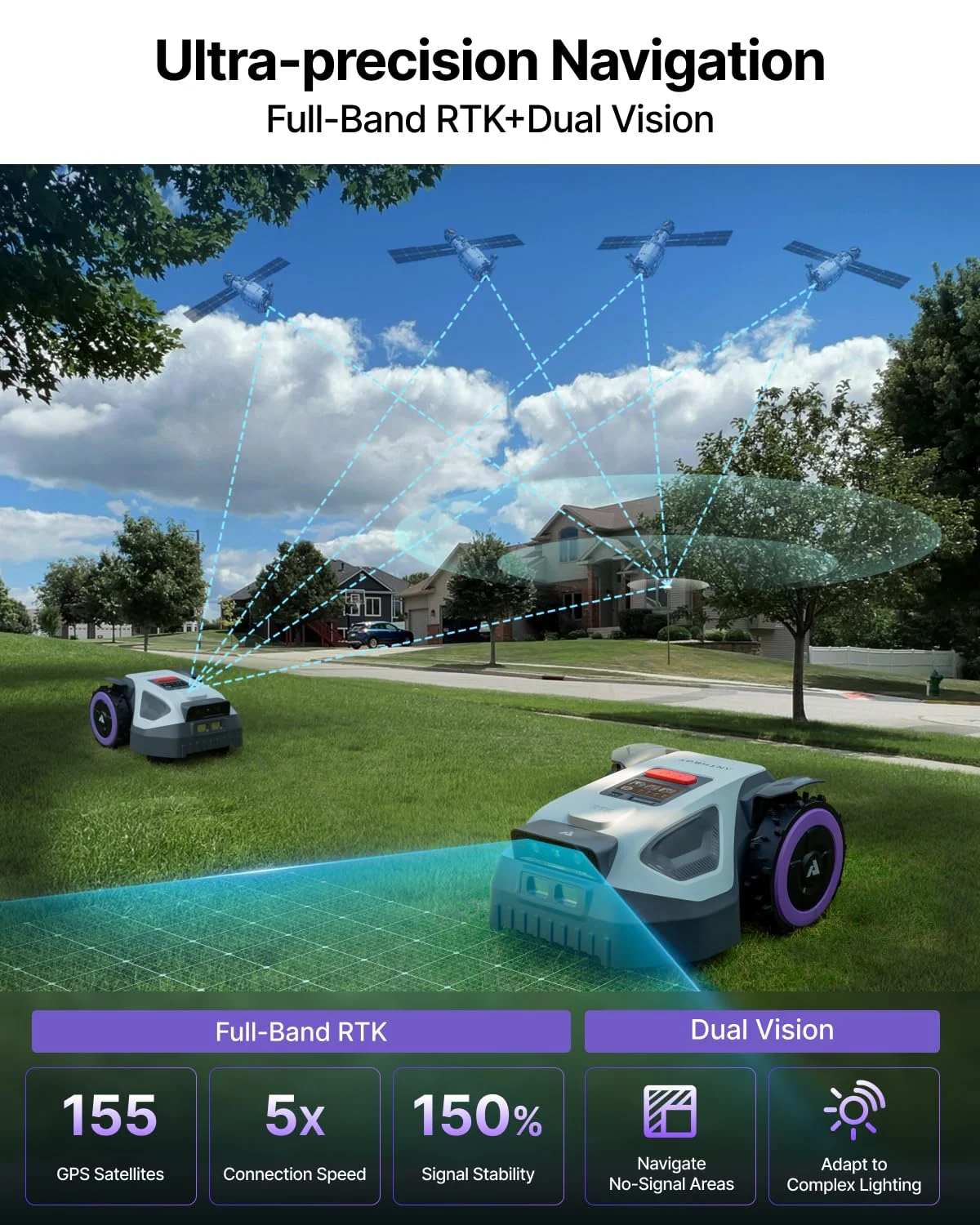
| Navigation | Full-band RTK with dual cameras | RTK, NRTK, and dual cameras |
| Mapped zones | Up to 20 | Up to 30 |
| Cutting height | 1.2 to 2.7 inches | 1.2 to 2.7 inches |
| Claimed maximum grade | 45%, about 24° | 45%, about 24° |
| Rated noise | 58 dB or less | 58 dB or less |
| Buying confidence | Recommended for the right small lawn | Too many ownership questions remain |
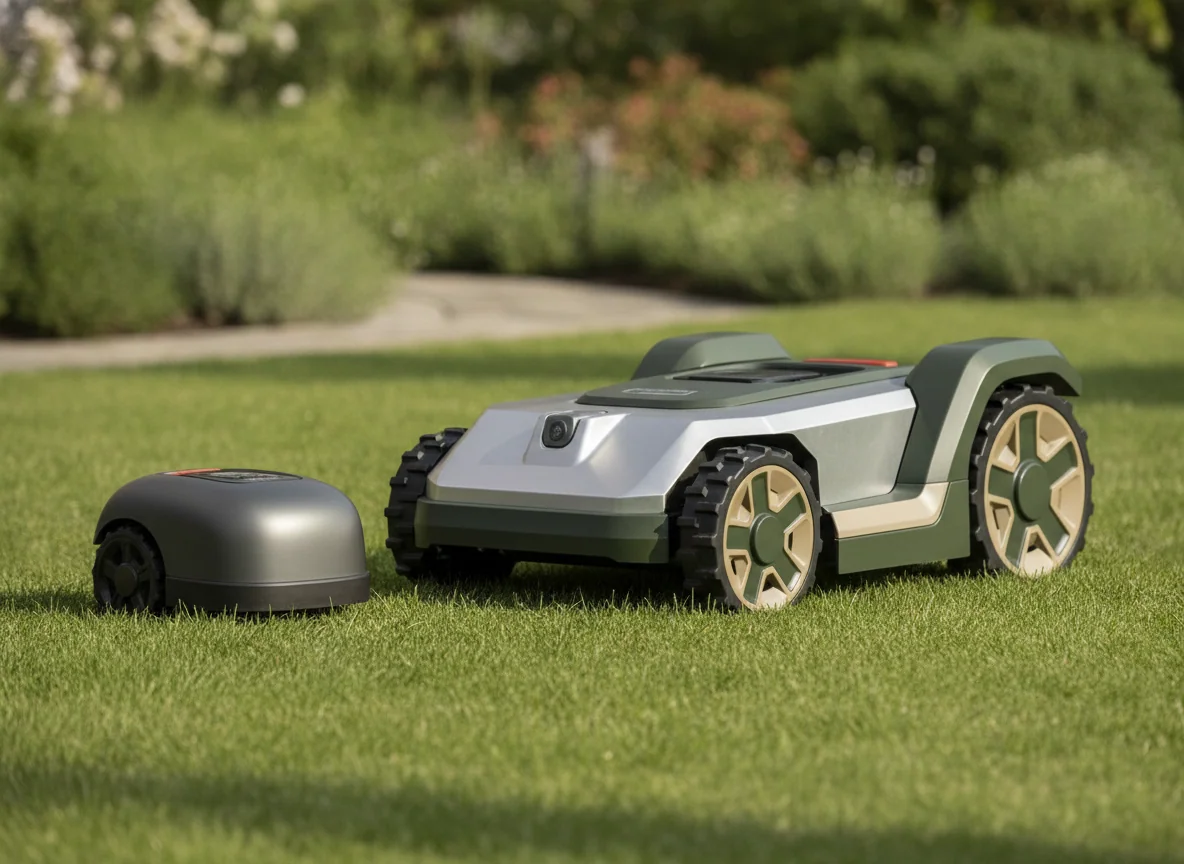
The M5 is the ANTHBOT to buy for a small, open lawn.
Its systematic cut, useful mapping controls, automatic charging, and established small-lawn performance make the M5 the convincing choice here.
The RTK antenna needs a broad view of the sky, and the inset blade disc still leaves a perimeter fringe for the string trimmer.
The M5 makes sense when the grass is already under control and needs frequent light cuts. Its five pivoting blades follow deliberate lanes rather than wandering randomly, while adjustable mowing angles and an optional second pass can produce a tidier pattern. The mower may take longer than a person pushing a conventional machine, but that is unattended machine time rather than another hour surrendered to the yard.
Wire-free setup is the other substantial benefit. The dock and RTK station still need thoughtful placement, but there is no perimeter cable to trench or repair. Boundaries, no-go areas, connecting paths, and separate zones live in the app. Automatic mapping can work where lawn edges are obvious; manually driving the boundary is the dependable fallback when a bush, path, or soft transition confuses the cameras.
Its claimed 1/8-acre capacity is the figure worth planning around, roughly 5,445 square feet. A separate maximum claim of 0.15 acre should not tempt anyone to size the mower with no margin. Complex shapes, several zones, and longer trips back to the dock all consume working time even when recharge-and-resume behaves properly.
The compromise appears at the perimeter. Edge mode moves the body closer to a mapped boundary, but the cutting disc cannot reach beneath the outer shell. Paving that allows the wheels to overlap can reduce the remaining strip; fences, walls, raised beds, and drops still leave manual trimming. The M5 replaces the repetitive center of the job, not every tool in the shed.
Obstacle avoidance deserves the same realism. The cameras can steer around conspicuous objects, and sensitivity can be raised for a more cautious route, but small, transparent, or partly hidden items remain difficult. Toys, hoses, sticks, glasses, pet waste, and wildlife should be cleared before a scheduled run. “Smart” describes assistance, not permission to stop looking at the lawn.
The M9 is for patient early adopters who need more than the M5 can cover.
The M9 earns consideration only when quarter-acre capacity is essential and the buyer is willing to troubleshoot an ambitious but weakly proven platform.
Its poor owner score and unanswered questions about runtime, warranty, NRTK, weather protection, batteries, parts, and firmware support undermine the hands-off promise.
The M9’s useful advantage is capacity. Its headline rating reaches one-quarter acre, or 10,890 square feet, and its app can manage as many as 30 zones. That gives it more room than the M5 for a larger lawn divided around beds, paths, and separate side areas. It also adds NRTK to the combination of satellite positioning and camera vision.
Those gains are not enough to erase the evidence problem. The listing stretches its maximum to 0.3 acre without supplying battery capacity, runtime, charging time, daily coverage, or mowing speed. Thirty zones sound impressive, but there is no documented minimum path width, maximum transfer distance, or dependable account of what happens to detailed maps after software updates. A compact, complicated garden may challenge it more than an open lawn with greater area.
The cutting specification also mirrors the M5 more than it advances it. The M9 uses five free-rotating blades and the same 1.2-to-2.7-inch height range, but the record does not establish a better finish, closer edging, stronger wet-grass performance, or greater tolerance for uneven ground. Its package includes five blades in total, not a clearly identified spare set, so replacement supply should be confirmed before purchase.
ANTHBOT’s 45% hill claim means a grade of about 24°, not a 45° hillside. Even that figure is a maximum, not a promise of secure turns on wet grass or safe travel beside a road, pond, or drop. Anyone whose property is defined by difficult slopes should start with the site’s guide to robot mowers for steep and uneven ground rather than treating either ANTHBOT as the obvious answer.
The M9 could become the better machine for larger lawns, but buyers cannot purchase future proof. Before considering it, obtain clear answers about warranty length, return handling, NRTK connectivity and fees, rain behavior, replacement blades, battery service, app support, and theft protection. If those answers are vague, the correct response is not patience after delivery; it is walking away before checkout.
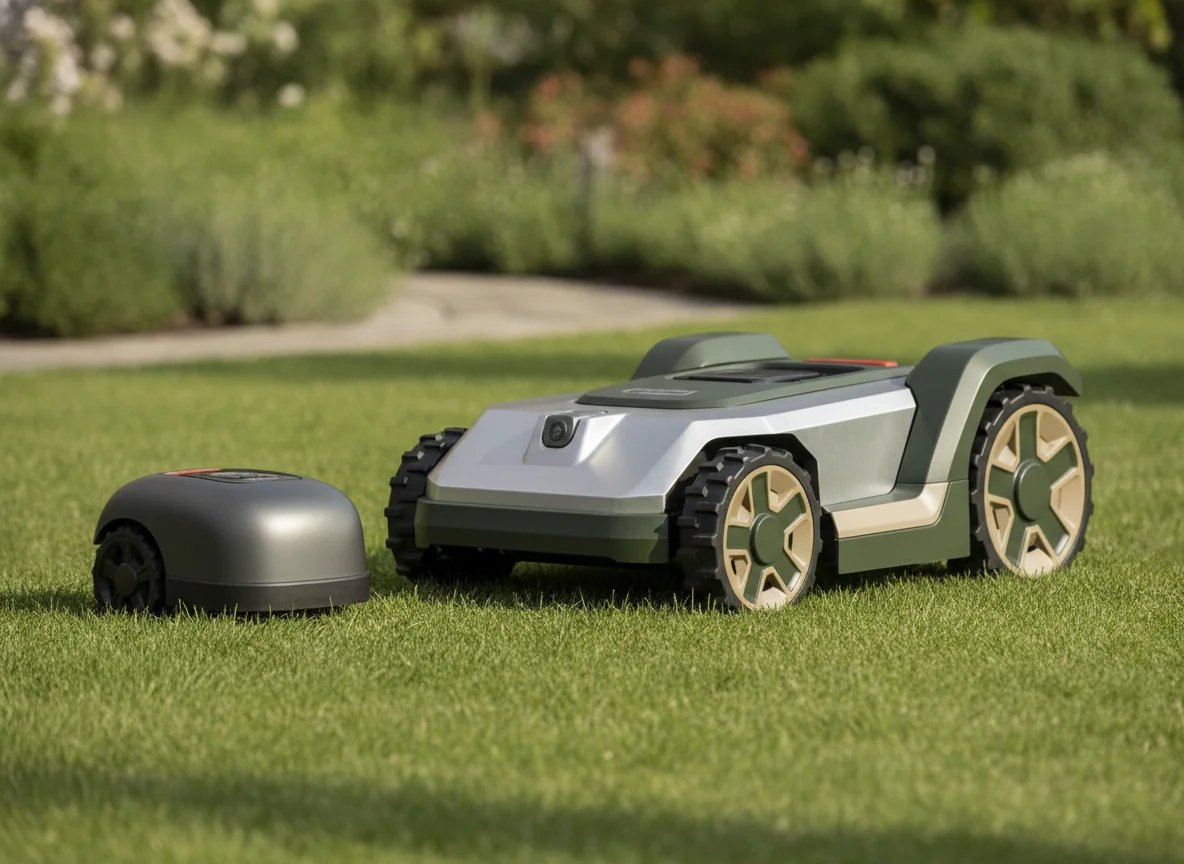
Capacity is the only reason to move up
A lawn comfortably within the M5’s working range does not benefit from owning the riskier M9. Both mowers offer virtual boundaries, planned mowing routes, multiple zones, automatic charging, app-controlled cutting height, dual-camera avoidance, and the same claimed slope and noise figures. Paying for more map slots or theoretical acreage does nothing for a 4,000-square-foot rectangle.
A lawn materially beyond 1/8 acre creates a different answer, but not an automatic victory for the M9. Undersizing the M5 would leave it spending too much of the day traveling to its dock and recovering charge. The M9 provides the necessary coverage claim, yet its mixed satisfaction record means the broader market deserves attention too. The site’s small-lawn mower guide compares alternatives without forcing a choice between these two siblings.
Neither model is the right response to poor satellite visibility. Dense tree canopy, close buildings, narrow side passages, and reflective walls can weaken or distort the positioning on which RTK depends. For that kind of property, the ECOVACS GOAT O1000 LiDAR PRO review covers a quarter-acre alternative that does not make an outdoor satellite antenna the center of the installation.
ANTHBOT M5
ANTHBOT M9 Robot Lawn Mower
Match the mower to the yard you actually have
Buy the M5
Choose it for roughly 1/8 acre of mostly smooth, clearly bounded grass with enough open sky for a stable RTK station. It suits an owner willing to mow little and often, clear loose objects before each run, use ANTHBOT’s app, and trim the hard perimeter separately.
Consider the M9 carefully
Consider it only when the lawn genuinely exceeds the M5’s comfortable range, remains simple enough to give new navigation software a fair chance, and belongs to someone who does not mind troubleshooting. Confirm the unresolved ownership terms in writing and preserve an easy return route.
Walk away from both
Reject both if trees and buildings obscure much of the sky, damp or difficult hills define the property, perfect edge cutting is non-negotiable, or a proprietary app account is unacceptable. A robot mower should remove a recurring obligation rather than replace mowing with signal management and software anxiety.
Sticker price alone cannot settle the value question. The real cost includes antenna placement, replacement blades, possible accessories, repairs, battery service, edge trimming, and the owner’s tolerance for interruptions. The site’s guide to robot mower ownership costs explains why a cheaper machine can become expensive when the property fights its navigation system.
Smart Lawn Bots recommends the M5 because its limitations can be understood before purchase and managed afterward. The M9 asks for more trust than its record has earned. Buy the smaller machine when it fits, choose another quarter-acre mower when it does not, and let the M9 prove itself somewhere other than your lawn.
Frequently Asked Questions
Is the ANTHBOT M5 better than the M9?
Yes, the M5 is the better purchase for a suitable 1/8-acre lawn because its benefits are better established and its drawbacks are easier to plan around.
Does either ANTHBOT mower need a perimeter wire?
No, both models use stored virtual boundaries created through their mapping and positioning systems.
Should I buy the M9 for a quarter-acre lawn?
Only patient early adopters should consider it, because the extra capacity arrives with mixed owner satisfaction and major unanswered ownership questions.
Can the M5 or M9 handle a 45-degree slope?
No, their advertised 45% maximum grade equals about 24°, and neither record justifies treating that ceiling as dependable performance on difficult hills.
Will either mower eliminate string trimming?
No, their inset cutting systems leave a fringe beside walls, fences, raised beds, and other hard boundaries.
Which model is better beneath trees or beside tall buildings?
Neither is an ideal first choice where satellite reception is persistently obstructed, so a LiDAR-based alternative deserves priority.
Ready to Choose?
Sources (3)
- Amazon listings and customer reviews — Anthbot M5 and Anthbot M9 Robot Mower
- Owner reports across r/SegwayNavimow, r/homeautomation, r/roboticLawnmowers and 5 more threads
- Owner and reviewer video, 15 channels