TerraMow’s V1000 beats the Sunseeker S4 by staying out longer and knowing when it has left the yard.
Buy the TerraMow V1000 for most smooth lawns up to 0.3 acre, but choose the Sunseeker S4 when manual boundary control, nighttime navigation or a slightly higher cutting range matters more than speed and connectivity.
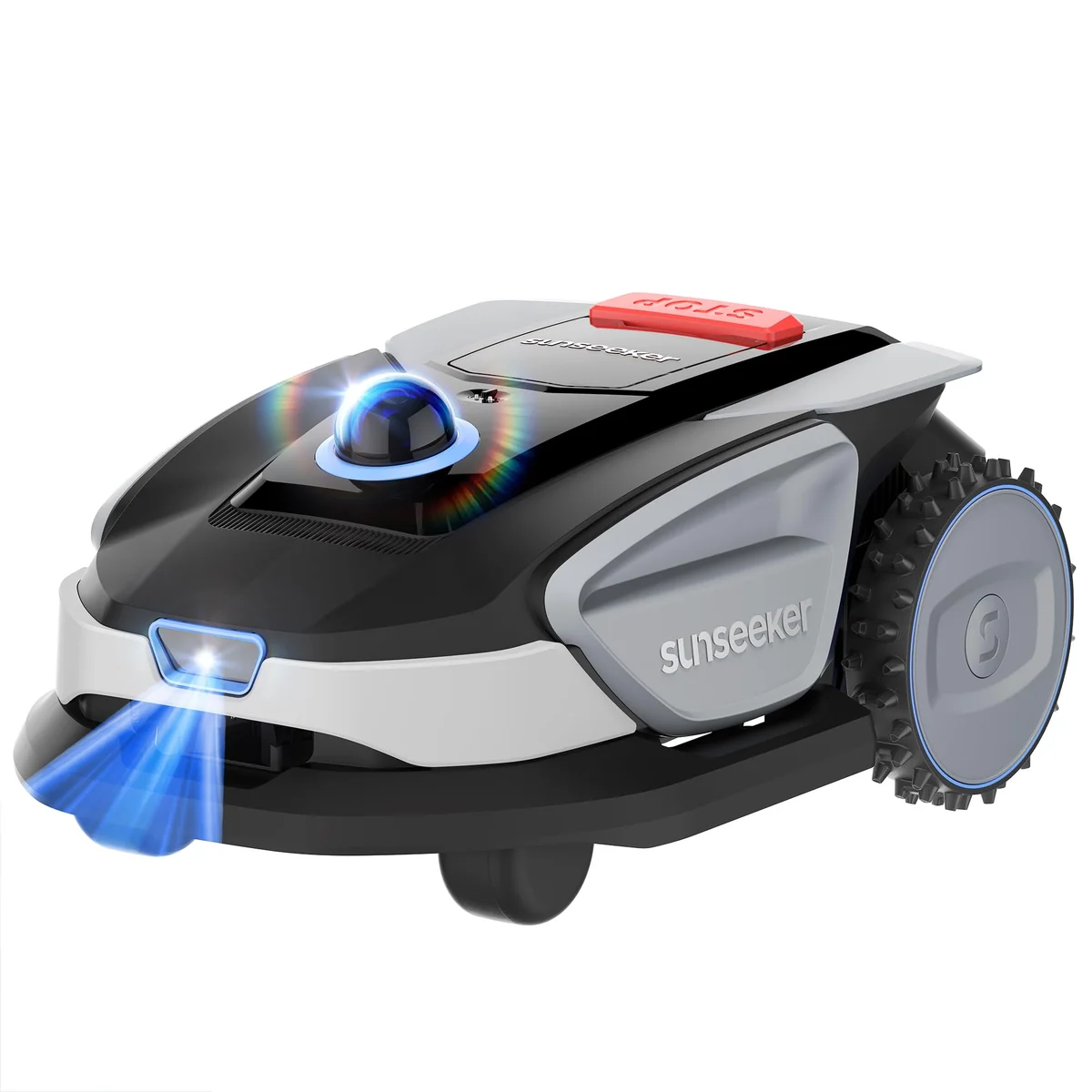
Sunseeker S4
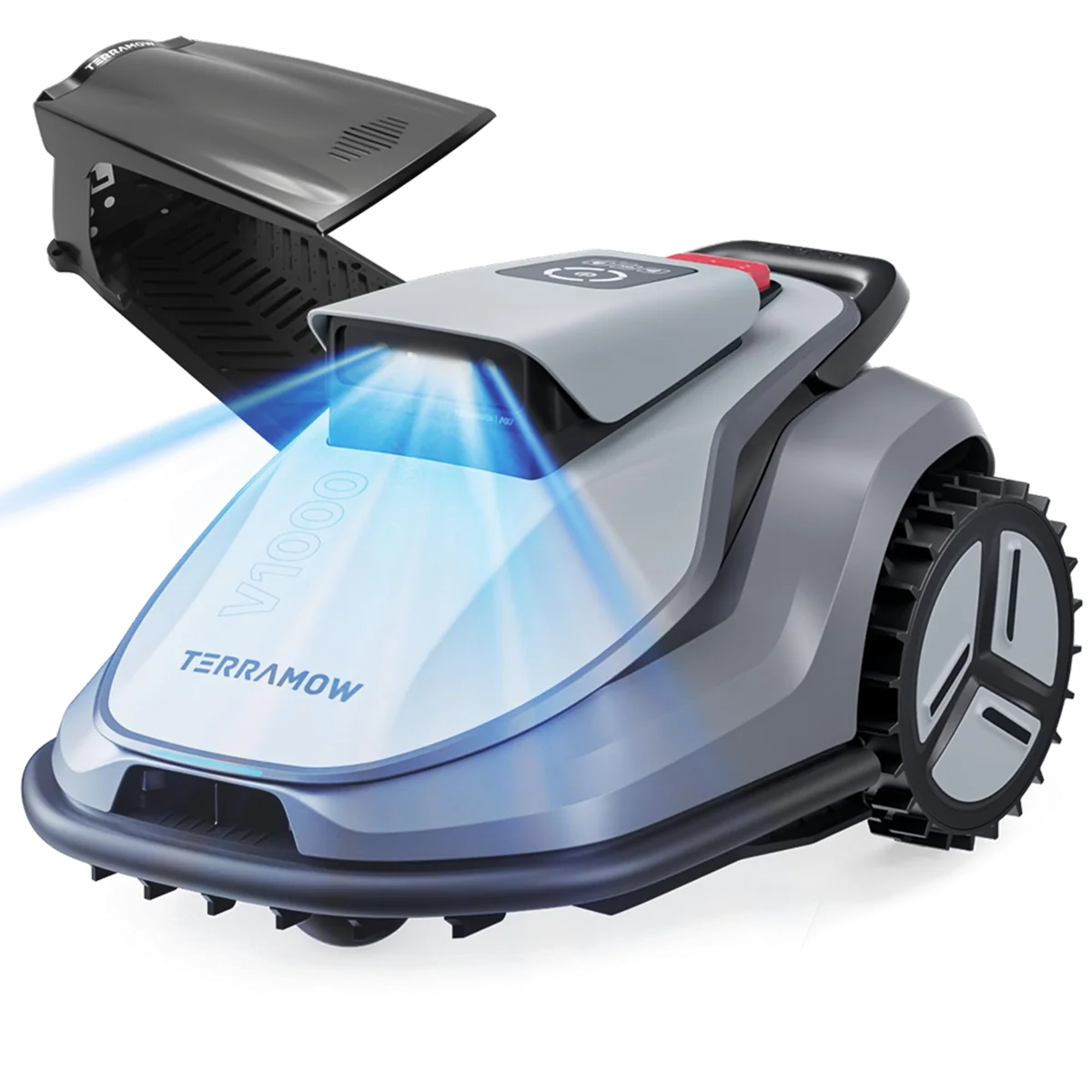
TerraMow V1000 Robotic Lawn Mower
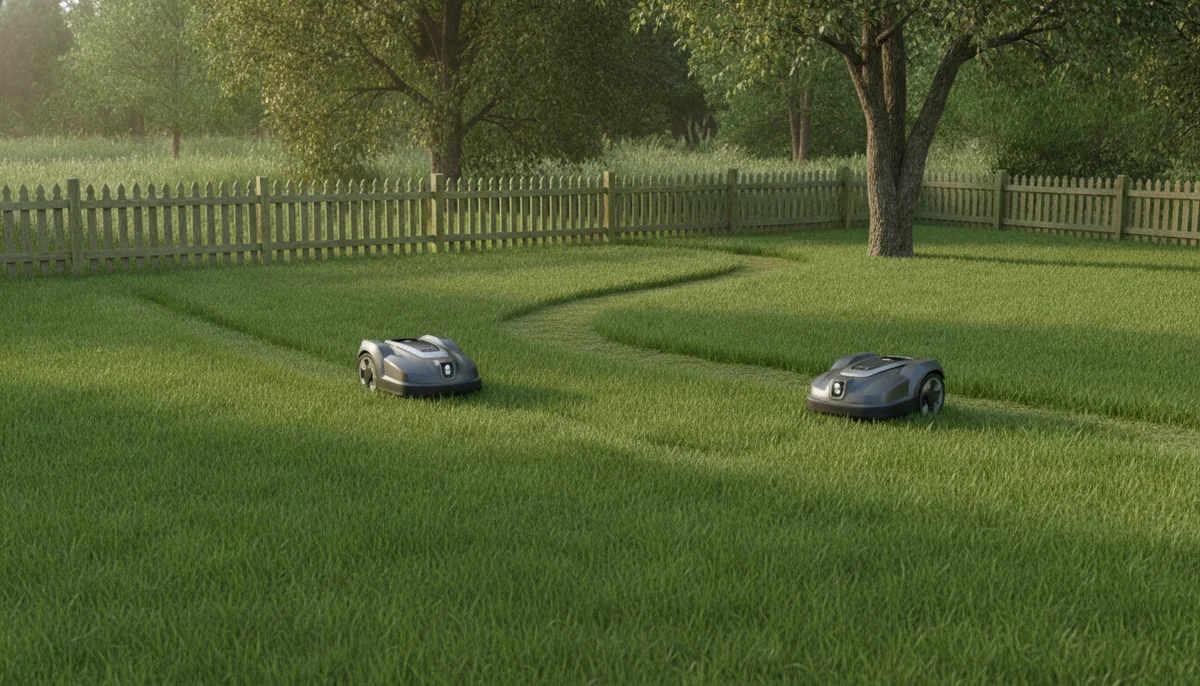
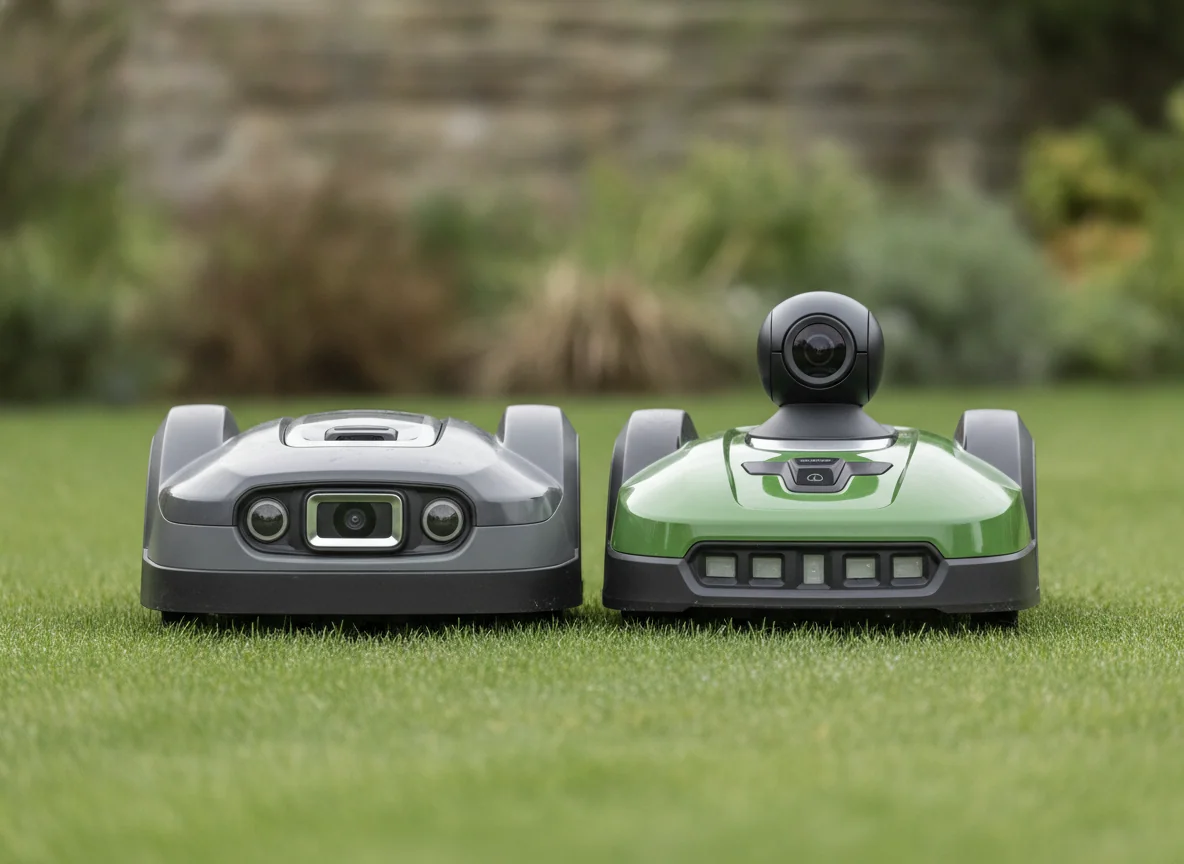
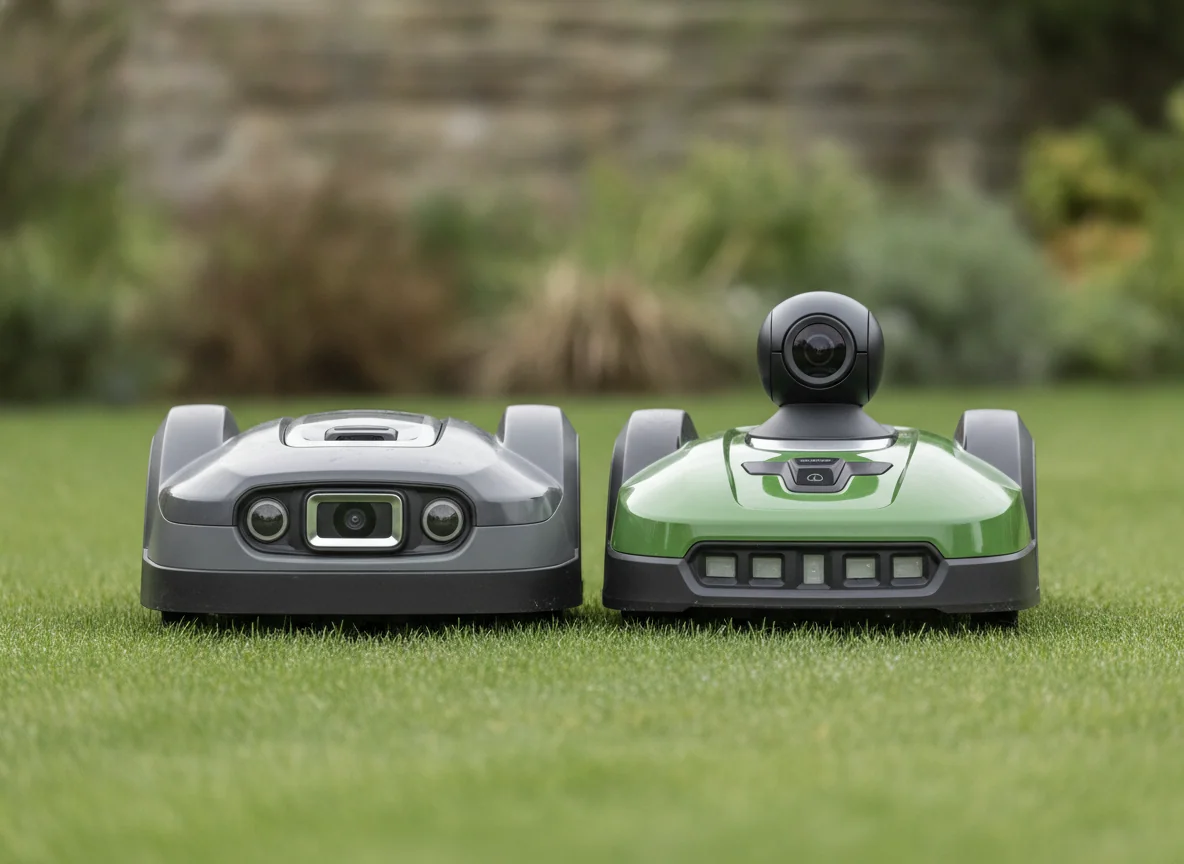
These are not two versions of the same wire-free mower. The Sunseeker S4 navigates with a spinning 3D LiDAR sensor and supporting camera vision, while the TerraMow V1000 interprets the lawn through three cameras. Both avoid a perimeter cable and RTK antenna. Both can work beneath trees and beside buildings. The difference appears after mapping, when the mower has to spend an ordinary week crossing the yard rather than impressing anyone with its sensor list.
The V1000 has the more complete ownership package. Its eight-inch deck is wider, its realistic two-to-two-and-a-half-hour runtime is substantially longer, and its GPS and 4G hardware provide a security and remote-access fallback the S4 lacks. It also maps automatically, handles multiple lawn sections well and is unusually composed around furniture, toys, trunks and other visible clutter.
The S4 answers with more deliberate boundary control. Manual steering can define curved beds, roads, drops and invisible property lines that automatic vision cannot infer, while LiDAR remains useful in low light and after sunset. Its 3.2-inch maximum cut is slightly higher, and its stated 22-degree slope ceiling exceeds the V1000’s 18-degree rating. Those advantages are real, but they do not repair a seven-inch deck, roughly 90 minutes of mowing per charge or the absence of native GPS tracking.
| Decision point | TerraMow V1000 | Sunseeker S4 |
|---|---|---|
| Navigation | Triple-camera vision with automatic mapping | 3D LiDAR and vision with automatic or manually driven mapping |
| Maximum stated area | 0.3 acre | 0.25 acre |
| Typical working time | About 2 to 2.5 hours | About 90 minutes |
| Cutting hardware | Eight-inch disc with three pivoting blades | Seven-inch disc with six blades |
| Cutting height | About 1 to 3 inches, electronic adjustment | 1.6 to 3.2 inches, manual dial |
| Stated slope limit | 18° or 32.5% | 22° or 42% |
| Remote location hardware | GPS and 4G support | Wi-Fi only, with no native GPS or cellular radio |
| Low-light operation | Needs enough ambient light to read the lawn | Can navigate in low light and at night |
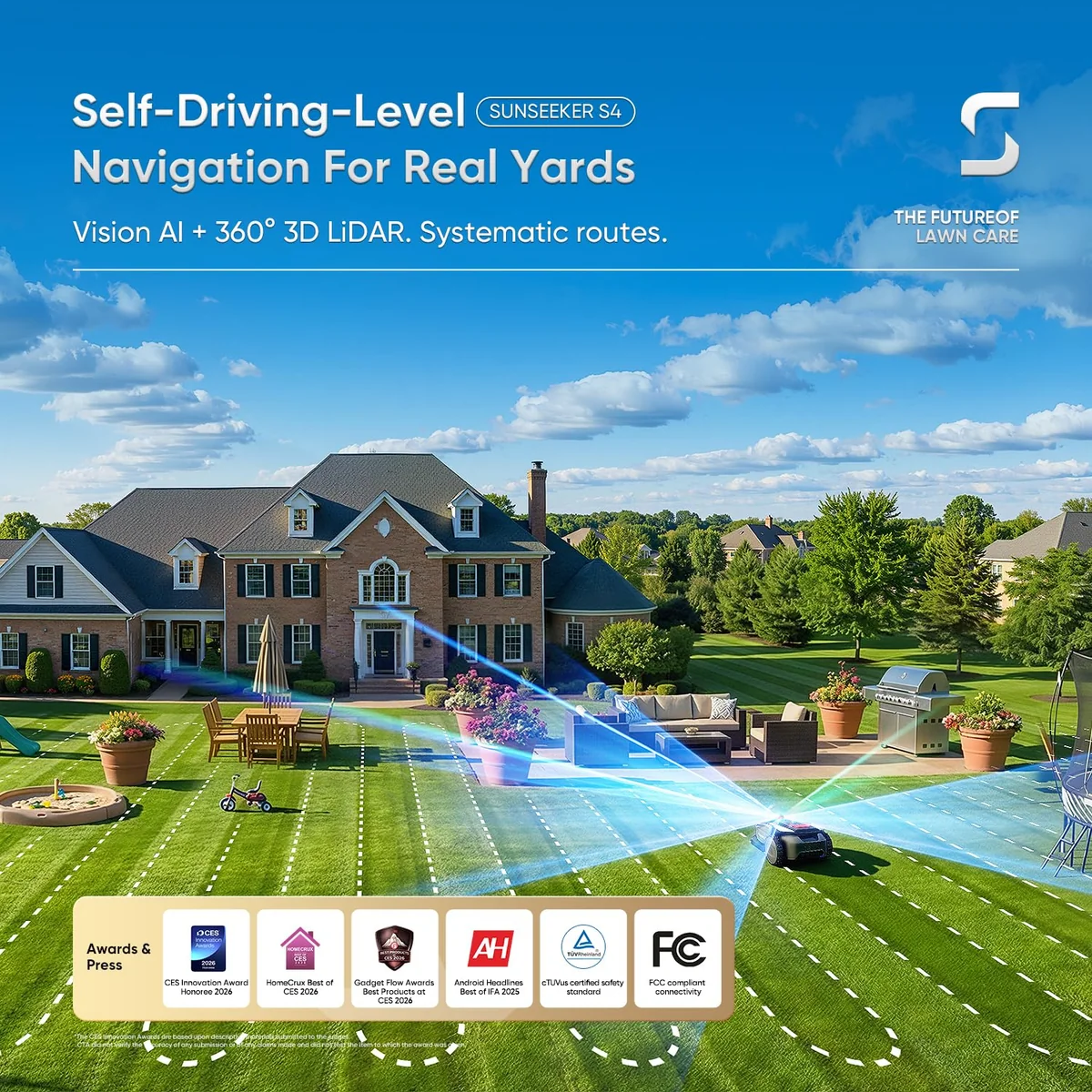
Sunseeker S4
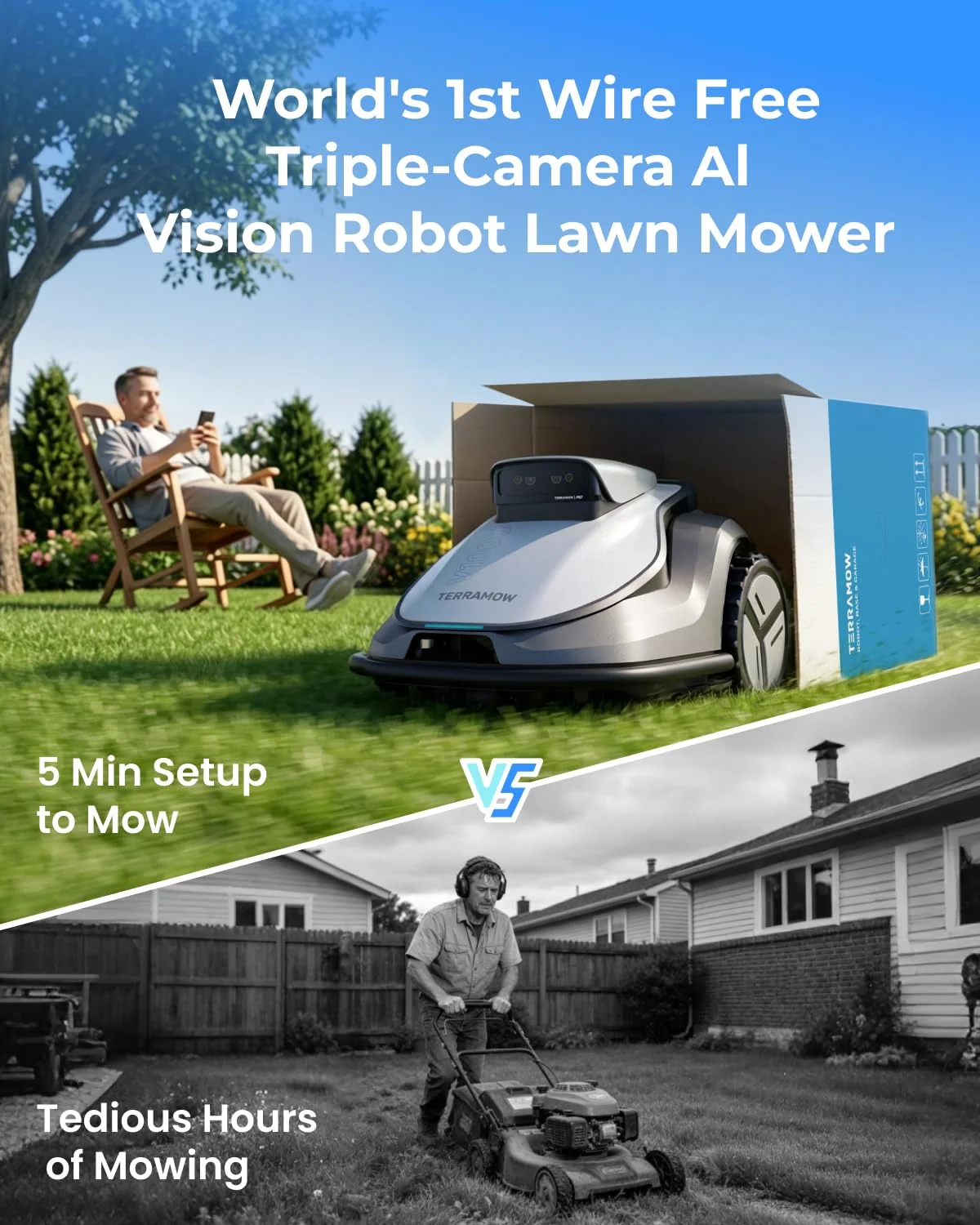
TerraMow V1000 Robotic Lawn Mower
At a Glance
| Feature | Sunseeker S4 | TerraMow V1000 Robotic Lawn Mower |
|---|---|---|
| Price Range | $500–$1,000 | $500–$1,000 |
| Cutting height | 1.6–3.2 inches, manual dial | — |
| Recommended lawn size | 0.25 acre | — |
| Cutting width | 7 inches | — |
| Check Price on Amazon | Check Price on Amazon |
The V1000 wins the ordinary week
A robot mower earns its keep when nobody has to plan the day around it. On a 4,000- or 5,000-square-foot lawn, the V1000 can settle into parallel passes, cross a firm patio to another zone and finish in a long session. The S4 may leave for the dock while a large part of the same job remains. It resumes reliably after charging, but every return stretches the elapsed job and creates another moment when a closed gate or supervised transfer can interrupt the routine.
Neither acreage number should be read as a promise to finish the rated area on one charge. Near their respective limits, both machines become frequent maintainers that rotate through short grass rather than weekly mowers sent into a shaggy lawn. The V1000 simply has more battery and deck width in reserve, which makes its 0.3-acre claim less constraining in daily life.
Mapping beneath trees is close, but boundary judgment is not
Tree cover does not force a retreat to buried wire with either mower. The S4 builds its position from physical features around the lawn, and the V1000 recognizes surfaces and landmarks without needing satellites for navigation. Both therefore belong in the conversation for lawns where trees and buildings obstruct the sky.
The V1000 is the easier first mapper when paving, walls, beds and fences make the lawn visually obvious. Set it exploring and it can find much of the perimeter for itself. A continuous strip of shared grass is different because a camera cannot see the property deed. The map must be edited and locked before the mower confidently visits the neighbor.
The S4 is better when the owner already knows that automatic discovery will need supervision. Driving the boundary manually is slower than pressing an auto-map button, yet it gives direct control beside an unfenced road, along a subtle property line or around a curved bed. LiDAR also keeps working after the scene becomes too dark for the V1000’s cameras. That is a niche advantage, not permission to mow blindly around wildlife, toys or pets at night.
The V1000 sees more than its chassis can cross
TerraMow’s obstacle behavior is the stronger of the pair. The V1000 recognizes common garden clutter, routes around it and returns to its line with little drama. The S4 is also cautious around obvious rocks, tools and balls, but tall weeds can be mistaken for obstacles and left standing. Neither machine makes a cluttered lawn safe to ignore: cords, thin sticks, waste and small animals can still evade detection.
The physical limit arrives sooner than the software limit. Both use rear-wheel drive, and the V1000’s swiveling front caster is vulnerable to loose gravel, deep divots and abrupt transitions. The S4 carries the higher slope specification, but it too can beach on a grass-to-pavement hump or narrow depression. If the yard’s defining feature is steep or broken ground, skip both and look at an AWD mower built around traction rather than compact-yard maneuverability.
Neither machine fires the string trimmer
The V1000 gets closer along flush paving because its wheels can overlap the boundary, its edge distance is adjustable and its deck is slightly wider. A wall, raised curb or fence still leaves several inches beyond the centrally mounted disc. The S4 produces a similarly tidy result where it can ride onto flat paving, then exposes an unavoidable strip beside vertical borders because its blade sits well inside the housing.
Buy either mower to replace routine mowing, not every pass with a trimmer. Buyers who place edge performance above this comparison’s other strengths should consider the ECOVACS GOAT O1000 LiDAR PRO and its dedicated trimming mechanism.
The TerraMow V1000 is the better compact-lawn all-rounder.
Its longer runtime, wider cut, automatic mapping, excellent obstacle response and GPS-plus-cellular hardware make it the easier mower to leave working across a smooth multi-zone yard.
Its clever vision cannot stop the front caster digging into gravel or rough depressions, and raised borders still leave work for a string trimmer.
The Sunseeker S4 is the specialist for difficult sightlines and deliberate maps.
Choose it when LiDAR navigation beneath trees, manually traced boundaries, nighttime operation or a 3.2-inch maximum cutting height outweighs the V1000’s greater throughput.
The seven-inch deck, roughly 90-minute runtime and missing GPS and cellular radios make a quarter-acre lawn feel much closer to the machine’s limit.
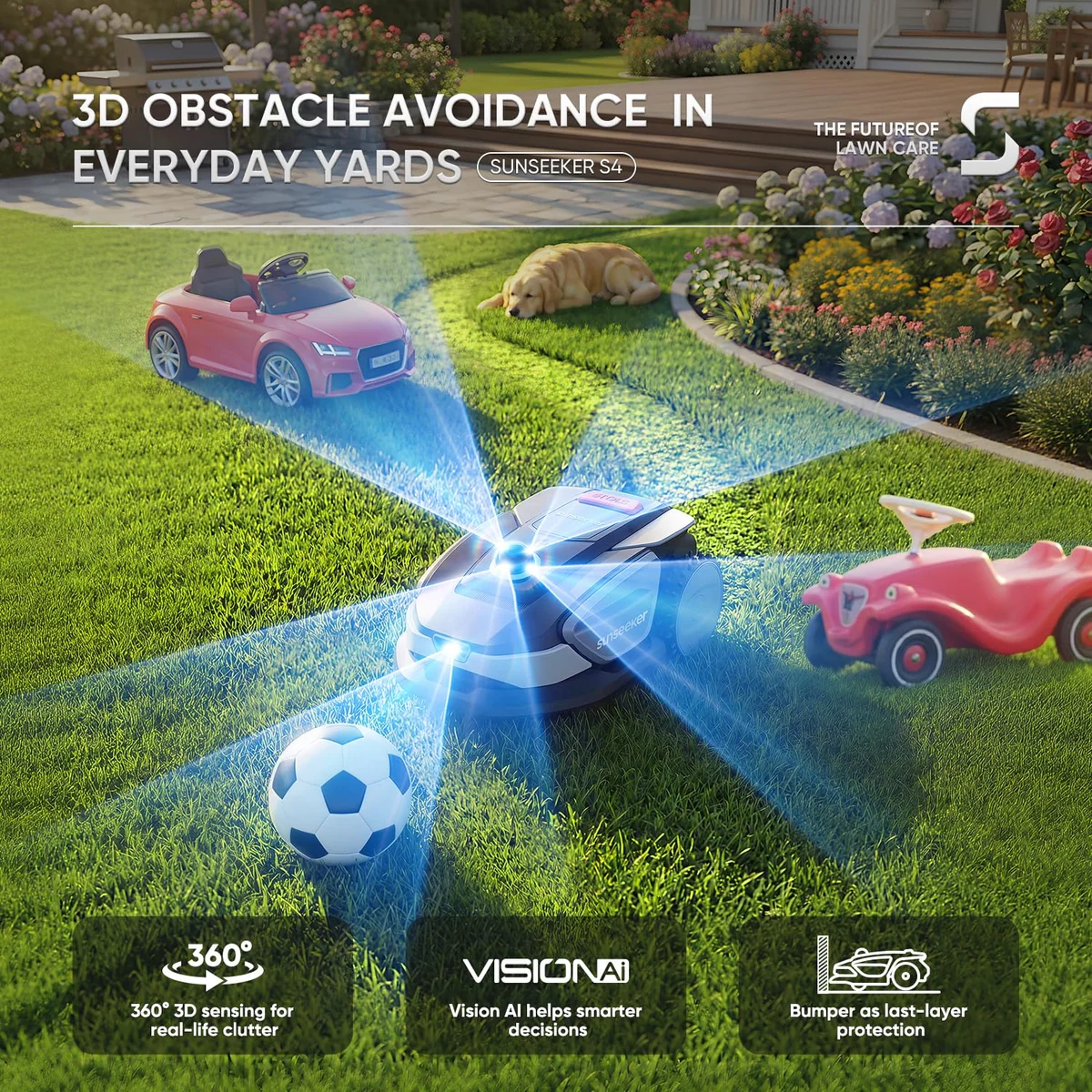
Sunseeker S4
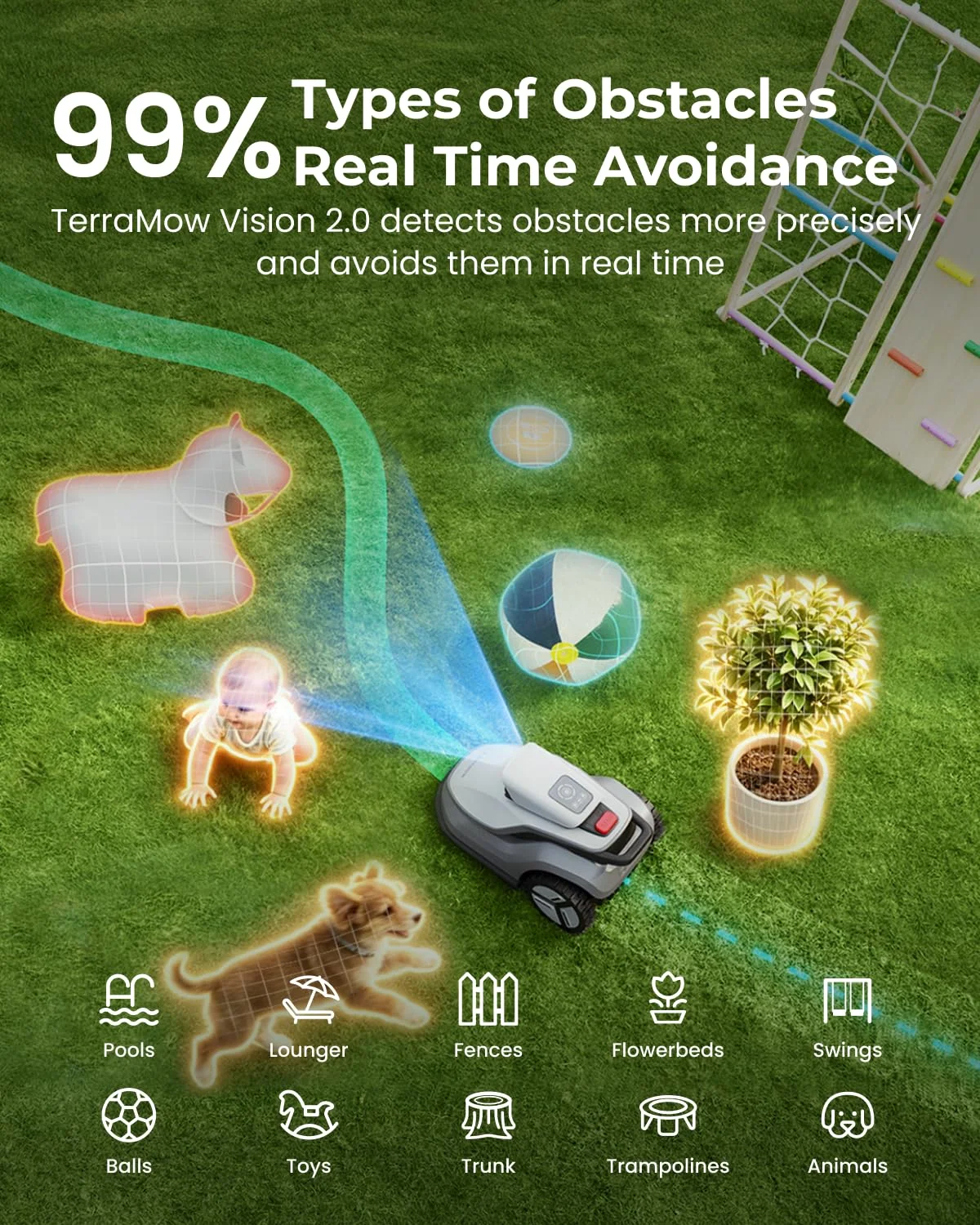
TerraMow V1000 Robotic Lawn Mower
Choose by what makes the yard difficult
Buy the TerraMow when the complication is visual
The V1000 suits a smooth to moderately uneven lawn divided by trees, beds, furniture, paving and several connected zones. It is the better choice when automatic discovery matters, the mower will work during daylight and remote location hardware is worth having. A firm path between front and rear grass is welcome; an unavoidable gravel crossing is not.
Buy the Sunseeker when the complication is positional
The S4 makes more sense where the sky is obstructed, the grass boundary is ambiguous and somebody wants to drive an exact virtual perimeter rather than correct an automatically discovered one. It also suits owners who need a slightly higher cut or a wider operating window after daylight fades. Keep the lawn at or below a quarter acre and do not confuse its higher slope rating with all-terrain ability.
Walk away from both for the same three reasons
Neither manufacturer recommends these models for Zoysia or St. Augustine, so dense warm-season turf is a stop sign unless current written compatibility guidance says otherwise. Both are also poor fits for deeply rutted ground, sustained severe slopes or a lawn expected to finish cleanly against every wall without manual trimming. An acreage rating cannot rescue a mower whose wheels, grass compatibility or deck geometry do not suit the property.
Smart Lawn Bots puts the TerraMow V1000 first because its advantages appear on more ordinary mowing days, while the Sunseeker S4 remains the right exception for a smaller yard that rewards LiDAR and hands-on map control more than battery endurance.
Frequently Asked Questions
Can an owner replace the Sunseeker S4 battery?
The S4 uses a 20V, 4Ah lithium-ion battery, but the available record does not confirm a model-specific replacement part number, price or owner-service procedure.
Is a mower shelter included with either model?
The V1000 includes a roof over its charging station, while the S4 has only a small dock overhang and requires the separate S4-specific garage for fuller coverage.
Will a Sunseeker X5 or X7 garage fit the S4?
The garages made for Sunseeker’s X5 and X7 do not fit the S4, so the model-specific S4 shelter is required.
Ready to Choose?
Sources (29)
- Amazon listings and customer reviews — Sunseeker S4 and Terramow V1000 Mower Max
- Owner reports across r/StrangeNewWorlds, r/terramow, r/roboticLawnmowers and 2 more threads
- Owner and reviewer video, 27 channels
- Costco listing
- Walmart listing
- Shopsunseekertech — Article — shopsunseekertech.com
- Tomsguide — Article — www.tomsguide.com
- T3 — Article — www.t3.com
- Warehouserunner — Article — app.warehouserunner.com
- Facebook — Article — www.facebook.com
- Electricrevolutionreviews — Article — electricrevolutionreviews.com
- Sunseekertech — Article — sunseekertech.com
- Bestbuy — Article — www.bestbuy.com
- Sunseekerelite — Article — sunseekerelite.com
- Bobvila — Article — www.bobvila.com
- Pcmag — Article — www.pcmag.com
- TerraMow — Article — www.terramow.com
- to — Article — www.birdi.to
- 9to5mac — Article — 9to5mac.com
- Trustpilot — Article — www.trustpilot.com
- Techradar — Article — www.techradar.com
- Notebookcheck — Article — www.notebookcheck.net
- Easylawnmowing — Article — easylawnmowing.co.uk
- Lawncareguides — Article — lawncareguides.com
- Mowingmagic — Article — mowingmagic.com
- Wired — Article — www.wired.com
- Rtl — Article — www.rtl.de
- Chip — Article — www.chip.de
- Meilleure Innovation — Article — meilleure-innovation.com