The Navimow X430 beats the LUBA 3 AWD 3000H by being easier on both the lawn and its owner
Buy the Navimow X430 for most large or difficult lawns, but choose the LUBA 3 AWD 3000H when firm, severely uneven ground or unreliable satellite visibility makes Mammotion’s tougher chassis and LiDAR redundancy worth its software and turf-wear risks.
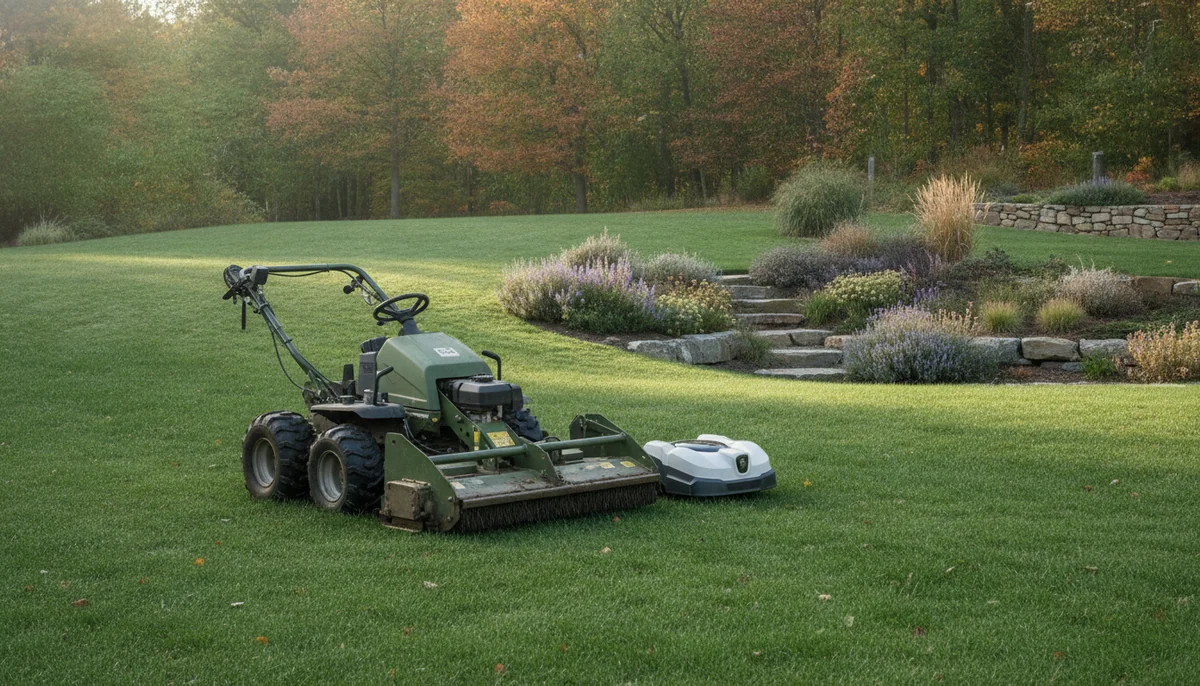
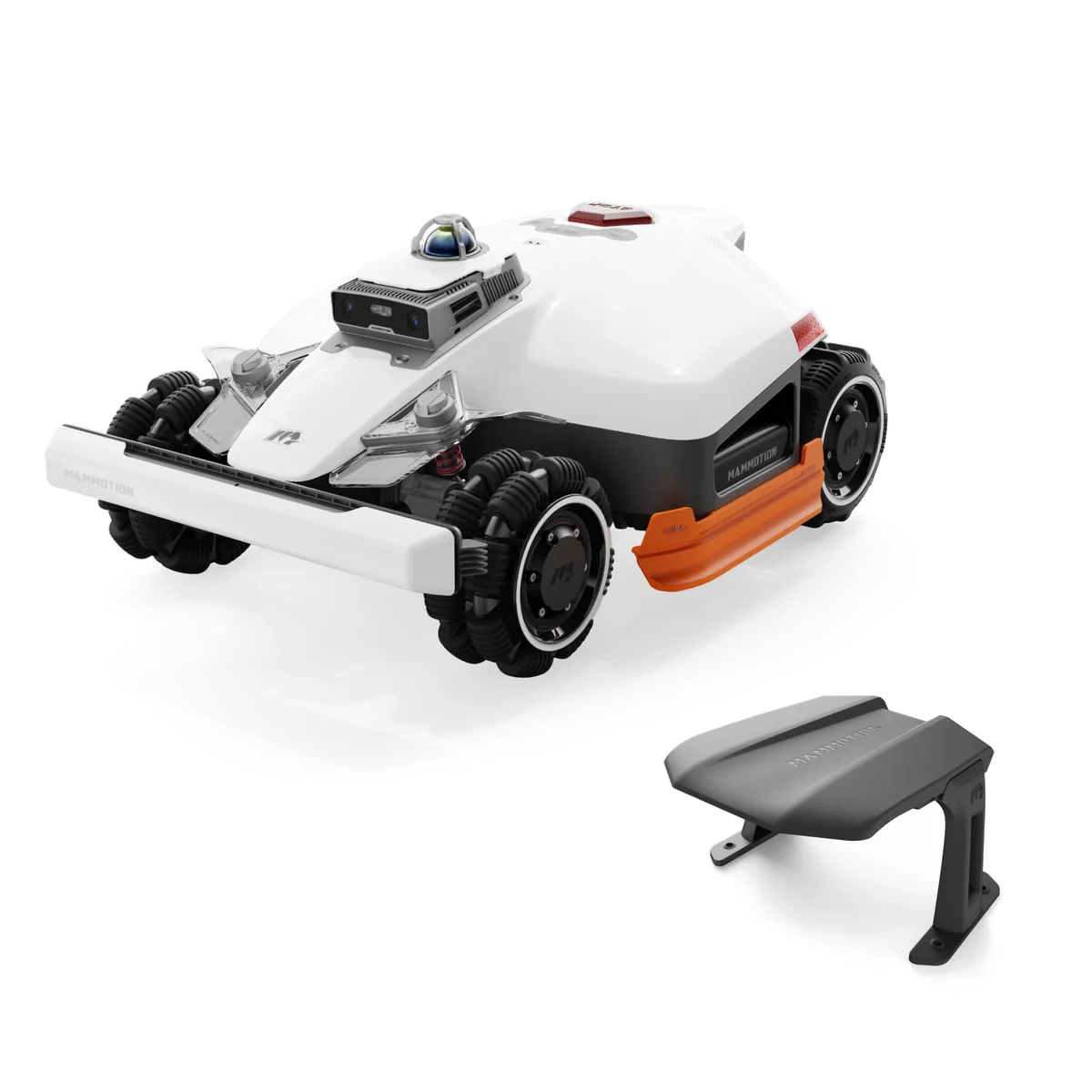
Mammotion LUBA 3 AWD 3000H
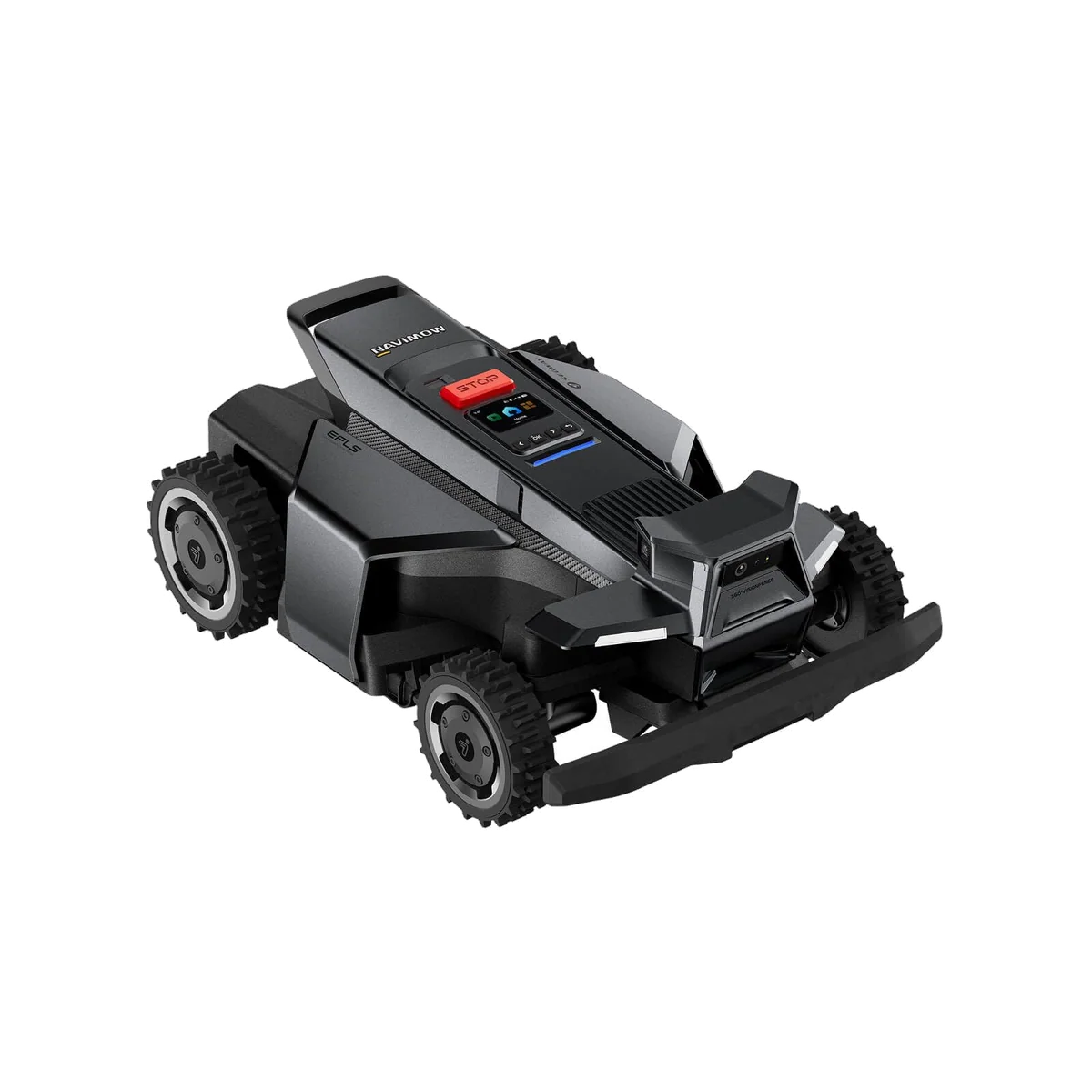
Navimow X430
These are not ordinary robot mowers with optimistic hill numbers. Both bring four-wheel drive, dual cutting discs, virtual boundaries and a four-inch maximum cutting height to ground that would expose a smaller machine within its first lap. Either can maintain slopes, roots, transitions and multiple zones without burying a perimeter wire. The decision turns on what happens after the specification sheet has done its selling.
The Navimow X430 is the better machine to live with. Its 17-inch deck covers more grass per pass, its one-acre mapped-area rating gives it more room than the 0.75-acre LUBA, and its steerable front wheels change direction without routinely dragging the nose across the turf. That last difference becomes visible around the charger and at the end of every stripe. A heavy autonomous mower repeats its routes relentlessly, so a gentler turn is not cosmetic engineering.
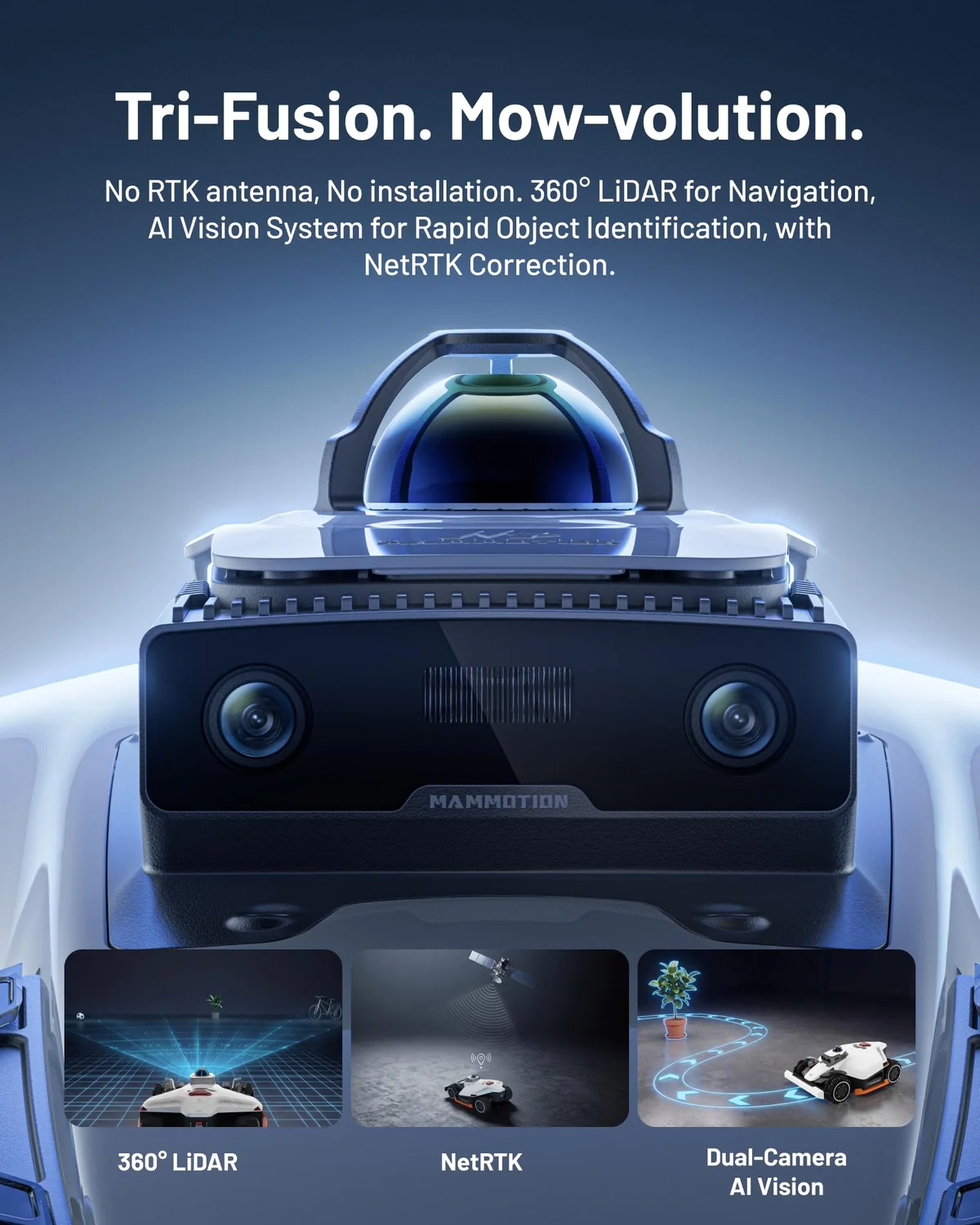
Mammotion’s LUBA 3 AWD 3000H answers with a more ambitious navigation stack. LiDAR, NetRTK and dual cameras give it several ways to understand a yard, while four independently driven wheels and a 41-pound body make it unusually difficult to strand on roots, ruts and loose transitions. It is the more persuasive choice for a remote, rough property where one immobilized mower means an unwanted drive across town.
That ability comes attached to the comparison’s biggest ownership risk. LUBA’s fixed front rollers can scrub soft, wet, sandy or thin grass during turns, and its app, firmware and support record is inconsistent enough that a successful first week does not settle the matter. The X430 is not trouble-free, but its weaknesses are more often installation problems that can be diagnosed than recurring uncertainty across the whole ownership experience.
Mammotion LUBA 3 AWD 3000H

Navimow X430
At a Glance
| Feature | Mammotion LUBA 3 AWD 3000H | Navimow X430 |
|---|---|---|
| Price Range | $3,000+ | $1,500–$3,000 |
| Cutting height | 2.2–4.0 inches | 0.75–4 inches |
| Recommended lawn size | Up to 0.75 acre / 3,000 m² | Up to 1 acre of mapped grass |
| Cutting width | 15.7 inches | 17 inches |
| Check Price on Amazon | Check Price on Amazon |
The lawn chooses between traction and restraint
| Decision point | Navimow X430 | LUBA 3 AWD 3000H |
|---|---|---|
| Rated mapped area | Up to 1 acre | Up to 0.75 acre / 3,000 m² |
| Cutting width | 17 inches | 15.7 inches |
| Cutting height | 0.75–4 inches | 2.2–4 inches |
| Claimed maximum slope | 84% grade / 40° | 80% grade / 38.6° |
| Navigation | Network RTK, cameras and visual odometry | LiDAR, NetRTK and dual cameras |
| Turning character | Steerable front wheels reduce turf scrub | Fixed rollers can scour vulnerable turf |
| Best fit | Large, tall-cut lawns with demanding terrain | Rough, obstructed lawns needing sensor redundancy |
The X430 wins the ordinary difficult yard
“Ordinary difficult” means an acre or less with slopes, tree roots, driveway crossings and enough open sky to establish reliable positioning. Here the X430’s combination is unusually coherent. Suspension keeps the deck composed over uneven ground, four-wheel traction handles meaningful elevation and the broad twin-disc deck makes progress without turning every mowing schedule into an all-day residency.
Its 0.75- to 4-inch range is also more versatile. Both machines can maintain tall fescue at four inches, but Navimow can cut substantially lower when the grass type or season calls for it. LUBA 3 AWD 3000H starts at 2.2 inches, which is an advantage only when cutting low would be a mistake anyway.
The X430’s drawback arrives before the first proper cut. The dock needs power, stable ground and a position its navigation system accepts. A location beside a wall can look sensible to a person and still produce crooked travel or failed docking until it is moved into a clearer position. Firmware updates may also need a full power cycle, and obstacle avoidance can require a vision-disabled patch around the charger. Wire-free removes the trench, not the installation judgment.
One reported X430 also dropped its electronic cutting height to minimum, scraped concrete and scalped the lawn. That behavior sits far outside the otherwise strong record, but it is serious enough to justify supervision during early cycles and a retailer with workable return terms. “Damage-free” steering describes the intended turn geometry, not an unconditional guarantee that no grass will suffer.
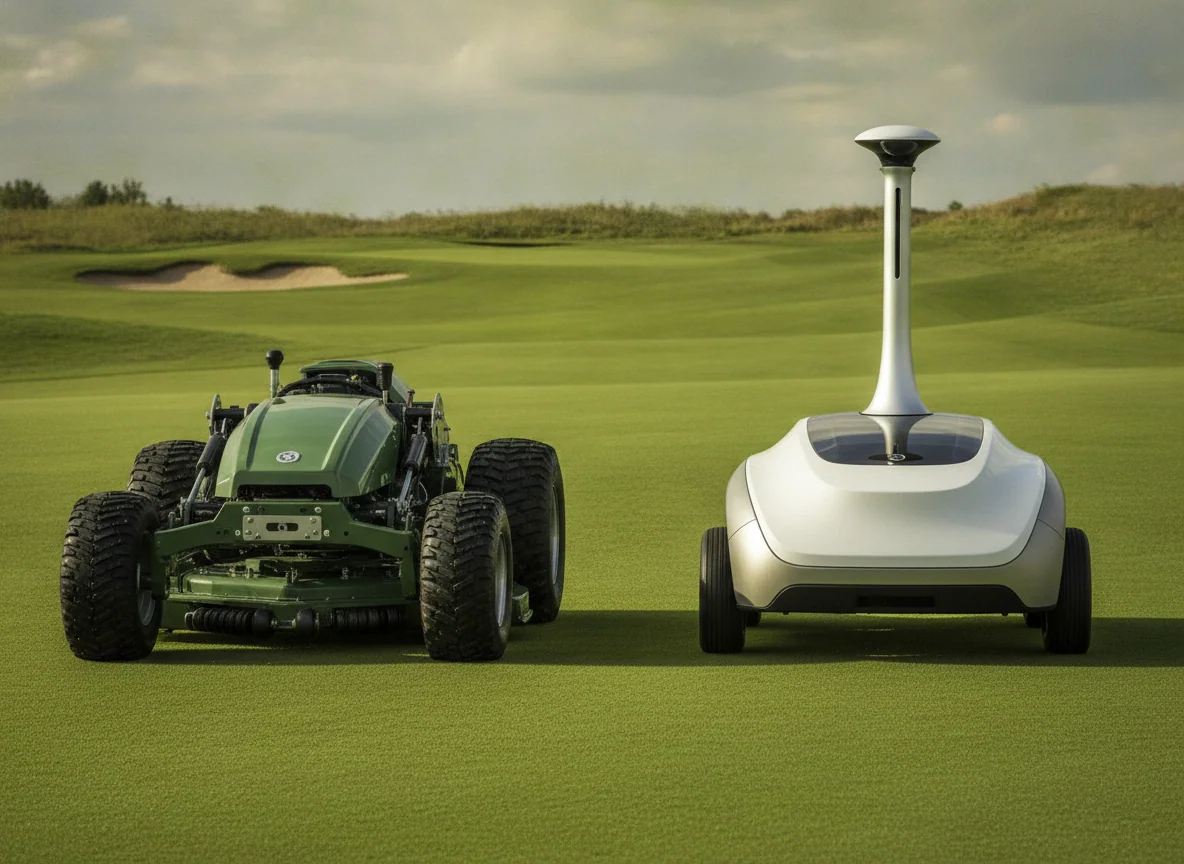
LUBA earns the upset when the yard breaks the navigation rules
The Mammotion becomes compelling where satellite-led positioning alone feels like a property audition. LiDAR can read local structure beneath trees and beside buildings, NetRTK can anchor long runs across open grass, and cameras can identify obstacles. That redundancy makes the LUBA the stronger bet for a large lawn that repeatedly moves between canopy, structures and clear sky.
Its drivetrain has the same specialized appeal. Rough country grass, mole holes, roots and severe transitions are exactly where four independently driven wheels justify the machine’s weight. The published 80% grade is a laboratory-style ceiling rather than a safe operating promise, but the chassis has a convincing record on firm banks that stop lighter two-wheel-drive robots. Anyone choosing between these machines primarily because walking the slope feels unsafe should also read the site’s guide to robot mowers for steep and uneven ground.
LUBA then charges for that capability in turf and patience. Its tank-like changes of direction can leave perimeter scars, especially when the ground is damp or weak. Multi-point turns reduce the damage without eliminating every pivot, and the repeated maneuver in front of the dock can wear one patch quickly. Put the charger on paving when possible and do not assume AWD is automatically kinder because it is more capable.
Manual mapping is also the sensible default around invisible property lines, ponds, roads and drops. Automatic exploration can produce jagged boundaries or claim reachable grass that does not belong in the mowing zone. Neither mower should be trusted to infer a safe margin beside water or traffic; virtual no-go areas need the same conservative thinking as a physical fence.
Neither machine replaces the rest of lawn care
Both are maintenance mowers. They work best after tall seasonal growth has been knocked down conventionally, then keep the lawn short by removing small amounts frequently. Their folding blades create little suction, so flattened grass may survive until a later pass from another direction. Heavy leaves, branches, pine cones, cords and straps still need to be cleared.
They mulch rather than collect, and neither eliminates string trimming. Flush paving can let a mower overlap the edge, but walls, raised beds, poles, inside corners and clustered obstacles leave a margin. The benefit is not a faster cut or a lawn-care vanishing act. It is getting the repetitive center work done quietly while the owner does something else. The broader trade-offs are covered in Smart Lawn Bots’ guide to whether robot mowers earn their place.
Navimow X430 strengths
- Its 17-inch deck and one-acre rating make it the more credible choice for sustained large-lawn work.
- Steerable front wheels reduce the turf scrub created by repeated skid turns.
- The 0.75- to 4-inch cutting range suits more grass types and seasonal preferences.
- Four-wheel drive and suspension handle slopes, roots and transitions without making rough terrain its entire personality.
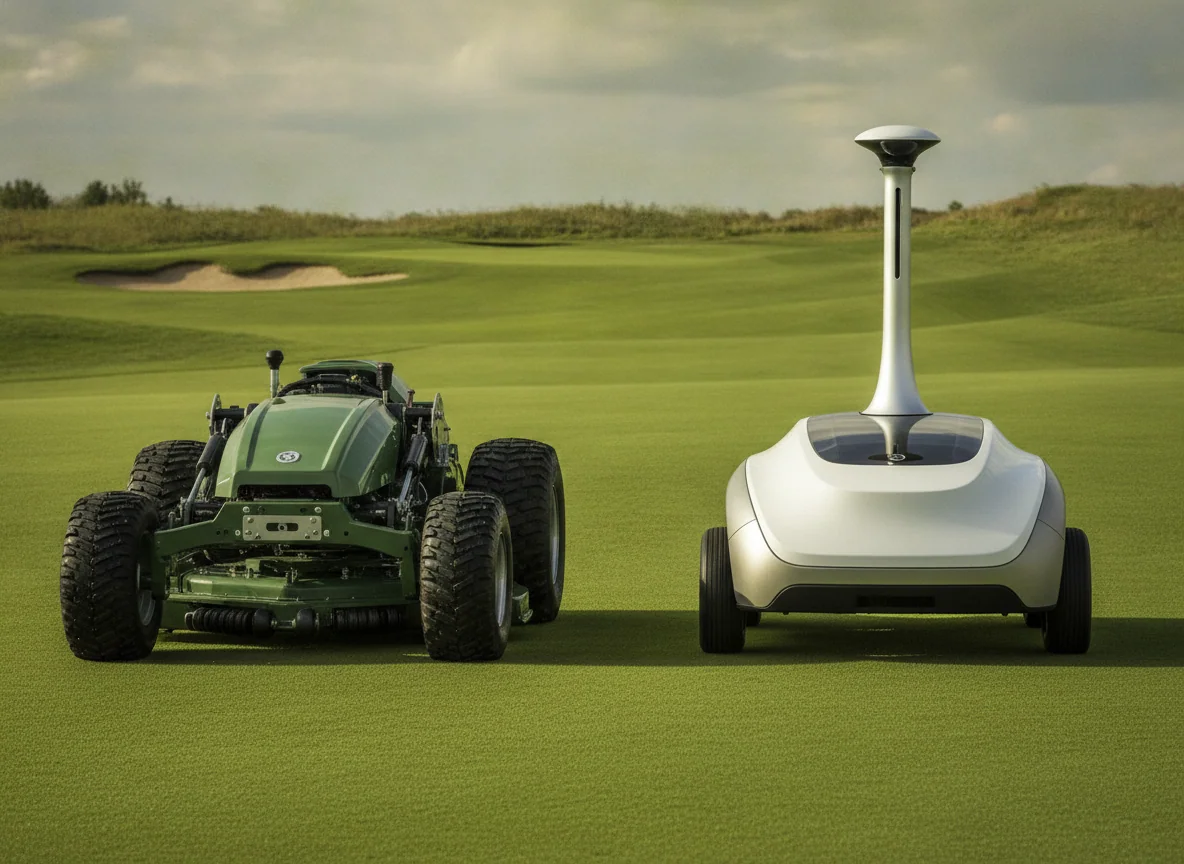
Navimow X430 weaknesses
- Dock placement and satellite conditions can turn initial setup into several rounds of relocation and remapping.
- A reported electronic height failure caused severe scalping and deserves caution during early operation.
- Repeated travel channels can still wear visible tracks despite the gentler steering system.
LUBA 3 AWD 3000H strengths
- LiDAR, NetRTK and dual cameras provide useful redundancy across open, wooded and built-up parts of a yard.
- Its four independently driven wheels are exceptionally capable across banks, roots, ruts and loose transitions.
- The 2.2- to 4-inch range is purposefully matched to higher-cut grass and rougher country lawns.
- The included garage gives the mower and dock worthwhile shelter from direct sun, rain and debris.
LUBA 3 AWD 3000H weaknesses
- Fixed front rollers and pivot turns can scar soft, wet, sandy or thin turf.
- App lag, connection failures and damaging firmware regressions remain credible ownership risks.
- Repair turnaround, parts access and eventual battery service are less reassuring than the physical mower.
- The 0.75-acre software limit leaves less capacity than the X430 even when extra charging time is available.
The Navimow X430 is the better difficult-lawn mower for most buyers.
Its wide deck, one-acre allowance, tall cutting range and turf-conscious steering turn formidable terrain hardware into the more polished daily ownership experience.
It still demands a viable dock location and reliable positioning, while the reported uncontrolled height drop makes early supervision essential.
The LUBA 3 AWD 3000H is the specialist for rough ground and obstructed navigation.
Choose it when exceptional traction and the combined resilience of LiDAR, NetRTK and cameras matter more than acreage or simplicity.
Its turning hardware can damage vulnerable grass, and uneven software, service and repair experiences make ownership harder to trust.
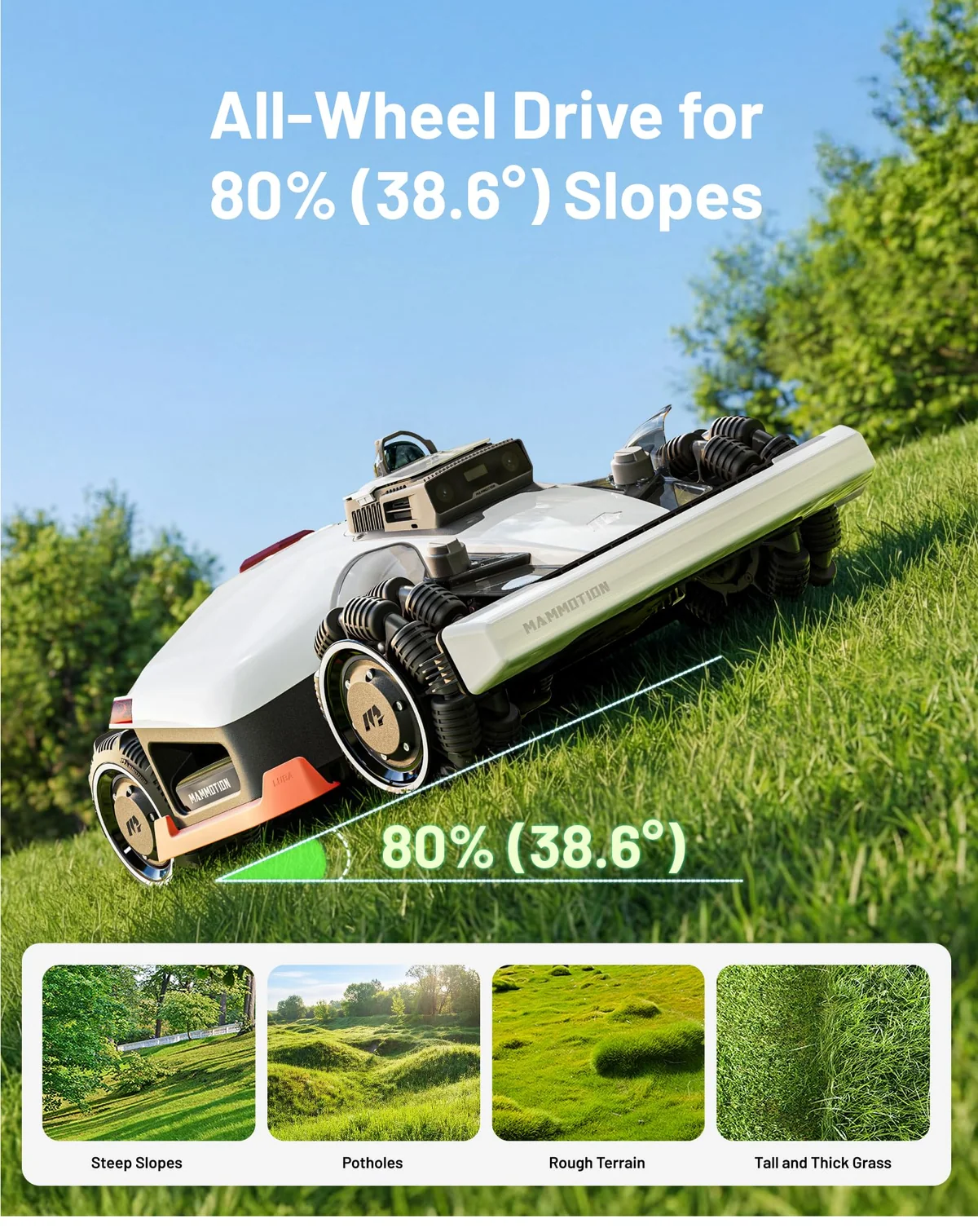
Mammotion LUBA 3 AWD 3000H
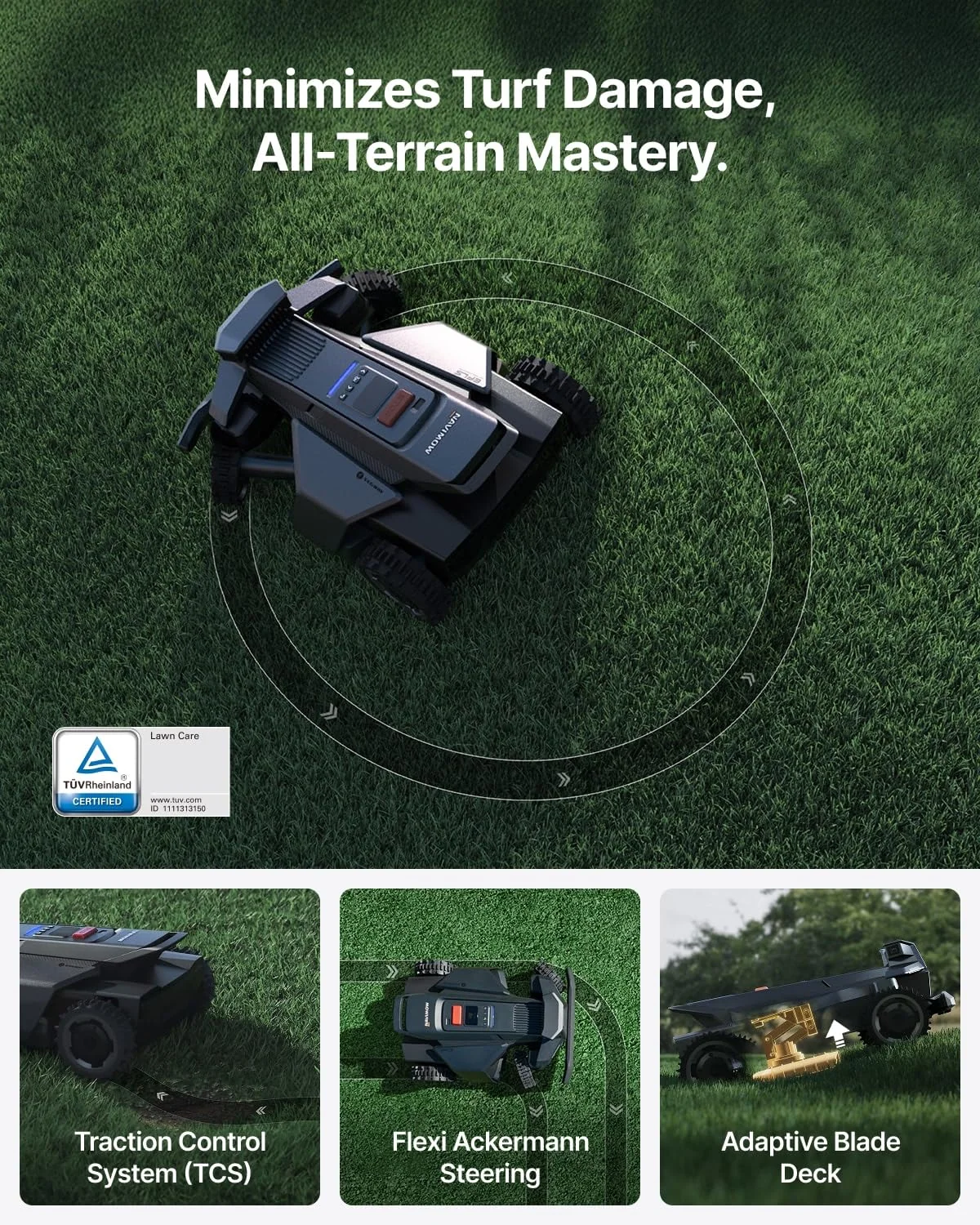
Navimow X430
Buy for the property you have, not the hill number you admire
Choose the X430 if the mowable area approaches an acre, the lawn needs a high summer cut, and its slopes and transitions are difficult without being a swamp or rock garden. Measure gates as well as grass because its body is 24 inches wide before useful clearance is added. For a smaller property crowded by buildings or heavy canopy, the compact Navimow i215 LiDAR versus X430 comparison explains why a smaller LiDAR mower may suit the navigation conditions better.
Choose the LUBA when failed traction or lost positioning would be the decisive problem. Firm ground matters: the machine’s capability is wasted if every forceful turn loosens the root zone. Its 3000H designation also needs to match the actual lawn area, not the parcel size. If there is more than 0.75 acre of grass, compare the LUBA 3 AWD 3000H with the 5000H rather than hoping repeated charging will bypass a mapped-area limit.
Walk away from both if the lawn is small, level and easy, because these heavy flagships solve problems that property does not have. Walk away if fallen debris cannot be cleared, an exposed pond or road cannot be given a generous buffer, or nobody can retrieve a stranded machine. A robot returns mowing time, but autonomy ends the moment forty pounds of electronics stops beyond arm’s reach.
The final call is clear. The Navimow X430 wins because it gives up little in climbing ability while covering more ground, cutting a wider range of heights and treating the turf with more restraint. LUBA is the more adventurous robot, sometimes spectacularly so, but adventure is not the quality most people want from an appliance that roams the garden three times a week.
Frequently Asked Questions
Which mower is better for a one-acre lawn?
The Navimow X430 is rated for up to one acre, while the LUBA 3 AWD 3000H is limited to 0.75 acre or 3,000 m².
Which mower is better under trees and beside buildings?
The LUBA has the stronger navigation fallback because it combines LiDAR, NetRTK and dual cameras, although every property still needs a cautious setup.
Which mower is less likely to damage soft grass?
The X430’s steerable front wheels are the safer design for vulnerable turf because the LUBA’s fixed front rollers can scrub during repeated turns.
Do either of these mowers need a perimeter wire?
No, both use virtual mapping instead of a buried boundary wire, but each still needs a powered dock and suitable positioning conditions.
Can either mower handle a steep hill?
Both have capable four-wheel-drive systems and extreme manufacturer slope ratings, but wet grass, loose soil, sidehill travel and unprotected drops lower the sensible real-world limit.
Will either mower collect clippings or eliminate edging?
No, both mulch frequent light cuttings and still leave manual trimming around raised borders, walls, corners and awkward obstacles.
Ready to Choose?
Sources (39)
- Amazon listings and customer reviews — Mammotion Luba 3 Awd and Navimow X430
- Owner reports across r/MammotionTechnology threads
- Owner and reviewer video, 60 channels
- Pcworld — Article — www.pcworld.com
- Toptenreviews — Article — www.toptenreviews.com
- Easylawnmowing — Article — easylawnmowing.co.uk
- Mammotion — Article — us.mammotion.com
- Trustpilot — Article — au.trustpilot.com
- Thetechnologyman — Article — thetechnologyman.com
- Easylawnmowing — Article — www.easylawnmowing.com
- Homedepot — Article — www.homedepot.com
- Mammotion — Article — mammotion.com
- Carplaylife — Article — www.carplaylife.com
- Trustpilot — Article — uk.trustpilot.com
- Freshlycharged — Article — freshlycharged.com
- Androidauthority — Article — www.androidauthority.com
- T3 — Article — www.t3.com
- Facebook — Article — www.facebook.com
- Au — Article — robotlawnmowers.com.au
- Smarthomejunkie — Article — www.smarthomejunkie.net
- Iheart — Article — rocketerie.iheart.com
- Techradar — Article — www.techradar.com
- Expertreviews — Article — www.expertreviews.co.uk
- Segway — Article — navimow.segway.com
- Trustedreviews — Article — www.trustedreviews.com
- Navimow — Article — navimow.com
- Trustpilot — Article — www.trustpilot.com
- Lowes — Article — www.lowes.com
- Notebookcheck — Article — www.notebookcheck.net
- Mowingmagic — Article — mowingmagic.com
- Smart Dots — Article — www.smart-dots.com
- Cnygreenteam — Article — cnygreenteam.com
- Nytimes — Article — www.nytimes.com
- Trustpilot — Article — ie.trustpilot.com
- Homeandgardenselect — Article — homeandgardenselect.com
- Cnet — Article — www.cnet.com
- Yarbo — Article — www.yarbo.com
- Consumerreports — Article — www.consumerreports.org
- Eu — Article — www.letemsvetemapplem.eu