The Sunseeker S4 is the better robot mower until the lawn itself demands an X7.
Buy the Sunseeker S4 for a structured lawn no larger than a quarter acre, and step up to the X7 only when greater coverage or difficult terrain matters more than reliable navigation beneath trees and beside buildings.
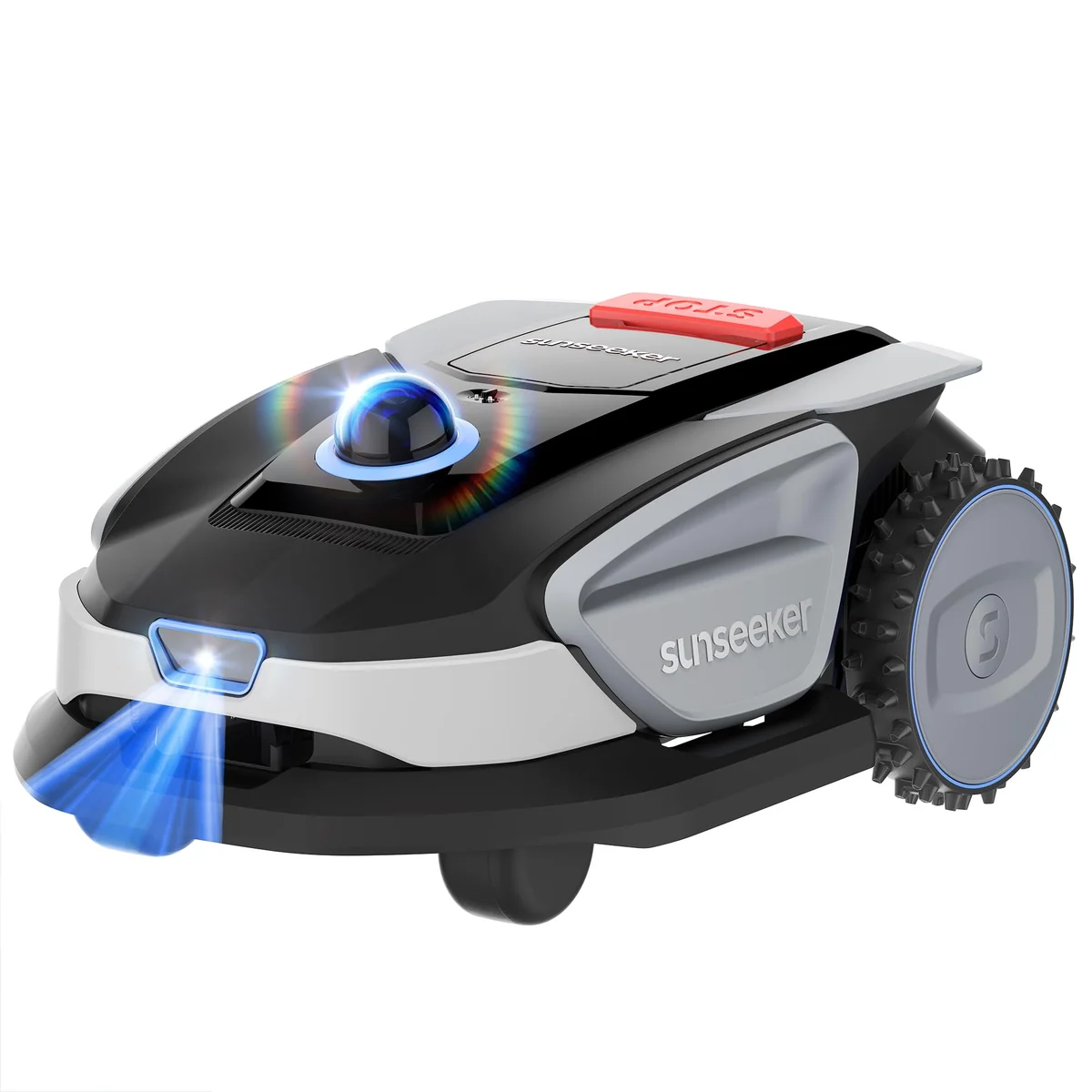
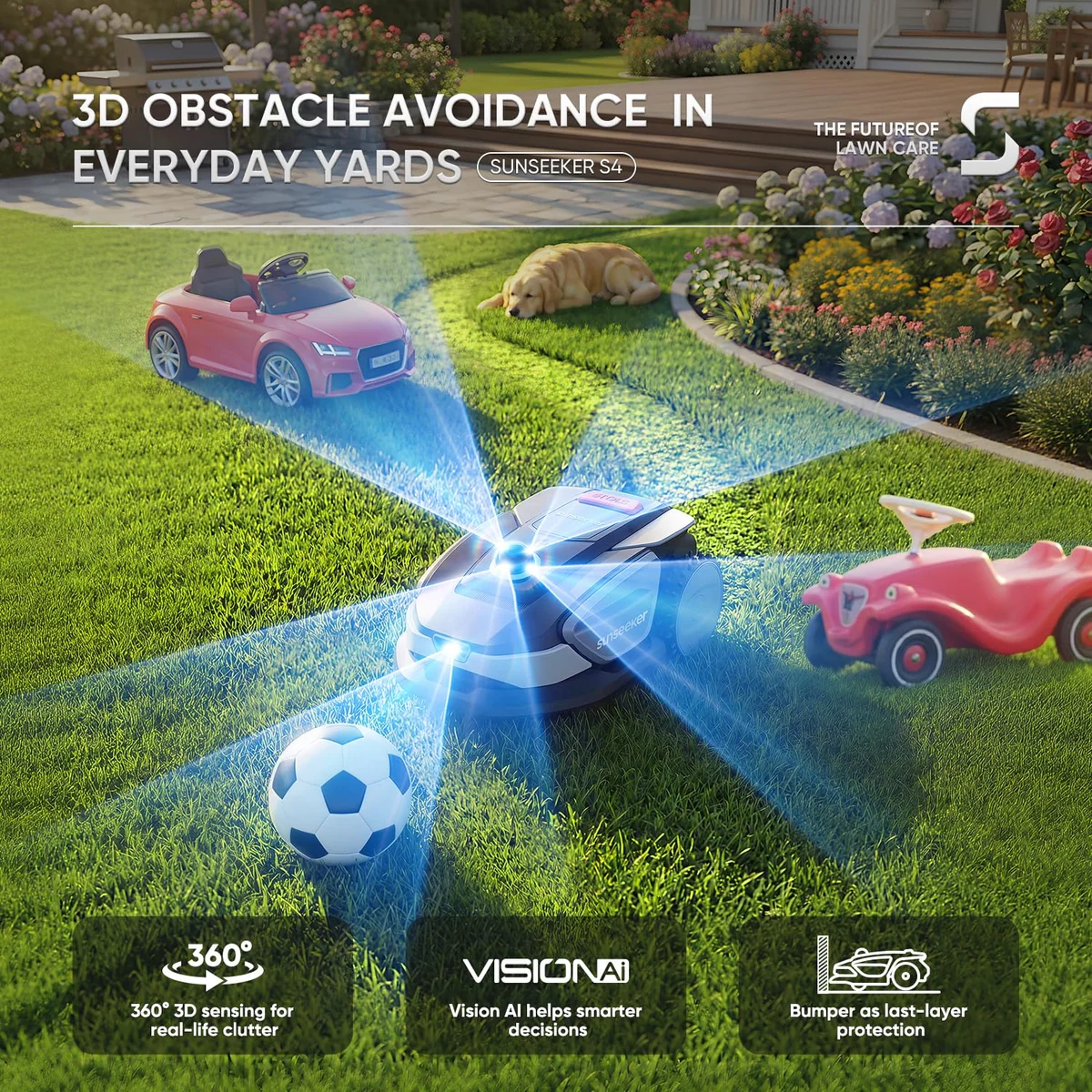
Sunseeker S4
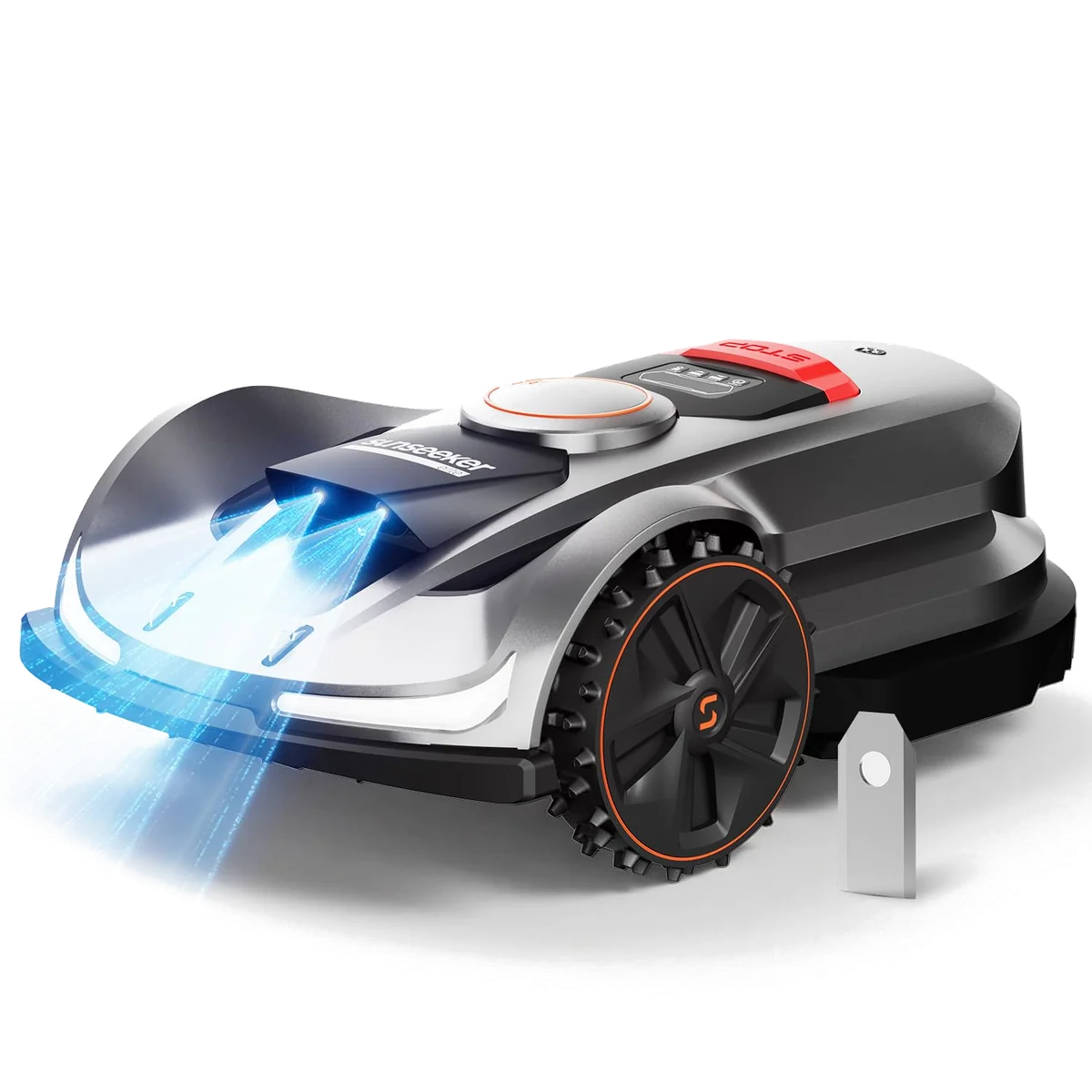
Sunseeker X7 AWD Robot Lawn
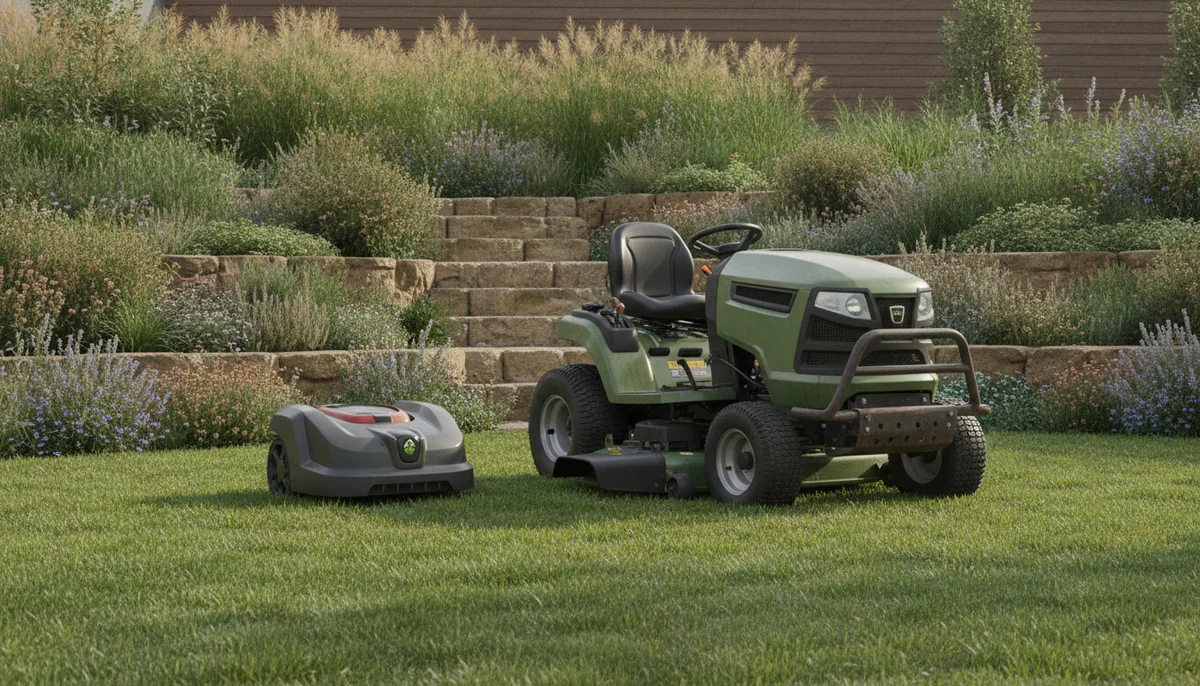
The S4 and X7 are not the same mower in small and large sizes. The S4 uses onboard 3D LiDAR to read nearby trees, fences and buildings without a satellite reference antenna. The X7 relies on RTK and vision, then puts a wider floating deck on a three-wheel AWD chassis built to climb and recover from rough ground. One solves a positioning problem; the other solves a traction and throughput problem.
That difference makes the cheaper-looking choice intellectually harder than the upgrade. A compact backyard can be the more demanding place to navigate when branches cover the sky, the house shadows one boundary and a narrow side passage connects two lawn sections. In that setting, the S4 is the better machine even before yard size enters the argument. Its LiDAR sees a yard that can leave the X7 waiting for a reliable position.
Move to an open half-acre with a long bank, exposed roots and rolling turf, and the decision reverses. The S4’s seven-inch deck, rear-wheel drive and repeated charging stops turn the week into a slow relay. The X7 cuts twice the width, adjusts its deck electronically and keeps all three wheels powered. Provided the mower and RTK antenna can share enough satellites across the property, the X7 is built for that work.
Neither mower is a substitute for preparing the lawn. Both can treat tall stalks and dense growth as obstacles, both leave trimming beside vertical borders, and both work best after a conventional first cut. The right expectation is a maintained lawn that stays short, not a machine that returns from the dock to reclaim two weeks of wet spring growth.
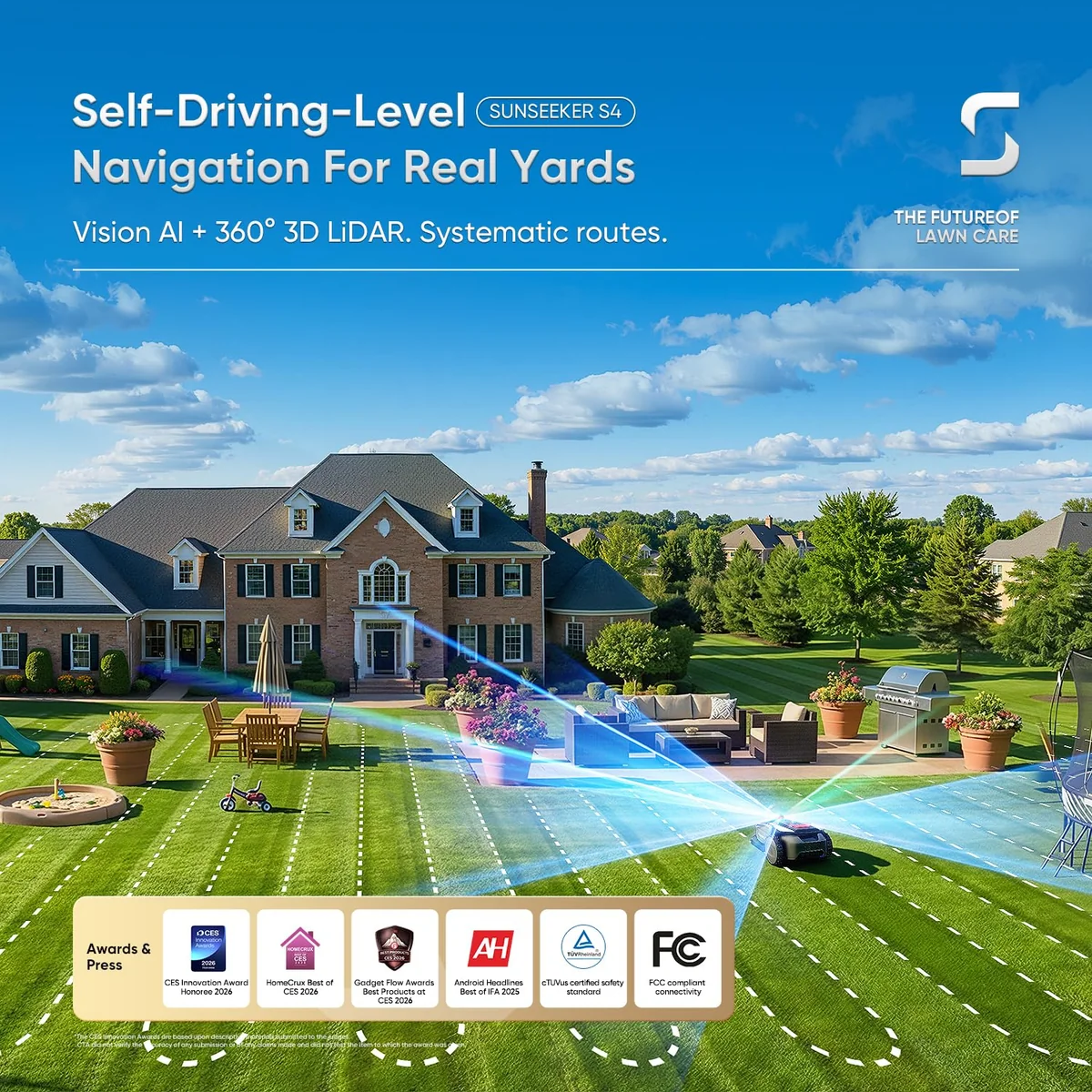
Sunseeker S4
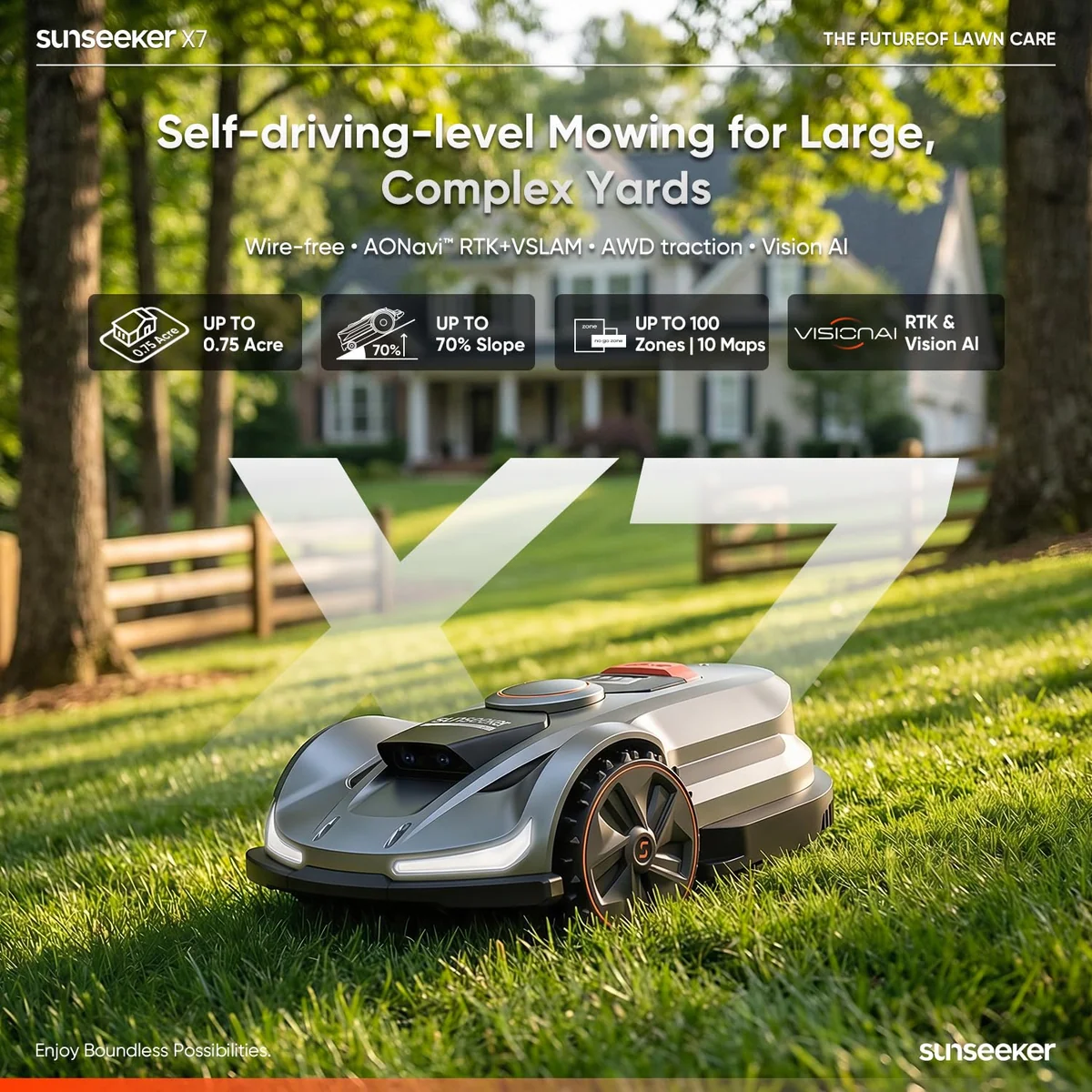
Sunseeker X7 AWD Robot Lawn
At a Glance
| Feature | Editor's Pick Sunseeker S4 | Sunseeker X7 AWD Robot Lawn |
|---|---|---|
| Price Range | $500–$1,000 | $1,500–$3,000 |
| Cutting height | 1.6–3.2 inches, manual dial | — |
| Recommended lawn size | 0.25 acre | — |
| Cutting width | 7 inches | — |
| Check Price on Amazon | Check Price on Amazon |
Choose navigation first, then choose capacity
The Sunseeker S4 is the better buy for small, shaded yards.
Its antenna-free LiDAR makes it the more dependable choice around trees, eaves and buildings where satellite positioning becomes the yard’s real obstacle.
The narrow deck, modest battery endurance, rear-wheel-drive chassis and wide uncut strip beside walls make it a poor fit for large, abrupt or edge-sensitive lawns.
The S4 builds its map from the yard around it, so there is no RTK antenna to position and no need for the mower and a reference station to see the same satellites. Fences, trunks and buildings give LiDAR useful structure. That makes a defined suburban lawn beneath tree cover its natural habitat, although a broad featureless field can be less legible than its acreage suggests.
Once mapped, it cuts in orderly parallel lanes and can divide the property into zones, corridors and no-go areas. The finish is convincing when grass is already short, and the mower returns to charge before resuming the unfinished job. A lawn approaching the quarter-acre rating may require several work and charging cycles, so gates and limited mowing windows can turn otherwise automatic resumption into supervision.
The honest nuisance appears at the perimeter. Its central seven-inch cutting disc sits well inside the body, leaving a conspicuous strip beside fences, curbs and raised beds unless the wheels can overlap flush paving. Abrupt sidewalk humps and planter dips can also strand the two-wheel-drive chassis. Add the absence of native GPS and cellular tracking, and this is a precise small-yard maintainer rather than a miniature all-terrain flagship.
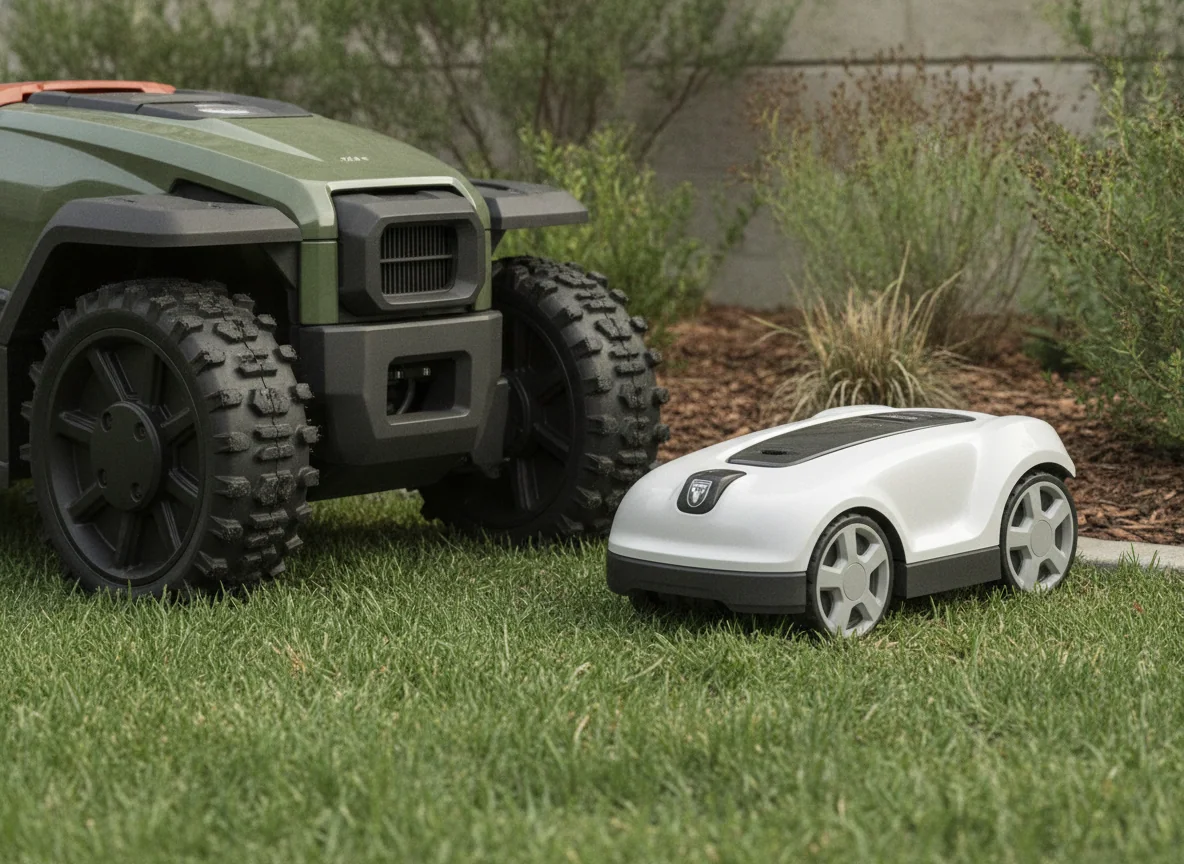
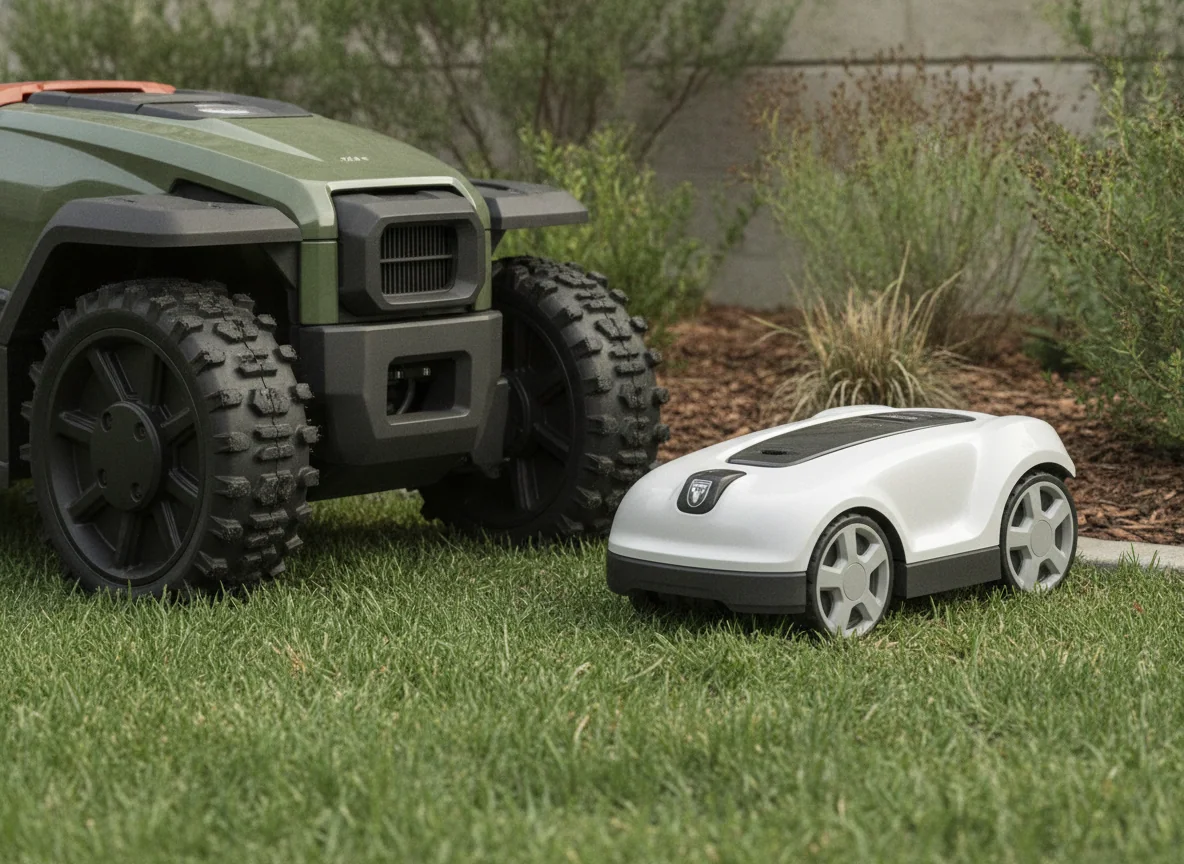
The Sunseeker X7 is the specialist for open, hilly ground.
Its three-wheel AWD system, 14-inch floating deck and broad electronic height range make it the stronger mower for uneven lawns comfortably below three-quarters of an acre.
The original X7 can become a rescue project when buildings, dense canopy or tall fences interrupt RTK positioning, and its software history makes a generous return window essential.
The X7’s powered rear wheel is not merely a swiveling caster. It steers and pushes with the two large drive wheels, helping the mower climb sustained slopes, cross shallow depressions and turn without the turf-scrubbing weight of a bulkier four-wheel platform. The floating dual-disc deck follows rolling ground while cutting twice the S4’s width, and electronic adjustment from 0.8 to 4 inches accommodates a much wider range of turf heights.
Those advantages disappear if the mower cannot maintain its position. The original X7 needs a powered RTK reference antenna with open sky, and the robot must receive enough of the same satellites while it travels. A narrow route can work when the sky is visible, while a physically wider corridor between a house and tall fence can fail. Vision can bridge brief weakness, but it does not transform a satellite canyon into a reliable transfer path.
The three-quarter-acre figure also needs breathing room. Work periods of roughly an hour are followed by charging, and complete coverage near the maximum can consume much of a day once those cycles are included. Rain, fast growth and positioning interruptions reduce the available margin further. The X7 belongs on a lawn comfortably below its ceiling, not one that needs every advertised square foot merely to qualify.
| Decision point | Sunseeker S4 | Sunseeker X7 |
|---|---|---|
| Best setting | Defined, shaded residential lawn | Open, sloping or uneven property |
| Maximum stated coverage | 0.25 acre | 0.75 acre |
| Navigation | Onboard 3D LiDAR and vision | RTK, vision and VSLAM |
| External antenna | Not required | Required |
| Drive and stated slope | Rear-wheel drive, up to 42% | Three-wheel AWD, up to 70% |
| Cutting width | 7 inches | 14 inches |
| Cutting height | 1.6–3.2 inches, manual dial | 0.8–4 inches, electronic adjustment |
| Security connection | Wi-Fi without native GPS or cellular tracking | 4G and GPS tracking hardware |
| Main ownership risk | Slow coverage and weak performance at abrupt transitions | RTK compatibility and inconsistent software behavior |
The acreage number is not the first filter
A quarter-acre lawn does not automatically belong to the S4. If that lawn contains a sustained incline, rough transitions and open sky, the X7’s traction and wider deck may justify the larger machine. Conversely, a property larger than a quarter acre does not automatically suit the X7 if the only route to the back lawn runs beneath dense branches or between tall walls.
Walk the property before comparing specification rows. Look upward along every transfer route, then look down at the sharpest changes in grade. Choose the S4 when the overhead view is compromised but the ground is manageable. Choose the X7 when the sky is usable but the turf beneath it would stop a conventional two-wheel-drive robot.
Both still leave the string trimmer employed
Flush paving is the friendly edge because either mower can overlap it and bring the cutting deck closer to the grass. A fence, retaining wall or raised curb forces the body to keep its distance while the blades remain farther inward. The X7 covers open turf faster, but it is not an edge-cutting specialist, and the S4’s central deck leaves the more obvious manual strip.
If close border work matters more than Sunseeker’s particular strengths, the ECOVACS GOAT O1000 LiDAR PRO is the more relevant small-yard alternative because it combines LiDAR navigation with a dedicated trimming mechanism. Buyers trying to minimize weekly touch-up should make that comparison before accepting either Sunseeker.
Sunseeker S4
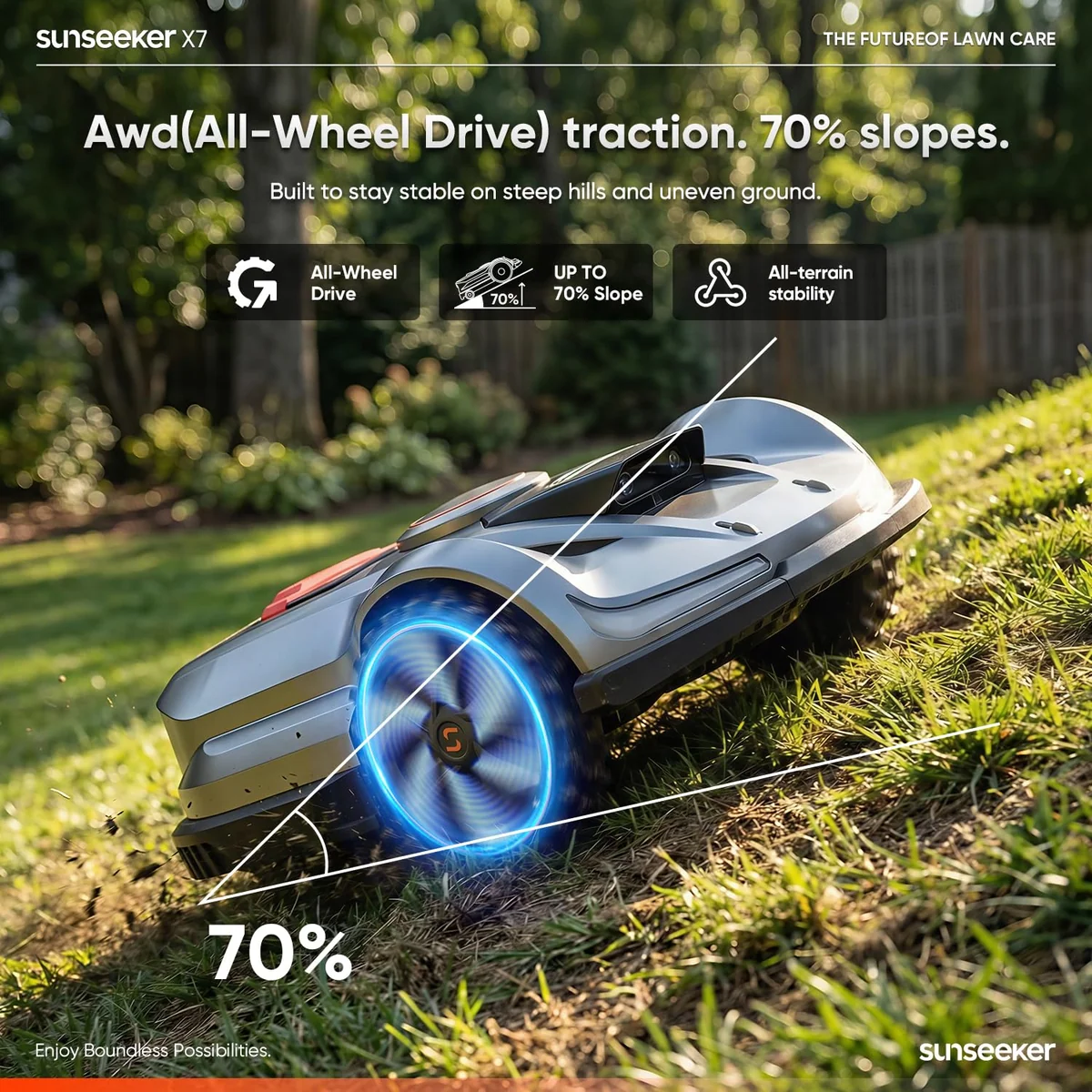
Sunseeker X7 AWD Robot Lawn
The winner changes at the tree line
Smart Lawn Bots gives the overall decision to the S4 because its advantage is harder to add later. A difficult RTK yard cannot be fixed by buying more traction, while slow S4 coverage can be managed on the compact lawns it was built to maintain. For a clearly bounded quarter acre beneath trees or beside buildings, the S4 is the more coherent purchase.
The X7 wins when the property presents the opposite challenge: usable sky, more grass and genuinely difficult ground. A long bank, shallow ruts, roots and rolling contours give its AWD chassis and floating deck a reason to exist. Keep the working area comfortably below 0.75 acre, cut the lawn conventionally before setup and verify every route before the retailer’s return period closes.
Walk away from both if the lawn is routinely allowed to grow tall, if zero trimming is a requirement or if disconnected zones depend on somebody opening gates. Buyers with a large, severe-slope property should also compare the stronger options for large yards and the mowers selected specifically for steep, uneven ground rather than forcing the X7 to operate at its capacity ceiling.
The final choice is therefore blunt: buy the S4 when the yard is difficult to see from space, and buy the X7 when the yard is easy to see but difficult to cross.
Frequently Asked Questions
Does the Sunseeker S4 need an RTK antenna?
No, the S4 maps and navigates with onboard 3D LiDAR and vision rather than an external RTK reference antenna.
Can the S4 mow a quarter acre on one battery charge?
A lawn near the S4’s quarter-acre limit can require multiple mowing and charging cycles, although the mower can resume the unfinished job after docking.
Will the Sunseeker X7 work beneath trees?
The X7 can tolerate some temporary RTK weakness with vision assistance, but dense canopy or an essential satellite-starved route makes the LiDAR-based S4 the safer choice.
Which Sunseeker mower handles steep slopes better?
The X7 is the stronger hill mower because its powered three-wheel AWD chassis carries a stated 70% slope limit compared with the rear-wheel-drive S4’s 42% limit.
Which model cuts closer to fences and walls?
Neither model eliminates trimming beside vertical borders, although the S4’s deeply inset central deck usually leaves the more noticeable strip.
Can the Sunseeker S4 and X7 use the same garage?
No, the S4 has its own separately sold garage and is not compatible with the garage designed for the X5 and X7.
Ready to Choose?
Sources (22)
- Amazon listings and customer reviews — Sunseeker S4 and Sunseeker X7 Awd Robot
- Owner reports across r/StrangeNewWorlds, r/berkeleyca, r/roboticLawnmowers and 7 more threads
- Owner and reviewer video, 24 channels
- Costco listing
- Walmart listing
- Shopsunseekertech — Article — shopsunseekertech.com
- Tomsguide — Article — www.tomsguide.com
- T3 — Article — www.t3.com
- Warehouserunner — Article — app.warehouserunner.com
- Facebook — Article — www.facebook.com
- Electricrevolutionreviews — Article — electricrevolutionreviews.com
- Sunseekertech — Article — sunseekertech.com
- Bestbuy — Article — www.bestbuy.com
- Sunseekerelite — Article — sunseekerelite.com
- Bobvila — Article — www.bobvila.com
- Pcmag — Article — www.pcmag.com
- Smart Dots — Article — www.smart-dots.com
- Freshlycharged — Article — freshlycharged.com
- Techwalls — Article — www.techwalls.com
- Pcworld — Article — www.pcworld.com
- Heise — Article — www.heise.de
- Mowscout — Article — mowscout.com