The LUBA 3 beats the WORX WR344, unless your lawn bruises easily
Buy the Mammotion LUBA 3 AWD 3000H for firm, steep or rooty ground; choose the WORX WR344 instead when tight passages, gentle turning and a removable battery matter more than mowing speed.
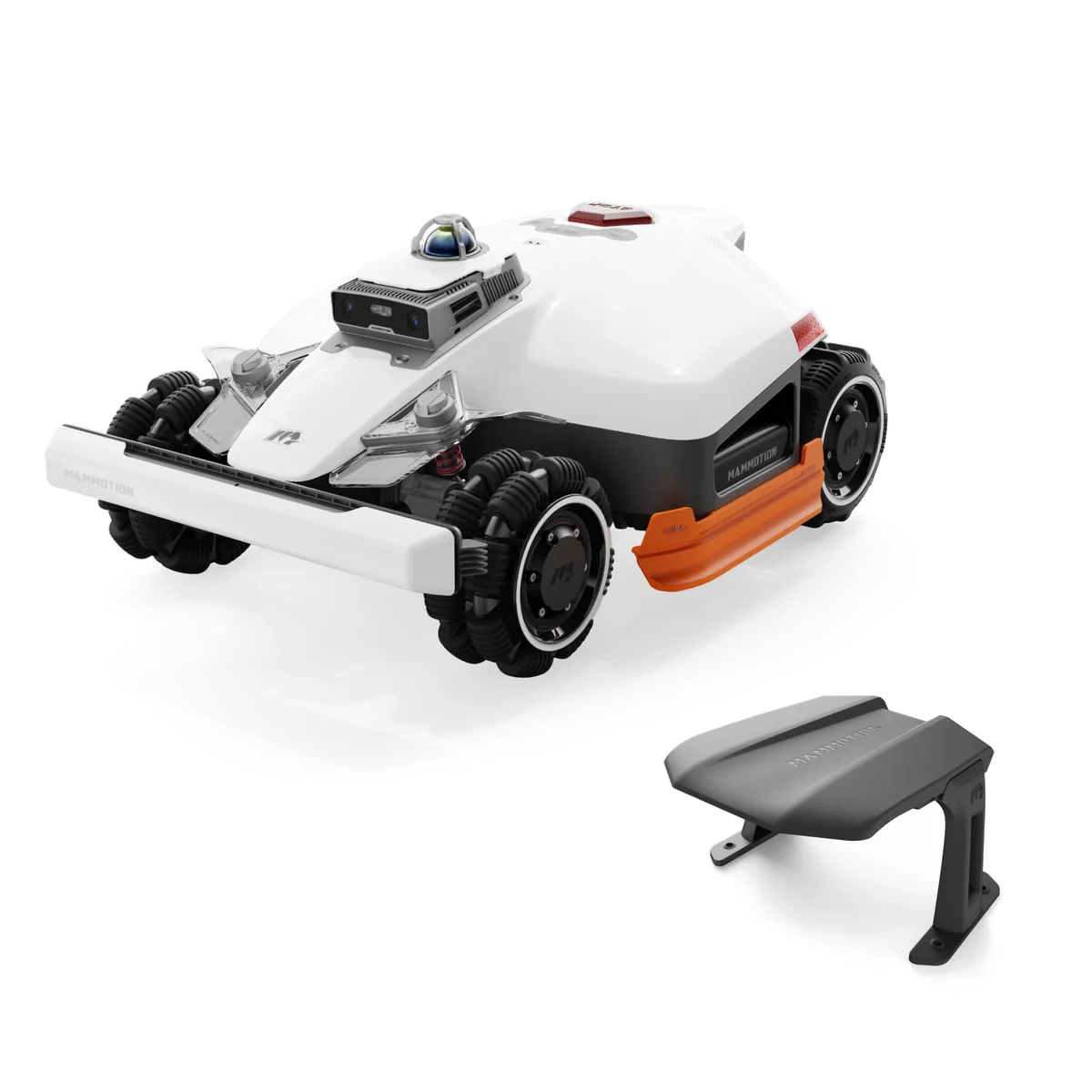
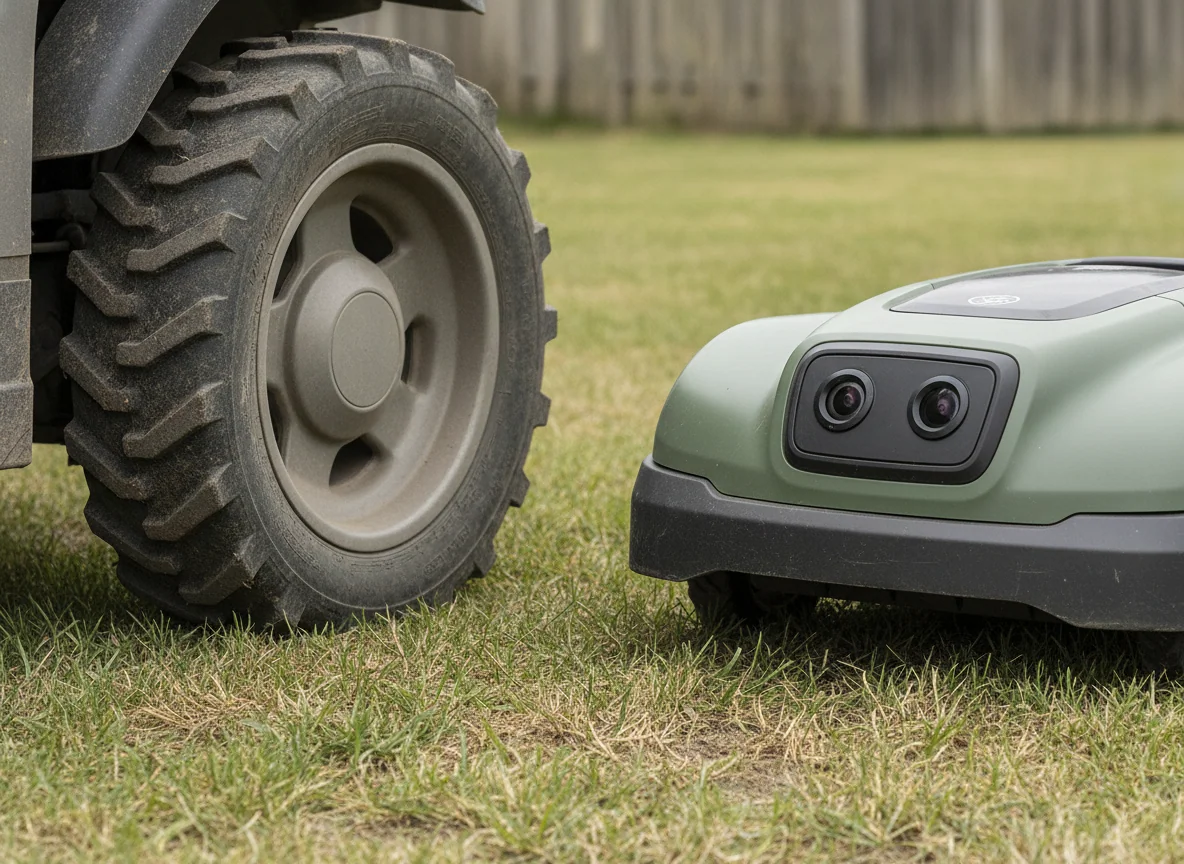
Mammotion LUBA 3 AWD 3000H
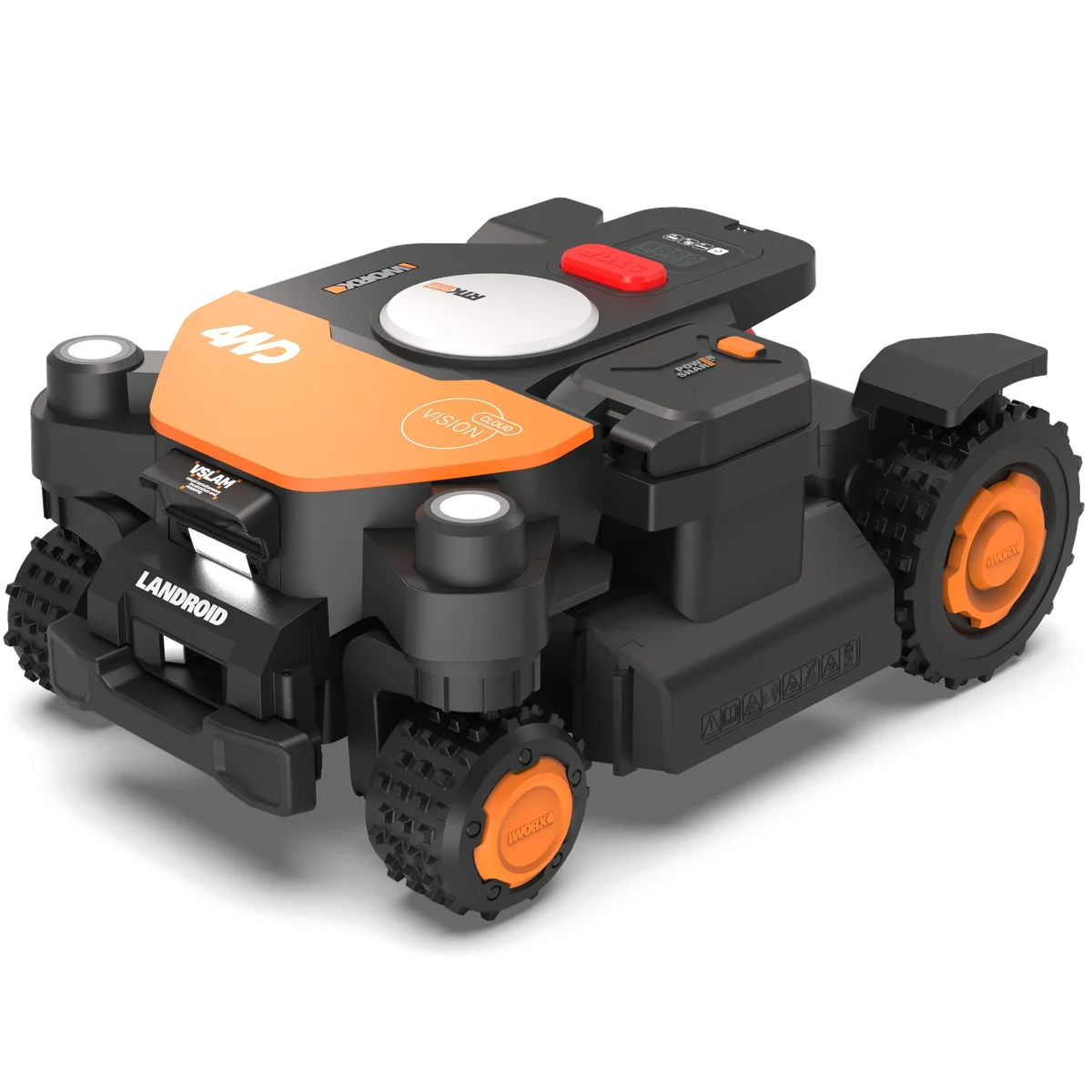
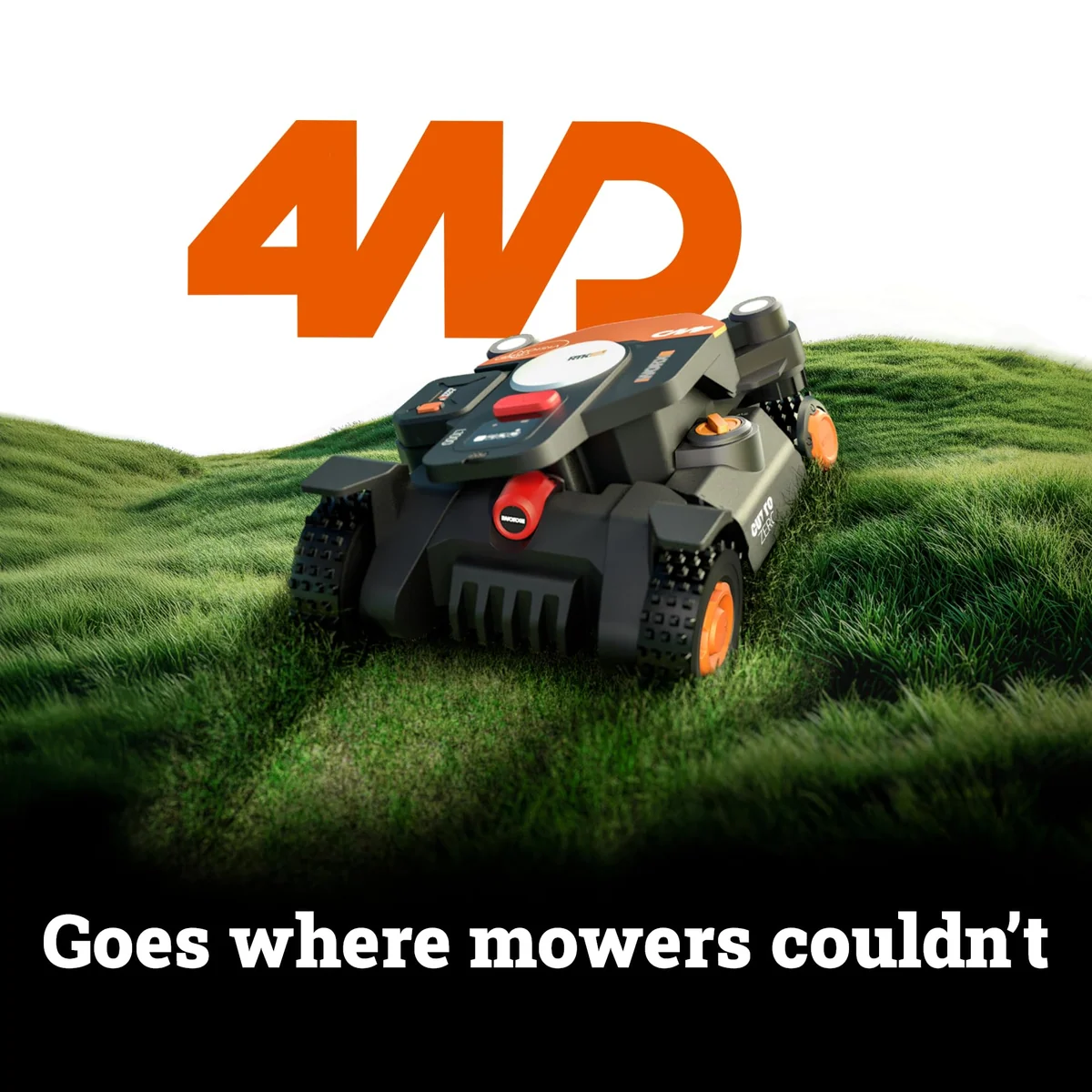
WORX WR344
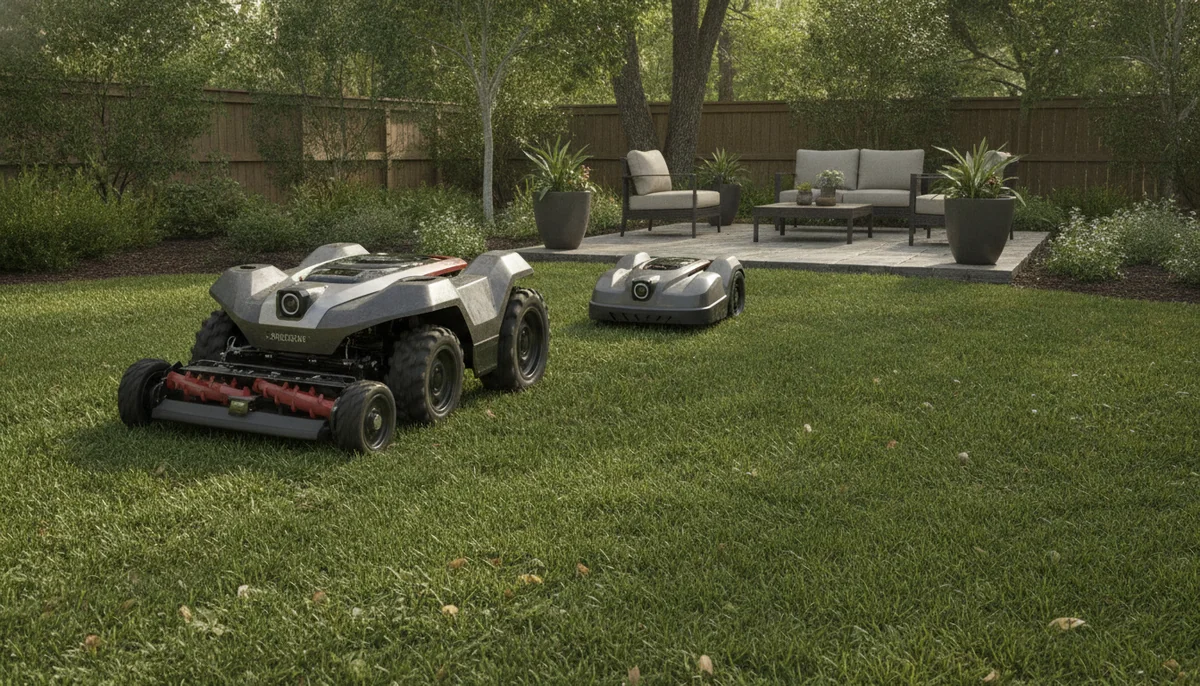
These are not two ordinary robot mowers wearing aggressive tires. Both have genuine four-wheel drive, wire-free mapping and enough traction to work on residential slopes that embarrass lighter machines. The difference appears when they turn around. Mammotion’s broad, powerful LUBA covers difficult ground quickly, but its fixed front rollers can scrub vulnerable grass. The narrower WORX steers its front wheels, pivots with more grace and then spends much longer cutting the same area.
That trade decides the comparison. The LUBA 3 is the stronger overall purchase because its 15.7-inch twin-disc deck, high cutting range and three-part navigation system solve more demanding lawn problems. Its victory is conditional, not comfortable. Software instability, inconsistent support and the risk of turn marks make it a poor indulgence for a flat, delicate lawn.
| Priority | Better choice | Why |
|---|---|---|
| Rough, rooty ground | LUBA 3 | Excellent traction, adaptive suspension and a wide deck suit genuinely difficult terrain. |
| Soft or easily marked turf | WR344 | Front steering avoids the routine skid turns that can scar grass. |
| High cutting height | LUBA 3 | Its range reaches 4 inches, compared with 3.54 inches for the WORX. |
| Open-area throughput | LUBA 3 | A 15.7-inch deck and longer mowing bouts beat the WORX mower’s 8.7-inch disc. |
| Tight landscaping | WR344 | The compact body and controlled steering fit awkward routes more naturally. |
| Battery replacement | WR344 | Its removable PowerShare pack is far more owner-friendly than LUBA’s internal battery. |
Mammotion LUBA 3 AWD 3000H
WORX WR344
At a Glance
| Feature | Editor's Pick Mammotion LUBA 3 AWD 3000H | WORX WR344 |
|---|---|---|
| Price Range | $3,000+ | $1,500–$3,000 |
| Cutting height | 2.2–4.0 inches | 1.57–3.54 in |
| Recommended lawn size | Up to 0.75 acre / 3,000 m² | Up to 1 acre |
| Cutting width | 15.7 inches | 8.7 in |
| Check Price on Amazon | Check Price on Amazon |
The whole contest turns on how each mower changes direction
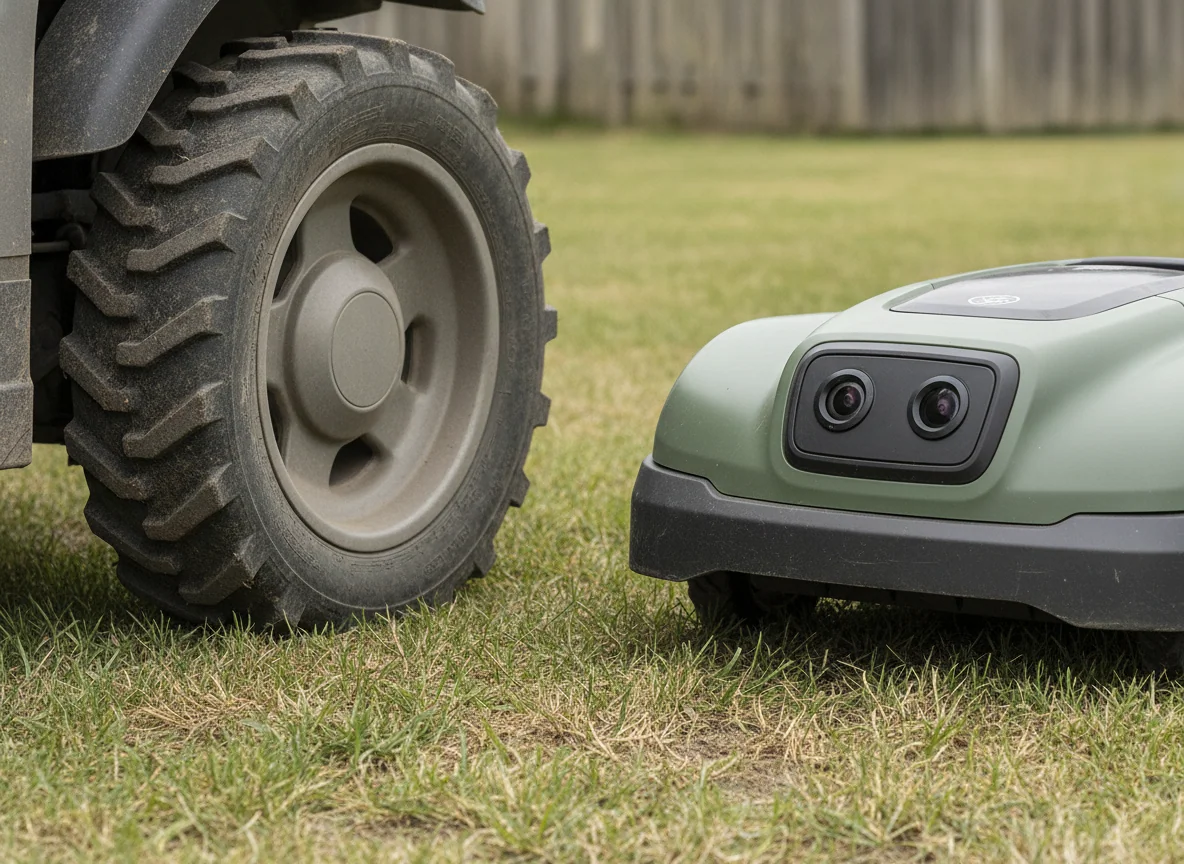
The LUBA 3 behaves like a small off-road machine. Four independently driven wheels move its roughly 41-pound body over ruts, roots, gravel transitions and steep banks, while two cutting discs clear a broad strip beneath it. That mass and grip are useful when the lawn is firm and hostile. On wet, sandy or thin turf, the same machine can repeatedly drag its front rollers through the perimeter turn and leave a worn crescent where healthy grass used to be.
WORX made the more sophisticated chassis. Its front wheels steer, and the body articulates over changes in ground level, so it can redirect itself without grinding one side across the lawn. The benefit is visible after hundreds of turns, not in a specification sheet. Around beds, narrow paths and irregular zones, the WR344 looks like the machine that understands it is driving on somebody’s lawn.
The price of that finesse is time. Its 8.7-inch cutting disc is almost comically narrow beside LUBA’s 15.7-inch twin-disc deck. The WR344 produces accurate, handsome lines on maintained dry grass, but real mowing bouts commonly last about 40 to 50 minutes before charging. A near-acre property becomes a rolling schedule of cutting, docking, charging and resuming rather than a job completed in one afternoon. Its one-acre rating describes what it can maintain through recurring work, not what it can rapidly finish before a garden party.
The slope numbers look decisive, but they are not
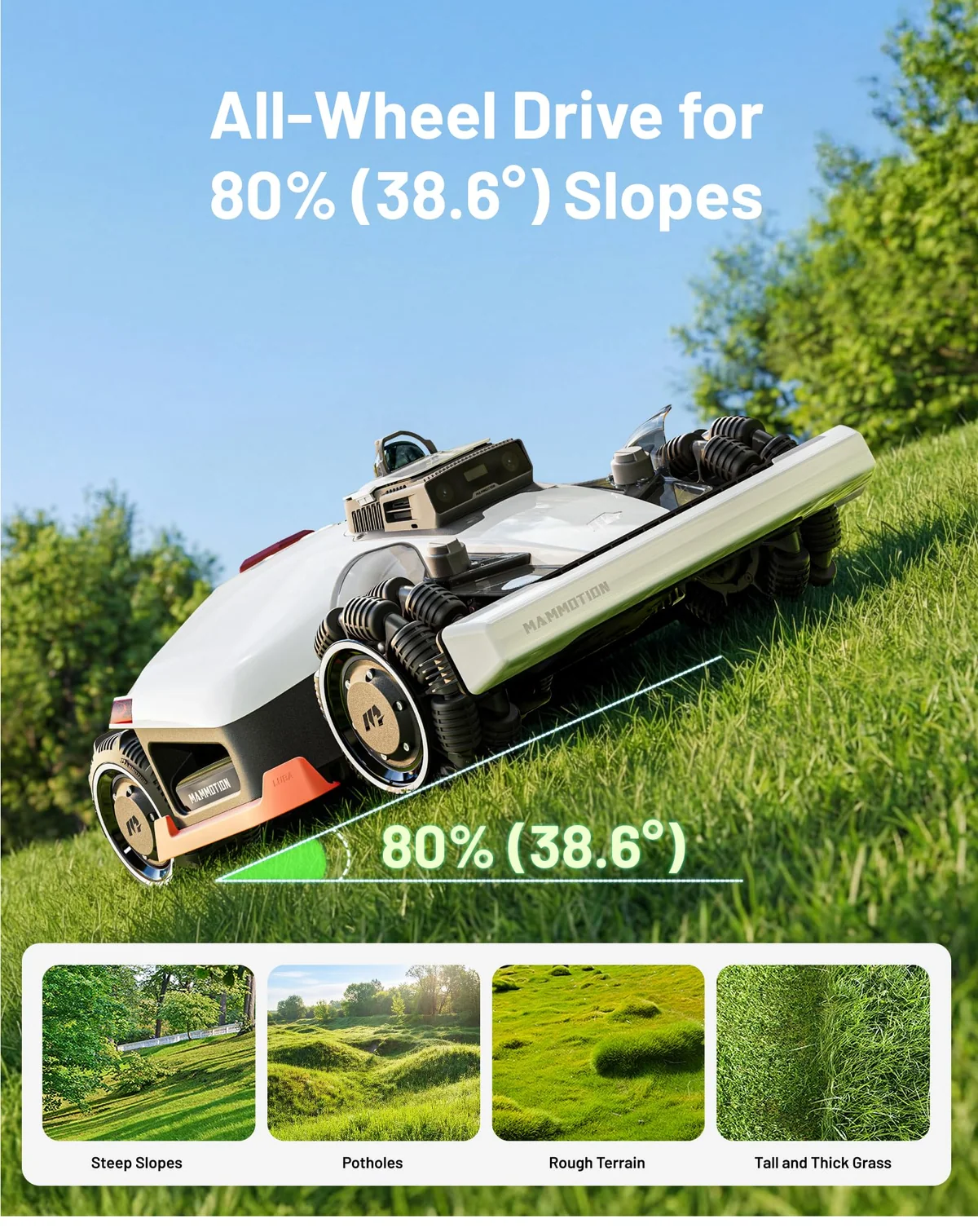
WORX claims an 84% grade and Mammotion claims 80%, equivalent to roughly 40 and 38.6 degrees respectively. That small paper advantage is not a reason to choose the WR344. Both figures are favorable-condition ceilings, and both machines need margin for wet grass, loose soil, worn patches and awkward approaches. Either is an unusually capable hill climber; LUBA has the more convincing advantage when the route also includes holes, roots and rough transitions.
A steep drop beside a road, pond or retaining wall still needs a conservative virtual boundary. Cameras, LiDAR and satellite corrections reduce navigation errors, but none becomes a physical fence when connectivity falters or a hazard looks different in hard afternoon shadow. The guide to robot mowers on hills explains why traction limits and safe operating limits are not the same thing.
LUBA brings more sensors, while WORX removes more hardware
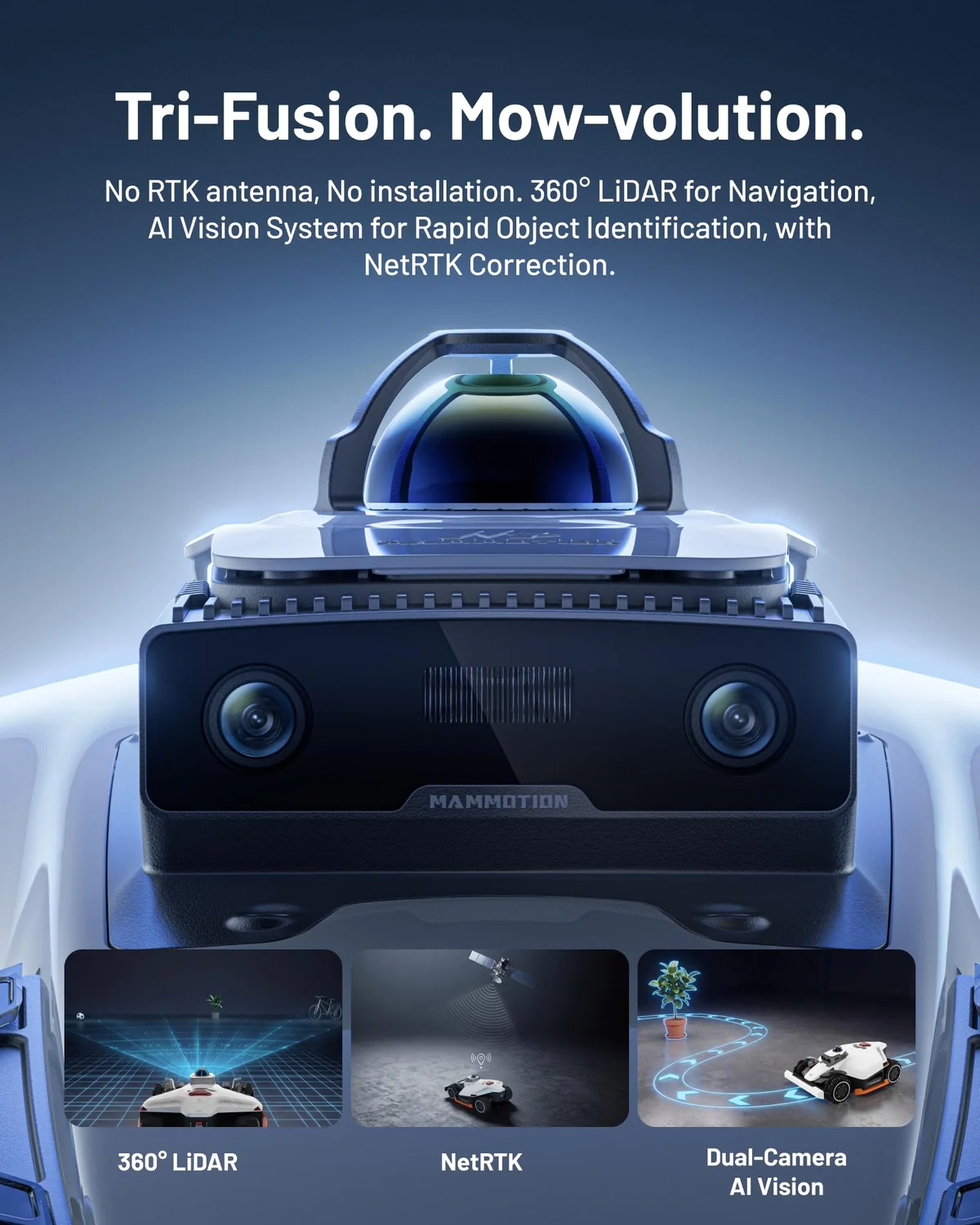
Mammotion combines 360-degree LiDAR, NetRTK and dual-camera vision. Open grass gives satellite positioning a clear view, LiDAR supplies local geometry under trees and beside buildings, and the cameras classify obstacles. This is the stronger navigation package for a property that moves between exposed lawn, canopy and structures. It can operate without a perimeter wire, and NetRTK may remove the need for a local reference antenna, although some installations or packages still require the supplied physical RTK hardware.
The WR344 uses cloud RTK, vision and visual positioning without an owner-installed mast. That makes the physical installation cleaner, but not effortless. Commissioning still depends on power, dependable 2.4 GHz Wi-Fi and successful cloud activation. A Wi-Fi, SIM or NTRIP failure can stop the mower before it cuts a blade of grass. Once operating, sharp shadows, bare patches, tall tufts and low branches can trigger false obstacle or trapped errors.
LUBA is not the software-safe choice. Its app can lag, firmware changes can alter behavior and automatic mapping may claim grass beyond an invisible property line. Manual boundary driving is the sensible approach for either mower on a complex site. Both products contain impressive machinery whose software can make ownership feel unfinished.
Neither mower eliminates the string trimmer
The WR344’s offset edge blade gets closer to flush paving than LUBA’s centered discs and can materially reduce border work. “Cut-to-Zero” still does not defeat walls, raised kerbs, posts or tight inside corners, because the chassis cannot place the blade where it needs to be. LUBA leaves more routine trimming around obstacles and hard vertical borders.
Both are maintenance mowers rather than rescue machines. They work best after a conventional first cut, then preserve the target height through frequent passes while mulching small clippings into the grass. Long wet growth, woody weeds, fallen branches and accumulated leaves are chores to clear, not challenges for the robot to prove itself against.
LUBA 3 AWD 3000H
- Rated area
- Up to 0.75 acre / 3,000 m²
- Cutting width
- 15.7 inches
- Cutting height
- 2.2–4.0 inches
- Claimed maximum grade
- 80% / 38.6°
- Navigation
- LiDAR, NetRTK and dual cameras
- Battery access
- Internal service procedure
WORX WR344
- Rated area
- Up to 1 acre
- Cutting width
- 8.7 inches
- Cutting height
- 1.57–3.54 inches
- Claimed maximum grade
- 84% / about 40°
- Navigation
- Cloud RTK, vision and V-SLAM
- Battery access
- Removable 20V PowerShare pack
The ranked choices
Choose the LUBA 3 when the lawn is genuinely difficult.
Its broad twin-disc cut, unusually high setting and sensor-rich AWD platform make it the more capable mower across firm slopes, roots and mixed tree cover.
Fixed front rollers can scar vulnerable turf, while unreliable updates and inconsistent repair support make ownership riskier than the chassis suggests.
Choose the WR344 when the grass needs a gentler machine.
True front steering, a compact articulated body and a removable battery make it the smarter long-term design for tight, steep and easily marked lawns.
Its narrow deck is painfully slow across open acreage, and cloud activation or vision errors can turn an autonomous mower into a recurring troubleshooting job.
Mammotion LUBA 3 AWD 3000H
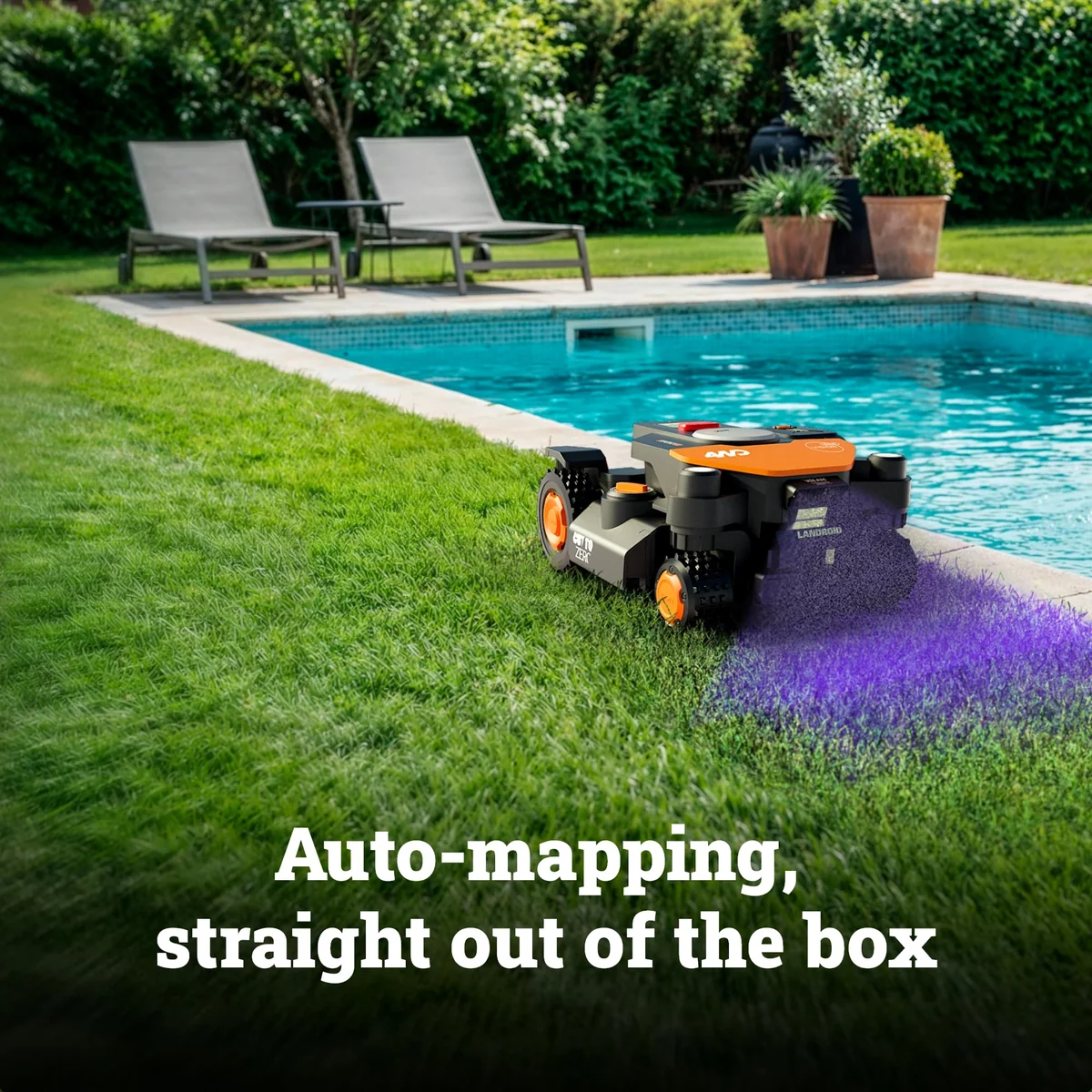
WORX WR344
Buy for the lawn you have, not the maximum slope on the box
Choose the LUBA 3 AWD 3000H when rough terrain is the reason a robot mower is being considered at all. It suits a firm lawn with banks, roots, ruts, tree cover and grass maintained above the range of many competing robots. It is also the clear choice when an 8.7-inch deck would take too long to keep pace with the property. The full LUBA 3 AWD 3000H review covers the mapping, turf and support risks in greater depth.
Choose the WR344 when the property is physically difficult but visually precious. Steered turns matter on soft grass, while the compact chassis makes sense between beds and through narrow transitions. Its removable battery is a rare piece of sensible long-term design in a category filled with sealed packs and service procedures. Accept that the mower may need most of two days to cycle through a large property, and read the complete WR344 review before trusting the cloud-dependent setup.
Buy neither for a mostly open acre where speed, straightforward setup and gentle steering all matter. The Segway Navimow X430 is the stronger all-round alternative there, with a much wider cutting system and a more polished ownership experience. It gives up some of LUBA’s sensor redundancy and some of WORX’s narrow-body precision, but ordinary large lawns benefit more from throughput than from extreme-terrain specialization.
A flat quarter-acre lawn is another reason to walk away from both. Their weight, four-wheel-drive hardware and software complexity solve problems that smaller machines do not encounter. Start with the site’s small-lawn recommendations instead of paying to park an expedition vehicle beside the flower bed.
Frequently Asked Questions
Do either of these mowers require a perimeter wire?
No, both use virtual boundaries, although each still requires careful mapping and dependable positioning services.
Which mower is better for an open acre?
The LUBA cuts open ground faster, but its 0.75-acre rating means neither model is the ideal general recommendation for a full open acre.
Which one is less likely to damage the lawn while turning?
The WORX WR344 is gentler because its front wheels steer instead of being dragged through a skid turn.
Is the WR344 the same product as the WR344E?
No, the WR344 is the U.S. model, while the European WR344E can differ in battery, accessories, warranty and cellular terms.
Ready to Choose?
Sources (35)
- Amazon listings and customer reviews — Mammotion Luba 3 Awd and Worx Wr344
- Owner reports across r/MammotionTechnology, r/roboticLawnmowers, r/2011 and 4 more threads
- Owner and reviewer video, 41 channels
- Walmart listing
- Target listing
- Pcworld — Article — www.pcworld.com
- Toptenreviews — Article — www.toptenreviews.com
- Easylawnmowing — Article — easylawnmowing.co.uk
- Mammotion — Article — us.mammotion.com
- Trustpilot — Article — au.trustpilot.com
- Thetechnologyman — Article — thetechnologyman.com
- Easylawnmowing — Article — www.easylawnmowing.com
- Homedepot — Article — www.homedepot.com
- Mammotion — Article — mammotion.com
- Carplaylife — Article — www.carplaylife.com
- Trustpilot — Article — uk.trustpilot.com
- Freshlycharged — Article — freshlycharged.com
- Androidauthority — Article — www.androidauthority.com
- T3 — Article — www.t3.com
- Facebook — Article — www.facebook.com
- Au — Article — robotlawnmowers.com.au
- Smarthomejunkie — Article — www.smarthomejunkie.net
- Iheart — Article — rocketerie.iheart.com
- Techradar — Article — www.techradar.com
- Lawncraftsupply — Article — lawncraftsupply.com
- Reviewed — Article — www.reviewed.com
- Lowes — Article — www.lowes.com
- WORX — Article — www.worx.com
- Ai — Article — www.robotmower.ai
- Homeandgardenselect — Article — homeandgardenselect.com
- Dreamhomeplace — Article — dreamhomeplace.com
- Mensjournal — Article — www.mensjournal.com
- Ibisik — Article — www.ibisik.com
- Smarthomecompared — Article — smarthomecompared.com
- Requiemforadream — Article — www.requiemforadream.com