The YARDCARE V100 automates the easy part and leaves you the chores
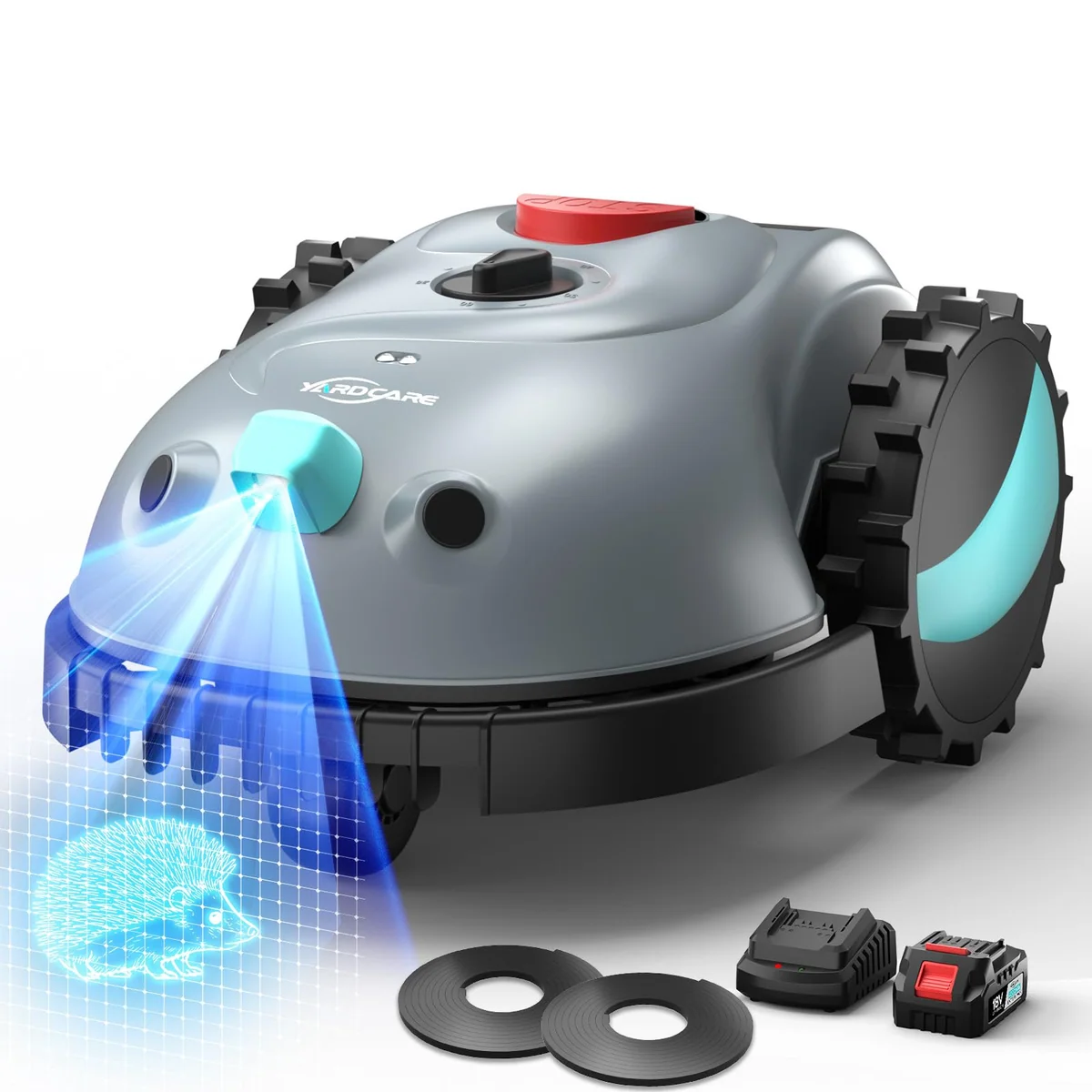
Buy the YARDCARE V100 only for a tiny, clearly bounded lawn when avoiding a push mower matters more than app control, automatic charging or a clean edge.
A narrow yes for a narrow lawn
The V100 makes sense when the lawn is one connected, uncomplicated patch, preferably closer to the conservative 1,076-square-foot recommendation than the advertised ceiling. It needs obvious borders, short grass, daylight, dry weather and reasonably even ground. Its owner must be comfortable placing it outside, handling the battery and trimming the perimeter afterward.
Within those limits, it offers something worthwhile: quiet interior mowing without pushing a machine or installing a powered boundary cable. That is a real accessibility benefit, not merely a budget substitute for premium mapping.
Walk away if the yard has subtle open edges, several disconnected areas, long grass, complex islands or a strong need for spotless borders. Also walk away if “robot mower” means app-drawn zones, scheduled departures, orderly lanes and automatic charging. The YARDCARE V100 can spare someone the hardest physical part of mowing a tiny lawn, but it never takes full responsibility for the lawn.
The robot label needs an asterisk
The V100 drives around a lawn and cuts grass without someone walking behind it, which is enough to make it useful. It does not map the yard, follow deliberate lanes, return to a charging station or resume after charging. There is no app and no remote. When the battery runs down, someone has to retrieve the mower, remove its 4Ah battery, charge it externally and put everything back together for another run.
That distinction matters because the best robot mowers disappear into a routine. The V100 remains an appliance that must be brought out at the right time and collected afterward. Its real achievement is eliminating the physical work of pushing a mower across a small patch, not eliminating lawn care itself.
That can still be a meaningful trade. A quiet machine that handles the interior of a compact lawn may be liberating for an older or disabled owner who cannot comfortably push even a lightweight mower. For a buyer picturing scheduled, unattended mowing, the V100 is the wrong product before its blades ever touch grass.
Key Specifications
No perimeter wire does not mean no boundary problem
A fence, sidewalk, curb or raised edging gives the camera a legible change to follow. An open transition into gravel, a flower bed, a neighboring lawn or a pool surround is a different proposition. The V100 cannot be shown an arbitrary virtual boundary in an app, so the shape of the property matters as much as its area. The broader distinction between this approach and mapped machines is explained in our guide to how wire-free robot mowers define where they may cut.
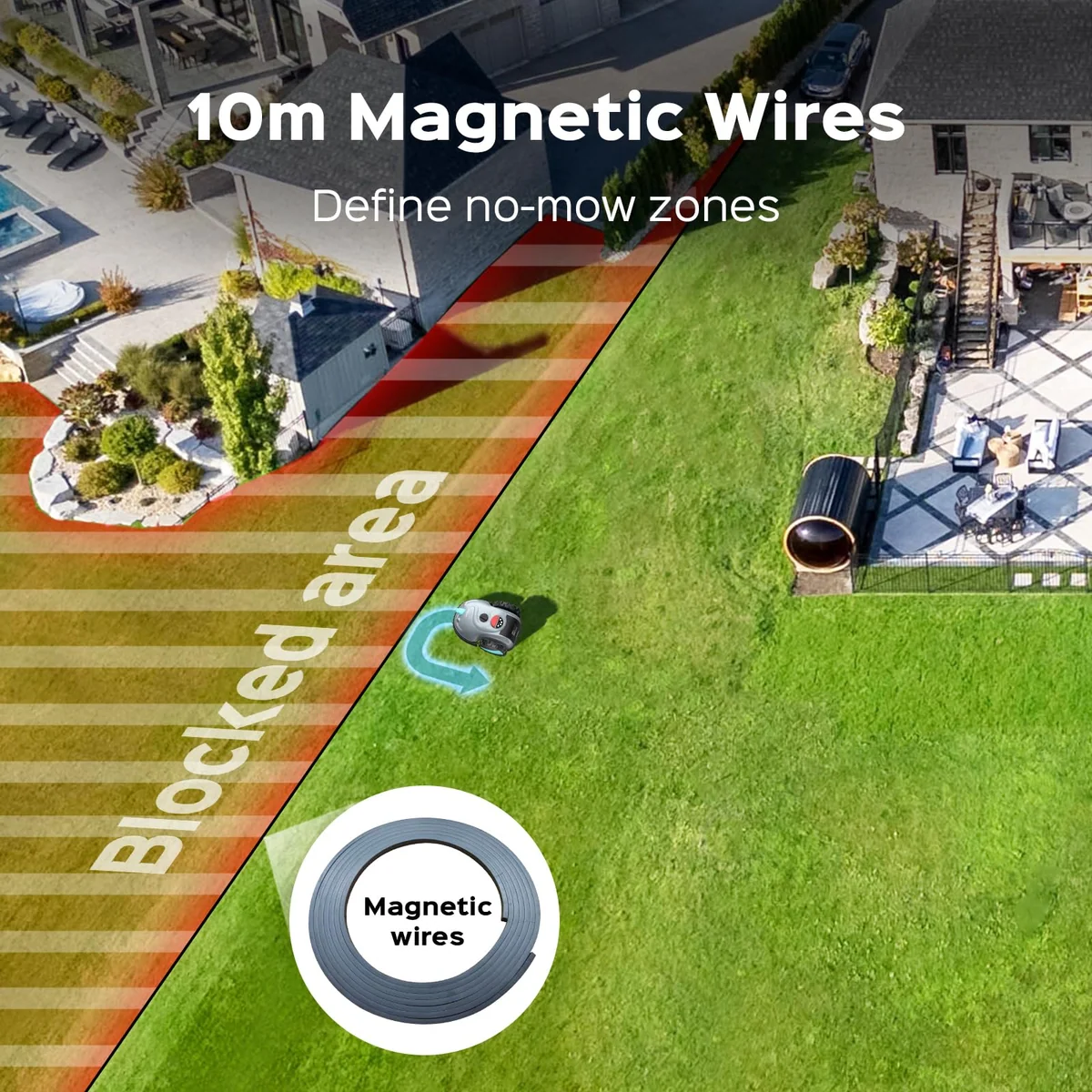
The exact B0HBWM7STP Amazon listing says the package includes 32 feet of magnetic strip and 20 pegs for marking no-go areas. YARDCARE’s own V100 page says the mower does not support magnetic strips and instead needs natural or built-in boundaries. Those statements cannot both describe every V100 configuration, and the available record does not prove whether this is a hardware revision, a bundle change or stale copy.
Even a boundary the mower recognizes will not be cut cleanly. Amazon says the V100 stops 10–20 cm from the lawn edge, which is roughly four to eight inches of grass left behind. That is not a fussy cosmetic complaint. It means the string trimmer remains part of the routine, and wide borders can make a very small lawn look unfinished after the robot has done its work. Buyers trying to minimize that follow-up should start with our guide to robot mower edge clearance and remaining trimming.
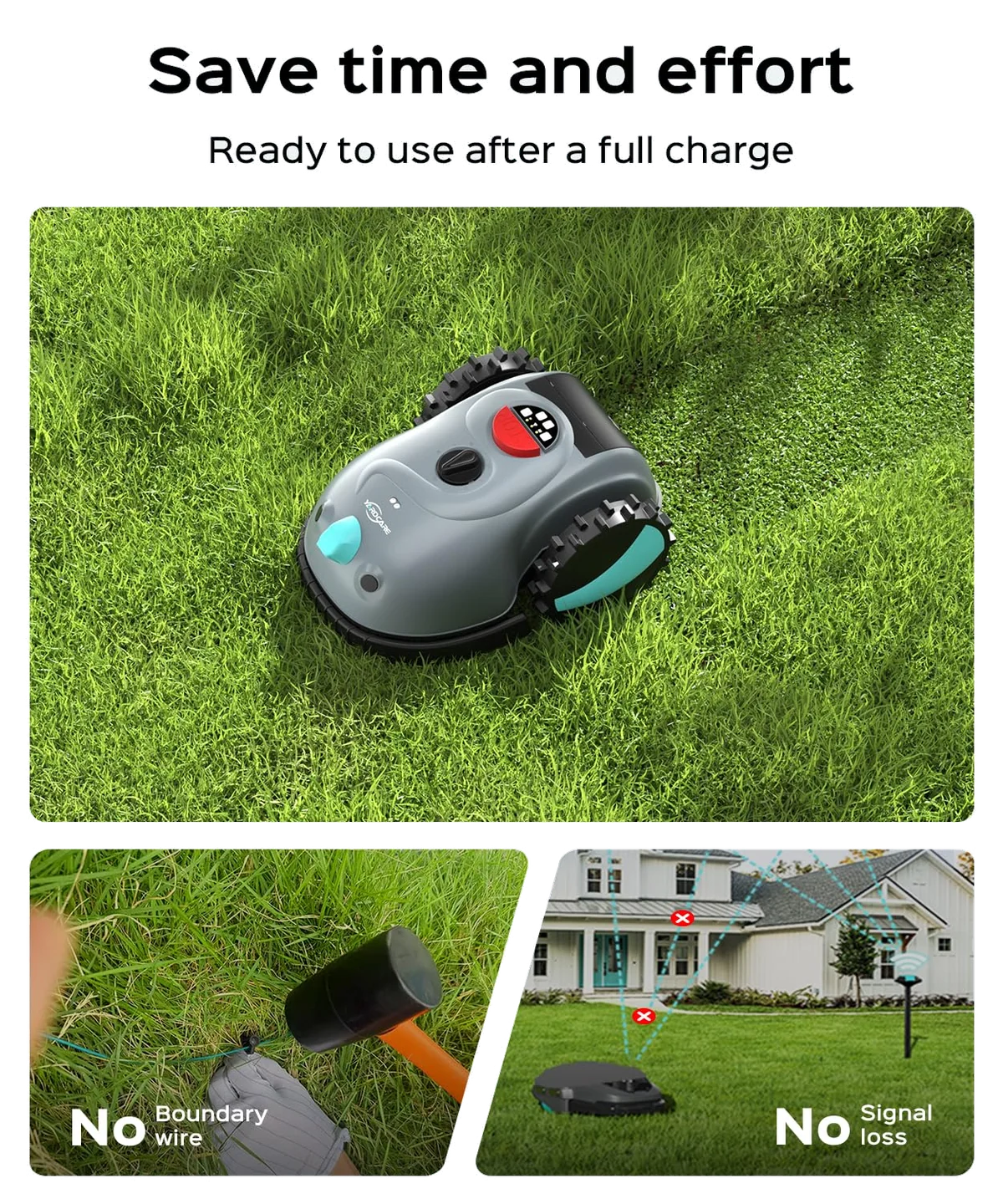
It maintains short grass; it does not rescue a neglected lawn
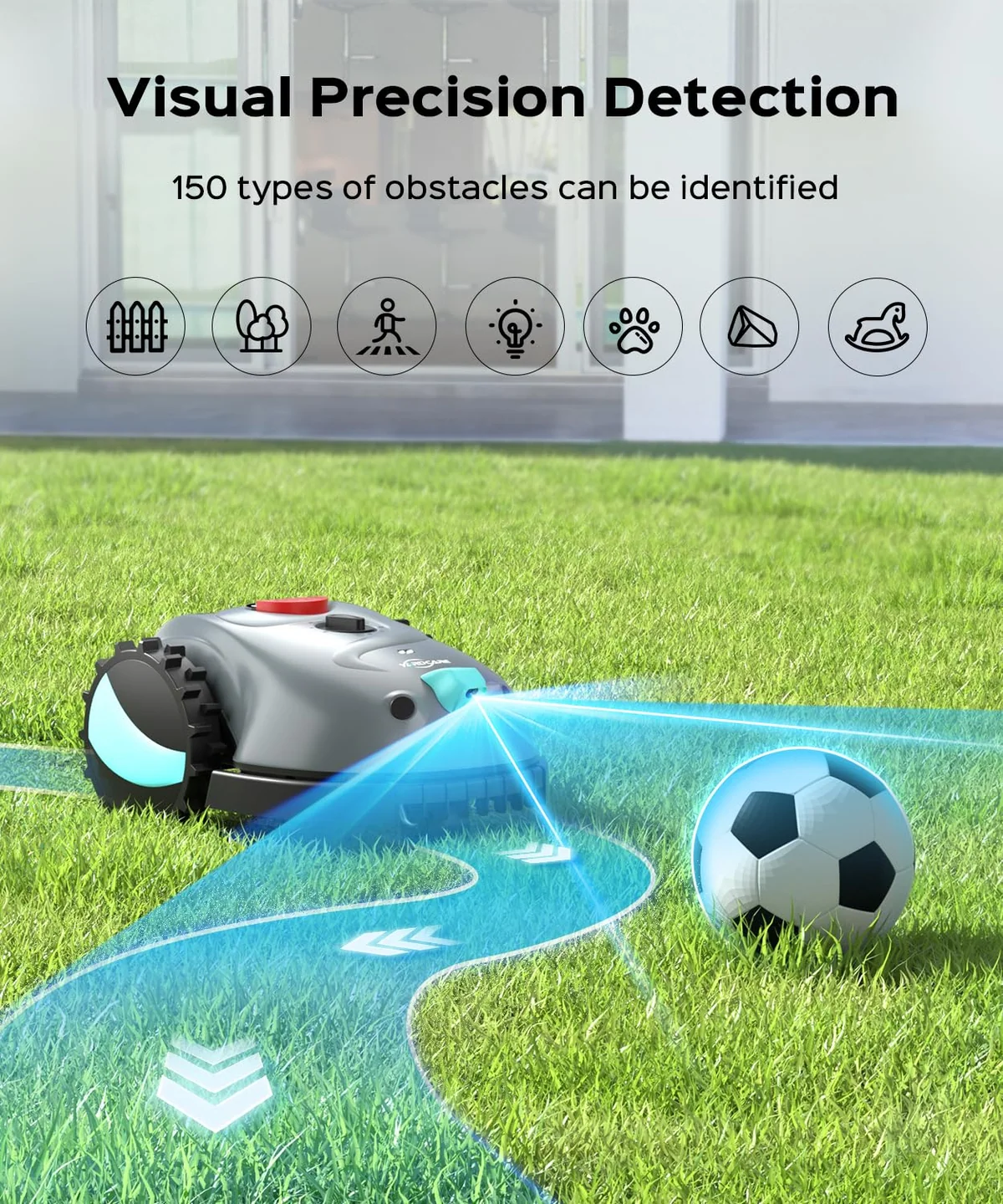
The V100 uses its camera to distinguish grass from non-grass surfaces, then changes direction as it encounters the lawn’s limits and ordinary obstacles. A bumper provides the less glamorous backup plan: if something sits in the camera’s blind spot, the mower may touch it before turning away. The advertised recognition of as many as 150 obstacle types should not be mistaken for proof that every toy, animal or low object will be detected without contact.
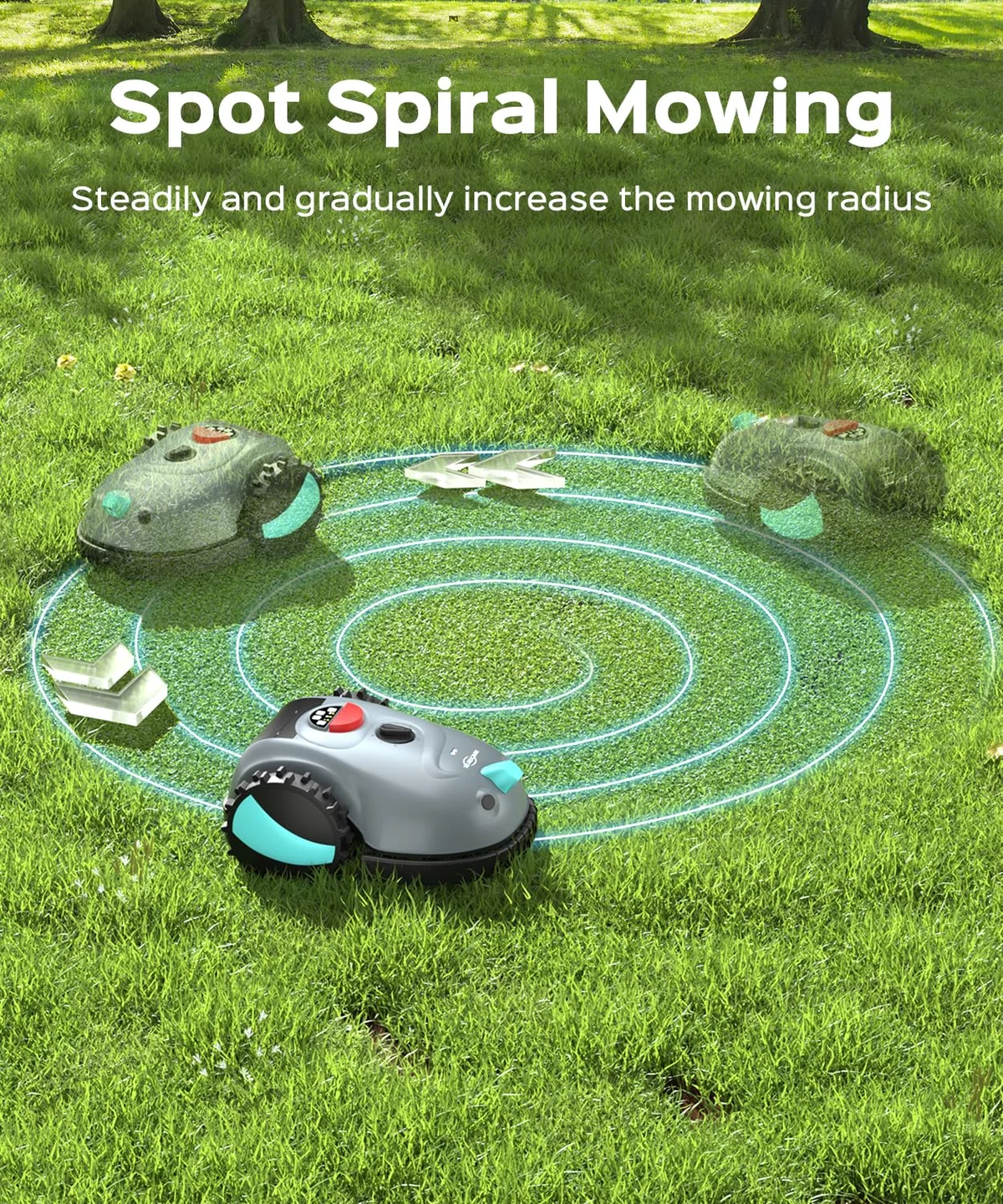
Coverage is random rather than mapped or systematic. On a simple rectangle, repeated passes can eventually maintain an even-looking interior, but the narrow 6.3-inch cutting width and wandering route make completion less predictable as beds, trees and corners multiply. There are no neat lanes to inspect and no map showing what was missed.
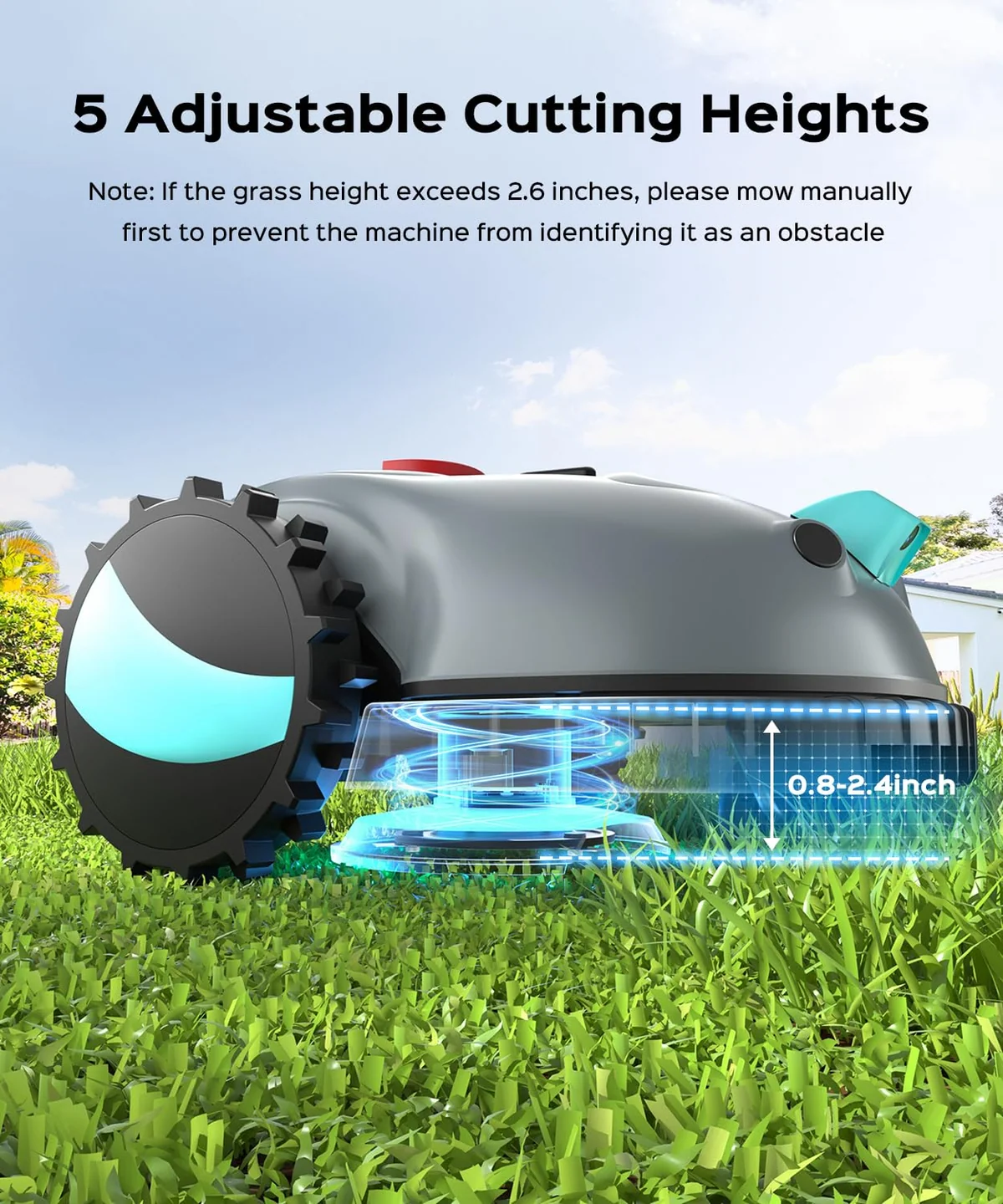
The mower is happiest when grass is already under control. Its cutting height adjusts from 0.8 to 2.4 inches, while grass above roughly 2.6 inches may be interpreted as an obstacle. One owner found that a low setting in taller grass made the mower circle instead of proceeding normally. Give an overgrown lawn a conventional first cut, then use the V100 frequently enough that it is only shaving off small clippings to mulch back into the turf.
The published 20-degree slope limit is respectable for a little vision mower, and owner reports describe it coping with a small hill and a lawn that was not perfectly flat. That is not evidence of all-terrain ability. Large pits should be filled, rough ground will complicate the random route, and anything near the stated limit deserves more caution than an unmeasured garden incline.
Scheduling is also narrower than the quiet motor suggests. The camera needs good daylight, the mower is intended for dry conditions, and its rain sensor stops the run when rain begins. A red flashing shutdown can indicate overheating and requires the machine to cool before restarting. Quiet late-evening operation may sound neighborly, but low noise does not override the daylight requirement.
Simplicity is the value, not hidden sophistication
The V100’s captured Amazon listing was roughly one-fifth lower than YARDCARE’s direct listing, so the recorded prices differed substantially. The bundles may also differ, particularly around the disputed magnetic strip and spare blades. Treat a lower listing as worthwhile only after checking that the exact package solves the boundaries in your yard.
For the right patch of grass, the value case is easy to understand. There is no powered perimeter cable to trench, no antenna to position and no app setup. Place the mower on short, dry grass in daylight, select the height and start it. Several owners describe the machine as very quiet, and some report finishing their small lawns on one charge, although none of those reports establishes a measured area or repeatable coverage time.
The problem is that “small” has two meanings in the product record. The headline claims up to 1,600 square feet, while Amazon’s own FAQ recommends about 1,076 square feet with clearly defined boundaries. The larger figure is best treated as a ceiling for a favorable, simple layout rather than a one-charge promise. Random navigation makes obstacles and geometry consume capacity that a square-foot number cannot show. Our guide to robot mower area ratings explains why the printed maximum is rarely the whole sizing decision.
| Model | Claimed area | Boundary method | App | Charging | Runtime |
|---|---|---|---|---|---|
| E400 | 4,300 sq ft | Perimeter wire | Yes | Dock and automatic charging | 40 minutes |
| V100 | 1,600 sq ft | Vision and physical boundaries | No | Removable battery | 70 minutes |
| M800Plus | 8,600 sq ft | Wire-free | Yes | Dock and automatic charging | 100 minutes |
The V100 beats the E400 when avoiding perimeter-wire installation matters more than having a dock or app, despite covering far less ground; our V100 and E400 comparison lays out that choice. The V100 and M800Plus comparison shows the opposite result: the M800Plus is the stronger choice for a larger lawn and meaningfully greater automation, while the V100 remains the deliberately basic option.
The chores become smaller, not absent
Ownership means charging and reinstalling the battery, clearing grass from the wheels and cutting assembly, and inspecting the blades for wear. When replacement is due, YARDCARE instructs owners to switch off the main power, wear gloves, and replace all three blades and their screws together. The replaceable battery is a practical advantage over a sealed pack, but there is no credible evidence here for its cycle life or the mower’s total service life.
The included instructions may not remove every first-run stumble. One owner found the manual too dependent on pictures and common sense, with useful details such as locating the power control, waiting for the indicator lights, selecting the movement behavior and setting the cutting height left unclear. The physical setup is simpler than installing boundary wire, but “ready to use” still assumes the lawn is suitable and the controls have been deciphered.
YARDCARE provides a one-year limited warranty plus phone and email support. That warranty is modest for outdoor power equipment, and one purchaser reported a unit that was defective on arrival along with no response to a return request. A single report does not establish a pattern, but it is serious enough to favor a seller with a clear return route rather than relying entirely on the manufacturer’s support process.
Sources (3)
- Amazon listings and customer reviews — Yardcare V100
- Owner reports across r/roboticLawnmowers, r/brisbane, r/berkeleyca and 4 more threads
- Yardcareinc — Article — yardcareinc.com